Is South Korea set to get its own KRW-pegged stablecoin soon?

ambcryptoОпубліковано о 2026-03-28Востаннє оновлено о 2026-03-28

Анотація

South Korea is moving closer to potentially launching its own KRW-pegged stablecoin, driven by its large and active retail crypto market. With over 18 million citizens already participating in crypto trading, the market is fast-moving and retail-focused, at times rivalling traditional equity markets. However, inefficiencies like the "Kimchi Premium"—where crypto assets trade at higher prices on local exchanges—highlight strong local demand and limited capital flow flexibility. A KRW-backed stablecoin could reduce reliance on USD-based stablecoins, improve liquidity in KRW trading pairs, enable faster settlement, and leverage existing market support from large players on Korean exchanges. Despite the potential benefits, regulatory hurdles remain a significant challenge.

South Korea could be closer than expected to launching its own stablecoin! With chatter around a KRW-backed token picking up, the country is becoming one of the most closely watched markets.

Here’s why.

South Korea – One of the world’s biggest retail markets

With over 18 million citizens already participating, South Korean crypto trading is fast-moving and retail-centric. At multiple points, their activity has rivalled traditional equity markets!
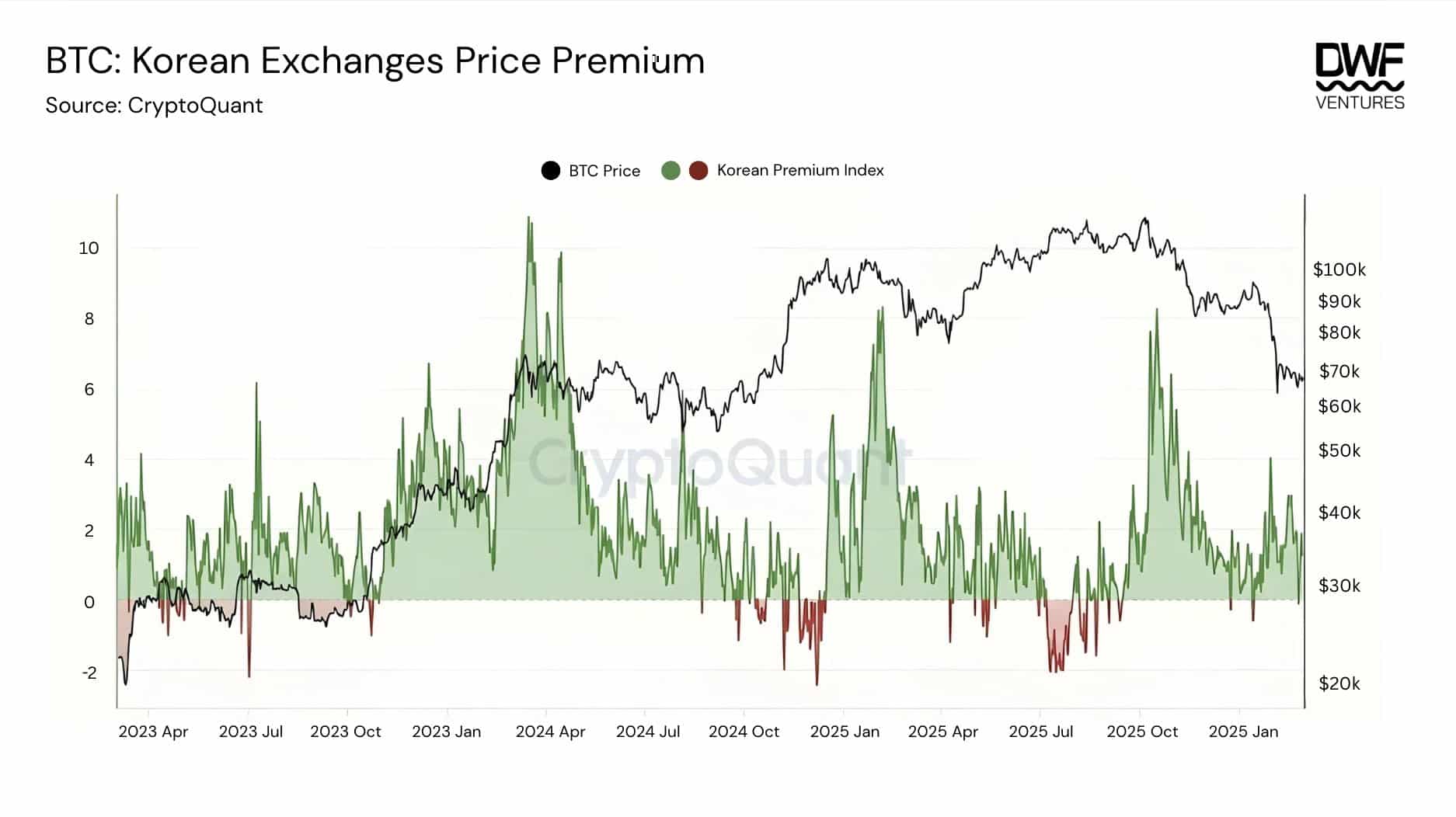
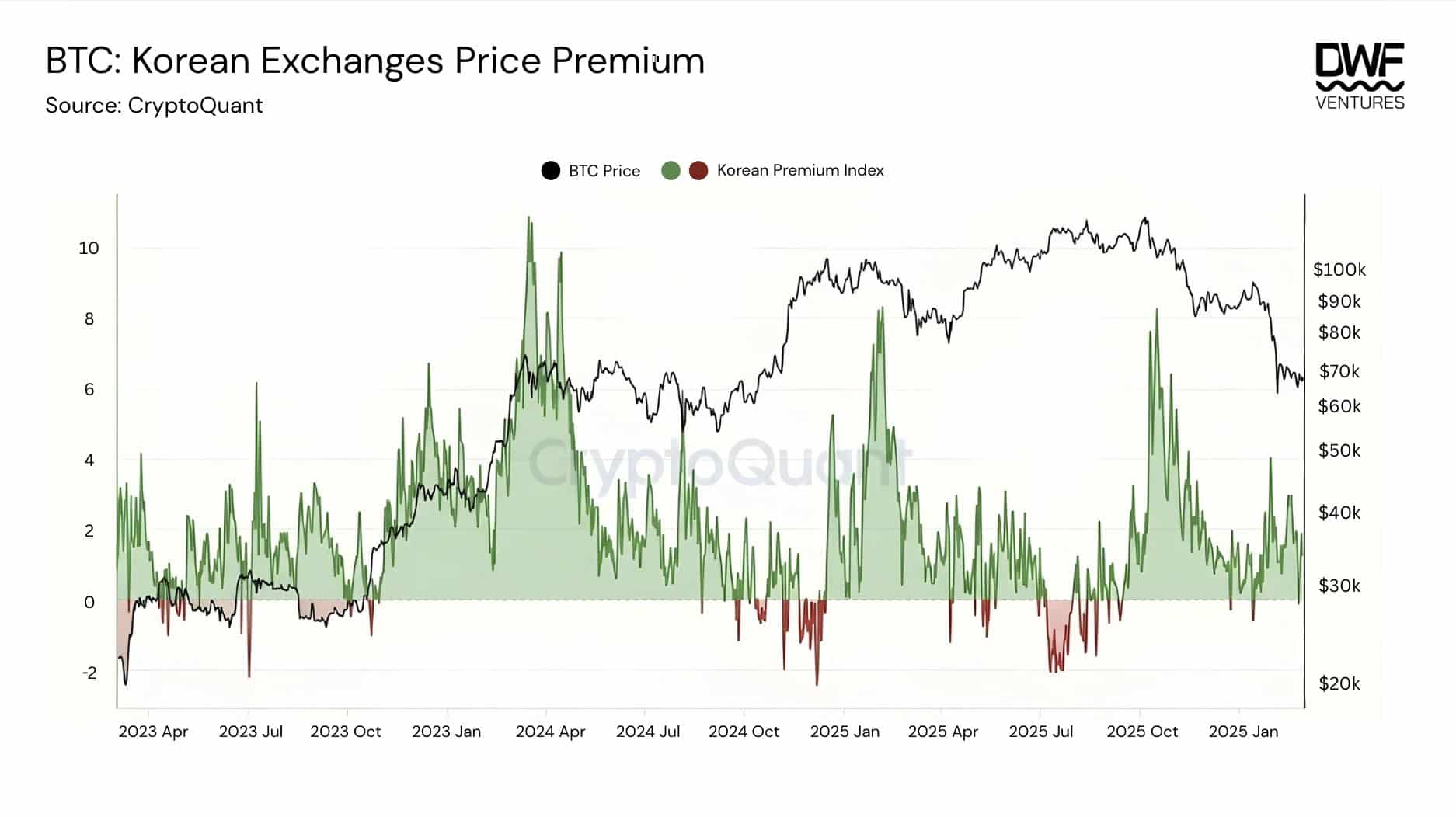
Source: DWF Ventures

However, this demand hasn’t always been efficient. The “Kimchi Premium,” where assets trade at higher prices on local exchanges, makes the gap between domestic and global markets clear. There’s both local demand and limited capital flow flexibility.

This is where a KRW stablecoin starts to make sense. A local alternative could reduce reliance on USD-based stablecoins and improve liquidity in KRW trading pairs. At the same time, it also helps achieve faster settlement.
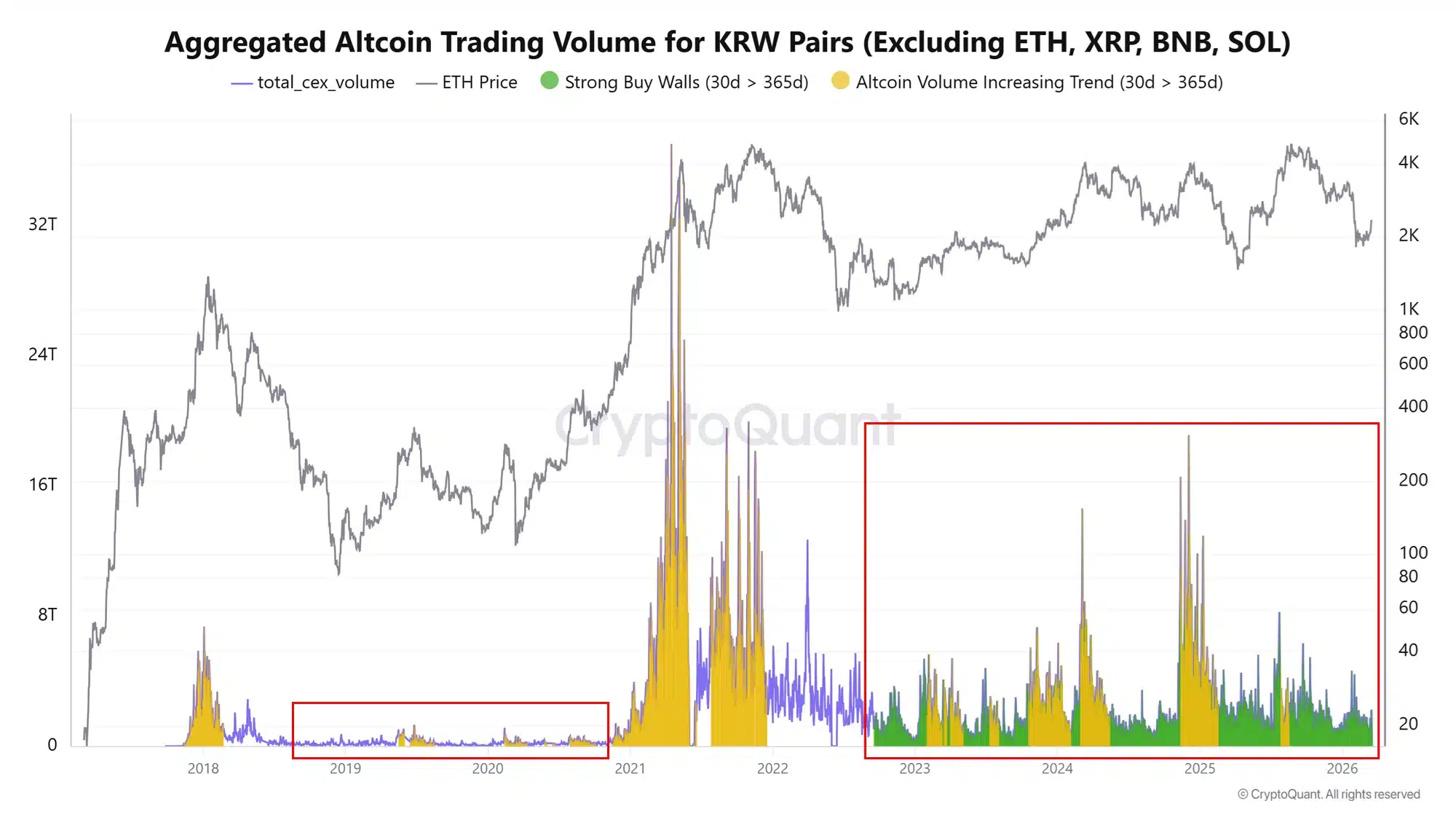
Source: Cryptoquant

And, here’s where it gets interesting; it’s not just the retail market. Large players on Korean exchanges have been absorbing sell-side pressure for years, creating a nice support wall that keeps liquidity intact.


Regulation is a hurdle

Пов'язані питання

QWhat is the main topic of the article regarding South Korea's financial market?

AThe article discusses the potential for South Korea to launch its own KRW-pegged stablecoin.

QWhy is South Korea considered a significant market for cryptocurrency trading?

ASouth Korea is one of the world's biggest retail markets for crypto, with over 18 million citizens participating in fast-moving, retail-centric trading.

QWhat is the 'Kimchi Premium' mentioned in the article?

AThe 'Kimchi Premium' refers to the phenomenon where crypto assets trade at higher prices on South Korean exchanges compared to global markets, highlighting local demand and limited capital flow flexibility.

QHow could a KRW-backed stablecoin benefit South Korea's crypto market?

AA KRW stablecoin could reduce reliance on USD-based stablecoins, improve liquidity in KRW trading pairs, and achieve faster settlement.

QWhat is identified as a major hurdle for the implementation of a KRW stablecoin in South Korea?

ARegulation is mentioned as a hurdle for the implementation of a KRW stablecoin in South Korea.

Пов'язані матеріали

Casper Network Publishes the Casper Manifest, a Multi-Year Roadmap to Power Regulated Real-World Assets and the Machine Economy

The Casper Association has published "The Casper Manifest," a multi-year technical roadmap for Casper Network. Introduced at the Digital Finance Forum in Bermuda, the roadmap outlines nine coordinated initiatives designed to position the layer-1 blockchain as the infrastructure for regulated real-world asset (RWA) tokenization and the machine-to-machine economy. Key initiatives focus on: 1. **Developer Access:** Adding full Ethereum Virtual Machine (EVM) compatibility alongside its existing WebAssembly (Wasm) execution layer. 2. **User Experience:** Implementing gasless transactions, batch operations, and smart accounts with biometric authentication. 3. **Institutional Compliance & Privacy:** Building compliant security tokens aligned with the ERC-3643 standard and a multi-phase roadmap for confidential transactions with built-in audit tools. 4. **Machine Economy:** Implementing the X402 open payment standard to enable AI agents and machines to make autonomous, programmatic micropayments. 5. **Token Infrastructure:** Creating a Native Token Registry to give all tokens protocol-level status with fixed, predictable costs. 6. **Quantum Safety:** Developing hybrid accounts with both classical and quantum-resistant keys. The first initiative, X402 micropayments, is expected within weeks. Subsequent releases through 2026 and 2027 will include EVM compatibility, compliant security tokens, the Native Token Registry, gasless transactions, and quantum-safe features. The goal is to create a blockchain that is frictionless for users, trusted by institutions, and native for machines.

TheNewsCrypto5 год тому

Casper Network Publishes the Casper Manifest, a Multi-Year Roadmap to Power Regulated Real-World Assets and the Machine Economy

TheNewsCrypto5 год тому

Торгівля

Спот
Ф'ючерси
活动图片