Interactive Tutorial | Startale Group, Which Raised $63 Million, Launches Points Campaign

Odaily星球日报Опубліковано о 2026-03-27Востаннє оновлено о 2026-03-27

Анотація

Startale Group, a Singapore-based Web3 infrastructure and solution provider, has raised $63 million in a Series A funding round. The investment includes $50 million from SBI Group and $13 million from Sony Innovation Fund. The funds will be used to advance its on-chain infrastructure, including the development of its Ethereum Layer 2 network Soneium (co-managed with Sony), the Astar Network, a stablecoin (Startale USD and JPYSC), and tokenized securities. The company has launched an interactive points campaign where users can earn STAR points by completing various tasks. Key steps include: registering with an invitation code, daily check-ins, swapping at least 10 USDC (for 3 points), depositing at least 10 USDC into a vault (for 5 points and 7.42% APY), and providing liquidity (for 5 points plus daily rewards). An additional "Lucky Easter Egg" event from March 23 to April 3 offers extra chances to win STAR points and USDSC rewards.

Original | Odaily Planet Daily (@OdailyChina)

Author | Asher (@Asher_ 0210)

Yesterday, Startale Group announced the completion of a $63 million Series A funding round, with SBI Group investing $50 million and Sony Innovation Fund investing $13 million. This round of funding will be used to advance its on-chain infrastructure layout, including Layer2 networks, stablecoins, and tokenized securities.
Startale Group Announces Completion of $63 Million Series A Funding Round

Next, Odaily Planet Daily will break down Startale Group and provide a step-by-step guide on how to interact with the project.

Startale Group

Startale Group is a Web3 infrastructure and solutions provider headquartered in Singapore. It currently jointly operates the Ethereum Layer 2 network Soneium with Sony Group and operates Astar Network.

Startale Group is building a complete on-chain ecosystem around projects such as Soneium, Astar Network, Startale App, stablecoin products Startale USD and JPYSC, and Strium, focusing on infrastructure, consumer applications, and financial tools. Furthermore, Startale Group emphasizes entertainment-native blockchain, IP protection, compliant financial infrastructure (RWA, stablecoins), and mass adoption. Through partnerships with Sony and SBI, the company holds a significant position in Japan's Web3 ecosystem while actively expanding globally.

In summary, Startale Group is a key Web3 player backed by Sony, focusing on vertical integration from infrastructure to consumer applications, with the goal of making blockchain technology truly serve hundreds of millions of users.

Step-by-Step Interaction Tutorial

STEP 1. Go to the interaction website (link). An invitation code is required to participate. Three invitation codes are provided here: CMPRFS46, QSQREF49, TGIAHX63. After entering the invitation code, log in to your account via a Web3 wallet.
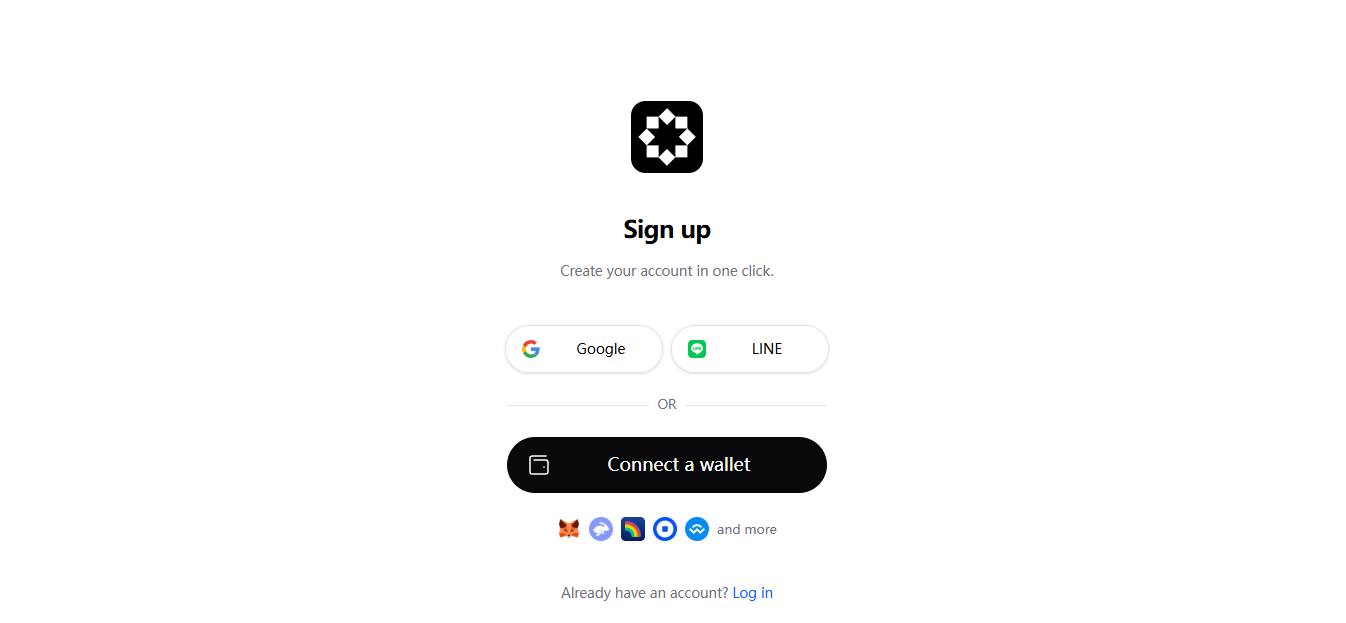
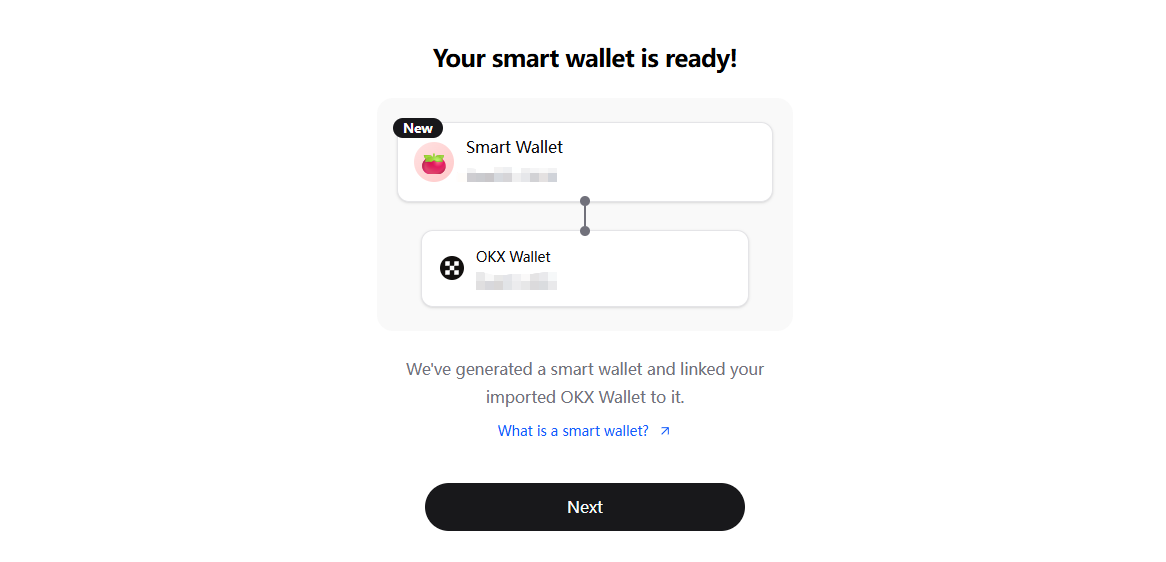
STEP 2. After entering the interaction website, click "Next" to automatically generate a built-in wallet.
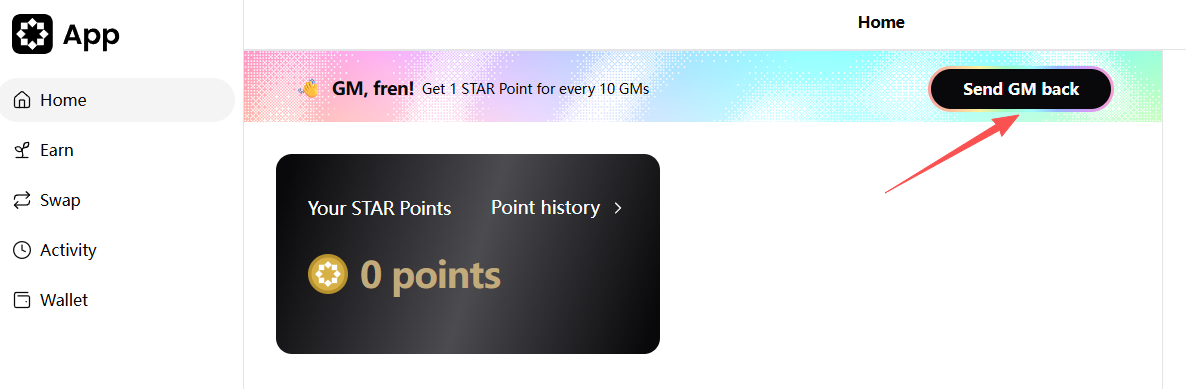
STEP 3. Click "GM" to complete the daily check-in. Consecutive check-ins for 10 days will yield rewards.
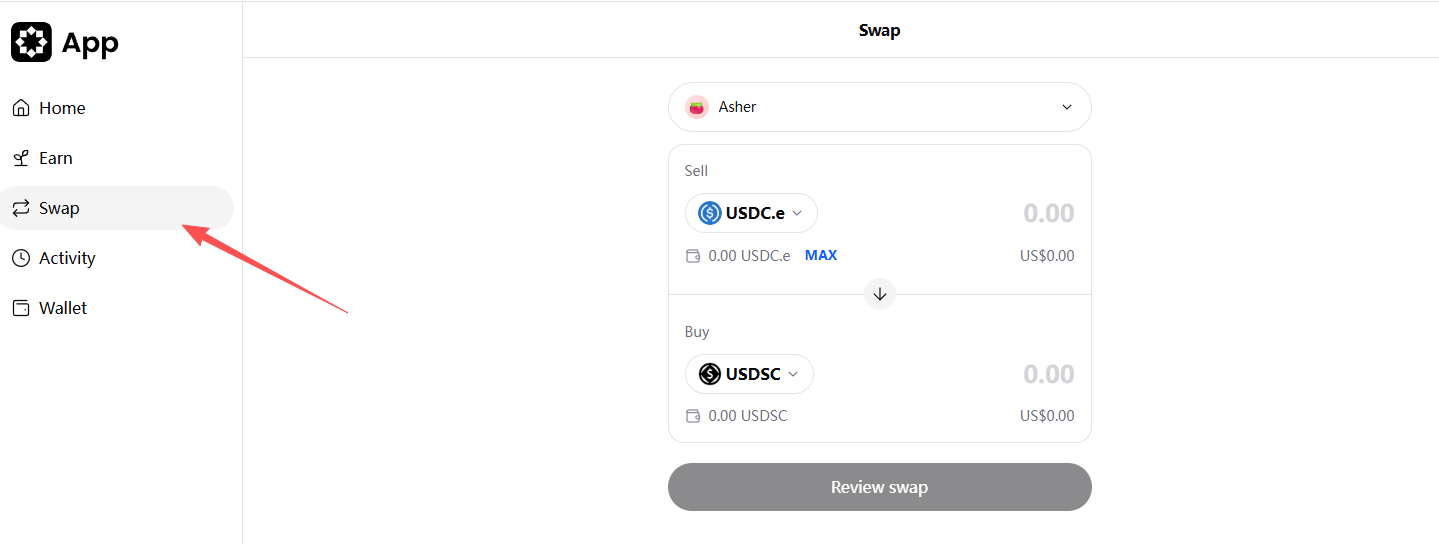
STEP 4. Swap USDC (minimum 10 USDC) to earn 3 STAR points.
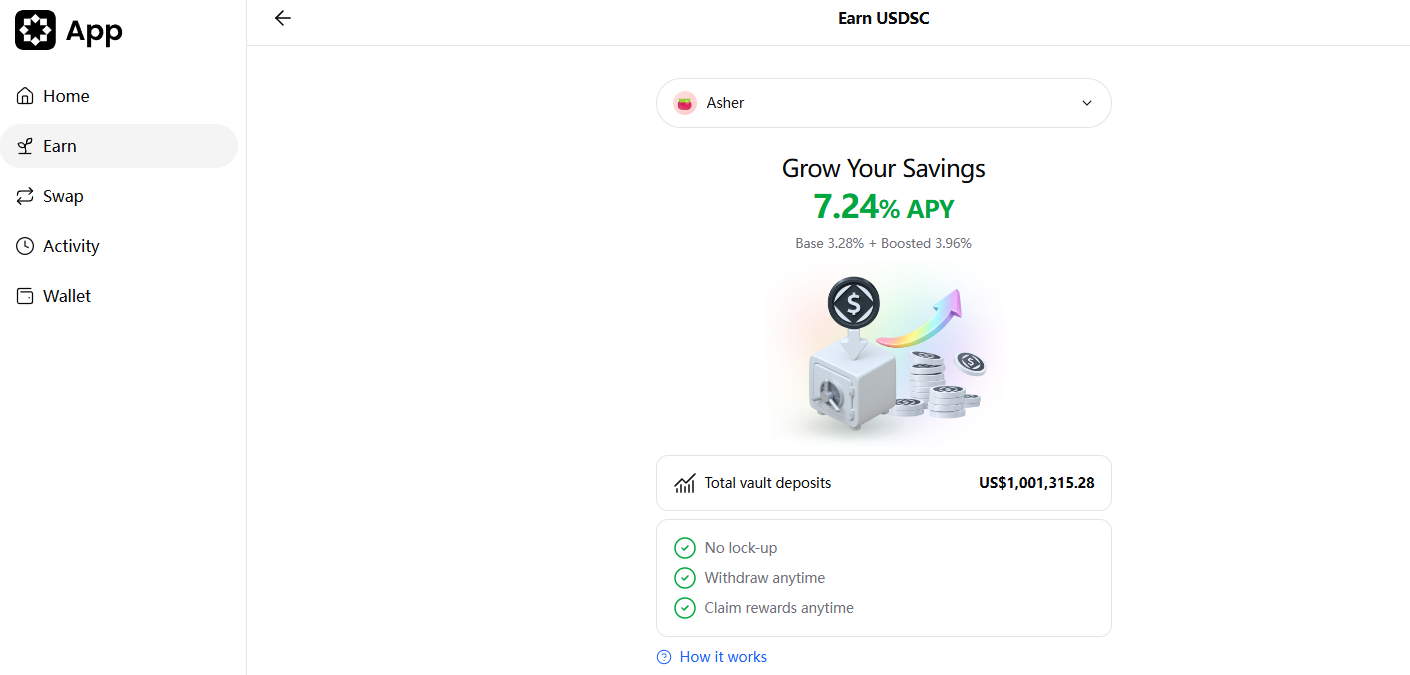
STEP 5. Deposit USDC into the vault (minimum 10 USDC) to earn 5 STAR points, while also receiving a 7.42% annualized yield. The current deposit amount is $1 million.
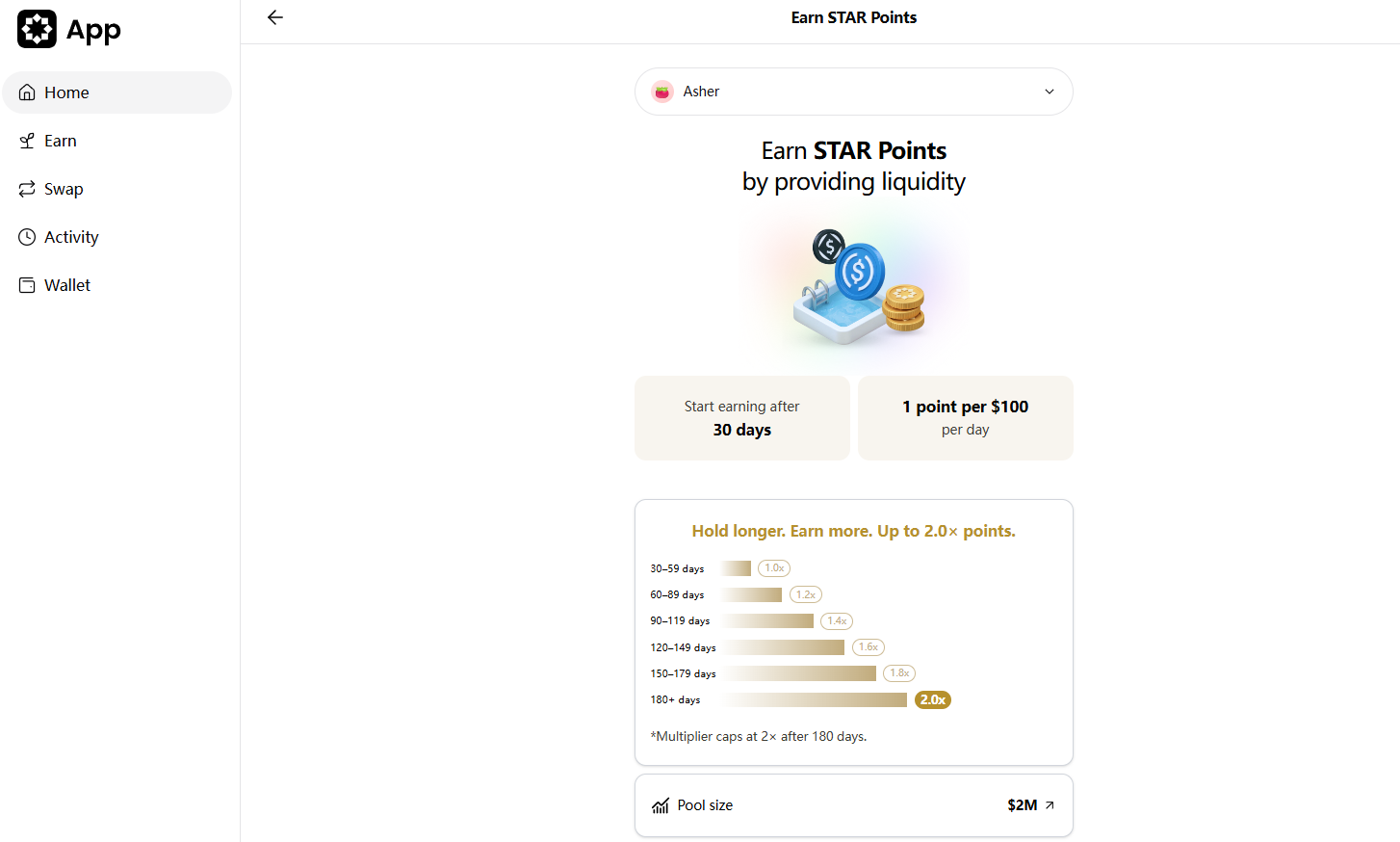
STEP 6. Provide LP liquidity to earn 5 points. Additionally, earn 1 STAR point daily for every $100 in value. Deposits held for over 60 days will receive additional STAR point bonuses.
Furthermore, Startale Group is running a "Lucky Easter Egg" event from March 23rd to April 3rd. Completing the above tasks will grant additional chances to open eggs for opportunities to win STAR points and USDSC rewards.

Пов'язані питання

QWhat is the total amount of Series A funding raised by Startale Group and who were the major investors?

AStartale Group raised a total of $63 million in Series A funding, with SBI Group investing $50 million and Sony Innovation Fund investing $13 million.

QWhat are the main business focuses and products of Startale Group as a Web3 infrastructure provider?

AStartale Group focuses on building a complete on-chain ecosystem, including the Ethereum Layer 2 network Soneium, operating Astar Network, the Startale App, stablecoin products Startale USD and JPYSC, and Strium. Their key areas are infrastructure, consumer applications, and financial tools.

QWhat is the first step to interact with the Startale Group project according to the tutorial?

AThe first step is to enter the interaction website, fill in an invitation code (e.g., CMPRFS46, QSQREF49, TGIAHX63), and then log in to the account using a Web3 wallet.

QHow can users earn STAR points by interacting with the platform?

AUsers can earn STAR points by: 1. Swapping at least 10 USDC to get 3 points. 2. Depositing at least 10 USDC into the vault to get 5 points. 3. Providing liquidity (LP) to get 5 points, plus 1 point daily for every $100 in value, with additional bonuses for deposits over 60 days.

QWhat special event did Startale Group launch from March 23 to April 3, and what can users win?

AStartale Group launched a 'Lucky Easter Egg' event during that period. Users who complete the interaction tasks get additional chances to open eggs and win STAR points and USDSC rewards.

Пов'язані матеріали

Lowering Expectations for BTC's Next Bull Market

The author, Alex Xu, explains his decision to significantly reduce his Bitcoin holdings (from full to ~30% of his portfolio) during the current bull cycle, citing a lowered long-term outlook for BTC's price appreciation in the next cycle. He outlines six key reasons for this reduced expectation: 1. **Diminished Growth Drivers:** The narrative of exponential user adoption has largely played out with institutional ETF adoption. The next major growth phase—adoption by sovereign national reserves or central banks—seems unlikely in the near future. 2. **Personal Opportunity Cost:** More attractive investment opportunities have emerged in other assets, such as undervalued companies. 3. **Industry-Wide Contraction:** The broader crypto industry is struggling, with most Web3 business models (SocialFi, GameFi, DePIN) failing. This overall萧条 (depression) reduces the fundamental demand and consensus for Bitcoin. 4. **Strain on Major Buyer:** MicroStrategy, a major corporate buyer of BTC, faces rising financing expenses for its debt, which could slow its purchasing rate and create significant marginal pressure on the market. 5. **Increased Competition from Gold:** The emergence of "tokenized gold" has closed the functional gap (portability, divisibility) between physical gold and Bitcoin, offering a strong competitor in the non-sovereign store-of-value space. 6. **Security Budget Concerns:** The block reward halving continues to exacerbate the long-standing issue of funding Bitcoin's network security, with new fee source explorations like Ordinals and L2s largely failing. The author's decision to hold a significant (though reduced) position reflects a cautious, not bearish, outlook. He remains open to increasing his exposure if the fundamental reasons for his skepticism change or if new positive catalysts emerge.

marsbit4 хв тому

Lowering Expectations for BTC's Next Bull Market

marsbit4 хв тому

Can Iran 'Control' the Strait of Hormuz?

Iran has announced a comprehensive plan to assert control over the strategic Strait of Hormuz, a critical global oil shipping chokepoint. The proposed measures include requiring all vessels to obtain Iranian permission for passage, imposing fees for security, environmental protection, and navigation management—preferably paid in Iranian rials—and absolutely banning Israeli ships. Vessels from countries deemed hostile by Iran’s top security bodies may also be barred. Analysts suggest Iran’s motives are multifaceted: increasing pressure on the U.S. and Israel by leveraging control over oil transit to influence global prices and inflation; creating a new revenue stream, potentially exceeding $7.7 billion annually, to counter Western sanctions and support postwar reconstruction; and using transit permissions as bargaining chips in future negotiations, notably with the U.S. However, the plan faces significant practical and diplomatic challenges. Enforcing comprehensive interception and fee collection in the busy waterway, patrolled by international military forces, would be difficult. The U.S. has already countering with a blockade of Iranian ports and threats to intercept any ship paying fees, potentially strangling Iran’s oil exports and fee revenue. Broad international opposition, led by European and Gulf states, and legal controversies further complicate implementation. The proposal may ultimately serve more as a negotiating tactic than a feasible policy, with its execution remaining highly uncertain.

marsbit1 год тому

Can Iran 'Control' the Strait of Hormuz?

marsbit1 год тому

Торгівля

Спот
Ф'ючерси
活动图片