Insurance Agent in Hong Kong Loses Over $3.3 Million Due to 'Romantic' Crypto Scam

cryptonews.ruОпубліковано о 2026-08-03Востаннє оновлено о 2026-08-03

Анотація

An experienced Hong Kong insurance agent fell victim to a "romance scam" involving fake crypto investments, losing over HK$26 million (approximately US$3.3 million), according to local police. Authorities reported 25 similar cases of online romance-linked investment fraud in just one week in late July, with total losses nearing HK$70 million. The scam began when an acquaintance introduced the victim to a woman seeking insurance advice. The woman later connected him via WhatsApp to a man nicknamed "Uncle," who claimed to sell cars. Over time, "Uncle" built trust and an online romantic relationship with the victim. He then claimed to have successful investment experience and persuaded the victim to invest in cryptocurrencies, directing him to install a fake crypto investment platform app and introducing a person posing as the platform's owner to "help" manage a crypto wallet. Over roughly six months, the victim personally handed over more than HK$4 million in cash across various Hong Kong locations and transferred nearly HK$22 million to bank accounts provided by the scammers. Suspicion only arose when the fake app showed returns exceeding 800% and withdrawal attempts were blocked. Subsequently, both the "romantic partner" and the supposed expert cut off all contact. Police emphasized that even financially experienced individuals can be defrauded when scammers use emotional pressure and gradually build trust.

An experienced insurance agent from Hong Kong has become a victim of a romantic investment scam and lost more than HK$26 million (about $3.3 million). Local police reported this.

According to law enforcement, in just the period from July 24 to 30, they received 25 reports of investment fraud related to online romances. The total losses of the victims reached nearly HK$70 million.

Scammers Used Romantic Relationships to Promote Fake Crypto Investments

Last year, an acquaintance introduced the victim to a woman who allegedly sought insurance advice. Later, she introduced a man nicknamed Uncle, who supposedly worked in car sales. Communication continued on WhatsApp.

According to police information, the interlocutor gradually gained the victim's trust, regularly showing care and attention. Subsequently, a romantic relationship developed between them online.

After this, Uncle claimed to have successful investment experience and suggested investing funds in crypto assets. He convinced the man to install an application allegedly for a cryptocurrency investment platform and also introduced him to a person who called himself its owner and offered help with managing the crypto wallet.

Over approximately six months, the victim personally handed over more than HK$4 million in cash to the scammers in different districts of Hong Kong and also transferred nearly HK$22 million to bank accounts provided by the criminals.

Suspicions arose only when the fake application showed a return of over 800%, and an attempt to withdraw funds ended in refusal. After this, the "romantic partner" and the so-called expert simultaneously ceased all communication.

Police emphasized that even people with financial experience can become victims of fraud if criminals use emotional pressure and gradually gain trust.

Earlier, in the US, over 61 million USDT were seized due to a "romantic" fraud scheme.

Пов'язані питання

QWhat was the total amount of money lost by the Hong Kong insurance agent in the 'romantic' crypto scam?

AThe agent lost over 26 million Hong Kong dollars, which is approximately $3.3 million USD.

QHow did the scammers first initiate contact with the victim, according to the police report?

AA friend of the victim introduced him to a woman who was supposedly seeking insurance consultation. Later, this woman introduced a man nicknamed 'Uncle' who claimed to be a car dealer, and their communication moved to WhatsApp.

QWhat method did the scammers use to gain the victim's trust before proposing the fake crypto investments?

AThe scammer gradually built the victim's trust by regularly showing care and attention, which eventually led to the development of an online romantic relationship.

QWhat specific actions did the victim take that led to the financial losses over six months?

AThe victim personally handed over more than 4 million HKD in cash to the scammers in various districts of Hong Kong and transferred nearly 22 million HKD to bank accounts provided by the scammers.

QWhat finally made the victim suspicious and led to the discovery of the scam?

ASuspicion arose when the fake investment application showed a return of over 800%, and an attempt to withdraw the funds was refused. Subsequently, both the 'romantic partner' and the so-called expert simultaneously cut off all communication.

Пов'язані матеріали

Once-Popular Web3 Enters Wave of Layoffs

The once-hot Web3 industry is experiencing a severe wave of layoffs. While many companies attribute job cuts to AI-driven restructuring, the primary reason is often financial pressure. The Web3 sector, at the intersection of tech and finance, has been hit particularly hard. Employees at major cryptocurrency exchanges report sudden, impersonal layoffs—often with system access revoked overnight—and minimal or no severance. Common tactics include setting impossible performance targets or terminating employees for minor policy violations. The working atmosphere has become toxic, marked by intense monitoring, excessive meetings, and management obsessed with control and internal politics rather than product innovation. The industry's core business model is collapsing. Exchange revenue from trading fees and listing charges has plummeted due to a decline in quality projects and retail investor exodus. Events like the massive forced liquidation on October 10th further shattered confidence. Competition from on-chain derivatives platforms and prediction markets is intensifying the downturn. As layoffs continue, displaced workers struggle to find new opportunities. Many transition to the AI sector, but face significant bias from traditional finance and even some AI firms, which view crypto industry experience with suspicion. The current downturn appears more structural than cyclical, driven by unsustainable practices, internal strife, and a failure to innovate, raising questions about the industry's future trajectory.

marsbit6 хв тому

Once-Popular Web3 Enters Wave of Layoffs

marsbit6 хв тому

Sales Drop 26% But Prices Rise? Xiaomi's Dilemma

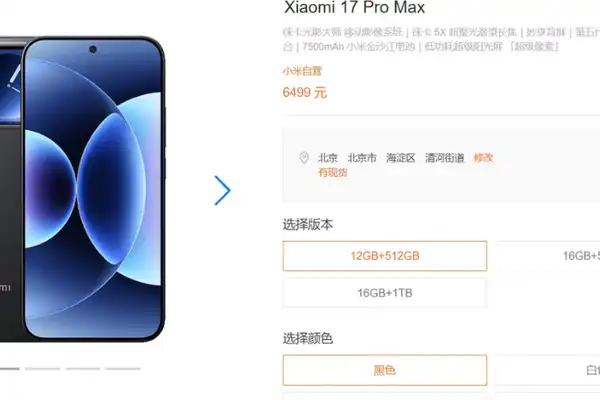
Xiaomi, facing a significant 26.3% year-on-year decline in global smartphone shipments in Q2 2026, has implemented its third price hike of the year. On August 2nd, prices were raised for nine models, including the flagship Mi 17 series (up 400-500 yuan) and Redmi K90/Turbo 5 series (up 300 yuan). This move completes a pattern where cost pressure, originating from surging memory chip prices, has climbed from entry-level to mid-range and now flagship products. The primary driver is a severe supply squeeze on consumer-grade DRAM and NAND flash memory, as major manufacturers like Samsung shift advanced capacity to more profitable HBM for AI applications. According to Xiaomi President Lu Weibing, memory prices for the same configuration have skyrocketed nearly fourfold since Q1 2025, adding roughly 1500 yuan to the cost of a mainstream 12GB+512GB phone. IDC estimates consumer memory costs have risen nearly 300% year-on-year. While the price increases hurt demand and contributed to the sales slump, Xiaomi's strategy of reducing entry-level models and upgrading its product mix also played a role. Domestically, its market share in China fell to 12% (5th place), while leaders Huawei and Apple saw shipments grow over 24%. To mitigate future risks, Xiaomi is accelerating its in-house "Surge" chip development and optimizing memory configurations across its lineup. Xiaomi is not alone; major brands like OPPO, vivo, and Apple have already raised prices in 2026, with industry insiders predicting another round of increases (200-800 yuan) in the second half. A full-scale industry-wide涨价 cycle is underway, forcing both manufacturers and consumers to recalibrate their strategies and purchasing decisions amid sustained cost pressures.

marsbit17 хв тому

Sales Drop 26% But Prices Rise? Xiaomi's Dilemma

marsbit17 хв тому

Three Consecutive Quarters of Decline: The Crypto Market is Experiencing Its Longest Ebb Since 2022

The cryptocurrency market experienced its third consecutive quarterly decline in Q2 2026, marking its longest downturn since 2022, according to a CoinGecko report. The total market capitalization fell 12.6% to $2.1 trillion, a retreat of roughly 52% from its October 2025 peak. Multiple indicators signal an orderly capital exit from the sector. For the first time since Q3 2023, the total stablecoin market cap shrank (-1.6% to $305.1B), indicating funds are leaving the ecosystem entirely, not just rotating to safer crypto assets. Trading volumes on centralized exchanges dropped 27.9%, while DeFi's Total Value Locked (TVL) plummeted 23.4%. Both Bitcoin (-14.2%) and Ethereum (-25.4%) underperformed traditional risk assets like equities in Q2, breaking from previous correlative narratives. Ethereum saw its first-ever three-quarter losing streak, with its market share falling to around 10%. A few areas saw growth. Prediction market volumes surged 48.7%, largely driven by sports betting. Hyperliquid's HYPE token entered the top 10 by market cap, and tokenized collectibles platforms grew, though primarily via gamified mechanics. Despite a ~9.8% Bitcoin rebound in July, historical trends suggest caution for August. The market, now ~49% below its 2025 high, is undergoing a measured retreat. Its recovery hinges on future Federal Reserve policy and the industry's ability to develop sustainable revenue streams beyond speculation.

marsbit31 хв тому

Three Consecutive Quarters of Decline: The Crypto Market is Experiencing Its Longest Ebb Since 2022

marsbit31 хв тому

Торгівля

Спот
活动图片