In Web3 Storytelling, You Don't Need Creativity

marsbitОпубліковано о 2025-12-29Востаннє оновлено о 2025-12-29

Анотація

In the Web3 content space, many creators mistakenly believe they lack creativity, but the real issue is the absence of contrast in their narratives. Contrast refers to a shift or change—such as moving from "before" to "after," "expectation" to "reality," or "belief" to "realization"—that makes content engaging and memorable. Without this transformation, content remains flat and forgettable, merely presenting information like features, data, or promises straightforwardly. The human mind is activated by unexpected changes, not linear facts. For example, instead of stating "Solana is fast and cheap," a contrast-driven approach would describe the surprise of a transaction completing instantly. This creates a relatable moment. Embracing contrast often involves acknowledging past mistakes, doubts, or uncertainties, which fosters authenticity and connection with audiences. To incorporate contrast, ask: "What changed here?" Include elements like a mistaken assumption, a moment of hesitation, or an unexpected outcome. In Web3’s noisy environment, contrast helps content stand out without needing exaggerated creativity—just genuine, relatable shifts.

Author:Noir

Compiled by: Deep Tide TechFlow

Most Web3 content creators think they're not good at storytelling because they feel they "lack creativity."

But friend, that's usually not the real issue.

Actually, the real problem is:

— Your content lacks contrast.

Hey, either the content:

Sounds the same,

Feels flat,

Or has no variation.

And when nothing changes, there's no story to tell.

What is Contrast?
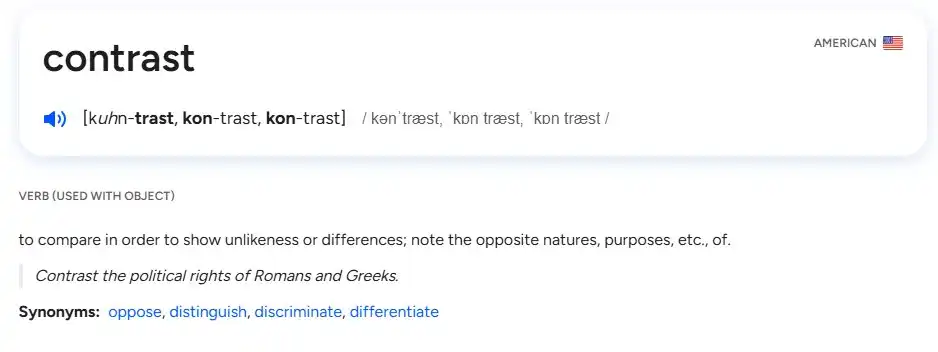
Contrast simply means something is different from what came before.

Yes, it's that simple.

It doesn't require:

Flowery language,

Unexpected plot twists,

Or background music.

At its core, contrast is a transformation, such as:

From "before" to "after"

From "expectation" to "reality"

From "belief" to "realization"

Without this transformation, your content is just information.

Yes, it might be useful, but memorable? Hmm... unlikely.

Why does a lack of contrast make content weak?

The Web3 world is full of:

Features, data, promises, roadmaps......

But most content is presented too straightforwardly:

"This is what it does."

"These are its benefits."

"This is why you should care."

However, the brain isn't interested in this linear information.

It wakes up when something unexpected happens.

Why Content Loses Appeal Without Contrast

The Web3 world is flooded with:

Features, data, promises, roadmaps......

But most content is presented too directly:

"This is its function."

"Why it's good."

"Why you need to care about it."

Yet, the brain isn't activated by this linear information.

It only wakes up when something unexpected occurs.

A Simple Example of "Contrast"

(You've definitely seen this countless times)

Expression without contrast:

Solana has fast transactions and low costs.

Your brain responds: Okay... and?

Expression with contrast:

I clicked send, switched tabs, and only then realized the transaction was already complete.

The same idea, but with a completely different impact.

The second expression creates a "moment." Get it?

Why Does "Contrast" Feel Uncomfortable?

(And why this matters)

Contrast often requires you to admit:

You were wrong, you were confused, you underestimated something.

That's why most people avoid it.

But this discomfort is precisely what makes content feel authentic.

People don't like flawless things.

They connect more easily with relatability and vulnerability.

When someone thinks: "Wait... I've felt that way too."

Congratulations, you've succeeded.

How to Add "Contrast" to Your Content?

Before publishing, ask yourself one question:

"What changed here?"

If you can't answer, try adding one of the following:

  • A mistaken assumption you once had

  • A moment of hesitation

  • An unexpected result

  • A "small decision" you almost didn't make

It really doesn't need a dramatic plot.

You just need a bit of relatable change.

Weirdo's Summary

Don't get me wrong, creativity does play an important role in storytelling.

But not everyone is born creative. This article is specifically for those who genuinely want to learn storytelling techniques.

Its core is: being sincere enough to show "transformation."

In the complex and noisy world of Web3,

"Contrast" is how you stand out without having to shout :)

Remember to follow me, or else you'll... (Content here does not comply with Mainland China norms, suggested deletion).


Пов'язані питання

QAccording to the article, what is the main reason most Web3 content creators struggle with storytelling?

AThe main reason is not a lack of creativity, but that their content lacks contrast.

QWhat is the article's definition of 'contrast' in the context of storytelling?

AContrast is defined as something that is different from what came before it, representing a transformation such as from 'before' to 'after' or from 'expectation' to 'reality'.

QWhy does the brain find content without contrast unengaging?

AThe brain is not activated by straightforward, linear information; it is awakened when something unexpected happens.

QWhat is one reason that using contrast in content can feel uncomfortable for the creator?

AIt often requires admitting that you were wrong, confused, or that you underestimated something.

QWhat is a simple question the article suggests creators ask themselves to add contrast to their content?

AAsk: 'What changed here?' and if you can't answer, add elements like a past mistaken assumption, a moment of hesitation, or an unexpected result.

Пов'язані матеріали

Three Frameworks for Ordinary People to Achieve AI Capability Leap: Say Goodbye to the Dilemma of 'Repeating Inputs Every Day'

Summary: This article outlines three frameworks for maximizing AI efficiency, moving beyond basic prompt usage. 1. **Three-Layer Evolution**: Users progress from (1) **Prompt** (one-off instructions, reset each session), to (2) **Project** (context-aware within a specific project), to (3) **Skill** (permanent, auto-applied knowledge). Most users stagnate at the first layer, repeating the same instructions daily with no cumulative improvement. Skills transform the AI from a chat tool into a personalized work system. 2. **Transaction vs. Compound Interest Mindset**: Using prompts is a linear transaction—effort and output are 1:1, and stopping resets progress. Investing time in building Skills is compound interest; a small initial time investment pays continuous dividends, as each Skill permanently elevates the AI's baseline performance. 3. **Thin Harness, Fat Skills**: The system architecture should prioritize thick, well-defined Skills (90% of the value—containing processes, standards, and domain knowledge) and a thin "harness" (the minimal technical environment). Avoid over-engineering the toolchain while neglecting the AI's actual knowledge. Skills are permanent assets that automatically improve with model updates. The key takeaway: Identify tasks you repeat, encode them into Skills (using tools like Claude's Skill Creator), and shift focus from daily prompting to building a compounding, self-improving AI system.

marsbit9 хв тому

Three Frameworks for Ordinary People to Achieve AI Capability Leap: Say Goodbye to the Dilemma of 'Repeating Inputs Every Day'

marsbit9 хв тому

Торгівля

Спот
Ф'ючерси

Популярні статті

Як купити T

Ласкаво просимо до HTX.com! Ми зробили покупку Threshold Network Token (T) простою та зручною. Дотримуйтесь нашої покрокової інструкції, щоб розпочати свою криптовалютну подорож.Крок 1: Створіть обліковий запис на HTXВикористовуйте свою електронну пошту або номер телефону, щоб зареєструвати обліковий запис на HTX безплатно. Пройдіть безпроблемну реєстрацію й отримайте доступ до всіх функцій.ЗареєструватисьКрок 2: Перейдіть до розділу Купити крипту і виберіть спосіб оплатиКредитна/дебетова картка: використовуйте вашу картку Visa або Mastercard, щоб миттєво купити Threshold Network Token (T).Баланс: використовуйте кошти з балансу вашого рахунку HTX для безперешкодної торгівлі.Треті особи: ми додали популярні способи оплати, такі як Google Pay та Apple Pay, щоб підвищити зручність.P2P: Торгуйте безпосередньо з іншими користувачами на HTX.Позабіржова торгівля (OTC): ми пропонуємо індивідуальні послуги та конкурентні обмінні курси для трейдерів.Крок 3: Зберігайте свої Threshold Network Token (T)Після придбання Threshold Network Token (T) збережіть його у своєму обліковому записі на HTX. Крім того, ви можете відправити його в інше місце за допомогою блокчейн-переказу або використовувати його для торгівлі іншими криптовалютами.Крок 4: Торгівля Threshold Network Token (T)Легко торгуйте Threshold Network Token (T) на спотовому ринку HTX. Просто увійдіть до свого облікового запису, виберіть торгову пару, укладайте угоди та спостерігайте за ними в режимі реального часу. Ми пропонуємо зручний досвід як для початківців, так і для досвідчених трейдерів.

377 переглядів усьогоОпубліковано 2024.12.10Оновлено 2025.03.21

Як купити T

Обговорення

Ласкаво просимо до спільноти HTX. Тут ви можете бути в курсі останніх подій розвитку платформи та отримати доступ до професійної ринкової інформації. Нижче представлені думки користувачів щодо ціни T (T).

活动图片