In Web3 Storytelling Today, You Don't Need Creativity

深潮Опубліковано о 2025-12-29Востаннє оновлено о 2025-12-29

Анотація

In the Web3 space, many content creators struggle with storytelling not due to a lack of creativity, but because their content lacks contrast—the element that creates engagement and memorability. Contrast refers to a shift or change, such as moving from "before" to "after," "expectation" to "reality," or "belief" to "realization." Without this transformation, content remains flat and informational but fails to resonate. Web3 is filled with straightforward presentations of features, data, and promises, which often fail to capture attention because the human brain responds to unexpected or relatable changes. For instance, instead of stating "Solana is fast and cheap," a more effective approach would be: "I clicked send, switched tabs, and realized the transaction was already complete"—creating a moment of contrast that stands out. Embracing contrast often involves acknowledging personal mistakes, doubts, or unexpected outcomes, which can feel uncomfortable but adds authenticity and relatability. To incorporate contrast, creators should ask: "What changed here?" and include elements like past assumptions, moments of hesitation, or surprising results. Ultimately, contrast allows Web3 content to stand out in a noisy landscape without needing exaggerated creativity—just genuine, transformative storytelling.

Author:Noir

Compiled by: Deep Tide TechFlow

Most Web3 content creators think they are not good at storytelling because they feel they "lack creativity."

But friend, that is usually not the real issue.

In fact, the real problem is:

—Your content lacks contrast.

Hey, either the content:

sounds the same,

feels flat,

or has no variation.

And when nothing changes, there is no story to tell.

What is Contrast?
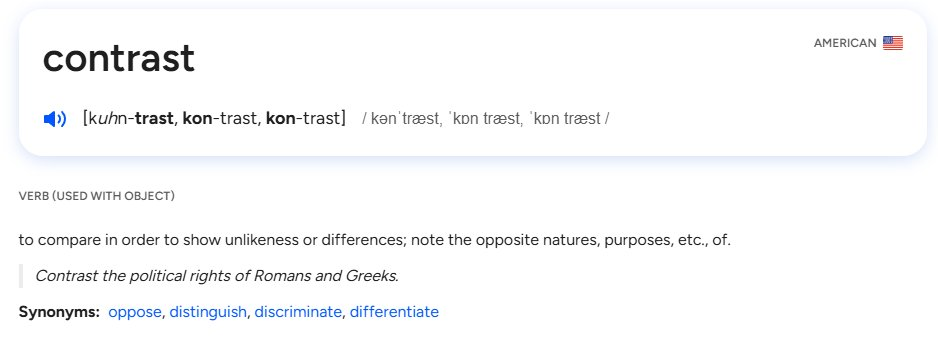
Contrast actually means something is different from previous content.

Yes, it's that simple.

It doesn't require:

flowery language,

surprising plot twists,

or background music.

Essentially, contrast is a transformation, such as:

From "before" to "after"

From "expectation" to "reality"

From "belief" to "realization"

Without this transformation, your content is just information.

Yes, it might be useful, but memorable? Hmm... unlikely.

Why does a lack of contrast make content weak?

The Web3 world is full of:

features, data, promises, roadmaps......

But most content is presented too straightforwardly:

"This is what it does."

"These are its benefits."

"This is why you should care about it."

However, the brain isn't interested in this linear information.

It wakes up when something unexpected happens.

Why Content Loses Appeal Without Contrast

The Web3 world is filled with:

features, data, promises, roadmaps......

But most content is presented too straightforwardly:

"This is its function."

"Why it's good."

"Why you need to care about it."

However, the brain isn't activated by this linear information.

It only wakes up when something unexpected happens.

A Simple Example of "Contrast"

(You must have seen it countless times)

Expression without contrast:

Solana has fast transactions and low costs.

Your brain responds: Okay... so what?

Expression with contrast:

I clicked send, switched pages, and then realized the transaction was already completed.

The same idea, but with a completely different impact.

The second expression creates a "moment." Got it?

Why Does "Contrast" Feel Uncomfortable?

(And why this matters)

Contrast often requires you to admit:

You were wrong, you were confused, you underestimated something.

That's why most people avoid it.

But this discomfort is precisely what makes content feel authentic.

People don't like flawless things.

They connect more easily with resonance and vulnerability.

When someone thinks: "Wait... I've felt that way too."

Congratulations, you've succeeded.

How to Add "Contrast" to Your Content?

Before publishing, ask yourself one question:

"What changed here?"

If you can't answer, try adding:

  • A mistaken assumption you once had

  • A moment of hesitation

  • An unexpected result

  • A "small decision" you almost didn't make

It really doesn't require a dramatic plot.

You just need a bit of relatable change.

Weirdo's Summary

Don't get me wrong, creativity does play an important role in storytelling.

But not everyone is born creative. This article is specifically for those who genuinely want to learn storytelling techniques.

Its core lies in: being sincere enough to show "transformation."

In the complex and noisy world of Web3,

"Contrast" is how you stand out without having to shout :)

Remember to follow me, or else... (Content here does not comply with Mainland China regulations, recommended to delete).


Пов'язані питання

QWhat is the main reason most Web3 content creators struggle with storytelling according to the article?

AThe main reason is not a lack of creativity, but rather that their content lacks contrast.

QWhat does 'contrast' in content creation refer to, as defined in the article?

AContrast refers to a change or transformation from one state to another, such as from 'before' to 'after', 'expectation' to 'reality', or 'belief' to 'realization'.

QWhy does the absence of contrast make content less engaging?

AWithout contrast, content becomes straightforward information that fails to activate the brain, which is only awakened by unexpected or surprising elements.

QHow can a content creator add contrast to their work, based on the article's advice?

ABy incorporating elements like a past mistaken assumption, a moment of hesitation, an unexpected result, or a small decision that was almost not made.

QWhat emotional quality does contrast often introduce, and why is this beneficial?

AContrast often introduces discomfort through vulnerability or admitting being wrong, which makes the content feel more authentic and relatable to the audience.

Пов'язані матеріали

Why Do You Always Lose Money on Polymarket? Because You're Betting on News, While the Pros Read the Rules

Why do you always lose money on Polymarket? Because you bet on news, while the pros study the rules. This article explains how top traders ("che tou") profit by meticulously analyzing market rules, not just predicting events. Polymarket, a prediction market platform, often sees disputes over event outcomes due to ambiguous rule wording. For instance, a market asking "Who will be the leader of Venezuela by the end of 2026?" was misinterpreted by many who bet on Delcy Rodríguez, assuming she held power. However, the rules specified "officially holds" as the formally appointed, sworn-in individual. Since Nicolás Maduro was still recognized as president officially, he won the market—even being in prison. To resolve such disputes, Polymarket uses a decentralized arbitration system via UMA protocol. The process involves: 1. Proposal: Anyone can propose a market outcome by staking 750 USDC, earning 5 USDC if unchallenged. 2. Dispute: A 2-hour window allows challenges with a 750 USDC stake; successful challengers earn 250 USDC. 3. Discussion: A 48-hour period on UMA Discord for evidence and debate. 4. Voting: UMA token holders vote in two 24-hour phases (blind then public). Outcomes require >65% consensus and 5M tokens voted; otherwise, four re-votes occur before Polymarket intervention. 5. Settlement: Results are final and automatic. Unlike traditional courts, Polymarket’s system lacks separation between arbitrators and stakeholders—voters often hold market positions, creating conflicts of interest. This leads to herd mentality in discussions and non-transparent outcomes without explanatory rulings, preventing precedent formation. Thus, success on Polymarket hinges on deep rule interpretation, not just event prediction, exploiting gaps between reality and contractual wording.

marsbit2 год тому

Why Do You Always Lose Money on Polymarket? Because You're Betting on News, While the Pros Read the Rules

marsbit2 год тому

DeepSeek Funding: Liang Wenfeng's 'Realist' Pivot

DeepSeek, a leading Chinese AI company, has initiated its first external funding round, aiming to raise at least $300 million at a valuation of no less than $10 billion. This move marks a significant shift from its founder Liang Wenfeng’s previous idealistic stance of rejecting external capital to maintain independence. Despite strong financial backing from its parent company, quantitative trading firm幻方量化 (Huanfang Quant), which provided an estimated $700 million in revenue in 2025 alone, DeepSeek faces mounting challenges. Key issues include a 15-month gap in major model updates, delays in its flagship V4 release, and the loss of several core researchers to competitors offering significantly higher compensation. The company is also undergoing a strategic pivot by migrating its infrastructure from NVIDIA’s CUDA to Huawei’s Ascend platform, a move aligned with China’s push for technological self-reliance amid U.S. export controls. However, DeepSeek lags behind rivals like智谱AI and MiniMax—both now publicly listed—in areas such as product ecosystem, multimodal capabilities, and commercialization. The funding round, though relatively small in scale, is seen as a way to establish a market-validated valuation anchor, making employee stock options more competitive and facilitating talent retention. It also signals DeepSeek’s transition from a pure research-oriented organization to a commercially-driven player in the global AI ecosystem.

marsbit3 год тому

DeepSeek Funding: Liang Wenfeng's 'Realist' Pivot

marsbit3 год тому

Торгівля

Спот
Ф'ючерси

Популярні статті

Як купити T

Ласкаво просимо до HTX.com! Ми зробили покупку Threshold Network Token (T) простою та зручною. Дотримуйтесь нашої покрокової інструкції, щоб розпочати свою криптовалютну подорож.Крок 1: Створіть обліковий запис на HTXВикористовуйте свою електронну пошту або номер телефону, щоб зареєструвати обліковий запис на HTX безплатно. Пройдіть безпроблемну реєстрацію й отримайте доступ до всіх функцій.ЗареєструватисьКрок 2: Перейдіть до розділу Купити крипту і виберіть спосіб оплатиКредитна/дебетова картка: використовуйте вашу картку Visa або Mastercard, щоб миттєво купити Threshold Network Token (T).Баланс: використовуйте кошти з балансу вашого рахунку HTX для безперешкодної торгівлі.Треті особи: ми додали популярні способи оплати, такі як Google Pay та Apple Pay, щоб підвищити зручність.P2P: Торгуйте безпосередньо з іншими користувачами на HTX.Позабіржова торгівля (OTC): ми пропонуємо індивідуальні послуги та конкурентні обмінні курси для трейдерів.Крок 3: Зберігайте свої Threshold Network Token (T)Після придбання Threshold Network Token (T) збережіть його у своєму обліковому записі на HTX. Крім того, ви можете відправити його в інше місце за допомогою блокчейн-переказу або використовувати його для торгівлі іншими криптовалютами.Крок 4: Торгівля Threshold Network Token (T)Легко торгуйте Threshold Network Token (T) на спотовому ринку HTX. Просто увійдіть до свого облікового запису, виберіть торгову пару, укладайте угоди та спостерігайте за ними в режимі реального часу. Ми пропонуємо зручний досвід як для початківців, так і для досвідчених трейдерів.

339 переглядів усьогоОпубліковано 2024.12.10Оновлено 2025.03.21

Як купити T

Обговорення

Ласкаво просимо до спільноти HTX. Тут ви можете бути в курсі останніх подій розвитку платформи та отримати доступ до професійної ринкової інформації. Нижче представлені думки користувачів щодо ціни T (T).

活动图片












