In-Depth Analysis of Katana: What Happens to Your Funds When You Bridge from Ethereum to Layer 2?

marsbitОпубліковано о 2026-01-23Востаннє оновлено о 2026-01-23

Анотація

This report analyzes Katana, a Layer 2 solution that actively utilizes bridged assets instead of leaving them idle. Unlike typical L2s where assets are locked in bridge contracts, Katana deploys them into Ethereum lending protocols (via its Vault Bridge) to generate yield. This yield, along with 100% of net sequencer fees (Chain-owned Liquidity) and off-chain US Treasury yields from its native stablecoin AUSD, is reinvested into DeFi protocols to enhance incentives. Users only earn rewards by actively deploying assets (e.g., providing liquidity), not by holding them. Over 95% of Katana’s TVL is actively utilized in DeFi, far exceeding the industry average. The network partners with risk managers like Gauntlet to mitigate the added risks of this active capital strategy.

This report is authored by Tiger Research. What if bridged assets could be utilized? We conducted an in-depth analysis of Katana, a blockchain that never sleeps. It reinvests 100% of on-chain, off-chain yields and transaction fees back into DeFi.

Key Takeaways

  • Most Layer 2s lock bridged assets without using them. Katana deploys these assets into Ethereum lending protocols to generate yield, then redistributes the yield as incentives for DeFi protocols.
  • Storing assets in custody does not generate any returns. Users must deploy their capital into Katana's DeFi protocols to earn additional rewards.
  • As of Q3 2025, over 95% of Katana's TVL is actively deployed in DeFi protocols. This contrasts with most chains, where utilization rates range from 50% to 70%.
  • Katana reinvests 100% of net sequencer fee revenue into liquidity provisioning, maintaining stable trading conditions even during market volatility.

1. Why Capital Sits Idle

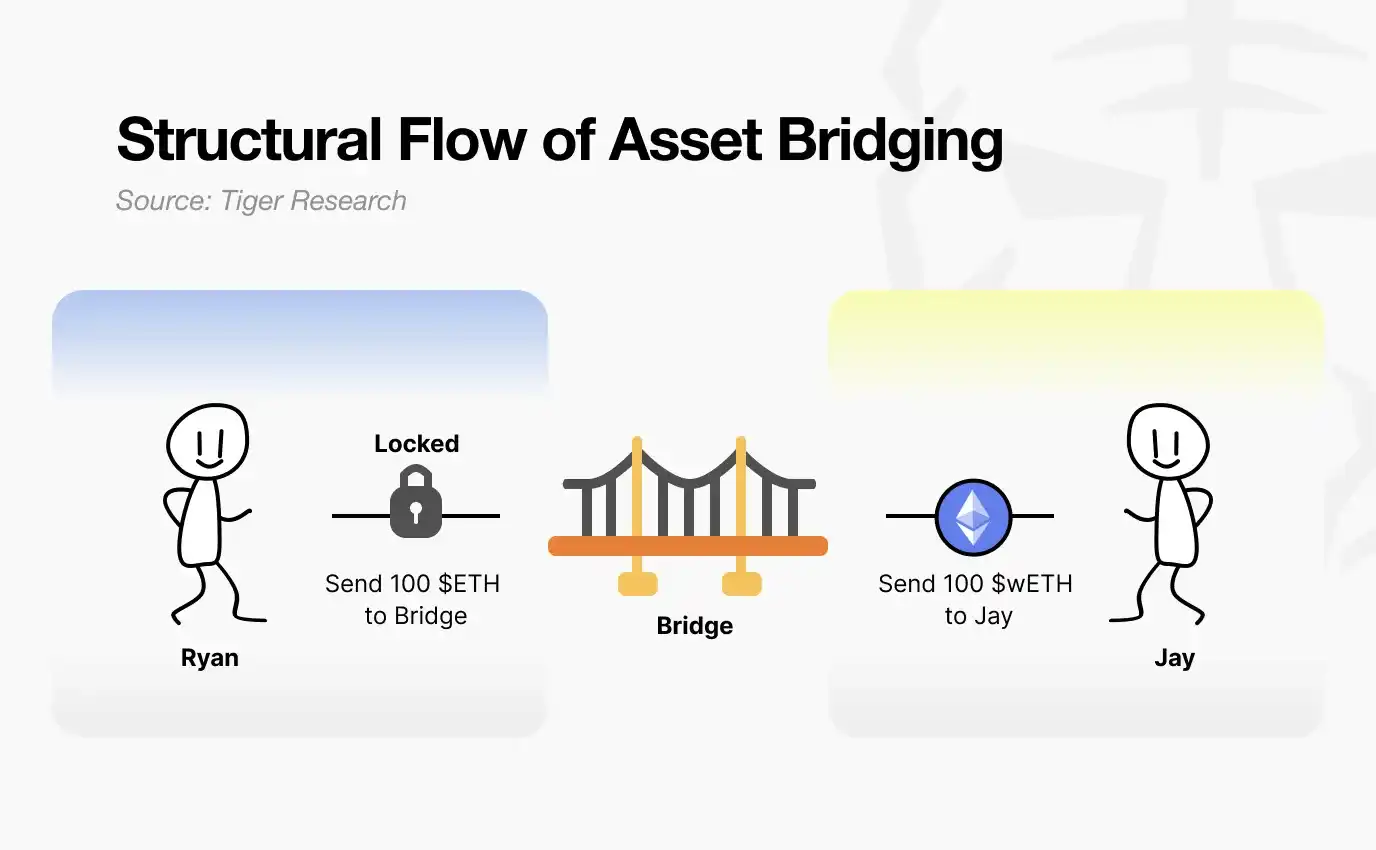
What happens to your funds when you bridge from Ethereum to Layer 2?
Source: Tiger Research

Most people think their assets are simply transferred. In reality, the process is closer to freezing. When you deposit assets into a bridge contract, the contract custodies them. The Layer 2 mints an equivalent amount of tokens. You can trade freely on the Layer 2, but your original assets on the mainnet remain locked and idle.
Source: Tiger Research

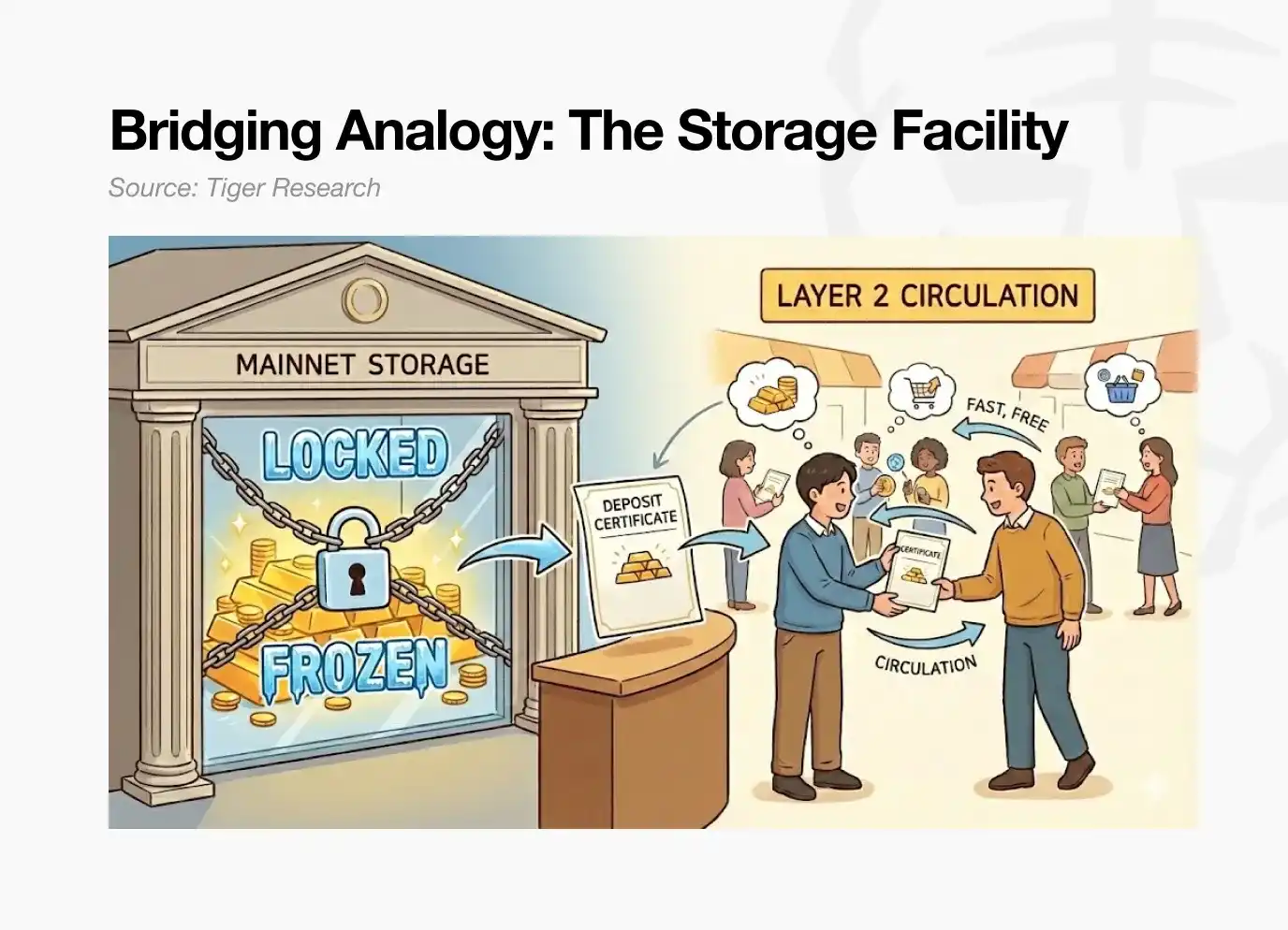
Consider a simple analogy. You store items in a storage facility and receive a claim ticket. This ticket can be transferred to someone else. But the items themselves remain in storage until you retrieve them.

This describes how most Layer 2 bridges work. The assets custodied in the Ethereum escrow contract do not generate any yield. They sit passively, waiting until users withdraw them back to the mainnet.

What if bridge deposits on the mainnet could earn DeFi yield, while you still get fast, low-cost transactions on the Layer 2?

Katana directly answers this question. Capital entering the bridge does not sit idle. It gets put to work.

2. How Katana Puts Capital to Work

Katana activates capital through three mechanisms:

  1. Bridged assets are deployed to Ethereum lending markets to generate yield.
  2. Transaction fee revenue is reinvested into liquidity pools.
  3. The native stablecoin, AUSD, captures US Treasury yield.

External capital is put to work, and capital generated on-chain is also put to work. These three mechanisms collectively eliminate idle assets on Katana.

2.1. Vault Bridge

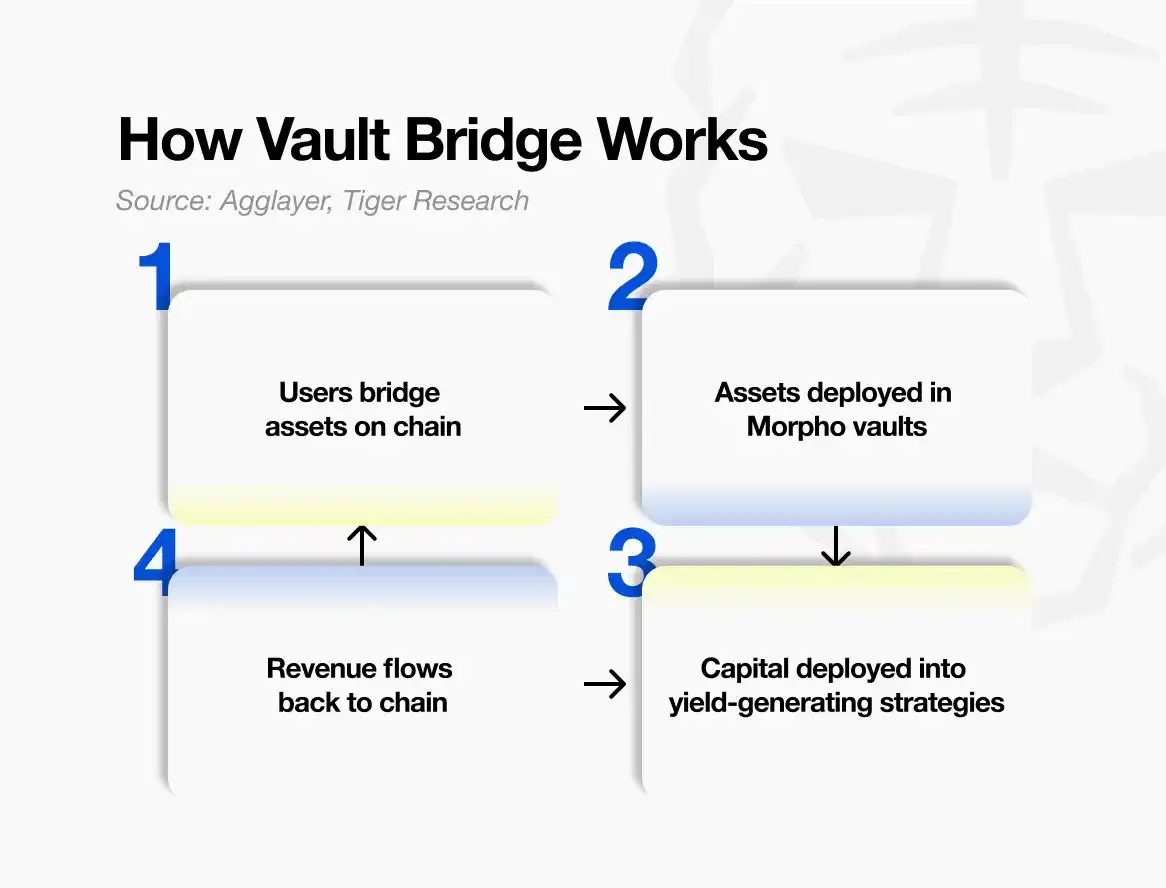
The first mechanism is the Vault Bridge. When users send assets to Katana, the original assets left on the Ethereum mainnet are deployed into lending markets to earn interest.
Source: Agglayer, Tiger Research

When you bridge USDC from Ethereum to Katana, these assets are not simply locked. On the Ethereum mainnet, they are deployed into curated vault strategies on Morpho, a leading lending protocol. The yield generated is not distributed directly to individual users but is instead collected at the network level and then redistributed as rewards to core DeFi markets on Katana.

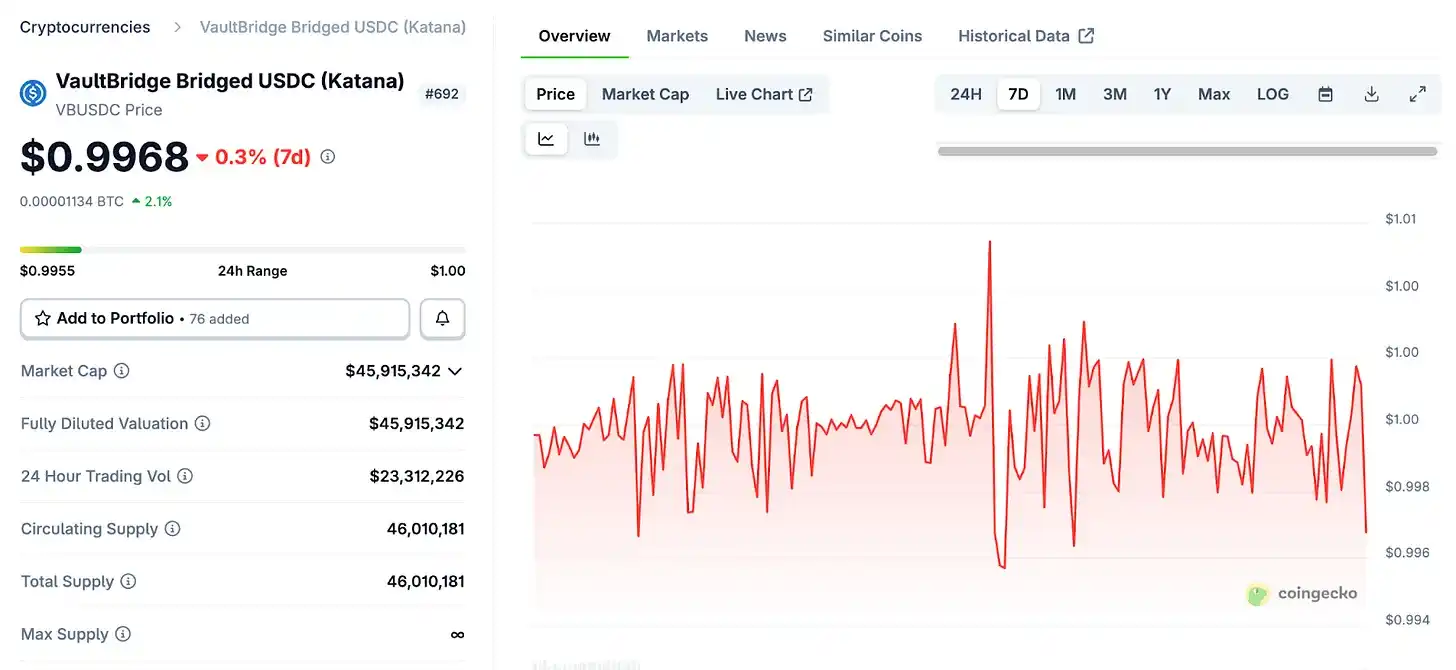
On Katana, users receive corresponding vbTokens, such as vbUSDC. This token can be used freely within Katana's DeFi ecosystem.

A common misconception needs clarification here. vbTokens are not comparable to staking derivatives like Lido's stETH. stETH automatically increases in value as staking rewards accumulate.
Source: Coingecko

The mechanism for vbTokens is entirely different. Holding vbUSDC in a wallet does not increase its quantity or price. The yield generated by the Vault Bridge on Ethereum does not flow to individual vbToken holders but to Katana's DeFi capital pools. This revenue is periodically distributed to the network to enhance incentive mechanisms for Sushi liquidity pools and Morpho lending markets.

Users only benefit by actively deploying their vbTokens. By supplying vbTokens to Sushi liquidity pools or lending strategies offered by platforms like Yearn, users can earn base yield plus additional rewards from the Vault Bridge. Simply holding vbTokens yields no return.

Katana rewards the active use of assets, not passive holding. Capital that moves gets rewarded; capital that sits idle does not.

2.2. Chain-owned Liquidity (CoL)

The second mechanism is Chain-owned Liquidity (CoL). Katana captures 100% of net sequencer fee revenue (i.e., transaction processing fees minus Ethereum settlement costs).

The Foundation uses this revenue to directly become a liquidity provider, supplying assets to Sushi trading pools and Morpho lending markets. This liquidity is owned and managed by the chain itself.

This creates a self-reinforcing cycle. As users transact on Katana, sequencer fees accumulate. These fees are converted into chain-owned liquidity, further deepening the pools. Slippage decreases, borrowing rates stabilize, and the user experience improves. A better experience attracts more users, generating more fees. The cycle repeats.

In theory, this structure is particularly effective during market downturns. External liquidity is highly mobile and often flees quickly during market stress. In contrast, chain-owned liquidity is designed to remain in place, allowing pools to continue functioning and absorb market shocks more effectively.

In practice, this places Katana in stark contrast to most DeFi systems that rely on token emissions to incentivize external capital. By directly maintaining its own liquidity, the network aims for more stable and sustainable operations.

2.3. AUSD Treasury Yield

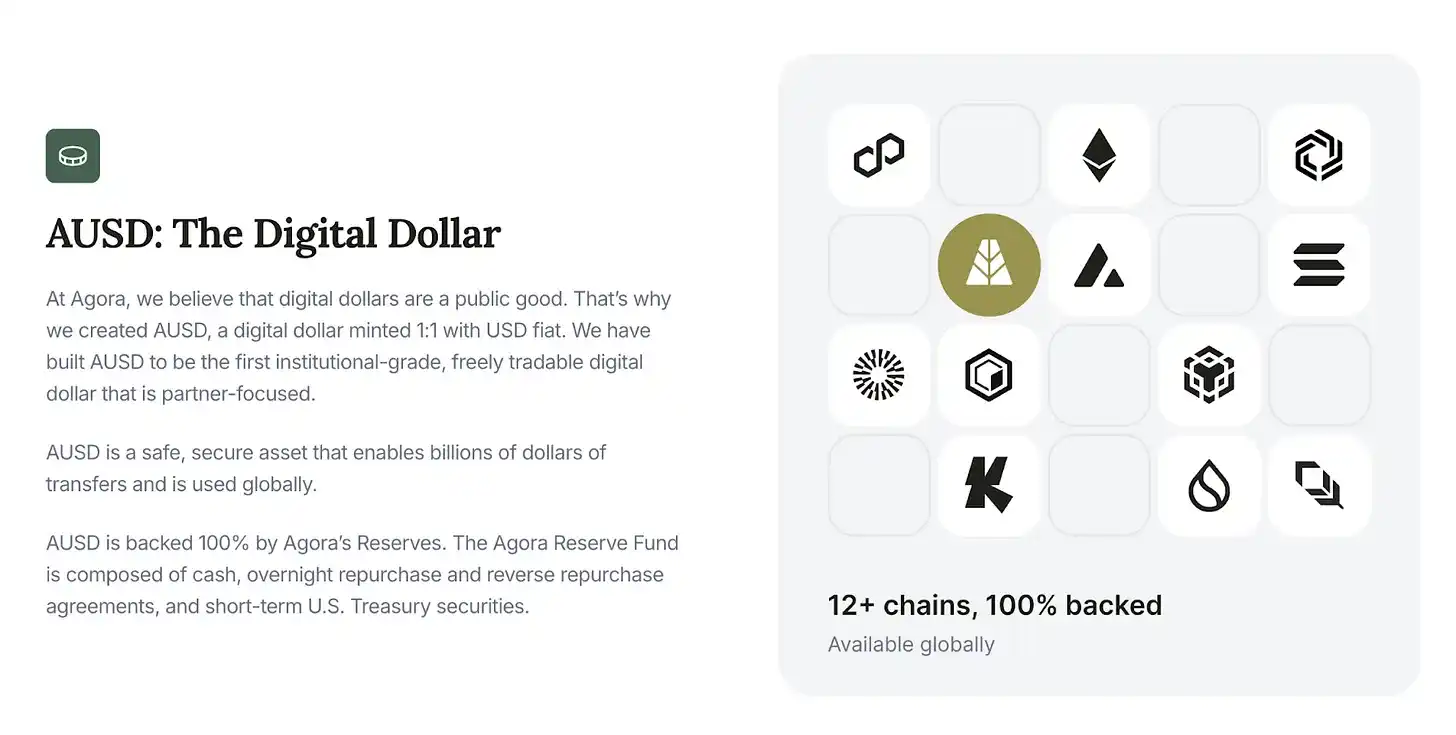
The third mechanism is AUSD, Katana's native stablecoin. AUSD is backed by US Treasuries, and the off-chain yield generated from these Treasury holdings flows into the Katana ecosystem.
Source: Agora

AUSD is issued by Agora. The collateral backing AUSD is invested in physical US Treasuries. Interest earned from these Treasuries accumulates off-chain and is then periodically channeled to the Katana network to enhance incentive mechanisms for pools denominated in AUSD.

If the Vault Bridge brings on-chain yield, then AUSD brings off-chain yield. These two revenue sources are fundamentally different. Vault Bridge yield fluctuates with Ethereum DeFi market conditions, while AUSD yield is tied to US Treasury rates, offering relative stability.

This diversifies Katana's revenue structure. When on-chain markets are volatile, off-chain yield provides a buffer; when on-chain yields are low, Treasury returns support the overall yield. This structure spans both the crypto market and traditional finance.

3. Locking Capital vs. Putting Capital to Work

As mentioned earlier, most existing cross-chain bridges choose to simply lock assets for a reason—security. When assets don't move, the system design remains simple, and the attack surface is limited. Most Layer 2 networks adopt this approach. While secure, the capital sits idle.

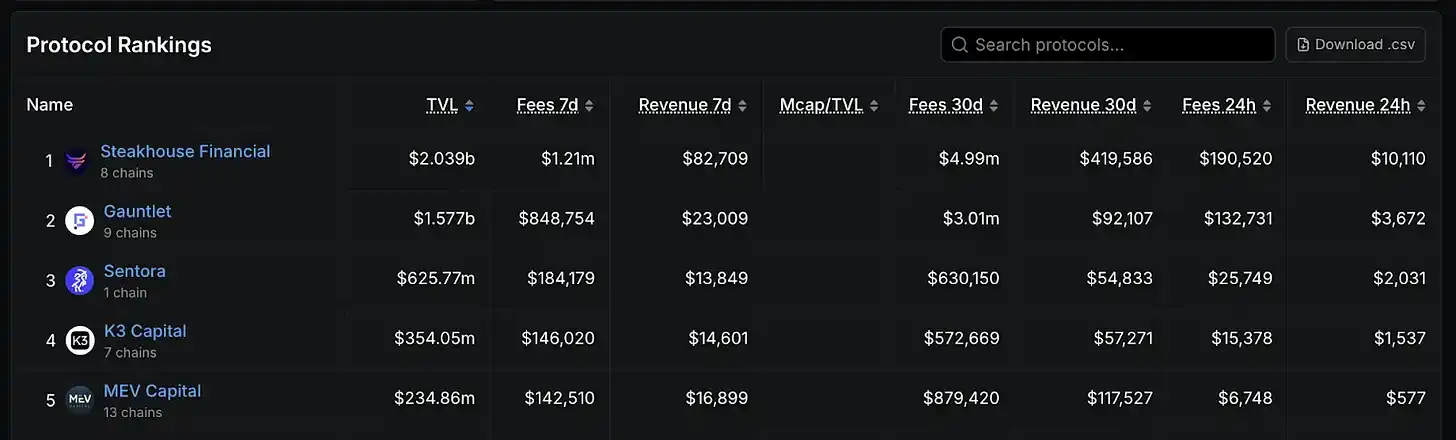
Katana takes the opposite stance. Activating idle assets introduces additional risk, and Katana is very transparent about this trade-off. Instead of avoiding risk, the network partners with established risk management experts in the DeFi space, including firms like Gauntlet and Steakhouse Financial.
Source: DefiLlama

Gauntlet and Steakhouse Financial are seasoned risk management firms in DeFi, with extensive experience setting parameters for major lending protocols and advising top DeFi projects. Their role is akin to professional asset managers in traditional finance, responsible for assessing which protocols to allocate capital to, determining appropriate position sizes, and continuously monitoring risk exposure.
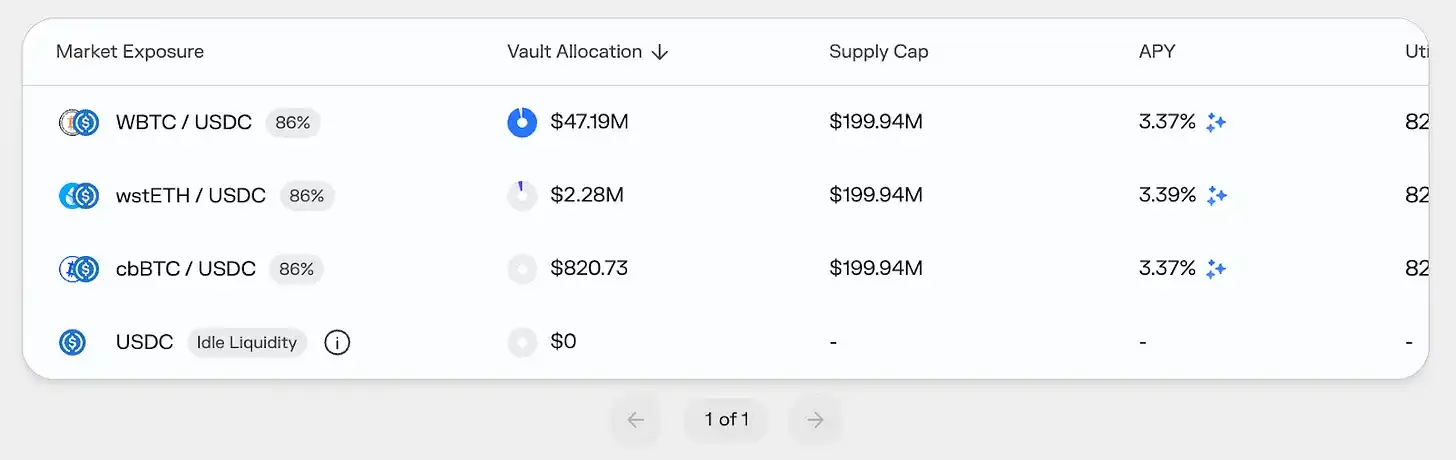
Source: Morpho

No financial system offers 100% security, so concerns about residual risk are valid.

However, Katana partners with top-tier risk managers and maintains a conservative vault architecture. An internal risk committee oversees operations. Additional safety measures include multiple protective mechanisms, such as liquidity buffers provided by Cork Protocol.

4. The DeFi Utopia Katana is Building

The current DeFi market suffers from liquidity fragmentation. Pools trading the same assets are scattered across different chains and protocols, which reduces execution efficiency, increases slippage, and lowers capital utilization. Some users profit from these inefficiencies through arbitrage, but most users bear higher costs.

Katana addresses this problem at a systemic level.

The Vault Bridge and Chain-owned Liquidity concentrate liquidity into core protocols. The result is improved trade execution, reduced slippage, and more stable borrowing rates. Most importantly, yield from idle assets on the Ethereum mainnet is layered on top of the base yield, increasing the overall APY.
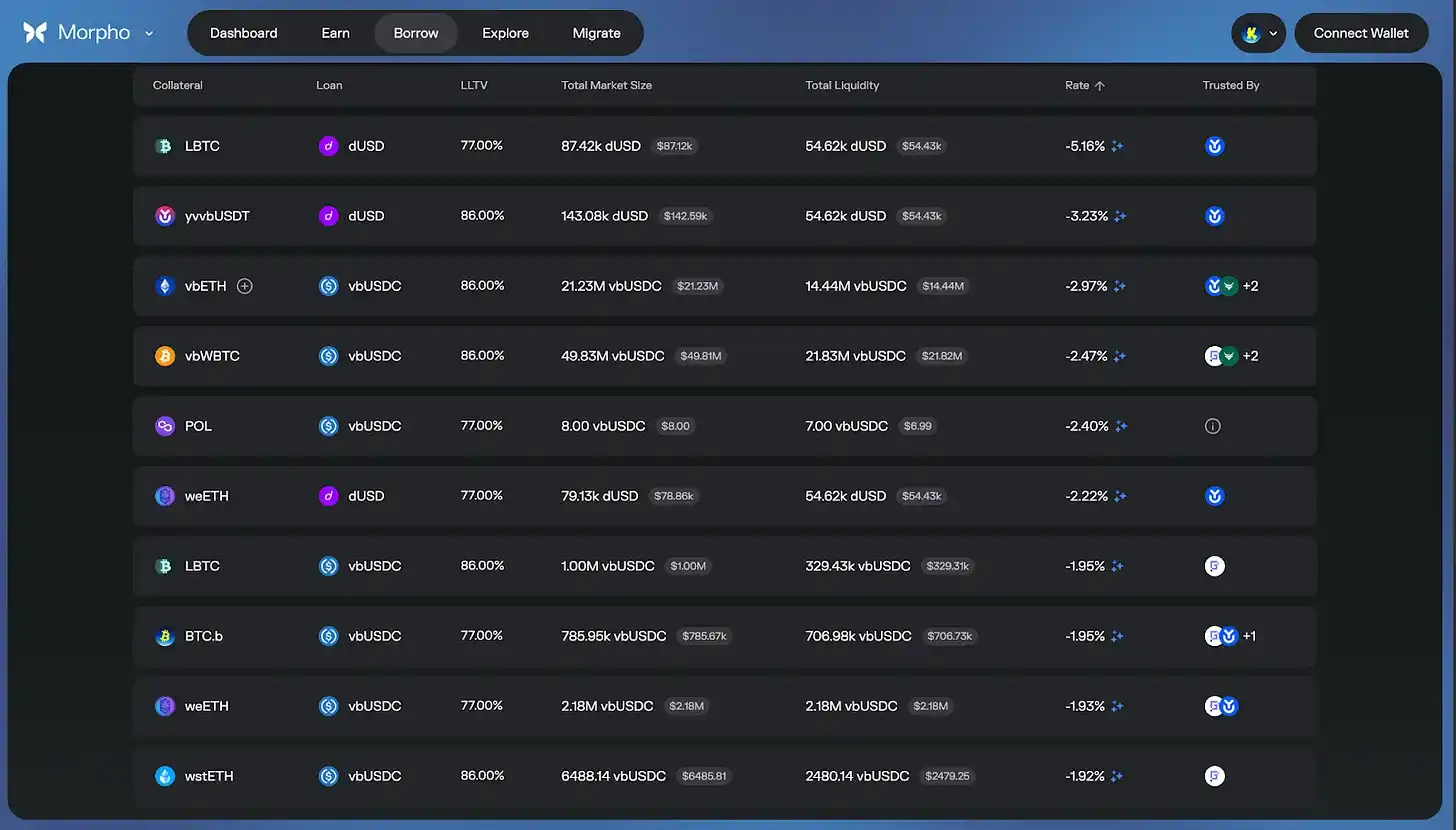
Source: Morpho

Katana's incentive structure can also significantly reduce the real cost of borrowing at specific times, even creating negative rates depending on market conditions and reward programs. This is because yields from the Vault Bridge, CoL, and AUSD are all reinvested into core markets. It's important to note, however, that these are incentive-driven outcomes that vary with market conditions.

This is why, as of Q3 2025, over 95% of Katana's TVL is actively deployed in DeFi protocols. In contrast, most chains see capital utilization rates between only 50% and 70%. Ultimately, Katana is building a chain where capital never sleeps, a system that truly rewards actual usage.

Katana never sleeps.

Трендові криптовалюти

Пов'язані питання

QWhat is the key difference between how Katana handles bridged assets compared to most Layer 2 solutions?

AMost Layer 2 solutions simply lock bridged assets in a custodial contract on Ethereum, leaving them idle. Katana, however, actively deploys these assets into Ethereum's DeFi lending protocols (like Morpho) to generate yield, which is then redistributed to incentivize its own DeFi ecosystem.

QWhat is a vbToken and how does it differ from a staking derivative like stETH?

AA vbToken (e.g., vbUSDC) is a representation of an asset bridged to Katana. Unlike stETH, which automatically increases in value as staking rewards accrue, holding a vbToken does not generate any individual rewards. The yield from the underlying asset is collected at the network level and used to boost incentives in Katana's DeFi pools. Users must actively deploy their vbTokens (e.g., in liquidity pools) to earn rewards.

QWhat are the three main mechanisms Katana uses to activate capital and prevent it from being idle?

A1. Vault Bridge: Deploys bridged assets on Ethereum to lending markets to generate yield. 2. Chain-owned Liquidity (CoL): Reinvests 100% of net sequencer fee revenue back into liquidity pools (e.g., on Sushi) and lending markets. 3. AUSD Treasury Yield: The native stablecoin AUSD is backed by US Treasuries, and the off-chain yield from these assets is funneled into the Katana ecosystem to boost incentives.

QHow does Katana's Chain-owned Liquidity (CoL) mechanism create a self-reinforcing cycle?

ACoL uses 100% of the net sequencer fees (transaction fees minus Ethereum settlement costs) to provide liquidity to core DeFi protocols like Sushi and Morpho. This deepens the liquidity, which reduces slippage and stabilizes borrowing rates, leading to a better user experience. This attracts more users, who generate more fees, which are then reinvested as liquidity, continuing the cycle.

QHow does Katana manage the additional risk introduced by actively deploying bridged capital instead of simply locking it?

AKatana manages this risk by partnering with established DeFi risk management experts like Gauntlet and Steakhouse Financial. These firms act like professional asset managers, assessing which protocols to use, determining appropriate position sizes, and continuously monitoring risk exposure. An internal risk committee also oversees operations, and additional safety measures like liquidity buffers from Cork Protocol are in place.

Пов'язані матеріали

Two Legends Lost in Three Days: Is Google's AI Talent Dam Cracking?

In three days, Google lost two AI legends. On June 18, Noam Shazeer, co-author of the seminal "Attention is All You Need" paper and Gemini co-lead, left for OpenAI. Just 48 hours later, John Jumper, 2024 Nobel laureate and AlphaFold lead, departed DeepMind for Anthropic. This follows Andrej Karpathy joining Anthropic in May. These moves highlight a structural trend: top AI talent is concentrating at mission-driven, pre-IPO firms like OpenAI and Anthropic, while Google becomes a primary source. The exodus stems from a core mission mismatch. Google's ad-centric model often subordinates AI research to product and revenue goals, creating friction for pioneers like Shazeer, who returned in 2024 only to leave again. In contrast, OpenAI and Anthropic offer singular focus on pushing AI boundaries, whether towards AGI or safety-aligned models, which deeply appeals to top researchers like Jumper. Financial incentives amplify the pull. With both OpenAI and Anthropic nearing IPO, employees stand to gain immensely from equity, an upside Google's mature stock cannot match. Furthermore, the 2023 merger of Google Brain and DeepMind, intended to consolidate strength, has instead created cultural tension and slowed the path from research to product, as evidenced by Gemini's pace. This talent redistribution is reshaping the AI landscape. While Google retains vast data and compute resources, its true crisis is the quiet, continuous loss of the people who define the field's future. The real moat in AI is not infrastructure, but the concentration of brilliant minds—a battle Google is currently losing.

marsbit36 хв тому

Two Legends Lost in Three Days: Is Google's AI Talent Dam Cracking?

marsbit36 хв тому

Behind the AI Report Card, Lies a Chinese 'Exam Setter'

Beyond the familiar performance charts like MMLU-Pro and MMMU, which major AI models strive to ace, stands a key "examiner": Chinese-Canadian researcher Wenhu Chen. An assistant professor at the University of Waterloo and founder of TIGERLab, Chen addresses the crucial need for more rigorous AI evaluation. As models like GPT-4 began scoring near-perfect results on older benchmarks like MMLU, it became difficult to distinguish their true capabilities. In response, Chen introduced MMLU-Pro in 2024, featuring harder, more reasoning-focused questions with more answer choices, successfully reintroducing meaningful performance gaps. His work extends to multi-modal evaluation with MMMU and its enhanced version, MMMU-Pro. These benchmarks test a model's ability to understand and reason with complex information from images, charts, and text across diverse academic subjects, exposing the significant challenges even top models face in genuine comprehension. Chen's background in complex QA, table reasoning, and his experience at Google DeepMind on projects like Gemini inform his approach. He understands that effective benchmarks must anticipate how models might "cheat" by memorizing data or avoiding visual analysis. His lab also actively researches video understanding and generation models (e.g., UniVideo, Vamba), ensuring his evaluation work is grounded in practical model-building challenges. Now at Meta's Super Intelligence Lab, Chen continues his focus on multi-modal data and evaluation, representing the deep yet often unseen contributions of Chinese talent in shaping the fundamental tools of the AI industry.

marsbit48 хв тому

Behind the AI Report Card, Lies a Chinese 'Exam Setter'

marsbit48 хв тому

Alliance Co-founder's Letter to Entrepreneurs: Written at the Moment Cursor Sold for $600 Billion

Alliance Co-founder's Letter to Entrepreneurs: On Cursor's $60 Billion Sale Many aspiring founders see massive exits like Cursor's $60B sale and wonder why they can't achieve the same, often concluding opportunities are exhausted. But great companies aren't built in obvious, crowded spaces. Cursor, like Stripe, Figma, and Shopify before it, started with a non-consensus belief about the future. Before ChatGPT, they believed AI would transform knowledge work. They focused on a genuinely exciting domain, became their own customer, and obsessed over power users. Their journey involved years of "glass-chewing" effort before the market was ready. The pattern is consistent: identify a long-term technological shift, find a missed entry point, and execute for years before the trend becomes obvious. First-generation products (PayPal, Adobe, Amazon) prove a market exists. Second-generation winners (Stripe, Figma, Shopify) rebuild that market around new insights, technology, or changing customer behaviors. Founders must identify their phase in the cycle. Early entrants like Coinbase or Cursor focus on making new technology usable for power users. Later entrants find the "yin" to the established "yang"—the blind spots incumbents miss as they grow distant from individual users. The key is deep market immersion. Use every product in your space. Talk to users. Build an audience. Stop looking for ideas and start *seeing* them everywhere. Then, choose one. The idea must offer a 10x improvement or solve a "hair-on-fire" pain point—something severe enough that users are already crafting workarounds. When building, avoid feature bloat. Ask: why would someone switch? Great startups rarely force new behaviors; they improve familiar workflows with drastically lower friction (e.g., Cursor forked VS Code instead of creating a new editor). Distribution is the underestimated moat. Before product-market fit, achieve distribution-market fit. How do customers discover new tools? Founders like those at Airbnb, Stripe, and Cursor did unscalable, manual work to recruit early users. The final, unteachable ingredient is resilience. Cursor built for years pre-market, faced rejection, and persisted. So did Airbnb, Nvidia, and Rain (which launched post-FTX collapse). The lesson isn't that these founders were smarter, but that they stayed in the game long enough for their insights to compound. Framework: Spot technological cycles. Cultivate unique insight. Obsess over your market. Talk to customers. Find a hair-on-fire problem. Build the simplest wedge. Win your distribution channel. Above all, don't quit when it gets hard. Most people won't do these things consistently. The few who do build the next generation of great companies. Go build.

marsbit52 хв тому

Alliance Co-founder's Letter to Entrepreneurs: Written at the Moment Cursor Sold for $600 Billion

marsbit52 хв тому

Weekly Editor's Picks (0613-0619)

Weekly Editor's Picks (0613-0619): Market Insights & Analysis This weekly digest curates in-depth analysis often lost in the information flow, focusing on key insights across macro trends, investment, and technology. **Macro & Geopolitics:** With the Strait of Hormuz reopening and military conflict shifting to negotiation, markets are pivoting from "war shock" to "supply restoration." Trades include shorting crude risk premiums, longing airlines/tourism, Asian energy importers, and bond duration, while shorting inflation expectations. LNG, fertilizer, and chemical chains are also being repriced. **Investment & VC:** Ray Dalio advises against betting on concentrated AI giants dominating indices, advocating for diversified portfolios of high-quality, low-correlation assets instead. Analysis covers the 4-year crypto cycle, predicting the core surviving product by 2029 will be asset trading markets. Current BTC metrics suggest a potential bottoming zone, presenting a patient accumulation window. SpaceX's high-profile IPO at a $2.1T valuation faces scrutiny over fundamentals, with key watchpoints being its likely inclusion in the Nasdaq index and Q2 earnings. Concerns are raised about potential "gamma squeeze" and systemic risks if its narrative-driven valuation gets amplified by passive index funds. Robinhood (HOOD) is noted for breaking its high correlation with crypto, bolstered by its stock trading and new underwriting business. **Web3 & AI:** A warning highlights ~$1.8T in off-balance-sheet AI infrastructure commitments (purchase commitments, leases) as a potential systemic risk if AI monetization lags. AI models are being used for World Cup predictions, adding a new layer for betting markets. A cost breakdown of a $20 AI subscription reveals the supply chain from model companies to cloud, GPUs, and power. **Prediction Markets:** The emergence of prediction market "concept stocks" is noted, with Robinhood developing its own platform, Rothera, signaling a shift from market competition to a "channel war" for user access. **CeFi & DeFi:** The SpaceX IPO tested perpetual contract mechanisms for pre-IPO assets, highlighting challenges in handling corporate actions like stock splits on-chain. The de-pegging of STRC (Strategy's preferred share) to ~$89 reflects market concerns over MicroStrategy's capital structure and BTC-backed leverage model. BlackRock's covered-call Bitcoin ETF (BITA) offers yield but caps upside, appealing to yield-seeking institutions. **Ethereum:** An opinion piece argues Ethereum's core strength is its vast developer community and composability, solidifying its role as the default operating system for the financial internet. **Weekly Hot Topics:** Include the US-Iran deal reopening the Strait of Hormuz, Fed's hawkish hold, Anthropic restricting model access, SpaceX acquiring Cursor, and a humorous stock surge for "Liuliumei" due to its "LLM" ticker.

marsbit57 хв тому

Weekly Editor's Picks (0613-0619)

marsbit57 хв тому

Alliance's Co-Founder's Letter to Entrepreneurs: Written on the Occasion of Cursor's $60 Billion Sale

In this letter to entrepreneurs, Alliance reflects on the success of Cursor's $60 billion sale to Elon Musk, using it as a case study to counter the misconception that opportunities in crowded fields like AI or crypto are exhausted. The piece argues that great companies like Cursor, Stripe, Figma, and Shopify are not built by geniuses with perfect ideas, but by founders who start with a non-consensus belief about the future and build for years before that future becomes obvious to everyone. They identify long-term shifts, find overlooked entry points, and execute relentlessly. The framework for success involves: 1. **Identifying your place in the technology cycle**: Early-stage opportunities focus on making new tech usable for power users (e.g., Coinbase, Cursor). Later-stage opportunities involve finding the "yin" to an existing "yang"—the blind spots of first-generation players (e.g., Stripe vs. PayPal, Figma vs. Adobe). 2. **Cultivating unique insights**: Immerse yourself deeply in the market. Use every product, talk to users, and build an audience. Insights will emerge naturally from deep engagement. 3. **Finding a "hair-on-fire" problem**: Look for a 10x improvement or a severe, urgent pain point. The strongest signal is people already building clumsy workarounds. 4. **Building a focused MVP**: Don't just add features because you can. Ask why users would abandon their current tool for yours. The best startups rarely force new behaviors; they improve familiar workflows with drastically lower friction. 5. **Winning a distribution channel**: Distribution is often the moat. Before product-market fit, achieve channel-market fit. Find where your customers are and build an engine to reach them, even through unscalable, manual efforts initially. 6. **Persistence**: The final, unteachable ingredient is resilience. Success stories like Cursor, Airbnb, and Nvidia involved years of grinding, rejection, and perseverance when the path forward seemed unclear. The conclusion is that there is no secret. Most people fail to consistently execute these steps over the long term. The few who do build the companies that define the next era. The world is yours to create.

链捕手1 год тому

Alliance's Co-Founder's Letter to Entrepreneurs: Written on the Occasion of Cursor's $60 Billion Sale

链捕手1 год тому

Торгівля

Спот
Ф'ючерси

Популярні статті

Що таке ETH 2.0

ETH 2.0: Нова ера для Ethereum Вступ ETH 2.0, широко відомий як Ethereum 2.0, є величезним оновленням для блокчейну Ethereum. Ця трансформація не є лише косметичною зміною; вона має на меті фундаментально покращити масштабованість, безпеку та сталий розвиток мережі. З переходом від енергомісткого механізму консенсусу Proof of Work (PoW) до більш ефективного Proof of Stake (PoS), ETH 2.0 обіцяє трансформаційний підхід до екосистеми блокчейнів. Що таке ETH 2.0? ETH 2.0 — це збірка особливих, взаємопов’язаних оновлень, спрямованих на оптимізацію можливостей та продуктивності Ethereum. Це перетворення розроблене для вирішення критичних викликів, з якими стикалося існуюче механізм Ethereum, зокрема щодо швидкості транзакцій та заторів у мережі. Мета ETH 2.0 Основні цілі ETH 2.0 зосереджені на покращенні трьох ключових аспектів: Масштабованість: Мета — значно підвищити кількість транзакцій, які мережа може обробити за секунду; ETH 2.0 прагне вийти за межі поточного обмеження приблизно в 15 транзакцій на секунду, потенційно досягнувши тисяч. Безпека: Підвищені заходи безпеки є невід’ємною частиною ETH 2.0, зокрема через покращену стійкість до кібератак і збереження децентралізованої етики Ethereum. Сталий розвиток: Новий механізм PoS розроблений не тільки для підвищення ефективності, але й для різкого зменшення споживання енергії, що узгоджує операційну структуру Ethereum з екологічними міркуваннями. Хто є творцем ETH 2.0? Створення ETH 2.0 можна віднести до Ethereum Foundation. Ця неприбуткова організація, яка відіграє важливу роль у підтримці розвитку Ethereum, очолюється відомим співавтором Віталіком Бутеріним. Його бачення більш масштабованого та стійкого Ethereum стало рушійною силою цього оновлення, залучаючи внески зі всього світу від розробників і ентузіастів, які прагнуть покращити протокол. Хто є інвесторами ETH 2.0? Хоча подробиці про інвесторів ETH 2.0 не були оприлюднені, відомо, що Ethereum Foundation отримує підтримку від різних організацій та осіб у сфері блокчейну та технологій. Ці партнери включають венчурні капітальні компанії, технологічні компанії та філантропічні організації, які мають спільний інтерес у підтримці розвитку децентралізованих технологій та інфраструктури блокчейну. Як працює ETH 2.0? ETH 2.0 відзначається введенням низки ключових функцій, які відрізняють його від попередника. Proof of Stake (PoS) Перехід до механізму консенсусу PoS є одним із знакових змін ETH 2.0. На відміну від PoW, який покладається на енергомісткий видобуток для перевірки транзакцій, PoS дозволяє користувачам підтверджувати транзакції та створювати нові блоки відповідно до кількості ETH, яку вони ставлять у мережі. Це призводить до підвищення енергоефективності, зменшуючи споживання приблизно на 99,95%, завдяки чому Ethereum 2.0 стає значно більш екологічною альтернативою. Шардові ланцюги Шардові ланцюги є ще одним ключовим нововведенням ETH 2.0. Ці менші ланцюги працюють паралельно з основним ланцюгом Ethereum, що дозволяє обробляти кілька транзакцій одночасно. Це підходи покращує загальну ємність мережі, усуваючи проблеми масштабованості, які переслідували Ethereum. Beacon Chain У центрі ETH 2.0 знаходиться Beacon Chain, яка координує мережу і управляє протоколом PoS. Вона виконує роль організатора: контролює валідаторів, забезпечує з’єднання шард з мережею і моніторить загальний стан екосистеми блокчейнів. Хронологія ETH 2.0 Шлях ETH 2.0 характеризується кількома ключовими етапами, які відображають еволюцію цього значного оновлення: Грудень 2020: Запуск Beacon Chain ознаменував введення PoS, проклавши шлях до міграції на ETH 2.0. Вересень 2022: Завершення "Злиття" є знаковим моментом, коли мережа Ethereum успішно перейшла з PoW на PoS, відкриваючи нову еру для Ethereum. 2023: Очікуване розгортання шардових ланцюгів має на меті подальше покращення масштабованості мережі Ethereum, закріплюючи ETH 2.0 як надійну платформу для децентралізованих додатків і послуг. Ключові особливості та переваги Покращена масштабованість Однією з найзначніших переваг ETH 2.0 є його покращена масштабованість. Поєднання PoS та шардових ланцюгів дозволяє мережі розширити свою ємність, що дозволяє їй обробляти набагато більший обсяг транзакцій в порівнянні з класичною системою. Енергоефективність Запровадження PoS є величезним кроком до енергоефективності в технології блокчейн. Значно зменшуючи споживання енергії, ETH 2.0 не тільки знижує операційні витрати, але також ближче узгоджується з глобальними цілями сталого розвитку. Підвищена безпека Оновлені механізми ETH 2.0 сприяють підвищенню безпеки по всій мережі. Впровадження PoS, поряд з інноваційними контрольними заходами, встановленими через шардові ланцюги та Beacon Chain, забезпечує вищий рівень захисту від потенційних загроз. Зниження витрат для користувачів З покращенням масштабованості вплив на витрати на транзакції також стане очевидним. Збільшена ємність і зменшені затори, як очікується, призведуть до зниження зборів для користувачів, що зробить Ethereum більш доступним для повсякденних транзакцій. Висновок ETH 2.0 є значною еволюцією в екосистемі блокчейну Ethereum. Оскільки він вирішує важливі питання, такі як масштабованість, споживання енергії, ефективність транзакцій і загальна безпека, важливість цього оновлення не можна недооцінювати. Перехід до Proof of Stake, введення шардових ланцюгів і фундаментальна робота Beacon Chain свідчать про майбутнє, в якому Ethereum може задовольнити зростаючі вимоги децентралізованого ринку. В індустрії, що рухається вперед завдяки інноваціям та прогресу, ETH 2.0 є підтвердженням можливостей технології блокчейн у прокладенні шляху до більш сталого та ефективного цифрового економіки.

175 переглядів усьогоОпубліковано 2024.04.04Оновлено 2024.12.03

Що таке ETH 2.0

Що таке ETH 3.0

ETH3.0 та $eth 3.0: Глибоке дослідження майбутнього Ethereum Вступ У швидко змінюваному світі криптовалют та технології блокчейн, ETH3.0, часто позначуваний як $eth 3.0, став темою значного інтересу та спекуляцій. Цей термін охоплює два основні концепти, які потребують уточнення: Ethereum 3.0: Це потенційне майбутнє оновлення, яке має на меті покращення можливостей існуючого блокчейну Ethereum, зокрема, фокусуючись на поліпшенні масштабованості та продуктивності. ETH3.0 Мем Токен: Цей окремий криптовалютний проект прагне використовувати блокчейн Ethereum для створення екосистеми, орієнтованої на меми, сприяючи залученню до криптовалютної громади. Розуміння цих аспектів ETH3.0 є важливим не лише для криптоентузіастів, але й для тих, хто спостерігає за широкими технологічними тенденціями у цифровому просторі. Що таке ETH3.0? Ethereum 3.0 Ethereum 3.0 пропонується як оновлення вже існуючої мережі Ethereum, яка стала основою багатьох децентралізованих додатків (dApps) та смарт-контрактів з моменту свого виникнення. Передбачувані удосконалення зосереджені в основному на масштабованості — інтегруючи передові технології, такі як шардінг та нульові знання (zk-докази). Ці технологічні нововведення націлені на забезпечення безпрецедентної кількості транзакцій на секунду (TPS), потенційно досягаючи мільйонів, тим самим вирішуючи одну з найзначніших обмежень, з якими стикається сучасна технологія блокчейн. Покращення є не лише технічним, а й стратегічним; воно спрямоване на підготовку мережі Ethereum до широкого прийняття та корисності в майбутньому, позначеному збільшеним попитом на децентралізовані рішення. ETH3.0 Мем Токен На відміну від Ethereum 3.0, ETH3.0 Мем Токен пропонує легшу та грайливішу домену, поєднуючи культуру інтернет-мемів із динамікою криптовалют. Цей проект дозволяє користувачам купувати, продавати та обмінювати меми на блокчейні Ethereum, надаючи платформу, яка сприяє залученню громади через креативність та спільні інтереси. ETH3.0 Мем Токен має на меті продемонструвати, як технологія блокчейн може перетинатися з цифровою культурою, створюючи випадки використання, які є водночас розважальними та фінансово життєздатними. Хто є творцем ETH3.0? Ethereum 3.0 Ініціатива щодо Ethereum 3.0 переважно підтримується консорціумом розробників та дослідників у межах громади Ethereum, зокрема, до складу якого входить Джастін Дрейк. Відомий своїми думками та внеском у розвиток Ethereum, Дрейк є помітною особистістю в обговореннях щодо переходу Ethereum на новий рівень консенсусу, який називається «Beam Chain». Цей колабораційний підхід до розробки свідчить про те, що Ethereum 3.0 не є продуктом єдиного творця, а скоріше втіленням колективної винахідливості, спрямованої на просування технології блокчейн. ETH3.0 Мем Токен Деталі про творця ETH3.0 Мем Токена наразі не відстежуються. Природа мем-токенів часто призводить до більш децентралізованої та громартової структури, що може пояснити відсутність специфічної атрибуції. Це узгоджується з етикою ширшої крипто-спільноти, де інновації часто виникають з колективних, а не індивідуальних зусиль. Хто є інвесторами ETH3.0? Ethereum 3.0 Підтримка Ethereum 3.0 переважно надходить від Фонду Ethereum поряд з ентузіастичною спільнотою розробників та інвесторів. Це базове співробітництво надає значний градус легітимності та підвищує ймовірність успішної реалізації, оскільки воно використовує довіру та авторитет, накопичені за роки роботи мережі. У швидко змінюваному кліматі криптовалют підтримка громади займає важливу роль у розвитку та прийнятті, позиціонуючи Ethereum 3.0 як серйозного конкурента для майбутніх блокчейн-інновацій. ETH3.0 Мем Токен Хоча наразі доступні джерела не надають явної інформації щодо інвестиційних фондів або організацій, що підтримують ETH3.0 Мем Токен, це свідчить про типову модель фінансування для мем-токенів, яка часто спирається на підтримку знизу та залучення громади. Інвестори в такі проекти зазвичай складаються з осіб, які мотивовані потенціалом інновацій, що керуються спільнотою, та духом співпраці, притаманним крипто-спільноті. Як працює ETH3.0? Ethereum 3.0 Відмінні риси Ethereum 3.0 полягають у його запропонованій реалізації технології шардінгу та zk-proof. Шардінг — це метод розподілу блокчейну на менші, керовані частини чи «шарди», які можуть обробляти транзакції одночасно, а не послідовно. Це децентралізоване оброблення допомагає запобігти заторам та забезпечити оперативність мережі навіть під великим навантаженням. Технологія нульових доказів (zk-proof) надає ще один рівень складності, дозволяючи валідацію транзакцій без розкриття підпорядкованих даних. Цей аспект не лише підвищує конфіденційність, а й збільшує загальну ефективність мережі. Також обговорюється включення нульової Ефірної віртуальної машини (zkEVM) в це оновлення, що ще більше підвищить можливості та корисність мережі. ETH3.0 Мем Токен ETH3.0 Мем Токен виділяється завдяки використанню популярності культури мемів. Він створює ринок, на якому користувачі можуть брати участь у торгівлі мемами не лише для розваги, але й для потенційного економічного вигоди. Інтегруючи функції, такі як стейкінг, забезпечення ліквідності та механізми управління, проект сприяє створенню середовища, яке заохочує взаємодію та участь громади. Пропонуючи унікальне поєднання розваг та економічних можливостей, ETH3.0 Мем Токен прагне залучити різну аудиторію, яка охоплює від криптоентузіастів до casual-консумерів мемів. Хронологія ETH3.0 Ethereum 3.0 11 листопада 2024: Джастін Дрейк натякає на майбутнє оновлення ETH 3.0, яке зосереджене на поліпшеннях масштабованості. Це оголошення означає початок формальних обговорень щодо майбутньої архітектури Ethereum. 12 листопада 2024: Очікується, що запропоновану пропозицію для Ethereum 3.0 буде представлено на Devcon у Бангкоку, що готує ґрунт для більш широкого зворотного зв'язку від громади та потенційних наступних кроків у розвитку. ETH3.0 Мем Токен 21 березня 2024: ETH3.0 Мем Токен офіційно потрапляє у список на CoinMarketCap, що означає його дебют у публічному крипто-просторі та підвищує видимість для його меморієнтованої екосистеми. Ключові моменти На завершення, Ethereum 3.0 представляє значну еволюцію в межах мережі Ethereum, зосереджуючись на подоланні обмежень щодо масштабованості та продуктивності через передові технології. Його запропоновані оновлення відображають проактивний підхід до майбутніх вимог і корисності. Натомість ETH3.0 Мем Токен втілює суть культури, керованої громадою, у сфері криптовалют, використовуючи культуру мемів для створення привабливих платформ, які заохочують творчість і участь користувачів. Розуміння окремих цілей і функцій ETH3.0 та $eth 3.0 є надзвичайно важливим для кожного, хто цікавиться поточними подіями в крипто-просторі. З обома ініціативами, які прокладають унікальні шляхи, вони разом підкреслюють динамічну та багатогранну природу інновацій у блокчейн-технологіях.

164 переглядів усьогоОпубліковано 2024.04.04Оновлено 2024.12.03

Що таке ETH 3.0

Як купити ETH

Ласкаво просимо до HTX.com! Ми зробили покупку Ethereum (ETH) простою та зручною. Дотримуйтесь нашої покрокової інструкції, щоб розпочати свою криптовалютну подорож.Крок 1: Створіть обліковий запис на HTXВикористовуйте свою електронну пошту або номер телефону, щоб зареєструвати обліковий запис на HTX безплатно. Пройдіть безпроблемну реєстрацію й отримайте доступ до всіх функцій.ЗареєструватисьКрок 2: Перейдіть до розділу Купити крипту і виберіть спосіб оплатиКредитна/дебетова картка: використовуйте вашу картку Visa або Mastercard, щоб миттєво купити Ethereum (ETH).Баланс: використовуйте кошти з балансу вашого рахунку HTX для безперешкодної торгівлі.Треті особи: ми додали популярні способи оплати, такі як Google Pay та Apple Pay, щоб підвищити зручність.P2P: Торгуйте безпосередньо з іншими користувачами на HTX.Позабіржова торгівля (OTC): ми пропонуємо індивідуальні послуги та конкурентні обмінні курси для трейдерів.Крок 3: Зберігайте свої Ethereum (ETH)Після придбання Ethereum (ETH) збережіть його у своєму обліковому записі на HTX. Крім того, ви можете відправити його в інше місце за допомогою блокчейн-переказу або використовувати його для торгівлі іншими криптовалютами.Крок 4: Торгівля Ethereum (ETH)Легко торгуйте Ethereum (ETH) на спотовому ринку HTX. Просто увійдіть до свого облікового запису, виберіть торгову пару, укладайте угоди та спостерігайте за ними в режимі реального часу. Ми пропонуємо зручний досвід як для початківців, так і для досвідчених трейдерів.

3.2k переглядів усьогоОпубліковано 2024.12.10Оновлено 2026.06.02

Як купити ETH

Обговорення

Ласкаво просимо до спільноти HTX. Тут ви можете бути в курсі останніх подій розвитку платформи та отримати доступ до професійної ринкової інформації. Нижче представлені думки користувачів щодо ціни ETH (ETH).

活动图片