In a Surprising Move, Pope and Anthropic Founder to Jointly Hold Press Conference

marsbitОпубліковано о 2026-05-19Востаннє оновлено о 2026-05-19

Анотація

In a surprising move, Pope Leo XIV will release his first encyclical, "Magnifica Humanitas," on May 26th, focusing on protecting humanity in the AI age. Anthropic co-founder Chris Olah will join him. This event, drawing parallels to a historic 1891 encyclical on labor rights, highlights the Vatican's attempt to fill the AI governance vacuum with moral authority for its 1.4 billion followers. The Vatican also established a new AI committee. The partnership aligns with Anthropic's focus on AI interpretability and safety, and its stance against military AI use. Critics, however, see this as a distraction from core questions about whether certain AI systems should be built at all, and note the lack of enforceable global AI regulation. The core question addressed is: as machines increasingly mimic human abilities, what defines human dignity? The text argues that human finitude—our mortality and capacity to suffer consequences—grounds meaningful choice and moral responsibility in a way AI cannot replicate. The ultimate warning is against outsourcing judgment and accountability to machines.

Pope Leo XIV will issue his first encyclical on May 26, focusing directly on AI, with Anthropic co-founder and Claude creator Chris Olah invited to share the stage. The Vatican simultaneously establishes an AI Commission. A 2,000-year-old institution is attempting to fill the AI governance vacuum with moral authority—covering a population larger than any AI bill's jurisdiction.

An institution with 1.4 billion followers, enduring for two millennia, has placed AI as its top agenda, even pulling in the creator of Claude to jointly release a position paper.

The core question this document aims to answer is precisely the one the entire AI industry cannot avoid—As machines become more and more like humans, what is human dignity and irreplaceability truly built upon?

On May 26, Pope Leo XIV will issue the encyclical "Magnifica Humanitas" ("Magnificent Humanity") at the Vatican, focusing on "protecting the human person in the age of AI."

An encyclical is one of the highest-level teaching documents of the Catholic Church, addressed to 1.4 billion Catholics worldwide, and also a symbolic action for a new Pope to highlight his governance priorities.

This Pope, an American with a mathematics background, has consistently been concerned with ethics in the AI age, aiming to protect humanity.

The Pope's First Encyclical, Written for AI

This release breaks two conventions.

Popes usually do not personally attend encyclical releases, delegating the task to a cardinal, but Leo XIV has chosen to be present.

Simultaneously inviting Anthropic co-founder Chris Olah as a lay spokesperson is almost unprecedented in the history of encyclical releases.

Vatican journalist Andrea Vreede's assessment is, "If only a cardinal released it, no one would really listen, but with the Pope present, all lenses will be focused there."

The timing was carefully chosen.

The encyclical was signed on May 15, coincidentally the same day 135 years ago when Pope Leo XIII signed the encyclical "Rerum Novarum."
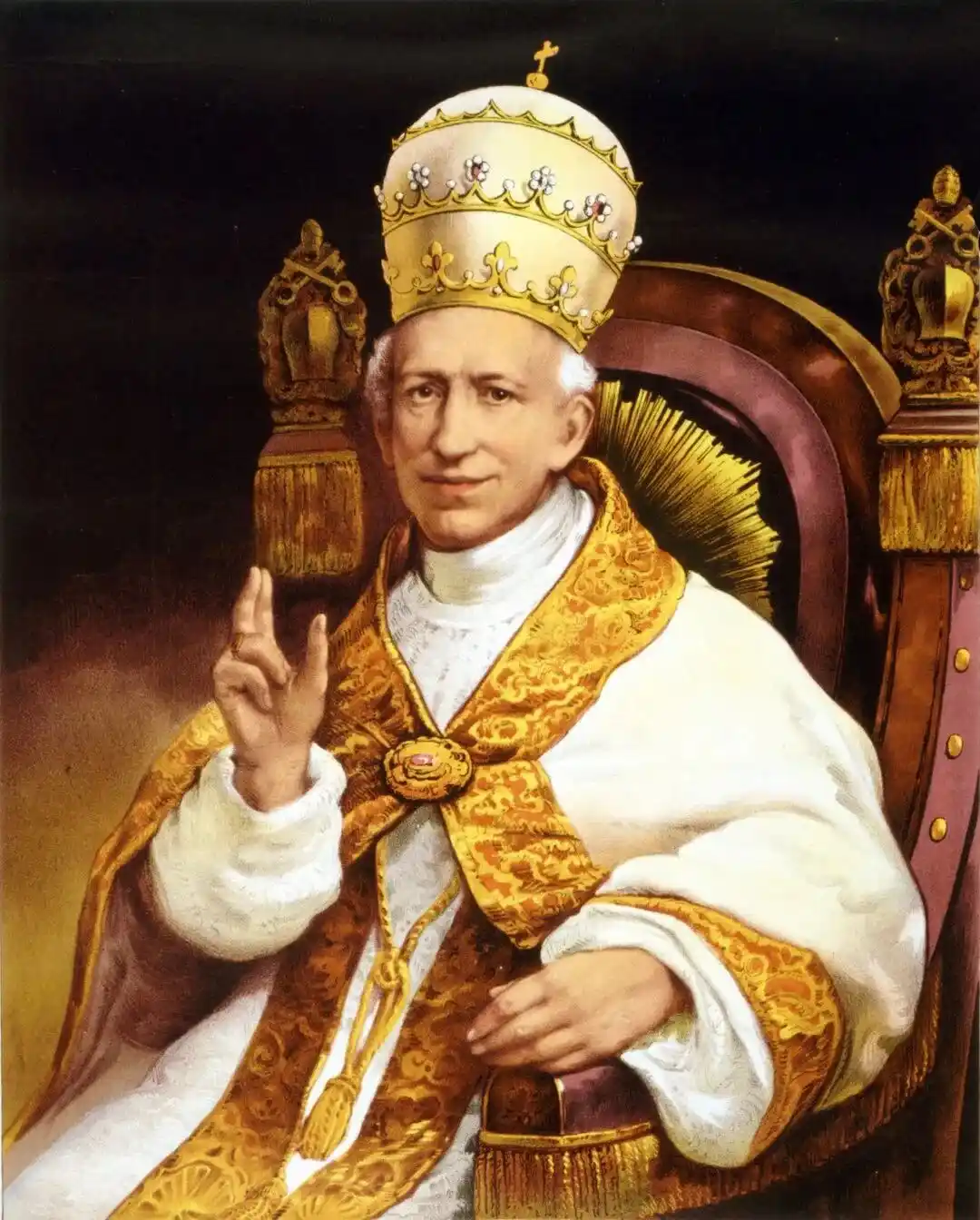
Leo XIII

"Rerum Novarum" responded to the impact of the Industrial Revolution on labor rights and is regarded as a foundational document of Catholic social teaching.

Leo XIV explicitly referenced this connection in his inaugural address: "The Church offers the treasury of its social teaching to everyone in response to yet another industrial revolution, and to developments in the field of artificial intelligence."

Almost simultaneously, the Vatican approved the establishment of an AI Commission on May 16, integrating seven curial institutions for the first time to coordinate previously scattered AI efforts.
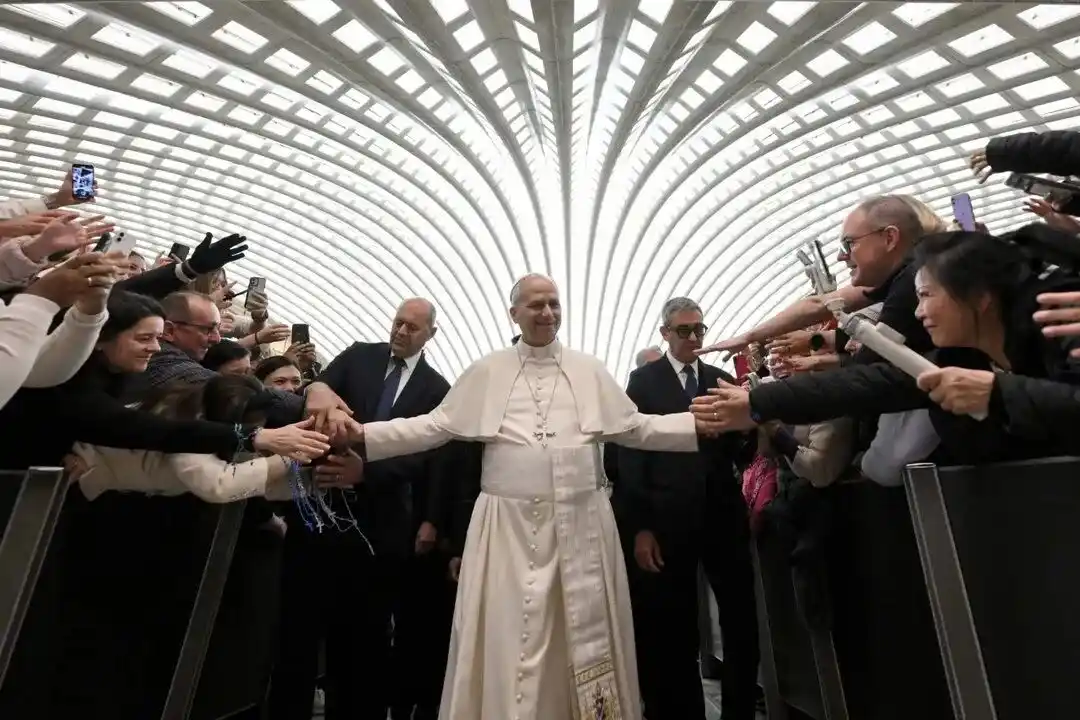
Previously, Leo XIV had already described the militarization of AI as pushing the world into a "spiral of destruction" in a speech at Europe's largest university.

Why Anthropic?

Olah's invitation is a precise alignment of mutual interests.

Olah leads interpretability research at Anthropic, aiming to open AI's black box and understand what neural networks are actually doing internally.

This happens to be the technical version of the Vatican's core concern: Can AI be fully understood and thus trusted?

Anthropic's engagement in religious ethics is systematic.

The company has previously invited clergy to participate in formulating Claude's "Constitution."

Further reading: Anthropic Officially Open Sources Claude's 'Soul'

In late April, representatives from Anthropic and OpenAI jointly participated in the inaugural "Faith-AI Covenant" roundtable in New York, discussing AI ethical frameworks with leaders from Hindu, Sikh, Jewish, Orthodox Christian, and other religious traditions. Follow-up meetings are planned in several cities globally.

A more pragmatic stake lies in Anthropic's current friction with the US government regarding the military use of AI, insisting its models cannot be used for autonomous weapon targeting and mass surveillance. This stance aligns highly with the Holy See's opposition to AI weaponization.

For Anthropic, the Vatican's moral endorsement strengthens its "responsible AI" brand positioning.

For the Vatican, having a company actually conducting AI safety research on stage elevates the encyclical beyond empty preaching. Both parties get what they need.

Silicon Valley long held skepticism towards organized religion.

Brian Boyd of the Future of Life Institute interprets this shift: "Silicon Valley's motto was 'move fast and break things.' They broke too many things and too many people."
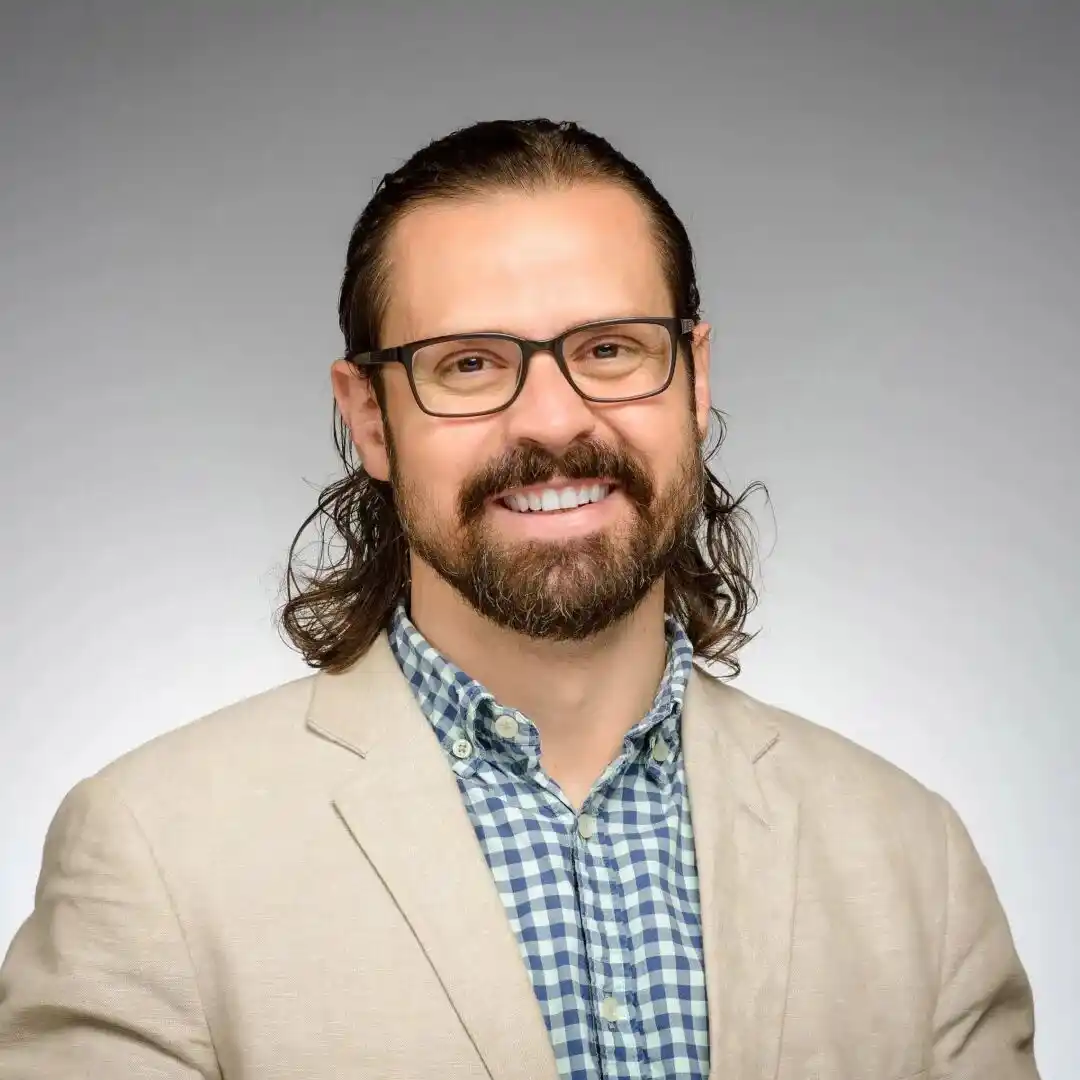
Aligning with religious authority is an attempt to rebuild overdrawn credibility.

Ethical Outsourcing or PR Prop?

The narrative sounds warm, but critics see a different picture.

The sharpest criticism comes from Dylan Baker, Research Lead at the Distributed AI Research (DAIR) Institute.

He argues that discussions around "ethical AI" obscure a more fundamental question: Should certain AI systems be developed at all?

When the discussion framework becomes "since we're building it, let's build it well," the preliminary question of "whether to build it" is completely bypassed.

Humane Intelligence CEO Rumman Chowdhury, former AI Science Envoy for the Biden administration, is similarly lukewarm: "At best it's a distraction, at worst it's derailing the issues that really matter."

She believes Silicon Valley is trying to find "universal ethical principles" from religion to handle gray areas, but the value differences among global religious traditions are no smaller than regulatory differences between nations.

The structural dilemma is even more evident.

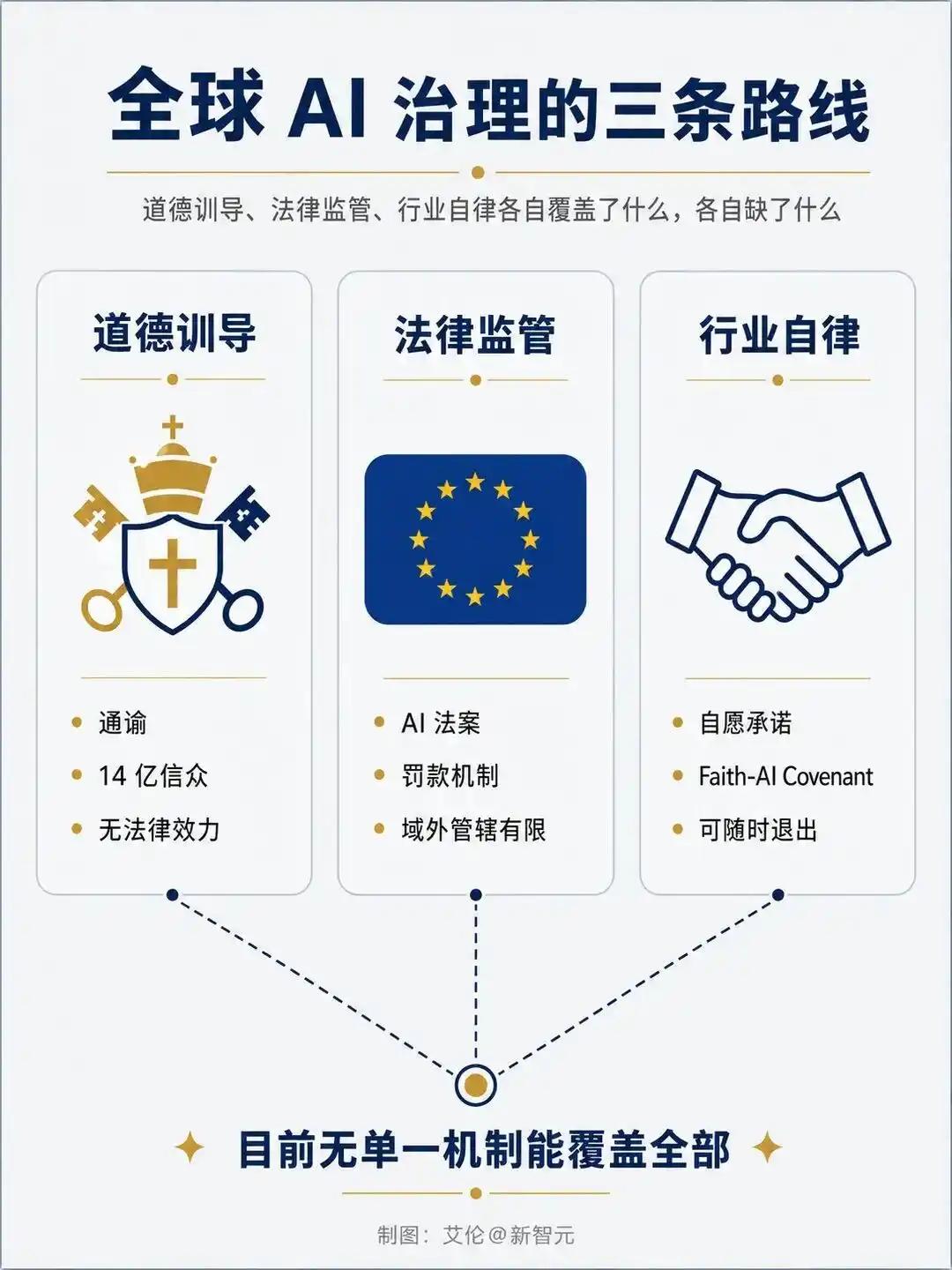
Papal encyclicals rely on moral suasion and have no legal binding force.

The Faith-AI Covenant is a voluntary pledge; participants can withdraw at any time.
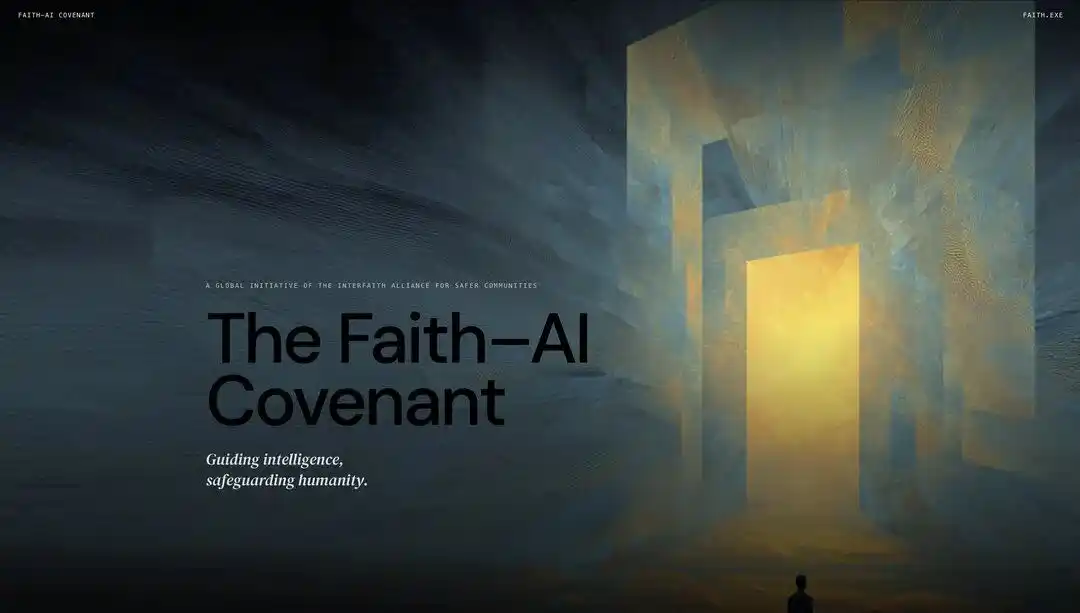
The EU AI Act carries fines of up to €35 million or 7% of global revenue, but its extraterritorial reach is limited.

The US federal level still lacks a unified AI regulatory framework.

Currently, no single mechanism globally can effectively constrain the pace of AI development.

The Holy See is filling a vacuum of discourse, not a vacuum of governance capability.
As Machines Become More Like Humans, What Do Humans Rely on to Confirm They Are Human?

All discussions on AI ethics, whether rooted in religious doctrine, legal statutes, or corporate values, ultimately point to the same underlying question: Where does human irreplaceability lie?

People have offered many answers in the past: intelligence, creativity, linguistic ability, emotional resonance, moral judgment.

These answers are being shaken one by one.

AI can write poetry, compose music, pass the bar exam, and make users form real emotional attachments to it.

When these abilities once considered "what makes us human" can all be simulated, what can humans still use to define themselves?

The answer might lie in an attribute AI can never possess: finitude.

Humans die.

Precisely because life has an end, every choice carries weight, every sacrifice has a cost, every promise holds meaning.

Moral judgment is never just a product of logical deduction.

It's built on the visceral experience that "making a mistake causes pain, regret, and the loss of something irreplaceable."

AI can simulate the process of weighing pros and cons, but it lacks the capacity to bear consequences, the urgency brought by mortality, the existential anxiety of "having only one chance in this lifetime."

In the face of the advent of AGI or even ASI, the scenario truly worth vigilance is humans, while having the power of choice, actively outsourcing judgment, decision-making, and even moral responsibility to machines.

Humans are too eager to escape the act of "making a decision and then bearing the consequences," and AI happens to provide a seemingly perfect outlet.

The Pope's encyclical, Anthropic's Constitution, the Faith-AI Covenant roundtables—different in form, but sharing the same underlying message: Technology can evolve infinitely, but the one who ultimately presses the button must be a mortal, vulnerable human being who feels pain and must be responsible for the consequences.

This is likely what "Magnifica Humanitas" truly wants to say.

References:

https://www.theguardian.com/world/2026/may/18/pope-leo-encyclical-human-dignity-ai-anthropic

This article is from the WeChat public account "Xinzhiyuan," author: Xinzhiyuan

Пов'язані питання

QWho are the two main figures highlighted in the article regarding the upcoming AI-focused encyclical?

AThe article highlights Pope Leo XIV, who will issue the encyclical, and Chris Olah, the co-founder of Anthropic and creator of Claude. Both will be present at the release event.

QWhat is the historical significance of the date May 15th mentioned in the article?

AMay 15th is significant because it is the same date in 1891 when Pope Leo XIII signed the landmark encyclical 'Rerum Novarum,' which addressed the social issues of the Industrial Revolution. Pope Leo XIV signed his new AI-focused encyclical on the same date, drawing a parallel between the two technological revolutions.

QWhat specific area of AI research does Chris Olah lead at Anthropic, and why does it align with the Vatican's concerns?

AChris Olah leads interpretability research at Anthropic, which aims to open the 'black box' of AI to understand how neural networks function. This aligns with the Vatican's core concern about whether AI can be sufficiently understood and, therefore, trusted.

QWhat is one of the main criticisms presented in the article regarding the 'ethical AI' discussions between tech companies and religious institutions?

AOne main criticism is that these discussions on 'how to build AI ethically' often bypass the more fundamental question of 'whether certain AI systems should be built at all.' Critics argue this framing legitimizes the development of potentially harmful systems from the outset.

QAccording to the article, what uniquely human attribute might form the basis for human dignity in the age of AI?

AThe article suggests that human finitude, particularly the fact that humans are mortal, is a key attribute. Mortality gives weight to choices, consequences, and commitments—an experiential foundation for moral judgment that an AI, which does not face death or irreversible loss, cannot truly possess.

Пов'язані матеріали

"Water Scarcity": The Hidden Fatal Flaw of AI Infrastructure

“Water Scarcity: The Hidden Vulnerability of AI Infrastructure” In June 2026, SpaceX revised its IPO prospectus to highlight a core resource constraint alongside power and processors: water. This move signals a pivotal shift where water scarcity has transformed from an operational cost to a major, uncontrollable investment risk, directly threatening AI data center expansion. The scale of the problem is immense. U.S. data centers consumed an estimated 17 billion gallons of water for direct cooling in 2023, with indirect water use for power generation exceeding 211 billion gallons. Giants like Google alone use billions of gallons annually, with single sites consuming volumes equivalent to a medium-sized city. This water is largely “consumptive,” evaporated into the atmosphere and lost. This massive demand is colliding with scarcity. Tech companies are building “water tigers” in arid regions, sparking community protests in places like Mexico and Arizona, where data centers can legally use millions of gallons daily—enough for tens of thousands of residents. These conflicts are not about illegality, but about a mismatch between historic water allocation frameworks and new, colossal demand. The consequences are real. Community opposition, largely centered on water, has reportedly stalled or canceled $64 billion in U.S. data center projects over two years. Simultaneously, investors are pressuring companies for greater water footprint transparency, viewing it as a financial risk, not just an ESG metric. Technological solutions like air or liquid cooling involve trade-offs between water and electricity use, with final choices dictated by local constraints. The irony is stark: while industry leaders envision AI as a utility “like water,” its physical infrastructure is straining real-world water supplies. The race for AI supremacy may ultimately be governed not by the fastest chip, but by the slowest water meter.

marsbit30 хв тому

"Water Scarcity": The Hidden Fatal Flaw of AI Infrastructure

marsbit30 хв тому

Global Card Issuance Enters a Compliance-Driven Era: WasabiCard is Building the Next-Generation Payment Infrastructure

Global card issuance is entering a compliance-driven era, with WasabiCard building next-generation payment infrastructure. The platform asserts that as stablecoins increasingly enter cross-border payments, corporate settlements, and global commerce, the industry is shifting focus from "availability" and "growth-driven" models to long-term, compliant operation under global frameworks. Competition will center on sustainable compliance and global infrastructure capabilities. Stablecoins are evolving from on-chain assets into key payment tools in global business, with card issuance acting as critical infrastructure connecting digital assets to traditional payment networks like Visa and Mastercard. This expansion has revealed structural issues, including cross-regional issuance, BIN resource management, and insufficient AML and risk controls. In response, the industry is moving away from reliance on "grey efficiency" towards prioritizing compliance, risk management, and long-term operational stability. WasabiCard outlines its strategy: collaborating with licensed principals and local partners for localized operations, building robust KYC/AML systems, strictly separating commercial and consumer BIN usage, and enhancing global issuance, payment, and cross-border fund flow infrastructure. The goal is to build stable, scalable payment infrastructure amid evolving global regulations, shifting industry competition from scale to infrastructure capability. As stablecoins integrate further with global commerce, payment infrastructure will become a fundamental, embedded component of internet business. WasabiCard will continue to develop capabilities in global card issuance, stablecoin payments, cross-border fund flows, and API-driven financial workflows.

marsbit41 хв тому

Global Card Issuance Enters a Compliance-Driven Era: WasabiCard is Building the Next-Generation Payment Infrastructure

marsbit41 хв тому

Zhou Hang: How Much Is SpaceX Really Worth?

**Zhou Hang: How Much is SpaceX Really Worth?** SpaceX, arguably one of the greatest industrial companies of the past 50 years, is reportedly targeting a staggering $1.75 trillion valuation in its potential IPO. However, the author argues this figure is inflated by approximately $1.25 trillion when assessed through standard financial metrics. The analysis begins by acknowledging SpaceX's undeniable success: drastically reducing launch costs, achieving near-monopoly in commercial launches, and building the strategic Starlink network. Its achievement surpasses even Tesla's, given it disrupted a state-monopolized industry. Despite this greatness, a $1.75 trillion valuation places SpaceX above the combined market cap of Boeing, Lockheed Martin, Northrop Grumman, RTX, and General Dynamics. Projecting optimistic 2030 revenues of $50-80 billion and applying generous tech-sector multiples yields a "reasonable" valuation range of $500 billion to $1.2 trillion. The $1.25 trillion gap is attributed to three non-financial premiums: 1. **Long-term vision premium** for future Starship-enabled markets (e.g., space-based computing). 2. **Sovereign asset/strategic premium**, as SpaceX is deeply integrated into U.S. national security. 3. **Retail narrative/Musk cult premium**, driven by a heroic story and personal following. Post-IPO, three scenarios are outlined: valuation solidifying (25% probability), sideways volatility as narrative outpaces reality (50%), or a re-rating down to $800B-$1.2T if execution falters or Musk-related risks emerge (25%). The probability-weighted expected value is $1.3-1.5 trillion, suggesting negative expected returns for those buying at the IPO price. The conclusion advises investors to separate the company's excellence from its stock price. Buying at the IPO likely prices in excessive optimism. A more prudent strategy would be to wait for key milestones (e.g., Starship V3 stability) or a significant price correction before investing, or to treat an early purchase as a long-term, high-conviction hold with limited position size, not a short-term bet.

链捕手45 хв тому

Zhou Hang: How Much Is SpaceX Really Worth?

链捕手45 хв тому

Торгівля

Спот
Ф'ючерси

Популярні статті

Як купити MOVE

Ласкаво просимо до HTX.com! Ми зробили покупку Movement (MOVE) простою та зручною. Дотримуйтесь нашої покрокової інструкції, щоб розпочати свою криптовалютну подорож.Крок 1: Створіть обліковий запис на HTXВикористовуйте свою електронну пошту або номер телефону, щоб зареєструвати обліковий запис на HTX безплатно. Пройдіть безпроблемну реєстрацію й отримайте доступ до всіх функцій.ЗареєструватисьКрок 2: Перейдіть до розділу Купити крипту і виберіть спосіб оплатиКредитна/дебетова картка: використовуйте вашу картку Visa або Mastercard, щоб миттєво купити Movement (MOVE).Баланс: використовуйте кошти з балансу вашого рахунку HTX для безперешкодної торгівлі.Треті особи: ми додали популярні способи оплати, такі як Google Pay та Apple Pay, щоб підвищити зручність.P2P: Торгуйте безпосередньо з іншими користувачами на HTX.Позабіржова торгівля (OTC): ми пропонуємо індивідуальні послуги та конкурентні обмінні курси для трейдерів.Крок 3: Зберігайте свої Movement (MOVE)Після придбання Movement (MOVE) збережіть його у своєму обліковому записі на HTX. Крім того, ви можете відправити його в інше місце за допомогою блокчейн-переказу або використовувати його для торгівлі іншими криптовалютами.Крок 4: Торгівля Movement (MOVE)Легко торгуйте Movement (MOVE) на спотовому ринку HTX. Просто увійдіть до свого облікового запису, виберіть торгову пару, укладайте угоди та спостерігайте за ними в режимі реального часу. Ми пропонуємо зручний досвід як для початківців, так і для досвідчених трейдерів.

324 переглядів усьогоОпубліковано 2024.12.13Оновлено 2026.06.02

Як купити MOVE

Обговорення

Ласкаво просимо до спільноти HTX. Тут ви можете бути в курсі останніх подій розвитку платформи та отримати доступ до професійної ринкової інформації. Нижче представлені думки користувачів щодо ціни MOVE (MOVE).

活动图片













