In a Surprising Move, Pope and Anthropic Founder to Jointly Hold Press Conference

marsbitОпубліковано о 2026-05-19Востаннє оновлено о 2026-05-19

Анотація

In a surprising move, Pope Leo XIV will release his first encyclical, "Magnifica Humanitas," on May 26th, focusing on protecting humanity in the AI age. Anthropic co-founder Chris Olah will join him. This event, drawing parallels to a historic 1891 encyclical on labor rights, highlights the Vatican's attempt to fill the AI governance vacuum with moral authority for its 1.4 billion followers. The Vatican also established a new AI committee. The partnership aligns with Anthropic's focus on AI interpretability and safety, and its stance against military AI use. Critics, however, see this as a distraction from core questions about whether certain AI systems should be built at all, and note the lack of enforceable global AI regulation. The core question addressed is: as machines increasingly mimic human abilities, what defines human dignity? The text argues that human finitude—our mortality and capacity to suffer consequences—grounds meaningful choice and moral responsibility in a way AI cannot replicate. The ultimate warning is against outsourcing judgment and accountability to machines.

Pope Leo XIV will issue his first encyclical on May 26, focusing directly on AI, with Anthropic co-founder and Claude creator Chris Olah invited to share the stage. The Vatican simultaneously establishes an AI Commission. A 2,000-year-old institution is attempting to fill the AI governance vacuum with moral authority—covering a population larger than any AI bill's jurisdiction.

An institution with 1.4 billion followers, enduring for two millennia, has placed AI as its top agenda, even pulling in the creator of Claude to jointly release a position paper.

The core question this document aims to answer is precisely the one the entire AI industry cannot avoid—As machines become more and more like humans, what is human dignity and irreplaceability truly built upon?

On May 26, Pope Leo XIV will issue the encyclical "Magnifica Humanitas" ("Magnificent Humanity") at the Vatican, focusing on "protecting the human person in the age of AI."

An encyclical is one of the highest-level teaching documents of the Catholic Church, addressed to 1.4 billion Catholics worldwide, and also a symbolic action for a new Pope to highlight his governance priorities.

This Pope, an American with a mathematics background, has consistently been concerned with ethics in the AI age, aiming to protect humanity.

The Pope's First Encyclical, Written for AI

This release breaks two conventions.

Popes usually do not personally attend encyclical releases, delegating the task to a cardinal, but Leo XIV has chosen to be present.

Simultaneously inviting Anthropic co-founder Chris Olah as a lay spokesperson is almost unprecedented in the history of encyclical releases.

Vatican journalist Andrea Vreede's assessment is, "If only a cardinal released it, no one would really listen, but with the Pope present, all lenses will be focused there."

The timing was carefully chosen.

The encyclical was signed on May 15, coincidentally the same day 135 years ago when Pope Leo XIII signed the encyclical "Rerum Novarum."
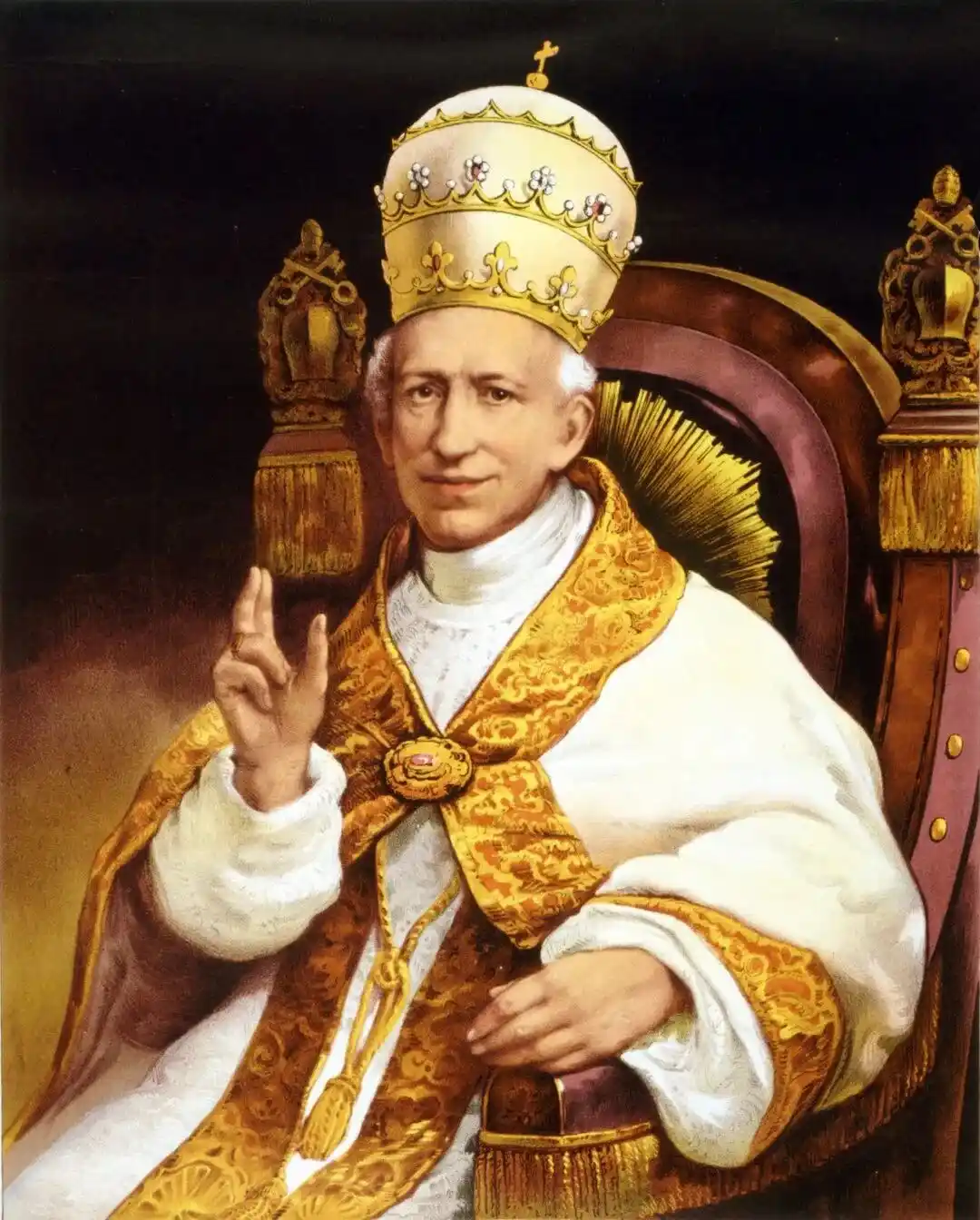
Leo XIII

"Rerum Novarum" responded to the impact of the Industrial Revolution on labor rights and is regarded as a foundational document of Catholic social teaching.

Leo XIV explicitly referenced this connection in his inaugural address: "The Church offers the treasury of its social teaching to everyone in response to yet another industrial revolution, and to developments in the field of artificial intelligence."

Almost simultaneously, the Vatican approved the establishment of an AI Commission on May 16, integrating seven curial institutions for the first time to coordinate previously scattered AI efforts.
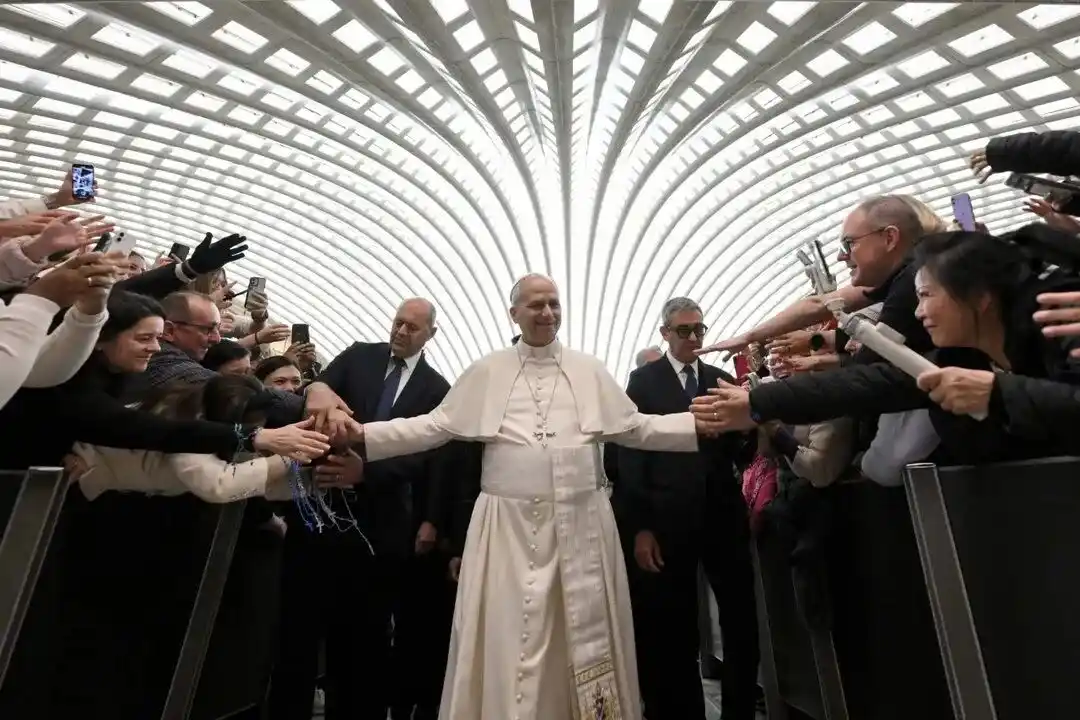
Previously, Leo XIV had already described the militarization of AI as pushing the world into a "spiral of destruction" in a speech at Europe's largest university.

Why Anthropic?

Olah's invitation is a precise alignment of mutual interests.

Olah leads interpretability research at Anthropic, aiming to open AI's black box and understand what neural networks are actually doing internally.

This happens to be the technical version of the Vatican's core concern: Can AI be fully understood and thus trusted?

Anthropic's engagement in religious ethics is systematic.

The company has previously invited clergy to participate in formulating Claude's "Constitution."

Further reading: Anthropic Officially Open Sources Claude's 'Soul'

In late April, representatives from Anthropic and OpenAI jointly participated in the inaugural "Faith-AI Covenant" roundtable in New York, discussing AI ethical frameworks with leaders from Hindu, Sikh, Jewish, Orthodox Christian, and other religious traditions. Follow-up meetings are planned in several cities globally.

A more pragmatic stake lies in Anthropic's current friction with the US government regarding the military use of AI, insisting its models cannot be used for autonomous weapon targeting and mass surveillance. This stance aligns highly with the Holy See's opposition to AI weaponization.

For Anthropic, the Vatican's moral endorsement strengthens its "responsible AI" brand positioning.

For the Vatican, having a company actually conducting AI safety research on stage elevates the encyclical beyond empty preaching. Both parties get what they need.

Silicon Valley long held skepticism towards organized religion.

Brian Boyd of the Future of Life Institute interprets this shift: "Silicon Valley's motto was 'move fast and break things.' They broke too many things and too many people."
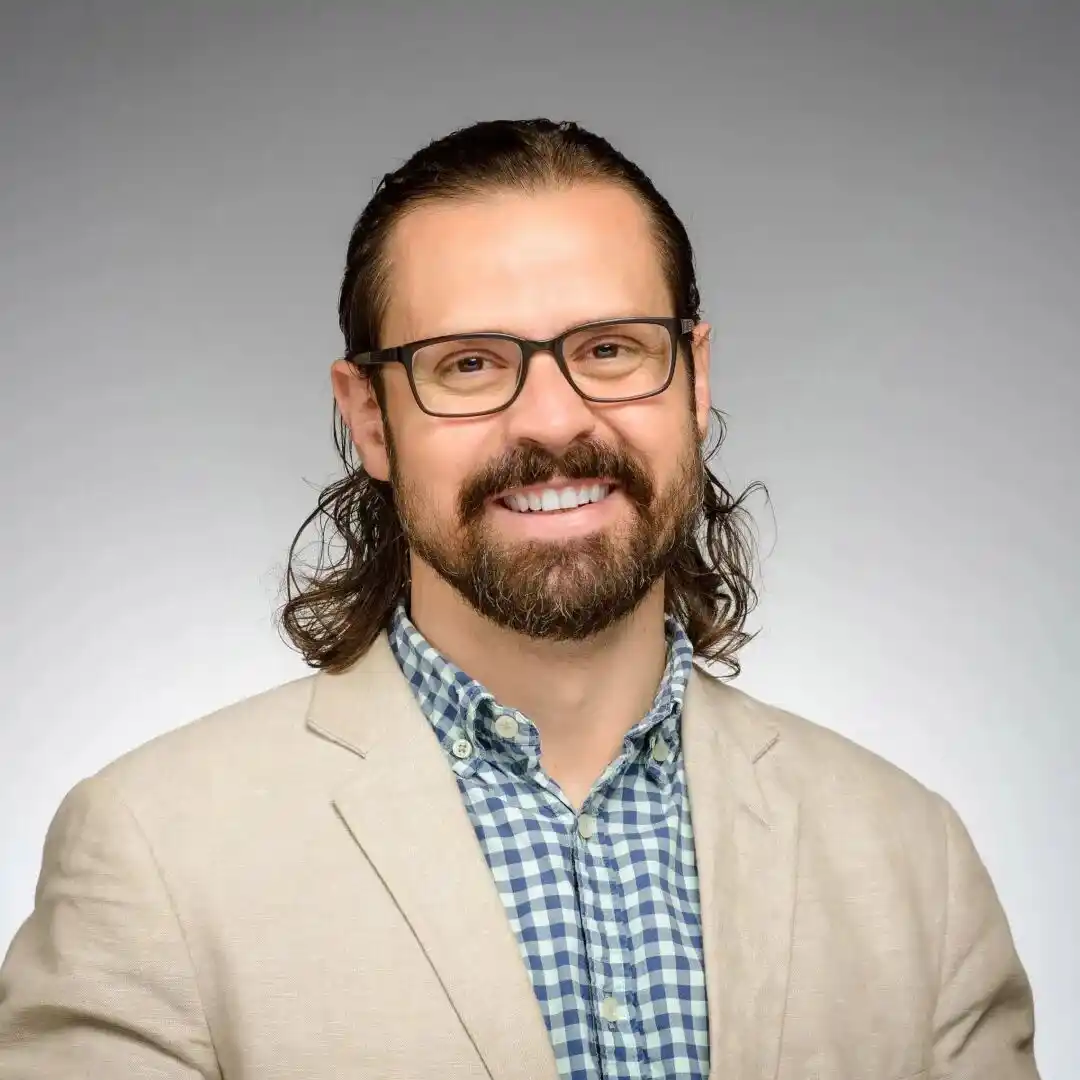
Aligning with religious authority is an attempt to rebuild overdrawn credibility.

Ethical Outsourcing or PR Prop?

The narrative sounds warm, but critics see a different picture.

The sharpest criticism comes from Dylan Baker, Research Lead at the Distributed AI Research (DAIR) Institute.

He argues that discussions around "ethical AI" obscure a more fundamental question: Should certain AI systems be developed at all?

When the discussion framework becomes "since we're building it, let's build it well," the preliminary question of "whether to build it" is completely bypassed.

Humane Intelligence CEO Rumman Chowdhury, former AI Science Envoy for the Biden administration, is similarly lukewarm: "At best it's a distraction, at worst it's derailing the issues that really matter."

She believes Silicon Valley is trying to find "universal ethical principles" from religion to handle gray areas, but the value differences among global religious traditions are no smaller than regulatory differences between nations.

The structural dilemma is even more evident.

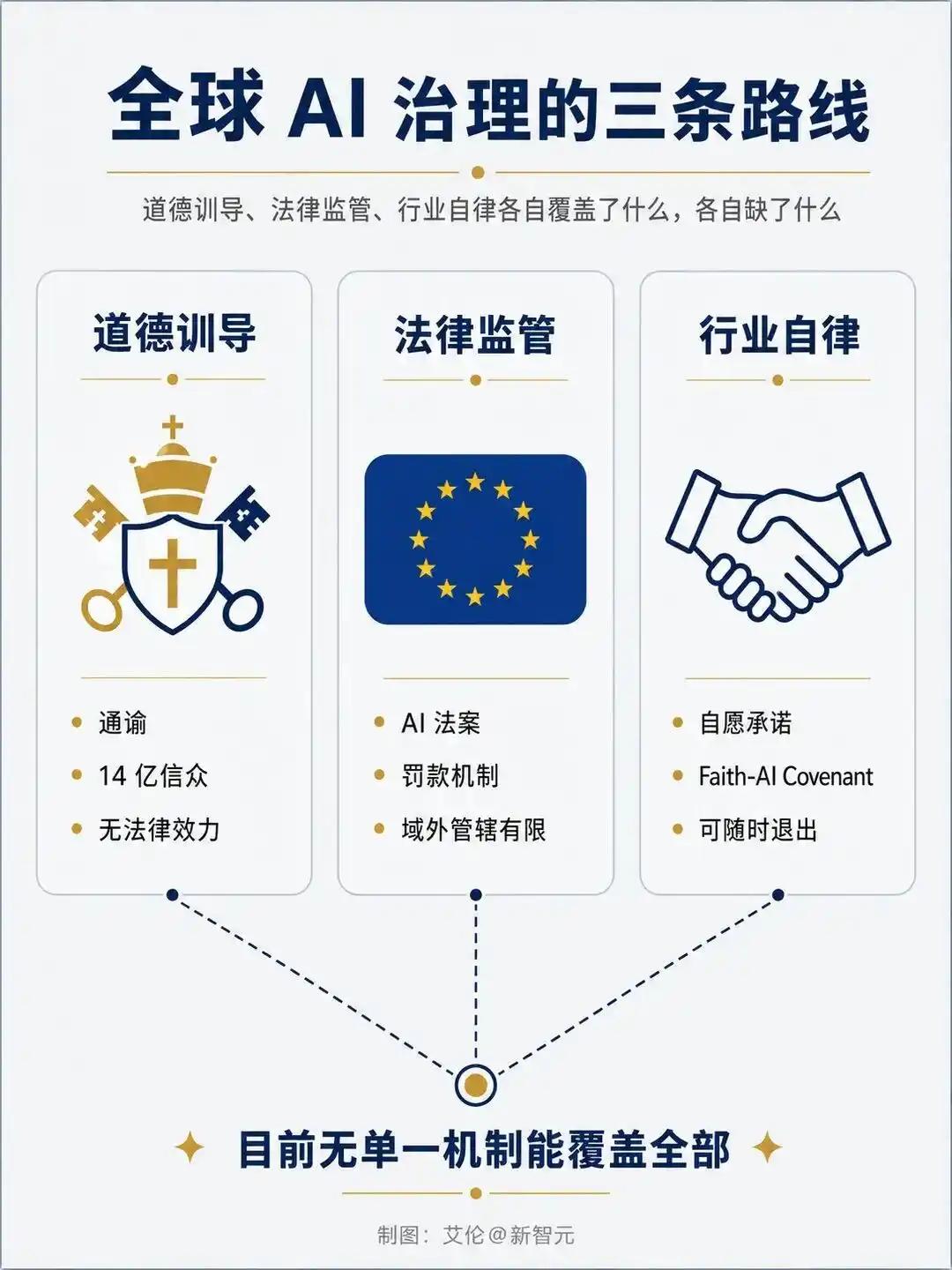
Papal encyclicals rely on moral suasion and have no legal binding force.

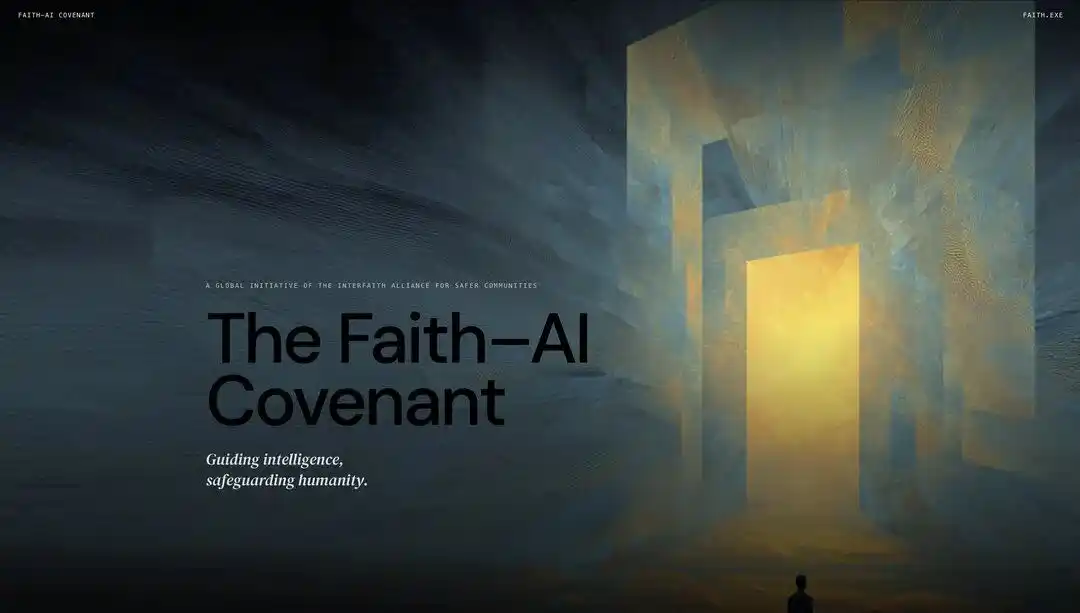
The Faith-AI Covenant is a voluntary pledge; participants can withdraw at any time.
The EU AI Act carries fines of up to €35 million or 7% of global revenue, but its extraterritorial reach is limited.

The US federal level still lacks a unified AI regulatory framework.

Currently, no single mechanism globally can effectively constrain the pace of AI development.

The Holy See is filling a vacuum of discourse, not a vacuum of governance capability.
As Machines Become More Like Humans, What Do Humans Rely on to Confirm They Are Human?

All discussions on AI ethics, whether rooted in religious doctrine, legal statutes, or corporate values, ultimately point to the same underlying question: Where does human irreplaceability lie?

People have offered many answers in the past: intelligence, creativity, linguistic ability, emotional resonance, moral judgment.

These answers are being shaken one by one.

AI can write poetry, compose music, pass the bar exam, and make users form real emotional attachments to it.

When these abilities once considered "what makes us human" can all be simulated, what can humans still use to define themselves?

The answer might lie in an attribute AI can never possess: finitude.

Humans die.

Precisely because life has an end, every choice carries weight, every sacrifice has a cost, every promise holds meaning.

Moral judgment is never just a product of logical deduction.

It's built on the visceral experience that "making a mistake causes pain, regret, and the loss of something irreplaceable."

AI can simulate the process of weighing pros and cons, but it lacks the capacity to bear consequences, the urgency brought by mortality, the existential anxiety of "having only one chance in this lifetime."

In the face of the advent of AGI or even ASI, the scenario truly worth vigilance is humans, while having the power of choice, actively outsourcing judgment, decision-making, and even moral responsibility to machines.

Humans are too eager to escape the act of "making a decision and then bearing the consequences," and AI happens to provide a seemingly perfect outlet.

The Pope's encyclical, Anthropic's Constitution, the Faith-AI Covenant roundtables—different in form, but sharing the same underlying message: Technology can evolve infinitely, but the one who ultimately presses the button must be a mortal, vulnerable human being who feels pain and must be responsible for the consequences.

This is likely what "Magnifica Humanitas" truly wants to say.

References:

https://www.theguardian.com/world/2026/may/18/pope-leo-encyclical-human-dignity-ai-anthropic

This article is from the WeChat public account "Xinzhiyuan," author: Xinzhiyuan

Пов'язані питання

QWho are the two main figures highlighted in the article regarding the upcoming AI-focused encyclical?

AThe article highlights Pope Leo XIV, who will issue the encyclical, and Chris Olah, the co-founder of Anthropic and creator of Claude. Both will be present at the release event.

QWhat is the historical significance of the date May 15th mentioned in the article?

AMay 15th is significant because it is the same date in 1891 when Pope Leo XIII signed the landmark encyclical 'Rerum Novarum,' which addressed the social issues of the Industrial Revolution. Pope Leo XIV signed his new AI-focused encyclical on the same date, drawing a parallel between the two technological revolutions.

QWhat specific area of AI research does Chris Olah lead at Anthropic, and why does it align with the Vatican's concerns?

AChris Olah leads interpretability research at Anthropic, which aims to open the 'black box' of AI to understand how neural networks function. This aligns with the Vatican's core concern about whether AI can be sufficiently understood and, therefore, trusted.

QWhat is one of the main criticisms presented in the article regarding the 'ethical AI' discussions between tech companies and religious institutions?

AOne main criticism is that these discussions on 'how to build AI ethically' often bypass the more fundamental question of 'whether certain AI systems should be built at all.' Critics argue this framing legitimizes the development of potentially harmful systems from the outset.

QAccording to the article, what uniquely human attribute might form the basis for human dignity in the age of AI?

AThe article suggests that human finitude, particularly the fact that humans are mortal, is a key attribute. Mortality gives weight to choices, consequences, and commitments—an experiential foundation for moral judgment that an AI, which does not face death or irreversible loss, cannot truly possess.

Пов'язані матеріали

Alibaba 'Stocks Up', ByteDance 'Trains'

"In late May, two closely timed events in China's AI industry clearly revealed the divergent strategic approaches of two tech giants: Alibaba and ByteDance. Alibaba is aggressively integrating AI into its existing commercial ecosystem, prioritizing immediate monetization. Its Qwen App now fully integrates with Taobao, leveraging the platform's 4-billion-item database for AI-powered shopping features like virtual try-on and price comparison. Internally, Alibaba has reorganized to incentivize AI-driven business growth, notably through the 'Agentic Commerce Trust Protocol' to enable AI-agent transactions. Financially, it emphasizes ROI, with CEO Daniel Wu stating every AI chip purchased is generating revenue. Alibaba's strategy bets that foundational AI model capabilities won't be leapfrogged in the next five years, allowing its 'AI-as-a-utility' approach to succeed. In stark contrast, ByteDance's Seed division focuses on pushing the frontiers of AGI with a long-term, research-oriented mindset. Its video generation model, Seedance 2.0, topped international benchmarks. The division, led by researchers Wu Yonghui and product head Zhu Wenjia, is tasked with 'exploring the upper limits of intelligence,' even considering open-sourcing its models—a rare move among Chinese firms. ByteDance is investing heavily, with reports of its 2026 capital expenditure plan being nearly triple that of 2024, funded by its substantial private profits. This allows it to pursue projects like an 8-month research paper questioning if video models are true 'world models,' devoid of immediate commercial pressure. The core divergence is less about corporate philosophy and more about structural constraints. As a publicly traded company, Alibaba is bound to quarterly financial expectations, forcing a pragmatic, revenue-focused AI integration. As a private entity, ByteDance has the luxury to fund long-term, high-risk foundational research without answering to public markets. The article concludes that the true determinant of a Chinese company's AI path is its IPO status, suggesting that if ByteDance were public, or if Alibaba were private, their strategies might well be reversed."

marsbit59 хв тому

Alibaba 'Stocks Up', ByteDance 'Trains'

marsbit59 хв тому

Why More AI Agents Does Not Equal Higher Productivity?

Editor's Note: As AI Agents become cheaper and easier to use, a new constraint emerges: the cost isn't in launching more Agents, but in the human attention required to manage, judge, and integrate their outputs. This hidden cost is called the "orchestration tax." The article argues that a developer's cognitive bandwidth is the key bottleneck—a serial, non-parallelizable resource akin to a Global Interpreter Lock (GIL). While many Agents can run concurrently, their results ultimately require human judgment for review, conflict resolution, and final integration. Therefore, more Agents don't automatically mean higher productivity; they can simply create longer queues, lead to cognitive fatigue, and create the illusion of busyness without real output. The core solution is to design workflows around this scarce human attention. Key strategies include: scaling the number of Agents to match review capacity (not UI capacity), categorizing tasks (delegating independent ones, keeping complex judgment-heavy ones serial), batch reviewing results to minimize context-switching costs, automating verifiable checks to reserve human judgment for critical decisions, and protecting focused, uninterrupted thinking time. Ultimately, the critical skill is not launching many Agents, but architecting systems that respect the fundamental limit of human attention. Unpaid "orchestration tax" accumulates as both technical and cognitive debt, undermining system understanding and quality. True productivity comes from thoughtfully managing the single-threaded resource—your focus.

marsbit2 год тому

Why More AI Agents Does Not Equal Higher Productivity?

marsbit2 год тому

Three Years Later: Looking Back at My Predictions About ChatGPT in 2023

Three Years Later: Revisiting My 2023 Predictions on ChatGPT In March 2023, shortly after ChatGPT's launch, I made 20 predictions about its future. Now, in mid-2026, I've used AI agents to fact-check each one against the latest data. Overall, most major directional forecasts were correct, with only one outright error (incorrectly stating GPT-4 had 100 trillion parameters). Key successes included predicting that RAG and retrieval architectures would become the standard for handling knowledge and hallucinations, that natural language interfaces (LUI) would create a massive new industry layer beyond the models themselves, and that China would develop viable large language models, significantly closing the performance gap with Western counterparts within about three years. Predictions about the absence of mass unemployment, the rise of a new "robot network" for agent communication, and ChatGPT not possessing consciousness also held true in their core arguments. However, the "devil was in the details." Errors frequently involved specific numbers, timelines, or overlooking distributional effects. I tended to overestimate the speed of adoption (e.g., for agent networks) while underestimating the ultimate scale of capabilities or costs (e.g., AI winning IMO gold without tools, or the extreme capital required for frontier models). Other misjudgments included: underestimating how AI would reinforce, not dissolve, information filter bubbles; incorrectly assuming AI-generated content would easily circumvent copyright (it has instead triggered record-breaking settlements); and misidentifying where value would be captured (it accrued overwhelmingly to the compute layer, like Nvidia, not just the application or model layers). Key lessons from reviewing these predictions are: 1) Directional and mechanistic insights are far more reliable than precise numbers or absolute statements. 2) There's a consistent bias to overestimate short-term speed but underestimate long-term magnitude. 3) Errors often lie in missing distributional impacts within a generally correct aggregate trend. 4) Predictions phrased with nuance and caveats aged the best. 5) Some fundamental debates (e.g., on machine consciousness or the ultimate value chain) remain unresolved even after three years. This exercise is less about scoring the past and more about establishing rules for clearer thinking about the next three years of AI.

marsbit9 год тому

Three Years Later: Looking Back at My Predictions About ChatGPT in 2023

marsbit9 год тому

Торгівля

Спот
Ф'ючерси

Популярні статті

Як купити MOVE

Ласкаво просимо до HTX.com! Ми зробили покупку Movement (MOVE) простою та зручною. Дотримуйтесь нашої покрокової інструкції, щоб розпочати свою криптовалютну подорож.Крок 1: Створіть обліковий запис на HTXВикористовуйте свою електронну пошту або номер телефону, щоб зареєструвати обліковий запис на HTX безплатно. Пройдіть безпроблемну реєстрацію й отримайте доступ до всіх функцій.ЗареєструватисьКрок 2: Перейдіть до розділу Купити крипту і виберіть спосіб оплатиКредитна/дебетова картка: використовуйте вашу картку Visa або Mastercard, щоб миттєво купити Movement (MOVE).Баланс: використовуйте кошти з балансу вашого рахунку HTX для безперешкодної торгівлі.Треті особи: ми додали популярні способи оплати, такі як Google Pay та Apple Pay, щоб підвищити зручність.P2P: Торгуйте безпосередньо з іншими користувачами на HTX.Позабіржова торгівля (OTC): ми пропонуємо індивідуальні послуги та конкурентні обмінні курси для трейдерів.Крок 3: Зберігайте свої Movement (MOVE)Після придбання Movement (MOVE) збережіть його у своєму обліковому записі на HTX. Крім того, ви можете відправити його в інше місце за допомогою блокчейн-переказу або використовувати його для торгівлі іншими криптовалютами.Крок 4: Торгівля Movement (MOVE)Легко торгуйте Movement (MOVE) на спотовому ринку HTX. Просто увійдіть до свого облікового запису, виберіть торгову пару, укладайте угоди та спостерігайте за ними в режимі реального часу. Ми пропонуємо зручний досвід як для початківців, так і для досвідчених трейдерів.

323 переглядів усьогоОпубліковано 2024.12.13Оновлено 2025.03.21

Як купити MOVE

Обговорення

Ласкаво просимо до спільноти HTX. Тут ви можете бути в курсі останніх подій розвитку платформи та отримати доступ до професійної ринкової інформації. Нижче представлені думки користувачів щодо ціни MOVE (MOVE).

活动图片













