Hunting Ethereum Bulls: 'Whales' Suffer $7 Billion in Losses, Under Collective Scrutiny

marsbitОпубліковано о 2026-02-03Востаннє оновлено о 2026-02-03

Анотація

"Whale Hunt: Ethereum Bulls Lose $7 Billion as Market Watches" The crypto market is witnessing a dramatic showdown as two prominent Ethereum "whales," Tom Lee's BitMine and Jack Yi's (易理华) Trend Research, face massive, publicly visible losses on their massive ETH long positions. BitMine, a former Bitcoin miner turned Ethereum treasury, holds 4.285 million ETH (approx. 3.52% of supply) with an average cost of $3,837. With ETH's price plummeting to around $2,350, the company is sitting on an estimated $6.4 billion unrealized loss. Despite this, BitMine remains committed, holding significant cash reserves and generating over $1 million daily from staking yields. In stark contrast, Trend Research took a high-risk, leveraged approach. Using a loop of staking ETH on Aave, borrowing USDT, and buying more ETH, the fund amplified its long exposure. The recent crash from $3,000 to nearly $2,150 forced Trend Research into a desperate survival mode. To avoid mass liquidation, it sold 73,588 ETH (worth ~$169 million) to repay loans, realizing millions in losses and creating a negative feedback loop of selling pressure. Its total losses on the leveraged position reached $613 million. This public struggle highlights the peril of transparent, on-chain leverage, where positions become targets for the entire market. Paradoxically, while these whales bleed, on-chain data shows underlying strength: a record 30%+ of ETH's supply is now staked, indicating long-term conviction and a shift from ...

Author: Frank, Maiton MSX

Tom Lee and Jack Yi (Yi Lihua) probably haven't been sleeping well these past couple of days.

After all, if one were to choose the most dramatic protagonist for the early 2026 crypto market, it probably wouldn't be Bitcoin, nor some groundbreaking new narrative, but these two publicly roasted ETH "whales".

Onlookers never think a funeral is too big an affair.

These days, global investors are holding their breath, collectively watching the largest and most transparent batch of openly long positions in Ethereum's history struggle to survive amidst floating losses.

I. ETH 'Whales' Are Already Floating Losses of Tens of Billions of Dollars

The years repeat similar events, but the 'whales' change each time.

The term "whale," in the Web3 context, typically refers to institutions or individuals with substantial capital足以影响市场走向.

But in recent years, the positive connotation of this word has been continuously diluted by reality, morphing into not just a heavyweight presence, but more like the most visible, and easiest to spectate, target during extreme market volatility.

Over the past few days, the two most discussed ETH "whales" have been Tom Lee's BitMine (BMNR.M) and Jack Yi's (Yi Lihua) Trend Research. Although both are Ethereum (ETH) bulls, they represent two截然不同的 paths: the former is the treasury holding the most ETH, while the latter is an investment机构 openly adding leverage on-chain and publicly going long on ETH.

First, look at BitMine.

As one of the most representative Ethereum reserve companies, BitMine once高调 proposed a long-term goal to acquire approximately 5% of Ethereum's total supply. As of writing, the company has accumulated holdings of 4,285,125 ETH, with a market value接近 $10 billion.

According to ultra sound money statistics, the current total Ethereum supply is approximately 121.4 million coins, meaning BitMine has directly locked up about 3.52% of the circulating ETH supply. The pace of fulfilling this vision is nothing short of aggressive.

Remember, it was only after completing a $250 million private financing round in July 2025 that it officially initiated its "Ethereum Treasury" shift. That is, in less than half a year, BitMine completed the leap from a Bitcoin mining company to the world's largest ETH holder.
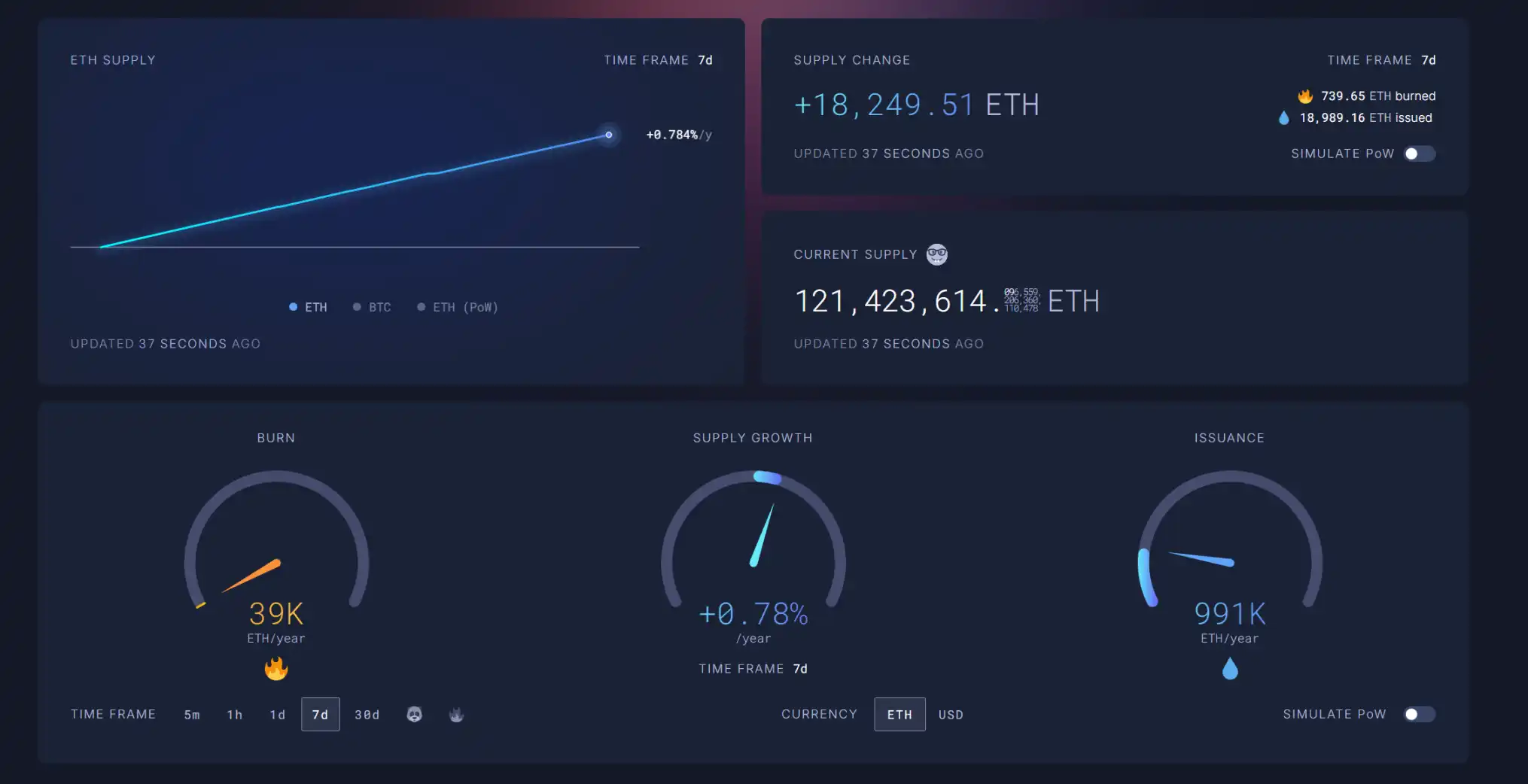
Source:ultra sound money

More notably, even as ETH broke below $3000 last week during the accelerating market collapse, BitMine chose to add positions against the trend, buying an additional 41,787 ETH (approx. $108 million) at around $2601, showing steadfast holding conviction.

But the problem随之而来—cost. Conviction has a price. BitMine's average ETH holding cost is approximately $3837, meaning that after ETH fell to around $2350, its paper losses have widened to about $6.4 billion.

This extremely aggressive "coin-based" transformation has also上演了一场极其癫狂的估值博弈 in the US stock secondary market.

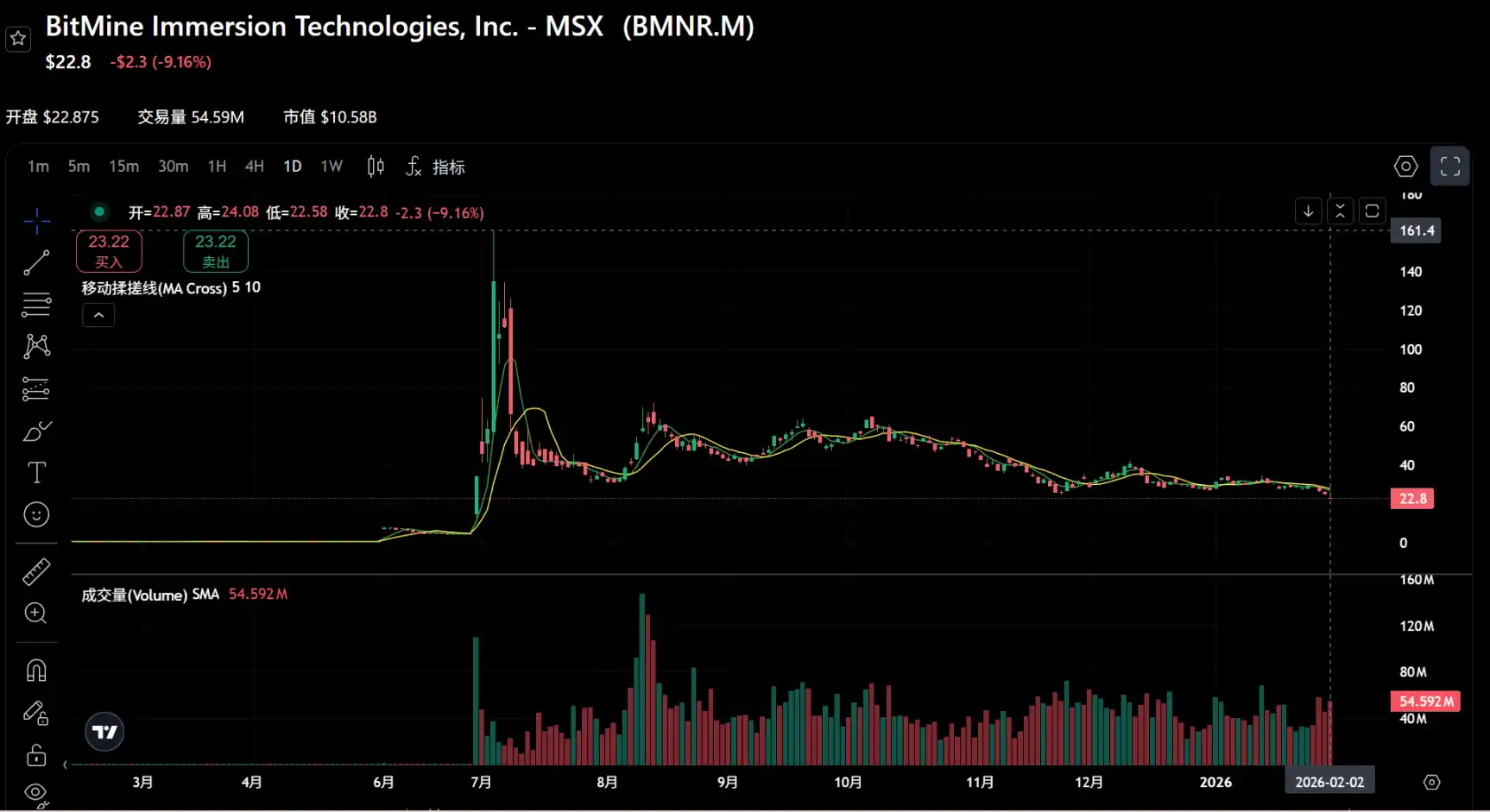
Looking back to July 2025, when BitMine first began disclosing its Ethereum acquisition strategy, its stock price (BMNR.M) hovered around $4. Subsequently, the stock price completed a leap from the floor to heaven within half a year, reaching a high of $161, becoming the most dazzling "Ethereum shadow stock" in the global capital markets.

However, succeed with Ethereum, fail with Ethereum. As the ETH price deeply retraced, the premium bubble of BitMine's stock price rapidly burst, and it has now plummeted to $22.8.
If BitMine represents the long-term spot path of trading time for space, then Jack Yi's Trend Research chose another, significantly riskier road.

Since November 2025, Trend Research has旗帜鲜明地 publicly gone long on ETH on-chain. Its core strategy is a typical "staking-borrowing-buying-restaking-borrowing" loop:

  • Stake held ETH into the on-chain lending protocol Aave;
  • Borrow the stablecoin USDT;
  • Use the USDT to buy more ETH;
  • Continuously循环 to amplify long exposure;

The actual logic of this operation is not complicated; it essentially uses existing ETH as collateral to borrow funds to buy more ETH, betting on leveraged gains during price increase.

This is undoubtedly a highly lethal strategy in a favorable market, but the risk stems precisely from this. Once the ETH price falls, the collateral value shrinks, the lending protocol will require additional margin, otherwise it will trigger forced liquidation, selling ETH at market price to repay the debt.

So when ETH plummeted from around $3000 to a low of approximately $2150 in just 5 days, this mechanism was forced into a "stress state." The chain随即呈现出一种颇具戏剧性的 "death by a thousand cuts"奇景:

To prevent positions from being forcibly liquidated, Trend Research continuously transferred ETH to exchanges, sold it for USDT, and then deposited the USDT back into Aave to repay loans, barely lowering the liquidation line and buying breathing room.

As of February 2nd, Trend Research had deposited 73,588 ETH (worth approx. $169 million) in multiple transactions to Binance for sale and loan repayment. The total loss on its ETH borrowing positions reached $613 million, including realized losses of $47.42 million and floating losses of $565 million. It currently still carries stablecoin leverage loans of approximately $897 million.

Especially during ETH's rapid descent through the $2300-$2150 range, the entire network was almost watching this "stop-loss survival" drama unfold in real-time—every ETH sold by Trend Research was both buying itself survival space and inadvertently handing new selling pressure to the market, tightening the noose around its own neck.

In other words, Trend Research almost killed itself.
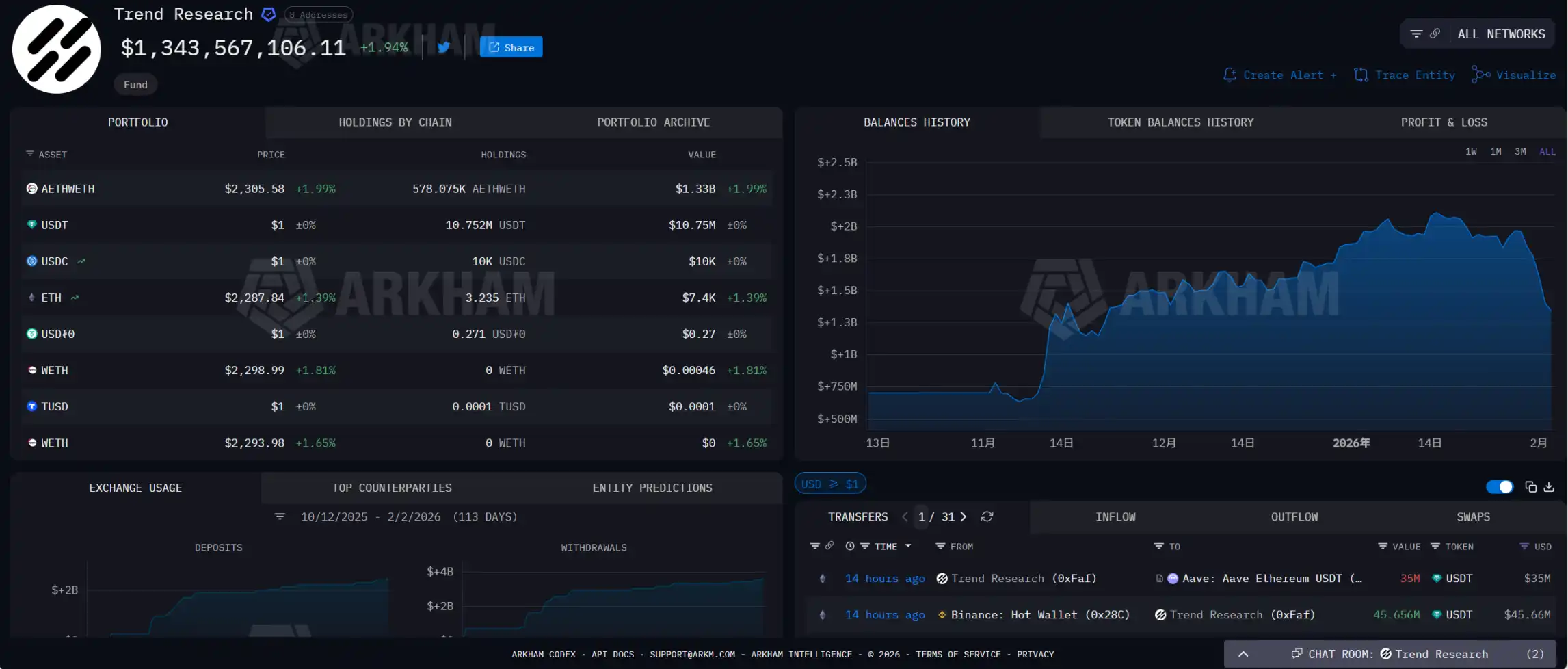
Source:Arkham

II. The 'Fire and Ice' Dichotomy Between On-Chain and Off-Chain

The吊诡 thing is, if we temporarily step back from the whales' tens of billions in paper losses and look at Ethereum from an on-chain structure rather than price itself, we find a reality almost opposite to secondary market sentiment—ETH on-chain is持续走热.

The Block statistics show that approximately 36.6 million ETH are currently staked on the Ethereum Beacon Chain, exceeding 30% of the network's circulating supply, hitting a new historical high.

Note that the previous staking rate record was 29.54%, set in July 2025. This round marks the first time Ethereum's staking rate has substantially crossed the 30% threshold since entering the PoS era.
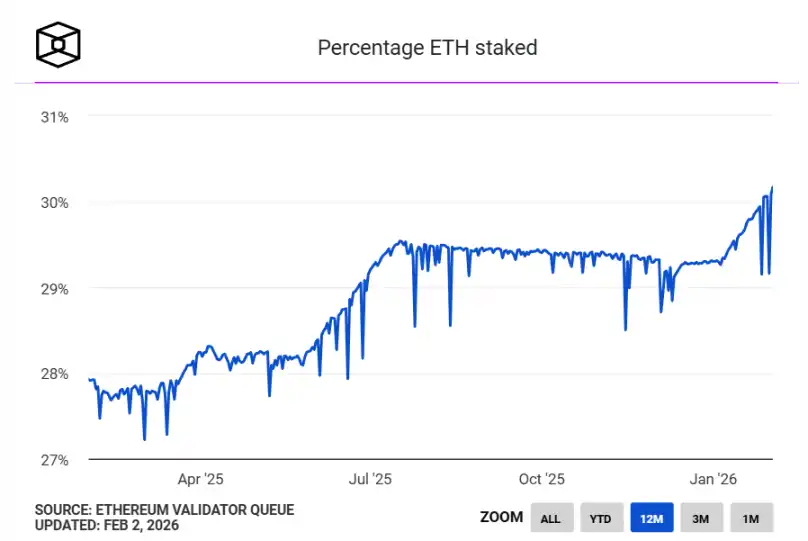
Source:The Block

From a financial supply and demand structure perspective, this change is highly significant.

A large amount of ETH being staked means it has actively exited the free流通 market,剧烈转型 from a "speculative currency" used for high-frequency trading and speculation into an "interest-bearing bond" with productive properties. In other words, ETH is no longer just Gas, a medium of exchange, or a speculative tool, but is increasingly扮演一种 "means of production" role—participating in network operation through staking and continuously generating yield.

Of course, heavyweight players like BitMine are part of this—BitMine has staked nearly 70% of its held ETH (approx. 2,897,459 coins) and is continuously adding more.

Simultaneously, the validator queue has seen微妙的变化. The exit queue is nearly empty, while the entry queue for staking continues to lengthen, with over 4.08 million ETH排队等待 "entering." In short, the current state is "exiting is smooth, but entering requires a 7-day wait."

This queue size has set a new high since the launch of Ethereum's PoS staking mechanism. And from a time dimension, the steep rise of this curve恰恰始于 December 2025.

This also coincides with the beginning of Trend Research's openly aggressive long positioning on ETH.
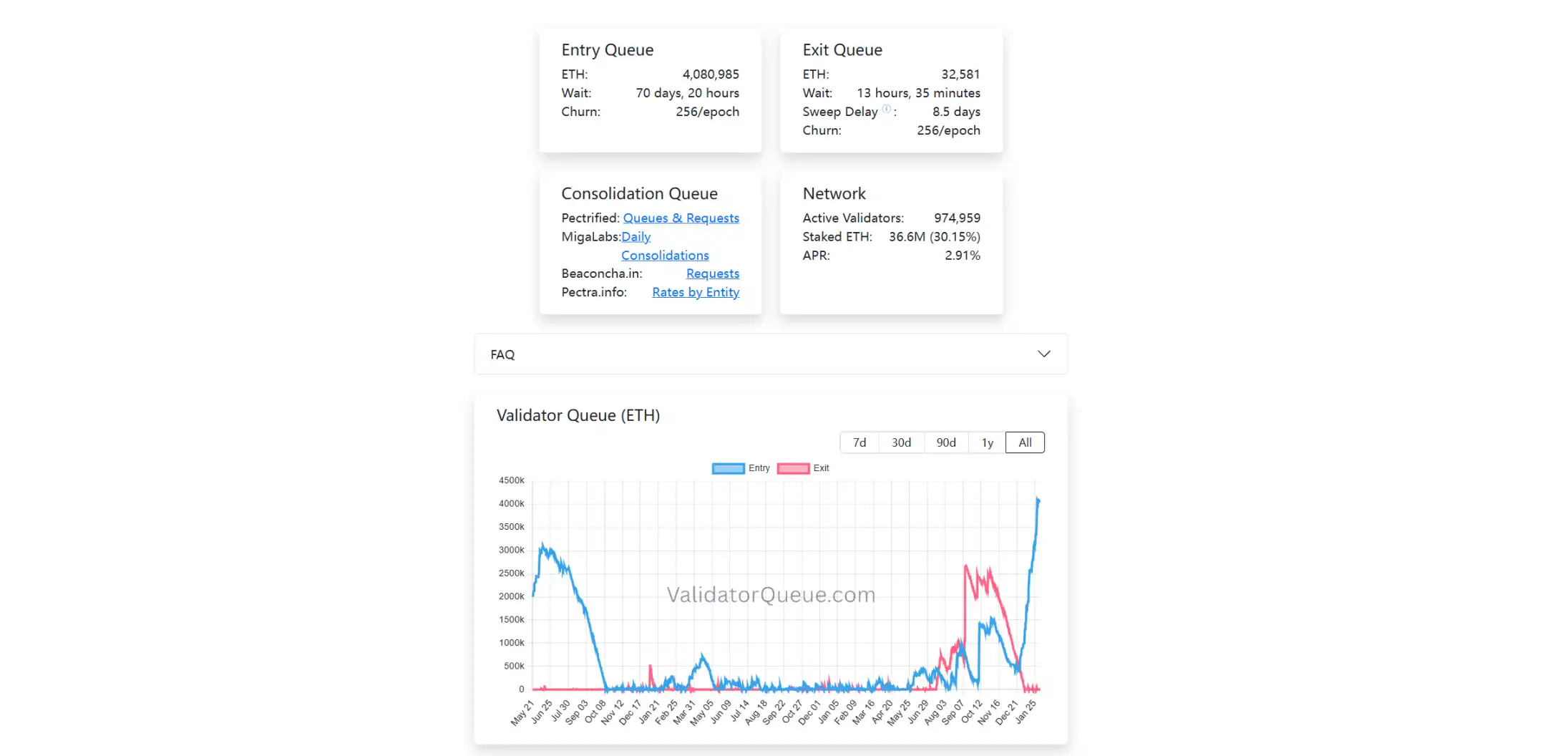
Source:Ethereum Validator Queue

It's important to emphasize that, unlike trading, staking is a low-liquidity, long-cycle配置方式 emphasizing stable returns. After all, once funds enter the staking queue, they意味着 giving up the possibility of flexible position adjustment and short-term speculation for a considerable time.

Therefore, as more and more ETH chooses to re-enter the staking system, it at least sends a clear signal: at the current stage, more and more participants are willing to accept long-term locking,主动承担 opportunity costs, in exchange for确定性 on-chain收益.

Thus, a highly tense structural picture emerges. On one side, nearly 1/3 of ETH is being continuously "hoarded," with源源不断的 ETH waiting off-field to be locked up; on the other side, secondary market liquidity is tightening, prices are under持续 pressure, whales are forced to stop losses, and positions are frequently exposed.

This clear divergence between on-chain and off-chain constitutes the most vivid "fire and ice" picture in the current Ethereum ecosystem.

III. The Openly Declared 'Whale,' Already on the Menu?

In traditional financial games, the cards are often not公开透明的. Things like position size, cost basis, leverage ratio, etc., can be hidden within tools like derivatives, OTC protocols, leveraging information asymmetry.

But on-chain, every transfer, every抵押, every liquidation line of a whale is exposed 24/7 to the entire market's view. Once you choose to openly declare a long position, you easily fall into a体力消耗战 of "proving Murphy's Law."

So from a game theory perspective, although Tom Lee and Jack Yi are both bulls and both have declared their hands, they stand at opposite ends of the risk curve.

Tom Lee, despite a $6.4 billion paper loss, BitMine chose a "low leverage, high staking, zero debt" spot path. As long as no structural risk is triggered, he can choose to hold (HODL) within the time window, letting staking收益 slowly hedge the volatility.

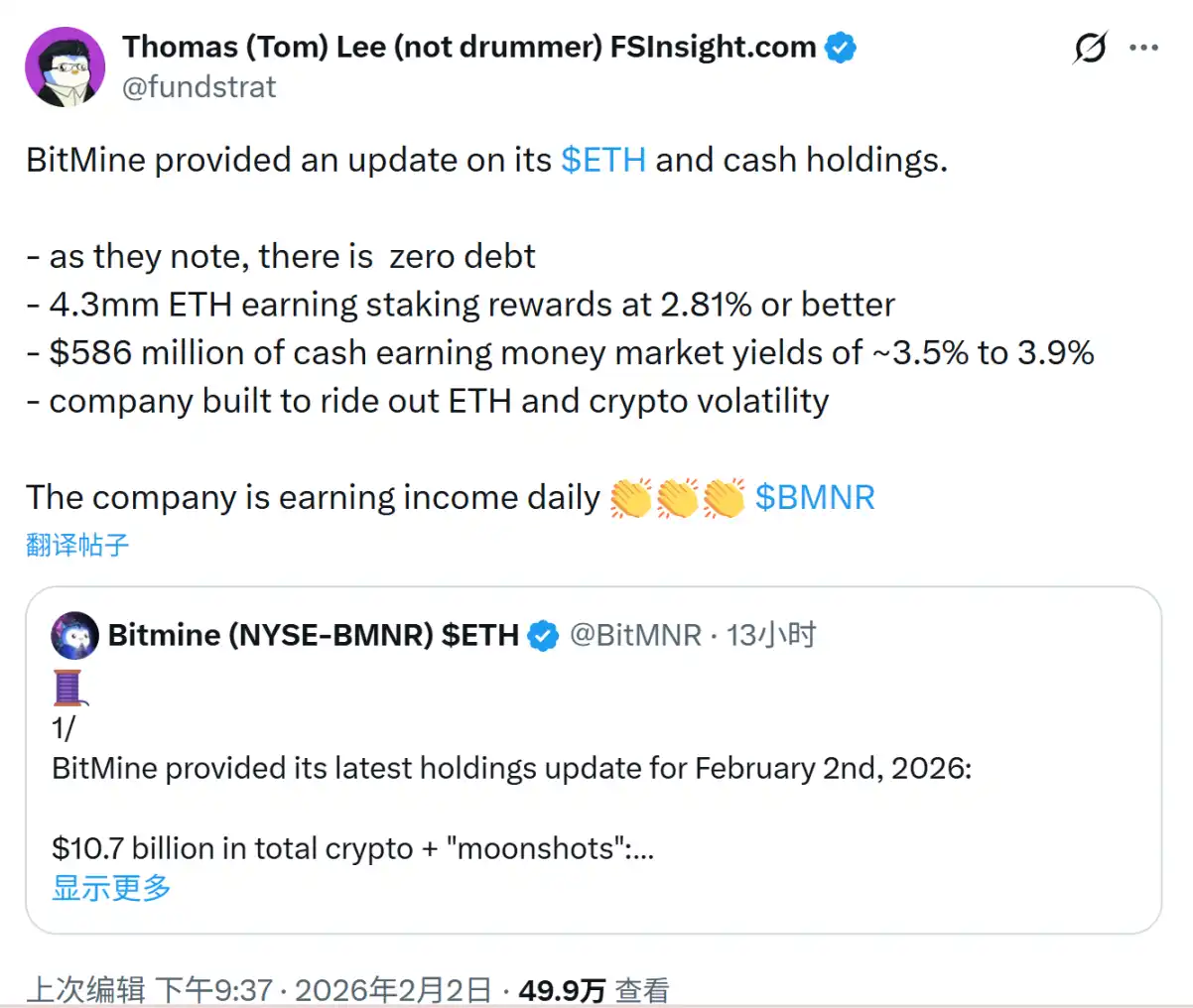
The facts are indeed so. Contrary to most market imaginations, BitMine's structure is not激进. As Tom Lee emphasized in a social media post on February 2nd: They have $586 million in cash reserves, and 67% of their ETH is staked, generating over $1 million in daily cash flow. For him, the drop is just a缩水 of paper numbers, not the降临 of a survival crisis.
Jack Yi, however, added leverage through Aave's循环贷, thus陷入 the negative loop of "price drop - approach liquidation line - transfer ETH to sell - add margin - price drops again." This is like a全网围观 "performance art."

The shorts don't necessarily need to liquidate you; they just need to suppress the price → force position reduction → create passive selling pressure → trigger follow-on selling to complete a structural hunt.

This is why every repayment, every transfer by Trend Research is放大解读 as a sign of Jack Yi's confidence waning, whether he is about to capitulate. As of writing, Trend Research has stop-loss sold 73,588 ETH (worth approx. $169 million), and the liquidation price for its borrowing positions has been lowered to below $1800.

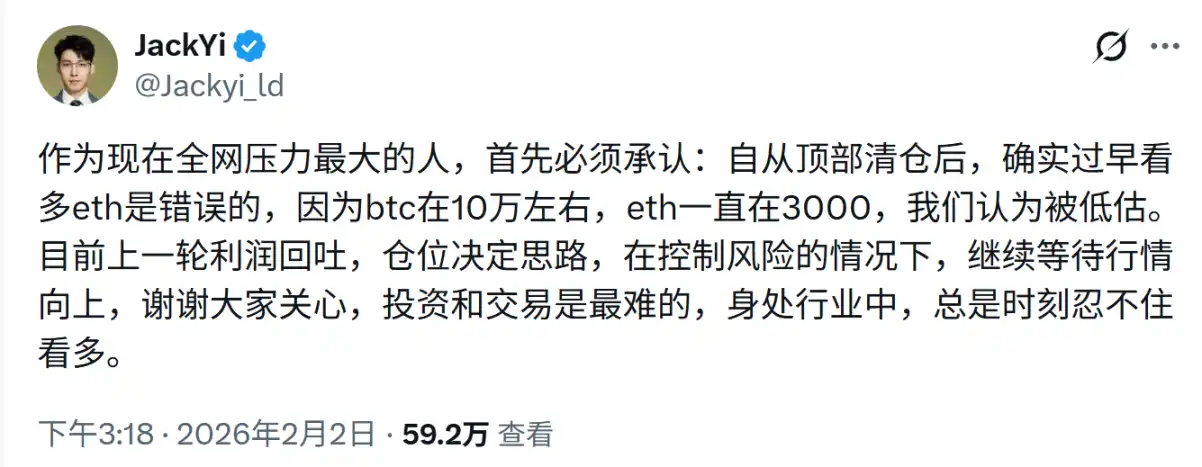
On the same day Tom Lee posted, Jack Yi also publicly reflected: As the person under the most pressure on the entire network right now, I must first admit that being bullish on ETH too early was a mistake... Currently, the profits from the last round have been given back. While controlling risk, I will wait for the market to move upward.
Ultimately, using on-chain循环贷 to go long is equivalent to laying your cards open for everyone to see. Whether there is truly organized targeted killing or not, when you publicize your position size, cost, leverage ratio, and liquidation line on-chain, you have already placed yourself on the sniper list of all共振 forces in the market.

Of course, to some extent, this is also a form of path dependency. After all, in April 2025, Jack Yi publicly called for going long on ETH when it fell to $1450, continuously added positions, and ultimately welcomed a rebound and profits, once becoming a "spiritual banner" for ETH bulls.

It's just that this time, the story's direction remains unknown, and Tom Lee's chances of winning are clearly greater.

In Conclusion

From Three Arrows Capital to FTX, to the now publicly spectated BitMine, the script never changes: all collapses begin with excessive arrogance regarding long-term certainty.

As Keynes's overused quote goes: "In the long run, we are all dead." Jack Yi's mistake was not in being long-term bullish on Ethereum, but in underestimating the残忍程度 of the market in its short-term irrational phases. From the moment he chose to openly add leverage, he had already sacrificed himself to this transparent algorithmic world.

But looking at it from another angle, this might be a necessary "great cleansing" for Ethereum. Every cycle needs such a whale fall process: whales being围观, leverage being squeezed out, path dependency being shattered,筹码重新分布.

Only after the necessary losses are stopped, and the necessary holding out is finished, can it truly advance lightly.


Пов'язані питання

QWhat is the main reason why Trend Research (led by Jack Yi) is facing significant pressure and public scrutiny?

ATrend Research is under significant pressure because it used a high-leverage strategy (recursive borrowing on Aave) to long ETH publicly on-chain. As ETH's price fell sharply, it neared liquidation levels, forcing them to sell ETH to repay loans and avoid being liquidated, creating a negative feedback loop of selling pressure and public scrutiny.

QHow does BitMine's approach to holding ETH differ fundamentally from Trend Research's strategy?

ABitMine holds a massive amount of ETH (over 4.2 million coins) as a long-term treasury asset with low leverage, high staking participation, and zero debt, allowing it to weather price volatility. In contrast, Trend Research uses a high-leverage, debt-fueled strategy on Aave, making it vulnerable to liquidations during price declines.

QWhat paradoxical on-chain data is presented in the article that contrasts with the negative price action of ETH?

ADespite the price decline, a record high of over 30% of ETH's circulating supply (more than 36.6 million ETH) is now staked on the Beacon Chain, indicating strong long-term conviction and a shift of ETH from a speculative asset to a productive, yield-generating one.

QAccording to the article, what is a key risk of making a large, public, leveraged long position on a transparent ledger like a blockchain?

AThe key risk is that your entire strategy—including position size, cost basis, leverage ratio, and liquidation price—is visible to everyone. This transparency makes you a target for market forces and potential 'sniping,' as others can trade against your known vulnerabilities.

QWhat financial metric does Tom Lee cite to demonstrate BitMine's resilience despite its massive paper losses on its ETH holdings?

ATom Lee cited that BitMine holds $586 million in cash reserves and that 67% of its ETH is staked, generating over $1 million in daily cash flow, providing a buffer against market volatility and allowing them to hold long-term.

Пов'язані матеріали

Торгівля

Спот
Ф'ючерси

Популярні статті

Що таке ETH 2.0

ETH 2.0: Нова ера для Ethereum Вступ ETH 2.0, широко відомий як Ethereum 2.0, є величезним оновленням для блокчейну Ethereum. Ця трансформація не є лише косметичною зміною; вона має на меті фундаментально покращити масштабованість, безпеку та сталий розвиток мережі. З переходом від енергомісткого механізму консенсусу Proof of Work (PoW) до більш ефективного Proof of Stake (PoS), ETH 2.0 обіцяє трансформаційний підхід до екосистеми блокчейнів. Що таке ETH 2.0? ETH 2.0 — це збірка особливих, взаємопов’язаних оновлень, спрямованих на оптимізацію можливостей та продуктивності Ethereum. Це перетворення розроблене для вирішення критичних викликів, з якими стикалося існуюче механізм Ethereum, зокрема щодо швидкості транзакцій та заторів у мережі. Мета ETH 2.0 Основні цілі ETH 2.0 зосереджені на покращенні трьох ключових аспектів: Масштабованість: Мета — значно підвищити кількість транзакцій, які мережа може обробити за секунду; ETH 2.0 прагне вийти за межі поточного обмеження приблизно в 15 транзакцій на секунду, потенційно досягнувши тисяч. Безпека: Підвищені заходи безпеки є невід’ємною частиною ETH 2.0, зокрема через покращену стійкість до кібератак і збереження децентралізованої етики Ethereum. Сталий розвиток: Новий механізм PoS розроблений не тільки для підвищення ефективності, але й для різкого зменшення споживання енергії, що узгоджує операційну структуру Ethereum з екологічними міркуваннями. Хто є творцем ETH 2.0? Створення ETH 2.0 можна віднести до Ethereum Foundation. Ця неприбуткова організація, яка відіграє важливу роль у підтримці розвитку Ethereum, очолюється відомим співавтором Віталіком Бутеріним. Його бачення більш масштабованого та стійкого Ethereum стало рушійною силою цього оновлення, залучаючи внески зі всього світу від розробників і ентузіастів, які прагнуть покращити протокол. Хто є інвесторами ETH 2.0? Хоча подробиці про інвесторів ETH 2.0 не були оприлюднені, відомо, що Ethereum Foundation отримує підтримку від різних організацій та осіб у сфері блокчейну та технологій. Ці партнери включають венчурні капітальні компанії, технологічні компанії та філантропічні організації, які мають спільний інтерес у підтримці розвитку децентралізованих технологій та інфраструктури блокчейну. Як працює ETH 2.0? ETH 2.0 відзначається введенням низки ключових функцій, які відрізняють його від попередника. Proof of Stake (PoS) Перехід до механізму консенсусу PoS є одним із знакових змін ETH 2.0. На відміну від PoW, який покладається на енергомісткий видобуток для перевірки транзакцій, PoS дозволяє користувачам підтверджувати транзакції та створювати нові блоки відповідно до кількості ETH, яку вони ставлять у мережі. Це призводить до підвищення енергоефективності, зменшуючи споживання приблизно на 99,95%, завдяки чому Ethereum 2.0 стає значно більш екологічною альтернативою. Шардові ланцюги Шардові ланцюги є ще одним ключовим нововведенням ETH 2.0. Ці менші ланцюги працюють паралельно з основним ланцюгом Ethereum, що дозволяє обробляти кілька транзакцій одночасно. Це підходи покращує загальну ємність мережі, усуваючи проблеми масштабованості, які переслідували Ethereum. Beacon Chain У центрі ETH 2.0 знаходиться Beacon Chain, яка координує мережу і управляє протоколом PoS. Вона виконує роль організатора: контролює валідаторів, забезпечує з’єднання шард з мережею і моніторить загальний стан екосистеми блокчейнів. Хронологія ETH 2.0 Шлях ETH 2.0 характеризується кількома ключовими етапами, які відображають еволюцію цього значного оновлення: Грудень 2020: Запуск Beacon Chain ознаменував введення PoS, проклавши шлях до міграції на ETH 2.0. Вересень 2022: Завершення "Злиття" є знаковим моментом, коли мережа Ethereum успішно перейшла з PoW на PoS, відкриваючи нову еру для Ethereum. 2023: Очікуване розгортання шардових ланцюгів має на меті подальше покращення масштабованості мережі Ethereum, закріплюючи ETH 2.0 як надійну платформу для децентралізованих додатків і послуг. Ключові особливості та переваги Покращена масштабованість Однією з найзначніших переваг ETH 2.0 є його покращена масштабованість. Поєднання PoS та шардових ланцюгів дозволяє мережі розширити свою ємність, що дозволяє їй обробляти набагато більший обсяг транзакцій в порівнянні з класичною системою. Енергоефективність Запровадження PoS є величезним кроком до енергоефективності в технології блокчейн. Значно зменшуючи споживання енергії, ETH 2.0 не тільки знижує операційні витрати, але також ближче узгоджується з глобальними цілями сталого розвитку. Підвищена безпека Оновлені механізми ETH 2.0 сприяють підвищенню безпеки по всій мережі. Впровадження PoS, поряд з інноваційними контрольними заходами, встановленими через шардові ланцюги та Beacon Chain, забезпечує вищий рівень захисту від потенційних загроз. Зниження витрат для користувачів З покращенням масштабованості вплив на витрати на транзакції також стане очевидним. Збільшена ємність і зменшені затори, як очікується, призведуть до зниження зборів для користувачів, що зробить Ethereum більш доступним для повсякденних транзакцій. Висновок ETH 2.0 є значною еволюцією в екосистемі блокчейну Ethereum. Оскільки він вирішує важливі питання, такі як масштабованість, споживання енергії, ефективність транзакцій і загальна безпека, важливість цього оновлення не можна недооцінювати. Перехід до Proof of Stake, введення шардових ланцюгів і фундаментальна робота Beacon Chain свідчать про майбутнє, в якому Ethereum може задовольнити зростаючі вимоги децентралізованого ринку. В індустрії, що рухається вперед завдяки інноваціям та прогресу, ETH 2.0 є підтвердженням можливостей технології блокчейн у прокладенні шляху до більш сталого та ефективного цифрового економіки.

168 переглядів усьогоОпубліковано 2024.04.04Оновлено 2024.12.03

Що таке ETH 2.0

Що таке ETH 3.0

ETH3.0 та $eth 3.0: Глибоке дослідження майбутнього Ethereum Вступ У швидко змінюваному світі криптовалют та технології блокчейн, ETH3.0, часто позначуваний як $eth 3.0, став темою значного інтересу та спекуляцій. Цей термін охоплює два основні концепти, які потребують уточнення: Ethereum 3.0: Це потенційне майбутнє оновлення, яке має на меті покращення можливостей існуючого блокчейну Ethereum, зокрема, фокусуючись на поліпшенні масштабованості та продуктивності. ETH3.0 Мем Токен: Цей окремий криптовалютний проект прагне використовувати блокчейн Ethereum для створення екосистеми, орієнтованої на меми, сприяючи залученню до криптовалютної громади. Розуміння цих аспектів ETH3.0 є важливим не лише для криптоентузіастів, але й для тих, хто спостерігає за широкими технологічними тенденціями у цифровому просторі. Що таке ETH3.0? Ethereum 3.0 Ethereum 3.0 пропонується як оновлення вже існуючої мережі Ethereum, яка стала основою багатьох децентралізованих додатків (dApps) та смарт-контрактів з моменту свого виникнення. Передбачувані удосконалення зосереджені в основному на масштабованості — інтегруючи передові технології, такі як шардінг та нульові знання (zk-докази). Ці технологічні нововведення націлені на забезпечення безпрецедентної кількості транзакцій на секунду (TPS), потенційно досягаючи мільйонів, тим самим вирішуючи одну з найзначніших обмежень, з якими стикається сучасна технологія блокчейн. Покращення є не лише технічним, а й стратегічним; воно спрямоване на підготовку мережі Ethereum до широкого прийняття та корисності в майбутньому, позначеному збільшеним попитом на децентралізовані рішення. ETH3.0 Мем Токен На відміну від Ethereum 3.0, ETH3.0 Мем Токен пропонує легшу та грайливішу домену, поєднуючи культуру інтернет-мемів із динамікою криптовалют. Цей проект дозволяє користувачам купувати, продавати та обмінювати меми на блокчейні Ethereum, надаючи платформу, яка сприяє залученню громади через креативність та спільні інтереси. ETH3.0 Мем Токен має на меті продемонструвати, як технологія блокчейн може перетинатися з цифровою культурою, створюючи випадки використання, які є водночас розважальними та фінансово життєздатними. Хто є творцем ETH3.0? Ethereum 3.0 Ініціатива щодо Ethereum 3.0 переважно підтримується консорціумом розробників та дослідників у межах громади Ethereum, зокрема, до складу якого входить Джастін Дрейк. Відомий своїми думками та внеском у розвиток Ethereum, Дрейк є помітною особистістю в обговореннях щодо переходу Ethereum на новий рівень консенсусу, який називається «Beam Chain». Цей колабораційний підхід до розробки свідчить про те, що Ethereum 3.0 не є продуктом єдиного творця, а скоріше втіленням колективної винахідливості, спрямованої на просування технології блокчейн. ETH3.0 Мем Токен Деталі про творця ETH3.0 Мем Токена наразі не відстежуються. Природа мем-токенів часто призводить до більш децентралізованої та громартової структури, що може пояснити відсутність специфічної атрибуції. Це узгоджується з етикою ширшої крипто-спільноти, де інновації часто виникають з колективних, а не індивідуальних зусиль. Хто є інвесторами ETH3.0? Ethereum 3.0 Підтримка Ethereum 3.0 переважно надходить від Фонду Ethereum поряд з ентузіастичною спільнотою розробників та інвесторів. Це базове співробітництво надає значний градус легітимності та підвищує ймовірність успішної реалізації, оскільки воно використовує довіру та авторитет, накопичені за роки роботи мережі. У швидко змінюваному кліматі криптовалют підтримка громади займає важливу роль у розвитку та прийнятті, позиціонуючи Ethereum 3.0 як серйозного конкурента для майбутніх блокчейн-інновацій. ETH3.0 Мем Токен Хоча наразі доступні джерела не надають явної інформації щодо інвестиційних фондів або організацій, що підтримують ETH3.0 Мем Токен, це свідчить про типову модель фінансування для мем-токенів, яка часто спирається на підтримку знизу та залучення громади. Інвестори в такі проекти зазвичай складаються з осіб, які мотивовані потенціалом інновацій, що керуються спільнотою, та духом співпраці, притаманним крипто-спільноті. Як працює ETH3.0? Ethereum 3.0 Відмінні риси Ethereum 3.0 полягають у його запропонованій реалізації технології шардінгу та zk-proof. Шардінг — це метод розподілу блокчейну на менші, керовані частини чи «шарди», які можуть обробляти транзакції одночасно, а не послідовно. Це децентралізоване оброблення допомагає запобігти заторам та забезпечити оперативність мережі навіть під великим навантаженням. Технологія нульових доказів (zk-proof) надає ще один рівень складності, дозволяючи валідацію транзакцій без розкриття підпорядкованих даних. Цей аспект не лише підвищує конфіденційність, а й збільшує загальну ефективність мережі. Також обговорюється включення нульової Ефірної віртуальної машини (zkEVM) в це оновлення, що ще більше підвищить можливості та корисність мережі. ETH3.0 Мем Токен ETH3.0 Мем Токен виділяється завдяки використанню популярності культури мемів. Він створює ринок, на якому користувачі можуть брати участь у торгівлі мемами не лише для розваги, але й для потенційного економічного вигоди. Інтегруючи функції, такі як стейкінг, забезпечення ліквідності та механізми управління, проект сприяє створенню середовища, яке заохочує взаємодію та участь громади. Пропонуючи унікальне поєднання розваг та економічних можливостей, ETH3.0 Мем Токен прагне залучити різну аудиторію, яка охоплює від криптоентузіастів до casual-консумерів мемів. Хронологія ETH3.0 Ethereum 3.0 11 листопада 2024: Джастін Дрейк натякає на майбутнє оновлення ETH 3.0, яке зосереджене на поліпшеннях масштабованості. Це оголошення означає початок формальних обговорень щодо майбутньої архітектури Ethereum. 12 листопада 2024: Очікується, що запропоновану пропозицію для Ethereum 3.0 буде представлено на Devcon у Бангкоку, що готує ґрунт для більш широкого зворотного зв'язку від громади та потенційних наступних кроків у розвитку. ETH3.0 Мем Токен 21 березня 2024: ETH3.0 Мем Токен офіційно потрапляє у список на CoinMarketCap, що означає його дебют у публічному крипто-просторі та підвищує видимість для його меморієнтованої екосистеми. Ключові моменти На завершення, Ethereum 3.0 представляє значну еволюцію в межах мережі Ethereum, зосереджуючись на подоланні обмежень щодо масштабованості та продуктивності через передові технології. Його запропоновані оновлення відображають проактивний підхід до майбутніх вимог і корисності. Натомість ETH3.0 Мем Токен втілює суть культури, керованої громадою, у сфері криптовалют, використовуючи культуру мемів для створення привабливих платформ, які заохочують творчість і участь користувачів. Розуміння окремих цілей і функцій ETH3.0 та $eth 3.0 є надзвичайно важливим для кожного, хто цікавиться поточними подіями в крипто-просторі. З обома ініціативами, які прокладають унікальні шляхи, вони разом підкреслюють динамічну та багатогранну природу інновацій у блокчейн-технологіях.

158 переглядів усьогоОпубліковано 2024.04.04Оновлено 2024.12.03

Що таке ETH 3.0

Як купити ETH

Ласкаво просимо до HTX.com! Ми зробили покупку Ethereum (ETH) простою та зручною. Дотримуйтесь нашої покрокової інструкції, щоб розпочати свою криптовалютну подорож.Крок 1: Створіть обліковий запис на HTXВикористовуйте свою електронну пошту або номер телефону, щоб зареєструвати обліковий запис на HTX безплатно. Пройдіть безпроблемну реєстрацію й отримайте доступ до всіх функцій.ЗареєструватисьКрок 2: Перейдіть до розділу Купити крипту і виберіть спосіб оплатиКредитна/дебетова картка: використовуйте вашу картку Visa або Mastercard, щоб миттєво купити Ethereum (ETH).Баланс: використовуйте кошти з балансу вашого рахунку HTX для безперешкодної торгівлі.Треті особи: ми додали популярні способи оплати, такі як Google Pay та Apple Pay, щоб підвищити зручність.P2P: Торгуйте безпосередньо з іншими користувачами на HTX.Позабіржова торгівля (OTC): ми пропонуємо індивідуальні послуги та конкурентні обмінні курси для трейдерів.Крок 3: Зберігайте свої Ethereum (ETH)Після придбання Ethereum (ETH) збережіть його у своєму обліковому записі на HTX. Крім того, ви можете відправити його в інше місце за допомогою блокчейн-переказу або використовувати його для торгівлі іншими криптовалютами.Крок 4: Торгівля Ethereum (ETH)Легко торгуйте Ethereum (ETH) на спотовому ринку HTX. Просто увійдіть до свого облікового запису, виберіть торгову пару, укладайте угоди та спостерігайте за ними в режимі реального часу. Ми пропонуємо зручний досвід як для початківців, так і для досвідчених трейдерів.

2.9k переглядів усьогоОпубліковано 2024.12.10Оновлено 2025.03.21

Як купити ETH

Обговорення

Ласкаво просимо до спільноти HTX. Тут ви можете бути в курсі останніх подій розвитку платформи та отримати доступ до професійної ринкової інформації. Нижче представлені думки користувачів щодо ціни ETH (ETH).

活动图片













