Hong Kong Crypto Scam Shock: Woman Loses Nearly $1 Million As AI Fraud Surges

bitcoinistОпубліковано о 2026-04-19Востаннє оновлено о 2026-04-19

Анотація

Hong Kong Crypto Scam Shock: Woman Loses Nearly $1 Million As AI Fraud Surges A Hong Kong woman lost HK$7.7 million (approximately $982,000) after being lured into a fraudulent cryptocurrency investment platform. The scam began on Telegram, where a person posing as an investment expert promoted an AI-powered trading strategy with guaranteed returns. After making 17 transfers of USDT and Ethereum, the victim was unable to withdraw her funds. Hong Kong Police have reported a significant surge in such online investment fraud, with over 80 cases recorded in a single week, totaling losses of nearly HK$80 million. Authorities warn that scammers are increasingly using sophisticated tactics, including promises of "AI trading" and "guaranteed profits," to appear credible. This follows a similar incident last month where a retiree lost HK$6.6 million in a multi-stage scam. Police urge the public to be cautious of unsolicited investment advice and to verify platforms through the official CyberDefender service before transferring any money. They emphasize that no legitimate investment can guarantee returns. Investigations are ongoing.

Her withdrawal requests kept getting denied. That was the moment a Hong Kong woman realized the crypto investment platform she had been using for weeks was fake — and that her money was gone.

Scam Built On Fake Promises

The woman had made 17 separate transfers of USDT and Ethereum to the fraudulent platform, losing nearly HK$7.7 million, roughly $982,000.

It started on Telegram, where someone posing as an investment expert approached her and pitched a trading strategy powered by artificial intelligence.

The promised returns were guaranteed. The platform looked convincing. She transferred the funds. When she tried to take her money out, nothing came through.

Hong Kong Police have since confirmed the case as part of a wider surge in online investment fraud hitting the city.

Based on reports from authorities, over 80 such cases were recorded in a single week, with combined losses topping HK$80 million — close to $10 million.

Different Types Of Scam

According to Vectra, AI scams now fall into seven distinct categories, with deepfake video, voice cloning, and AI-driven BEC among the biggest threats to enterprises. This framework spans both consumer- and enterprise-focused attacks.
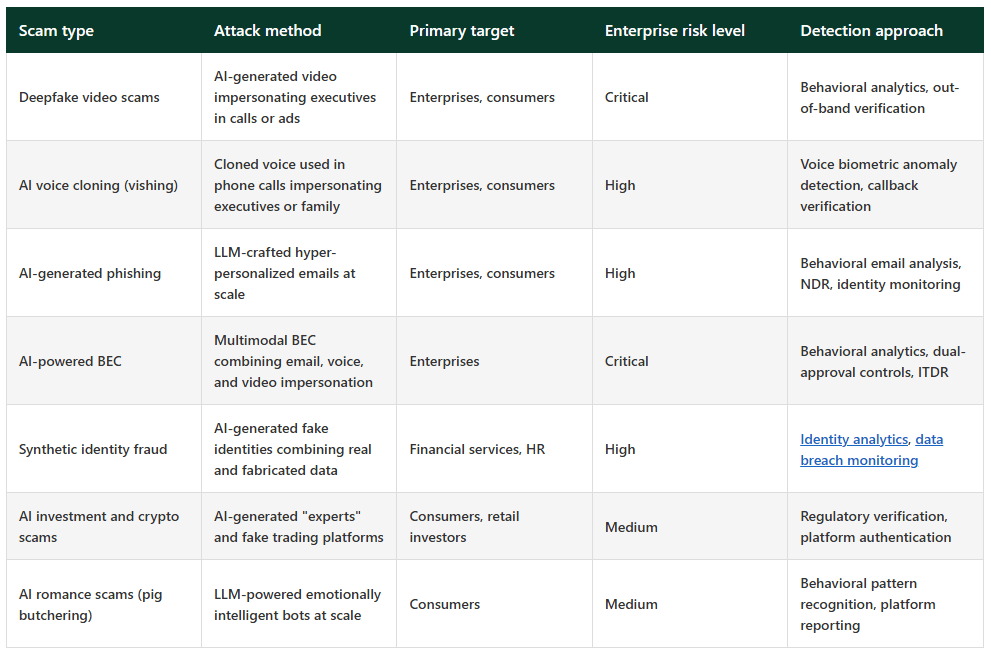
Types of AI scams. Source: Vectra

A Pattern Repeating Itself

This is not the first case of its kind, and it is not the last. Just last month, a 66-year-old retiree lost HK$6.6 million to a multi-stage scheme that played out over six months.

In that case, scammers first posed as investment advisors to win the victim’s trust, then came back later with a fake “recovery” offer — squeezing even more money out of someone who had already been burned.

Officials say the playbook is getting more sophisticated. Fraudsters are now borrowing the language of technology to add credibility to their pitches.

BTCUSD now trading at $76,179. Chart: TradingView

Terms like “AI trading” and “guaranteed profits” are being used to draw people in, according to the Hong Kong Police Force.

The artificial intelligence angle makes the pitch harder to dismiss, especially for victims who may not be familiar with how such systems actually work.

Authorities Push Public To Verify Before Transferring

Police are urging residents to be cautious with unsolicited investment advice, whether it arrives through social media, messaging apps, or anywhere else.

They are also encouraging people to use the official CyberDefender platform to check whether an investment site or service carries signs of fraud before sending any funds.

One warning is worth repeating: no legitimate investment guarantees returns. Reports indicate that every recent case in this wave involved that exact promise.

The woman who lost nearly $1 million, the retiree who lost HK$6.6 million — both were told their money was safe and the profits were certain. Neither turned out to be true.

Investigations into the cases are ongoing.

Featured image from The Verge, chart from TradingView

Пов'язані питання

QHow much money did the Hong Kong woman lose in the crypto scam?

AShe lost nearly HK$7.7 million, which is roughly $982,000.

QWhat was the initial point of contact where the victim was approached by the scammer?

AThe scammer first approached her on the messaging app Telegram, posing as an investment expert.

QAccording to Vectra, what are some of the biggest AI scam threats to enterprises?

AThe biggest threats include deepfake video, voice cloning, and AI-driven Business Email Compromise (BEC).

QWhat tool are Hong Kong authorities encouraging the public to use to verify investment sites?

AThey are encouraging people to use the official CyberDefender platform to check for signs of fraud.

QWhat common promise was made in every recent case of this fraud wave, according to reports?

AEvery recent case involved the promise of guaranteed returns, which is a sign of a scam as no legitimate investment can guarantee profits.

Пов'язані матеріали

Winter for Crypto IPOs: Consensys and Ledger Withdraw Applications

The crypto IPO window is tightening significantly in 2026, marked by prominent companies delaying or pausing their public listing plans. Following a successful 2025 "harvest year" that saw Circle, Bullish, and Gemini go public amidst a bull market, the tide has turned. Consensys, developer of MetaMask, recently postponed its IPO until at least fall 2026. Hardware wallet leader Ledger also suspended its planned US listing due to unfavorable market conditions, with Kraken having previously delayed its own plans. This shift is driven by a cooling market in 2026, characterized by a significant Bitcoin price correction, declining trading volumes, and reduced investor risk appetite for crypto stocks. The poor post-IPO performance of 2025 listings like Circle and Bullish, which saw major share price declines, has heightened investor caution. This contrasts sharply with the current AI sector, where companies like SpaceX, OpenAI, and Anthropic are commanding massive valuations and investor enthusiasm based on narratives of stable, exponential growth. Crypto companies now face pressure to transition from hype-driven models to demonstrating reliable cash flows and robust compliance. While the paused IPO plans may lead to valuation resets and affect ecosystem liquidity, they also accelerate industry consolidation toward stronger, more compliant infrastructure players. A potential recovery in Bitcoin's price and clearer regulations could reopen the IPO window in the latter half of 2026.

marsbit3 год тому

Winter for Crypto IPOs: Consensys and Ledger Withdraw Applications

marsbit3 год тому

ChatGPT Can Manage Your Money for You. Would You Trust It with Your Bank Account?

OpenAI has launched a personal finance tool for ChatGPT, currently in preview for US-based ChatGPT Pro users. This feature allows users to connect their bank and investment accounts (via Plaid, supporting over 12,000 institutions) directly to ChatGPT. It analyzes transactions, generates visual dashboards, and offers conversational financial advice—such as budgeting or planning for major purchases—based on the user's actual data. This move follows OpenAI's acquisitions of fintech startups Roi and Hiro Finance, signaling a strategic push into vertical "super assistant" applications, similar to its earlier health-focused feature. However, the launch has sparked significant privacy concerns. Critics question the safety of granting such sensitive financial access to an AI, especially amid ongoing lawsuits alleging OpenAI shared user chat data with third parties like Meta and Google. OpenAI emphasizes that ChatGPT only reads data (no transaction capabilities), deletes it within 30 days if disconnected, and offers opt-out options for model training. Yet, trust remains a major hurdle. The trend reflects a broader industry shift: AI companies like Anthropic and Perplexity are also targeting high-value, data-rich domains like finance and health. While technically promising, the tool operates in a regulatory gray area—it provides personalized guidance but disclaims formal financial advice or liability. Ultimately, OpenAI's challenge is convincing users to trust an AI with their most private financial information.

marsbit3 год тому

ChatGPT Can Manage Your Money for You. Would You Trust It with Your Bank Account?

marsbit3 год тому

Торгівля

Спот
Ф'ючерси
活动图片





