Hassabis Predicts: AI's 'Move 37' in Mathematics is Only a Matter of Time

marsbitОпубліковано о 2026-08-10Востаннє оновлено о 2026-08-10

Анотація

Demis Hassabis, the co-founder of DeepMind, predicts that AI achieving a "Move 37" level breakthrough in mathematics—solving a major unsolved problem like a Millennium Prize problem—is only a matter of time. He draws a parallel to the pivotal "Move 37" in the 2016 AlphaGo vs. Lee Sedol match, where AI's unconventional play challenged human understanding. Conversely, Lee Sedol's "Move 78" victory highlighted human resilience and the potential for human-AI collaboration. The article details AI's rapid progress in mathematics. Starting from basic arithmetic errors in 2023, AI systems like AlphaProof and Gemini Deep Think reached gold-medal levels in the International Mathematical Olympiad by 2025. The shift from problem-solving to genuine research began in 2025, with AI (e.g., GPT-5, Claude Fable 5) contributing key ideas to solve or refute long-standing conjectures like the Erdős problem 848 and the Jacobian conjecture. In 2026, AI achieved breakthroughs such as OpenAI's solution to the plane unit-distance problem and DeepMind's Aletheia agent autonomously tackling multiple open problems. Hassabis envisions a "centaur" era of science, where human intuition guides AI in complex, less-verifiable fields like biology and drug discovery. While AI can enhance human creativity and efficiency, as seen in post-AlphaGo围棋, there is a risk of over-reliance diminishing human judgment. The core challenge is for humanity to find its own "Move 78"—leveraging AI while maintaining critical ins...

AI in Mathematics, Ushering in a 'Slap-in-the-Face Moment' Similar to What the Go World Experienced a Decade Ago.

Holding a similar view is none other than Demis Hassabis, co-founder of DeepMind, who spearheaded the AlphaGo project ten years ago.

Although Hassabis recently underwent a series of role changes—transitioning from CEO of DeepMind to Google's Chief Scientist and Chairman of DeepMind.

When it comes to how AI is changing human cognition, he remains one of the most authoritative voices.
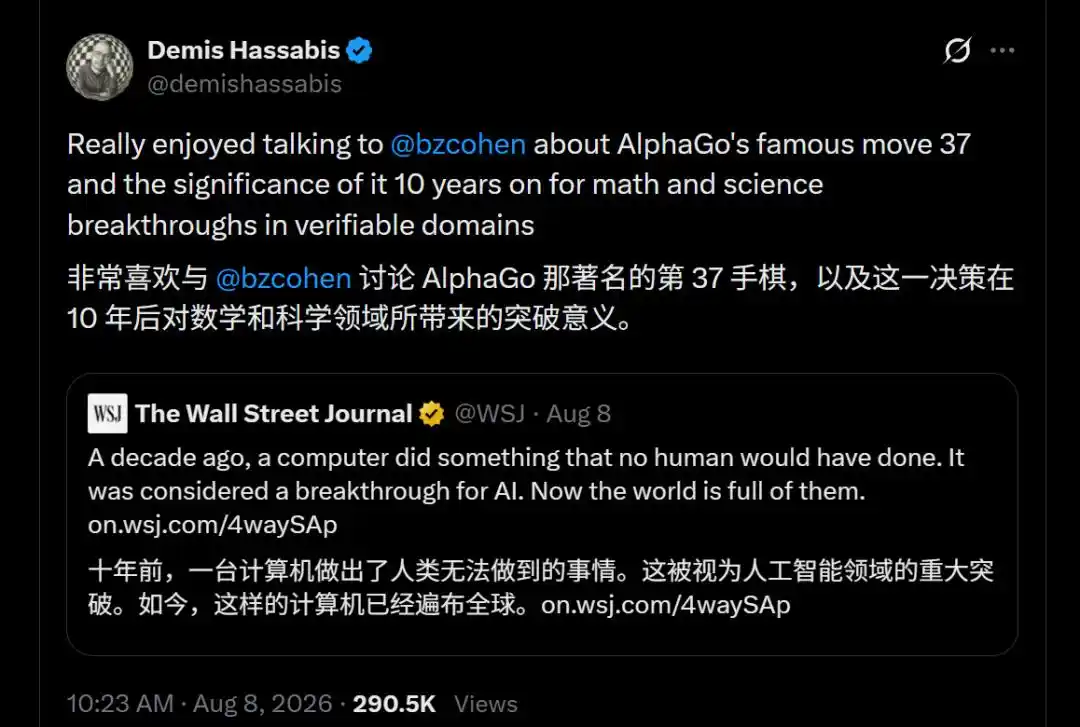
A decade ago, he witnessed AlphaGo's earth-shattering Move 37 defeat legendary Go player Lee Sedol.

A decade later, now at the forefront of AI's push into mathematics and scientific frontiers, he offers another new assessment:

If AI can solve one of the Millennium Prize Problems in mathematics, that would be a 'Move 37-level' breakthrough. At present, it seems to be only a matter of time before AI reaches that level, I see no reason why it wouldn't happen.

Move 37, a moment representing the first time humanity was collectively humbled by AI, is thus remembered by the world.

But few remember that Move 37 was not the only answer left by that man-machine battle.

Two matches later, after losing three games in a row, Lee Sedol played Move 78.

This move also had a probability of only one in ten thousand of being played by a human, yet it successfully disrupted AlphaGo, helping Lee Sedol secure the only human victory in the five-match series.

Looking back at this man-machine battle ten years later, one can't help but marvel:

The relationship between humans and AI is precisely like these two numbers.

One made humanity recognize AI anew, the other made humanity recognize itself anew.

The Face-Slapping Move 37

Turning back the clock to March 2016, the five-match series between AlphaGo and Lee Sedol was taking place in Seoul, South Korea.

In the first game, Lee Sedol lost to AlphaGo, an inauspicious start.

Arriving at the second game, the whole world awaited a counterattack from this legendary player.

Midway through the game, Lee Sedol temporarily left the board, had a cigarette to calm his nerves. But when he returned to the board, a black stone had already been placed.

Move 37.
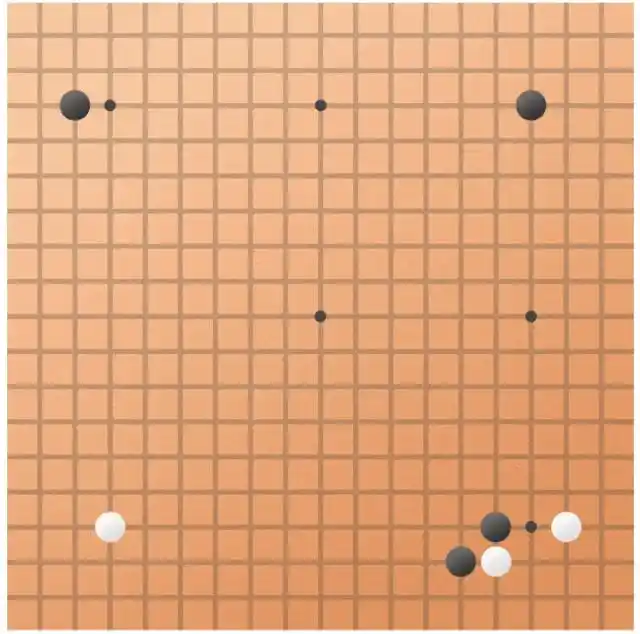
Lee Sedol did not sit down immediately. He stood there staring at the board, hardly able to believe his eyes.

The reason was simple: this move was too inhuman.

AlphaGo placed the stone on the fifth line, deviating from centuries of positional intuition held by professional players. In conventional human Go understanding, stones should occupy higher positions to control the board, but AlphaGo placed it in an area with no immediate fighting.

The live commentators initially even suspected AlphaGo had made a mistake.

Professional 9-dan Michael Redmond, serving as commentator, stared at the black stone for a long time, unable to judge, could only say:

I don't know if this is good or bad, it's very strange.

His co-commentator was more direct:

I thought it was a mistake.

The DeepMind team later calculated the probability of a human player choosing this move at one in ten thousand.

But as the game progressed, people gradually realized this was not a bad move; it was a brilliant move that changed the course of the battle on a larger scale.

About 100 moves later, this seemingly misplaced black stone became the key to AlphaGo's victory in the second game.

Later, this moment of collective human misjudgment was gradually dubbed the 'Slap-in-the-Face Moment'

Originally thinking AI was wrong, but in the end, it was humans themselves who were wrong.

Beyond the slap, this move also made the world realize for the first time that AI could not only mimic human play, but also make moves humans had never considered.

And just ten years later, 'Move 37' indeed re-emerged, and this time it's linked to an ancient discipline:

Mathematics.

For AI, Go and mathematics share a major commonality: verifiability.

Because the logic and rules of these fields are sufficiently clear, AI can repeatedly run a simple process:

Try an idea, test it, learn from the results, then try again until it succeeds (the reinforcement learning approach).

This mechanism also explains why mathematics is the first discipline to be 'bombarded' by AI's 'Move 37'.

In fields like drug discovery, biology, etc., whether an idea works often requires lengthy experiments to verify.

Mathematics is different; a proof can be checked step by step, right or wrong, so AI can tirelessly search.

And so, as AI capabilities grow stronger, change began accelerating on a yearly basis.

Starting with ChatGPT's birth in 2023, large models still stumbled on basic arithmetic problems; flubs like "Which is larger, 9.11 or 9.9?" once caused amusement.

But by 2024, DeepMind's AlphaProof and AlphaGeometry 2 had already stormed into the International Mathematical Olympiad (IMO).

The two systems solved 4 out of 6 problems, scoring 28 points, reaching silver medal level (just 1 point short of that year's gold medal threshold).

And merely a year later, Gemini Deep Think solved 5 problems within the official contest's 4.5-hour limit, scoring 35 points, reaching IMO gold medal level.

In two years, AI advanced from novice to IMO gold medalist—astonishing speed.

But this was just the exam hall.

What really made the mathematical community feel the tide rushing in was AI starting to move from 'problem-solving' to 'research'.

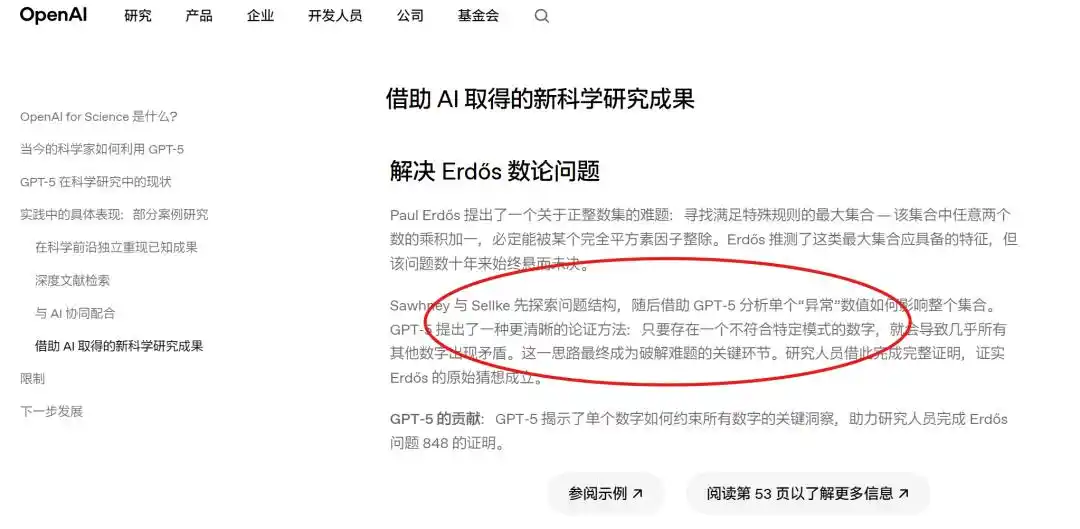
In 2025, GPT-5 participated in solving Erdős Problem 848, proposing a key estimate required for the proof.

Mathematicians refined and tightened it, ultimately completing the full proof.
The same year, UCLA mathematician Ernest Ryu used GPT-5 to find a breakthrough for an open problem that had puzzled optimization theory for 40 years.
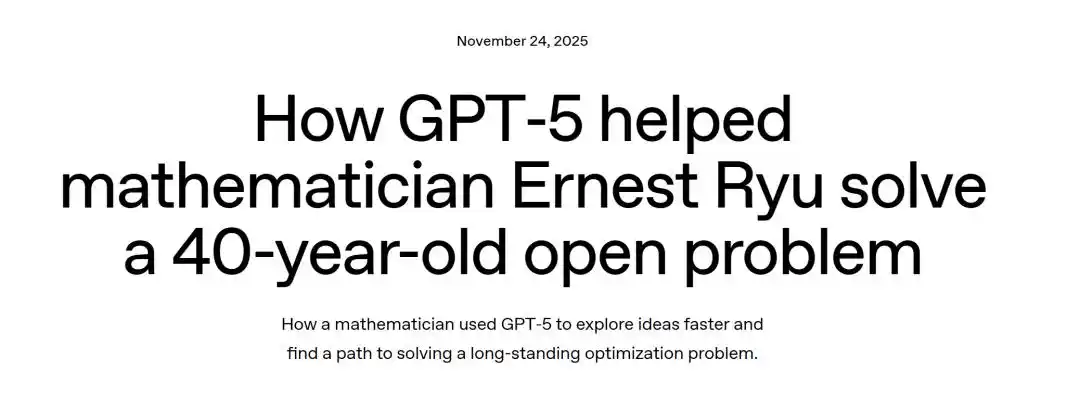
At this stage, AI was no longer just calculating answers; it began contributing key ideas.

Then, as time came to 2026, a series of major mathematical problems began to see breakthroughs.

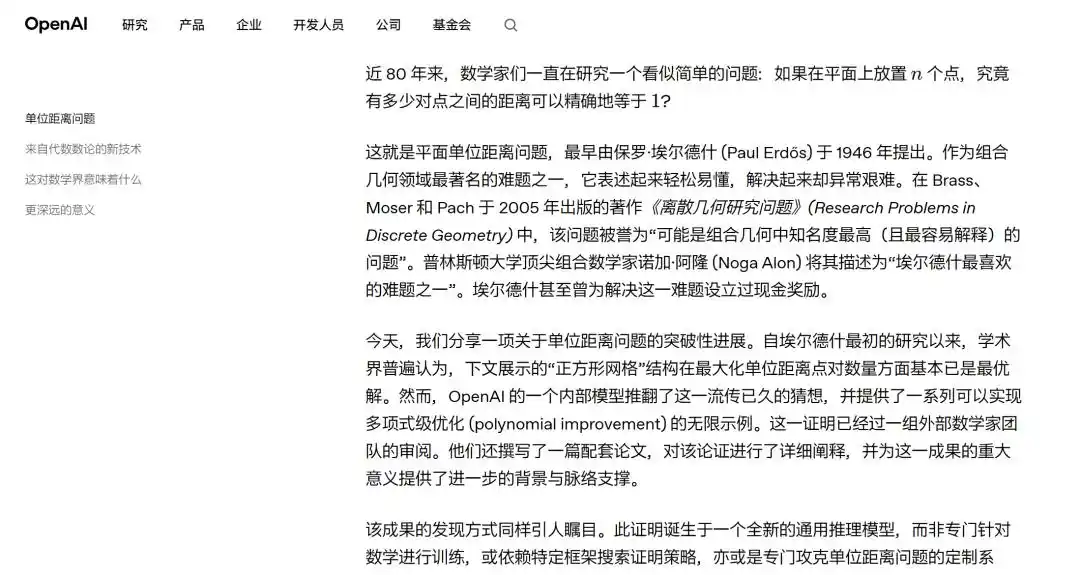
Leading the charge with a bombshell was again OpenAI.

An internal general-purpose reasoning model set its sights on the Unit Distance Problem in the plane. Posed by mathematician Paul Erdős in 1946, it asks: given n points placed on a plane, what is the maximum number of pairs of points exactly distance 1 apart.

For nearly 80 years, the mathematical consensus was that constructions like square grids were near-optimal.

But the AI directly borrowed a set of tools from seemingly unrelated algebraic number theory, constructing an entirely new set of points, overturning this long-held conjecture.

The entire proof was subsequently verified by external mathematicians.

OpenAI stated that this was the first time a general-purpose AI autonomously solved an open problem of significant standing in a mathematical subfield.
Following closely, Anthropic also made its move.

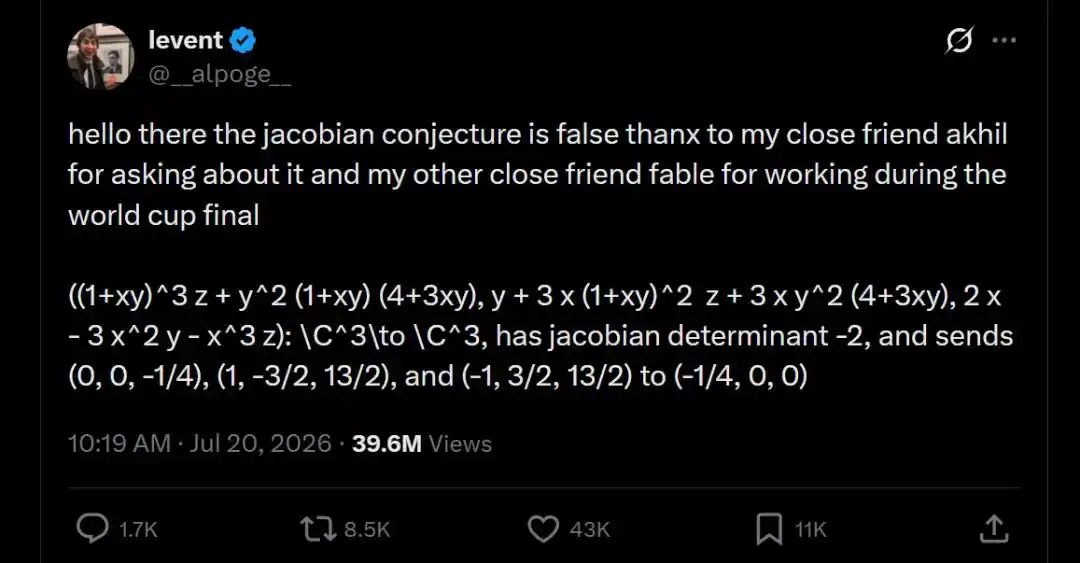
In July 2026, Anthropic mathematician Levent Alpöge, using Claude Fable 5, found an explicit counterexample to the Jacobian Conjecture.

A conjecture that had puzzled mathematicians for 87 years was thus disproven by AI overnight.
There were even instances of OpenAI and Anthropic joining forces.

Just a couple of days ago, GPT-5.6 and Fable 5 teamed up to solve a mathematical puzzle that had been open for 25 years.

(There are plenty of similar stories...)

But perhaps the most astonishing is Google, as DeepMind is turning such breakthroughs into an assembly line.

Its mathematical agent, Aletheia, no longer just generates one answer; it repeatedly proposes proofs, checks for flaws, refutes itself, and then searches for new paths.

DeepMind used it to scan 700 open problems in the Erdős conjecture database.

Among them, AI autonomously solved 4 unsolved problems and contributed to multiple mathematical results of publishable quality.

This attempt demonstrates that AI has begun systematically exploring the blank spaces in the mathematical world.

So it's not hard to imagine:

AI solving more major mathematical problems is truly just a matter of time.

From problem-solving to research, from reiterating known knowledge to proposing unknown answers, Move 37 in mathematics is being played one after another.

Searching for Humanity's Move 78

And facing this moment that is most likely approaching, humanity will undoubtedly confront a soul-searching question:

If AI will keep making novel moves humans have never considered, what should humanity do?

Move 78 from that decade-ago match might be the answer.

In the fourth match of the five-game series, Lee Sedol, having already lost three in a row, wedged a white stone into the center of AlphaGo's formation.

This move was also unconventional; AlphaGo estimated the probability of a human playing it at one in ten thousand.

Subsequently, the machine lost its composure.

Lee Sedol ultimately secured the only human victory, and Move 78 was thus dubbed the 'Hand of God' move.

This victory did not mean humans had overcome AI again.

But it at least showed that humans, after understanding the machine, could find a next step the machine did not anticipate.

This is precisely the lesson Move 78 leaves for today.

As AI becomes increasingly adept at providing answers, human value will shift more towards asking questions, judging direction, and deciding which answers are truly worth seeking.

Borrowing the concept of 'centaur chess' from chess, where human players cooperate with computer engines.

p.s. After IBM's 'Deep Blue' defeated human world champion Garry Kasparov in 1997, Kasparov advocated and organized the first 'Advanced Chess' (Centaur) tournament in 1998 to explore the potential of human-AI collaboration.

Hassabis believes science is entering a similar 'Centaur Era':

We are entering an era of collaboration between humans and computers. I don't know how long this cycle will last. But for very complex fields, it might be quite long. For instance, in drug discovery, biology, chemistry, etc., these fields are highly complex, dynamic, and not everything can be verified. That's where human intuition and insight are needed to decide the direction forward.

Subsequent developments in Go have proven this point.

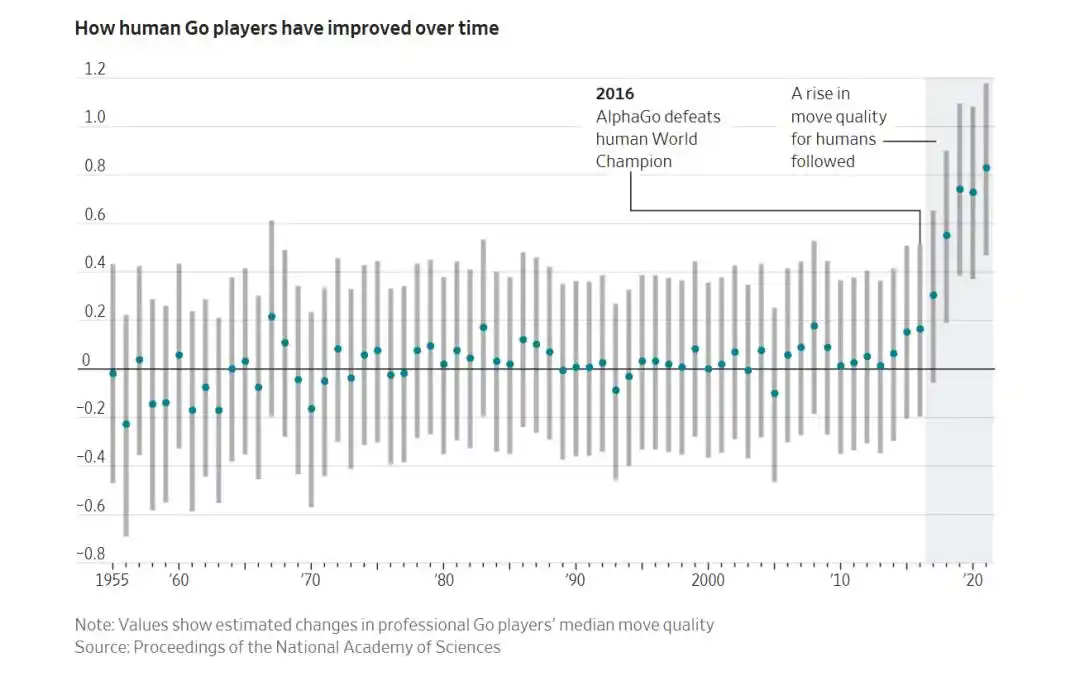
After AlphaGo emerged, AI quickly became a review tool for professional players. Players could use AI to re-examine past joseki, discover which experiences were actually unreliable, and study new moves once deemed unreasonable.

An analysis of over 5.8 million professional move decisions found:

After the advent of superhuman AI, the quality of human players' moves significantly improved, and novel moves also became more frequent.
However, there's another side to the story, namely:

People began relying on AI for answers, gradually losing the ability to judge the answers themselves.

As Lee Sedol said upon retiring, facing an undefeatable opponent made it hard for him to continue enjoying the Go he once loved.

This might be the most cautionary issue in the AI era.

As more fields beyond mathematics are impacted by AI, will more powerful systems make us more creative, efficient, and more human?

Or will they cause people to give up striving?

In the future, AI will keep playing Move 37.

The remaining question is, can humanity find its own Move 78.

Reference links:

[1]https://www.wsj.com/tech/ai/move-37-ai-demis-hassabis-google-deepmind-alphago-ec832a41?st=9XMAjn&reflink=desktopwebshare_permalink

[2]https://x.com/demishassabis/status/2085914742414061886

This article is from the WeChat public account "QbitAI", author: Focus on Frontier Technology

Трендові криптовалюти

Пов'язані питання

QWhat is the significance of 'Move 37' in the context of AI development according to Demis Hassabis?

A'Move 37' refers to a groundbreaking move made by AlphaGo during its 2016 match against Lee Sedol, which defied centuries of established human intuition in Go. According to Demis Hassabis, it represents the moment AI demonstrated it could find novel solutions beyond human thinking, and he believes a similar level of breakthrough is imminent in mathematics, where AI could solve a Millennium Prize Problem.

QWhat major shift in AI's role in mathematics does the article describe between 2024 and 2026?

AThe article describes a shift from AI 'solving problems' (like achieving IMO gold-level performance) to AI 'conducting research' and contributing key novel ideas to solve long-standing open conjectures. Examples include AI disproving the Jacobian Conjecture in 2026 and autonomously tackling significant problems like the planar unit distance problem.

QWhat does the 'Move 78' from the AlphaGo-Lee Sedol match symbolize in the human-AI relationship?

A'Move 78', the unexpected move by Lee Sedol that led to his sole victory in the match, symbolizes the human ability to find novel paths even after understanding AI's capabilities. It represents the hope that humans, by collaborating with and learning from AI, can maintain their creative and strategic value by asking the right questions and finding unexpected solutions.

QWhat concept does Demis Hassabis use to describe the future of scientific discovery with AI?

ADemis Hassabis describes the future as entering a 'centaur era' for science, drawing a parallel to chess. This concept refers to an era of human-computer collaboration, where human intuition and insight are crucial for guiding direction in complex, less verifiable fields like drug discovery and biology, while AI handles vast computation and pattern recognition.

QAccording to the article, what is a potential risk of increasing reliance on powerful AI systems?

AA potential risk is that humans might become overly reliant on AI for answers, leading to a loss of independent judgment and the ability to critically evaluate solutions. The article cites Lee Sedol's retirement sentiment, where the dominance of an unbeatable AI opponent diminished his enjoyment of Go, illustrating how reliance could potentially stifle human motivation and creativity.

Пов'язані матеріали

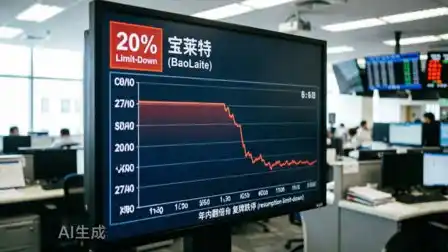
Stock Price Doubles Within the Year, Plummets 20% After Resumption, Baolai Medical's 'Chip Backdoor Listing' Script Ends

On August 10, 2026, BPL (300246.SZ) resumed trading after a nearly week-long suspension and immediately fell by a 20% limit-down. This plunge was triggered by the termination of a planned controlling stake transfer, dashing earlier market speculation. In January 2026, Zhejiang Quwei Zhihe Partnership entered as a significant shareholder, sparking hopes. Investors speculated that its backer, Weigu Information—a specialized "little giant" company in high-reliability solid-state storage chips—might be seeking a backdoor listing through BPL. This "cross-industry restructuring" expectation fueled a strong rally, with BPL's stock price more than doubling in 2026 prior to the halt. However, the deal was called off on August 7, directly causing the sharp sell-off. Underlying BPL's vulnerability is its fundamentally weak business. The company, a medical device firm, is mired in losses, having reported three consecutive years of net losses totaling over 200 million yuan. Its core hemodialysis business is squeezed by government procurement price cuts, while growth in its patient monitor segment has stalled. Furthermore, BPL faces imminent debt pressure with convertible bonds worth approximately 218 million yuan due in September 2026, and its current stock price is far below the conversion price. The failed control transfer may represent a delayed release of negative news, but BPL's core challenges remain: reversing operational losses and addressing its urgent liquidity crisis.

marsbit42 хв тому

Stock Price Doubles Within the Year, Plummets 20% After Resumption, Baolai Medical's 'Chip Backdoor Listing' Script Ends

marsbit42 хв тому

Moore Threads, Having Just Raised 8 Billion, Is Already Planning a Hong Kong IPO

On August 9th, Moore Threads announced plans for a Hong Kong IPO alongside a strong first-half 2026 earnings report. Listed on the Shanghai STAR Market in December 2025 as the "first domestic GPU stock," the company raised 8 billion yuan. Its stock price initially surged but has since fallen 40% from its peak. This decline followed market concerns over its use of substantial idle raised funds for low-risk financial products instead of promised projects. The company's H1 2026 revenue reached 1.74 billion yuan, a 147.4% year-over-year increase, already surpassing its full-year 2025 revenue. This growth is attributed to strong demand for AI and full-feature GPUs, particularly its Kuae AI computing clusters. Despite the revenue surge, Moore Threads remains unprofitable on a non-GAAP basis, with a net loss of 115 million yuan after adjustments. R&D and sales expenses grew significantly. The proposed Hong Kong listing aims to support its global strategy, attract international talent, and improve corporate governance, following the path of other Chinese tech firms pursuing dual listings. However, its港股 IPO valuation may face challenges as international investors could benchmark it against peers like Biren Technology, potentially demanding a discount. In summary, while Moore Threads is expanding rapidly and strategically seeking a港股 listing for global growth, it continues to face profitability challenges amid high costs and market skepticism about its capital allocation and valuation.

marsbit1 год тому

Moore Threads, Having Just Raised 8 Billion, Is Already Planning a Hong Kong IPO

marsbit1 год тому

Торгівля

Спот

Популярні статті

Що таке $S$

Розуміння SPERO: Комплексний огляд Вступ до SPERO Оскільки ландшафт інновацій продовжує еволюціонувати, виникнення технологій web3 та криптовалютних проектів відіграє ключову роль у формуванні цифрового майбутнього. Один з проектів, який привернув увагу в цій динамічній сфері, — це SPERO, позначений як SPERO,$$s$. Ця стаття має на меті зібрати та представити детальну інформацію про SPERO, щоб допомогти ентузіастам та інвесторам зрозуміти його основи, цілі та інновації в рамках web3 та крипто-сектору. Що таке SPERO,$$s$? SPERO,$$s$ — це унікальний проект у криптопросторі, який прагне використати принципи децентралізації та технології блокчейн для створення екосистеми, що сприяє залученню, корисності та фінансовій інклюзії. Проект розроблений для полегшення взаємодії між користувачами новими способами, надаючи їм інноваційні фінансові рішення та послуги. У своїй основі SPERO,$$s$ прагне надати можливості індивідам, забезпечуючи інструменти та платформи, які покращують користувацький досвід у криптовалютному просторі. Це включає в себе можливість більш гнучких методів транзакцій, сприяння ініціативам, що підтримуються спільнотою, та створення шляхів для фінансових можливостей через децентралізовані додатки (dApps). Основна концепція SPERO,$$s$ обертається навколо інклюзивності, прагнучи зменшити розриви в традиційній фінансовій системі, використовуючи переваги технології блокчейн. Хто є творцем SPERO,$$s$? Особистість творця SPERO,$$s$ залишається дещо невідомою, оскільки є обмежені публічно доступні ресурси, що надають детальну інформацію про його засновників. Ця відсутність прозорості може бути наслідком зобов'язання проекту до децентралізації — етики, яку багато проектів web3 поділяють, ставлячи колективні внески вище за індивідуальне визнання. Зосереджуючи обговорення навколо спільноти та її колективних цілей, SPERO,$$s$ втілює суть наділення без виділення конкретних осіб. Таким чином, розуміння етики та місії SPERO є більш важливим, ніж ідентифікація єдиного творця. Хто є інвесторами SPERO,$$s$? SPERO,$$s$ підтримується різноманітними інвесторами, починаючи від венчурних капіталістів до ангельських інвесторів, які прагнуть сприяти інноваціям у крипто-секторі. Зосередження цих інвесторів зазвичай узгоджується з місією SPERO — пріоритет надається проектам, які обіцяють технологічний прогрес у суспільстві, фінансову інклюзію та децентралізоване управління. Ці інвесторські фонди зазвичай зацікавлені в проектах, які не лише пропонують інноваційні продукти, але й позитивно впливають на спільноту блокчейн та її екосистеми. Підтримка з боку цих інвесторів підкріплює SPERO,$$s$ як значного конкурента в швидко змінюваній сфері крипто-проектів. Як працює SPERO,$$s$? SPERO,$$s$ використовує багатогранну структуру, яка відрізняє його від традиційних криптовалютних проектів. Ось деякі ключові особливості, які підкреслюють його унікальність та інноваційність: Децентралізоване управління: SPERO,$$s$ інтегрує моделі децентралізованого управління, надаючи користувачам можливість активно брати участь у процесах прийняття рішень щодо майбутнього проекту. Цей підхід сприяє відчуттю власності та відповідальності серед членів спільноти. Корисність токена: SPERO,$$s$ використовує свій власний криптовалютний токен, розроблений для виконання різних функцій в екосистемі. Ці токени дозволяють здійснювати транзакції, отримувати винагороди та полегшувати послуги, що пропонуються на платформі, підвищуючи загальну залученість та корисність. Шарова архітектура: Технічна архітектура SPERO,$$s$ підтримує модульність та масштабованість, що дозволяє безперешкодно інтегрувати додаткові функції та додатки в міру розвитку проекту. Ця адаптивність є надзвичайно важливою для збереження актуальності в постійно змінюваному крипто-ландшафті. Залучення спільноти: Проект підкреслює ініціативи, що підтримуються спільнотою, використовуючи механізми, які стимулюють співпрацю та зворотний зв'язок. Підтримуючи сильну спільноту, SPERO,$$s$ може краще задовольняти потреби користувачів та адаптуватися до ринкових тенденцій. Фокус на інклюзію: Пропонуючи низькі комісії за транзакції та зручні інтерфейси, SPERO,$$s$ прагне залучити різноманітну базу користувачів, включаючи осіб, які раніше не брали участі в крипто-просторі. Це зобов'язання до інклюзії узгоджується з його загальною місією наділення через доступність. Хронологія SPERO,$$s$ Розуміння історії проекту надає важливі уявлення про його розвиток та етапи. Нижче наведено пропоновану хронологію, що відображає значні події в еволюції SPERO,$$s$: Етап концептуалізації та ідеації: Початкові ідеї, що стали основою SPERO,$$s$, були сформовані, тісно пов'язані з принципами децентралізації та фокусом на спільноті в індустрії блокчейн. Запуск білого паперу проекту: Після концептуального етапу був випущений комплексний білий папір, що детально описує бачення, цілі та технологічну інфраструктуру SPERO,$$s$, щоб залучити інтерес та зворотний зв'язок від спільноти. Створення спільноти та ранні залучення: Активні зусилля були спрямовані на створення спільноти ранніх прихильників та потенційних інвесторів, що полегшило обговорення цілей проекту та отримання підтримки. Подія генерації токенів: SPERO,$$s$ провів подію генерації токенів (TGE) для розподілу своїх рідних токенів серед ранніх прихильників та встановлення початкової ліквідності в екосистемі. Запуск початкового dApp: Перший децентралізований додаток (dApp), пов'язаний з SPERO,$$s$, став доступним, дозволяючи користувачам взаємодіяти з основними функціями платформи. Постійний розвиток та партнерства: Безперервні оновлення та вдосконалення пропозицій проекту, включаючи стратегічні партнерства з іншими учасниками блокчейн-простору, сформували SPERO,$$s$ у конкурентоспроможного та еволюціонуючого гравця на крипто-ринку. Висновок SPERO,$$s$ є свідченням потенціалу web3 та криптовалют для революціонізації фінансових систем та наділення індивідів. Завдяки зобов'язанню до децентралізованого управління, залучення спільноти та інноваційно спроектованих функцій, він прокладає шлях до більш інклюзивного фінансового ландшафту. Як і з будь-якими інвестиціями в швидко змінюваному крипто-просторі, потенційним інвесторам та користувачам рекомендується ретельно досліджувати та обдумано взаємодіяти з поточними подіями в SPERO,$$s$. Проект демонструє інноваційний дух крипто-індустрії, запрошуючи до подальшого дослідження його численних можливостей. Хоча подорож SPERO,$$s$ ще триває, його основні принципи можуть справді вплинути на майбутнє того, як ми взаємодіємо з технологією, фінансами та один з одним у взаємопов'язаних цифрових екосистемах.

276 переглядів усьогоОпубліковано 2024.12.17Оновлено 2024.12.17

Що таке $S$

Що таке AGENT S

Агент S: Майбутнє автономної взаємодії в Web3 Вступ У постійно змінюваному ландшафті Web3 та криптовалюти інновації постійно переосмислюють, як люди взаємодіють з цифровими платформами. Один з таких новаторських проектів, Агент S, обіцяє революціонізувати взаємодію людини з комп'ютером через свою відкриту агентну структуру. Прокладаючи шлях для автономних взаємодій, Агент S прагне спростити складні завдання, пропонуючи трансформаційні застосування в штучному інтелекті (ШІ). Це детальне дослідження заглиблюється в складності проекту, його унікальні особливості та наслідки для сфери криптовалюти. Що таке Агент S? Агент S є революційною відкритою агентною структурою, спеціально розробленою для вирішення трьох основних викликів в автоматизації комп'ютерних завдань: Набуття специфічних знань у галузі: Структура інтелектуально навчається з різних зовнішніх джерел знань та внутрішнього досвіду. Цей подвійний підхід дозволяє їй створити багатий репозиторій специфічних знань у галузі, покращуючи її продуктивність у виконанні завдань. Планування на довгих горизонтах завдань: Агент S використовує планування з підкріпленням досвіду, стратегічний підхід, який полегшує ефективний розподіл та виконання складних завдань. Ця функція значно підвищує її здатність ефективно та результативно управляти кількома підзавданнями. Обробка динамічних, неоднорідних інтерфейсів: Проект представляє Інтерфейс Агент-Комп'ютер (ACI), інноваційне рішення, яке покращує взаємодію між агентами та користувачами. Використовуючи багатомодальні великі мовні моделі (MLLMs), Агент S може безперешкодно орієнтуватися та маніпулювати різноманітними графічними інтерфейсами користувача. Завдяки цим новаторським функціям Агент S надає надійну структуру, яка вирішує складнощі, пов'язані з автоматизацією людської взаємодії з машинами, прокладаючи шлях для численних застосувань у ШІ та за його межами. Хто є творцем Агент S? Хоча концепція Агент S є фундаментально новаторською, конкретна інформація про його творця залишається невідомою. Творець наразі невідомий, що підкреслює або початкову стадію проекту, або стратегічний вибір зберегти засновників у таємниці. Незважаючи на анонімність, акцент залишається на можливостях та потенціалі структури. Хто є інвесторами Агент S? Оскільки Агент S є відносно новим у криптографічній екосистемі, детальна інформація про його інвесторів та фінансових спонсорів не задокументована. Відсутність публічно доступних відомостей про інвестиційні фонди або організації, що підтримують проект, викликає питання щодо його фінансової структури та дорожньої карти розвитку. Розуміння підтримки є критично важливим для оцінки стійкості проекту та потенційного впливу на ринок. Як працює Агент S? В основі Агент S лежить передова технологія, яка дозволяє йому ефективно функціонувати в різних умовах. Його операційна модель побудована навколо кількох ключових функцій: Взаємодія з комп'ютером, подібна до людської: Структура пропонує розширене планування ШІ, прагнучи зробити взаємодії з комп'ютерами більш інтуїтивними. Імітуючи людську поведінку при виконанні завдань, вона обіцяє підвищити досвід користувачів. Наративна пам'ять: Використовується для використання високорівневого досвіду, Агент S використовує наративну пам'ять для відстеження історій завдань, тим самим покращуючи свої процеси прийняття рішень. Епізодична пам'ять: Ця функція надає користувачам покрокові інструкції, дозволяючи структурі пропонувати контекстуальну підтримку в міру виконання завдань. Підтримка OpenACI: Завдяки можливості працювати локально, Агент S дозволяє користувачам зберігати контроль над своїми взаємодіями та робочими процесами, узгоджуючи з децентралізованою етикою Web3. Легка інтеграція з зовнішніми API: Його універсальність і сумісність з різними платформами ШІ забезпечують те, що Агент S може безперешкодно вписатися в існуючі технологічні екосистеми, роблячи його привабливим вибором для розробників та організацій. Ці функціональні можливості колективно сприяють унікальному положенню Агент S у крипто-просторі, оскільки він автоматизує складні, багатоступеневі завдання з мінімальним втручанням людини. У міру розвитку проекту його потенційні застосування в Web3 можуть переосмислити, як відбуваються цифрові взаємодії. Хронологія Агент S Розробка та етапи Агент S можуть бути узагальнені в хронології, яка підкреслює його значні події: 27 вересня 2024 року: Концепція Агент S була представлена в комплексній науковій статті під назвою “Відкрита агентна структура, яка використовує комп'ютери як людина”, що демонструє основи проекту. 10 жовтня 2024 року: Наукова стаття була опублікована на arXiv, пропонуючи детальне дослідження структури та її оцінки продуктивності на основі бенчмарку OSWorld. 12 жовтня 2024 року: Було випущено відеопрезентацію, що надає візуальне уявлення про можливості та особливості Агент S, ще більше залучаючи потенційних користувачів та інвесторів. Ці маркери в хронології не лише ілюструють прогрес Агент S, але й вказують на його прихильність до прозорості та залучення громади. Ключові моменти про Агент S У міру розвитку структури Агент S кілька ключових характеристик виділяються, підкреслюючи її новаторський характер та потенціал: Інноваційна структура: Розроблена для забезпечення інтуїтивного використання комп'ютерів, подібного до людської взаємодії, Агент S пропонує новий підхід до автоматизації завдань. Автономна взаємодія: Здатність автономно взаємодіяти з комп'ютерами через GUI означає стрибок до більш інтелектуальних та ефективних обчислювальних рішень. Автоматизація складних завдань: Завдяки своїй надійній методології він може автоматизувати складні, багатоступеневі завдання, роблячи процеси швидшими та менш схильними до помилок. Безперервне вдосконалення: Механізми навчання дозволяють Агенту S покращуватися на основі минулого досвіду, постійно підвищуючи свою продуктивність та ефективність. Універсальність: Його адаптивність до різних операційних середовищ, таких як OSWorld та WindowsAgentArena, забезпечує його здатність служити широкому спектру застосувань. Оскільки Агент S займає своє місце в ландшафті Web3 та криптовалюти, його потенціал покращити можливості взаємодії та автоматизувати процеси означає значний прогрес у технологіях ШІ. Завдяки своїй інноваційній структурі Агент S є прикладом майбутнього цифрових взаємодій, обіцяючи більш безперешкодний та ефективний досвід для користувачів у різних галузях. Висновок Агент S представляє собою сміливий крок вперед у поєднанні ШІ та Web3, з можливістю переосмислити, як ми взаємодіємо з технологією. Хоча проект все ще на ранніх стадіях, можливості для його застосування є величезними та переконливими. Завдяки своїй комплексній структурі, що вирішує критичні виклики, Агент S прагне вивести автономні взаємодії на передній план цифрового досвіду. У міру того, як ми заглиблюємося в сфери криптовалюти та децентралізації, проекти, подібні до Агент S, безсумнівно, відіграватимуть ключову роль у формуванні майбутнього технологій та співпраці людини з комп'ютером.

887 переглядів усьогоОпубліковано 2025.01.14Оновлено 2025.01.14

Що таке AGENT S

Як купити S

Ласкаво просимо до HTX.com! Ми зробили покупку Sonic (S) простою та зручною. Дотримуйтесь нашої покрокової інструкції, щоб розпочати свою криптовалютну подорож.Крок 1: Створіть обліковий запис на HTXВикористовуйте свою електронну пошту або номер телефону, щоб зареєструвати обліковий запис на HTX безплатно. Пройдіть безпроблемну реєстрацію й отримайте доступ до всіх функцій.ЗареєструватисьКрок 2: Перейдіть до розділу Купити крипту і виберіть спосіб оплатиКредитна/дебетова картка: використовуйте вашу картку Visa або Mastercard, щоб миттєво купити Sonic (S).Баланс: використовуйте кошти з балансу вашого рахунку HTX для безперешкодної торгівлі.Треті особи: ми додали популярні способи оплати, такі як Google Pay та Apple Pay, щоб підвищити зручність.P2P: Торгуйте безпосередньо з іншими користувачами на HTX.Позабіржова торгівля (OTC): ми пропонуємо індивідуальні послуги та конкурентні обмінні курси для трейдерів.Крок 3: Зберігайте свої Sonic (S)Після придбання Sonic (S) збережіть його у своєму обліковому записі на HTX. Крім того, ви можете відправити його в інше місце за допомогою блокчейн-переказу або використовувати його для торгівлі іншими криптовалютами.Крок 4: Торгівля Sonic (S)Легко торгуйте Sonic (S) на спотовому ринку HTX. Просто увійдіть до свого облікового запису, виберіть торгову пару, укладайте угоди та спостерігайте за ними в режимі реального часу. Ми пропонуємо зручний досвід як для початківців, так і для досвідчених трейдерів.

1.9k переглядів усьогоОпубліковано 2025.01.15Оновлено 2026.06.02

Як купити S

Обговорення

Ласкаво просимо до спільноти HTX. Тут ви можете бути в курсі останніх подій розвитку платформи та отримати доступ до професійної ринкової інформації. Нижче представлені думки користувачів щодо ціни S (S).

活动图片