Has the Winter of Crypto IPOs Arrived? Consensys and Ledger Hit Pause

marsbitОпубліковано о 2026-05-14Востаннє оновлено о 2026-05-14

Анотація

Crypto IPO Winter Arrives? Consensys and Ledger Hit Pause. Following a boom in 2025, the window for crypto company initial public offerings has narrowed sharply in 2026. Major players like MetaMask developer Consensys and hardware wallet firm Ledger have recently postponed their US listing plans, joining exchange Kraken which paused its process earlier this year. This slowdown follows a strong 2025 where companies like Circle and Bullish went public, raising billions as Bitcoin hit all-time highs. However, in 2026, declining Bitcoin prices and trading volumes have cooled investor risk appetite. Newly listed crypto stocks, including BitGo, have seen significant price drops post-IPO, reinforcing investor caution. The cooling crypto IPO market contrasts sharply with the red-hot AI sector, where companies like SpaceX and OpenAI command massive valuations and investor interest based on "productivity revolution" narratives. Crypto firms, seen as more cyclical and volatile, struggle to compete for capital. The IPO delays are prompting a strategic shift. Companies are focusing on strengthening fundamentals, pursuing private funding, and expanding into more stable revenue streams like institutional services. This phase may accelerate industry consolidation, favoring firms with robust compliance and infrastructure. Analysts suggest a potential second wave of crypto IPOs in late 2026 could depend on a Bitcoin price recovery and clearer regulatory developments.

Original Author: Ma He, Foresight News

On May 14th, MetaMask wallet developer Consensys temporarily postponed its IPO until at least this autumn. Meanwhile, crypto hardware wallet giant Ledger also suspended its U.S. IPO plans on May 13th. Previously, exchange Kraken had repeatedly delayed its listing plans. This series of IPO delays and suspensions indicates a clear narrowing of the IPO window in 2026, following the surge in crypto company listings in 2025.

2025 was seen as a "bumper year for IPOs" in the industry: stablecoin issuer Circle successfully listed on the NYSE, and companies like Bullish and Gemini completed their IPOs, initially opening exit channels for crypto VCs. Crypto-related IPOs in 2025 raised approximately $14.6 billion, and total VC deal volume soared to $19.7 billion. The price of BTC once surged to a historic high of $126,000. Inflows of institutional capital and a relatively friendly regulatory environment propelled strong first-day performances for several crypto stocks.

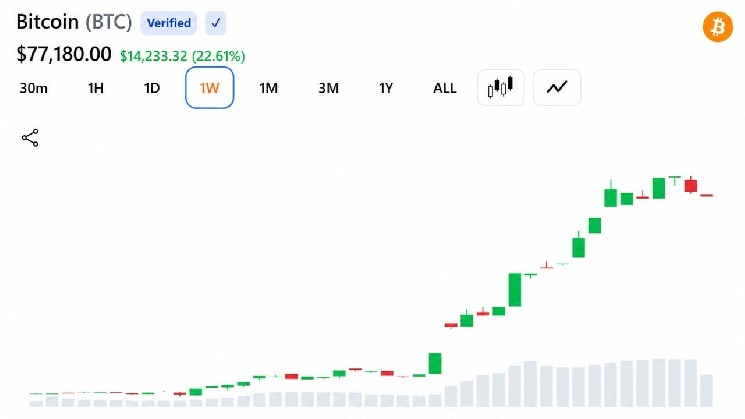
Entering 2026, Bitcoin's price saw a significant correction, trading volume declined, and investor risk appetite for crypto stocks rapidly cooled. BitGo, as the first crypto IPO of 2026, listed in January at a price of $18. Despite a brief rise on the first day, its price subsequently fell, at one point dropping to $7, and has now recovered to $11.9.

Specifically, the listing pace of several leading companies has noticeably slowed. Kraken's parent company, Payward, confidentially filed an S-1 form in November 2025, originally planning to proceed in Q1 2026, with a valuation once targeting $20 billion. On March 18th this year, the company paused its plans citing "difficult market conditions." Co-CEO Arjun Sethi stated that despite a recent funding round lowering the valuation to $13.3 billion, the IPO filing remains active, awaiting the optimal window.

Arjun Sethi

Ledger's pause was more abrupt. Known for its hardware wallets and enterprise-grade infrastructure, reports in January 2026 indicated it had hired investment banks to prepare for a U.S. listing with a target valuation of $4 billion. According to sources familiar with the matter, Ledger decided to hold off due to unfavorable market conditions and did not initiate the formal filing process. A company spokesperson declined to comment but indicated a possible turn towards private financing to sustain growth.

Notably, just in March, Ledger appointed former Circle executive John Andrews as CFO and opened a New York office to strengthen its U.S. business presence. This expansion shows its business strategy remains unchanged, and the listing suspension is more a result of external pressures.

Meanwhile, MetaMask parent company Consensys has also joined the wait-and-see ranks. The company had hired JPMorgan and Goldman Sachs as underwriters, originally planning to submit its S-1 form around the end of February, targeting a 2026 listing. However, due to weak market conditions, Consensys has postponed its IPO to at least this autumn.

The suspension of these crypto company IPOs is, of course, the result of multiple overlapping factors.

The stock performance of the first wave of crypto IPOs in 2025 has heightened market caution towards the 2026 listing window.

This year, Circle's stock price has fallen from a high of $300 to below $50 at one point, and Bullish's dropped from $118 to below $25. Even BitGo, the first crypto IPO of 2026, was not spared—after listing at $18 in January, it briefly rebounded but then fell all the way to around $7 at its lowest.

This year's performance collectively confirms that crypto-related stocks can easily attract capital during the tail end of a bull market but struggle to resist valuation resets during cyclical downturns. Traditional institutional investors are significantly increasing their risk premium requirements for "cycle-bound" assets.

In stark contrast to the "cooling-off period" for crypto IPOs, the AI sector is experiencing a dual climax of IPOs and financing in 2026.

SpaceX has initiated IPO preparations with a target valuation as high as $1.75 trillion to $2 trillion, making it one of the most anticipated tech listings globally.
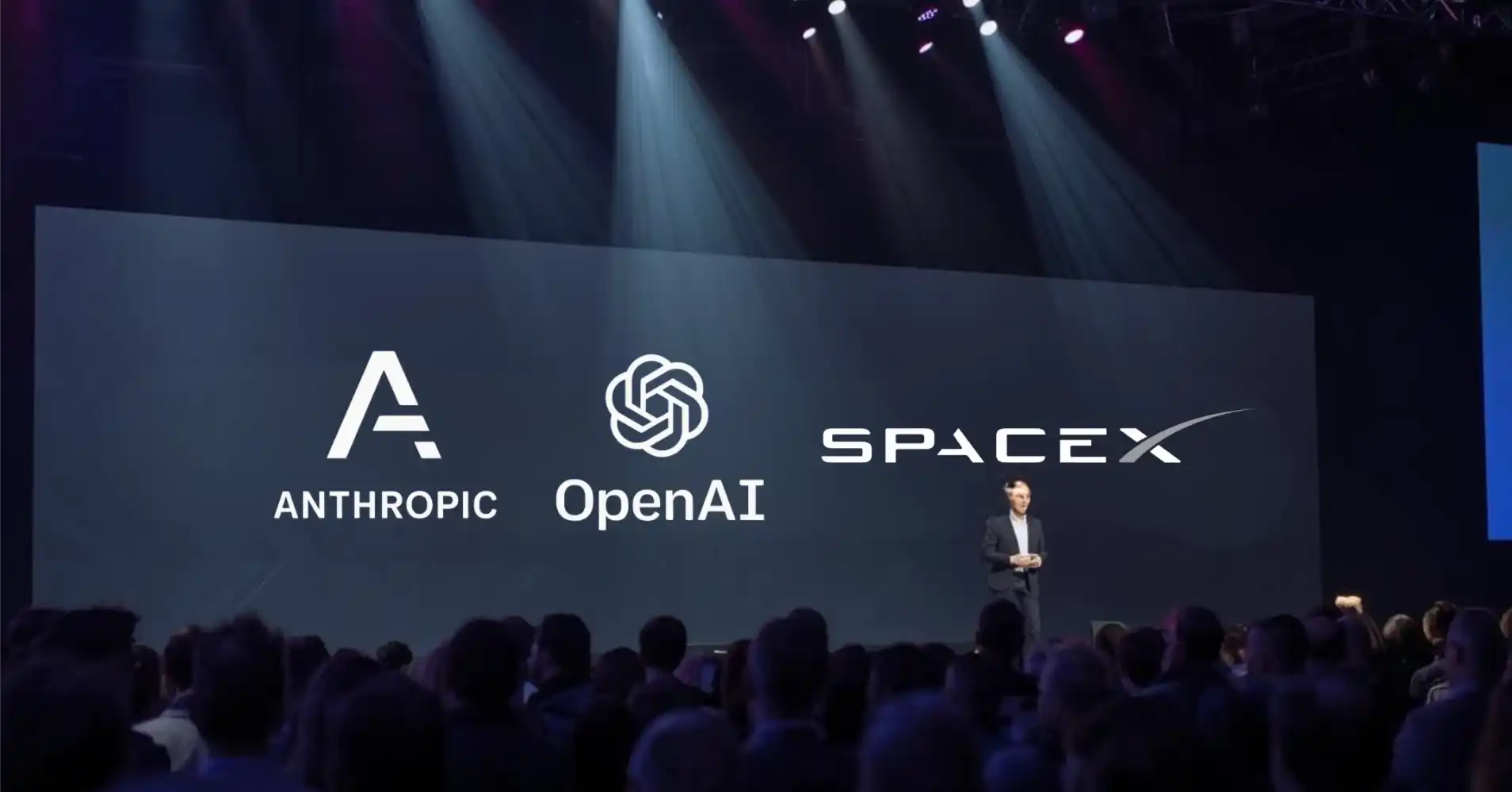
OpenAI's valuation is approaching $1 trillion and is in close communication with multiple investment banks regarding its listing path; Anthropic's valuation is nearing $900 billion and is also actively preparing IPO materials. The AI narrative, backed by the certainty of a "productivity revolution," is attracting a massive influx of long-term capital. Even in an environment of macroeconomic uncertainty, AI-related IPOs still garner far higher risk appetite than crypto assets.

In contrast, crypto companies are highly dependent on Bitcoin prices and trading volume, with more volatile revenue, making it difficult to provide the certainty of "exponential growth" promised by AI companies. This cross-sector disparity in cold and hot sentiment further amplifies investors' wait-and-see attitude towards crypto IPOs and also forces crypto enterprises to accelerate their transition from "storytelling" to "focusing on cash flow and compliance."

Furthermore, crypto companies are adopting a more pragmatic strategic shift: while private financing scales have shrunk, it can still provide a buffer; some companies choose to first optimize product lines, expand into stablecoins or institutional services, and wait to list after Bitcoin stabilizes at higher levels and market conditions improve.

The implications of this phenomenon for the industry warrant deep thought.

On one hand, it accelerates the survival of the fittest. Weaker projects face increased difficulty in financing, and resources concentrate towards companies with strong compliance and solid infrastructure, such as Ledger's institutional-grade platform and Kraken's custody business. On the other hand, it highlights the crypto industry's transition from story-driven to performance-driven. Companies that truly survive across cycles are winning long-term trust by building resilient cash flows and enhancing transparency. However, in the short term, the narrowing IPO window may lead to valuation resets and affect confidence and liquidity across the entire ecosystem.

Looking ahead, if Bitcoin returns to $90,000 or even higher, and regulatory legislation further materializes, a second wave of IPOs may emerge in the second half of 2026.


Пов'язані питання

QWhat are the two major cryptocurrency companies mentioned that have postponed their IPO plans recently, and to when has Consensys delayed its IPO?

AThe two major cryptocurrency companies mentioned are Consensys (developer of MetaMask) and Ledger. Consensys has postponed its IPO until at least the fall of this year (2026).

QAccording to the article, what were the key factors that made 2025 a 'bountiful IPO year' for crypto companies?

AKey factors included Circle's successful listing on the NYSE, the IPOs of companies like Bullish and Gemini, a total of about $14.6 billion raised from crypto-related IPOs, a surge in VC deal volume to $19.7 billion, Bitcoin's price reaching a then all-time high of $126,000, institutional capital inflows, and a relatively friendly regulatory environment.

QHow does the article contrast the current market reception for crypto company IPOs with that of AI company IPOs in 2026?

AThe article states that crypto company IPOs are in a 'cooling-off period' with multiple delays, while AI is in a 'double climax' for IPOs and financing. AI companies like SpaceX, OpenAI, and Anthropic attract high valuations and capital due to the 'certain narrative of productivity revolution,' offering more perceived certainty than the high volatility and Bitcoin-price-dependent revenues of crypto firms.

QWhat is cited as a primary reason behind the recent wave of IPO delays and suspensions for crypto companies in 2026?

AA primary reason cited is the poor stock performance of the first wave of crypto IPOs from 2025, such as Circle and Bullish experiencing significant price drops from their highs. This has increased caution among investors and raised the risk premium demanded for crypto stocks, which are seen as highly cyclical.

QWhat potential positive developments does the article suggest could open a new IPO window for crypto companies in the second half of 2026?

AThe article suggests that if Bitcoin's price returns to $90,000 or higher and if further regulatory legislation is passed, the second half of 2026 could see a second wave of IPO opportunities for crypto companies.

Пов'язані матеріали

Breaking: OpenAI Undergoes Major Reorganization, President Brockman Assumes Command

OpenAI has announced a major internal reorganization just months before its anticipated IPO. The company is merging its three flagship product lines—ChatGPT, Codex, and the API platform—into a single, unified product organization. The most significant leadership change involves co-founder and President Greg Brockman moving from a background technical role to take full, permanent control over all product strategy. This follows the indefinite medical leave of AGI Deployment CEO Fidji Simo. Additionally, ChatGPT's longtime lead, Nick Turley, has been reassigned to enterprise products, with former Instagram executive Ashley Alexander taking over consumer offerings. The consolidation, internally framed as a strategic move towards an "Agentic Future," aims to break down internal silos and create a cohesive "Super App." This planned desktop application would integrate ChatGPT's conversational abilities, Codex's coding power, and a rumored internal web browser named "Atlas" to autonomously perform complex user tasks. The reorganization occurs amid significant internal and external pressures. OpenAI has recently seen a wave of high-profile departures, including Sora co-lead Bill Peebles and other senior technical leaders, leading to concerns about a thinning executive bench. Externally, rival Anthropic recently secured funding at a staggering $900 billion valuation, surpassing OpenAI's own. Google's upcoming I/O developer conference also poses a competitive threat. Analysts suggest the dramatic restructure is a pre-IPO move to present a clearer, more focused narrative to Wall Street—streamlining operations and demonstrating decisive leadership under Brockman to counter internal turbulence and intense market competition.

marsbit6 хв тому

Breaking: OpenAI Undergoes Major Reorganization, President Brockman Assumes Command

marsbit6 хв тому

Two Survival Structures of Market Makers and Arbitrageurs

Market makers and arbitrageurs represent two distinct survival structures in high-frequency trading. Market makers primarily use limit orders (makers) to profit from the bid-ask spread, enjoying high capital efficiency (nominally 100%) but bearing inventory risk. This "inventory risk" arises from passive, fragmented, and discontinuous order fills in the limit order book (LOB). This risk, while a potential cost, can also contribute to excess profit if managed within control boundaries, allowing for mean reversion. Market makers essentially sell "time" (uncertainty over execution timing) to the market for price control and low fees. In contrast, cross-exchange arbitrageurs typically use market orders (takers) to exploit price differences or funding rates, resulting in lower nominal capital efficiency (requiring capital on both exchanges) and higher transaction costs. Their risk exposure stems from asymmetries in exchange rules (e.g., minimum order sizes), execution latency, and infrastructure risks (e.g., ADL, oracle drift). These exposures are active, exogenous gaps that primarily erode profits rather than contribute to them. Arbitrageurs essentially sell "space" (capital sunk across venues) for localized, immediate certainty. Both strategies engage in a trade-off between execution friction and residual risk. Optimal systems allow for temporary, controlled risk exposure rather than enforcing zero exposure at all costs. Their evolution converges towards hybrid models: arbitrageurs may use maker orders to reduce costs, while market makers may use taker orders or hedges for risk management. Ultimately, both use different forms of risk exposure—market makers exposing inventory, arbitrageurs immobilizing capital—to extract marginal, hard-won certainty from the market.

链捕手6 хв тому

Two Survival Structures of Market Makers and Arbitrageurs

链捕手6 хв тому

Who Will Define the Rules of the AI Era? Anthropic Discusses the 2028 US-China AI Landscape

This article, based on Anthropic's analysis, outlines the intensifying systemic competition between the U.S./allies and China for AI leadership by 2028. It argues that access to advanced computing power ("compute") is the critical bottleneck, where the U.S. currently holds a significant advantage through chip export controls and allied innovation. However, China's AI labs remain competitive by exploiting policy loopholes—via chip smuggling, overseas data center access, and "model distillation" attacks to copy U.S. model capabilities—keeping them close to the frontier. The piece presents two contrasting scenarios for 2028. In the first, decisive U.S. action to tighten compute controls and curb distillation locks in a 12-24 month AI capability lead, cementing democratic influence over global AI norms, security, and economic infrastructure. In the second, policy inaction allows China to achieve near-parity through continued access to U.S. technology, enabling Beijing to promote its AI stack globally and integrate advanced AI into its military and governance systems, altering the strategic balance. Anthropic contends that maintaining a decisive U.S. lead is essential for shaping safe AI development and governance. The core recommendation is for U.S. policymakers to urgently close compute and model access loopholes while promoting global adoption of the U.S. AI technology stack to secure a lasting strategic advantage.

marsbit2 год тому

Who Will Define the Rules of the AI Era? Anthropic Discusses the 2028 US-China AI Landscape

marsbit2 год тому

“Why Didn’t You Buy 2x Long SK Hynix?”

The article discusses the immense popularity of the "2x Long SK Hynix ETF" (07709.HK) in Hong Kong, which became the world's largest single-stock leveraged ETF by May 2026. Launched in October 2025, the ETF's net value soared over 1000% in seven months, significantly outperforming the 324% gain of SK Hynix's underlying stock, driven by the AI boom and a critical shift in industry demand from computing power to memory. It highlights the mechanics and risks of daily-rebalanced leveraged ETFs. In a smooth bullish market, they generate amplified returns, but during volatile periods—exemplified by market swings during geopolitical tensions in the Strait of Hormuz in March-April 2026—they suffer severe "volatility decay," where choppy price action can cause losses far exceeding twice the drop of the underlying asset. The piece frames SK Hynix, as NVIDIA's primary HBM supplier, within the classic cycle of the memory chip industry—a commoditized sector prone to boom-and-bust cycles of shortage, price hikes, overcapacity, and crashes. While current AI-driven demand and high margins (Q1 2026毛利率~79%) create a "super cycle," the article questions its sustainability. It warns that extreme profits will inevitably tempt competitors like Samsung and Micron to ramp up HBM production, potentially eroding scarcity. Furthermore, the entire narrative remains tethered to the massive AI capital expenditure of tech giants. In conclusion, the ETF's trajectory symbolizes the accelerated, all-in nature of the current AI revolution, where timeframes are compressed and market moves are extreme. However, it also underscores that while industry trends define ultimate returns, macro-geopolitical risks dictate the volatile and uncertain path to get there.

marsbit2 год тому

“Why Didn’t You Buy 2x Long SK Hynix?”

marsbit2 год тому

Торгівля

Спот
Ф'ючерси
活动图片