Has the Era of Easy Money for Crypto VCs Come to an End?

比推Опубліковано о 2025-12-18Востаннє оновлено о 2025-12-18

Анотація

The era of easy profits for crypto VCs appears to be over, marked by a necessary market correction and a shift toward more sustainable investment practices. The recent collapse of Shima Capital, following SEC charges against its founder for fraudulent fundraising and mismanagement, symbolizes a broader industry-wide reckoning. Once-revered VCs are now facing scrutiny as inflated valuations, poor returns, and failed exit strategies expose systemic flaws. Market dynamics have shifted significantly: liquidity has dried up,散户 investors have retreated, and many VC portfolios are underwater. Data shows only 2% of altcoins are currently profitable, underscoring the severity of the downturn. VCs are adapting by focusing on later-stage investments, prioritizing projects with real traction and data over speculative narratives. Funding is increasingly concentrated in infrastructure—such as payment rails and privacy tools—rather than premature application-layer projects like NFTs or metaverse platforms. This period of "creative destruction" is pushing the industry toward maturity. VCs are becoming more disciplined, seeking genuine value and long-term viability rather than quick returns. While the transition is painful, it may ultimately lead to a healthier, more transparent, and more resilient crypto ecosystem.

Author: Nancy, PANews

Original Title: Farewell to Building Castles in the Sand: The Transformation Moment for Crypto VCs


From the former "investment风向标" to the current "fear of VCs," crypto venture capital is undergoing a necessary demystification and clearing out.

The darkest moment is also the moment of rebirth. This brutal process of defoaming is forcing the crypto market to establish a healthier and more sustainable valuation logic, while also driving the industry back to rational development and maturity.

The Fall of Star VCs: The Demystification of Elite Glory

Another crypto venture capital firm has fallen. On December 17, Shima Capital was exposed to be quietly shutting down.

In this brutal crypto cycle, the exit of VCs is not uncommon, but Shima Capital's departure is far from graceful. Unlike other VCs that died from liquidity drying up or were dragged down by poor investment portfolios, Shima Capital's downfall stemmed more from internal moral hazards and management chaos.

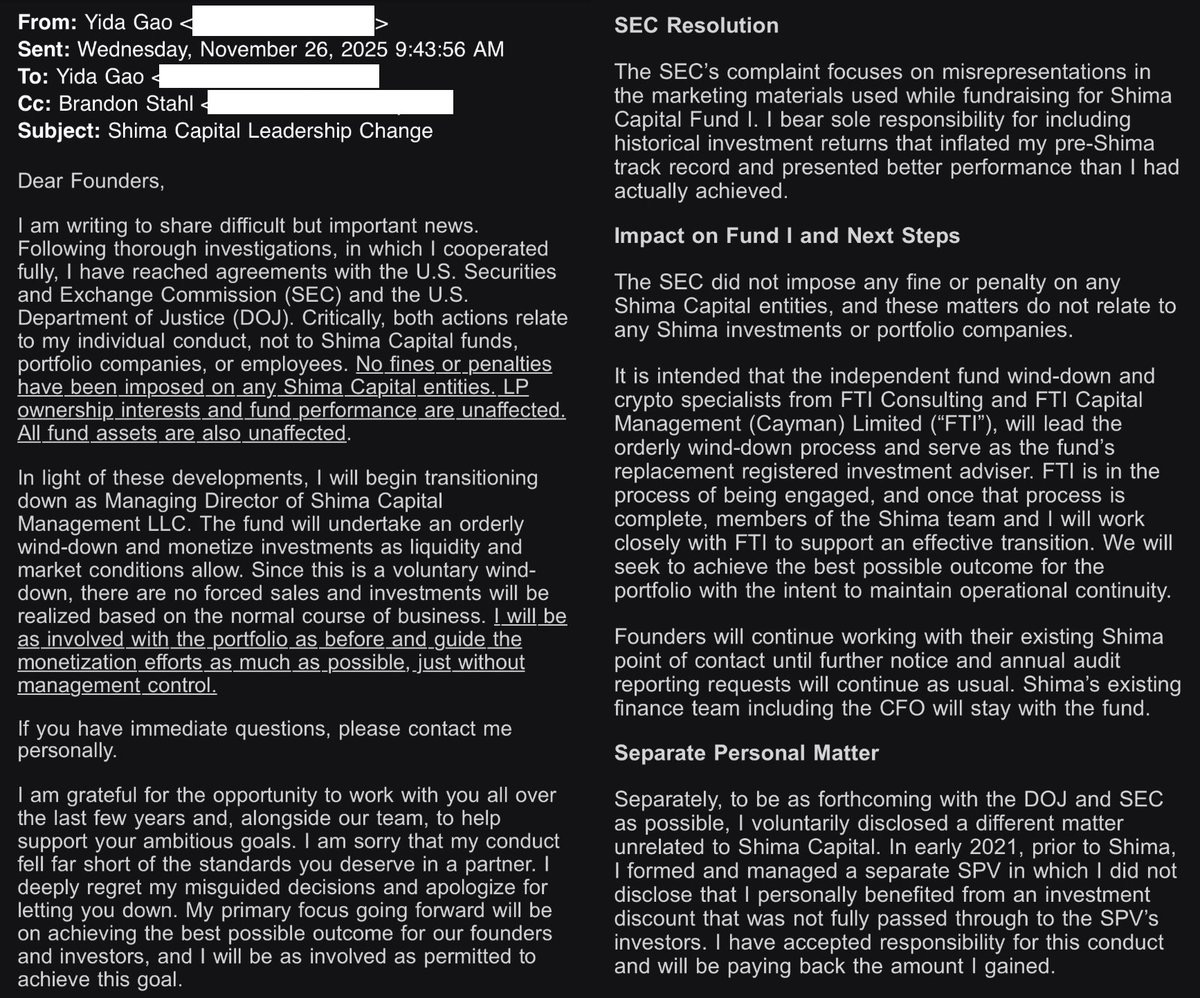
The direct trigger for this decision was the lawsuit filed by the U.S. SEC against the institution and its founder, Yida Gao, three weeks ago. The charges alleged that they violated multiple securities laws and illegally raised over $169.9 million from investors through fraudulent means.

Under regulatory pressure, Yida Gao quickly chose to settle with the SEC and the U.S. Department of Justice. While paying a fine of about $4 million, he decided to close the fund and announced his resignation from all positions, expressing deep regret for his "misleading decisions." The foundation will enter a liquidation process, gradually liquidating assets to repay investors when the market allows.
As a once high-frequency star venture capital firm in the crypto space, Shima Capital's rise relied more on the founder's elite光环. American-Chinese Yida Gao was a Wall Street top student with a background from MIT. He even took over former SEC Chairman Gary Gensler's role in teaching crypto courses at MIT, and his resume included prestigious institutions like Morgan Stanley and New Enterprise Associates.

With this background, Shima easily raised $200 million for its first fund, with backers including Dragonfly, hedge fund billionaire Bill Ackman, Animoca, OKX, Republic Capital, Digital Currency Group, and Mirana Ventures.

Armed with huge funds, Shima became one of the most active hunters in the last cycle, betting on over 200 crypto projects, including hot projects like Monad, Puddy Penguins, Solv, Berachain, 1inch, and Coin98. Despite its vast investment portfolio, Shima and its team were evaluated by investors as young and lacking experience, not truly understanding the industry, and merely riding the speculative wave of cryptocurrency.

More seriously, all this was built on lies. According to the SEC's lawsuit, when raising $158 million for Shima Capital Fund I, he fabricated past performance, claiming that one of his investments had achieved a 90x return, while the actual data was only 2.8x. When faced with the risk of exposure, he even tried to brush it off as a "笔误" to investors.

Not only that, Yida Gao raised funds from investors through an SPV to purchase BitClout tokens, promising discounts and principal protection. However, in reality, although he purchased the tokens at low prices, he did not offer them to investors at the original price but instead resold them to his own SPV at a markup, secretly profiting $1.9 million without disclosure.

From a long-term perspective, Shima's exit also sends a positive signal to the market: crypto wrongdoing is no longer outside the law, and the industry's transparency and ethical standards will be better improved.

Related reading: Unveiling the Founder of Shima Capital, Accused of Misappropriating Assets: From Fujian Immigrant to Wall Street Financial Elite

The Era of Easy Money Is Over, VCs Enter an Evolutionary Period

The so-called failure of the VC model is essentially the market forcing the industry to evolve.

Currently, the assembly-line model of "VCs assembling the game, retail investors taking over" has been broken, and funds are rapidly withdrawing from air projects. For example, not long ago, Monad, with its豪华 investment lineup, still couldn't escape price difficulties after its launch, which also broke the defenses of a group of VCs, sparking fierce debates around value valuation among风投 like Dragonfly.

The industry's rules of the game have changed. Whether it's the success of projects without VC funding (like Hyperliquid) or the community's resistance to high-valuation projects, they are actually pushing venture capital institutions out of their arrogant ivory towers. Only when the path of making quick money simply by "issuing and selling tokens" is blocked will VCs truly settle down to find projects with造血能力 that can solve real problems.

This阵痛 is obvious. As retail investors withdraw导致流动性枯竭, the traditional exit channels for VCs are blocked. Valuation callbacks not only延长了回报周期 but also leave a large number of investments facing serious paper losses.

Not long ago, Akshat Vaidya, co-founder of Arthur Hayes' family office Maelstrom, publicly complained that the principal of his investment in a certain Pantera fund four years ago had nearly halved, while Bitcoin had risen about twofold during the same period.

Another VC confessed to PANews that they were焦头烂额 with exits. Even though they participated in the seed round, the current token price they hold is lower than the cost price. Projects that managed to list on top exchanges like Binance only recovered one-fifth of the principal after many years. Many projects choose to随便上个小交易所 to give investors an交代, but there is simply no liquidity to exit. Some projects even choose to lie flat, and when asked, the answer is always "wait for the right time."

Glassnode data shows that currently only about 2% of altcoin supply is in a state of profit, showing an unprecedented分化 in the market. Historically, it has been uncommon for altcoins to consistently underperform during a Bitcoin bull market.
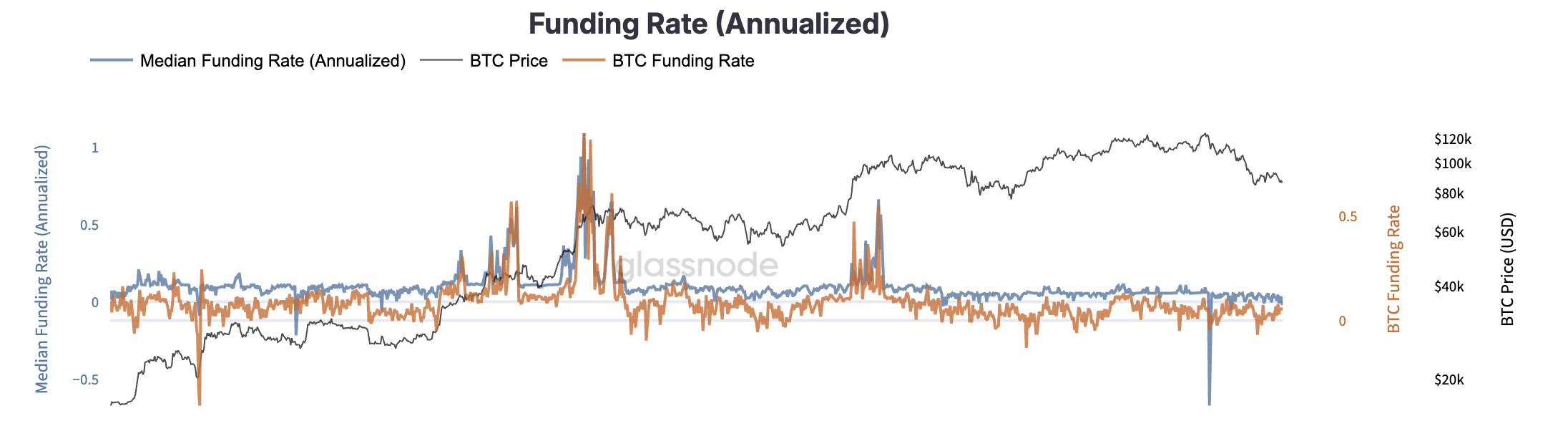
The data confirms that the era of making money with eyes closed is彻底结束了.

The end of one era means the beginning of another. Rui from HashKey Ventures pointed out on social media that VCs are not afraid of熬, they are afraid of快, which is why bear markets are actually more suitable for VCs. To truly succeed, one must survive until the next dead period. Unlike project parties, VCs are quite good at enduring. At the same time, most crypto VCs essentially arbitrage information asymmetry, coupled with some path dependence, earning some辛苦钱 and渠道费. More importantly, many of these people have now turned into market agents or market makers, which is essentially not much different.

Build Roads Before Building Towers, Seeking Certain Opportunities

Facing the receding hot money, VCs are not all "fleeing" but are making strategic contractions and adjustments to their battle lines.

"If a project doesn't have a data dashboard, we won't invest in it." Recent attendees of Dubai crypto events revealed that VCs now pay more attention to actual business data rather than单纯的故事. Faced with the bleak reality, VCs have significantly raised investment thresholds or even completely abandoned new investments.

Dovey Wan, founder of Primitive Ventures,坦言 that for investors, the ratio at which strength and luck can be exchanged (currently) is becoming increasingly苛刻, especially in the post-GPT era. This is true for all industries: choice is more important than effort, but choice is much harder than effort.

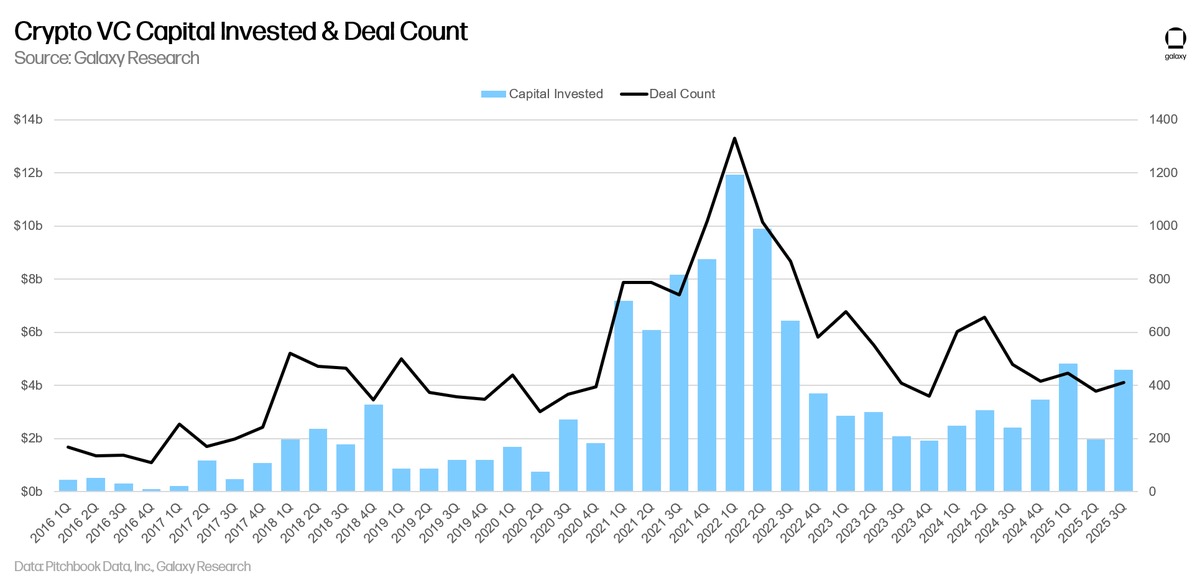
Pantera Capital revealed a positive trend in a recent video. According to its disclosure, although the total financing amount in the crypto field reached $34 billion this year, exceeding the records of 2021 and 2022, the number of transactions decreased by nearly 50%. Several main reasons are behind this phenomenon: First, the investor structure has changed. Family offices and individual investors active during 2021-2022 have become more cautious after experiencing bear market losses, with some even choosing to exit the market. Second, surviving VCs' investment strategies have become more concentrated. These风投 prefer to put funds into a few high-quality projects rather than casting a wide net as before, because the capital, time, and resource costs required to launch new projects are higher now. On the other hand, some funds have shifted to relatively safer assets, which also explains why大量资金 is highly concentrated in Bitcoin and a few mainline assets in this cycle. Third, funds are ample but deployment节奏放缓. Many venture capital funds raised large amounts of money in 2021 and 2022 and are currently holding ample "ammunition," mainly used to support existing investment portfolios and are in no hurry to invest in new projects. From a longer-term perspective, this change is not a negative signal but rather a sign of the market maturing.

Galaxy Research's recent analysis of Q3 investment reports also pointed out that crypto VC investment volume increased in the quarter but was relatively concentrated. Meanwhile, nearly 60% of investment capital flowed to late-stage companies, the second-highest level since Q1 2021. Compared to 2022, venture capital fundraising data also shows a significant decline in investor interest. This data also shows that VCs are more willing to heavily bet on certain opportunities.
To hedge against the single-market risk, some crypto VCs have started "slacking off," targeting markets outside crypto-native ones. For example, the recent investment list of YZi Labs shows that its gaze has turned to biotech, robotics, and other outside tracks. Some crypto-native funds have long started investing in AI projects. Although they don't have a big pricing advantage compared to tech funds, it's an attempt at transformation.

Pantera also reflected on the investments of the last cycle. "In the last cycle, a large amount of capital poured into speculative areas like NFTs and the metaverse. These projects tried to skip infrastructure and directly build the 'cultural top layer.' But it was like building a castle on sand: the underlying infrastructure wasn't ready, payment rails were immature, the regulatory environment was unclear, and the user experience was far from mainstream level. The industry was too eager to seek killer apps and poured resources into the application layer where there was no soil yet."

Pantera believes this crypto cycle is undergoing a necessary "correction." Now more funds are flowing into infrastructure construction, such as more efficient payment chains, more mature privacy tools, and stablecoin systems. This path is the correct sequence, enabling the applications of the next cycle to truly explode.

Lay the foundation first, then build the tower.

The残酷出清 of crypto VCs today is both a阵痛 and a重塑.


Twitter:https://twitter.com/BitpushNewsCN

Bitpush TG Communication Group:https://t.me/BitPushCommunity

Bitpush TG Subscription: https://t.me/bitpush

Original link:https://www.bitpush.news/articles/7596797

Трендові криптовалюти

Пов'язані питання

QWhat led to the shutdown of Shima Capital, and what were the specific allegations by the SEC?

AShima Capital shut down after the SEC sued the firm and its founder, Yida Gao, for violating securities laws. The SEC alleged that Gao fraudulently raised over $169.9 million from investors by misrepresenting past investment returns and secretly profiting from undisclosed markups on token sales.

QHow has the investment strategy of crypto VCs changed in the current market cycle?

ACrypto VCs have become more selective, focusing on fewer high-quality projects with actual business data and traction. They are prioritizing infrastructure investments over speculative applications and are more concentrated on later-stage companies, reflecting a shift towards确定性机会 (certain opportunities) and risk mitigation.

QWhat does the case of Shima Capital indicate about the current state of crypto venture capital?

AThe Shima Capital case signifies a necessary cleansing and maturation of the crypto VC industry. It shows that unethical practices are no longer tolerated, and the market is demanding higher transparency and accountability, moving away from reliance on elite光环 (elite光环) and towards substantive value creation.

QWhy are some crypto VCs investing in non-crypto sectors like biotech and AI?

ASome crypto VCs are diversifying into non-crypto sectors like biotech and AI to hedge against the high risks and volatility in the cryptocurrency market. This strategy allows them to explore new growth areas while mitigating exposure to the cyclical and often speculative nature of crypto investments.

QAccording to Pantera Capital, what was the flaw in the previous crypto cycle's investment approach?

APantera Capital noted that the previous cycle saw excessive funding directed towards speculative areas like NFTs and metaverse projects without adequate underlying infrastructure. This was likened to building castles on sand, as the foundational elements—such as payment rails, regulatory clarity, and user experience—were not yet mature enough to support sustainable application growth.

Пов'язані матеріали

Bank of America Quietly Positions: Could $6 Trillion in Bank Deposits Flow into Stablecoins?

Bank of America (BofA) is making strategic moves in digital assets, appointing senior leaders to advance a platform covering stablecoins, tokenized deposits, custody, and crypto settlement. This comes amid a broader discussion about the potential migration of trillions in bank deposits to stablecoins. A cited TBAC report estimated up to $6.6 trillion in transactional deposits could be at risk of moving to stablecoins long-term, a point BofA's CEO previously conditioned on stablecoins being allowed to pay interest. The regulatory landscape is evolving, with the GENIUS Act setting a final implementation deadline for January 2027. Major banks, however, are not waiting; JPMorgan, Citi, BofA, and others are already developing tokenized deposit networks and services. Industry observers note that while retail crypto trading is sluggish, institutional adoption of stablecoins for real-world use cases is driving growth. Despite the activity, some analysts remain cautious, noting banks have a long history of blockchain announcements and that true structural change is slow. The stablecoin market itself has seen a recent dip from its peak. Optimistic projections, however, foresee significant growth, with stablecoin settlement volume already reaching $33 trillion in 2025. The race is on for the post-January 2027 landscape, where regulatory clarity is expected to accelerate the fusion of traditional finance and crypto.

marsbit3 хв тому

Bank of America Quietly Positions: Could $6 Trillion in Bank Deposits Flow into Stablecoins?

marsbit3 хв тому

STAR 50 Soars 10.73%, Why Did A-Shares Stage a "V-Shaped Reversal"?

After a prolonged decline, the Chinese A-share market staged a strong rally on July 21. The STAR 50 index surged 10.73%, its largest single-day gain in nearly a year, leading a broad-based "V-shaped" reversal. The Shanghai Composite Index rose 1.79%, the Shenzhen Component Index gained 4.81%, and the ChiNext Index jumped 7.05%. Total market turnover reached 2.97 trillion yuan, an increase of 256.1 billion yuan from the previous session, with over 3,100 stocks advancing. The semiconductor sector spearheaded the rebound, with related ETFs posting significant gains. Analysts attribute the surge to three converging factors. First, coordinated capital inflows from "national team" institutions, insurance funds, listed company buybacks, and fund house self-purchases have bolstered market liquidity and confidence. Second, supportive policy signals, including commitments from regulators to ensure stable market operations, provided a favorable backdrop. Third, a stabilization and recovery in overseas markets, notably South Korea, created a positive external environment. Institutions suggest the most severe panic selling phase for the tech sector has likely passed, following a significant digestion of crowded positions and leveraged funds. While short-term volatility may persist, the medium to long-term outlook remains underpinned by enduring trends like AI computing demand expansion and semiconductor localization. The market's focus now shifts to the sustainability of supportive fund flows, earnings reports, and upcoming catalysts from the global AI industry chain.

marsbit41 хв тому

STAR 50 Soars 10.73%, Why Did A-Shares Stage a "V-Shaped Reversal"?

marsbit41 хв тому

U.S. Tech Momentum Stocks Post Largest Single-Day Gain Ever, But Is the Plunge Over?

US tech momentum stocks staged a sharp rebound on Tuesday (July 21st). Morgan Stanley's TMT Momentum Factor surged over 12%, marking its largest single-day gain on record, exceeding even peaks from the 2000 dot-com bubble. Key momentum indices from Goldman Sachs also posted their strongest daily performances in years. The rally was led by semiconductors, with the Philadelphia Semiconductor Index jumping 4.6%. This rebound followed three consecutive down days and a cumulative 33% plunge in momentum stocks, one of the steepest drawdowns since the dot-com era. Analysts attribute the surge largely to a short squeeze. Heavy selling had pushed high-beta momentum stocks into deeply oversold territory, forcing many short sellers, particularly in Asia, to cover their positions, creating a self-reinforcing buying spiral. However, the rebound's internals appear weak. Trading volume was notably low, and advancing stocks still lagged decliners on the S&P 500, indicating a narrow, concentrated rally rather than broad market participation. Diverging views emerge on the outlook. BTIG warns the bounce has hit key resistance and recommends selling into strength, citing extreme volatility and historical parallels to past market tops. Conversely, Goldman Sachs and UBS believe the momentum unwind is nearing its end, suggesting it may be time to gradually add exposure, as positioning has been significantly reduced. They caution, however, that high volatility warrants a measured approach, potentially using defined-risk strategies. The upcoming earnings season, particularly reports from major tech firms like Alphabet, is seen as a critical test for the rally's sustainability. Simultaneously, bond markets flashed a warning, with yields rising partly due to spiking oil prices. Analysts note that if long-term Treasury yields break decisively higher, it could pose a significant headwind for equities, especially growth stocks.

marsbit48 хв тому

U.S. Tech Momentum Stocks Post Largest Single-Day Gain Ever, But Is the Plunge Over?

marsbit48 хв тому

U.S. Tech Momentum Stocks Record Largest Single-Day Gain Ever, but Has the Rout Ended?

U.S. tech momentum stocks staged a dramatic rebound on Tuesday, July 21st. Key momentum indices like the Morgan Stanley TMT Momentum Factor and Goldman Sachs' High Beta Momentum Long Index posted historic or near-historic single-day gains, fueled largely by semiconductor stocks. This sharp rally followed a severe three-day sell-off that saw momentum stocks plunge 33%, marking one of the steepest pullbacks since the dot-com bubble. Analysts attribute the bounce primarily to a short squeeze, as forced covering from over-leveraged traders, particularly in Asia, created a buying spiral. However, the rally's health is questioned due to weak market breadth—overall trading volume was low, and decliners outnumbered advancers in the S&P 500 despite the index's gain—suggesting a narrow, concentrated surge rather than broad recovery. Opinions on the sustainability diverge. BTIG strategists warn the rebound has hit key resistance levels, citing extreme volatility and historic stock dispersion as signs of an ongoing broader correction, and recommend selling into strength. Conversely, Goldman Sachs and UBS view the aggressive momentum unwinding as nearing its end, noting reduced positioning and a lack of new fundamental catalysts. They suggest the sell-off presents a selective opportunity to add exposure, albeit cautiously and gradually using defined-risk strategies. The immediate trajectory hinges on the ongoing earnings season, with market focus on Alphabet's capital expenditure guidance for AI investment clarity. Meanwhile, bond markets present a risk, with rising Treasury yields—potentially heading toward 5.5%—and widening credit spreads for mega-cap tech companies posing a threat to equity valuations. The combination of technical factors, earnings results, and macro conditions leaves the durability of the rebound in doubt.

链捕手51 хв тому

U.S. Tech Momentum Stocks Record Largest Single-Day Gain Ever, but Has the Rout Ended?

链捕手51 хв тому

Торгівля

Спот

Популярні статті

Як купити ERA

Ласкаво просимо до HTX.com! Ми зробили покупку Caldera (ERA) простою та зручною. Дотримуйтесь нашої покрокової інструкції, щоб розпочати свою криптовалютну подорож.Крок 1: Створіть обліковий запис на HTXВикористовуйте свою електронну пошту або номер телефону, щоб зареєструвати обліковий запис на HTX безплатно. Пройдіть безпроблемну реєстрацію й отримайте доступ до всіх функцій.ЗареєструватисьКрок 2: Перейдіть до розділу Купити крипту і виберіть спосіб оплатиКредитна/дебетова картка: використовуйте вашу картку Visa або Mastercard, щоб миттєво купити Caldera (ERA).Баланс: використовуйте кошти з балансу вашого рахунку HTX для безперешкодної торгівлі.Треті особи: ми додали популярні способи оплати, такі як Google Pay та Apple Pay, щоб підвищити зручність.P2P: Торгуйте безпосередньо з іншими користувачами на HTX.Позабіржова торгівля (OTC): ми пропонуємо індивідуальні послуги та конкурентні обмінні курси для трейдерів.Крок 3: Зберігайте свої Caldera (ERA)Після придбання Caldera (ERA) збережіть його у своєму обліковому записі на HTX. Крім того, ви можете відправити його в інше місце за допомогою блокчейн-переказу або використовувати його для торгівлі іншими криптовалютами.Крок 4: Торгівля Caldera (ERA)Легко торгуйте Caldera (ERA) на спотовому ринку HTX. Просто увійдіть до свого облікового запису, виберіть торгову пару, укладайте угоди та спостерігайте за ними в режимі реального часу. Ми пропонуємо зручний досвід як для початківців, так і для досвідчених трейдерів.

501 переглядів усьогоОпубліковано 2025.07.17Оновлено 2026.06.02

Як купити ERA

Обговорення

Ласкаво просимо до спільноти HTX. Тут ви можете бути в курсі останніх подій розвитку платформи та отримати доступ до професійної ринкової інформації. Нижче представлені думки користувачів щодо ціни ERA (ERA).

活动图片