Has Hook Summer Truly Arrived? sato, Lo0p, FLOOD Ignite the New Uniswap v4 Narrative

Odaily星球日报Опубліковано о 2026-05-11Востаннє оновлено о 2026-05-11

Анотація

With the broader market showing signs of recovery, a new wave of interest has emerged around Ethereum-based meme coins. Following ASTEROID, tokens like sato, sat1, Lo0p, and FLOOD, built upon the Uniswap v4 Hook protocol, are capturing market attention. Their market capitalizations range from millions to tens of millions of dollars, injecting much-needed focused liquidity into a market lacking narratives. This article explores whether this trend signifies an incoming "Hook Summer" and its potential impact on UNI's price. Hooks are essentially plug-in smart contracts for Uniswap v4 liquidity pools, allowing developers to inject custom logic at key points in a pool's lifecycle (like initialization, adding/removing liquidity, swaps). This transforms the AMM into programmable building blocks. Key highlighted projects include: * **sato**: Peaked over $38M market cap. It utilizes a v4 curve for minting/burning; buying locks ETH as reserve to mint new tokens, while selling redeems ETH from the reserve and burns tokens. * **sat1**: Market cap briefly exceeded $10M, promoted as an "optimized sato," but later declined significantly. * **Lo0p**: Reached nearly $6.6M. It's a lending AMM protocol where buying LO0P tokens locks them as collateral, allowing users to borrow ETH from the pool reserve at 40% LTV, aiming to improve capital efficiency for idle ETH in LPs. * **FLOOD**: Peaked near $6M. Its mechanism directs asset reserves from buys into Aave v3 to generate yield, with f...

Original | Odaily Planet Daily (@OdailyChina)

Author | Wenser (@wenser 2010 )
As the broader market shows slight signs of recovery, the heat for Ethereum ecosystem Meme coins has reignited. Following ASTEROID, ecosystem tokens like sato, sat1, Lo0p, and FLOOD, which are backed by the Uniswap v4 Hook protocol, have gradually become the focus of market attention. Their market capitalizations range from several million to tens of millions of dollars, bringing much-needed concentrated liquidity to the crypto market that has been lacking narratives. In this article, Odaily Planet Daily will briefly review the information about these tokens and explore whether this wave of excitement can drive a recovery in the UNI token price.

Has Hook Summer Arrived? 4 Major Ecosystem Tokens, Intelligent Liquidity Management

According to Uniswap's official documentation, Hooks are essentially "plugin-style smart contracts" custom-designed for liquidity pools (Pools) in Uniswap v4. Unlike traditional Uniswap V2/V3 which only have a fixed constant product curve (x*y=k), Hooks allow developers to automatically inject custom logic before or after key lifecycle events of a pool (initialization, adding/removing liquidity, Swap, Donate, etc.), thereby turning the entire AMM (Automated Market Maker) into programmable "Lego bricks". In addition to the earlier uPEG, recent representative projects are as follows:

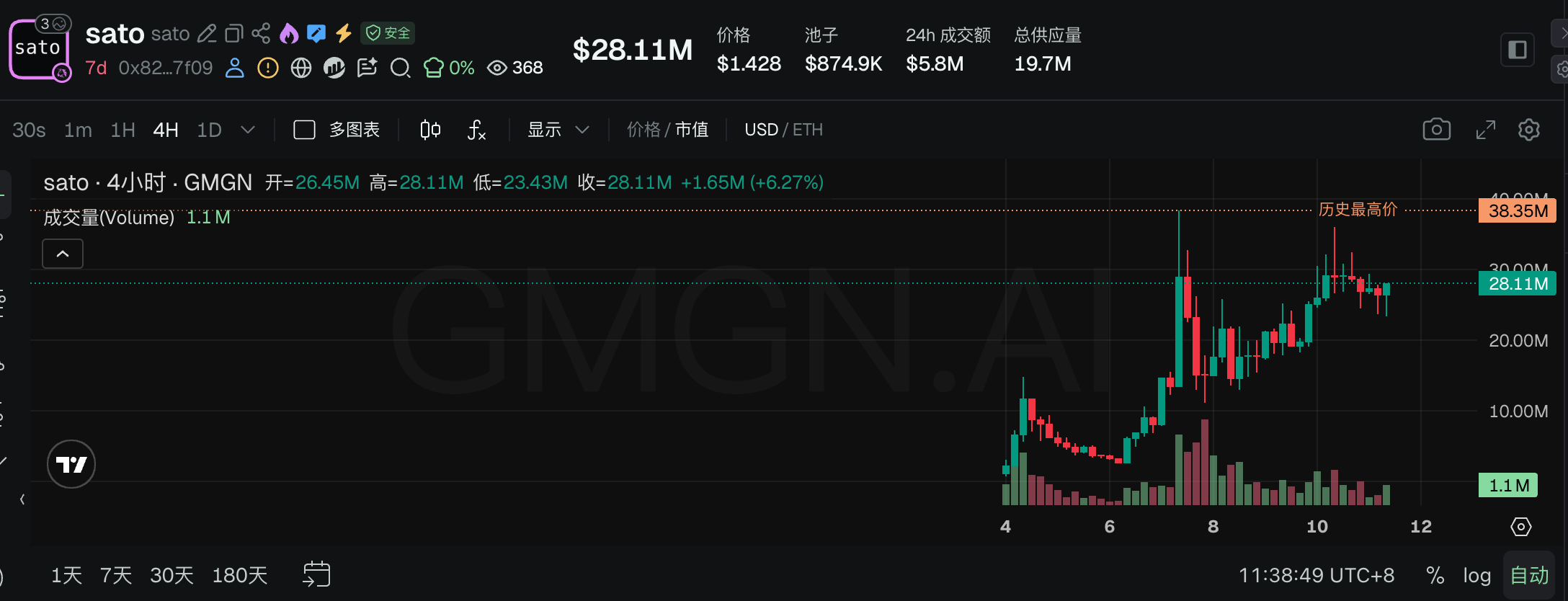
sato: Market Cap Peak Over $38 Million

CA: 0x829f4b62eebe12af653b4dd4ffc480966f7d7f09

Current Market Cap: Approximately $28 Million

On May 4th, immediately after sato's debut, Odaily Planet Daily briefly introduced it. At that time, its market cap was only $9 million. This token is minted and burned through the Uniswap v4 bonding curve mechanism. Buying generates new tokens and locks ETH as reserves, while selling exchanges ETH from the reserves and burns tokens. At that point, its cumulative buy volume had approached 1000 ETH. Subsequently, sato's market cap once exceeded $30 million.

Although community users later discovered its curve mechanism had buy-sell price disparities, causing its market cap to once drop below $13 million, its innovative mechanism and first-mover advantage have kept its current market cap around $28 million, with a 24-hour trading volume nearing $6 million.
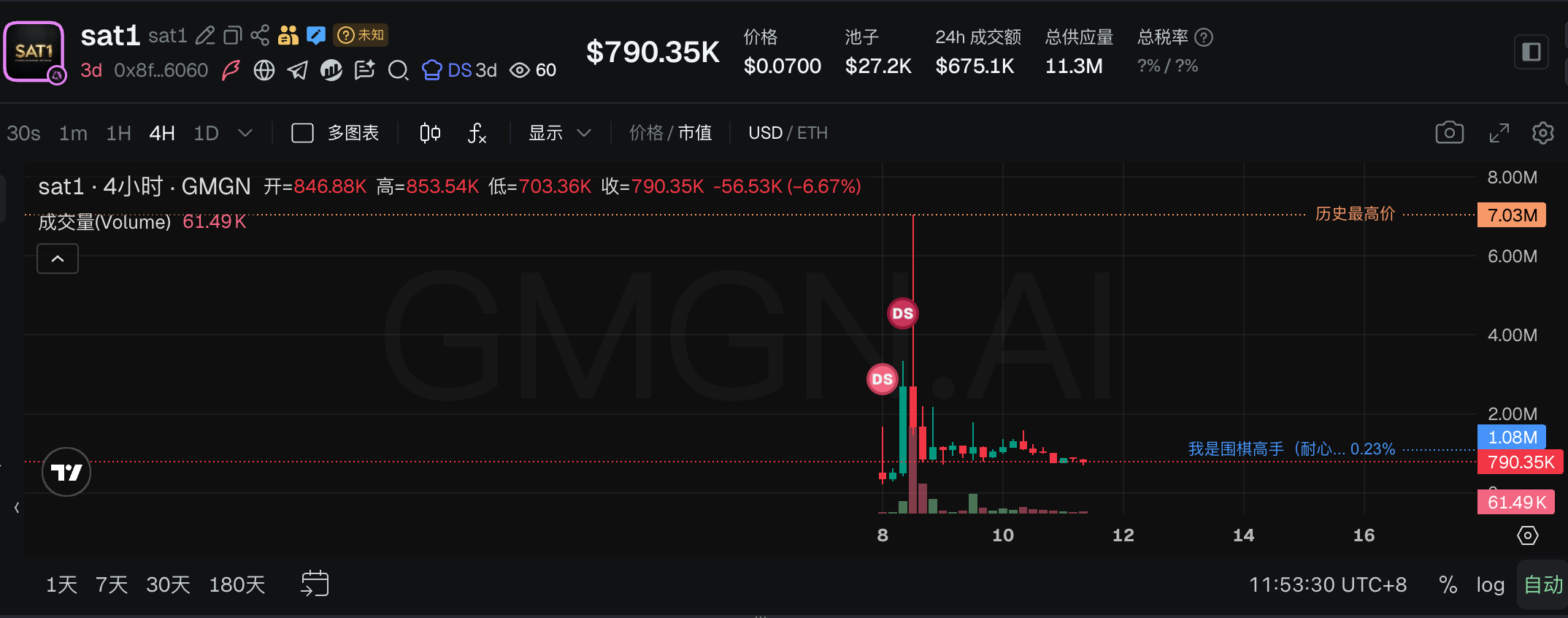
sat1: Market Cap Peak Over $10 Million

CA: 0x8f66337a0c2a02202fd91dd596c411cf977c6060

Current Market Cap: Approximately $800,000

On May 8th, sat1, marketed as an "optimized version of sato", reached its hype peak. Thanks to strong promotion by crypto KOL Huanba Longwang (Dragon King) in WeChat groups, the token's market cap once surpassed $10 million. However, following subsequent backlash, the project eventually spiraled downwards, with its market cap now less than a tenth of its peak.
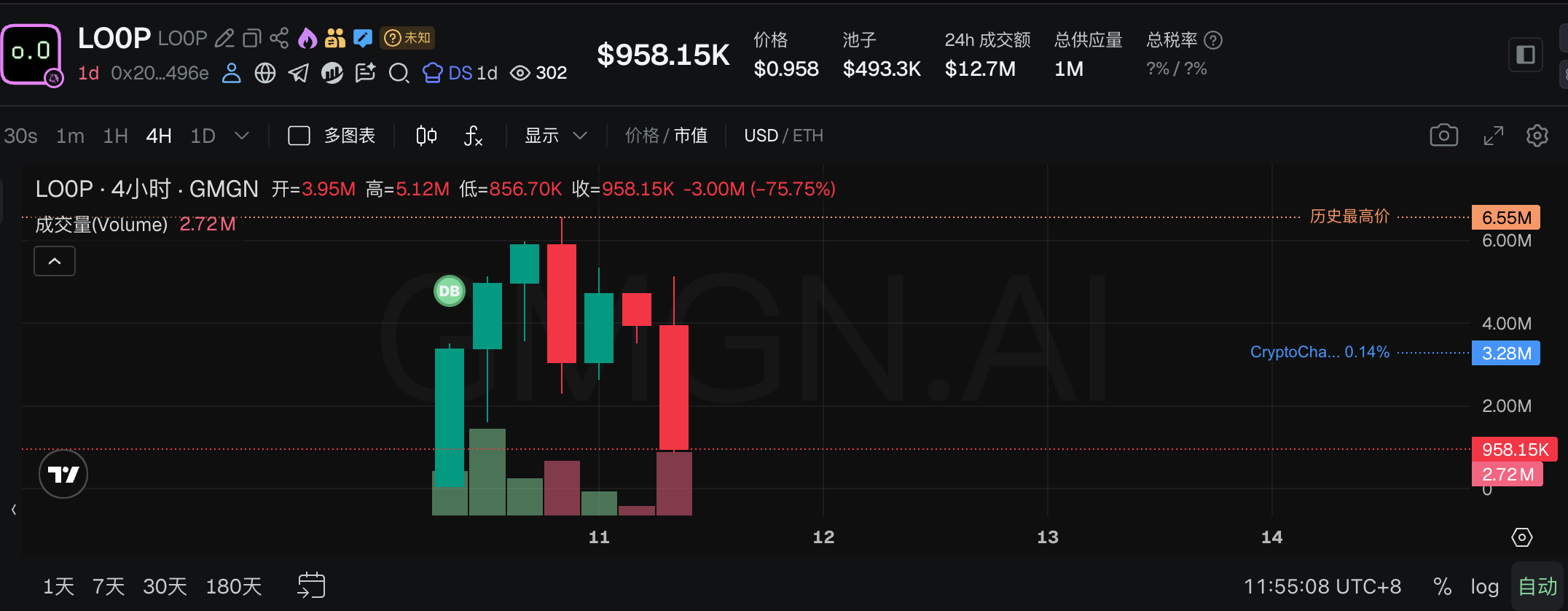
Lo0p: Market Cap Peak Close to $6.6 Million

CA: 0x20ea861b3acec90d3a15b4755d9a1cf1f161496e

Current Market Cap: Approximately $960,000

Official Account: https://x.com/lo0pio

On May 10th, Lo0p's market cap once exceeded $6 million, with a daily increase of over 110x. Similarly, Lo0p's main concept is a "lending AMM protocol based on Uniswap v4 Hooks", aiming to solve the idle ETH capital efficiency issue in LP pools. Users buy LO0P tokens through a bonding curve, which are locked as collateral (without selling), and can directly borrow ETH from the pool reserves at a 40% LTV; borrowing does not directly impact the spot price, and the post-liquidation mechanism attempts to refill the LP band. Hooks inject custom logic during Swap/liquidity lifecycle events, achieving "collateralized lending + LP rewards + borrowing interest" composite returns while maintaining pool price stability. Its core mechanism lies in "built-in lending."
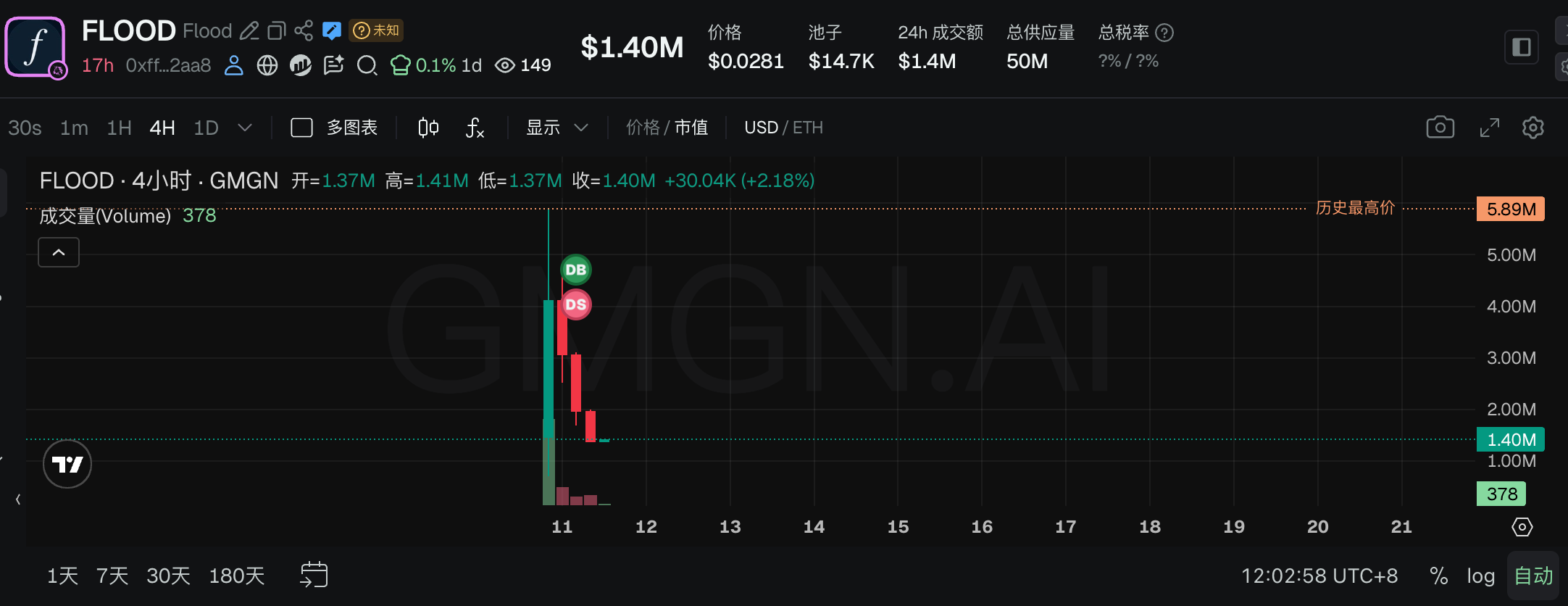
FLOOD: Market Cap Peak Nearly $6 Million

CA: 0xff003fbe8b8d5e7f271a9cb9f2780003daed2aa8

Current Market Cap: Approximately $1.4 Million

Official Account: https://x.com/flood_markets

On May 10th, FLOOD's market cap once exceeded $5 million. As the hype subsided, its current market cap is around $1.4 million. It is reported that FLOOD has a total supply of 50 million tokens. Its special mechanism is: the asset reserves generated from user purchases enter the corresponding Aave v3 market to earn yield; transaction fees are also retained within the pool, used to increase reserves and influence token price. The core lies in the Aave integration for automatic yield, with the Hook mechanism playing the role of "automatic rebalancing and yield recycling". No wonder some community users remarked: "Buying funds enter the pool → pool assets earn interest on Aave → interest stays in the pool → long-term price increase. So this is using my money to deposit and earn interest?"
Hook Mechanism Tokens Drive Uniswap Ecosystem Development: UNI Bullish Long-Term, But Limited Short-Term Gains

Thanks to the rapid development of the Uniswap v4 Hook mechanism, ecosystem tokens in this sector have become a category alongside Meme coins and project ecosystem tokens. In the long run, they can further attract users and capital liquidity to participate in Uniswap v4 liquidity pool trading and development.

Combined with the previous news that "Uniswap has turned on the fee switch, with a portion of protocol fees used to burn UNI tokens," the long-term fundamentals of UNI appear steady and positive.

However, in the short term, the emergence of Hook mechanism tokens cannot directly drive a rise in the UNI token price. Factors such as the lifecycle and sustainability of these tokens, token price volatility versus transaction fee proportions, and UNI's susceptibility to crypto regulatory policies and broader market trends intervene.

Therefore, in summary, the Hook ecosystem is a "long-term nutrient" for UNI, but in the short term, it acts more like a "catalyst" rather than a "booster."

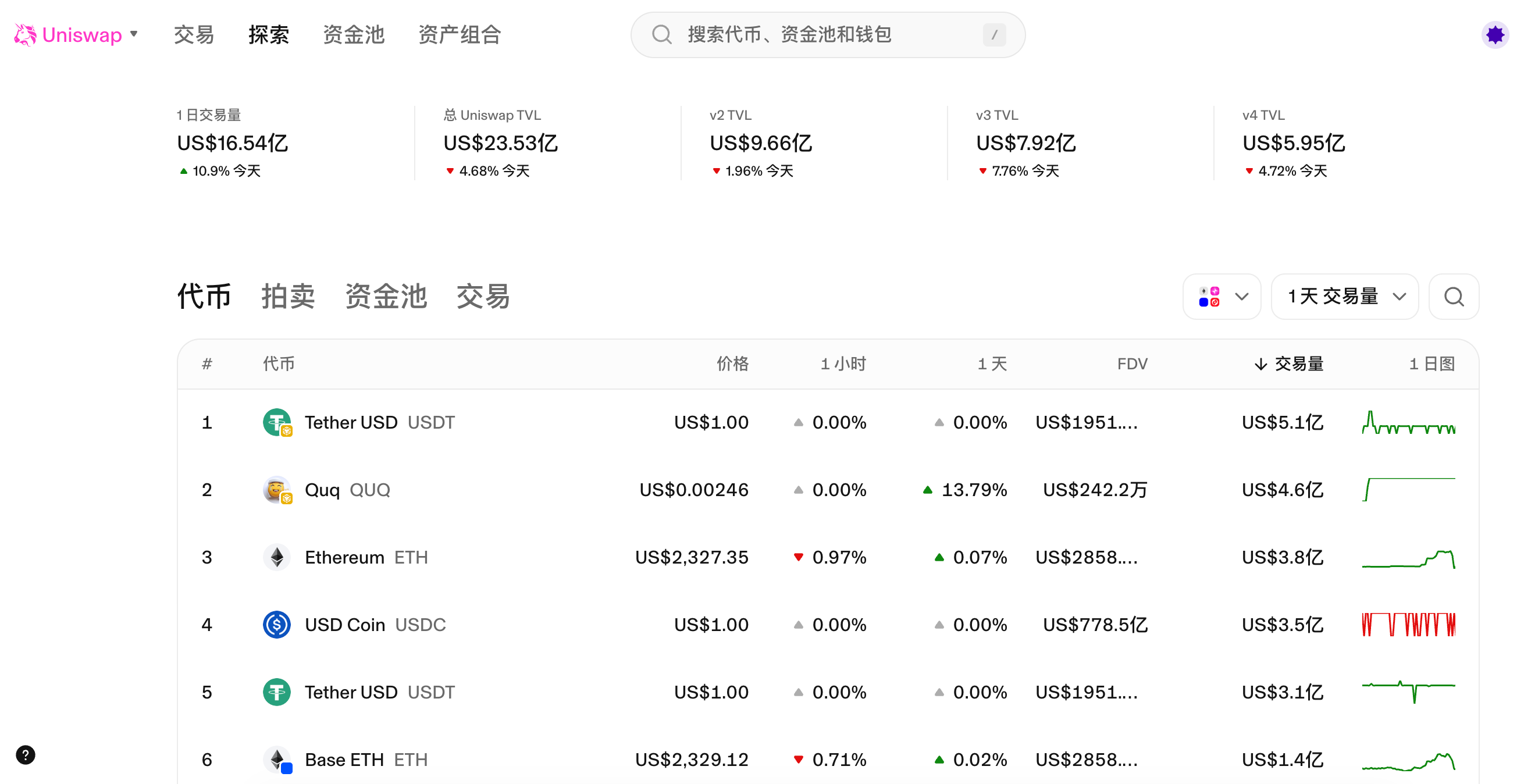
Furthermore, according to the Uniswap official website, the current v4 TVL is approximately $595 million, slightly lower than v3 ($792 million) and v2 ($966 million) liquidity pools. Thus, v4 and the Hook ecosystem still require time to accumulate strength and gradually grow into mainstream liquidity management protocols in the market.
Finally, Odaily Planet Daily reminds readers that the above tokens are all early-stage technological innovation experiments and may contain unknown bugs or other risks. Please be aware of relevant risks when participating in trading. The above information does not constitute investment advice.


Пов'язані питання

QAccording to the article, what is a Uniswap v4 Hook and what is its primary function?

AA Uniswap v4 Hook is a 'plugin smart contract' designed for liquidity pools (Pools). It allows developers to automatically inject custom logic at key lifecycle points of a pool (such as initialization, adding/removing liquidity, Swap, Donate, etc.), transforming the AMM into programmable 'Lego blocks', unlike the traditional constant product curve (x*y=k) of V2/V3.

QWhat unique mechanism does the FLOOD token implement using its Hook?

AFLOOD's Hook integrates with Aave v3. When users buy the token, the generated asset reserves are deposited into the corresponding Aave v3 market to generate yield. The trading fees are also retained within the pool to increase reserves and influence the token's price. The Hook facilitates automatic rebalancing and the flow of generated interest back into the pool.

QWhat problem does the Lo0p protocol aim to solve, and what is its core feature?

AThe Lo0p protocol aims to solve the problem of idle ETH capital efficiency in LP pools. Its core feature is 'built-in lending'. Users can buy LO0P tokens as collateral (without selling) and borrow ETH directly from the pool reserves at a 40% LTV. This mechanism is designed to not directly impact the spot price and attempts to refill the LP band upon liquidation.

QWhat is the article's conclusion regarding the impact of Hook mechanism tokens on the price of UNI in the short and long term?

AThe article concludes that Hook mechanism tokens serve as 'long-term nutrients' for UNI, contributing positively to its fundamentals. However, in the short term, they act more like a 'catalyst' rather than a 'propellant' for a direct price increase, as their impact is moderated by factors like token lifecycle sustainability and broader market trends.

QBased on the article, what was a key risk or criticism identified by the community regarding the sato token's initial mechanism?

AThe community discovered that sato's curve mechanism had a significant buy-sell price spread (slippage), which led to a sharp decline in its market capitalization, dropping from over $38 million to around $13 million at one point.

Пов'язані матеріали

7 Months After the Collapse of Huiwang, Southeast Asia's Escrow Platforms Undergo a Major Reshuffle

Following the collapse of Huione Pay—dubbed the "Alipay of Southeast Asia"—seven months ago, the region's underground financial guarantee platform sector is undergoing a significant reshuffle. This power vacuum has been swiftly filled by emerging platforms such as XinBi, Tiger/Navigator, JinBei (renamed JinBo), Dali/Tiancheng, and FullyLight. These platforms, operating largely via Telegram and offering services like escrow for illicit transactions, have absorbed the vast user base and markets left behind by Huione. While positioning themselves as "trust intermediaries," their primary clientele consists of networks involved in online scams, money laundering, illegal gambling, and even human trafficking. For instance, the Tiger/Navigator platform explicitly provides "escrow" services for kidnapping-for-ransom operations ("强押车交易"). Data underscores the immense scale: Huione alone processed over $103 billion in cryptocurrency payments and facilitated over $31 billion through its escrow market before its downfall, linking it to Cambodia's notorious Prince Group. Since its collapse, competitors have seen explosive growth. For example, the XinBi platform has accumulated over $1.6 billion in total USDT revenue, while platforms like NewPay, OkPay (under Dali), and FullyLight Wallet collectively processed over $4.8 billion in USDT in a single year. This ecosystem thrives in regions like Cambodia and Myanmar, where regulatory gaps allow these platforms to act as critical financial infrastructure for sprawling cybercrime industries, from scam compounds to online casinos. The article concludes that the moniker "Southeast Asian Alipay" is a misnomer, obscuring the platforms' fundamental role in enabling serious criminal enterprises rather than representing legitimate financial innovation.

Odaily星球日报18 хв тому

7 Months After the Collapse of Huiwang, Southeast Asia's Escrow Platforms Undergo a Major Reshuffle

Odaily星球日报18 хв тому

The Changing Landscape: What Are Crypto VCs Experiencing?

Title: The Shifting Landscape of Crypto Venture Capital The era of dedicated crypto venture capital funds is undergoing a significant transformation. Once essential for navigating the sector's complexity and high risk, these specialized funds are now facing an identity crisis as the market matures. This shift mirrors historical patterns in other specialized investment classes like cleantech and SPACs, where initial information advantages dissipate as technologies become mainstream and integrated into existing industry frameworks. The article argues that crypto is reaching a critical inflection point, transitioning from a "building phase" to an "integration phase." Major players like Stripe, BlackRock, and Visa now engage with crypto not for its novel mechanics but as a foundational financial infrastructure. Their needs—regulatory compliance, banking partnerships, distribution channels—align with traditional fintech, a domain easily understood by large, generalist funds like Sequoia and Founders Fund. This evolution creates a "barbell effect" within the VC landscape. On one end are massive, diversified platforms that can incorporate crypto as one vertical among many. On the other are small, nimble funds focused on niche, experimental projects. The middle ground—medium-sized dedicated crypto funds—is being squeezed out. Their typical fund size makes it impossible to generate sufficient returns solely from early-stage crypto bets, yet they cannot compete with giants for later-stage deals. Consequently, leading crypto-native firms like Paradigm and Framework Ventures are expanding into AI, robotics, and other sectors, driven partly by LP pressure for better returns amid a broader VC DPI crisis. Others, like Dragonfly and a16z, have narrowed their crypto focus predominantly to financial infrastructure like stablecoins, reframing the sector's core narrative. For crypto entrepreneurs, this consolidation presents challenges. While generalist funds offer larger checks and broader resources, crypto projects now compete fiercely with AI for attention and capital within these firms. Furthermore, the long-term, non-commercial foundational work that built the ecosystem—funded by dedicated crypto VCs—is less likely to attract generalist capital focused on direct returns. The conclusion is that "crypto investor" as a standalone category is becoming obsolete, akin to "internet investor." Crypto is becoming a baseline infrastructure layer. The future will see a barbell structure: large-scale growth financing handled by generalist funds, while pioneering, speculative projects are funded by small, specialized vehicles. The dedicated crypto funds of the 2017-2021 boom, which incubated core infrastructure, are giving way to this new, bifurcated reality.

Foresight News35 хв тому

The Changing Landscape: What Are Crypto VCs Experiencing?

Foresight News35 хв тому

As Consensus Accelerates, What Are Young Investors Betting On?

Title: As Consensus Forms Faster, What Are Young Investors Betting On? In the rapid evolution of tech investment, a new generation of young investors is navigating a landscape where AI, robotics, commercial aerospace, and quantum computing are advancing simultaneously. Traditional investment logic based on financial models is giving way to a need for deep technical understanding and the ability to act before industry consensus forms. An analysis of trends from the "WAIC FUTURE TECH" list of young investment leaders reveals key shifts in focus. The first major trend is the movement of AI from the digital screen into the physical world. Investment is shifting from large language models and chatbots towards embodied AI, robotics, AI hardware, and edge computing. While demonstrations generate excitement, the real challenge lies in achieving scalable, reliable, and cost-effective delivery in complex real-world environments like factories and logistics. Success depends not just on algorithms but on the integration of sensors, actuators, and control systems. Second, the competitive focus for large models is moving beyond raw capability toward building an "intelligence flywheel." The goal is to create self-reinforcing systems where user interaction generates data, improving the model, which in turn enhances the user experience and attracts more engagement. Companies that successfully embed AI into workflows to create these closed-loop systems can build lasting value that isn't easily erased by the next model upgrade. Third, facing a potential bottleneck in high-quality human-generated data, investors are looking at new underlying technologies. Reinforcement learning and self-play, as demonstrated by AlphaGo Zero, offer paths for AI to generate its own experience. Scientific foundation models, which aim to build general AI capabilities for fields like life sciences and materials discovery, represent a non-consensus direction that could unlock new frontiers of knowledge and data. Finally, in deep-tech areas like quantum computing, commercial aerospace, and space-based infrastructure, patient capital is essential. These fields have long, uncertain development and validation cycles involving complex engineering, supply chains, and regulations. Investment here requires a long-term view, focusing on foundational team capabilities and the eventual emergence of market demand, even if commercial returns are distant. Collectively, these trends illustrate how young investors are adapting to a new era. They are learning to make earlier, technically-informed judgments, balance hype with real-world viability, and provide the patient capital needed to build the deep-tech foundations of the future.

marsbit1 год тому

As Consensus Accelerates, What Are Young Investors Betting On?

marsbit1 год тому

Торгівля

Спот
活动图片




