Groq Raises $350 Million at $3.5 Billion Valuation After Nvidia Deal

cryptonews.ruОпубліковано о 2026-08-17Востаннє оновлено о 2026-08-17

Анотація

AI chip startup Groq has raised $350 million in a funding round that values the company at $3.5 billion, nearly half its peak valuation of $6.9 billion from September last year. The company was originally founded in 2016 to build hardware to compete with Nvidia but faced a significant setback after Nvidia licensed its technology and poached its founder, Jonathan Ross, along with other senior staff. This leadership loss forced Groq into a period of restructuring. The new funding round was led by Dallas-based investment firm Disruptive, with Nvidia also participating as an investor. Groq has pivoted its business model from selling chips to operating data centers, aiming to meet the demand for AI inference computing power. The company plans to use part of the new capital to expand its data center infrastructure, targeting over 200 megawatts of total capacity by next year.

Groq has raised $350 million in funding, valuing the AI chip startup turned data center operator at $3.5 billion — roughly half the $6.9 billion the startup was worth last September, before Nvidia licensed its technology and poached its founder.

Groq’s Fall Began With Nvidia’s Stock Interception

Groq was founded in 2016 with the goal of building its own hardware to compete with Nvidia in AI data processing. The situation changed after Nvidia struck a deal to license Groq’s technology and poached CEO Jonathan Ross, along with other senior executives.

Such deals, followed by subsequent personnel changes, have become common in the AI industry. Google and Meta have done similar things, licensing technologies and attracting engineers from AI startups instead of acquiring the companies. Major tech firms do this to acquire highly skilled talent without buying the entire business.

The Nvidia deal left Groq without leadership, leading the company in recent months to focus on rebuilding its staff and defining its goals.

The $350 Million Funding Round Was Led by Disruptive

According to Bloomberg, the funding round was led by Dallas-based investment firm Disruptive. A Groq spokesperson also stated that Nvidia is investing funds in this deal.

Disruptive was founded by Alex Davis, who is also the executive chairman of Groq.

The new valuation is roughly half the peak value this AI startup reached. The peak valuation in September was $6.9 billion, indicating a sharp restructuring for a company that until recently was one of the largest players in the race to build silicon chips capable of competing with Nvidia's.

From Selling Chips and Hardware to Renting Compute Power

Groq has restructured into a data center operator, aiming to meet the demand for compute power to run AI models in production, in an area known as inference. In June, the company raised $650 million to fund this transformation and revised its valuation at the time, without specifying numbers.

"The inference layer will undoubtedly become the largest and most important level of AI infrastructure," Davis stated in an interview with Bloomberg News, adding that the startup will focus on "supporting the most important model developers."

A portion of the investments raised in this round is reserved for expanding the startup's infrastructure. Groq plans to increase its total data center capacity to over 200 megawatts by next year.


Трендові криптовалюти

Пов'язані питання

QWhat was the amount and valuation of Groq's latest funding round mentioned in the article?

AGroq completed a $350 million funding round, valuing the company at $3.5 billion.

QWhat major event preceded Groq's significant drop in valuation and internal restructuring?

AThe drop in valuation and restructuring followed a deal where Nvidia licensed Groq's technology and poached its founder and CEO, Jonathan Ross, along with other top staff.

QWhich investment firm led the $350 million funding round for Groq, and who founded this firm?

AThe funding round was led by the Dallas-based investment firm Disruptive, which was founded by Alex Davis.

QHow has Groq's business model shifted according to the article?

AGroq has restructured from selling chips and hardware to operating as a data center operator focused on providing computational power for AI model inference.

QWhat are Groq's plans for its data center infrastructure using the new funding?

AGroq plans to use part of the new funding to expand its infrastructure, aiming to increase its total data center capacity to over 200 megawatts by next year.

Пов'язані матеріали

Claude Code Easily Compromised with Just a Fake Tool

Researchers have demonstrated a novel attack, dubbed ToolLeak, that can easily compromise AI coding assistants like Claude Code. The method exploits a "mode gap" by stealing the system prompts (instructions) not through direct chat queries, but by tricking the model into leaking them as parameters during tool calls. This extracted information is then used to craft a "two-channel prompt injection" attack. Attackers register a malicious tool with a description formatted to mimic legitimate instructions, prompting the AI agent to call it. The tool's return value then instructs the agent to execute a malicious command (e.g., `curl | bash`), achieving Remote Code Execution (RCE). In tests against six major AI programming tools (Cursor, Claude Code, Copilot, Windsurf, Cline, Trae) using older versions, all were fully compromised, with attack success rates reaching up to 1.0. Notably, Claude Code's secondary guard model (Haiku) was overridden by the main model (Sonnet), which had been manipulated by the injected instructions. Newer versions show improved defenses. Claude Code and Cursor implemented mitigations like "progressive tool description exposure," reducing RCE success to 0 and 0.3 respectively in some configurations. However, tools like Cline, Windsurf, and Trae paired with certain models remained fully vulnerable. The research underscores that architectural isolation is crucial for defense, as long as tool return values can ambiguously function as both data and executable instructions, the threat of tool hijacking persists. The paper "TIPExploit: Tool-Invocation Prompt Extraction and Exploitation in AI Coding Agents" has been accepted at ISSTA 2026.

marsbit2 хв тому

Claude Code Easily Compromised with Just a Fake Tool

marsbit2 хв тому

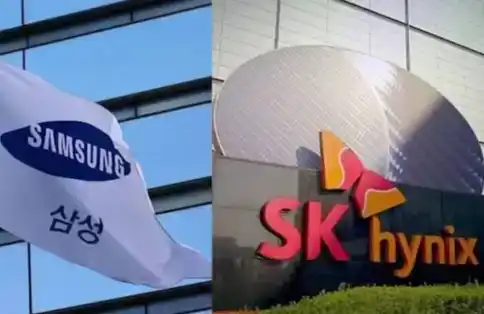
Bernstein Analysis: Samsung's HBM4 Accelerates Volume, Q3 Revenue May Overtake SK Hynix

South Korea’s July memory export data, serving as an early indicator for HBM business in Q3, shows overall HBM demand remains robust. While total exports to Taiwan and Malaysia declined 32% month-on-month from June’s peak—largely due to seasonality—they were still up 13% compared to April and rose 64% year-on-year. However, a divergence emerged between Samsung and SK Hynix. Samsung’s exports from Chungcheongnam-do (a proxy for its HBM shipments) surged, reaching $2.2 billion in July, up 122% from April. Based on regression analysis, Bernstein estimates Samsung’s Q3 HBM revenue could hit around $12 billion, roughly 30% above its prior forecast, driven by a rapid ramp in higher-value HBM4. The unit value of Samsung’s exports has doubled since April, signaling a shift toward HBM4, which carries a significantly higher price. In contrast, exports linked to SK Hynix from Chungcheongbuk-do and Icheon fell 28% month-on-month and 27% versus April. Bernstein’s base model suggests SK Hynix’s Q3 HBM revenue could drop to about $5.6 billion, though this could rebound to $12 billion if shipments concentrate later in the quarter as historically seen. The weakness may relate to potential delays in HBM4 shipments for Nvidia’s Rubin platform. Notably, HBM pricing is decoupling from general DRAM, with HBM4 mix driving average selling prices rather than broad-based hikes. Exports to Malaysia also surged, possibly linked to Intel’s EMIB packaging facilities, though the exact drivers remain unclear. While July data reinforces Samsung’s accelerating momentum in HBM4, it is insufficient to confirm a full-year market share reversal. Key factors to watch are Samsung’s August-September export performance, whether SK Hynix recovers lost ground, and upcoming 2027 HBM contract pricing negotiations.

marsbit3 хв тому

Bernstein Analysis: Samsung's HBM4 Accelerates Volume, Q3 Revenue May Overtake SK Hynix

marsbit3 хв тому

The New Rules of the AI Race: Nvidia Shifts from Chips to Energy Resources and Construction Sites

Nvidia is providing a $105 billion financial guarantee for the construction of OpenAI's data center campus in Ohio, signaling a strategic shift in the AI industry from competing on chips to battling for physical infrastructure and energy resources. The guarantee, detailed in an SEC filing, acts as insurance against tenant default rather than direct construction funding. OpenAI must repay any sums drawn. Nvidia will also invest $1.5 billion in SB Energy for the project's power component. The planned campus has a capacity of 4.25 GW, with OpenAI's current commitments to Nvidia reaching 12 GW. This move underscores that leading AI development now requires securing space, power, and financial backing for massive, long-term projects. Tech giants are taking on roles akin to developers and financial institutions. Concurrently, AI firms are diversifying suppliers: OpenAI and Anthropic have signed major deals with AMD for GPU deployments. Nvidia is also scaling its financial model through partnerships with investment firms to mobilize over $500 billion in external capital. The paradigm in AI is shifting from hardware supremacy to building comprehensive ecosystems. Future industry growth will depend on balancing innovation with real-world infrastructure capabilities, turning abstract computations into tangible industrial projects. An AI analysis notes the deal's resemblance to vendor financing schemes from the telecom bubble of the late 1990s and questions the long-term viability of gas-dependent energy infrastructure for AI, should market growth slow.

cryptonews.ru12 хв тому

The New Rules of the AI Race: Nvidia Shifts from Chips to Energy Resources and Construction Sites

cryptonews.ru12 хв тому

Торгівля

Спот

Популярні статті

Як купити DATA

Ласкаво просимо до HTX.com! Ми зробили покупку DATA Network (DATA) простою та зручною. Дотримуйтесь нашої покрокової інструкції, щоб розпочати свою криптовалютну подорож.Крок 1: Створіть обліковий запис на HTXВикористовуйте свою електронну пошту або номер телефону, щоб зареєструвати обліковий запис на HTX безплатно. Пройдіть безпроблемну реєстрацію й отримайте доступ до всіх функцій.ЗареєструватисьКрок 2: Перейдіть до розділу Купити крипту і виберіть спосіб оплатиКредитна/дебетова картка: використовуйте вашу картку Visa або Mastercard, щоб миттєво купити DATA Network (DATA).Баланс: використовуйте кошти з балансу вашого рахунку HTX для безперешкодної торгівлі.Треті особи: ми додали популярні способи оплати, такі як Google Pay та Apple Pay, щоб підвищити зручність.P2P: Торгуйте безпосередньо з іншими користувачами на HTX.Позабіржова торгівля (OTC): ми пропонуємо індивідуальні послуги та конкурентні обмінні курси для трейдерів.Крок 3: Зберігайте свої DATA Network (DATA)Після придбання DATA Network (DATA) збережіть його у своєму обліковому записі на HTX. Крім того, ви можете відправити його в інше місце за допомогою блокчейн-переказу або використовувати його для торгівлі іншими криптовалютами.Крок 4: Торгівля DATA Network (DATA)Легко торгуйте DATA Network (DATA) на спотовому ринку HTX. Просто увійдіть до свого облікового запису, виберіть торгову пару, укладайте угоди та спостерігайте за ними в режимі реального часу. Ми пропонуємо зручний досвід як для початківців, так і для досвідчених трейдерів.

571 переглядів усьогоОпубліковано 2026.07.01Оновлено 2026.07.01

Як купити DATA

Обговорення

Ласкаво просимо до спільноти HTX. Тут ви можете бути в курсі останніх подій розвитку платформи та отримати доступ до професійної ринкової інформації. Нижче представлені думки користувачів щодо ціни DATA (DATA).

活动图片