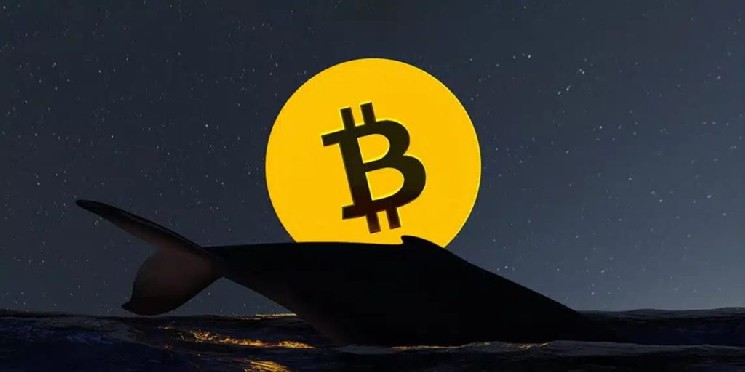
Grayscale-Linked Firms Sell XRP and Solana Holdings as ETF Outflows Rise

TheNewsCryptoОпубліковано о 2026-02-03Востаннє оновлено о 2026-02-03

Анотація

Grayscale's parent company, Digital Currency Group (DCG), and its affiliate, DCG International Investment Ltd., are selling their holdings in Grayscale's Solana and XRP ETFs. This was disclosed in recent SEC filings and coincides with a broader crypto market decline of approximately $5 billion. DCG sold 26,000 shares of the Grayscale Solana Staking ETF (GSOL) as Solana's price fell below $100. Simultaneously, DCG International sold 15,000 shares of the Grayscale XRP ETF (GXRP), contributing to significant outflows from these funds. These sales are presented as portfolio adjustment moves in response to market conditions rather than a shutdown of the products, signaling a cautious institutional sentiment towards these major altcoins.

Grayscale-linked companies are quietly selling their exposure to XRP and Solana when the crypto market is under pressure. The investors started pulling money out of the Altcoin ETFs, according to the recent U.S. regulatory filings. The sales come after the crypto market is wiping out around $5 billion in value, and ETF outflows signal weakening institutional confidence in some major altcoins.

The two key firms, such as Digital Currency Group (DCG), which is Grayscale’s parent company, and DCG International Investment Ltd, which is the DCG-linked investment entity, are the sellers. Both companies disclosed their sales through official U.S SEC Form 144 filings, which are required when insiders sell securities.

DCG reduces Solana Exposure

DCG sold 15,000 shares of the Grayscale Solana Staking ETF (GSOL) for about $115,440. This sale happened on Feb 2, and the trade was handled by Canaccord Genuity. These shares were originally bought in January 2025, and over the past week, DCG has sold 26,000 GSOL shares in total. This activity coincides with Solana’s price dropping below $100 with 16% dip in one week, which caused around $5.5 million to be left from the Solana ETF.

DCG International cuts XRP ETF holdings

DCG International Investment Ltd sold 3,620 shares of the Grayscale XRP ETF (GXRP) worth around $115,070. The sale took place on February 2, and these shares were acquired in September 2024. The firm sold 15,000 GXRP shares last week alone. XRP ETFs faced strong selling pressure, and the price dropped below $1.60. The grayscale XRP ETF alone lost $98.39 million, with total XRP ETF outflows reaching $92.92 million.

These moves do not mean Grayscale is shutting down XRP or Solana products. They show that the firms are adjusting their positions according to market conditions. ETF outflows suggest that investors are becoming more cautious, and insider sales usually reflect portfolio adjustments.

Highlighted Crypto News:

Chainlink Slips Below $10 as Selling Pressure Continues

TagsGrayscaleSolanaxrp

Пов'язані питання

QWhich Grayscale-linked firms are selling their XRP and Solana holdings according to the article?

ADigital Currency Group (DCG), which is Grayscale's parent company, and DCG International Investment Ltd, a DCG-linked investment entity.

QWhat was the value of the GSOL shares sold by DCG on February 2nd?

ADCG sold 15,000 shares of the Grayscale Solana Staking ETF (GSOL) for about $115,440.

QHow much did the Grayscale XRP ETF (GXRP) lose, according to the regulatory filings?

AThe Grayscale XRP ETF alone lost $98.39 million.

QWhat do the ETF outflows and insider sales signal about institutional confidence?

AThe ETF outflows signal weakening institutional confidence in some major altcoins, and the insider sales reflect portfolio adjustments in response to market conditions.

QDoes the selling activity mean that Grayscale is shutting down its XRP or Solana products?

ANo, the moves do not mean Grayscale is shutting down XRP or Solana products. They show that the firms are adjusting their positions according to market conditions.

Пов'язані матеріали

In-depth: The Foreign Guest Genspark

The article "The Foreign Guest: Genspark" investigates the identity and business practices of AI startup Genspark, which presents itself as a Palo Alto-based "AI Costco" offering a subscription bundle of over 70 models and numerous AI agent tools. Despite its official Silicon Valley narrative, Genspark's founding team has deep roots in Chinese tech giant Baidu, a history systematically downplayed in its branding. The company actively cultivates an image as an elite US firm, heavily publicizing partnerships and endorsements from OpenAI, Anthropic, and Microsoft, while distancing itself from the Chinese AI community and obscuring its connections to Chinese investors and open-weight models (like those from DeepSeek, Moonshot AI, and MiniMax) that power its services. Genspark's core strategy involves rapidly cloning and integrating successful AI product concepts (e.g., from Perplexity, Manus, Plaud) into its unified platform, supported by aggressive marketing, including Super Bowl ads and paid native content in publications like The Wall Street Journal. Critically, the article suggests a significant portion of its engineering and product development is conducted by a team in Beijing, operating outside its official US corporate structure. This duality allows Genspark to leverage Chinese talent and models for efficiency and cost reduction while constructing a public facade as a purely American success story. The piece concludes that Genspark's most effective agent is its own corporate identity, meticulously engineered to obscure its Chinese underpinnings and be perceived solely as a Silicon Valley company.

marsbit42 хв тому

In-depth: The Foreign Guest Genspark

marsbit42 хв тому

Debate: Korean Workers Fear Unemployment, While Musk Envisions a Society 'Without Work'?

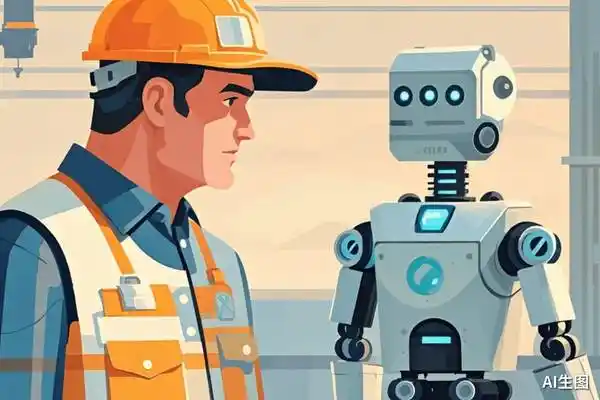
While South Korean auto workers fear job losses from robotics, Elon Musk envisions a future where AI and robots render most work optional. This article explores the growing tension between immediate anxieties over automation and long-term visions of a post-work society. The piece begins with recent strikes at Hyundai's Korean plants, where unions, amid standard wage negotiations, also sought job guarantees against advancing robotics—specifically mentioning Boston Dynamics' Atlas. This reflects how anxiety about technological displacement is emerging even before robots are fully capable of replacing skilled labor on assembly lines. The author argues that while current robotics still struggle with the nuanced, experiential knowledge of veteran workers, the *perception* of imminent replacement is fueling social conflict prematurely. This modern "Luddite" sentiment is compared to the 19th-century English textile workers who smashed machines. Historically, Luddites weren't simply anti-technology; they were protesting the rapid devaluation of their skills and the unequal distribution of productivity gains. Similarly, today's workers ask who will bear the cost of transition and share in the new wealth created by machines. In contrast, figures like Elon Musk propose an optimistic endpoint: with AI and robotics driving extreme abundance, the link between work and survival could break. He suggests concepts like "Universal High Income" could allow society to share the technological bounty, transforming work from a necessity into a choice. The core challenge, however, lies in the transition. The author notes that technology's benefits diffuse slowly, while its disruptive costs—job losses, skill obsolescence—can be concentrated and immediate. The risk is a painful interim period where productivity gains are captured by a few before new social contracts, safety nets, and retraining systems are established. The conclusion calls for proactive governance. Just as past industrial revolutions gave rise to labor standards and social safety nets, the robotics era needs its own frameworks. These should address job transition support, distribution of productivity gains, safety liability, and ethical deployment. Embracing such "constraints" is not opposition to progress but a necessary step to ensure technology benefits society broadly. The discussion sparked by Hyundai's workers, therefore, is not premature but essential.

marsbit55 хв тому

Debate: Korean Workers Fear Unemployment, While Musk Envisions a Society 'Without Work'?

marsbit55 хв тому

Торгівля

Спот
活动图片