Important notice! Everyone, don't wait for Gemini 3.5 Pro, otherwise you're like waiting for a ship at the airport.
During the main keynote at Google I/O in May, there was a slide like this:
Gemini 3.5 Pro—Coming next month.
According to the original plan, this model was supposed to shoulder Google's task of recharging into the forefront of AI competition.
After all, against the backdrop of OpenAI and Anthropic continuously refreshing model capabilities, the Gemini Pro series has always been an important benchmark for the outside world to measure Google's AI strength.
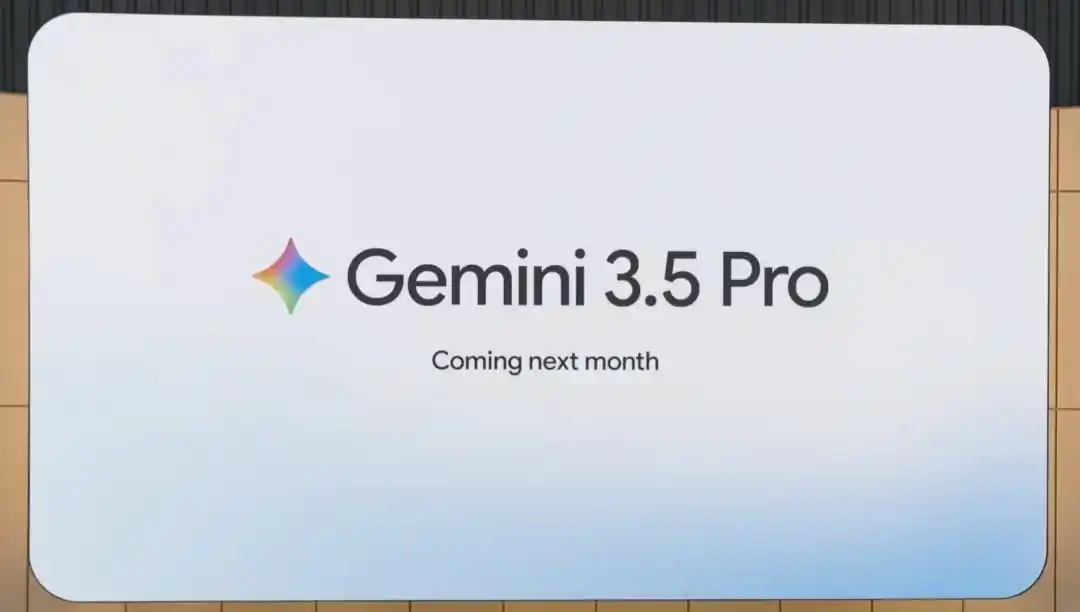
Who would have thought, and then there was nothing.
We waited for 3.6 Flash, 3.5 Flash-Lite, and 3.5 Flash Cyber, but there's been no sign of 3.5 Pro.
It's already mid-August, hello!
Google, you're really redefining what "next month" means.

The official statement is that 3.5 Pro is still in a closed beta phase with limited partners, with no confirmed launch month; meanwhile, Gemini 4 has entered the pre-training phase.
However, according to the independent business research think tank SemiAnalysis, which focuses on semiconductors and AI, Gemini 3.5 Pro has quietly been cancelled.
A Late Flagship Model
The Pro series models have always been Google's flagship models, and Gemini 3.5 Pro was originally tasked with Google's "comeback mission" in the high-end model competition.
In the first three quarters of last year, Google's Gemini 3 Pro and Nano Banana Pro almost universally received applause.
According to an internal OpenAI memo from last October exposed by The Information, Altman stated:
Google's recent progress in AI may bring some temporary economic headwinds for our company. We know we have some work to do, but we are catching up quickly.
However, just as people jokingly say, Google, OpenAI, and Anthropic often take turns, as if fortunes shift every thirty years.

This year, Gemini suddenly fell silent.
First, Gemini 3.5 Pro, after being announced as "launching next month," has still not appeared to this day.
Speculation is that the actual capabilities of this model may not have met Google's initial expectations.
SemiAnalysis believes the capability of Gemini 3.5 Pro is roughly close to that of Anthropic's Claude Opus 4.5 (and folks, that model was released back in late November last year).
As an interim solution, Google released more Flash models.
3.6 Flash, 3.5 Flash-Lite, and 3.5 Flash Cyber......
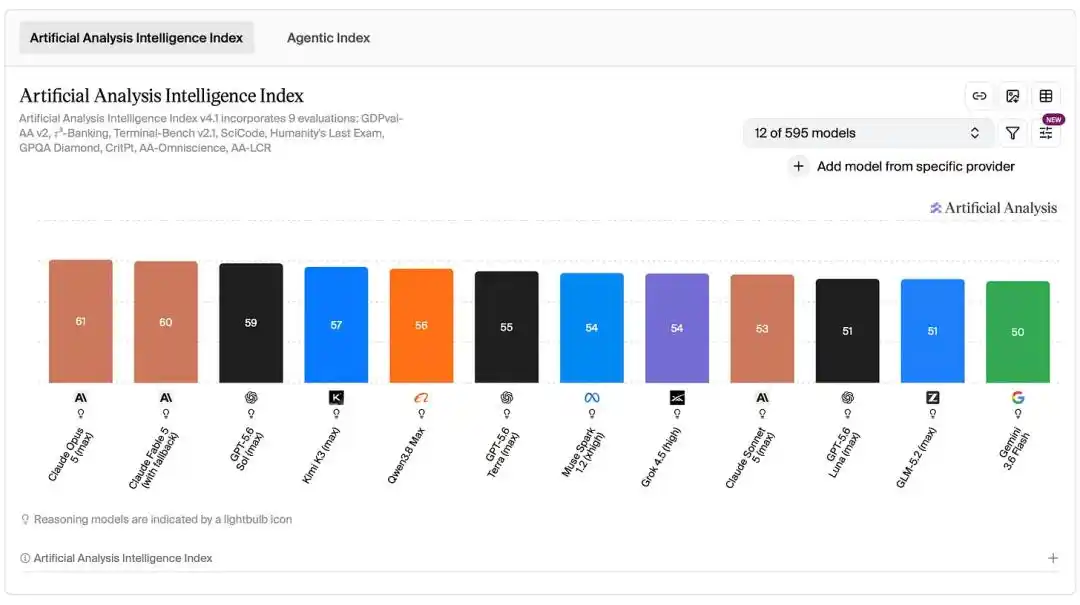
But judging from current public evaluations, the Gemini Flash series emphasizes speed, cost, and deployment efficiency more, while still lagging behind Muse Spark 1.2, Grok 4.5, and leading open-source industry models in complex reasoning, programming, and Agent tasks.
Depending on the ranking method, Gemini 3.6 Flash currently ranks eighth or ninth.
△
This means the problem Google faces is no longer just "missing one flagship model."
To the extent that SemiAnalysis made a piercing judgment:
"We believe Gemini 4 will also struggle to reverse the decline."
Co-founder Brin Returns to the Gemini Cockpit
Amid the pressure on Gemini, changes are also happening within Google.
Especially personnel turmoil among senior management and core technical talent.
Nobel laureate Demis Hassabis stepped down as Google DeepMind CEO, completely relinquishing all daily management authority of the London lab and full responsibility for Gemini commercialization, transitioning to serve as DeepMind Chairman and Alphabet Group Chief Scientist;
Former DeepMind CTO and Alphabet Chief AI Architect Koray Kavukcuoglu was promoted to Senior Vice President of DeepMind (DeepMind no longer has a separate CEO), reporting directly to Pichai;
Google's 30th employee, a 27-year veteran, and Google's Chief Scientist Jeff Dean led a collective departure of four AI veterans to start a new venture;
One of the core inventors of the Transformer architecture and co-head of Gemini, Noam Shazeer, jumped ship to join OpenAI;
......
Over the past few years, Google's AI strategy was primarily driven by Google DeepMind after its merger with Google Brain.
Hassabis's reassignment is widely interpreted as Google's dissatisfaction with his "long-term basic research first" strategy.
In an internal memo from the first half of 2026, Google co-founder Sergey Brin directly pointed out that Gemini lags behind Claude and GPT in coding and enterprise commercial sectors.
DeepMind can continue exploring reinforcement learning, foundational models, and AI scientific research, but as the AI race enters a phase of rapid iteration, speed, engineering efficiency, and resource allocation have also become critical variables.
A more crucial matter—now, Brin has also been exposed by the Financial Times as returning to the cockpit, re-engaging deeply in Gemini-related strategy discussions and becoming one of the important voices on AI direction within Google.
Although he has not been given a new formal management position, this marks the Google co-founder's high-intensity involvement in core AI business after many years.
It's important to know that as early as 2019, Brin and the other Google co-founder, Larry Page, stepped back from the day-to-day management of Google's parent company, Alphabet.
While both remain on the board in key positions, they had already resigned from their specific operational management roles at Google.
Their occasional appearances at Alphabet's Silicon Valley offices were mainly to learn about the "other bets" moonshot projects.

△
Since then, primary leadership of the company has been handed over to Sundar Pichai.
But the AI 2.0 wave changed everything.
In January 2023, less than two months after ChatGPT's release, Google urgently summoned Page and Brin, holding multiple high-level meetings regarding ChatGPT's fierce offensive.
In February of that year, Brin began personally modifying LaMDA code.
At the time, this was interpreted as a clear signal from Google—in the face of the threat from OpenAI's conversational model ChatGPT, Google internally was in a state of urgency.
Under pressure, Google managed to work overtime to give birth to the Gemini series.
In December, Brin's name also appeared on the list of core contributors to the Gemini large model. It was said he coded at a frequency of "almost daily."
Stability AI founder Emad Mostaque also confirmed this happened, "He was asking me about VAE architecture and deep diffusion problems."
Starting in 2024, the large model tug-of-war became even more intense, with OpenAI, Google, and Anthropic taking turns dominating, dubbed the "Big Three" of foreign large models.
In 2025, Google, with the Gemini 3 series and Nano banana, won countless accolades.

However, since the beginning of this year, new Gemini models have been nowhere to be seen, and the old models also seem to have lost their intelligence.
People half-jokingly, half-sighingly say:
If you used Gemini before and use it now, you'll feel it seems to have developed Alzheimer's...
In April this year, facing Anthropic's incredibly mystical Mythos, Brin personally led an emergency strike team formed at DeepMind, going all out on an AI Coding sprint.
But it still doesn't seem to have taken effect yet—at least for now, the information released by Google suggests so.
According to reports, following Jeff's departure to start a business and Hassabis's reassignment, some DeepMind employees (especially those based in London) are worried that the research culture will be further affected by commercial goals, and many have already submitted resignations or are frequently exploring external opportunities.
Google's Real Problem Might Be Compute Allocation?
Compared to model release dates, a bigger challenge might come from compute.
The AI competition has now entered the infrastructure competition stage. Training a frontier model requires not only excellent algorithms but also securing large-scale computing resources in advance.
Companies like OpenAI, Anthropic, and Meta are all continuously increasing their compute investments, hoping to ensure sufficient training capacity for the coming years.
Theoretically, Google has its own advantages.
It not only possesses a world-leading TPU chip system but also has massive data center resources.
Especially now that the AI race has moved from single-model capability competition to comprehensive competition involving organizational efficiency, engineering systems, data loops, and compute resources.
Possessing almost all the foundational conditions that other AI companies envy, Google's advantages should, in theory, be even more apparent.
But SemiAnalysis believes Google's problem is that it hasn't prioritized allocating enough resources to its own frontier model teams.
The example SemiAnalysis gives is Google's continued provision of TPU resources to Anthropic.
According to projections, between Q3 2026 and Q4 2027, over 20% of TPU shipments will be sold directly to Anthropic.
This figure doesn't even include the large amount of TPU resources Google Cloud has already leased to Anthropic, nor the potential for expanded cooperation in the future.

This creates a delicate situation.
On one hand, Google wants Gemini to be a world-leading model; on the other hand, it provides critical infrastructure to competitors through its cloud computing business.
From a commercial perspective, both cloud business revenue and AI ecosystem expansion are valuable.
But from a model competition perspective, the most precious resource for a frontier lab is precisely computing power.
Having abundant, multi-dimensional resources doesn't necessarily guarantee winning the competition... or put another way, for labs aiming for AGI, compute priority is itself a strategic choice.
Google currently needs to re-answer a question:
In the AI era, how should this company, possessing one of the world's strongest technical asset bases, actually organize itself?
One More Thing
BTW, a small episode full of symbolism.
Screenshots circulating in overseas communities recently claimed that Google is testing a homepage without an independent "Google Search" button in a small scope.
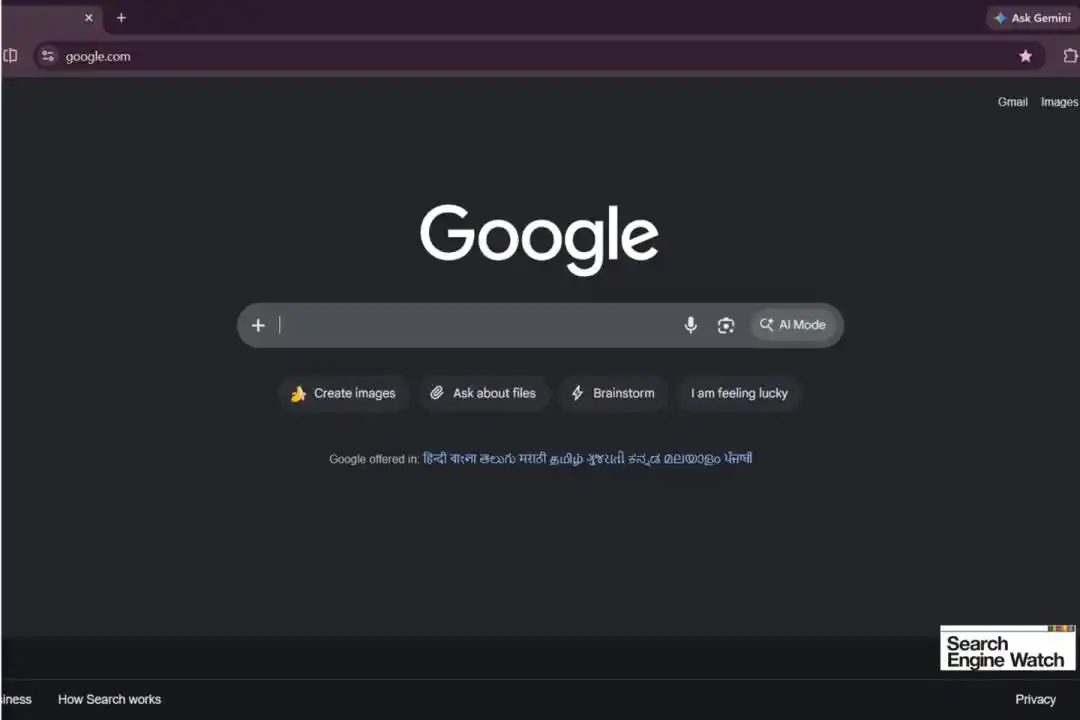
Beyond advancing frontier model progress, Google has already started adjusting its most core product first.
Does this mean Gemini generative AI, conversational tasks, multimodal creation, and document processing are the future core entry points?
Maybe.
Then hurry up with your model, my dear Google???!
This article is from the WeChat public account "QbitAI", author: Focus on Frontier Technology