Gold breaks KEY support with 3.7% drop – Will crypto face pressure next?

ambcryptoОпубліковано о 2026-03-21Востаннє оновлено о 2026-03-21

Анотація

The latest inflation report, with February's hotter-than-expected PPI, triggered a 3.7% drop in gold, breaking key support. This sell-off is attributed to a stronger U.S. dollar and rising Treasury yields, making traditional safe havens more attractive. Historically, a stronger DXY negatively impacts risk assets like crypto. Bitcoin is currently stagnant near $70k with negative funding rates and declining capital inflows, indicating a bearish bias. The falling Coinbase Premium Index and increased short positions suggest a crypto downturn may already be priced in, especially given macro pressures and the historical inverse correlation between DXY and BTC.

The latest inflation report has clearly shaken things up in this market cycle.

To put it in context, February’s PPI, released on the 18th of March, came in hotter than expected, signaling that U.S. inflation is still sticky. The reaction was almost instant. Gold, for instance, dropped 3.74%, slicing through the $5k support level, a move that caught many traders off guard.

The logic here is straightforward: Historically, during times of geopolitical instability, investors flocked to gold as a hedge against inflation. But what’s interesting now is that this pattern seems to be shifting. So far, this move hasn’t spilled over into crypto, though that doesn’t mean a crash is off the table.
Source: TradingEconomics

To see why, you need to look at a couple of key things.

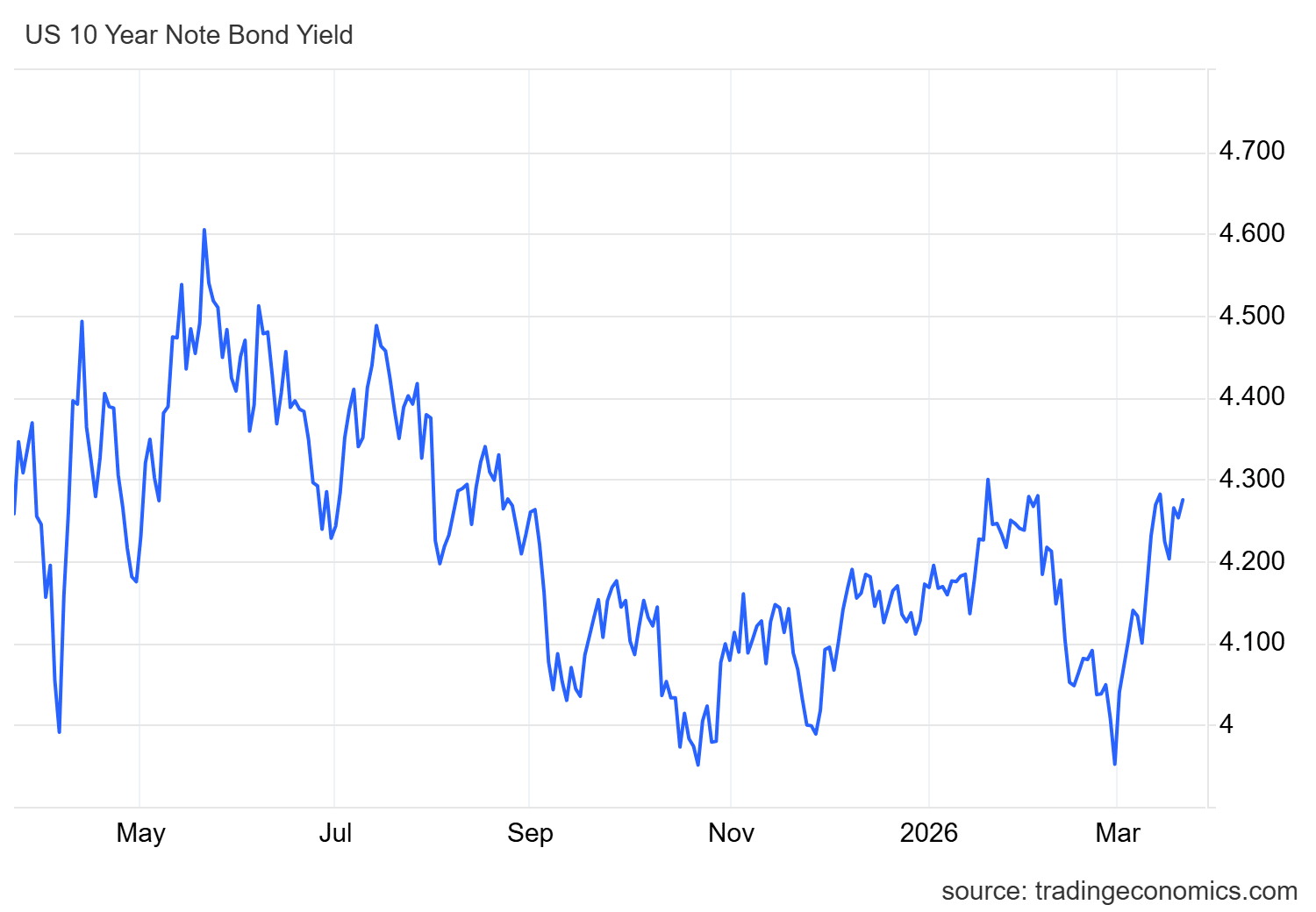
First, the gold sell-off is tied to the U.S. dollar getting stronger. With the Fed keeping interest rates steady and U.S. debt now over $39 trillion, Treasury yields are starting to look a lot more attractive. In fact, yields have jumped nearly 10% since the war kicked off, which is clearly pulling attention away from gold.

On the crypto side, history tells a familiar story. A stronger DXY usually means less love for risk assets. That means when geopolitical tensions rise, risk assets start to feel less appealing. Meanwhile, a stronger dollar pulls capital into bonds, which feel safer and now offer higher returns thanks to rising yields.

In this context, the falling Coinbase Premium Index (CPI) is already hinting at this shift, showing why crypto could eventually follow gold’s lead.

Rising Bitcoin shorts: Is a crypto crash already priced in?

Crowded trades during volatile markets can be a double-edged sword.

Currently, crypto is stuck chopping in a tight range, with Bitcoin [BTC] hovering around the $70k mark and no big capital inflows in sight. Naturally, liquidity clusters are stacking up at different price levels, hinting that traders are gearing up for a potential move.

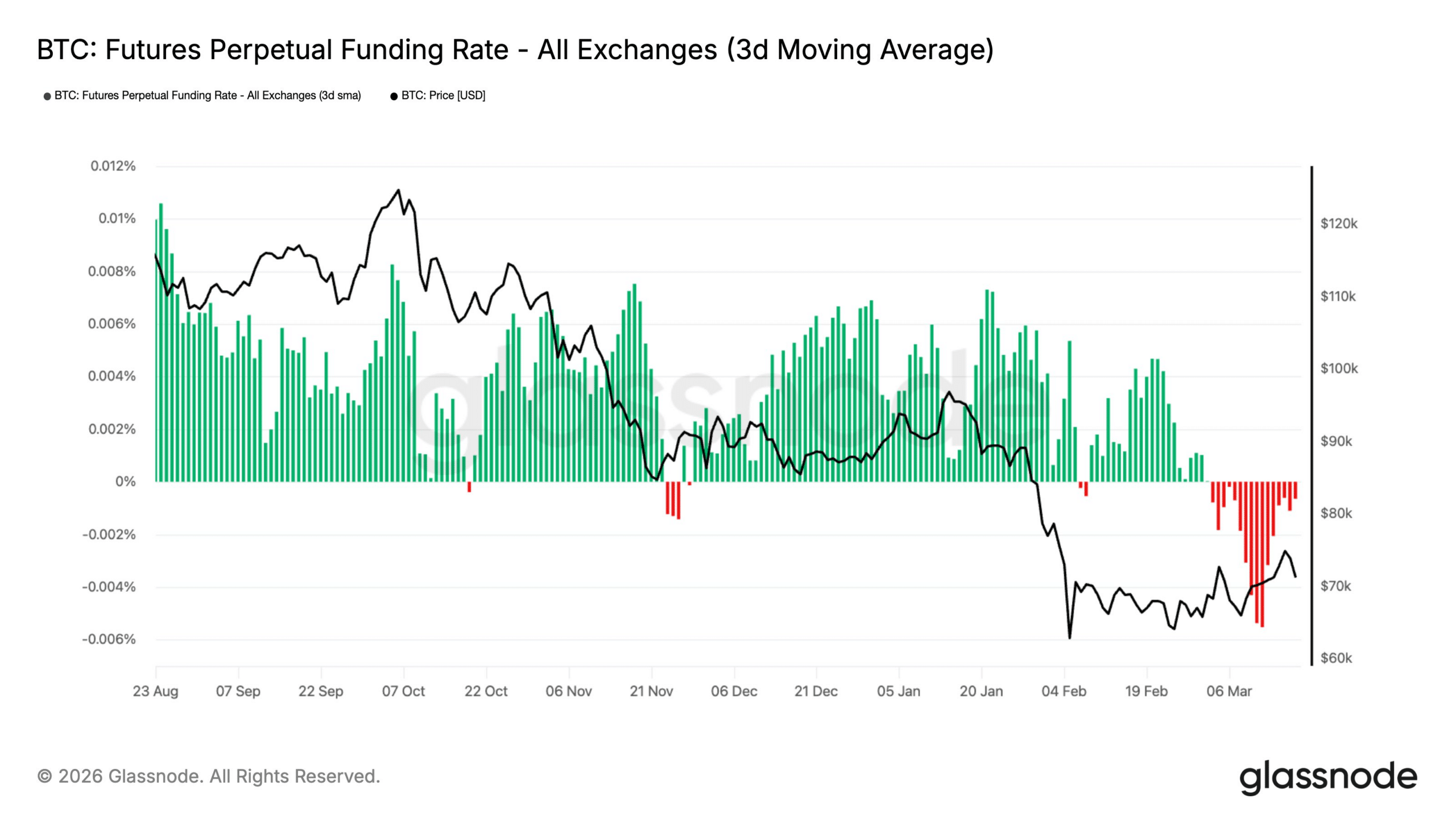
Backing this up, Glassnode data shows perpetual funding is still firmly negative, confirming the bearish bias in directional premium. Put simply, even though BTC has bounced off the lows, traders are still leaning short, which keeps the market primed for a potential squeeze-driven upside.
Source: Glassnode

But here’s where it gets interesting: The recent gold sell-off adds a twist, showing just how exposed the crypto market still is. With rising yields pulling capital back into traditional safe havens, and the Federal Reserve brushing off any talk of interest rate cuts, crypto traders are left navigating a tricky setup.

In this context, the rising Bitcoin shorts don’t feel like a fluke.

Instead, they’re looking more like strategic positioning. With the Coinbase Premium Index falling, limited capital inflows, BTC stuck near resistance, and a shifting macro backdrop, everything points to a bearish bias in both technicals and fundamentals. Bottom line? A crypto crash already looks priced in, and with the historical DXY-BTC correlation, it wouldn’t be surprising if history repeats itself.


Final Summary

  • Rising yields and a firmer DXY are pulling capital into safe havens, shaking confidence in gold.
  • With Bitcoin near resistance, falling CPI, and bearish technicals, a crypto crash may already be priced in.


Пов'язані питання

QWhat was the immediate market reaction to the hotter-than-expected February PPI report released on March 18th?

AThe reaction was almost instant. Gold, for instance, dropped 3.74%, slicing through the $5k support level.

QAccording to the article, what two key factors are pulling attention and capital away from gold?

AThe gold sell-off is tied to the U.S. dollar getting stronger (a firmer DXY) and rising Treasury yields, which have jumped nearly 10% and are now more attractive.

QWhat does the falling Coinbase Premium Index (CPI) signal for the crypto market?

AThe falling Coinbase Premium Index is hinting at a shift, showing that crypto could eventually follow gold's lead downward as capital moves away from risk assets.

QWhat does the negative perpetual funding rate and bearish bias in directional premium indicate about trader sentiment?

AIt confirms a bearish bias, indicating that even though BTC has bounced off lows, traders are still leaning short and positioning for a potential downside move.

QWhy does the article suggest that a crypto crash may already be 'priced in'?

ABecause of the rising Bitcoin shorts, falling CPI, limited capital inflows, BTC being stuck near resistance, and a shifting macro backdrop with a stronger dollar and rising yields, all of which point to a bearish bias.

Пов'язані матеріали

Dialogue with a Macro Analyst: AI Drains All Liquidity from U.S. Stocks, $40K Bitcoin is the True Bottom

In a recent discussion, macro strategist Luke Groman, founder of FFT LC, presented a sobering analysis of current markets. He argues that while the S&P 500 hits new highs, this is largely driven by just seven AI stocks, which are "sucking all the oxygen and liquidity out of the room." Bitcoin, which he calls the "last working smoke alarm for liquidity," is signaling trouble, having entered a difficult period. Groman explains that the AI boom is fueled by accounting practices that front-load revenue, creating an illusion of high profits while cash is being depleted. He warns this cycle could reverse sharply when construction slows. His base case is that stocks will rise in dollar terms but fall significantly when measured in gold or Bitcoin, highlighting that long-term US Treasury futures have already lost 90% of their value against gold over the past decade. He points to major structural risks, including China's dominance in rare earths—a small commodity market underpinning trillions in tech stock value—and the prolonged closure of the Strait of Hormuz, which he calls a "Suez Moment" for the US. This, combined with a shift towards a "no ticky, no washy" proof-of-work system for settling trade (using gold, not trust), signals deeper systemic distrust. Regarding US debt, Groman notes that historically, all 58 countries that reached a 130% debt-to-GDP ratio defaulted, primarily through inflation. The US crossed this threshold in 2020. He also highlights a contradiction in the AI narrative: if it's as transformative as claimed, it must destroy white-collar jobs, threatening half of US tax revenue—a reality at odds with the "no job loss" messaging from tech leaders. On Bitcoin, Groman sold most of his position near the top and hasn't fully re-entered. Citing technical analysis from Northstar Bad Charts, he suggests a potential bottom around $40,000 could materialize in Q3 or Q4. He concludes that while he may be labeled a doomsayer, his view is simply realistic, grounded in historical precedents and current macro pressures.

marsbit6 год тому

Dialogue with a Macro Analyst: AI Drains All Liquidity from U.S. Stocks, $40K Bitcoin is the True Bottom

marsbit6 год тому

Торгівля

Спот
Ф'ючерси
活动图片




