GnosisDAO Approved Transition of Gnosis Chain to Ethereum Economic Zone

cryptonews.ruОпубліковано о 2026-08-20Востаннє оновлено о 2026-08-20

Анотація

GnosisDAO has approved a proposal (GIP-153) for Gnosis Chain to transition from an independent Layer 1 blockchain into a zk-rollup within the Ethereum Economic Zone (EEZ). The move, supported by a significant majority of $GNO token holders, will see the network's validator set dissolved, with transaction computation and security ultimately relying on Ethereum. The upgrade is slated for late 2026 or early 2027, pending EEZ technology readiness. This migration will make Gnosis Chain the first deployed implementation of the EEZ framework, a project developed by Gnosis and ZisK with Ethereum Foundation backing. The core goal of EEZ is to unify Ethereum's fragmented Layer 2 ecosystem by enabling synchronous operations and direct contract calls between different rollups, eliminating the need for vulnerable cross-chain bridges. This aims to preserve liquidity and improve user experience while addressing scalability trade-offs. The change will allow native Gnosis Chain smart contracts to interact directly with Ethereum's mainnet within a single transaction, accessing its assets and liquidity. Analysts, including from Standard Chartered, suggest EEZ could reduce reliance on hack-prone bridges and increase asset composability, potentially boosting overall activity within the Ethereum ecosystem. The existing Gnosis Chain applications, user balances, and xDAI gas token will be maintained throughout the transition.

GnosisDAO has approved the transition of Gnosis Chain from an autonomous Layer 1 (L1) network to a rollup in the Ethereum Economic Zone (EEZ), with transaction validation using ZK-proofs.

GIP-153 was supported by holders of 123,158 $GNO; 115 voted against, and 151 abstained. 54 participants took part in the vote, Gnosis Chain reported in an X post. Turnout was 123,425 $GNO — exceeding the 75,000 quorum.

According to the proposal, the Gnosis Chain validator set will be retired, and the network will settle transactions on Ethereum. This will make Gnosis Chain a Layer 2 (L2) solution that relies on Ethereum validators for settlement.

The initial launch is scheduled for late 2026 or early 2027, pending the readiness of the necessary EEZ technology.

The upgrade will allow smart contracts native to Gnosis Chain to call Ethereum and use the result within the same transaction. They will gain access to the assets and liquidity of the Ethereum mainnet in a "user-optimized" environment. According to the proposal, existing L2s do not yet support such capability.

Gnosis Chain Will Be the First Launched Implementation of EEZ.

EEZ is a framework for building Ethereum-centric rollups, developed by Gnosis and ZisK, with financial backing from the Ethereum Foundation.

The initiative aims to unify the fragmented Ethereum L2 ecosystem: smart contracts across different rollups will be able to perform operations synchronously without bridges. This is intended to eliminate one of the main scaling trade-offs of Ethereum. Dozens of L2 networks increase throughput but fragment liquidity, infrastructure, and user activity across separate blockchains.

Gnosis Chain will become the first deployed implementation of EEZ and will retain existing applications, balances, and the xDAI gas token.

Ethereum co-founder Vitalik Buterin previously expressed concerns about centralized sequencers and trust-based aggregation mechanisms in bridges. He called them potentially vulnerable elements in the architecture of some L2 networks. "The original concept of L2 and their role in Ethereum no longer makes sense, and we need a new path," Buterin wrote in a February 3 X post.

According to L2Beat, 22 Ethereum rollups secure $27.82 billion. Including validiums, optimistic rollups, and other scaling networks, the tracking platform monitors a total of $34.88 billion in secured value.

Related: Ripple Raised $275,000,000 Million to Launch Core Brokerage Service in the US Amid Institutional Demand

EEZ Could Reduce Reliance on Vulnerable Infrastructure: Standard Chartered

According to Geoffrey Kendrick, Global Head of Digital Assets Research at Standard Chartered, EEZ could reduce reliance on blockchain bridges and increase activity within the Ethereum ecosystem.

"EEZ will allow for less need for bridges, where hacks are common, and increase the utility of assets across EVM networks," he wrote in a May 28 report published by Cointelegraph.

"Both are likely to lead to higher levels of activity within the Ethereum ecosystem."

Kendrick stated that EEZ could enhance asset composability: smart contracts across different participating networks will be able to interact within a single transaction.

Magazine: Ethereum's EEZ Could Pull Other Blockchains Into Its Orbit

end-content
Трендові криптовалюти

Пов'язані питання

QWhat did GnosisDAO approve regarding Gnosis Chain?

AGnosisDAO approved the transition of Gnosis Chain from an autonomous layer-1 network to a rollup in the Ethereum Economic Zone (EEZ) with transaction verification using ZK-proofs.

QWhat will happen to the Gnosis Chain validator set as part of the transition to EEZ?

AThe Gnosis Chain validator set will be abolished. The network will then rely on Ethereum's validators for transaction calculations, effectively becoming a layer-2 (L2) solution.

QWhat is a key expected benefit of the Ethereum Economic Zone (EEZ) framework?

AA key expected benefit of EEZ is to unify the fragmented Ethereum L2 ecosystem by allowing smart contracts in different rollups to perform synchronous operations without bridges, thereby improving asset composability and concentrating liquidity.

QAccording to Jeffrey Kendrick of Standard Chartered, how might EEZ impact the Ethereum ecosystem?

AJeffrey Kendrick stated that EEZ could reduce the need for bridges (which are often vulnerable to hacks), increase the utility of assets in EVM networks, and likely lead to increased activity within the Ethereum ecosystem.

QWhat is the planned timeline for the initial launch of Gnosis Chain as an EEZ rollup?

AThe initial launch is planned for late 2026 or early 2027, contingent on the readiness of the necessary EEZ technology.

Пов'язані матеріали

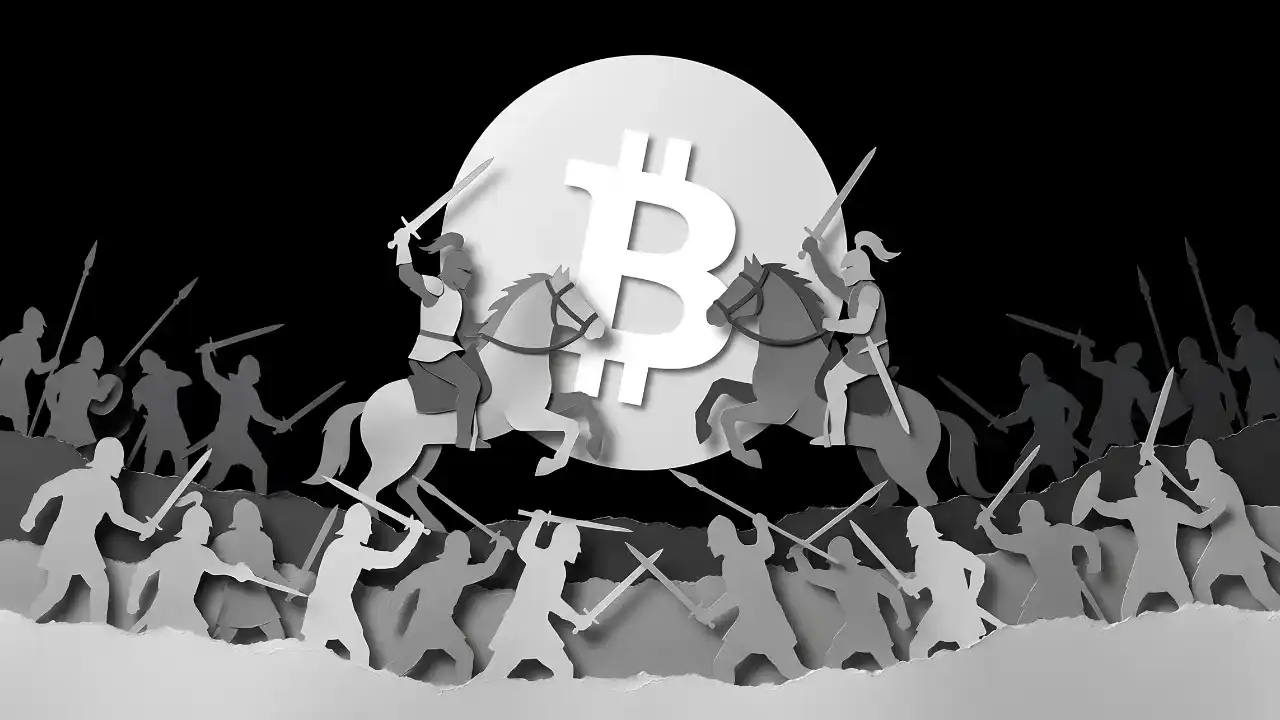
Jameson Lopp's BIP-110 Postmortem: Bitcoin Is Driven by Game Theory, Not Morality

Jameson Lopp's analysis concludes that BIP-110, a proposal to restrict arbitrary data (like inscriptions) on Bitcoin, failed due to economic and technical realities, not moral arguments. The proposal, championed by Luke Dashjr and others, aimed to "cleanse" the chain but never reached its 55% miner activation threshold. Upon its forced signaling deadline in August, only the OCEAN pool (with ~1% hash rate) supported it, creating a short-lived fork that quickly died as miners faced unredeemable block rewards. Lopp's earlier predictions about its economic infeasibility were proven correct. Technically, BIP-110 was flawed; workarounds to embed data compliant with its rules were demonstrated almost immediately, proving it couldn't achieve its stated goal. The debate often devolved into moralistic rhetoric, with supporters accusing opponents of supporting child exploitation material—a tactic Lopp criticizes as ineffective for building consensus. Lopp argues Bitcoin is driven by incentives and game theory, not morality. Past forks like Bitcoin Cash promised economic benefits, while BIP-110 offered only restrictions and reduced miner fees, gaining no substantial support from major economic players. He predicts the "puritans" behind the failed fork will continue complaining but their new chain will remain insignificant. The episode reaffirms that attempting to censor data on a permissionless, anti-censorship network like Bitcoin is a futile battle.

marsbit30 хв тому

Jameson Lopp's BIP-110 Postmortem: Bitcoin Is Driven by Game Theory, Not Morality

marsbit30 хв тому

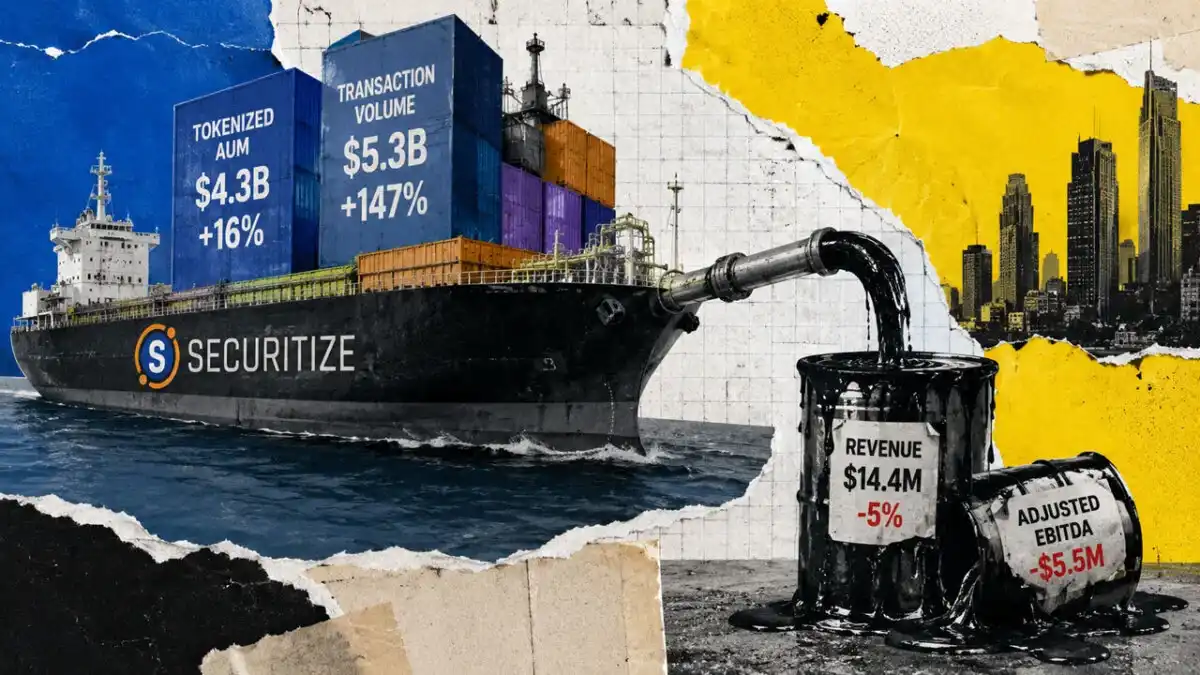
Tokenization Scale Soars to $4.3 Billion, But Why Did Securitize Incur a $5.5 Million Loss?

Securitize's first quarterly report post-IPO reveals a paradox: while its tokenized assets under management hit a record $4.3 billion (up 16% YoY) and platform trading volume surged 147% to $5.3 billion, total revenue fell 5% to $14.4 million. Tokenization revenue specifically dropped ~12% to $7.8 million, leading to an adjusted EBITDA loss of $5.5 million. CFO Francisco Flores explained that most trading volume is not yet monetized, with the majority of tokenization revenue still coming from one-time projects like new protocol integrations. In contrast, asset servicing revenue, a more recurring stream, grew slightly to $6.6 million. The company has lowered its full-year revenue guidance to $70-$80 million from an initial projection of $110 million. Industry experts note this highlights a structural challenge for the tokenization sector. Scaling assets on-chain doesn't automatically scale a profitable business model. Current implementations often rely on costly, customized projects for each new asset or jurisdiction. The future, they argue, lies in building standardized infrastructure that generates recurring "infrastructure revenue" from post-issuance activities like compliance, distributions, and secondary trading—similar to enterprise software. Analysts caution against misinterpreting high trading volumes as indicative of a mature fee-based model, as Securitize's broad volume metric includes many non-monetized actions. The key test for the industry is whether adding billions in new assets can generate sustainable revenue without constant new custom projects.

marsbit32 хв тому

Tokenization Scale Soars to $4.3 Billion, But Why Did Securitize Incur a $5.5 Million Loss?

marsbit32 хв тому

The Five Paradoxes of Artificial Intelligence

**Five Paradoxes of Artificial Intelligence** Artificial intelligence (AI) is an era filled with paradoxes, which we navigate as we advance. **1. The Prediction Paradox** AI experts, from pioneers like Marvin Minsky to contemporary figures like Geoffrey Hinton and Demis Hassabis, have a history of inaccurate forecasts regarding AI's capabilities and timelines, such as achieving human-level machine intelligence or surpassing radiologists. Predictions about Artificial General Intelligence (AGI) vary wildly between optimistic entrepreneurs and skeptical academics, highlighting the inherent unpredictability of technological futures. **2. The Employment Quantification Paradox** Despite numerous studies from institutions like the OECD, IMF, and McKinsey attempting to quantify AI's impact on jobs, estimates of affected employment range from 0.4% to 67%, revealing vast inconsistencies. This paradox arises because isolating AI's effect from other economic, social, and technological factors is virtually impossible, and forecasts depend on static assumptions about a dynamically evolving technology. **3. The Productivity Paradox** While AI is a transformative General Purpose Technology, significant productivity growth has not yet materialized in major economies like the EU and has only matched historical averages in the US. This disconnect between rapid innovation and slow productivity gains, reminiscent of the "Solow Paradox" from the computer age, is often explained by time lags. History shows it takes decades for such technologies to diffuse and trigger complementary innovations that boost productivity. **4. The Data Value Paradox** Data is hailed as the "new oil" and critical for AI, yet its economic value is paradoxical. Its worth is realized only in use, not in straightforward trade. Despite policy emphasis and initiatives for data asset recognition on corporate balance sheets in China, the monetized value remains negligible—accounting for only about 0.06% of major telecom operators' total assets—highlighting the gap between perceived utility and financial valuation. **5. The Industrial Revolution Paradox** For decades, nearly every major new technology, from the internet and nanotechnology to blockchain and now AI, has been proclaimed as the driver of a "Fourth Industrial Revolution." This constant reassignment suggests prior labels were premature. True industrial revolutions are typically identified in hindsight, not in real-time. Furthermore, the coexistence of such a proclaimed transformative revolution with ongoing economic crises would be historically anomalous. Whether AI truly defines a new industrial revolution remains a narrative for the future to decide.

marsbit35 хв тому

The Five Paradoxes of Artificial Intelligence

marsbit35 хв тому

Торгівля

Спот

Популярні статті

Як купити LAYER

Ласкаво просимо до HTX.com! Ми зробили покупку Solayer (LAYER) простою та зручною. Дотримуйтесь нашої покрокової інструкції, щоб розпочати свою криптовалютну подорож.Крок 1: Створіть обліковий запис на HTXВикористовуйте свою електронну пошту або номер телефону, щоб зареєструвати обліковий запис на HTX безплатно. Пройдіть безпроблемну реєстрацію й отримайте доступ до всіх функцій.ЗареєструватисьКрок 2: Перейдіть до розділу Купити крипту і виберіть спосіб оплатиКредитна/дебетова картка: використовуйте вашу картку Visa або Mastercard, щоб миттєво купити Solayer (LAYER).Баланс: використовуйте кошти з балансу вашого рахунку HTX для безперешкодної торгівлі.Треті особи: ми додали популярні способи оплати, такі як Google Pay та Apple Pay, щоб підвищити зручність.P2P: Торгуйте безпосередньо з іншими користувачами на HTX.Позабіржова торгівля (OTC): ми пропонуємо індивідуальні послуги та конкурентні обмінні курси для трейдерів.Крок 3: Зберігайте свої Solayer (LAYER)Після придбання Solayer (LAYER) збережіть його у своєму обліковому записі на HTX. Крім того, ви можете відправити його в інше місце за допомогою блокчейн-переказу або використовувати його для торгівлі іншими криптовалютами.Крок 4: Торгівля Solayer (LAYER)Легко торгуйте Solayer (LAYER) на спотовому ринку HTX. Просто увійдіть до свого облікового запису, виберіть торгову пару, укладайте угоди та спостерігайте за ними в режимі реального часу. Ми пропонуємо зручний досвід як для початківців, так і для досвідчених трейдерів.

541 переглядів усьогоОпубліковано 2025.02.11Оновлено 2026.06.02

Як купити LAYER

Обговорення

Ласкаво просимо до спільноти HTX. Тут ви можете бути в курсі останніх подій розвитку платформи та отримати доступ до професійної ринкової інформації. Нижче представлені думки користувачів щодо ціни LAYER (LAYER).

活动图片