Global Top Streamer MrBeast Becomes a Major Card for Tom Lee

比推Опубліковано о 2026-01-16Востаннє оновлено о 2026-01-16

Анотація

This article details the strategic $200 million investment by BitMine Immersion Technologies (BMNR), led by Wall Street analyst Tom Lee, into Beast Industries, the holding company of global YouTube phenomenon MrBeast. The deal signals a major move to explore integrating DeFi into Beast's upcoming financial services platform. MrBeast, whose main channel has over 460 million subscribers, built an empire on ultra-high-cost, viral video content, often spending millions per video. His business, Beast Industries, now generates an estimated $400 million in annual revenue across content, consumer goods (like his profitable Feastables chocolate brand), and licensing, with a valuation around $5 billion. Despite this, MrBeast operates with minimal personal cash flow, reinvesting nearly all profits back into content to fuel growth and maintain his massive audience reach. The partnership with Tom Lee and BMNR is framed as a necessary evolution. Facing the limits of a high-cost, ad-reliant model, Beast Industries aims to build a more sustainable economic relationship with its audience through decentralized finance (DeFi). Potential applications include a lower-cost payment layer, a programmable account system for creators and fans, and decentralized asset tracking. The article positions this as a high-risk, high-reward experiment in transforming a vast attention economy into a new financial infrastructure, all while being mindful of not eroding the immense trust MrBeast has built with hi...

$200 million is the figure just announced today.

BitMine Immersion Technologies (BMNR), chaired by Wall Street renowned analyst Tom Lee , announced that it will invest in Beast Industries, the holding company behind global top streamer MrBeast. Meanwhile, Beast Industries mentioned in its official statement that the company will explore how to "integrate DeFi into the upcoming financial services platform" in the future.
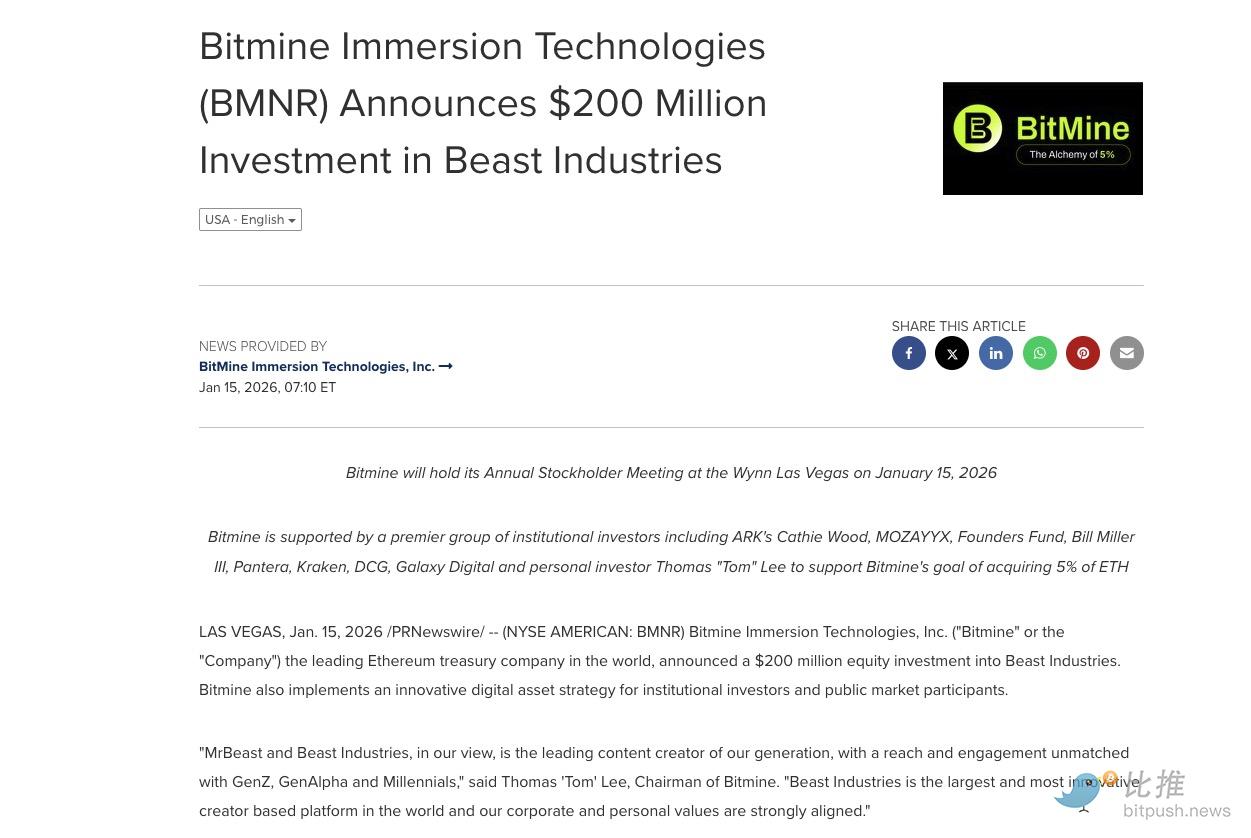
If you only look at the news, it seems like another familiar crossover: traditional, crypto, internet celebrity, entrepreneurship. On one side is the YouTube霸主 (overlord) with cumulative global subscriptions exceeding 400 million, where a single video can get the algorithm to weight you spontaneously; on the other side is Wall Street's top analyst best at telling crypto narratives, skilled at writing grand blockchain concepts into balance sheets. Everything seems perfectly logical.

MrBeast's Journey

Looking back at MrBeast's early videos, it's hard to connect them to today's Beast Industries, valued at $5 billion.
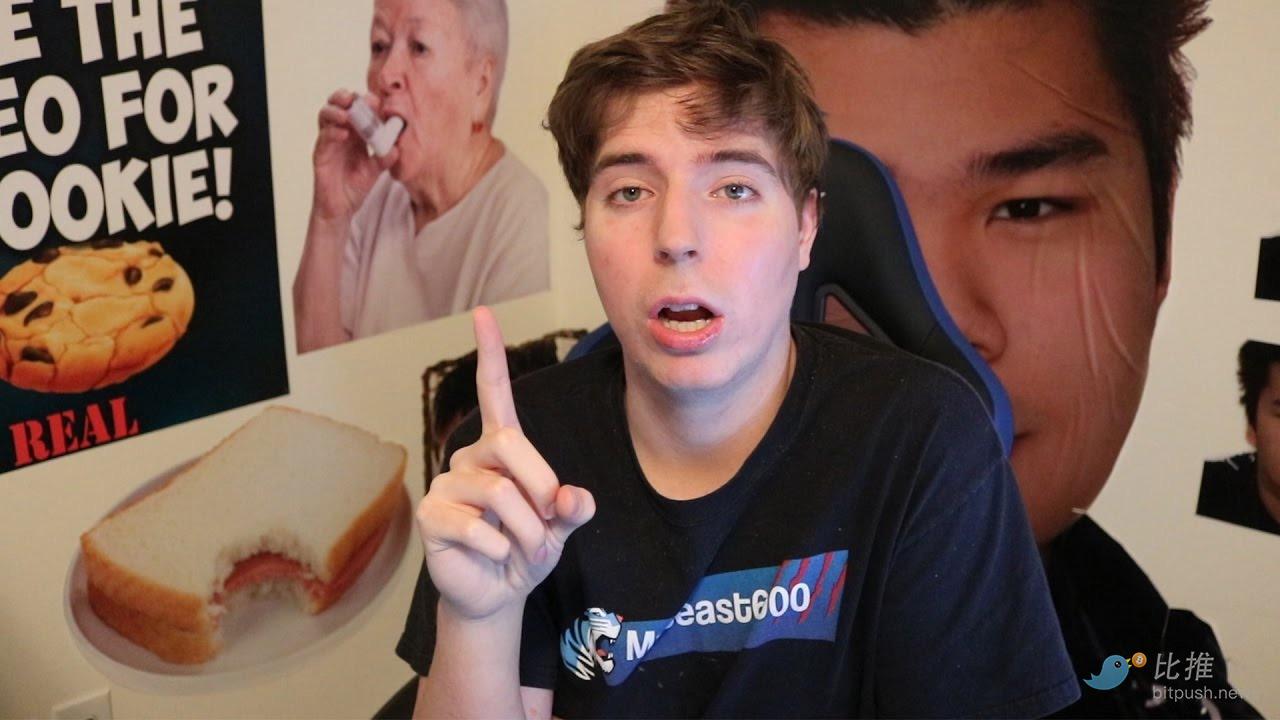
In 2017, Jimmy Donaldson, who had just graduated from high school, uploaded a video of himself counting continuously for 44 hours—"Challenge: Count from 1 to 100,000!" The content was simple, almost childish, with no plot, no editing, just a person repeating numbers to the camera, yet it became a turning point in his content career.

He was not yet 19 at the time, with only about 13,000 channel subscribers. After the video was released, it quickly surpassed a million views, becoming the first globally viral case study.

Later, in an interview recalling that time, he said one thing:

"I wasn't actually trying to get famous back then; I just wanted to know if the result would be different if I was willing to put all my time into something no one else was willing to do."

That video was indeed different. Donaldson successfully built his audience, but more importantly, from that moment on, he formed an almost obsessive belief: attention is not earned by talent, but by investment and endurance.

Treating YouTube as a Company, Not a Creative Platform

Many creators, after gaining fame, choose to "play it safe": reduce risk, increase efficiency, turn content into stable cash flow.

MrBeast chose the opposite path.

He has repeatedly emphasized one thing in multiple interviews:

"Basically, all the money I earn gets spent on the next video."

This is the core of his business model.

By 2024, his main channel had over 460 million subscribers, with cumulative video views exceeding 100 billion. But behind this lies extremely high costs:

  • The production cost for a single top video is consistently between $3 million – $5 million;

  • Some large-scale challenges or philanthropic projects can cost over $10 million;

  • The first season of "Beast Games" on Amazon Prime Video was described by himself as "completely out-of-control production," and he admitted in an interview: losses amounted to tens of millions of dollars.

When he said this, he didn't show regret:

"If I don't do this, the audience will watch someone else.
At this level, you can't save money and expect to win."

This sentence can almost be the key to understanding Beast Industries.

Beast Industries: $400 Million Annual Revenue, But Thin Profits

By 2024, MrBeast consolidated all his businesses under the name Beast Industries.

From public information, this company has far exceeded the scope of "creator side hustles":

  • Annual revenue exceeds $400 million;

  • Business spans content production, fast-moving consumer goods (FMCG) retail, licensed merchandise, tool-based products;

  • After the latest round of funding, the general market expectation for its valuation is around $5 billion.

But it's not easy.

MrBeast's YouTube main channel and Beast Games bring huge exposure but consume almost all the profits.
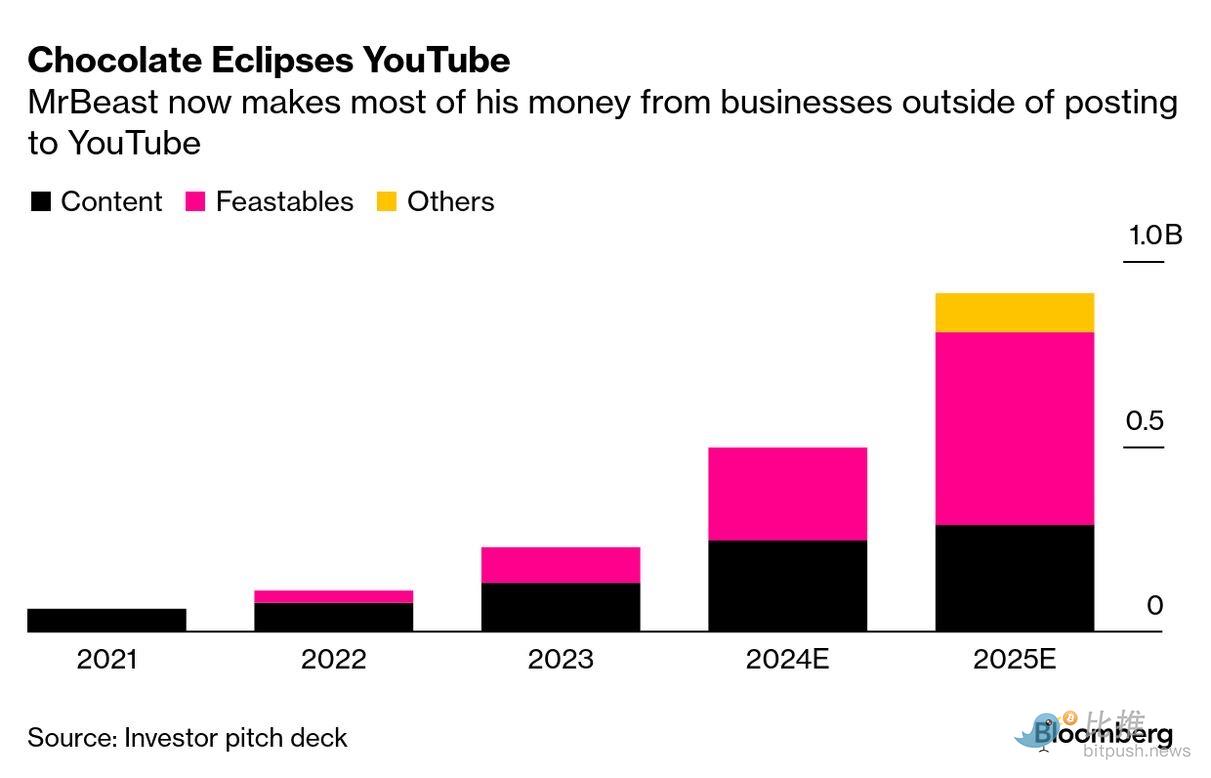
In stark contrast to the content is his chocolate brand, Feastables. Public information shows that in 2024, Feastables' sales were about $250 million, contributing over $20 million in profit. This was the first time Beast Industries had a stable, replicable cash flow business. By the end of 2025, Feastables had entered over 30,000 physical retail stores in North America (including Walmart, Target, 7-Eleven, etc.), covering the US, Canada, and Mexico, significantly enhancing the brand's offline sales capabilities.

MrBeast has stated on multiple occasions that video production costs are getting higher and higher, even "increasingly difficult to break even." But he still insists on investing heavily in content production because, in his view, this is not just paying for videos, but buying traffic for the entire business ecosystem.

The core barrier of the chocolate business is not production, but the ability to reach consumers. While other brands need to spend huge sums on advertising exposure, he only needs to release one video. Whether the video itself is profitable is no longer important; as long as Feastables continues to sell, this business闭环 (closed loop) can continue to operate.

"I'm Actually Broke"

In early 2026, MrBeast revealed in a Wall Street Journal interview that he was broke, sparking discussion:

"I'm basically in a 'negative cash' state right now. They all say I'm a billionaire, but there's not much money in my bank account."

This statement is not "humblebragging," but rather a natural result of his business model.

MrBeast's wealth is highly concentrated in unlisted equity; although he holds just over 50% of Beast Industries, the company continues to expand and almost never pays dividends; he personally even deliberately avoids keeping cash. In June 2025, MrBeast revealed that because he continuously invested almost all his savings into video production and business expansion, he once had to borrow money from his mother to pay for his wedding.

As he later explained more bluntly:

"I don't look at my bank balance—it affects my decision-making."

And the fields he invests in have long gone beyond content and consumer goods.

In fact, as early as the 2021 NFT boom, on-chain records show he purchased and traded multiple CryptoPunks, some of which were sold for 120 ETH each (worth hundreds of thousands of dollars at the time).
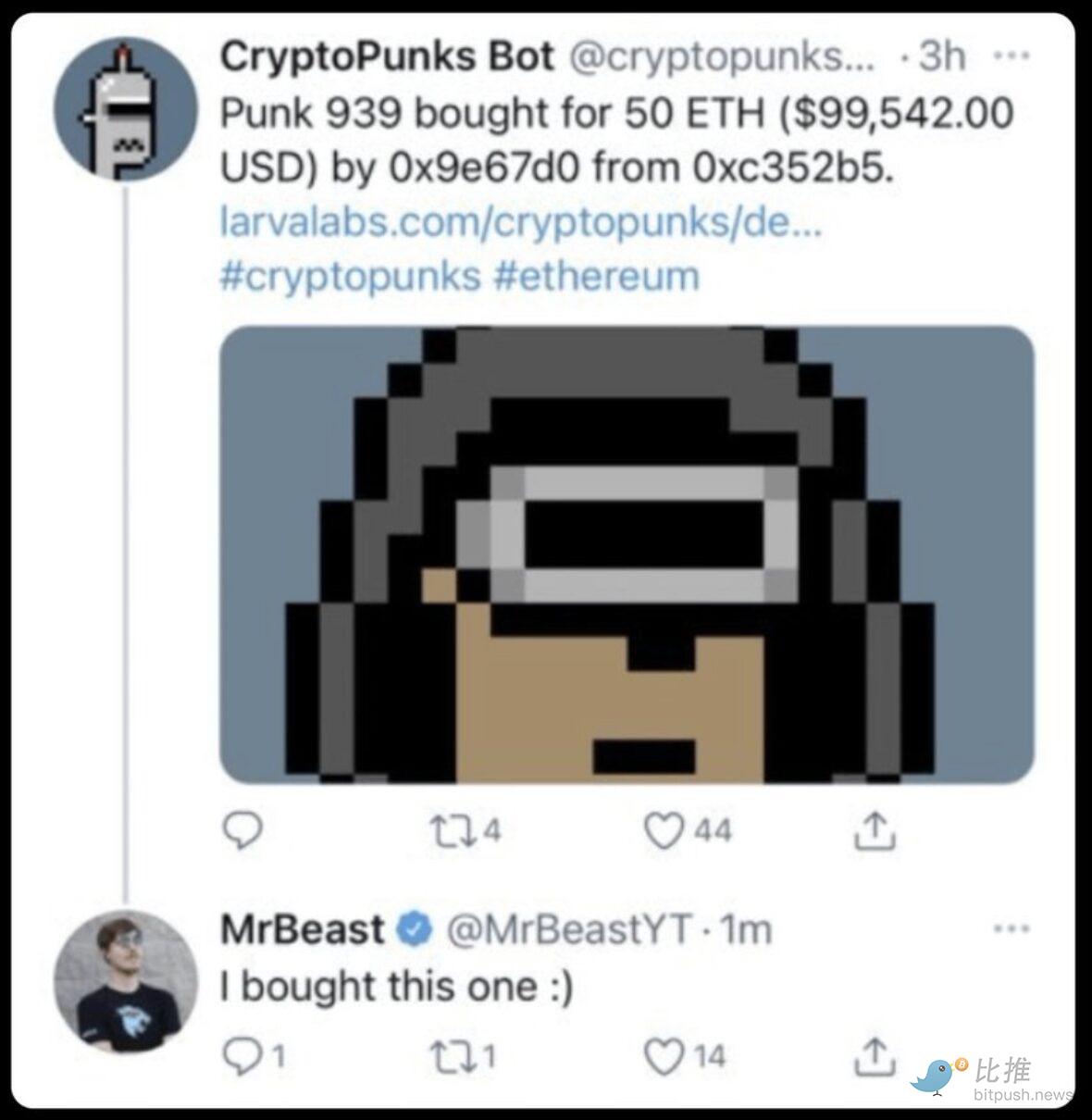
However, as the market entered a correction period, his attitude became more cautious.

The real turning point, is that MrBeast's own business model has reached a critical edge.

When a person controls a global top-tier traffic入口 (entry point) but is长期 (long-term) in a state of high investment, cash紧张 (tightness), and expansion reliant on financing, finance is no longer just an investment option, but becomes an infrastructure that must be重构 (restructured).

The命题 (proposition) repeatedly discussed within Beast Industries in recent years has gradually become clear: how to make users no longer just "watch content, buy goods," but enter a long-term, stable, sustainable economic relationship?

This is precisely the direction traditional internet platforms have tried for years: payments, accounts, credit systems. And at this juncture, the emergence of Tom Lee and BitMine Immersion (BMNR) has directed this path towards a more structural possibility.

Joining Forces with Tom Lee to Build a DEFI Foundation

On Wall Street, Tom Lee has always played the role of a "narrative architect." From early explanations of Bitcoin's value logic to emphasizing the strategic significance of Ethereum on corporate balance sheets, he is skilled at translating technological trends into financial language. BMNR's investment in Beast Industries is not chasing internet celebrity热度 (heat), but betting on the programmable future of attention入口 (entry points).

So, what exactly does DeFi mean here?

Current public information is extremely restrained: no token issuance, no yield promises, no exclusive financial products for fans. But the phrase "integrating DeFi into the financial services platform" points to several possibilities:

- Lower-cost payment and settlement layer;

- Programmable account systems for creators and fans;

- Asset recording and equity structures based on decentralized mechanisms.

The imagination space is large, but the risks are equally huge. If handled improperly, financial logic could backfire and damage the trust assets accumulated over years. And MrBeast's emphasis on trust is perhaps the most crucial constraint in this experiment. After all, he once said:

"If one day what I do hurts the audience, I would rather do nothing."

This statement will likely be tested repeatedly in every future attempt at financialization.

So, when the world's strongest attention machine seriously starts building financial infrastructure, will it become a new-generation platform, or an "overly brave" crossover?

The answer won't be revealed quickly.

But there is one thing he understands better than any of his peers: the greatest capital is not past glory, but the right to "start over." After all, he is only 27 years old.

Author: Seed.eth


Twitter:https://twitter.com/BitpushNewsCN

Bitpush TG Discussion Group:https://t.me/BitPushCommunity

Bitpush TG Subscription: https://t.me/bitpush

Original link:https://www.bitpush.news/articles/7603279

Пов'язані питання

QWhat is the significance of the $200 million investment by BitMine Immersion Technologies in Beast Industries?

AThe $200 million investment by BitMine Immersion Technologies (BMNR), led by Wall Street analyst Tom Lee, into MrBeast's Beast Industries signifies a strategic move to explore integrating DeFi into the company's upcoming financial services platform, potentially building a programmable financial infrastructure for its massive audience.

QHow did MrBeast's early video 'Counting to 100,000' impact his career?

AMrBeast's early video 'Counting to 100,000', where he counted numbers for 44 hours, went viral and became his first phenomenon-level success. It marked a turning point, teaching him that attention could be earned through extreme dedication and endurance, not just talent, and helped grow his channel significantly.

QWhat is the core philosophy behind MrBeast's business model regarding revenue and spending?

AMrBeast's core business philosophy is to reinvest almost all the money he earns back into the next video. He believes that at his scale, you cannot win by being frugal; continuous high investment in content is necessary to maintain audience attention and drive the broader business ecosystem.

QWhich business within Beast Industries provides a stable and replicable cash flow, and how does it benefit from the content?

AFeastables, MrBeast's chocolate brand, is the business within Beast Industries that provides stable and replicable cash flow, generating over $200 million in profit on $2.5 billion in sales. It benefits massively from the free, immense exposure from his YouTube videos, which act as a powerful advertising channel, reducing customer acquisition costs.

QWhy did MrBeast describe himself as 'broke' despite his company's high valuation, and what does this reveal about his financial strategy?

AMrBeast described himself as 'broke' because his wealth is highly illiquid, tied up in the equity of his privately held company, Beast Industries, which reinvests almost all profits and does not pay dividends. This reveals his strategy of prioritizing aggressive reinvestment and growth over personal liquidity, believing that checking his bank balance would negatively impact his decision-making for expansion.

Пов'язані матеріали

Gensyn AI: Don't Let AI Repeat the Mistakes of the Internet

In recent months, the rapid growth of the AI industry has attracted significant talent from the crypto sector. A persistent question among researchers intersecting both fields is whether blockchain can become a foundational part of AI infrastructure. While many previous AI and Crypto projects focused on application layers (like AI Agents, on-chain reasoning, data markets, and compute rentals), few achieved viable commercial models. Gensyn differentiates itself by targeting the most critical and expensive layer of AI: model training. Gensyn aims to organize globally distributed GPU resources into an open AI training network. Developers can submit training tasks, nodes provide computational power, and the network verifies results while distributing incentives. The core issue addressed is not decentralization for its own sake, but the increasing centralization of compute power among tech giants. In the era of large models, access to GPUs (like the H100) has become a decisive bottleneck, dictating the pace of AI development. Major AI companies are heavily dependent on large cloud providers for compute resources. Gensyn's approach is significant for several reasons: 1) It operates at the core infrastructure layer (model training), the most resource-intensive and technically demanding part of the AI value chain. 2) It proposes a more open, collaborative model for compute, potentially increasing resource utilization by dynamically pooling idle GPUs, similar to early cloud computing logic. 3) Its technical moat lies in solving complex challenges like verifying training results, ensuring node honesty, and maintaining reliability in a distributed environment—making it more of a deep-tech infrastructure company. 4) It targets a validated, high-growth market with genuine demand, rather than pursuing blockchain integration without purpose. Ultimately, the boundaries between Crypto and AI are blurring. AI requires global resource coordination, incentive mechanisms, and collaborative systems—areas where crypto-native solutions excel. Gensyn represents a step toward making advanced training capabilities more accessible and collaborative, moving beyond a niche controlled by a few giants. If successful, it could evolve into a fundamental piece of AI infrastructure, where the most enduring value in the AI era is often created.

marsbit12 год тому

Gensyn AI: Don't Let AI Repeat the Mistakes of the Internet

marsbit12 год тому

Why is China's AI Developing So Fast? The Answer Lies Inside the Labs

A US researcher's visit to China's top AI labs reveals distinct cultural and organizational factors driving China's rapid AI development. While talent, data, and compute are similar to the West, Chinese labs excel through a pragmatic, execution-focused culture: less emphasis on individual stardom and conceptual debate, and more on teamwork, engineering optimization, and mastering the full tech stack. A key advantage is the integration of young students and researchers who approach model-building with fresh perspectives and low ego, prioritizing collective progress over personal credit. This contrasts with the US culture of self-promotion and "star scientist" narratives. Chinese labs also exhibit a strong "build, don't buy" mentality, preferring to develop core capabilities—like data pipelines and environments—in-house rather than relying on external services. The ecosystem feels more collaborative than tribal, with mutual respect among labs. While government support exists, its scale is unclear, and technical decisions appear driven by labs, not state mandates. Chinese companies across sectors, from platforms to consumer tech, are building their own foundational models to control their tech destiny, reflecting a broader cultural drive for technological sovereignty. Demand for AI is emerging, with spending patterns potentially mirroring cloud infrastructure more than traditional SaaS. Despite challenges like a less mature data industry and GPU shortages, Chinese labs are propelled by vast talent, rapid iteration, and deep integration with the open-source community. The competition is evolving beyond a pure model race into a contest of organizational execution, developer ecosystems, and industrial pragmatism.

marsbit14 год тому

Why is China's AI Developing So Fast? The Answer Lies Inside the Labs

marsbit14 год тому

3 Years, 5 Times: The Rebirth of a Century-Old Glass Factory

Corning, a 175-year-old glass company, is experiencing a dramatic revival as a key player in AI infrastructure, driven by surging demand for high-performance optical fiber in data centers. AI data centers require vastly more fiber than traditional ones—5 to 10 times as much per rack—to handle high-speed data transmission between GPUs. This structural demand shift, coupled with supply constraints from the lengthy expansion cycle for fiber preforms, has created a significant supply-demand gap. Nvidia has invested in Corning, along with Lumentum and Coherent, in a $4.5 billion total commitment to secure the optical supply chain for AI. Corning's competitive edge lies in its expertise in producing ultra-low-loss, high-density, and bend-resistant specialty fiber, which is critical for 800G+ and future 1.6T data rates. Its deep involvement in co-packaged optics (CPO) with partners like Nvidia further solidifies its position. While not the largest fiber manufacturer globally, Corning's revenue from enterprise/data center clients now exceeds 40% of its optical communications sales, and it has secured multi-year supply agreements with major hyperscalers including Meta and Nvidia. Financially, Corning's optical communications revenue has surged, doubling from $1.3 billion in 2023 to over $3 billion in 2025. Its stock price has risen nearly 6-fold since late 2023. Key future catalysts include the rollout of Nvidia's CPO products and the scale of undisclosed customer agreements. However, risks include high current valuations and potential disruption from next-generation technologies like hollow-core fiber. The company's long-term bet on light over electricity, maintained even through the telecom bubble crash, is now being validated by the AI boom.

marsbit15 год тому

3 Years, 5 Times: The Rebirth of a Century-Old Glass Factory

marsbit15 год тому

Торгівля

Спот
Ф'ючерси
活动图片