Global debt markets show dollar dominance moves in cycles, US Fed says

cointelegraphОпубліковано о 2025-12-18Востаннє оновлено о 2025-12-18

Анотація

A new Federal Reserve discussion paper reveals that the U.S. dollar’s dominance in global debt markets has moved in cycles over the past 60 years, with no clear long-term trend toward either dollarization or de-dollarization. The study identifies three distinct "dollarization waves" since the 1960s, showing currency usage shifts are cyclical rather than structural. As of 2024, emerging markets still rely heavily on dollar-denominated debt, which makes up about 80% of their international bonds. Meanwhile, the rise of dollar-pegged stablecoins like USDT and USDC—which together represent 85% of the $309.6 billion stablecoin market—has reinforced dollar dominance. These stablecoins are backed significantly by U.S. Treasury holdings, making their issuers major holders of U.S. government debt. The report concludes that despite vulnerabilities, the dollar’s global role remains unchallenged due to a lack of alternatives. Efforts to internationalize other currencies, including the Chinese renminbi, have seen limited success. European policymakers have expressed concern over the growing influence of dollar-backed stablecoins.

A new Federal Reserve discussion paper finds that the US dollar’s role in global bond markets has risen and fallen in cycles over the past six decades, with no clear long-term trend toward either greater dollar dominance or de-dollarization.

Using the Bank for International Settlements’ (BIS) international debt securities database, the authors identify three distinct “dollarization waves” since the 1960s, showing that shifts in currency use have followed cyclical patterns rather than a steady structural change in global financing.

“We find no monotonic dollarization or de-dollarization trend; instead, the dollar’s share exhibits a wavelike pattern,” the paper says.

The most recent wave emerged after the 2008 global financial crisis, when the dollar regained market share in international bond issuance, climbing back toward levels seen before the surge in euro-denominated bond issuance in the early 2000s, according to the report.
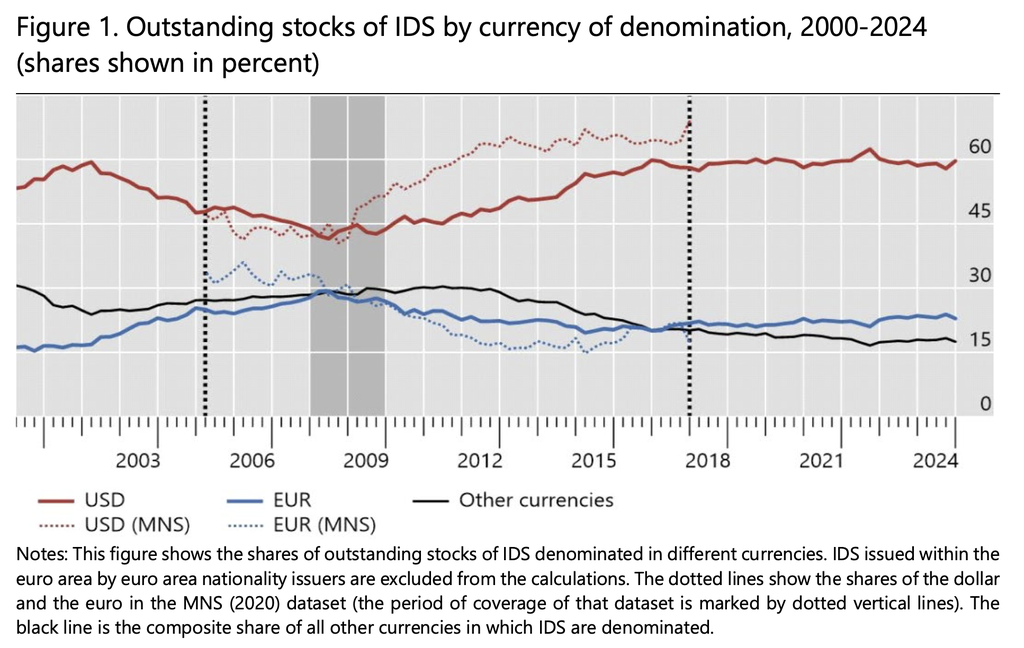
Share of international debt issued by currency, 2000–2024. Source: Federalreserve.gov

The study also found that, as of 2024, emerging market issuers still rely predominantly on dollar-denominated debt, which accounts for about 80% of their outstanding international bonds, while efforts by China begun in 2010 to internationalize its currency, the renminbi, have produced only modest gains.

“While the dollar’s eminence rests on vulnerable foundations, the absence of viable alternatives has left the dollar’s primacy unchallenged,” the report said.

Related: Intuit to use Circle’s stablecoin for financial platforms

Stablecoins back US Treasurys

The global stablecoin market has expanded sharply over the past year, growing to roughly $309.6 billion from $205.5 billion in December 2024, according to DefiLlama data.

Most of that growth has been concentrated in US dollar-pegged tokens, with Tether’s USDt (USDT) and Circle’s USDC (USDC) together accounting for about 85% of total stablecoin supply, or roughly $264 billion of the market at the time of writing.
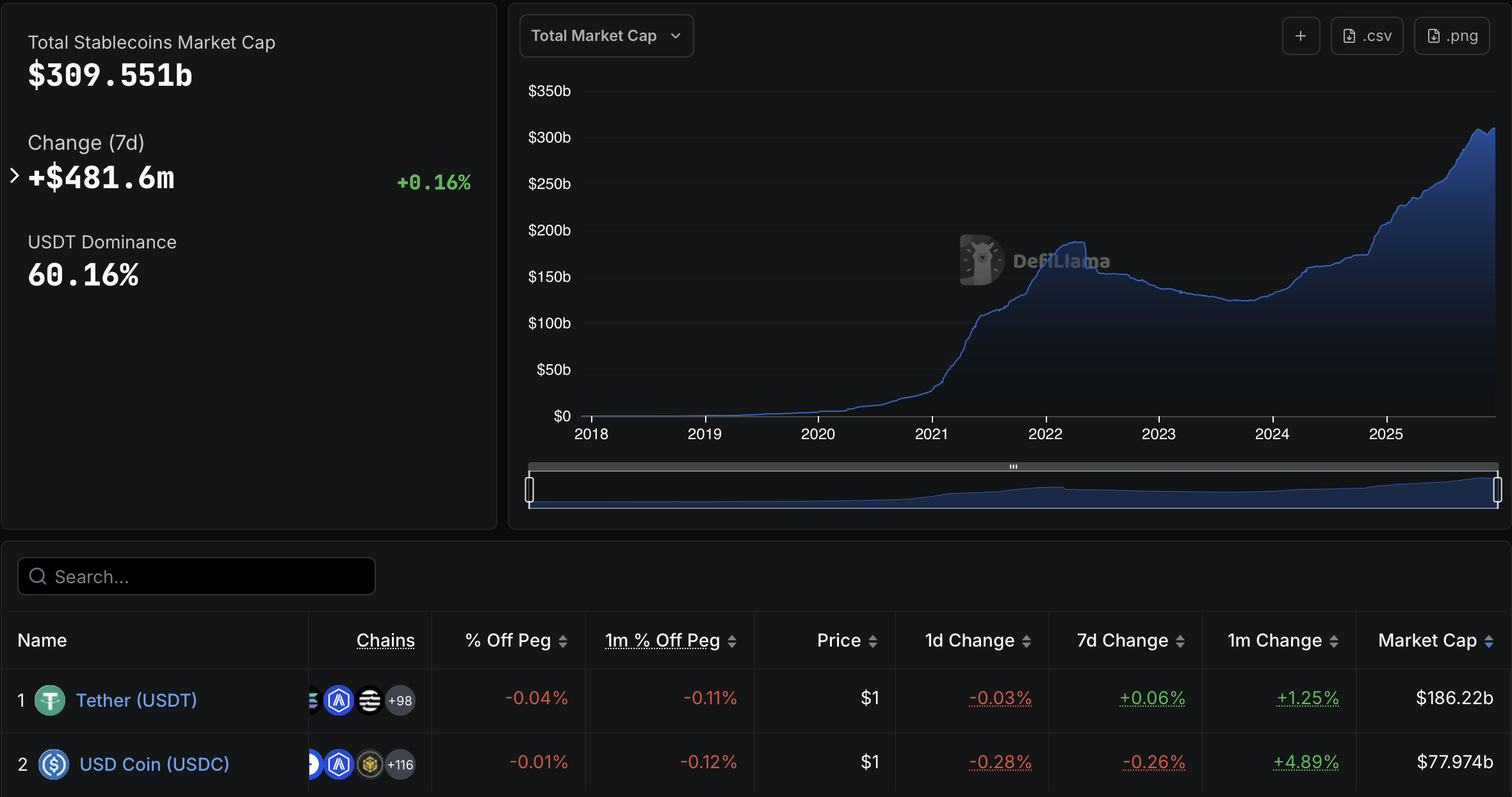
Stablecoin market cap. Source: DefiLlama

As dollar-pegged stablecoins have expanded, issuers have become significant holders of short-term US government debt.

In its second-quarter 2025 reserve report, Tether said its exposure to US Treasurys exceeded $127 billion, including $105.5 billion held directly and $21.3 billion held indirectly. According to the company, that level of Treasury holdings places Tether among the largest holders of US government debt.

Circle’s latest transparency report, dated Dec. 15, shows USDC is also backed largely by US government debt instruments, including $49.7 billion in overnight reverse Treasury repos and $18.5 billion in short-term Treasurys.
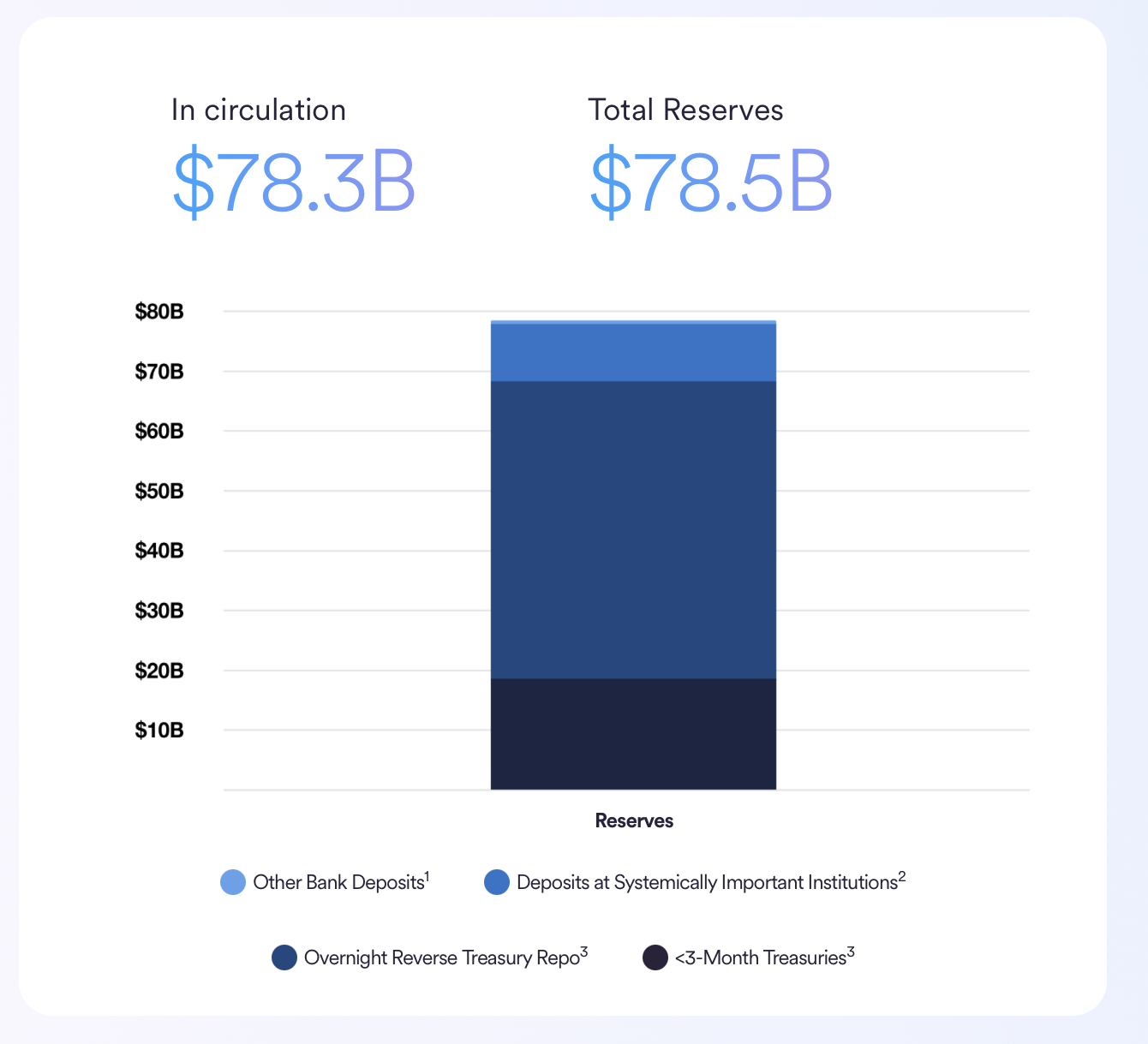
Circle’s reserves composition. Dec. 15, 2025. Source: Circle

A July report from digital asset bank Sygnum said the US government sees dollar-pegged stablecoins as a means to reinforce the dollar’s role as a global reserve currency and is backing their growth through legislation.

Other countries have taken notice. In April, Italy’s Economy and Finance Minister Giancarlo Giorgetti warned that US policies supporting dollar-backed stablecoins pose a greater long-term risk to Europe’s financial system than trade tariffs, citing their potential to erode the euro’s role in cross-border payments.

In December, a group of 10 European banks said they plan to launch a euro-pegged stablecoin in the second half of 2026.

Magazine: Meet the onchain crypto detectives fighting crime better than the cops

Пов'язані питання

QWhat is the main finding of the Federal Reserve discussion paper regarding the US dollar's role in global debt markets?

AThe paper finds that the US dollar's role in global bond markets has risen and fallen in cyclical waves over the past six decades, with no clear long-term trend toward either greater dollar dominance or de-dollarization.

QAccording to the report, what percentage of emerging market issuers' outstanding international bonds are denominated in US dollars as of 2024?

AAs of 2024, dollar-denominated debt accounts for about 80% of emerging market issuers' outstanding international bonds.

QWhich two stablecoins dominate the stablecoin market, and what is their combined market share?

ATether's USDt (USDT) and Circle's USDC (USDC) together account for about 85% of the total stablecoin supply.

QHow significant is Tether's holding of US Treasurys, according to its Q2 2025 reserve report?

ATether's exposure to US Treasurys exceeded $127 billion, a level that places it among the largest holders of US government debt.

QWhat concern did Italy's Economy and Finance Minister raise regarding US policies on dollar-backed stablecoins?

AHe warned that US policies supporting dollar-backed stablecoins pose a greater long-term risk to Europe's financial system than trade tariffs, citing their potential to erode the euro's role in cross-border payments.

Пов'язані матеріали

Торгівля

Спот
Ф'ючерси

Популярні статті

Як купити US

Ласкаво просимо до HTX.com! Ми зробили покупку Talus Network (US) простою та зручною. Дотримуйтесь нашої покрокової інструкції, щоб розпочати свою криптовалютну подорож.Крок 1: Створіть обліковий запис на HTXВикористовуйте свою електронну пошту або номер телефону, щоб зареєструвати обліковий запис на HTX безплатно. Пройдіть безпроблемну реєстрацію й отримайте доступ до всіх функцій.ЗареєструватисьКрок 2: Перейдіть до розділу Купити крипту і виберіть спосіб оплатиКредитна/дебетова картка: використовуйте вашу картку Visa або Mastercard, щоб миттєво купити Talus Network (US).Баланс: використовуйте кошти з балансу вашого рахунку HTX для безперешкодної торгівлі.Треті особи: ми додали популярні способи оплати, такі як Google Pay та Apple Pay, щоб підвищити зручність.P2P: Торгуйте безпосередньо з іншими користувачами на HTX.Позабіржова торгівля (OTC): ми пропонуємо індивідуальні послуги та конкурентні обмінні курси для трейдерів.Крок 3: Зберігайте свої Talus Network (US)Після придбання Talus Network (US) збережіть його у своєму обліковому записі на HTX. Крім того, ви можете відправити його в інше місце за допомогою блокчейн-переказу або використовувати його для торгівлі іншими криптовалютами.Крок 4: Торгівля Talus Network (US)Легко торгуйте Talus Network (US) на спотовому ринку HTX. Просто увійдіть до свого облікового запису, виберіть торгову пару, укладайте угоди та спостерігайте за ними в режимі реального часу. Ми пропонуємо зручний досвід як для початківців, так і для досвідчених трейдерів.

1.2k переглядів усьогоОпубліковано 2025.12.11Оновлено 2025.12.11

Як купити US

Обговорення

Ласкаво просимо до спільноти HTX. Тут ви можете бути в курсі останніх подій розвитку платформи та отримати доступ до професійної ринкової інформації. Нижче представлені думки користувачів щодо ціни US (US).

活动图片