From Viral Memes to Soaring Meme Coins: A 'Bull Arrives' Attention-Driven Bull Market

marsbitОпубліковано о 2026-08-17Востаннє оновлено о 2026-08-17

Анотація

From widespread internet memes to the meteoric rise of its namesake cryptocurrency, the animated film "Niu Lai" (meaning "Bull Coming") has sparked an unexpected "attention bull market." Initially generating a low box office, the Chinese animation gained viral fame due to its stark contrast between polished promotional art and its intentionally crude, absurd content. This online frenzy fueled thousands of user-generated memes and discussions. Capitalizing on this hype, a BNB Chain meme token also named "Niu Lai" surged thousands of times in value shortly after its August 14 launch, reaching a market cap exceeding $47 million. The token's narrative was amplified by viral community engagement, wild profit stories from early traders, and even a fabricated on-chain "burn" event falsely linked to a prominent figure's wallet. The phenomenon spilled over into stock markets, where Chinese retail investors humorously linked the film to their longing for a bull market. They created financial memes from movie scenes and rallied around stocks with "bull" or "niu" in their names, causing brief price spikes for several such companies. Ultimately, "Niu Lai" transcended its origins as a simple film, becoming a blank canvas for mass participation, social currency, and a collective outlet for market sentiment in both crypto and traditional finance.

Author: Nancy, PANews

Upright walking cattle herds, sudden bursts of inspirational quotes, utterly absurd plots... The domestic animation film "Bull Arrives" ("Niu Lai") unexpectedly trended online over the weekend. Despite its rough production and abstract storyline, its box office surged from an initial few thousand yuan to over ten million yuan.

Even more dramatic is that after theaters nationwide hastily pulled the film, this viral meme craze didn't fade. Instead, it rapidly spread from the silver screen to social media. Frenzied user-generated content and meme-making kept the hype alive, directly invading the stock and crypto markets.

Absurd Animation Jumps from Screen to Blockchain, Homonymous Meme Coin Soars Thousands of Times

In the era of the attention economy, meme coins have become the most direct on-chain vehicle for capturing market sentiment. Within just a few days, the homonymous meme coin "Niu Lai" (Bull Arrives) on-chain staged a myth of thousands-fold gains. According to GMGN data, since launching on the BNB Chain on August 14th, the market cap of the "Niu Lai" token rapidly climbed from around $10,000 to once exceed $47 million.
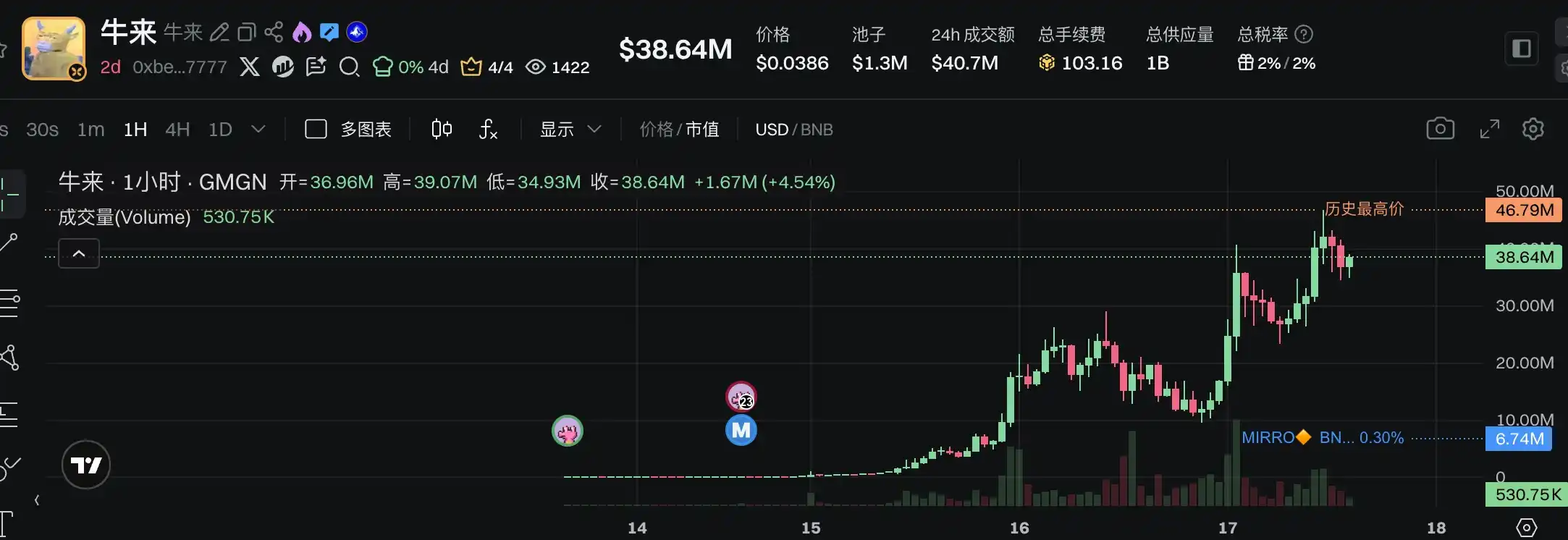
This on-chain frenzy was fueled by a combination of catalysts: the film's explosive popularity, frenzied community meme creation, and an on-chain accidental "burn" incident.

First, the massive attention created by the film "Bull Arrives" blowing up in reverse. This domestic animation frequently trended recently, even entering the top ten 2026 Chinese animated films by box office. Its spread wasn't based on traditional high-quality content, but rather on a strong sense of contrast, curiosity, and spectacle. From the huge gap between the initial exquisitely crafted traditional ink-painting style posters and the rough 3D modeling and absurd plot in the actual film, to behind-the-scenes stories like "a renovation company transitioning," "five years of handmade production," and "mom funding her child's dream," "Bull Arrives" continuously generated talking points, sparking waves of spread on social media.

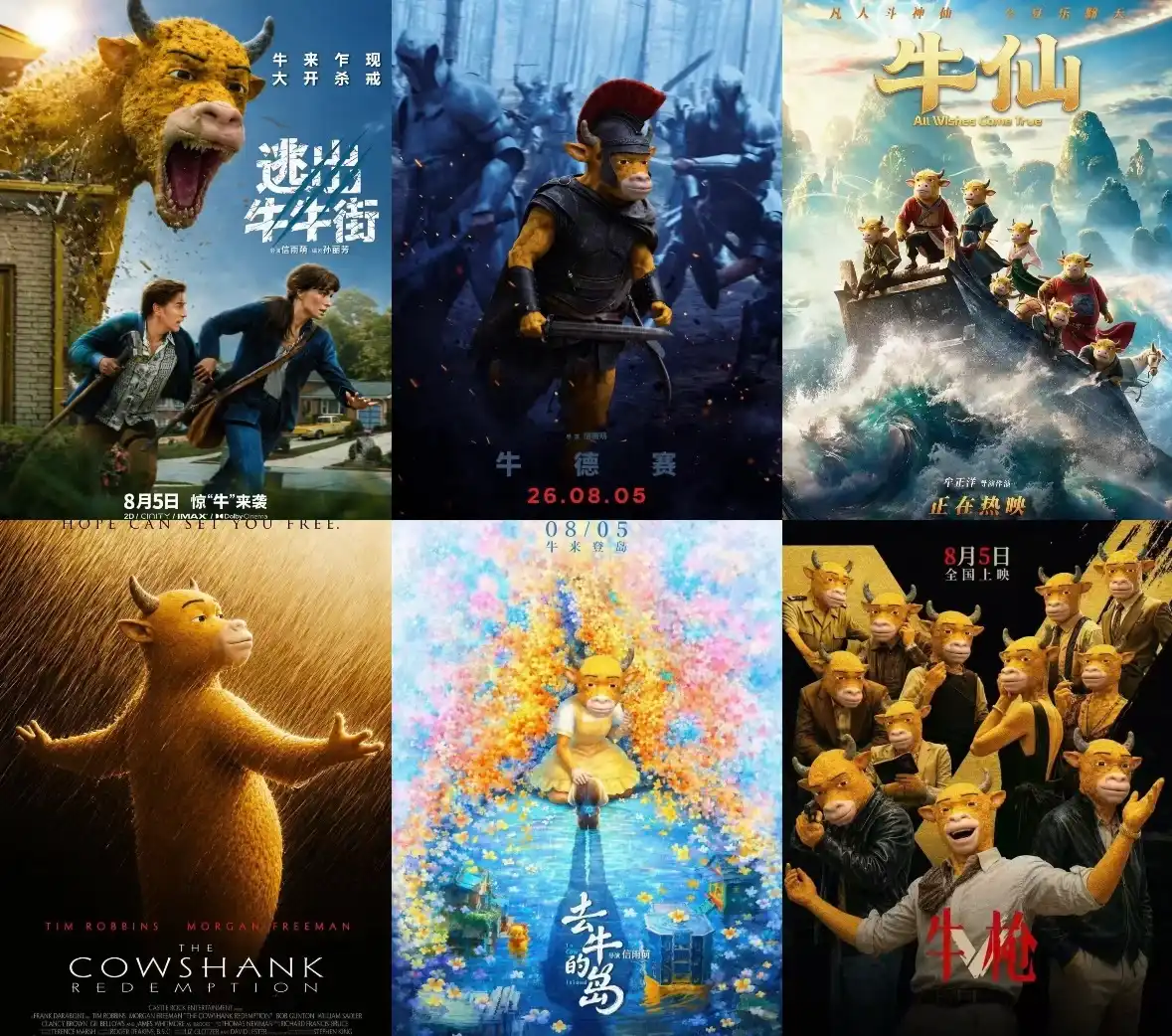
After its abstract breakthrough into mainstream awareness, the film rapidly transformed from a screen product into a widely participatory emotional totem and social currency. Some remade classic movie posters into "Bull Arrives" versions, others used AI to generate derivative content, some combined it with gaming videos and internet memes, and even Yiwu merchants started selling lookalike dolls. Massive amounts of user-generated content turned "Bull Arrives" into an internet symbol that could be endlessly replicated, modified, and spread.
Simultaneously, an "accidental burn" incident involving CZ's address dramatically added fuel to this frenzy.

On-chain monitoring showed that CZ's publicly known donation address had an operation that appeared to "burn" "Niu Lai" tokens. Although the token contract address (starting with 0xD043B6) was merely a homonymous token different from the hotly traded one (starting with 0xbee), it was initially interpreted as CZ's proactive cleanup. In fact, on-chain data confirmed this was not CZ actively burning tokens; it was the token creator utilizing contract privileges to first send a large number of tokens to CZ's address, then forcibly transfer a small amount from that address to a black hole address, simulating a burn. CZ's address had not granted any authorization to this token or its deployer during this period.

Afterwards, CZ announced he would deactivate his public address to avoid misinterpretation of operations. Nonetheless, the incident itself had already achieved a magnification of attention.

Get-rich-quick stories also significantly amplified the meme coin's spread effect. According to Ai Yi monitoring, the total single-token profit for the "Niu Lai" top-earning address 0x31f...ef337 exceeded $585,000 (including partial profits from another address), with a return rate of 7882.9% on an initial investment of just $7,188; a trader spent $16,552 buying 22.1 million tokens, now worth $663,000, with an unrealized profit of $646,000 and a return of 39x; another trader spent only $120 to buy 19.1 million tokens, later sold 9.1 million for a profit of $25,900, with total profits reaching $205,800, a staggering return of 822x. In a sluggish market, these almost lottery-like windfall stories are particularly eye-catching.

Furthermore, the film's title "Niu Lai" (Bull Arrives) naturally forms a homophone with "Niu Shi Lai Le" (the bull market has arrived), hitting the crypto community's collective expectation and self-deprecating sentiment for a bull run, providing a natural emotional outlet for the entire narrative.

Stock Investors Team Up "Seeking Good Luck," "Bull-related" Stocks Trend

Not limited to the crypto circle, the "Bull Arrives" craze quickly spread to the stock market, with many retail investors joining the banter, even calling it a "must-watch movie for A-share investors."

To many investors, "Bull Arrives" seems tailor-made for them. Netizens discovered the director follows accounts like "Tonghuashun Investment," and the film itself is filled with a sense of contrast similar to capital markets. The promotional posters feature exquisite, elegant traditional ink-painting, somewhat reminiscent of the flowery packaging seen in research reports and financial statements. Actually entering the cinema reveals rough animation and absurd plots, mirroring the huge gap between reality and performance/K-line charts in the market. Some investors thus quipped, "Don't blindly enter the market out of curiosity" — a phrase that sounds like advice for potential moviegoers and a stock market investment warning alike.

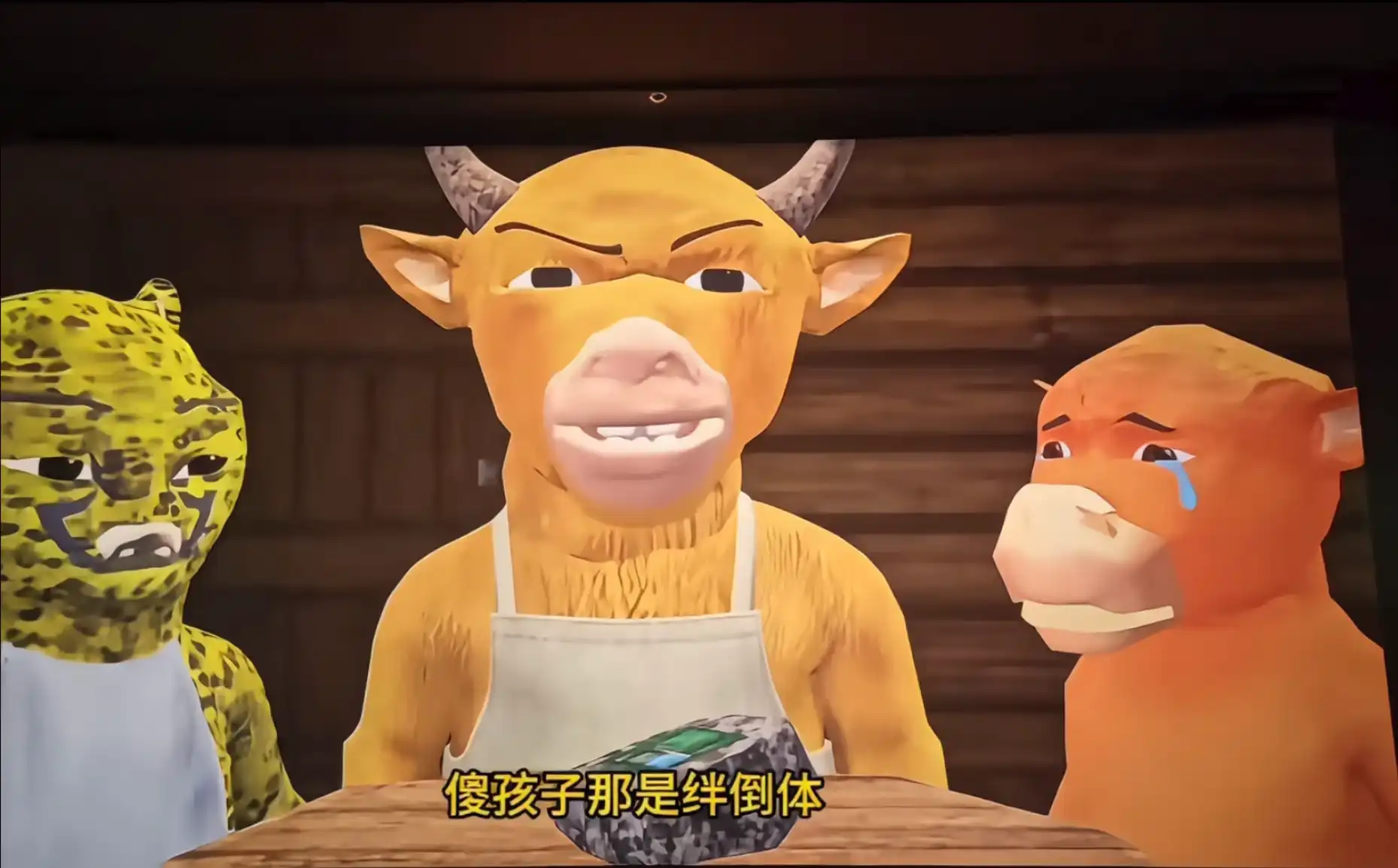
One scene from the film was turned into a financial meme by investors. In the movie, the protagonist, a yellow abstract calf, trips over a stone, falls flat on its back with its feet in the air, yet wears a bizarrely calm smile. Netizens screenshotted this moment, calling it the "stumbling body" style, a homophone for "semiconductor" ("Ban Dao Ti"). Coinciding with the recent weak performance of the semiconductor sector, this prone calf was quickly dubbed the "semiconductor ancestor" by investors.

Even after Chinese K-pop idol Zhou Anxin, active in South Korea, shouted in Northeastern Chinese dialect, "Who wouldn't want to eagerly watch 'Bull Arrives'?" the topic spread to South Korea, where retail investors also started heated discussions. Additionally, in "Bull Arrives," the calf "Niu Lai" has a leopard friend named "Bao La," which investors imagined as "Bao La" (explosive surge).
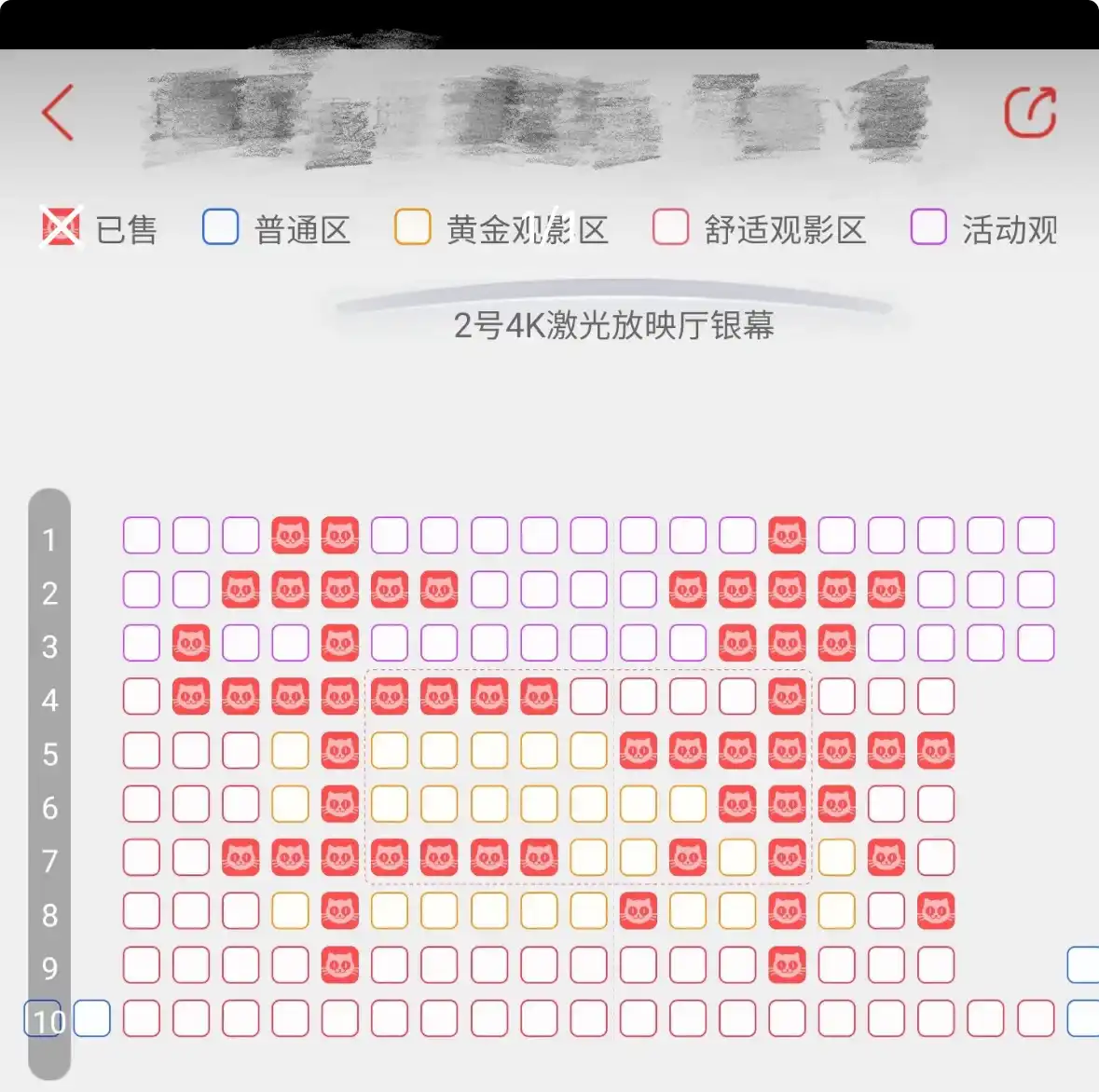
Some investors even formed groups to watch the movie in theaters for good luck, explicitly stating "Bull Arrives equals the bull market arriving," hoping the film would drive up bull stocks. In some cinemas, audience seating charts were tacitly arranged to spell out the characters for "Bull Arrives" or the pattern of a stock's limit-up intraday chart, while others formed the character for "bull."
In the secondary market, multiple "bull-related" stocks surged onto hot stock lists, with discussions about movie concept stocks and "touching 'bull' means rising" appearing on stock forums. According to Sina Finance, four A-share stocks with "Niu" (bull) in their names saw rapid spikes in popularity: Jinniu Chemical, Tongniu Information, Gongniu Group, and Luoniushan. Except for Gongniu Group, the other three opened higher in the morning session. At the time of writing, Luoniushan in the pork sector hit the limit-up, Jinniu Chemical in the chemical raw materials sector rose over 5%, and Tongniu Information, a computing power leasing concept stock, also showed notable gains. However, such movements are still largely driven by sentiment and thematic plays. Whether the热度 can be sustained ultimately depends on the market's own capital flows and fundamentals.

Perhaps the biggest "Easter egg" of "Bull Arrives" isn't in the film itself. The film's nearly blank narrative and highly abstract expression instead left immense space for imagination and interpretation. As different groups—moviegoers, stock investors, crypto players—continuously memed, created derivatives, and assigned new meanings, they also gained a sense of participation, fun, and resonance through each act of recreation. In the attention economy era, this very act of mass participation might be the most unexpected, and most brilliant, Easter egg of this film.

Пов'язані питання

QWhat is the article about?

AThe article discusses how the low-budget, absurdist Chinese animated film 'Niu Lai' (Cow Coming) unexpectedly became a viral meme. This online frenzy spilled over from social media into the financial world, leading to the explosive rise of a related meme cryptocurrency and influencing stock prices of 'bull'-related companies, creating what is described as an 'attention-driven bull market'.

QHow did the 'Niu Lai' meme cryptocurrency perform after launch?

AAccording to GMGN data, after launching on the BNB Chain on August 14th, the 'Niu Lai' meme token's market capitalization rapidly surged from approximately $10,000 to over $47 million at its peak, representing an increase of thousands of times.

QWhat was the role of CZ's public address in the meme coin's narrative?

AAn on-chain incident involving Binance founder CZ's public donation address was misinterpreted as him actively burning 'Niu Lai' tokens. In reality, the token's creator abused contract privileges by sending a large number of tokens to CZ's address and then forced a transfer of a small amount from it to a burn address, creating the illusion of a burn by CZ. CZ later announced he would deactivate his public address to avoid further misinterpretation.

QHow did the 'Niu Lai' film connect with stock market investors (A股股民)?

AMany A股 stock investors (股民) saw parallels between the film's contrast of beautiful promotional posters vs. its crude actual content and the gap between flashy financial reports and disappointing real-world stock performance. They created memes (like interpreting a falling cow as the struggling 'semiconductor' sector) and even flocked to theaters in groups, arranging seats to spell out words like '牛来' or stock chart patterns, hoping for good luck (讨彩头) to bring a bull market.

QAccording to the article, what was a key factor driving the widespread popularity of the 'Niu Lai' phenomenon?

AA key factor was the film's highly abstract and nearly blank narrative, which left vast room for interpretation and collective participation. This allowed different groups (audiences, stock traders, crypto players) to continuously create derivative content (二创), memes, and assign new meanings, generating a sense of community, fun, and shared emotion that fueled its viral spread in the attention economy.

Пов'язані матеріали

Polymarket and Kalshi Give Signals But Do Not Guarantee a Predicted Outcome

Prediction markets like Polymarket and Kalshi are becoming a significant source of information for investors. Their main advantage is that participants stake their own money on specific outcomes, allowing contract prices to be interpreted as market-assessed probabilities. For instance, a YES contract priced at $0.65 on Kalshi suggests an approximately 65% likelihood of an event occurring. However, this is not a pure probability, as it is influenced by liquidity, spreads, fees, capital constraints, and informational differences among participants. A key question arises: does a high probability for an event on these platforms imply that the bitcoin or broader crypto market will follow suit? The answer is no. Prediction markets and crypto markets serve different purposes: the former assesses the likelihood of specific events, while the latter allocates capital and determines asset prices. Betting on an event is not the same as betting on an asset. For example, a signal forecasting a Federal Reserve interest rate cut is relevant, but it may already be priced into crypto markets through futures, options, or spot positions. The crypto price is shaped by existing capital commitments, leverage, liquidity, and the need to close trades, not just expectations. While prediction markets are useful for aggregating information and have shown accuracy in events like political elections, they should not be viewed as direct trading signals for assets like bitcoin. Research involving millions of trades indicates that the calibration of probabilities varies by event category, time horizon, trade size, and platform. Therefore, these markets offer valuable supplementary data but do not guarantee corresponding asset price movements.

cryptonews.ru1 хв тому

Polymarket and Kalshi Give Signals But Do Not Guarantee a Predicted Outcome

cryptonews.ru1 хв тому

Broadcom Plunges 20%, What is the Market Afraid Of?

Broadcom's stock price has fallen over 20% from its June high, driven by market fears over a massive off-balance-sheet liability linked to its "AI XPV Platform." This financing structure, established with Apollo and Blackstone, aims to lease AI hardware (featuring Broadcom's custom XPU chips) to clients like Anthropic. Broadcom provides a Residual Value Guarantee (RVG), agreeing to cover potential shortfalls if a client defaults and the resale value of the leased chips is insufficient to repay the SPV's senior debt. While the first deal involves a $290 billion RVG exposure, a Bank of America analysis projects this could balloon to $3.7 trillion in senior debt principal by mid-2029 if the platform scales to its 20GW target. In a worst-case scenario of 100% client defaults, Broadcom's theoretical maximum loss is estimated at $42 billion. This rapid growth of contingent liabilities far outpaces the company's revenue and cash flow, transforming Broadcom from a capital-light chip designer into a de facto financial guarantor for AI infrastructure financing. The core risk lies in the untested residual value of AI chips, which lack a mature secondary market and face rapid technological obsolescence. Credit rating agencies like S&P have flagged the arrangement as a "credit negative," and bond markets have already widened Broadcom's credit spreads, reflecting investor concern. The market's fear is not weak AI demand but rather the unpriced and systemic risks embedded in this new financing model where a semiconductor company's investment-grade credit backs an expanding chain of trillion-dollar AI debt.

marsbit3 хв тому

Broadcom Plunges 20%, What is the Market Afraid Of?

marsbit3 хв тому

Glassnode: Consumer Confidence Falls as AI-Related Stocks Rise, Bitcoin Lags Behind

According to Glassnode, consumer confidence remains at one of its lowest levels in a decade, despite two consecutive months of improvement. This has not stopped households from moving money out of cash, as they expect further cost-of-living increases and a broader economic slowdown. The key question is where this capital is flowing. US stocks hit a new all-time high in early August, primarily driven by trading in AI-related stocks rather than a broad market rally. Bitcoin, historically seen as a hedge against declining trust in traditional finance, has not participated in this movement. Spot Bitcoin ETFs saw outflows of $389.7 million in one week, coinciding with rising equity markets—a divergence that aligns with Glassnode's data on capital flows. Bitcoin is currently trading at roughly half its October 2025 peak, stuck in a narrow range. Meanwhile, AI-related trading continues to attract fresh capital from retail traders, hedge funds, and even crypto-native institutional investors, who are redirecting funds into AI stocks and tokens. The macroeconomic backdrop has not been hostile to Bitcoin, with core inflation at a moderate 2.5% in July. However, Bitcoin's muted response to favorable inflation data is seen as a concerning signal, given its supposed role as a hedge against currency debasement. Spot Bitcoin exchange trading volume has fallen to its lowest since 2019, and recent ETF inflows are only a "fraction of any prior accumulation wave," suggesting institutional buying may have paused. This trend extends beyond trading: some Bitcoin miners are repurposing their power contracts and data center capacity for AI workloads. This appears to be a structural shift that could pressure Bitcoin's status as the default destination for capital leaving cash. The fundamental arguments for Bitcoin as a hedge against inflation or scarcity are not invalidated, but their expected impact has not materialized within the timeline anticipated by crypto optimists this summer.

cryptonews.ru4 хв тому

Glassnode: Consumer Confidence Falls as AI-Related Stocks Rise, Bitcoin Lags Behind

cryptonews.ru4 хв тому

Торгівля

Спот
活动图片