From Changing Rules to Betraying the Community: Trove, a Failed ICO Stress Test

比推Опубліковано о 2026-01-21Востаннє оновлено о 2026-01-21

Анотація

The article analyzes two recent ICOs, Trove and Ranger, as case studies for the evolving state of initial coin offerings. Trove's ICO, which raised over $11.5 million, promised to build on the Hyperliquid ecosystem but abruptly pivoted to Solana after fundraising concluded. This retroactive change, coupled with questionable fund management and a lack of transparency, led to a 75% token price crash and a severe loss of investor trust. In contrast, Ranger’s ICO on the MetaDAO platform was structured with pre-defined, unchangeable rules. Its framework included vesting schedules, governance controls, and treasury restrictions that limited team discretion and aligned incentives with long-term performance. The piece concludes that while modern ICOs use more structure to mitigate risks, the fundamental issue remains trust. The Trove incident underscores that changing core plans post-fundraising is a breach of contributor trust and highlights the need for robust mechanisms to protect investors, suggesting a full refund and a new sale under revised terms would be the ideal corrective action.

Author: Prathik Desai

Original Title: The New ICO Test

Compiled and Edited by: BitpushNews


The new year kicked off with a series of major events. The rekindled tariff war between the United States and the European Union has once again brought uncertainty to the forefront. Following closely was a wave of high-volume liquidations in the crypto market within a week.

However, tariffs were not the only "discordant note" at the start of this year. Several Initial Coin Offering (ICO) events that occurred over the past week have given us ample reason to revisit this topic that the crypto community was once obsessed with nearly a decade ago.

Those who remember history might think that the crypto world has long moved beyond the ICO era of 2017. Although many aspects of ICOs have changed since then, the two ICO events last week still raised many key questions—some are old issues, while others are new.

Both the Trove and Ranger ICOs were oversubscribed, albeit without the frenzied aura of Telegram-style countdowns from 2017. However, the evolution of these events still serves as a reminder that the fairness of the community allocation process is crucial.

In today's article, I will delve into what the TROVE and RNGR issuance events tell us about how ICOs are evolving and the trust mechanisms for investors in the allocation process.

The Story Begins:

The more recent of the two, Trove's ICO, ran from January 8 to January 11, raising over $11.5 million upon conclusion. This exceeded the initial $2.5 million target by 4.5 times. The oversubscription clearly indicated investor support and belief in the project, which was positioned as a perpetual contract exchange.

Trove had promised to build on Hyperliquid, leveraging the ecosystem's perpetual contract infrastructure and community.

However, just days after raising funds and before the token generation event, Trove suddenly pivoted, announcing it would launch on Solana instead of the initially promised Hyperliquid. Participants who had invested based on trust in Hyperliquid instantly felt betrayed.

This pivot not only shook investor confidence but also caused widespread confusion. Chaos further escalated when another detail was dug up by investors: Trove stated it would retain approximately $9.4 million of the raised funds for the redesigned plan, refunding only the remaining few million. This undoubtedly raised another red flag.

Ultimately, Trove had to respond.

"We are not taking the money and running," it said in a statement on platform X.
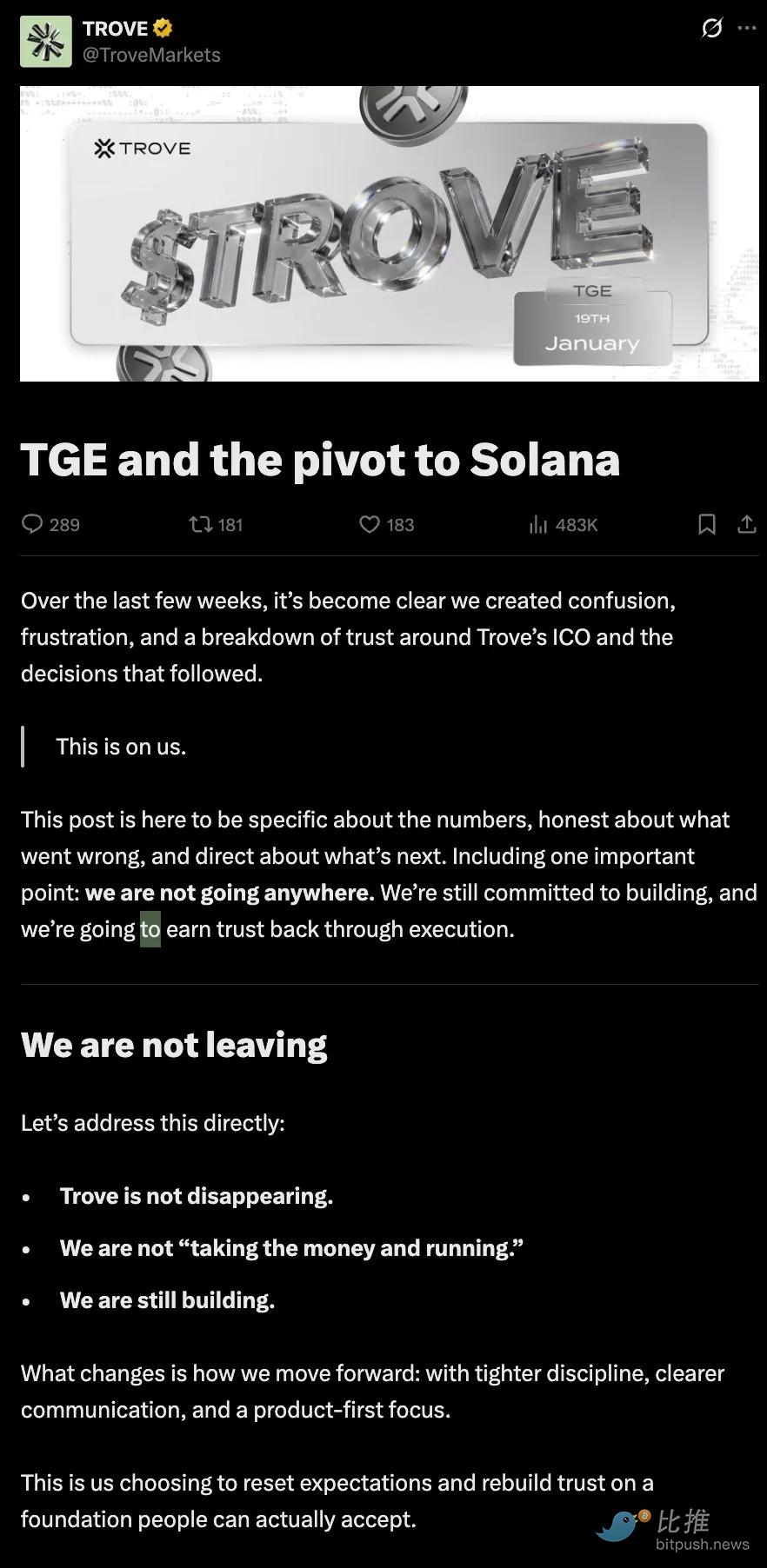
The team insisted that the project remained focused on building, albeit with a changed approach.

Even without making any assumptions, one thing is crystal clear: it is hard to imagine that they were not framed in an unfair, retroactive manner. The funds were initially committed based on one ecosystem, one technical path, and one set of implied risk profiles. The modified plan now requires them to accept another set of assumptions without reopening the participation terms.

It is like changing the rules for one player alone after a game has started.

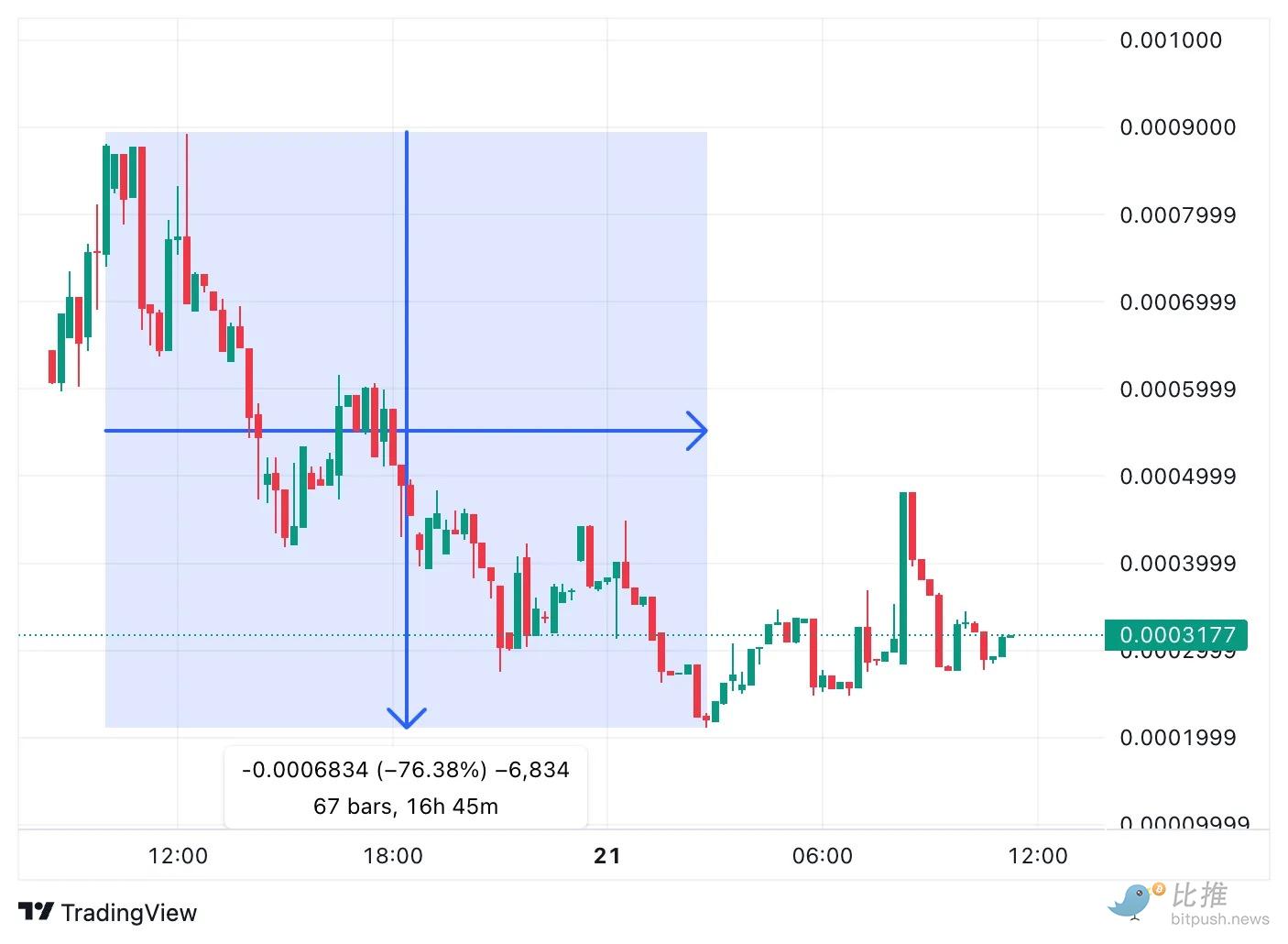
But by then, the damage was done, and the market voted with its feet, punishing this collapse of trust. The TROVE token plummeted over 75% within 24 hours of its listing, with its market capitalization expectations nearly zeroed out.
In the community, some moved beyond gut feelings and delved into on-chain fund movements. Crypto detective ZachXBT pointed out several suspicious transactions: approximately $45,000 in USDC from angel round funds eventually flowed into a prediction market platform and even to an address associated with a casino.
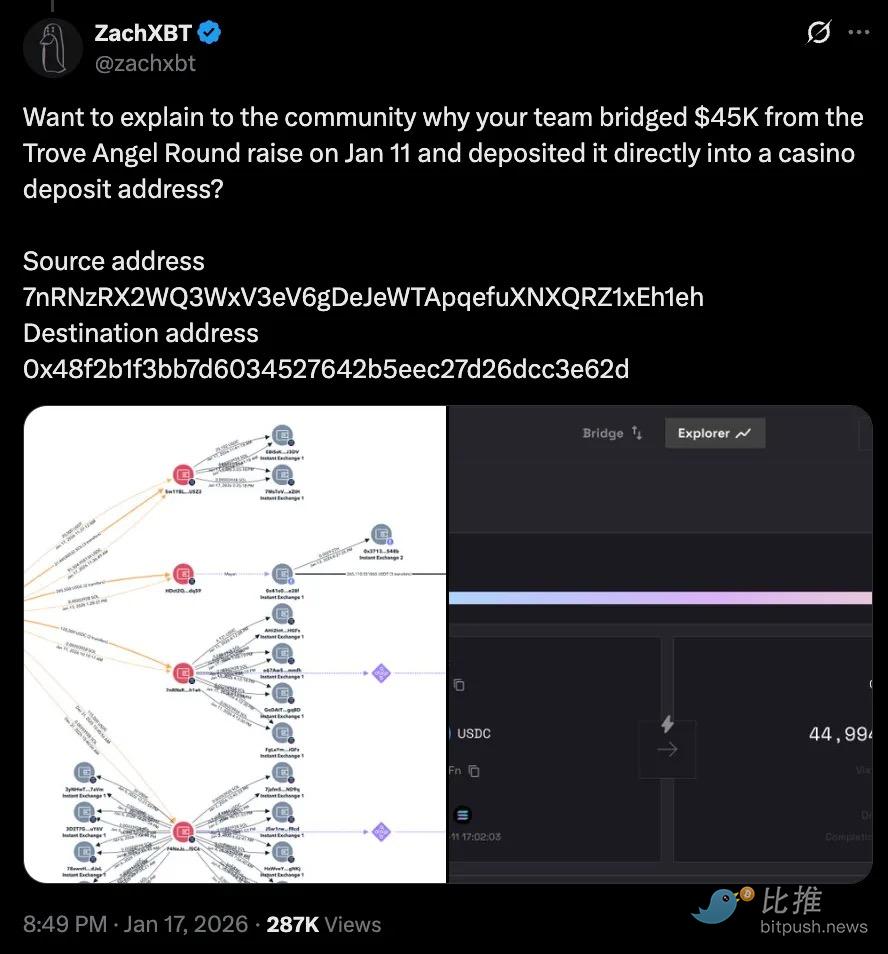
Whether this was a careless accounting error, poor fund management, or a genuine red flag remains debatable. Many users criticized the refund process, noting that only a few deserving refund recipients received their payments promptly.

Amid all this, Trove's statements failed to reassure investors who felt betrayed. Although it emphasized that the project would continue—a perpetual exchange on Solana—it did not adequately address the economic concerns arising from the pivot. It provided no detailed breakdown of the modified fund deployment and governance plan, nor did it offer more clarity on the refund roadmap.

Although there is no conclusive evidence linking this pivot to team misconduct, the incident shows that once trust in the fundraising process erodes, every data point is more likely to be viewed with suspicion.

What made this turmoil even more unstable was the way the team handled its discretion after the fundraising concluded.

Oversubscription effectively handed control of both capital and voice to the project team. Once the team changed direction, supporters had little recourse beyond selling on the secondary market or exerting public pressure.

To some extent, Trove's ICO still shares similarities with many projects from past cycles. Although the mechanisms are more standardized and the infrastructure more mature today, the core issue spanning both old and new cycles remains trust—investors still have to rely on the team's judgment rather than a clear set of rules as a backbone.

The Ranger ICO, conducted a few days earlier, provides an important contrast.

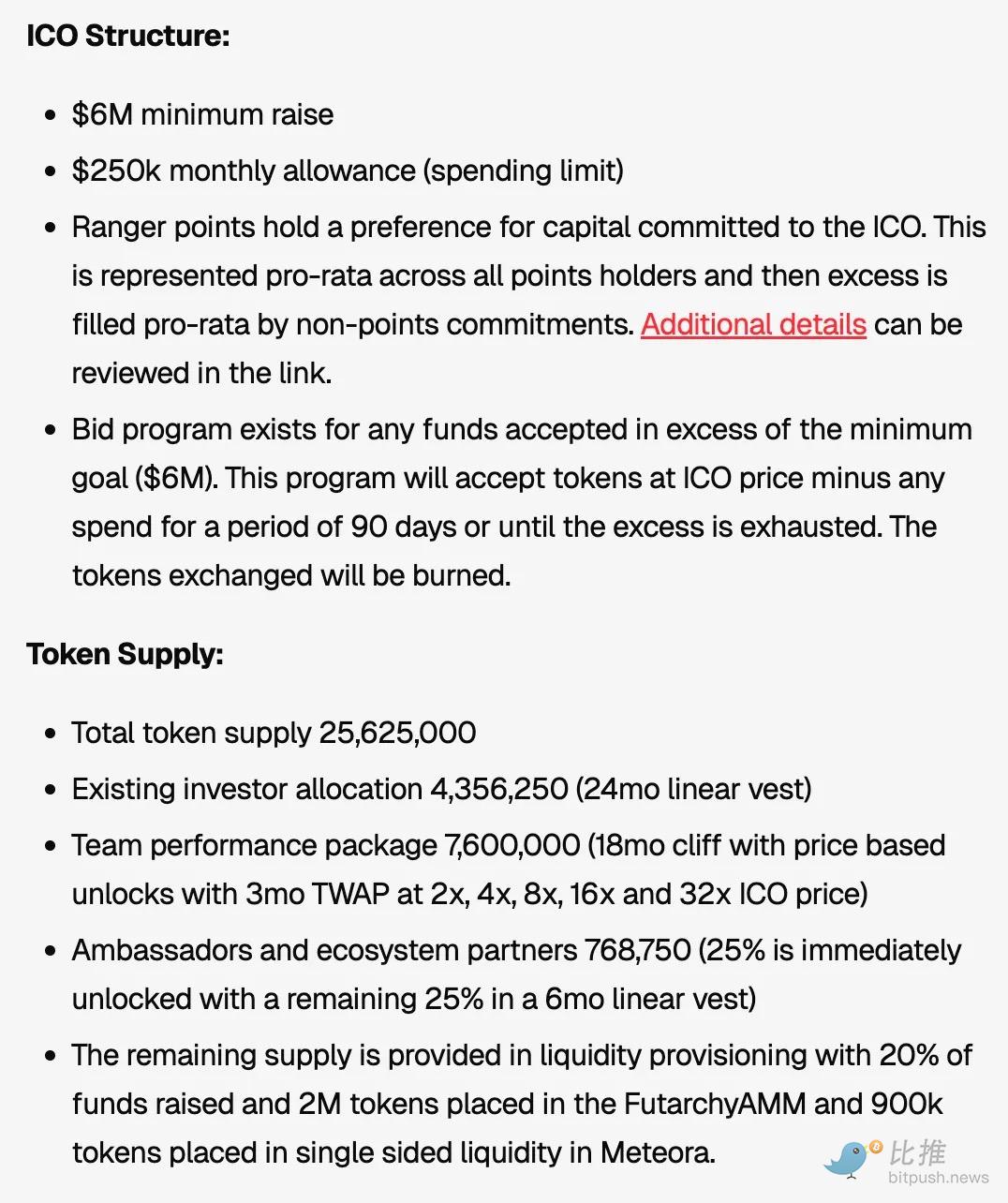
Ranger's token sale took place from January 6 to 10 on the MetaDAO platform, which requires teams to predefine key fundraising and allocation rules before the sale begins. Once started, these rules cannot be modified by the team.

Ranger sought a minimum fundraising target of $6 million and sold approximately 39% of its total token supply through the public sale. Similar to Trove, its sale was oversubscribed. But MetaDAO's constraints meant the team had anticipated the possibility of oversubscription and made arrangements from the outset, unlike Trove's situation.

When the sale was oversubscribed, the proceeds were deposited into a treasury governed by token holders. MetaDAO's rules also restricted the team's access to the treasury to a fixed monthly allowance of $250,000.

Even the allocation structure was defined more clearly. Public sale participants received full liquidity at the token generation event, while presale investors faced a 24-month linear unlock period. The majority of tokens allocated to the team would only unlock upon reaching specific price milestones for the RNGR token. These milestones, such as reaching 2x, 4x, 8x, 16x, and 32x of the ICO price, would be measured using a three-month time-weighted average price, with at least an 18-month lock-up period before any unlocking occurs.

These measures show that the team embedded constraints into the fundraising structure itself, rather than expecting contributors to rely on post-fundraising discretion. Control over capital was partially ceded to governance rules, and any team gains were tied to long-term market performance, protecting contributors from the risk of a "rug pull" on launch day.
Nevertheless, concerns about fairness persist.

Like many modern ICOs, Ranger used a pro-rata allocation model to distribute tokens in its oversubscribed sale. In theory, this means everyone should receive tokens in proportion to their capital commitment. However, Blockworks Research pointed out that this model often favors participants who can over-commit capital. Smaller contributors typically receive disproportionately small allocations.
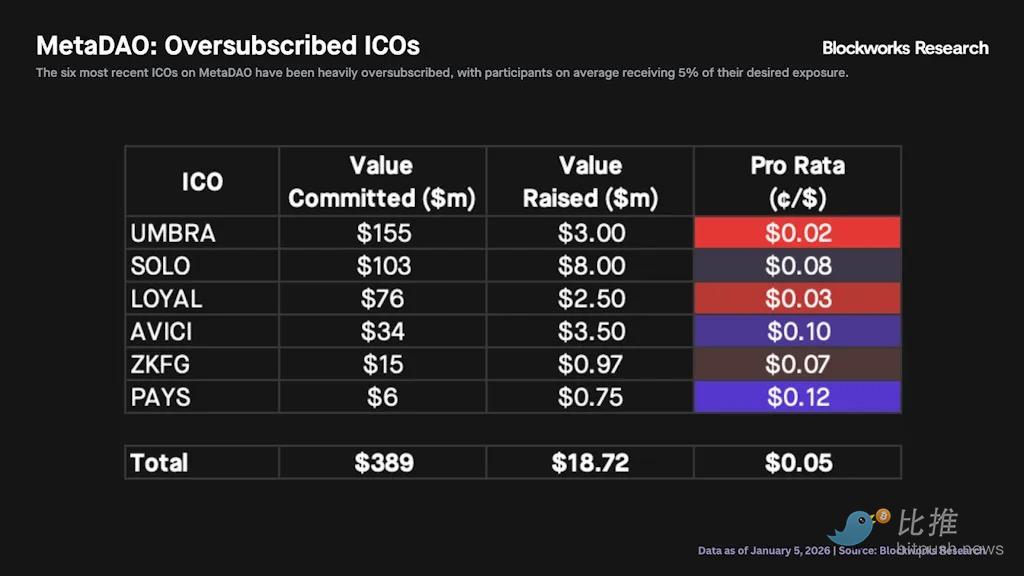
However, there is no simple solution to this problem.

Ranger attempted to address this by reserving separate token allocation pools specifically for users who had participated in the ecosystem before the public sale. While this practice alleviated some矛盾, it did not completely resolve a fundamental dilemma: how to balance allowing more people to obtain tokens with ensuring participants receive substantial shares.

Conclusion

The Trove and Ranger events show that nearly a decade after the initial explosion of ICOs, they are still subject to many constraints. The old ICO model heavily relied on Telegram announcements, narratives, and momentum.

The new model relies on structure—including unlock schedules, governance frameworks, treasury rules, and allocation formulas—to demonstrate restraint. These tools, often mandated by platforms like MetaDAO, help limit the discretionary power of launch teams. However, these tools can only reduce risks, not eliminate them entirely.

These events raise critical questions that every future ICO team needs to answer: "Who decides when a team can change plans?" "Who controls the funds after the fundraising is complete?" "What mechanisms do contributors have when expectations are not met?"

In any case, the issues that occurred in the Trove incident need to be corrected. Changing the chain on which a project launches cannot be a spur-of-the-moment decision. Here, the best way to remedy the damage is for Trove to treat its contributors properly. In this case, that might mean fully refunding the funds and re-conducting the sale under revised assumptions.

Although this is the most ideal path forward at the moment, it is not easy for Trove to actually achieve this. Funds may have already been deployed, operational costs may have been incurred, and partial refunds may have already been executed. Reversing course at this point could trigger multiple legal, procedural, and reputational complexities. But this is the price that must be paid to clean up the current mess.

How Trove chooses to proceed may set a precedent for ICOs in the year to come. Project launches now face a more cautious market environment—participants no longer equate oversubscription simply with consensus, nor do they confuse "being involved" with "being protected." Only a truly robust system can provide a fundraising experience that, while not foolproof, is trustworthy enough.


Twitter: https://twitter.com/BitpushNewsCN

Bitpush TG Discussion Group: https://t.me/BitPushCommunity

Bitpush TG Subscription: https://t.me/bitpush

Original link: https://www.bitpush.news/articles/7604888

Пов'язані питання

QWhat was the main reason Trove's ICO caused a loss of investor trust?

ATrove abruptly changed its plan to launch on Solana instead of the originally promised Hyperliquid ecosystem after fundraising, without reopening participation terms or properly addressing economic concerns.

QHow did the market react to Trove's token after its launch?

AThe TROVE token plummeted over 75% within 24 hours of its launch, with its market capitalization expectations nearly collapsing to zero.

QWhat key difference in structure did Ranger's ICO have compared to Trove's?

ARanger's ICO used the MetaDAO platform, which enforced predefined fundraising and allocation rules that could not be modified by the team after the sale began, including governance-controlled treasury access and milestone-based token unlocks.

QWhat suspicious activity did crypto investigator ZachXBT uncover related to Trove's funds?

AZachXBT identified suspicious transactions where approximately $45,000 USDC from angel round funds flowed into a prediction market platform and even to a casino-linked address.

QWhat fundamental issue do modern ICOs still face despite improved infrastructure and mechanisms?

AModern ICOs still fundamentally rely on trust in the team's judgment rather than solely on clear, enforceable rules, and they struggle with balancing broad token distribution against meaningful allocations for participants.

Пов'язані матеріали

After Three Consecutive Quarters of Decline, Can the Crypto Market Find a Window for Stabilization in Q3?

The cryptocurrency market has just concluded its worst-performing quarter since 2022, with total capitalization dropping 12.6% to $2.1 trillion. All core metrics indicate capital is leaving the sector, not just rotating within it. Bitcoin fell 14.2% and Ethereum dropped 25.4% in Q2, breaking their previous correlation with US tech stocks. A key driver is the reversal in US spot Bitcoin ETF flows, which saw a net outflow of approximately $4.67 billion in Q2, including a record monthly outflow near $4.5 billion in June. While recent data suggests long-term holders are accumulating again, sustained ETF outflows mean continued selling pressure. Market focus is now singularly on the Federal Reserve. The upcoming July FOMC meeting is seen as the most critical event for Q3. A dovish signal could support Bitcoin reclaiming a $68,000-$84,000 range, while a hawkish stance might establish a new trading band around $50,000-$56,000. Additionally, regulatory uncertainty persists, with the progress of the crucial *CLARITY Act* stalling in the Senate, reducing its perceived 2026 passage probability to 40-45%. Despite the broad downturn, a few sectors showed growth. Prediction markets saw nominal volume surge 48.7% year-over-year to $113.8 billion, and tokenized collectibles transaction volume rose 143% quarterly to $1.4 billion. The Real-World Asset (RWA) tokenization sector also continued steady growth, now representing ~$28.1 billion in on-chain value. The market's foundation for an extreme crash appears limited, with Bitcoin price hovering near its 200-week moving average. However, the trading paradigm has shifted from narrative-driven speculation to decisions based on price action, policy developments, and interest rate expectations, making a broad sentiment-driven rally unlikely in the near term.

marsbit33 хв тому

After Three Consecutive Quarters of Decline, Can the Crypto Market Find a Window for Stabilization in Q3?

marsbit33 хв тому

BIT Trading Moment: BTC Still Suppressed by Weekly 200 EMA, Rejection May Restart Decline; Storage and Semiconductors that Surged Last Night Begin Falling in Evening Trading

**Crypto & Stock Market Wrap: Bitcoin Tests Resistance, Stocks Retreat After AI Surge** Bitcoin consolidates around $66,000, facing key resistance near $68,000—an area seen as a major psychological and technical hurdle where previous rallies have failed. Analysts note the cryptocurrency is caught between its 200-week moving average (~$63,333) and 200-week EMA (~$68,328). A clear break above $68k is needed to signal a stronger bullish trend, while a rejection could lead to a retest of $63k support. Market sentiment remains cautious, with low futures open interest pointing to a low-liquidity rebound rather than a full bull market. Bitcoin spot ETFs saw another $203 million inflow. US stock futures pointed lower after a strong Tuesday session led by a massive rebound in semiconductors and memory stocks. The rally was fueled by renewed optimism about AI-driven hardware demand, with Micron, SanDisk, and SK Hynix surging. However, those gains reversed in pre-market trading. Super Micro Computer (SMCI) soared over 20% after hours on strong guidance and a record backlog. Other standouts included Rocket Lab and nuclear energy plays Oklo and X-Energy. Rising oil prices (Brent above $91) and climbing Treasury yields (10-year near 4.64%), however, are reigniting inflation concerns and acting as a headwind for equities. In Asia, markets were mixed. South Korea's KOSPI pared early gains to close slightly higher as semiconductor stocks like SK Hynix gave back initial surges. Japan's Nikkei edged lower as the yen hit a fresh 38-year low against the dollar, raising fears of potential market intervention. Key events to watch include the Samsung Galaxy launch, AMD's AI event, and a slew of major tech earnings from Alphabet, Tesla, and IBM after the close on Wednesday, followed by the ECB meeting and Intel's earnings on Thursday.

marsbit41 хв тому

BIT Trading Moment: BTC Still Suppressed by Weekly 200 EMA, Rejection May Restart Decline; Storage and Semiconductors that Surged Last Night Begin Falling in Evening Trading

marsbit41 хв тому

Former CFTC Chairman, Circle President Tarbert: Preaching Long-Termism While Cashing Out $30 Million Himself

Former CFTC Chairman and Circle President Heath Tarbert has consistently advocated for a long-term vision in public, urging patience from investors as Circle’s stock price has fallen significantly from its peak. However, it has been revealed that since Circle’s IPO, Tarbert has continuously sold his CRCL shares through pre-arranged trading plans, cashing out approximately $30 million, without making any public market purchases. This contrast between his public messaging and personal actions has drawn criticism. Tarbert joined Circle in July 2023 as Chief Legal Officer, leveraging his regulatory experience to help guide the company through its IPO and expansion. Despite promoting stablecoins as long-term infrastructure, he established a 10b5-1 trading plan just before Circle went public, leading to substantial stock sales over the following year. In March 2026, he initiated another plan to sell more shares. His career trajectory highlights a pattern of moving between high-level regulatory roles and influential positions in the financial sector. After resigning as CFTC Chairman in early 2021, he joined Citadel Securities as Chief Legal Officer just 27 days later, during a period of intense regulatory scrutiny for the firm. He later joined Circle, aiding its efforts to navigate regulatory challenges for its public listing. While Tarbert's expertise in policy and compliance is valuable to companies like Circle, his actions—advocating long-term confidence while personally divesting—raise questions about the alignment between his public statements and his private financial decisions, leaving investors who followed his advice to bear the market risks.

marsbit1 год тому

Former CFTC Chairman, Circle President Tarbert: Preaching Long-Termism While Cashing Out $30 Million Himself

marsbit1 год тому

Gate Research Institute: The 'Wall Street-ization' Wave of Crypto Financial Products – Competition or Integration?

The article titled "Gate Research Institute: Are Crypto Financial Products Sparking a 'Wall Street' Wave—Competition or Convergence?" explores the evolving relationship between the crypto ecosystem and traditional finance (TradFi). The piece begins by reflecting on Bitcoin's original 2009 vision of decentralization, disintermediation, and moving away from banks. It then contrasts this with the 2024 landscape, where key crypto assets like Bitcoin are increasingly held through Wall Street products like ETFs issued by giants like BlackRock. The article questions whether this signifies that TradFi is systematically taking over the rights to issue, price, custody, and distribute crypto financial assets. The core argument is that this is not a zero-sum takeover but rather a bidirectional convergence where each side addresses the other's weaknesses. Crypto offers 24/7 global markets, programmable settlement, and open access but lacks compliant channels, institutional-grade custody, deep fiat liquidity, and mainstream distribution. TradFi possesses these but is constrained by legacy systems, limited operating hours, and slow settlement. Two primary convergence paths are highlighted: * **Path A (CEX to TradFi):** Exemplified by Gate, which has progressed from offering tokenized stocks and CFDs to providing direct, real stock trading (US, Hong Kong, South Korea) within its platform, using USDT. * **Path B (TradFi to Crypto):** Exemplified by Robinhood, which has integrated crypto trading, acquired exchanges like Bitstamp, and is moving traditional assets like stocks onto the blockchain via tokenization and its own Layer 2. Both paths are ultimately competing to become the next-generation, unified financial account—a "super account" where users can seamlessly trade cryptocurrencies, stocks, ETFs, RWA (Real World Assets), and tokenized treasury products in one interface. The growth of RWA and tokenized treasuries (e.g., BlackRock's BUIDL) is presented as the asset-layer fusion, providing stable, yield-bearing assets on-chain and acting as a bridge between the two worlds. In conclusion, the "Wall Street-ization" of crypto is framed as a mutual transformation. Decentralized ideals persist in the protocol layer, while at the application layer, a more efficient, global, and accessible unified capital market is emerging from this convergence. The future competition lies not between crypto exchanges and stockbrokers, but between platforms vying to offer the most comprehensive asset coverage, liquidity, and user experience within a single account.

marsbit1 год тому

Gate Research Institute: The 'Wall Street-ization' Wave of Crypto Financial Products – Competition or Integration?

marsbit1 год тому

Торгівля

Спот
活动图片





