From Ban Threats To Bank Licenses: Russia’s New Crypto Play

bitcoinistОпубліковано о 2026-03-07Востаннє оновлено о 2026-03-07

Анотація

The Bank of Russia has proposed allowing banks and brokerage firms to obtain licenses to operate cryptocurrency exchanges through a simplified notification process based on existing licenses. Central Bank Governor Elvira Nabiullina stated that this move aims to leverage the banking sector’s experience in anti-money laundering and fraud prevention to protect digital asset market clients. Under the proposal, crypto and stablecoins would be classified as "currency valuables"—permissible for ownership and trading but restricted as a domestic payment method. Banks would face a temporary risk cap of 1% of their capital when dealing with crypto. Qualified investors may trade without limits, while non-qualified investors are restricted to purchasing up to 300,000 rubles annually per intermediary. This regulatory shift reflects Russia’s gradual move from hostility toward crypto to tightly managed acceptance, with the goal of bringing activity onshore, enforcing taxation, and sidelining unlicensed foreign platforms. The central bank aims to finalize the legal framework by mid-2026.

The Bank of Russia has proposed letting banks and brokerage firms obtain licenses to operate crypto exchanges.

A New Crypto Play

A report published by Interfax on March 5 states that The Central Bank of Russia (CBR) Governor Elvira Nabiullina has proposed to allow banks and brokers to obtain crypto exchange licenses via a notification process, as based on their current licenses. This statement was made at the annual meeting of lending institutions with the Central Bank.

According to Nabiullina, the proposal aims to leverage the banking sector’s infrastructure for fighting money laundering and countering the financing of terrorism and fraud in order to better protect digital assets market clients. In what appears to be a conciliatory move between regulators and digital asset’s traders, Nabiullina directly addresses some of the main concerns typically raised by TradFi when arguing against crypto assets:

We hope that your extensive banking experience in AML/CFT [anti-money laundering and countering the financing of terrorism], as well as your experience in countering fraud, will help protect your clients in the crypto market once it is legalized.

The Crypto Proposal

The exchange permissions being notification‐based means that institutions could bolt cryptocurrency services onto existing financial licenses instead of going through a separate, standalone approval process.

Under the draft rules, crypto and stablecoins would be treated as “currency valuables”: Russians could own and trade them but using them as a domestic means of payment would remain restricted.

Regarding the risk level, Naibullina remain cautious. She clarified that there would be a temporary threshold for banks’ involvement in the asset class:

However, we would still like to limit the level of risk a bank takes in this area to one percent of capital. Let’s start by seeing how banks operate within the one percent cap, and then see whether we need to move forward.

According to the Interfax report, qualified investors may acquire crypto assets without restrictions, while non-qualified investors are limited to purchasing up to 300,000 rubles per year through a single intermediary. The proposal effectively turns banks into the primary regulated gateways for digital asset trading.

Russia’s Back-And-Forth

Since 2020, Russia has recognized digital assets as property but banned them as a means of payment. Russia flirted with a full ban in 2022 and then shifted to “regulate, don’t ban.” By 2024–2025, Russia allowed limited cross‐border use, legalized mining, and opened the market only to banks and “super qualified” investors, keeping retail, P2P, and foreign platforms in a gray zone.

A Change In The Tide

Russia has slowly but surely moved from hostility to tightly managed acceptance: the new push to license banks and brokers as cryptocurrency intermediaries is about pulling activity onshore, taxing it, preserving capital controls, and sidelining unlicensed foreign exchanges rather than outlawing crypto itself.

The central bank is pushing to finish the broader legal framework by mid‐2026, after which penalties for unlicensed intermediaries and offshore platforms that do not localize in Russia are expected to kick in.
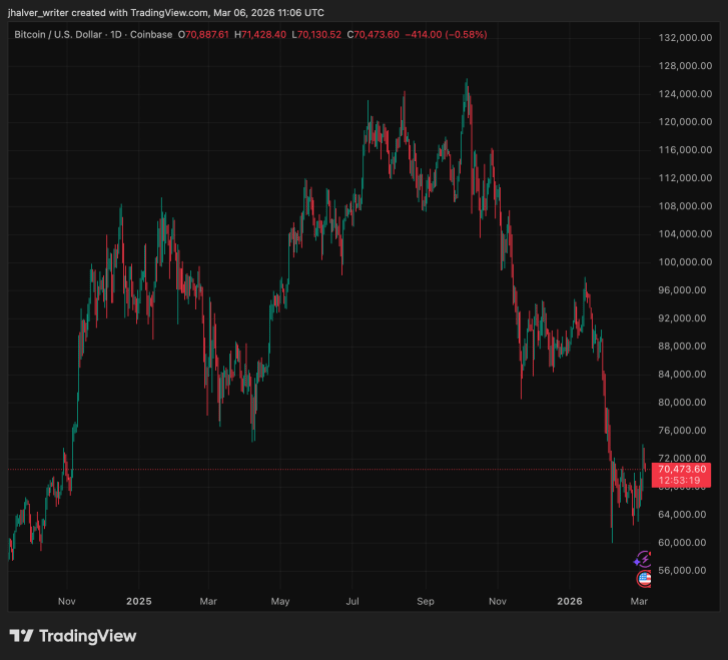
BTC's price trends to the downside on the daily chart. Source: BTCUSD on Tradingview

Cover image from ChatGPT, BTCUSD chart from Tradingview

Пов'язані питання

QWhat is the Bank of Russia's new proposal regarding cryptocurrency exchanges?

AThe Bank of Russia has proposed allowing banks and brokerage firms to obtain licenses to operate crypto exchanges through a notification process based on their existing licenses.

QWhat is the primary reason given by Governor Elvira Nabiullina for this new crypto proposal?

AThe proposal aims to leverage the banking sector's infrastructure for anti-money laundering (AML) and countering the financing of terrorism and fraud (CFT) to better protect clients in the digital assets market.

QHow would crypto assets be treated under the draft rules, and what key restriction remains?

ACrypto and stablecoins would be treated as 'currency valuables,' meaning Russians can own and trade them, but using them as a domestic means of payment would remain restricted.

QWhat risk limitation does the Central Bank propose for banks involved in crypto assets?

AThe Central Bank proposes to limit the level of risk a bank takes in this area to one percent of its capital as a temporary measure.

QHow has Russia's overall stance on cryptocurrency evolved from 2020 to the present, according to the article?

ARussia has evolved from recognizing digital assets as property but banning them as payment in 2020, to flirting with a full ban in 2022, and then shifting to a 'regulate, don't ban' approach. By 2024-2025, it allowed limited cross-border use, legalized mining, and is now opening the market to banks and qualified investors to pull activity onshore and tax it.

Пов'язані матеріали

Has Hook Summer Really Arrived? sato, Lo0p, FLOOD Ignite the New Narrative of Uniswap v4

"Hook Summer" Arrives? Sato, Lo0p, FLOOD Ignite Uniswap v4 Narrative Amidst a slight market recovery, attention within the Ethereum ecosystem has shifted to Meme coins built on Uniswap v4's Hook protocol. Following ASTEROID, tokens like sato, sat1, Lo0p, and FLOOD have become market focal points, with market caps ranging from millions to tens of millions, bringing concentrated liquidity to a narrative-dry market. Uniswap v4 Hooks are "plugin smart contracts" that allow developers to inject custom logic at key points in a liquidity pool's lifecycle (initialization, adding/removing liquidity, swaps, etc.), making the AMM programmable. Recent representative projects include: * **sato**: Market cap peaked over $38M; uses a v4 curve mechanism for minting/burning, locking ETH as reserve. * **sat1**: Market cap briefly exceeded $10M, positioning as an "optimized sato," but later declined significantly. * **Lo0p**: Market cap neared $6.6M; a "lending AMM protocol" allowing users to borrow ETH against deposited LO0P tokens without immediate selling pressure. * **FLOOD**: Market cap approached $6M; channels trading reserves into Aave v3 to generate yield, which is retained in the pool. The emergence of these Hook-based tokens could drive long-term growth for the Uniswap ecosystem by attracting users and liquidity to v4 pools. Combined with Uniswap's activated fee switch (partially used to burn UNI), the long-term outlook for UNI appears positive. However, short-term UNI price appreciation is not directly guaranteed. Factors include the sustainability and lifecycle of these new tokens, their price volatility, overall market conditions, and regulatory pressures. Currently, Uniswap v4's TVL ($595M) lags behind v3 and v2, indicating Hook adoption still requires time to mature. In summary, the Hook ecosystem serves as "long-term nourishment" for UNI, but acts more as a "catalyst" than a direct "booster" in the short term. Note: These are early-stage experimental tokens and may carry unknown risks.

marsbit8 хв тому

Has Hook Summer Really Arrived? sato, Lo0p, FLOOD Ignite the New Narrative of Uniswap v4

marsbit8 хв тому

Has Hook Summer Truly Arrived? sato, Lo0p, FLOOD Ignite the New Uniswap v4 Narrative

With the broader market showing signs of recovery, a new wave of interest has emerged around Ethereum-based meme coins. Following ASTEROID, tokens like sato, sat1, Lo0p, and FLOOD, built upon the Uniswap v4 Hook protocol, are capturing market attention. Their market capitalizations range from millions to tens of millions of dollars, injecting much-needed focused liquidity into a market lacking narratives. This article explores whether this trend signifies an incoming "Hook Summer" and its potential impact on UNI's price. Hooks are essentially plug-in smart contracts for Uniswap v4 liquidity pools, allowing developers to inject custom logic at key points in a pool's lifecycle (like initialization, adding/removing liquidity, swaps). This transforms the AMM into programmable building blocks. Key highlighted projects include: * **sato**: Peaked over $38M market cap. It utilizes a v4 curve for minting/burning; buying locks ETH as reserve to mint new tokens, while selling redeems ETH from the reserve and burns tokens. * **sat1**: Market cap briefly exceeded $10M, promoted as an "optimized sato," but later declined significantly. * **Lo0p**: Reached nearly $6.6M. It's a lending AMM protocol where buying LO0P tokens locks them as collateral, allowing users to borrow ETH from the pool reserve at 40% LTV, aiming to improve capital efficiency for idle ETH in LPs. * **FLOOD**: Peaked near $6M. Its mechanism directs asset reserves from buys into Aave v3 to generate yield, with fees and interest retained in the pool to potentially influence the token's price long-term. In the long term, the development of the Hook ecosystem can attract users and liquidity to Uniswap v4, benefiting UNI's fundamentals—especially combined with the recent activation of the protocol fee switch, where a portion of fees is used to burn UNI. However, in the short term, these Hook-based tokens are unlikely to directly drive significant UNI price appreciation. Their impact is moderated by factors like token sustainability, price volatility, and broader market and regulatory conditions. Currently, Uniswap v4's TVL ($595M) still trails behind v2 and v3, indicating adoption and growth will take time. The article concludes that while the Hook ecosystem provides long-term "nourishment" for UNI, its short-term role is more of a "catalyst" than a "booster." Readers are cautioned that these are early-stage experimental tokens and may carry unknown risks.

Odaily星球日报20 хв тому

Has Hook Summer Truly Arrived? sato, Lo0p, FLOOD Ignite the New Uniswap v4 Narrative

Odaily星球日报20 хв тому

Interview with Michael Saylor: I Did Say I Would Sell Bitcoin, But Never a Net Sale

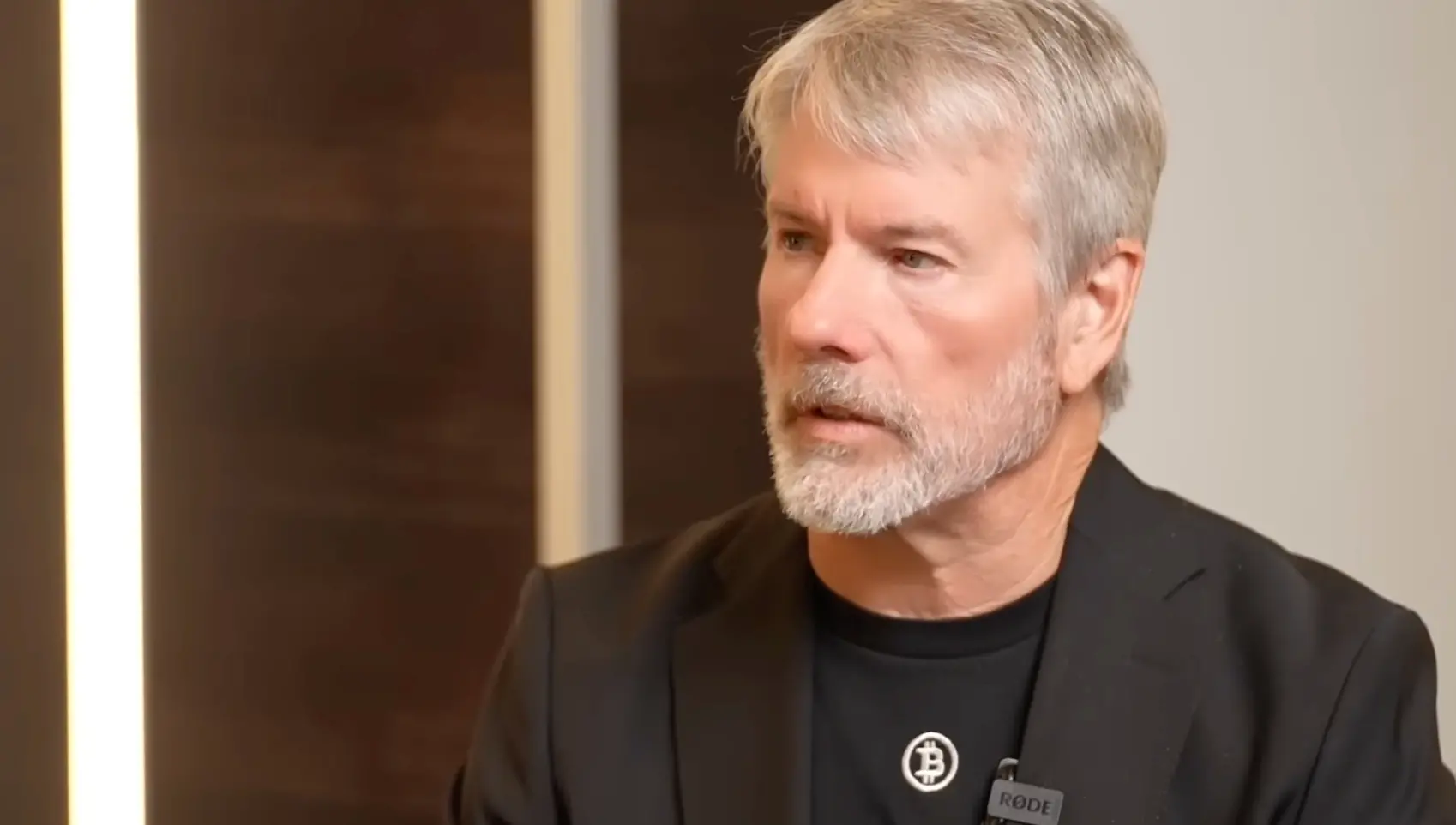
Interview with Michael Saylor: I Said We'd Sell Bitcoin, But Never Be a Net Seller In a recent podcast, MicroStrategy Executive Chairman Michael Saylor clarified the company's stance on potentially selling Bitcoin. Following MicroStrategy's earnings call statement about being prepared to sell BTC to fund dividends for its STRC (Strategic) credit product, Saylor emphasized the distinction between selling and being a "net seller." Saylor explained the core business model: MicroStrategy sells credit instruments like STRC and uses the proceeds to buy Bitcoin, which is viewed as "digital capital" expected to appreciate around 30-40% annually. A portion of these capital gains can then be used to pay the dividends on the credit products. He stressed that even if the company sells some Bitcoin for dividends, it simultaneously buys much more with new credit issuance. For example, after raising $3.2 billion from STRC sales in April, the dividend obligation was only $80-90 million, making the company a net buyer. The clarification aims to counter market narratives questioning the value of Bitcoin on MicroStrategy's balance sheet if it were never sold, and to dismiss claims of a "Ponzi scheme." Saylor reiterated his personal philosophy for investors: "Don't be a net seller of bitcoin" and ensure your Bitcoin holdings increase each year. Saylor also discussed Bitcoin's role as the foundation for "digital credit," noting that STRC has become the largest and most liquid preferred stock issue in the U.S., offering high risk-adjusted returns (Sharpe ratio). He highlighted Bitcoin's deep liquidity, stating that even large purchases by MicroStrategy do not move the market significantly, which is driven by macro factors, geopolitical tensions, and capital flows from ETFs and credit products. Finally, Saylor reflected on his early inspiration from sci-fi books, which motivated his path to MIT, and maintained his fundamental thesis on Bitcoin remains unchanged: it is superior digital capital enabling superior digital credit.

链捕手24 хв тому

Interview with Michael Saylor: I Did Say I Would Sell Bitcoin, But Never a Net Sale

链捕手24 хв тому

Beaten SK Hynix Employees in China: Year-end Bonus Less Than 5% of Korean Staff's

"SK Hynix Chinese Staff Hit Hard: Bonuses Less Than 5% of Korean Counterparts" Driven by the AI boom, South Korea's SK Hynix is experiencing record performance, with media reports predicting massive year-end bonuses for its employees, making them highly desirable in the matchmaking market. However, this prosperity starkly contrasts with the situation for the company's Chinese employees. According to reports, SK Hynix operates under a rule allocating 10% of operating profit for employee bonuses. While projections suggest Korean employees could receive bonuses reaching millions of RMB, a Chinese employee with over a decade of technical experience revealed the disparity: "If they get 3 million, Chinese staff get less than 5% of that." After adjustments based on KPI ratings, this employee's highest bonus was slightly over 100,000 RMB. Bonuses are paid annually in Korea but semi-annually in China. During the industry downturn in 2023-2024, Chinese employees received no bonus at all. The gap extends beyond bonuses. Recruitment posts for SK Hynix's Chinese factories (in Wuxi, Dalian, Chongqing) show engineer monthly salaries ranging from 10,000 to 35,000 RMB, with a 13th-month salary promised. Chinese employees also receive standard benefits like annual leave but lack stock incentives, which are reportedly unavailable to them. Furthermore, management positions in China are predominantly held by Korean personnel, though industry observers note a gradual increase in local middle managers over time. SK Hynix has confirmed the 10% bonus rule but cautioned that specific future bonus amounts remain unpredictable. The company forecasts strong demand for HBM and other high-value enterprise products for the next 2-3 years, driven by AI infrastructure investment. This focus on business-to-business markets may continue to constrain supply for consumer products, potentially prolonging price increases for components like memory.

链捕手38 хв тому

Beaten SK Hynix Employees in China: Year-end Bonus Less Than 5% of Korean Staff's

链捕手38 хв тому

Торгівля

Спот
Ф'ючерси

Популярні статті

Як купити BAN

Ласкаво просимо до HTX.com! Ми зробили покупку Comedian (BAN) простою та зручною. Дотримуйтесь нашої покрокової інструкції, щоб розпочати свою криптовалютну подорож.Крок 1: Створіть обліковий запис на HTXВикористовуйте свою електронну пошту або номер телефону, щоб зареєструвати обліковий запис на HTX безплатно. Пройдіть безпроблемну реєстрацію й отримайте доступ до всіх функцій.ЗареєструватисьКрок 2: Перейдіть до розділу Купити крипту і виберіть спосіб оплатиКредитна/дебетова картка: використовуйте вашу картку Visa або Mastercard, щоб миттєво купити Comedian (BAN).Баланс: використовуйте кошти з балансу вашого рахунку HTX для безперешкодної торгівлі.Треті особи: ми додали популярні способи оплати, такі як Google Pay та Apple Pay, щоб підвищити зручність.P2P: Торгуйте безпосередньо з іншими користувачами на HTX.Позабіржова торгівля (OTC): ми пропонуємо індивідуальні послуги та конкурентні обмінні курси для трейдерів.Крок 3: Зберігайте свої Comedian (BAN)Після придбання Comedian (BAN) збережіть його у своєму обліковому записі на HTX. Крім того, ви можете відправити його в інше місце за допомогою блокчейн-переказу або використовувати його для торгівлі іншими криптовалютами.Крок 4: Торгівля Comedian (BAN)Легко торгуйте Comedian (BAN) на спотовому ринку HTX. Просто увійдіть до свого облікового запису, виберіть торгову пару, укладайте угоди та спостерігайте за ними в режимі реального часу. Ми пропонуємо зручний досвід як для початківців, так і для досвідчених трейдерів.

450 переглядів усьогоОпубліковано 2024.12.11Оновлено 2025.03.21

Як купити BAN

Обговорення

Ласкаво просимо до спільноти HTX. Тут ви можете бути в курсі останніх подій розвитку платформи та отримати доступ до професійної ринкової інформації. Нижче представлені думки користувачів щодо ціни BAN (BAN).

活动图片