Forbes Feature: Cross-Border Payments with Stablecoins are Faster, But Not Yet Cheaper

链捕手Опубліковано о 2026-07-05Востаннє оновлено о 2026-07-05

Анотація

A Forbes feature on stablecoin cross-border payments highlights rapid industry growth but notes the cost advantage remains theoretical. While stablecoins offer faster, 24/7, and more accessible international transfers compared to traditional forex brokers (charging 60-70 bps), they have not yet achieved their promised lower costs of 2-5 bps. The primary hurdle is a lack of deep, scaled liquidity pools, according to Imran Ahmad of Bitso Business. He states costs will only drop significantly with large-scale institutional and banking participation. Adoption faces a deeper challenge: trust. Businesses often stick with traditional brokers based on long-standing personal relationships, not just fees. Ezra Kebrab of cross-border payment firm Caliza emphasizes that reliability in handling complex details like tax codes is as critical as speed and cost. Contrary to some narratives, successful companies like Caliza see stablecoins as complementing, not replacing, existing infrastructure like SWIFT, which excels at payment standardization. Caliza itself uses SWIFT for many transactions and has seen monthly growth exceeding 40%. Ahmad predicts a future industry consolidation, where success will hinge on three pillars: proper licensing, reliable fiat on/off-ramps, and robust liquidity.

Author: Aaron Stanley

Compiled by: Jiahuan, ChainCatcher

The stablecoin cross-border payment industry is experiencing rapid growth.

Earlier this month, hundreds of companies gathered at the Bitso Business stablecoin conference in Mexico City. Ask any attendee, and you'll hear the same answer: the technology is mature and available, the regulatory environment is improving, and transaction volumes are climbing.
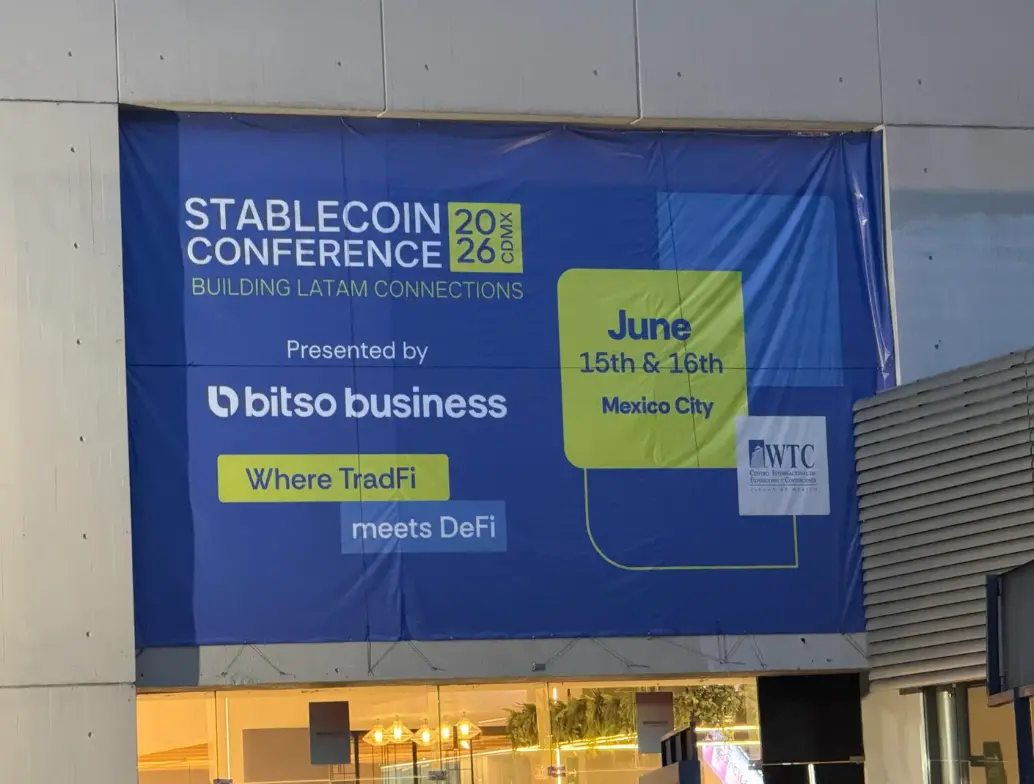
However, spend some time talking to those who actually move money across borders, and a more nuanced picture emerges: cross-border payments based on stablecoins are faster, more accessible, and increasingly reliable. But in terms of price, the industry has yet to deliver on its promise.

Where does the gap come from? Foreign exchange brokers typically charge 60 to 70 basis points for cross-border supplier payments. Stablecoins promise to compress this cost to 2 to 5 basis points. The direction is clear.

It's just that the deep liquidity pools needed to make this cost compression a reality have not yet been built at scale.

Imran Ahmad, head of Bitso Business, the B2B division of one of Latin America's largest crypto exchanges, puts it bluntly: Before significant institutional liquidity flows into these channels, the cost advantage of stablecoins remains theoretical.

Once banks start connecting directly, pricing will be forced down, and the equation will change accordingly.

Ahmad explained in an interview during the conference: "They are faster, better, that's unquestionable; they operate 24/7, that's also unquestionable. But are they cheaper? Not yet. The liquidity pools need to be built first."

Addressing the Trust Problem

Bringing this liquidity online requires some behavioral change.

Imagine a medium-sized importer based in Santos, Brazil (Latin America's largest port), who has been using the same local FX broker for years to handle payments.

That broker charges 60 to 70 basis points. In theory, a stablecoin solution could complete the same payment for a fraction of that cost.

But the importer might not think of the transaction in basis points. He thinks of the reliable agent who has handled his forex for a decade: the person who always answers the phone, who always gets things done.

This relationship, built on trust, is the real barrier to stablecoin adoption in B2B payments. It will only erode slowly: when the price gap becomes too large to ignore, when a new generation of operators no longer takes personal relationships for granted.

"Ultimately, it all comes down to trust," said Ezra Kebrab, CEO of Caliza, a cross-border payments company handling supplier payments and treasury management transactions between Latin America, North America, and Asia.

"It's not as simple as 'I'm the cheapest, fastest solution,'" Kebrab added. "Do you know the consequences if this payment doesn't meet the counterparty's requirements?"

Complementing Swift, Not Replacing It

Contrary to some narratives in the stablecoin payments space, the companies truly gaining market traction are those that have stopped treating existing infrastructure as the enemy.

Caliza's clients range from customs brokers in Santos to global payment processors like Flutterwave and India's Skydo; the company also partners with payment partner LianLian for flows from Latin America to China.

Despite running on stablecoin rails, Caliza still completes many transactions via Swift. The reason is: in supplier payments, paying correctly is as important as paying quickly. A remittance with an incorrect tax ID or missing payment field can cause goods to be held at customs indefinitely.

"Some of my peers might call themselves 'Swift killers,'" Kebrab said. "But I think Swift has done an excellent job in establishing the standardization needed for supplier payments."

This willingness to work alongside, rather than against, traditional systems has translated into sustained growth. Since its inception, Caliza has seen month-over-month growth exceeding 40%, reaching 60% last month.

To avoid reliance on intermediaries, the company built its licensing and banking partnerships from scratch. A decision that seemed costly early on now looks more and more like a competitive advantage.

Bitso's Ahmad believes the growth momentum of stablecoin companies operating in these cross-border corridors over the past year has been staggering. But given the business structure and highly regulated nature, he expects a natural shakeout will eventually occur.

"The growth trajectories of these companies are fascinating," he said. "There hasn't been a 'graveyard' of stablecoin companies yet. But I think one day there will be."

In his view, who ultimately stands firm depends on three things: licenses, fiat channels, and liquidity. Build these, and you have a real business. "Otherwise, you're just a middleman."


Пов'язані питання

QWhat is the main obstacle preventing stablecoins from achieving their promised cost savings in cross-border B2B payments?

AThe main obstacle is not technology, but the lack of deep, institutional-scale liquidity pools. Additionally, the established trust-based relationships that businesses have with traditional foreign exchange brokers present a significant barrier to adoption, as companies value reliability over potential cost savings.

QAccording to Bitso Business's Imran Ahmad, what are the three key elements needed for a stablecoin cross-border payment company to establish a sustainable business?

AAccording to Imran Ahmad, the three key elements are licenses, fiat currency on/off-ramps, and liquidity. Without building these, a company remains merely a middleman.

QHow does Caliza's CEO, Ezra Kebrab, view the role of traditional systems like SWIFT in relation to stablecoin-based payments?

AEzra Kebrab views stablecoin solutions as complementing, not replacing, traditional systems like SWIFT. He acknowledges SWIFT's excellence in establishing the standardization necessary for reliable supplier payments, where accuracy in details like tax IDs is as critical as speed.

QWhat is the reported current fee range for traditional forex brokers in supplier payments, and what is the potential fee range promised by stablecoin solutions?

ATraditional forex brokers typically charge between 60 to 70 basis points for supplier payments. Stablecoin solutions promise to compress these fees to a range of 2 to 5 basis points.

QWhat growth trend is mentioned for the company Caliza, and what strategic decision is cited as a key competitive advantage?

ACaliza has maintained month-over-month growth exceeding 40% since its founding, reaching 60% recently. A key competitive advantage cited is its early decision to build its own licenses and banking partnerships from scratch, avoiding dependency on intermediaries, which was initially costly but is now paying off.

Пов'язані матеріали

Must-Watch Events Next Week|CLARITY Act Could Face Senate Vote; SpaceX, Circle to Report Earnings (8.3-8.9)

**Summary: Key Events and Developments to Watch (August 3-9)** The upcoming week is marked by significant financial disclosures, key legislative deadlines, and notable product updates. **Major Financial Events:** Several companies are scheduled to release their Q2 2026 earnings. American Bitcoin (ABTC) will report on August 3, followed by SpaceX and Hut 8 Mining Corp. on August 4, and Circle on August 5. Notably, a significant portion of SpaceX shares (up to 12% of total shares) will be unlocked on August 6 following their earnings release. **Key Legislative Deadline:** The U.S. Senate faces an August 7 deadline to secure 60 votes for the CLARITY Act, a bipartisan bill aiming to establish a federal regulatory framework for cryptocurrencies. The Senate may hold a full vote on the bill during the week. **Economic Data:** The U.S. July Non-Farm Payrolls report will be released on August 7, providing crucial labor market data. **Technology & Product Updates:** * **Shutdowns:** DeFi portfolio tracker Zapper and wallet app Ctrl Wallet will cease operations on August 3. * **Upgrades:** LayerZero will deprecate its v1 relayers on August 3. XRP Ledger's new version 3.3.0, featuring five new functions, is expected next week. * **AI:** Elon Musk announced that the advanced Grok 4.6 AI model is set for release around August 7. * **Bitcoin:** The BIP-110 forced signaling for a potential Bitcoin network change is scheduled to begin around August 8. **Other Notable Events:** Chinese robotics firm Unitree Tech has set its preliminary price inquiry for its IPO for August 5. South Korean exchange Upbit will delist AQT and AERGO tokens on August 3.

marsbit1 год тому

Must-Watch Events Next Week|CLARITY Act Could Face Senate Vote; SpaceX, Circle to Report Earnings (8.3-8.9)

marsbit1 год тому

Stocks Are Plummeting More Sharply Than Cryptocurrencies. Where Has the Money Gone?

Stock Markets Plunge Deeper Than Cryptocurrencies: Where Did the Money Go? In late July, Seoul's Kospi index triggered circuit breakers for two consecutive days, plummeting over 40% from its June high. The collapse was led by heavyweight stocks like SK Hynix, whose record profits still disappointed investors, and devastating leveraged ETFs, with one major product losing over 83% of its value. This signaled a global, forced deleveraging targeting the most crowded trades. Interestingly, while stocks exhibited extreme volatility akin to crypto markets, Bitcoin rose nearly 15% in July after a prior steep drop. Analysis shows the money fleeing equities did not flow into Bitcoin. Instead, Bitcoin had already absorbed its sell-off in May-June, when U.S. spot Bitcoin ETFs saw historic outflows. The true safe-haven beneficiary was gold, whose price rose over 20% year-on-year, highlighting a decoupling between Bitcoin and gold as "digital gold." The sell-off was a targeted unwinding of leveraged positions in tech and semiconductors, accelerated by broker-dealer risk management and shifts in the AI narrative, including new competition from Chinese memory chipmakers. The retreat path was clear: from high-valuation tech stocks to cash and U.S. Treasuries, then to gold. For Bitcoin to attract sustained institutional inflows, conditions like eased global liquidity pressure, a "soft-landing" Fed rate cut, and U.S. regulatory clarity via legislation like the stalled CLARITY Act are needed. Currently, Bitcoin is not a safe haven but an already-cleared asset. Its low correlation with tech stocks, however, makes it a potential diversification play for institutional portfolios once the storm passes. The money isn't here yet, but the positioning is underway.

marsbit1 год тому

Stocks Are Plummeting More Sharply Than Cryptocurrencies. Where Has the Money Gone?

marsbit1 год тому

In Conversation with Ray Dalio: We Are Currently in an AI Bubble, with 1% of My Portfolio in Bitcoin

Ray Dalio, founder of Bridgewater Associates, warns in an interview that the current AI boom shows classic bubble characteristics, which could lead to significant economic downturns as seen in past cycles like 1929 or 2000. He explains that speculative enthusiasm, fueled by debt and overvaluation, often precedes a crash when rising rates or taxation force asset sales, causing widespread losses and recession. Dalio also outlines his "Big Cycle" theory, describing an approximate 80-year pattern where widening wealth gaps, massive government deficits, and shifting geopolitical power (like China's rise) create internal conflict and global instability. He emphasizes that we are in a late-cycle, transitional phase where traditional powers like the US and UK face decline. For personal wealth protection, Dalio advises diversification beyond cash into assets like stocks, bonds, real estate, and particularly gold, which he prefers over Bitcoin. While he holds about 1% of his portfolio in Bitcoin as a non-printable hard asset, he views gold as more secure from technological or governmental threats. Regarding AI's impact, Dalio believes it will disproportionately benefit capital owners, worsening inequality by replacing both physical and cognitive labor. He suggests that human intuition and emotional intelligence, combined with AI, will be key for future workers. On taxation, Dalio argues that wealth taxes are impractical and risk triggering asset sell-offs, reducing productive investment. He points to the UK as a cautionary example of debt, low productivity, and political strife. Geopolitically, Dalio foresees a more regionalized world, with the US showing weakness in prolonged conflicts like with Iran, akin to past imperial declines. The ideal outcome, he suggests, is coexisting powerful blocs (e.g., Americas, China-Asia Pacific) without major war.

marsbit5 год тому

In Conversation with Ray Dalio: We Are Currently in an AI Bubble, with 1% of My Portfolio in Bitcoin

marsbit5 год тому

Торгівля

Спот
活动图片




