FOMC Minutes Hint at a Possible Rate Hike, Trouble For the Crypto Market?

TheNewsCryptoОпубліковано о 2026-02-19Востаннє оновлено о 2026-02-19

Анотація

FOMC meeting minutes indicate a potential interest rate hike despite U.S. inflation dropping to 2.40% in January 2026, nearing the 2% target. Federal Reserve officials suggest pausing rate cuts and possibly considering an increase, emphasizing the need for balanced inflation and labor market conditions. The current federal rate remains at 3.50%-3.75%, with slight labor market improvements. This uncertainty may negatively impact the crypto market, causing increased volatility, $38.73 million in liquidations, and a 1.55% market cap decline. BTC saw significant short liquidations amid heightened investor caution.

Meeting minutes by the Federal Open Market Committee (FOMC) have hinted at a possible rate hike. This comes despite a drop in inflation and at a time when the crypto market is attempting to find a bullish momentum. The focus, as stated, could be on choosing inflation or the labor market before taking a call.

FOMC Minutes Signal Rate Hike

The US January 2026 inflation dropped to 2.40%, closer to the target of 2%; however, Federal Reserve officials have indicated that rate cuts could be paused for some time. This was speculated – what was now speculated was that a rate hike could be on the table.

Minutes from the Jan 27-28 meeting have opened up a possibility for the same.

A debate is expected to happen over which sector should have more focus, inflation or the labor market. Officials are seeking a balanced inflation level before slashing the rate, per a report by CNBC. The summary has said that a downward adjustment would be likely if inflation were to decline according to expectations.

Simply put, there is a chance for the Federal Reserve to keep the rate steady. If anything, there could be a discussion around upward adjustment to better reflect a two-sided description on the interest rate decisions of the Committee.

San Francisco Federal Reserve President Mary Daly recently cited something similar, saying that the US central bank still needs to get inflation down.

Current Situation

The federal rate is between 3.50% and 3.75%, with US President Donald Trump earlier calling out the need to lower the lending rate. The last cut was announced in December 2025, and the rate has remained unchanged since then.

Attention is on the labor market because the unemployment rate has dropped only slightly to 4.3% in January 2026 from 4.4% in December 2025. Some relief has come up in the form of an increase by 130k in non-farm payroll. A slight misjudge or calculation could take inflation away from the target value of 2%.

Trouble in Crypto Market?

The crypto market is familiar with volatility and uncertainty. But, a rate hike could shrink investors’ appetite to allocate their funds to the sector. For now, Coinglass has reported a total liquidation of $38.73 million in the last 12 hours. This consists of $22.08 million in long and $16.66 million in short.

BTC has seen more short liquidations during this time. The figure stands at $7.01 million, out of the individual total value of $9.56 million. This has left $2.55 million in long. The market has collectively shed 1.55% of its value in terms of market cap, with a shift to 11 points in FGI.

Highlighted Crypto News Today:

South Korea Recovers $21.4M in Seized Bitcoin After Hack

TagsCrypto MarketFOMCrate cut

Пов'язані питання

QWhat did the FOMC meeting minutes hint at regarding interest rates?

AThe FOMC meeting minutes hinted at a possible interest rate hike, despite a recent drop in inflation.

QWhat was the US inflation rate in January 2026 and how does it compare to the Federal Reserve's target?

AThe US inflation rate in January 2026 was 2.40%, which is closer to the Federal Reserve's target of 2%.

QAccording to the article, what two sectors are officials debating to focus on before making a decision on rates?

AOfficials are debating whether to focus more on inflation or the labor market before making a decision on interest rates.

QWhat potential impact could a rate hike have on the cryptocurrency market?

AA rate hike could shrink investors' appetite to allocate funds to the cryptocurrency sector, potentially increasing market volatility and leading to liquidations.

QWhat was the total value of crypto market liquidations reported by Coinglass in the 12 hours preceding the article?

ACoinglass reported a total liquidation of $38.73 million in the crypto market over the last 12 hours.

Пов'язані матеріали

Has Hook Summer Really Arrived? sato, Lo0p, FLOOD Ignite the New Narrative of Uniswap v4

"Hook Summer" Arrives? Sato, Lo0p, FLOOD Ignite Uniswap v4 Narrative Amidst a slight market recovery, attention within the Ethereum ecosystem has shifted to Meme coins built on Uniswap v4's Hook protocol. Following ASTEROID, tokens like sato, sat1, Lo0p, and FLOOD have become market focal points, with market caps ranging from millions to tens of millions, bringing concentrated liquidity to a narrative-dry market. Uniswap v4 Hooks are "plugin smart contracts" that allow developers to inject custom logic at key points in a liquidity pool's lifecycle (initialization, adding/removing liquidity, swaps, etc.), making the AMM programmable. Recent representative projects include: * **sato**: Market cap peaked over $38M; uses a v4 curve mechanism for minting/burning, locking ETH as reserve. * **sat1**: Market cap briefly exceeded $10M, positioning as an "optimized sato," but later declined significantly. * **Lo0p**: Market cap neared $6.6M; a "lending AMM protocol" allowing users to borrow ETH against deposited LO0P tokens without immediate selling pressure. * **FLOOD**: Market cap approached $6M; channels trading reserves into Aave v3 to generate yield, which is retained in the pool. The emergence of these Hook-based tokens could drive long-term growth for the Uniswap ecosystem by attracting users and liquidity to v4 pools. Combined with Uniswap's activated fee switch (partially used to burn UNI), the long-term outlook for UNI appears positive. However, short-term UNI price appreciation is not directly guaranteed. Factors include the sustainability and lifecycle of these new tokens, their price volatility, overall market conditions, and regulatory pressures. Currently, Uniswap v4's TVL ($595M) lags behind v3 and v2, indicating Hook adoption still requires time to mature. In summary, the Hook ecosystem serves as "long-term nourishment" for UNI, but acts more as a "catalyst" than a direct "booster" in the short term. Note: These are early-stage experimental tokens and may carry unknown risks.

marsbit27 хв тому

Has Hook Summer Really Arrived? sato, Lo0p, FLOOD Ignite the New Narrative of Uniswap v4

marsbit27 хв тому

Has Hook Summer Truly Arrived? sato, Lo0p, FLOOD Ignite the New Uniswap v4 Narrative

With the broader market showing signs of recovery, a new wave of interest has emerged around Ethereum-based meme coins. Following ASTEROID, tokens like sato, sat1, Lo0p, and FLOOD, built upon the Uniswap v4 Hook protocol, are capturing market attention. Their market capitalizations range from millions to tens of millions of dollars, injecting much-needed focused liquidity into a market lacking narratives. This article explores whether this trend signifies an incoming "Hook Summer" and its potential impact on UNI's price. Hooks are essentially plug-in smart contracts for Uniswap v4 liquidity pools, allowing developers to inject custom logic at key points in a pool's lifecycle (like initialization, adding/removing liquidity, swaps). This transforms the AMM into programmable building blocks. Key highlighted projects include: * **sato**: Peaked over $38M market cap. It utilizes a v4 curve for minting/burning; buying locks ETH as reserve to mint new tokens, while selling redeems ETH from the reserve and burns tokens. * **sat1**: Market cap briefly exceeded $10M, promoted as an "optimized sato," but later declined significantly. * **Lo0p**: Reached nearly $6.6M. It's a lending AMM protocol where buying LO0P tokens locks them as collateral, allowing users to borrow ETH from the pool reserve at 40% LTV, aiming to improve capital efficiency for idle ETH in LPs. * **FLOOD**: Peaked near $6M. Its mechanism directs asset reserves from buys into Aave v3 to generate yield, with fees and interest retained in the pool to potentially influence the token's price long-term. In the long term, the development of the Hook ecosystem can attract users and liquidity to Uniswap v4, benefiting UNI's fundamentals—especially combined with the recent activation of the protocol fee switch, where a portion of fees is used to burn UNI. However, in the short term, these Hook-based tokens are unlikely to directly drive significant UNI price appreciation. Their impact is moderated by factors like token sustainability, price volatility, and broader market and regulatory conditions. Currently, Uniswap v4's TVL ($595M) still trails behind v2 and v3, indicating adoption and growth will take time. The article concludes that while the Hook ecosystem provides long-term "nourishment" for UNI, its short-term role is more of a "catalyst" than a "booster." Readers are cautioned that these are early-stage experimental tokens and may carry unknown risks.

Odaily星球日报40 хв тому

Has Hook Summer Truly Arrived? sato, Lo0p, FLOOD Ignite the New Uniswap v4 Narrative

Odaily星球日报40 хв тому

Interview with Michael Saylor: I Did Say I Would Sell Bitcoin, But Never a Net Sale

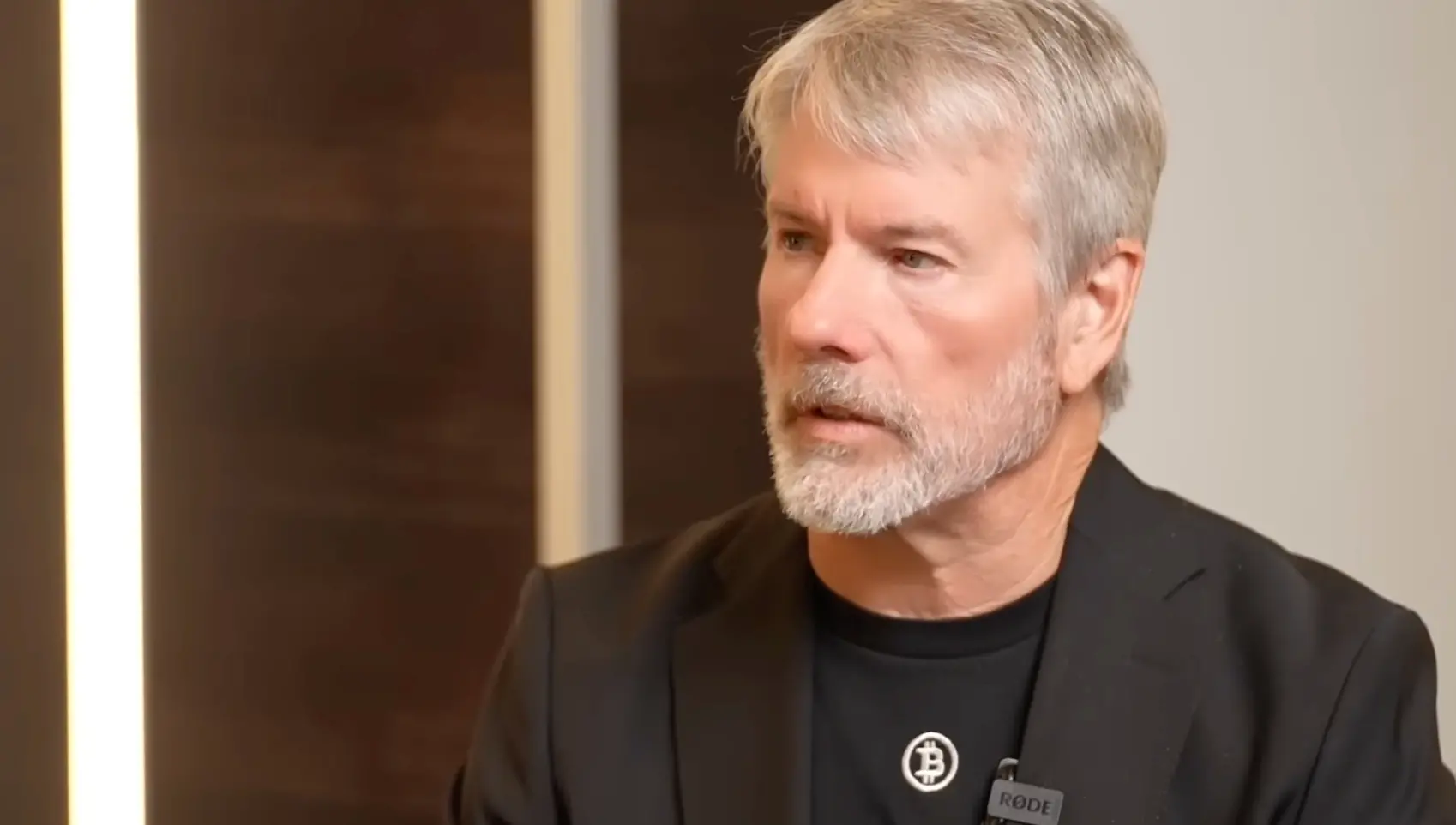
Interview with Michael Saylor: I Said We'd Sell Bitcoin, But Never Be a Net Seller In a recent podcast, MicroStrategy Executive Chairman Michael Saylor clarified the company's stance on potentially selling Bitcoin. Following MicroStrategy's earnings call statement about being prepared to sell BTC to fund dividends for its STRC (Strategic) credit product, Saylor emphasized the distinction between selling and being a "net seller." Saylor explained the core business model: MicroStrategy sells credit instruments like STRC and uses the proceeds to buy Bitcoin, which is viewed as "digital capital" expected to appreciate around 30-40% annually. A portion of these capital gains can then be used to pay the dividends on the credit products. He stressed that even if the company sells some Bitcoin for dividends, it simultaneously buys much more with new credit issuance. For example, after raising $3.2 billion from STRC sales in April, the dividend obligation was only $80-90 million, making the company a net buyer. The clarification aims to counter market narratives questioning the value of Bitcoin on MicroStrategy's balance sheet if it were never sold, and to dismiss claims of a "Ponzi scheme." Saylor reiterated his personal philosophy for investors: "Don't be a net seller of bitcoin" and ensure your Bitcoin holdings increase each year. Saylor also discussed Bitcoin's role as the foundation for "digital credit," noting that STRC has become the largest and most liquid preferred stock issue in the U.S., offering high risk-adjusted returns (Sharpe ratio). He highlighted Bitcoin's deep liquidity, stating that even large purchases by MicroStrategy do not move the market significantly, which is driven by macro factors, geopolitical tensions, and capital flows from ETFs and credit products. Finally, Saylor reflected on his early inspiration from sci-fi books, which motivated his path to MIT, and maintained his fundamental thesis on Bitcoin remains unchanged: it is superior digital capital enabling superior digital credit.

链捕手44 хв тому

Interview with Michael Saylor: I Did Say I Would Sell Bitcoin, But Never a Net Sale

链捕手44 хв тому

Торгівля

Спот
Ф'ючерси
活动图片