Fermi Crisis: A Case Study of an AI Power Stock's Sudden Decline

marsbitОпубліковано о 2026-04-21Востаннє оновлено о 2026-04-21

Анотація

The article "Fermi Crisis: A Case Study of an AI Power Stock's Collapse" details the rapid rise and fall of Fermi, a company that promised to build the world's largest AI data center campus in Texas. Despite having zero revenue, tenants, or a finished product, it raised $785 million in its October IPO, with its market cap peaking at $12.5 billion. However, its stock plummeted from $37 to $5.40 within months. The collapse began when its anchor tenant, believed to be Amazon, terminated its contract after promised funding failed to materialize. Construction halted as lease terms forbade building without a tenant. The simultaneous departure of the CEO and CFO, alongside insider stock sales totaling $68 million, accelerated the decline. A short-seller report highlighted the CEO's history of alleged fraud at a previous venture. Fermi is presented as a symptom of a broader AI infrastructure bubble. A significant gap exists between announced data center projects and those under construction, hampered by severe supply chain delays for critical components like transformers. While tech giants plan massive investments, many projects face cancellation or indefinite delays. The article warns that Fermi's story may be repeated, as many ventures are built on speculative narratives rather than deliverable infrastructure.

Author: Ada, Deep Tide TechFlow

On April 20th, Fermi's stock price settled at $5.4.

Six months ago, that number was around $37. And it had just had its IPO last October.

A company less than 12 months old, with zero revenue, zero tenants, and no tangible product to speak of, yet it raised $785 million on the Nasdaq, with its market capitalization once soaring to $12.5 billion.

But then, the CEO and CFO resigned on the same day, the construction site halted, insiders sold $68 million worth of stock, a short-seller published a report alleging fraud, and a securities class-action lawsuit has been filed.

This marks the first major collapse of the AI power narrative.

The "World's First" in the Texas Wilderness

Fermi's story began in early 2025.

Former US Energy Secretary Rick Perry and private equity magnate Toby Neugebauer joined forces to found the company. Their core bet was called "Project Matador": to build the world's largest AI data center campus on 5,800 acres of land outside Amarillo, Texas, initially powered by natural gas, with plans to add four nuclear reactors in the future.

The planned capacity was 11GW of power, alongside approximately 18 million square feet of data center facilities. The label "World's Largest" was repeatedly emphasized.

AI's thirst for power is real, nuclear energy is green, and Trump signed an executive order to expand US nuclear capacity from 100GW to 400GW. All the trends aligned.

The market bought it. On October 1st last year, Fermi went public at $21 per share, jumping to $25 at open, fully oversubscribed. The next day, it peaked at $37, 76% above the IPO price. Within days, this company without a cent of revenue saw its market cap break $10 billion.

Back then, everyone was buying AI power concept stocks. No customers needed, no revenue needed, just a PowerPoint presentation and a vision no one else could see.

The Real Crisis

The first crack appeared last December.

Fermi's sole anchor tenant terminated its contract, widely believed to be Amazon. This tenant had committed to prepay up to $150 million in construction costs but ultimately paid nothing.

Short-seller Fuzzy Panda uncovered the reason behind it. Fermi had promised to secure $5 to $5.5 billion in financing to ensure project execution, but this money never materialized. The tenant grew impatient and walked away.

According to the lease terms with Texas Tech University, without a signed tenant, Fermi wasn't even permitted to begin construction. This created a vicious cycle: no tenant meant no financing, no financing meant no construction, no construction meant no tenant.

The construction site stopped. Workers posted on social media saying "we all got laid off."

Then came the recent bombshell: CEO Neugebauer and CFO Miles Everson resigned simultaneously. The company packaged it as a "Fermi 2.0" strategic transformation. But the stock fell another 22%. From the IPO last year, investors who bought FRMI stock faced maximum losses of up to 78%.

And insiders had already started running. The moment the lock-up period ended on March 30th, Griffin Perry, son of co-founder Rick Perry, immediately sold 11 million shares, cashing out $56.3 million. The COO, CFO, and Chief Development Officer followed suit, with insiders collectively selling over $68 million worth of stock.

Fuzzy Panda revealed that before the lock-up expired, Griffin Perry had attempted to offload 30 million shares in a block trade.

This isn't Neugebauer's first company to face crisis.

In 2022, his "anti-woke" bank GloriFi collapsed, filing for bankruptcy after burning through investments from conservative backers like Peter Thiel, Ken Griffin, and Vivek Ramaswamy. The bankruptcy trustee alleged in court filings that Neugebauer engaged in "securities fraud," "egregious self-dealing," and "fraudulent transfers."

Fuzzy Panda's report also pointed out that several members of Fermi's current management team were associates of Neugebauer from his GloriFi days. Chief Site Development Officer Charlie Hamilton was described in bankruptcy filings as a "longtime friend" of Neugebauer. CFO Miles Everson was also accused of participating in unfair transactions涉嫌利益输送 (involving alleged利益输送 - benefit conveyance).

The bankruptcy court ruled that several of Neugebauer's transactions constituted fraudulent transfers. Yet, despite being accused of fraud at his previous company, his next company raised $785 million on Nasdaq. The IPO prospectus even mentioned these lawsuits could distract management. Investors bought anyway. What does that show? It shows that during a bubble, people don't read risk disclosures; they just look for a sexy enough story.

A Microcosm Under the Bubble

Fermi is not an isolated case. It is a microcosm.

According to data from Sightline Climate, as of April 2026, there are about 140 large data center projects scheduled to come online in the US this year, but only one-third are under actual construction. The rest are either delayed or canceled.

The bottleneck lies in electrical components.

Transformers, switchgear, and batteries – these are essential components for every data center build. Before 2020, delivery lead times for large-power transformers were 24 to 30 months. Now, wait times can stretch to five years. For data centers with deployment cycles under 18 months, this is structurally unacceptable. A delay in any single component can halt the entire project.

The deeper issue is a generational mismatch. The US power grid was not designed for the loads required by AI. Data centers can be built in three years, but power generation takes longer. Solar or wind power generation takes three to six years, gas turbine generation about six years, and nuclear power generation over a decade. Network World magazine notes that this mismatch was manageable when data centers were smaller. But the scale required by AI today, with individual facilities consuming hundreds of megawatts, has become an insurmountable bottleneck.

OpenAI's flagship project, Stargate, reportedly costing $500 billion, had no substantial construction progress as of April.

Partners are locked in disputes over site ownership and system control. The 800MW expansion of the flagship Texas campus has been canceled. Stargate projects in the UK and Norway have been paused successively, and three core executives responsible for Stargate have jumped ship to Meta.

Meanwhile, Alphabet, Amazon, Meta, and Microsoft are projected to spend over $650 billion in 2026 to expand AI capacity. Alphabet alone reported $175 to $185 billion, equating to burning $500 million daily. However, the infrastructure supporting this grand ambition cannot develop at the speed the industry requires.

The last time the US saw a energy infrastructure boom of similar scale was in the late 1990s. The dot-com bubble and electricity market deregulation spurred a wave of natural gas power plant construction, investing about $100 billion. After the bubble burst, many power plants sat idle.

This time, the scale is an order of magnitude larger. US utility companies alone have proposed $1.4 trillion in planned expenditures, 27% higher than last year's forecast. Tech companies' investment in energy-related infrastructure is already twice the annual investment of the entire US power industry.

But from Q3 to Q4, new data center deals have fallen by over 40%. Some analysts believe supercomputing companies' capital expenditures could halve this year.

Money is tightening, but the stories are still being told. This is where the danger lies.

A report by Built In summarized: When vendors heavily invest in startups, and those startups turn around and spend the money on the vendors' own products, real demand and artificially created illusions get mixed together. When a company's customers are also its investors, and revenue grows faster than actual usage, that's a signal a bubble is forming.

When the Bubble Bursts

In this food chain, there are three tiers of players.

The first tier consists of the real winners. These are companies that already own operational nuclear power plants, like Constellation Energy. They don't need to build anything new; they just need to transfer contracts from the grid to data centers to reap the AI power红利 (dividend). Meta signed a 20-year, 1.1GW nuclear power supply contract with Constellation. Microsoft spent $1.6 billion to restart the Three Mile Island nuclear plant. These are transactions with physical assets.

The second tier includes various small modular reactor (SMR) startups, like Oklo, whose stock price has been hyped to the sky, but not a single reactor has been built. US nuclear projects are notoriously known for delays and cost overruns, with almost no recent cases completed on the original schedule and budget. But investors don't care about that.

The third tier consists of companies like Fermi, which don't even have nuclear reactors, haven't started building the natural gas power plant, and have no tenants. They are at the bottom of the food chain, selling not power, but a story. When the story collapses, nothing remains.

Fermi's collapse will not be an isolated incident.

When an industry's actual delivery capability lags far behind the promises made in its PowerPoint presentations, a collapse is only a matter of time.

Of the US data center capacity planned to come online in 2027, only 6.3GW is under construction, while the announced total is 21.5GW. A gap of 15GW exists on paper, corresponding to hundreds of billions of dollars and countless promises that will fail to materialize.

Who will be the next Fermi? No one knows. But in this arena, there's $500 billion searching for power, high-power transformers awaiting delivery, and a slew of startups that haven't even secured basic grid interconnection assuring investors that everything is under control.

When the last energy infrastructure bubble burst, at least some power plants were left behind. This time, many projects might not even break ground.

And Fermi's 5,800 acres of land in the Texas wilderness, along with all the unrealized grand narratives, will slowly be buried by time.

Пов'язані питання

QWhat was the core project that Fermi was betting on, and what was its planned scale?

AFermi's core bet was 'Project Matador,' which aimed to build the world's largest AI data center campus on 5,800 acres in Amarillo, Texas. It planned to provide 11GW of power capacity (initially from natural gas, with future nuclear reactors) and about 18 million square feet of data center facilities.

QWhat was the first major crack in Fermi's story that led to its crisis?

AThe first major crack appeared in December when Fermi's sole anchor tenant, widely believed to be Amazon, terminated its contract. This tenant had promised up to $150 million in prepaid construction funding but never paid anything. The termination was linked to Fermi's failure to secure the $5-5.5 billion in financing it had promised to ensure project execution.

QWhat allegations did the short-seller Fuzzy Panda make against Fermi's management?

AFuzzy Panda alleged that Fermi's CEO Toby Neugebauer had a history of 'securities fraud,' 'egregious self-dealing,' and 'fraudulent transfers' from his previous failed company, GloriFi. The report also noted that several current Fermi executives were associates of Neugebauer from GloriFi and were implicated in questionable transactions.

QAccording to the article, what is the fundamental bottleneck causing delays and cancellations in many large US data center projects?

AThe fundamental bottleneck is the shortage and long lead times for critical electrical components, such as transformers, switchgear, and batteries. Large power transformers that once had a 24-30 month delivery time can now take up to five years. This structural delay, combined with a generational mismatch where the power grid wasn't designed for AI's massive energy demands, causes entire projects to stall.

QHow does the article categorize the three layers of players in the AI power infrastructure 'food chain', and which layer did Fermi belong to?

AThe three layers are: 1) The true winners: companies with existing operational power plants (e.g., Constellation Energy) that can simply redirect power to data centers. 2) SMR startups: companies like Oklo that have hype but no built reactors. 3) Story sellers: companies like Fermi with no power plants, no construction, and no tenants, selling only a narrative. Fermi was in the bottom third layer.

Пов'язані матеріали

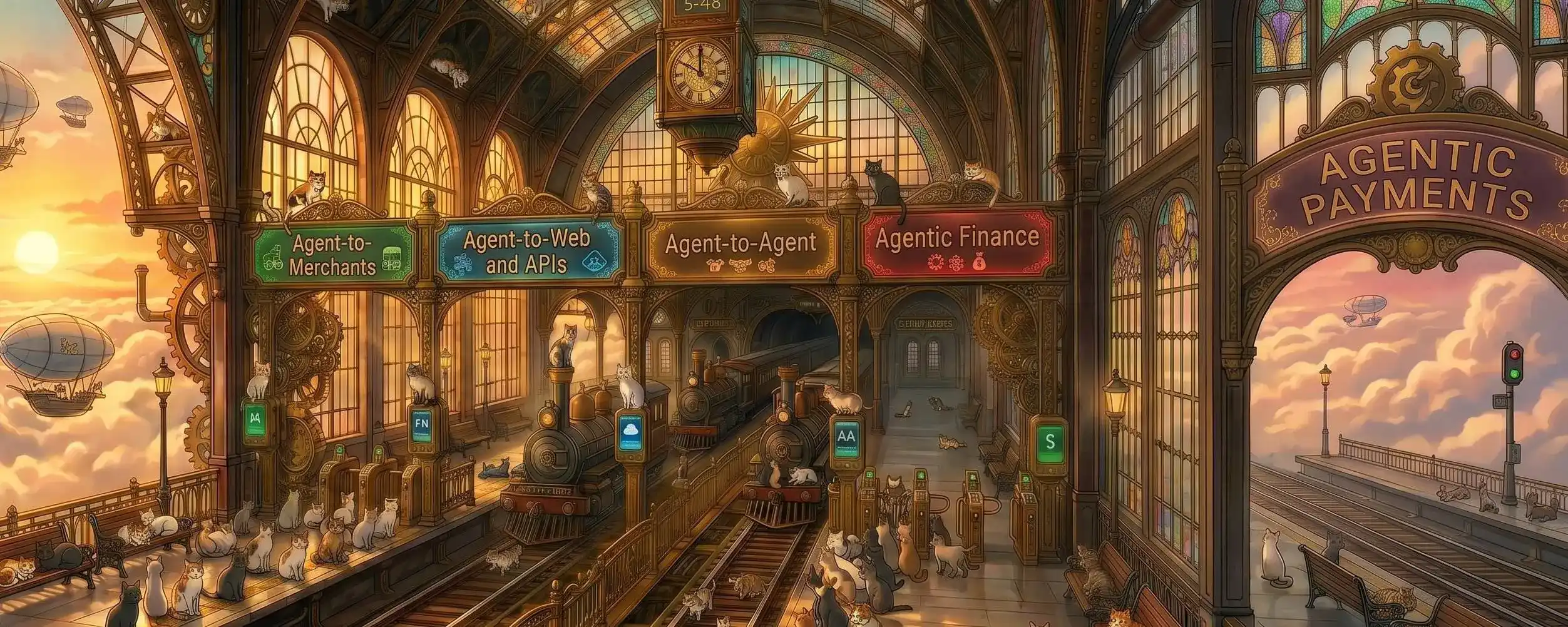
It Took Me a Year to See the Bitter Truth About Agent Payments

After a year building infrastructure for the Agent economy, engaging with major players like Stripe, Visa, and Coinbase, the author shares a sobering analysis of the current state of Agent payments. The core finding is a stark lack of genuine, immediate demand across most envisioned use cases. The article breaks down four key market segments: 1. **Agent-to-Merchant (Consumer Shopping):** For most product categories (e.g., clothing, electronics), conversational AI shopping is a step backwards from visual e-commerce interfaces. While agents excel at understanding needs, they can't replace side-by-side product comparison. Real merchant interest is defensive "Agent Engine Optimization," not driven by current customer demand. Potential exists for high-frequency, low-decision purchases (like food delivery) or navigating complex store UIs, but these require massive B2C distribution channels dominated by giants like Amazon. 2. **Agent-to-API (Developer Services):** Developers already have subscriptions and billing relationships for APIs (compute, data). Prepaid balances solve micro-payment issues for low transaction volumes. A deeper structural problem is that major SaaS vendors' business models rely on enterprise contracts, resisting granular pay-per-call pricing. While protocols like MPP and x402 serve the long tail of niche services, this market is small and developers are historically low-willingness-to-pay. 3. **Agent-to-Agent:** This remains largely theoretical with minimal transaction volume. While it represents a long-term bet on a fundamentally new transaction infrastructure (sub-second, micro-penny to million-dollar, multi-party settlements), it does not constitute a present market. 4. **Agent-to-Finance:** This is the only category with existing, paying demand. Integrating AI into financial workflows (trading, portfolio management) is a natural evolution and enables new capabilities like autonomous rebalancing. However, competition favors established, regulated institutions. The "real problem" is not moving money between agents, but the broader challenge of **coordination**—orchestrating work between agents and humans, verifying outcomes, and settling results. Payment is just one component of settlement, which is itself part of coordination. Companies that solve the coordination layer will subsume payment, not the other way around. While well-funded incumbents build defensively for a long-term future, startups must find where the market is today—which, for the author's team, lies outside these four categories in an area of real, growing, and underserved activity.

marsbit2 хв тому

It Took Me a Year to See the Bitter Truth About Agent Payments

marsbit2 хв тому

It Took Me a Year to See the Hard Truth About Agent Payments

**Title: It Took Me a Year to See the Hard Truth About Agent Payments** Over the past year, I've worked on infrastructure for the Agent economy, engaging with major players like Stripe, Visa, Coinbase, and numerous startups. The findings reveal a stark reality: genuine, widespread demand for Agent-based payments does not yet exist. **Key Observations:** * **Agent-to-Merchant (Shopping):** The user experience for AI shopping often falls short, especially for visual product discovery. While AI excels at understanding needs, conversational interfaces can't yet replace browsing and comparing multiple products visually. Current merchant interest is largely defensive ("Agent Engine Optimization") for a future that hasn't arrived. High-frequency, low-friction purchases (like food delivery) are potential fits, but lack open APIs and face high AI inference costs. Simpler, more affordable, or cross-language interactions for complex UIs are a niche opportunity but require massive consumer distribution to scale. * **Agent-to-API (Developer Tools):** Developer payment needs for APIs (computing, data, models) are already met through subscriptions and prepaid credits. The core challenge is not payment friction but supplier economics: most large SaaS providers prefer enterprise contracts over micropayments for API calls. Protocols like MPP and x402 suit the long-tail of smaller services but cater to a developer market historically reluctant to pay for these tools. Major infrastructure needs at the top of the stack are already being addressed. * **Agent-to-Agent (Machine Commerce):** This is a long-term vision with almost no current transaction volume. While a future with high-speed, high-frequency, multi-party machine-to-machine transactions would require novel infrastructure, it remains theoretical. The market is not here yet. * **Agent-to-Finance:** This is the only category with clear, present demand. Financial professionals and DeFi users already pay for tools, and AI augmentation is a natural evolution. Autonomous AI agents can enable entirely new financial strategies. However, competition is fierce from established, regulated incumbents who can more easily layer AI onto their existing products. **The Core Insight:** Companies, especially giants with long time horizons, are building defensively for a potential future of mass machine commerce. For them, early investment is a low-cost hedge. For startups, the current market reality is different. The primary challenge isn't just moving money between agents (payments). The larger, unsolved problem is **orchestration** – coordinating work between agents and humans, verifying outcomes, and then settling. Payment is just a part of settlement, which is just a part of orchestration. Companies that solve the orchestration problem will subsume payments, not the other way around. After a year of building, we see the real, growing, and underserved market opportunity lies in this broader domain of orchestration.

链捕手26 хв тому

It Took Me a Year to See the Hard Truth About Agent Payments

链捕手26 хв тому

Claude Opus 4.8 Finds a $4.5 Billion Bug: The AI Era is Mass-Producing Hackers

A researcher discovered a critical "infinite mint" vulnerability in the Zcash cryptocurrency's Orchard protocol using Claude Opus 4.8, leading to a swift fix but also a 50% market drop, erasing billions in value. This incident highlights a new era where powerful, accessible AI models are dramatically lowering the barrier to finding software vulnerabilities. Previously, the security community feared specialized models like Claude Mythos Preview, capable of finding decades-old zero-day exploits. The Zcash case, however, involved a publicly available, general-purpose model. This shift makes advanced security auditing—and attack capabilities—accessible to far more people, not just experts. The mass democratization of vulnerability discovery brings a dual challenge: a flood of low-quality, AI-generated false reports that overwhelm maintainers, and the real, rapid uncovering of deep, dangerous bugs. Open-source projects, often understaffed and unfunded, are particularly vulnerable to this "attention DDoS." The article cites examples like curl shutting down its bug bounty program due to the unsustainable workload. Our perceived digital safety has often been luck, relying on the high cost and effort required to find deeply hidden flaws in complex systems, as seen with historical vulnerabilities like Heartbleed or Baron Samedit. AI changes this cost structure, effectively "mass-producing flashlights" to illuminate every corner of our codebase. While large companies operate extensive security chains involving external white-hat hackers and massive defensive operations, the global cybersecurity workforce faces a severe shortage, especially of experienced personnel capable of analyzing complex threats and coordinating fixes. The core dilemma emerges: AI makes *finding* bugs cheap and scalable, but *fixing* them remains a slow, expensive, and human-intensive process. The article concludes that AI won't destroy the internet but acts as a bright light, revealing that our digital existence is not inherently secure but is precariously maintained by ongoing human effort. The true cost in the AI era may not be discovery, but whether there will be enough people left willing and able to do the hard work of repair.

marsbit59 хв тому

Claude Opus 4.8 Finds a $4.5 Billion Bug: The AI Era is Mass-Producing Hackers

marsbit59 хв тому

Codex Goal Mode Usage Guide: How to Make AI Continuously Pursue a Specific Objective

"Codex Goal Mode: How to Make AI Work Continuously Toward a Specific Goal" OpenAI's Codex "goal mode" (/goal) transforms the AI from a reactive code assistant into a proactive execution agent capable of working autonomously for hours or even days to achieve a defined objective. To maximize its effectiveness, follow these key principles: 1. **Define Clear, Verifiable Exit Criteria:** The goal prompt should be a concise, measurable success condition, not a lengthy specification. Use quantifiable metrics like "reduce build time by 30%" or "achieve 100% test parity." 2. **Provide Initial Guidance and Tools:** Direct Codex toward likely problem areas and specify available tools (e.g., browsers, testing environments) to prevent it from exploring unproductive paths. 3. **Enable Progress Measurement:** Equip Codex with ways to track advancement, such as creating comparison tools for visual tasks or evaluation sets, ensuring it can gauge its own progress. 4. **Use a Realistic Execution Environment:** For tasks like performance optimization, provide access to environments that closely mimic production (e.g., similar configs, databases) to yield valid results. 5. **Be Cautious with Visual Goals:** Avoid vague "pixel-perfect" instructions. Instead, supplement visual references with functional checklists or design system specifications to prevent Codex from obsessing over minor details. 6. **Implement Progress Tracking:** For long-running tasks, have Codex commit code to draft PRs, update progress documents, or send Slack updates to maintain visibility into its work. 7. **Review and Consolidate Results:** Once the goal is met, instruct Codex to review its work, clean up ineffective experimental code, and reflect on what strategies succeeded or failed. Ultimately, using goal mode shifts the developer's role from writing prompts to managing a persistent engineering agent—defining objectives, establishing metrics, configuring environments, and conducting final reviews.

marsbit2 год тому

Codex Goal Mode Usage Guide: How to Make AI Continuously Pursue a Specific Objective

marsbit2 год тому

Торгівля

Спот
Ф'ючерси

Популярні статті

Як купити ADA

Ласкаво просимо до HTX.com! Ми зробили покупку Cardano (ADA) простою та зручною. Дотримуйтесь нашої покрокової інструкції, щоб розпочати свою криптовалютну подорож.Крок 1: Створіть обліковий запис на HTXВикористовуйте свою електронну пошту або номер телефону, щоб зареєструвати обліковий запис на HTX безплатно. Пройдіть безпроблемну реєстрацію й отримайте доступ до всіх функцій.ЗареєструватисьКрок 2: Перейдіть до розділу Купити крипту і виберіть спосіб оплатиКредитна/дебетова картка: використовуйте вашу картку Visa або Mastercard, щоб миттєво купити Cardano (ADA).Баланс: використовуйте кошти з балансу вашого рахунку HTX для безперешкодної торгівлі.Треті особи: ми додали популярні способи оплати, такі як Google Pay та Apple Pay, щоб підвищити зручність.P2P: Торгуйте безпосередньо з іншими користувачами на HTX.Позабіржова торгівля (OTC): ми пропонуємо індивідуальні послуги та конкурентні обмінні курси для трейдерів.Крок 3: Зберігайте свої Cardano (ADA)Після придбання Cardano (ADA) збережіть його у своєму обліковому записі на HTX. Крім того, ви можете відправити його в інше місце за допомогою блокчейн-переказу або використовувати його для торгівлі іншими криптовалютами.Крок 4: Торгівля Cardano (ADA)Легко торгуйте Cardano (ADA) на спотовому ринку HTX. Просто увійдіть до свого облікового запису, виберіть торгову пару, укладайте угоди та спостерігайте за ними в режимі реального часу. Ми пропонуємо зручний досвід як для початківців, так і для досвідчених трейдерів.

977 переглядів усьогоОпубліковано 2024.12.10Оновлено 2026.06.02

Як купити ADA

Обговорення

Ласкаво просимо до спільноти HTX. Тут ви можете бути в курсі останніх подій розвитку платформи та отримати доступ до професійної ринкової інформації. Нижче представлені думки користувачів щодо ціни ADA (ADA).

活动图片