Female Billionaire Becomes a VC

marsbitОпубліковано о 2026-07-02Востаннє оновлено о 2026-07-02

Анотація

The article details how Zhou Qunfei, founder and chairwoman of Lens Technology and once China's "richest woman," has entered the venture capital (VC) space. Zhou's recent investment in the embodied AI unicorn Kuawei Intelligent, contributing several hundred million RMB from her personal funds, brought her VC activities into focus. Her investment vehicle, Changsha Qunxin Investment, has made 17 investments, targeting semiconductor and hard tech companies like ChipOne Technology. Meanwhile, Lens Technology, her listed company, has made strategic bets this year on AI startups such as BrainCo, Xinghai Tu, Qingtian Zu, and Pudu Robotics. Zhou's own story is one of remarkable ascent. Starting as a migrant factory worker in Shenzhen, she built Lens Technology into a powerhouse supplying glass for major tech clients like Apple, with a market cap surpassing 300 billion RMB. Her move mirrors a broader trend among China's self-made industrial tycoons. Figures like Liu Yi of iHealth Labs (an investor in DeepSeek) and Zhu Xingming of Inovance Technology are similarly redirecting family offices and corporate capital away from traditional sectors like real estate. Instead, they are placing strategic bets on frontier technologies—AI, embodied intelligence, brain-computer interfaces, and nuclear fusion—effectively funding China's next wave of technological innovation.

It all starts with a financing round.

This week, Kwaiwei Intelligence completed a 1 billion yuan Series B financing, becoming the latest billion-dollar unicorn in the embodied world model arena. Looking through the long list of investors, an unexpected name appears—Lens Technology.

Thus, the person behind it, Zhou Qunfei, enters the VC circle's view.

Born in 1970, she wrote a legendary story of entrepreneurial counterattack with a piece of glass, successfully transforming from an ordinary migrant worker into the "Glass Queen" presiding over a market value of 300 billion yuan. In recent years, she and Lens have begun to appear in the VC circle, investing in a batch of star companies such as BrainCo, Xinghaimap, QingskyRent, etc. Quietly, such a group of traditional tycoons is channeling money into the vast ocean of Chinese technology.

Hunan's Richest Woman Maps Out a Hidden Portfolio

Once she makes a move, it's a billion-dollar unicorn.

Kwaiwei Intelligence is an embodied intelligence company headquartered in Nanshan, Shenzhen. Its founder, Jia Kui, is a tenured professor at The Chinese University of Hong Kong, Shenzhen. In 2021, he ventured into physical AGI exploration, leading Kwaiwei Intelligence to build a fully self-developed four-layer product matrix: the underlying DexVerseTM generative simulation embodied engine, DexSense spatial intelligence sensors, DexBrain embodied intelligence brain software, and the DexForce W1 humanoid robot body, constructing a complete virtual-real synergistic technology loop.

The connection between Zhou Qunfei and Kwaiwei Intelligence can be traced back to 2022. That year, Kwaiwei's simulation models and vision sensors had already entered Lens production lines, completing tasks like disordered workpiece sorting and precision flexible assembly. Over the years, trust grew with each delivery.

One morning in April this year, Zhou Qunfei visited Kwaiwei Intelligence and decided to invest on the spot after seeing the products. Sources reveal that Zhou Qunfei's investment amounted to several hundred million yuan, made with her personal funds. "First use your product, then invest in your company, accompany you further." Such rapport is uncommon in the venture capital circle.

Through Kwaiwei Intelligence, the hidden portfolio of this manufacturing industry leader is gradually emerging.

Based on Tianyancha information, one of Zhou Qunfei's personal investment vehicles is "Changsha Qunxin Investment Consulting Co., Ltd." ("Qunxin Investment")—registered in 2011 in Changsha, Hunan, with Zhou Qunfei holding nearly 98% and her husband Zheng Junlong holding the rest. This entity has made 17 external investments.

As an LP, Qunxin Investment committed 500 million yuan to Shanghai Junhe Tonghang Private Equity Fund Partnership (Limited Partnership), whose related institution Junhe Capital has invested in companies like Changxin Technology and BOE. Additionally, Qunxin Investment has invested in Kunqiao Capital and Hengbang Capital.

In direct investments, Qunxin Investment has backed chip and semiconductor companies like Xinai Technology, Chixin Semiconductor, and Jamexin, as well as hard-tech companies like Zhongshan Precision, Jia'an Intelligence, Maiqing Technology, Laizefeng, and Damai Technology.

At the group level, Lens Technology is more active in venture capital. Especially this year, it has consecutively invested in a batch of AI star companies like BrainCo, Xinghaimap, QingskyRent, Pudu Technology, etc. At the end of April this year, Lens Technology also acted as a cornerstone investor for Cofoe Medical, which now boasts a market cap exceeding HK$10 billion. Moreover, Lens Technology is also behind the Changsha Intelligent Robotics Research Institute.

Overall, Zhou Qunfei's investment strategy involves dual tracks: personal and corporate. The former is flexible and low-key, while the latter focuses on strategic positioning and industrial synergy. Walking on two legs, they complement each other.

From Migrant Worker to Billionaire, Building a 300 Billion Yuan Empire

Earlier this year, a photo circulated online—

At a state banquet in Beijing, a woman sat between Apple CEO Tim Cook and Tesla CEO Elon Musk, with NVIDIA CEO Jensen Huang across the round table. This composed and calm female entrepreneur was none other than Lens Technology Chairman Zhou Qunfei.
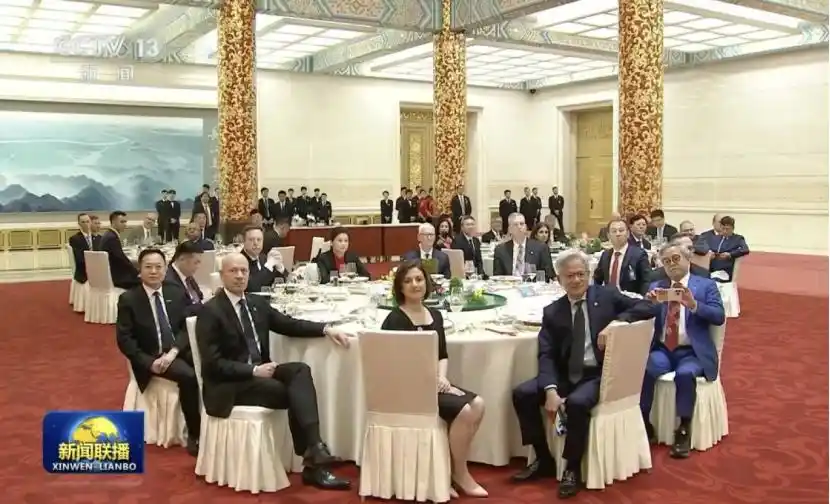
"My entrepreneurial journey is a history of hardship and tears," Zhou Qunfei once summarized.

Born in 1970 into a poor family in Xiangxiang, Hunan, she dropped out of school in her teens to make a living, heading south to Shenzhen to become a factory assembly line worker. While working, she attended training classes at Shenzhen University and even learned Cantonese.

A life-changing opportunity came in 1990. The glass factory where she worked was expanding, but the factory manager left, and the investor planned to withdraw. Zhou Qunfei proactively volunteered to take over, convincing the investor. Years later, determined to go it alone, she rented a three-bedroom farmer's house in Shenzhen with relatives and friends, establishing "Hengsheng Glass Surface Processing Factory"—the predecessor of Lens Technology.

Later, Zhou Qunfei got into the mobile phone window glass business, gradually gaining a reputation. In 2003, Lens Technology was formally established. "Lens" comes from the homophone of "lens." At that time, many foreign merchants searching for "lens" online would find Lens Technology.

What truly made Lens Technology famous was the Motorola order; Lens was the first company to meet the foreign client's drop-test requirements at the time. Soon, Apple came knocking.

In 2006, Zhou Qunfei decided to build a factory back in Hunan. She told the Liuyang city leaders one sentence: "Everyone says Hunanese are good at fighting and being officials, but not at business. Why can't we have high-tech enterprises? I just want to prove them wrong."

At that time, Apple released the first iPhone, with Lens Technology as the touchscreen glass supplier. For many years since, Lens Technology has been deeply involved in supplying multiple Apple product lines like the iPhone, Apple Watch, Mac, and Apple Vision Pro. Revenue from major customers like Apple has almost accounted for half of Lens Technology's income.

In 2015, Lens Technology listed on the Shenzhen Stock Exchange ChiNext board. Zhou Qunfei led the team to expand into new businesses. Today, Lens Technology covers smartphones, wearables, computers, smart cars, smart home devices, etc., with products including glass, sapphire, ceramics, metal, plastic materials for appearance structures and functional components. Its client list includes Huawei, OPPO, vivo, Xiaomi, as well as Porsche, BMW, NIO, Li Auto, and other renowned major enterprises.

In 2025, Lens Technology's revenue exceeded 74 billion yuan, with profits over 4 billion yuan, and it achieved A+H listing by going public in Hong Kong. This year, its stock price has climbed, once surpassing 300 billion yuan. According to the "2026 Hurun Global Rich List," Zhou Qunfei and her husband, with 135 billion yuan in wealth, rank as Hunan's richest.

Chinese Tycoons Bet on the Next Tech Future

A clear trend is emerging: Chinese tycoons who made their fortunes in traditional industries are collectively turning their gaze to the most cutting-edge tech sectors.

The latest scene is DeepSeek's first funding round, where iHealth unexpectedly appeared among the shareholders. At its helm is Liu Yi, an alumnus of Tianjin University, who built iHealth from scratch into its current 30 billion yuan market cap. After making money, Liu Yi extended his reach into venture capital.

In recent years, iHealth has acted as an LP, investing in over ten venture capital funds like Monolith Capital, Jifeng Capital, and Yaotu Capital, and has also directly invested in star projects like Moonshot AI's Kimi, StepFun, Zhiyuan Robot, and Independent Variable Robot.

Earlier this year, the family office of Zhu Xingming, chairman of the hundred-billion-yuan market cap Inovance Technology—Ming Hui Investment—invested in the billion-dollar embodied intelligence unicorn Qianxun Intelligence. Investment界 reported that Ming Hui Investment has 2.5 billion yuan in proprietary funds, 10 billion yuan in reserve industrial capital, and has invested in areas like brain-computer interfaces and AI computing.

Similarly active is the family office behind Luxshare Precision—Liling Fund, which has invested in tech companies like Winano Core, SMIC Integration, and Silan Power. Through this fund, one can see the figure of Luxshare Precision's leader, Wang Laichun. She built Luxshare Precision to a nearly 500 billion yuan market cap, and now family wealth is flowing into next-generation technology.

Quietly, these Chinese entrepreneurs, armed with industrial experience and resources, are moving away from past investment paths—real estate and traditional manufacturing are no longer the first choice. They are instead looking towards frontier directions like AI, embodied intelligence, brain-computer interfaces, nuclear fusion, etc. Behind this unanimous choice, a consensus is quietly forming:

The future's growth lies not in steel and concrete, but in the world of data and algorithms.

In a sense, they are not just seeking outlets for their wealth but are also betting with real money on China's next wave of technological future.

This article is from the WeChat public account "Investment界" (ID: pedaily2012), author: Zhou Jiali


Пов'язані питання

QWho is the 'Glass Queen' mentioned in the article and what is her primary business?

AThe 'Glass Queen' is Zhou Qunfei, the founder and chairwoman of Lens Technology, a major manufacturer of glass, sapphire, and ceramic components for consumer electronics.

QWhat significant investment did Zhou Qunfei recently make in the VC sector, and what was unique about her decision process?

AZhou Qunfei recently invested hundreds of millions of RMB in Cross-dimensional Intelligence, a leading embodied AI company. The unique aspect was that she decided to invest on the spot during a company visit in April, after Lens Technology had already been using Cross-dimensional's products in its production lines since 2022.

QThrough which two main channels does Zhou Qunfei conduct her investment activities?

AZhou Qunfei conducts investments through two main channels: her personal investment vehicle, Changsha Qunxin Investment Consulting Co., Ltd., and the corporate venture capital arm of Lens Technology Group.

QAccording to the article, what broader trend are Chinese industrial tycoons following with their investments?

AChinese industrial tycoons are shifting their investment focus from traditional sectors like real estate and manufacturing to cutting-edge technology fields such as AI, embodied intelligence, brain-computer interfaces, and nuclear fusion.

QBesides Zhou Qunfei, name another Chinese entrepreneur mentioned who is actively investing in frontier tech and their company.

AAnother entrepreneur mentioned is Liu Yi, the founder of Andon Health (formerly known as iHealth Labs). He is actively investing through Andon Health in VC funds and direct investments in companies like Moon's Dark Side (Kimi), StepFun, and Zhiyuan Robotics.

Пов'язані матеріали

Ray Dalio's Latest Macro Analysis Full Text: Buy More Gold, Add Some Bitcoin

In his latest macro analysis, Ray Dalio applies his framework from "How Countries Go Broke: The Big Cycle" to the current global debt environment. He highlights recent events like Japan selling U.S. Treasuries and rising U.S. long-term yields as signs of an unsustainable debt dynamic. Dalio explains that excessive government debt leads to either unacceptably high interest rates, severe economic downturns, or significant currency debasement through central bank money printing. He summarizes the U.S. fiscal situation: with $5.5 trillion in revenue, $7.5 trillion in spending, a $2 trillion deficit, and total debt at six times annual revenue, debt servicing costs are immense. Without correction, U.S. debt could reach $55-$60 trillion in a decade. Dalio proposes a "3% Three-Way" solution: reducing the budget deficit to 3% of GDP through balanced spending cuts, tax increases, and interest rate reductions to avoid a traumatic adjustment. In response to FAQs, he argues that the risk of a U.S. debt crisis is high and could materialize within a few years if the current path continues. He dismisses the notion that the dollar's reserve status makes the U.S. immune, citing historical precedents of reserve currency declines. He is also unconvinced by Japan's high-debt stability, noting poor returns for yen-denominated assets. For investors, Dalio recommends diversifying globally, underweighting bonds, and overweighting assets like gold and a small allocation to Bitcoin (around 10-15% to gold) to hedge against currency debasement and poor debt returns.

marsbit11 хв тому

Ray Dalio's Latest Macro Analysis Full Text: Buy More Gold, Add Some Bitcoin

marsbit11 хв тому

Stripe’s 16-Year Chronicle: From 7 Lines of Code to a $100 Billion Valuation

Stripe's 16-year journey began with a simple promise: "7 lines of code to accept payments." Founded by Patrick and John Collison, the company started by hiding the complexity of bank integrations and merchant accounts behind a clean API, initially targeting developers at startups. This early focus on user experience and technical simplicity fueled rapid adoption. A key early milestone was establishing vital bank partnerships, a challenge overcome by hiring Billy Alvarado, who brought crucial institutional relationship skills. From this foundation, Stripe systematically expanded its product boundaries. It launched Connect for platform payments, Atlas for company formation, Radar for fraud prevention, and Billing for subscriptions. This transformed Stripe from a payment processor into a broader financial infrastructure suite for internet businesses. The COVID-19 pandemic accelerated growth but also led to over-hiring. A 14% layoff in 2022 marked a period of organizational correction. Subsequently, Stripe shifted its growth strategy towards strategic acquisitions to enter new domains quickly. It acquired Bridge (stablecoin infrastructure), Privy (wallet infrastructure), Metronome (usage-based billing), and agreed to buy OpenRouter (AI model routing). These moves signal Stripe's ambition to build a "programmable money system" for the emerging AI and agent-based economy, managing not just currency flows but also the measurement and pricing of computational resources like AI tokens. Internally, Stripe leverages AI agents (like "Minions") to boost engineering productivity. Despite scaling to nearly 8,000 employees and processing $1.9 trillion in payment volume annually, the company remains private. A recent employee tender offer valued it at $159 billion. The core question for Stripe's future is whether it can successfully integrate its expanding product matrix—spanning payments, crypto, and AI infrastructure—into a cohesive platform, positioning itself as the foundational economic layer for autonomous software agents.

marsbit40 хв тому

Stripe’s 16-Year Chronicle: From 7 Lines of Code to a $100 Billion Valuation

marsbit40 хв тому

Treasury Secretary's Move to Suppress Treasury Yields Ignites 'Currency Debasement Trade'! Gold Hits Three-Month High, Bitcoin Surges Over 25% in a Single Week

US Treasury Secretary Besant's efforts to lower long-term Treasury yields by announcing expanded buybacks had only a brief market impact. However, this move fueled a "currency devaluation trade," weakening the US dollar while boosting both gold (to a three-month high) and Bitcoin (up over 25% for the week). Analysts attribute this reaction to deepening market concerns over the massive US fiscal deficit and structural pressures keeping long-term rates elevated, including fierce competition for capital from global government borrowing and massive AI sector financing. Despite the Treasury's actions, fundamental forces like growth, inflation, and capital demand are seen as limiting its ability to sustainably suppress yields. Bitcoin's strong positive correlation with gold has reinforced its narrative as a hedge against devaluation. While equity markets have shown resilience, some strategists warn that Treasury yields nearing 5% increase pressure on the dollar and high-leverage assets. Figures like Ray Dalio have advised reducing bond exposure in favor of gold and some Bitcoin, citing US debt risks. Market opinions are divided on the sustainability of the devaluation trade, with some noting the lack of a near-term catalyst for its next leg higher. The underlying tension between the Treasury's desire for lower borrowing costs and the Federal Reserve's focus on inflation and reducing market intervention remains a key theme. Upcoming events like Nvidia's earnings and the Jackson Hole symposium will test whether AI profits can continue supporting stocks and if the Fed aligns more with Washington's preference for easier financial conditions.

华尔街日报2 год тому

Treasury Secretary's Move to Suppress Treasury Yields Ignites 'Currency Debasement Trade'! Gold Hits Three-Month High, Bitcoin Surges Over 25% in a Single Week

华尔街日报2 год тому

Alexander Shokhin: Business Needs an Interest Rate Below 10% and the Dollar at 90-95 Rubles

Alexander Shokhin, head of the Russian Union of Industrialists and Entrepreneurs (RSPP), has advocated for potentially using "non-market" tools to keep the ruble within a target exchange rate corridor. This, he argues on August 21, would help avoid excessive volatility, though he called the topic a separate discussion. Shokhin had previously raised the idea of a currency corridor in late May, noting the ruble's current exchange rate is not fully market-driven due to a limited currency segment and reduced foreign currency demand. He stated that many business community colleagues propose fixing a corridor, even through non-market methods, to ensure predictability. The business community's key targets, as outlined by Shokhin in late December 2025, are a Central Bank key rate of 12%, inflation of 4–5%, and a US dollar exchange rate of 90–95 rubles by the end of 2026. A turning point for investment, he said, would be lowering the rate to 12% with 6% inflation, though truly comfortable business conditions would require a rate below 10%. He stressed the critical importance of currency predictability for corporate investment decisions. From a data analysis perspective, the idea of a ruble corridor is not new. A similar mechanism was used in Russia from 1995 to 1998, where the central bank held the dollar within fixed boundaries through regular interventions. This regime lasted three years before ending abruptly during the 1998 default, illustrating the fragility of rigid targets under external shocks. The macro-economic link is clear: stricter corridors require more reserves to defend against currency pressure. The key unresolved technical aspect is the specific sources and volume of such interventions given the current market's limited liquidity. Whether this discussion remains theoretical or leads to concrete corridor parameters will be seen in the coming months.

cryptonews.ru4 год тому

Alexander Shokhin: Business Needs an Interest Rate Below 10% and the Dollar at 90-95 Rubles

cryptonews.ru4 год тому

Торгівля

Спот
活动图片