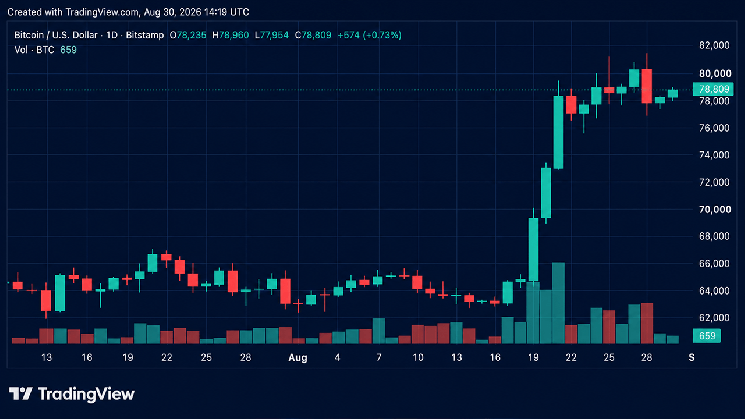
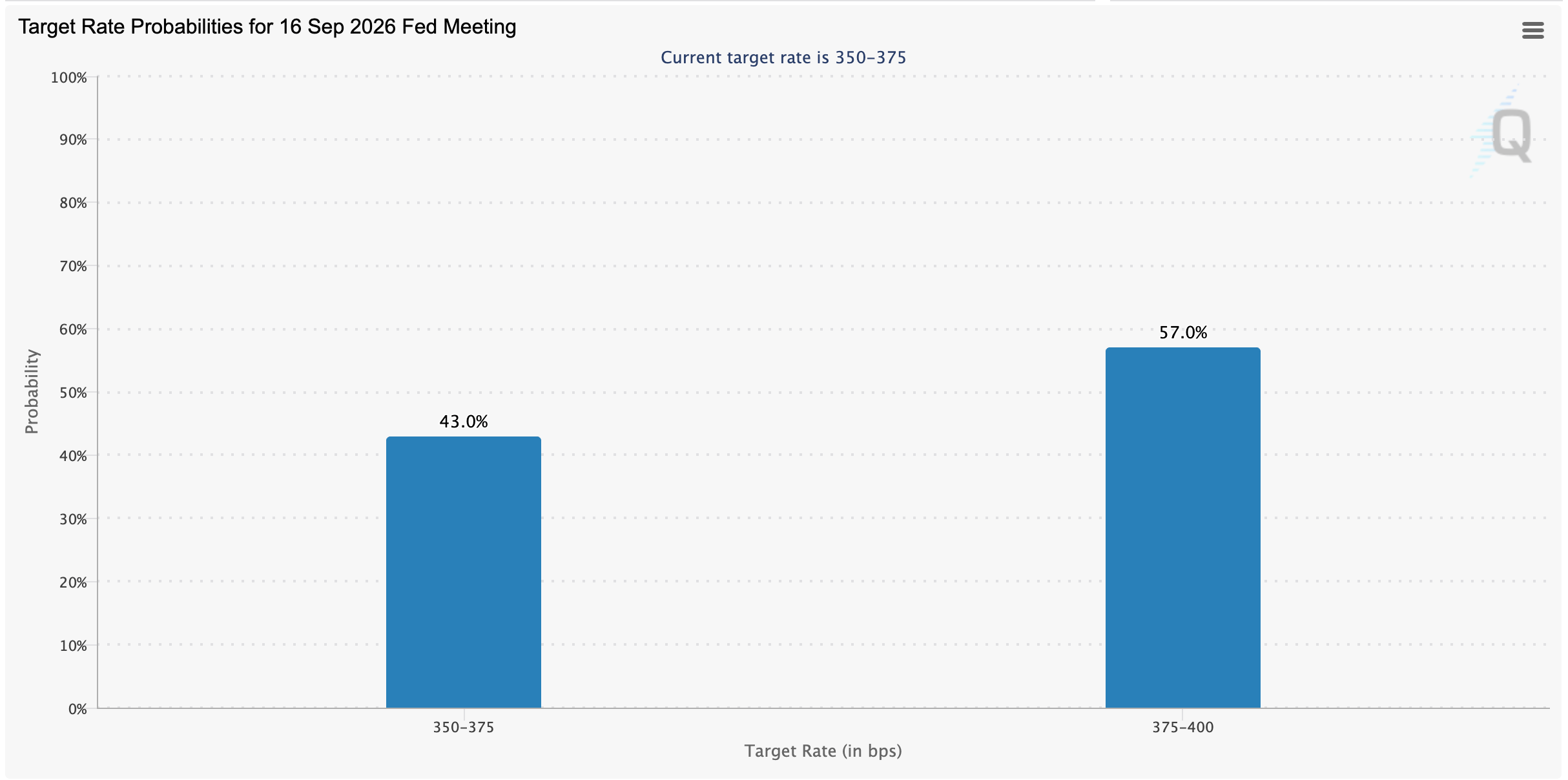
Current attention is focused on the Fed's federal funds rate decision, which will be made on September 16. The CME Fedwatch tool, which converts trading dynamics in federal funds rate futures into implied probabilities for various outcomes, estimates a 57% probability of a 25 basis point rate hike, which would raise the target range to 3.75%–4%. The probability of maintaining the current range of 3.5%–3.75% is estimated at only 43%. There is currently a high degree of uncertainty, and forecasts regarding the FOMC decision are little better than a coin toss.
Fedwatch Shifts Forecast Amid Rising Bets on September Rate Hike
This move is becoming harder to ignore when compared to traders' positions just a week ago. According to CME data, the probability of a rate hike on August 21 was only 39.9%. Of course, by August 28, following the Jackson Hole speech, it jumped to 57%, while bets on a rate cut in September have virtually disappeared from the market.
Prediction markets haven't fully embraced the 'hawkish' stance. As of this weekend, traders on Polymarket assess the probability that the Fed will leave rates unchanged at 52%, and the probability of a 25 basis point hike at 48%. Over $66.6 million has been wagered on this specific contract, while what was once a customary bet on a rate cut is now priced at just a 1% probability.
On the Kalshi prediction market, traders are facing near 50-50 odds. On the market for the September Fed meeting, which has seen over $23.8 million in volume, the probability of holding rates steady is priced at 52%, and the probability of a quarter-point hike at 48%.
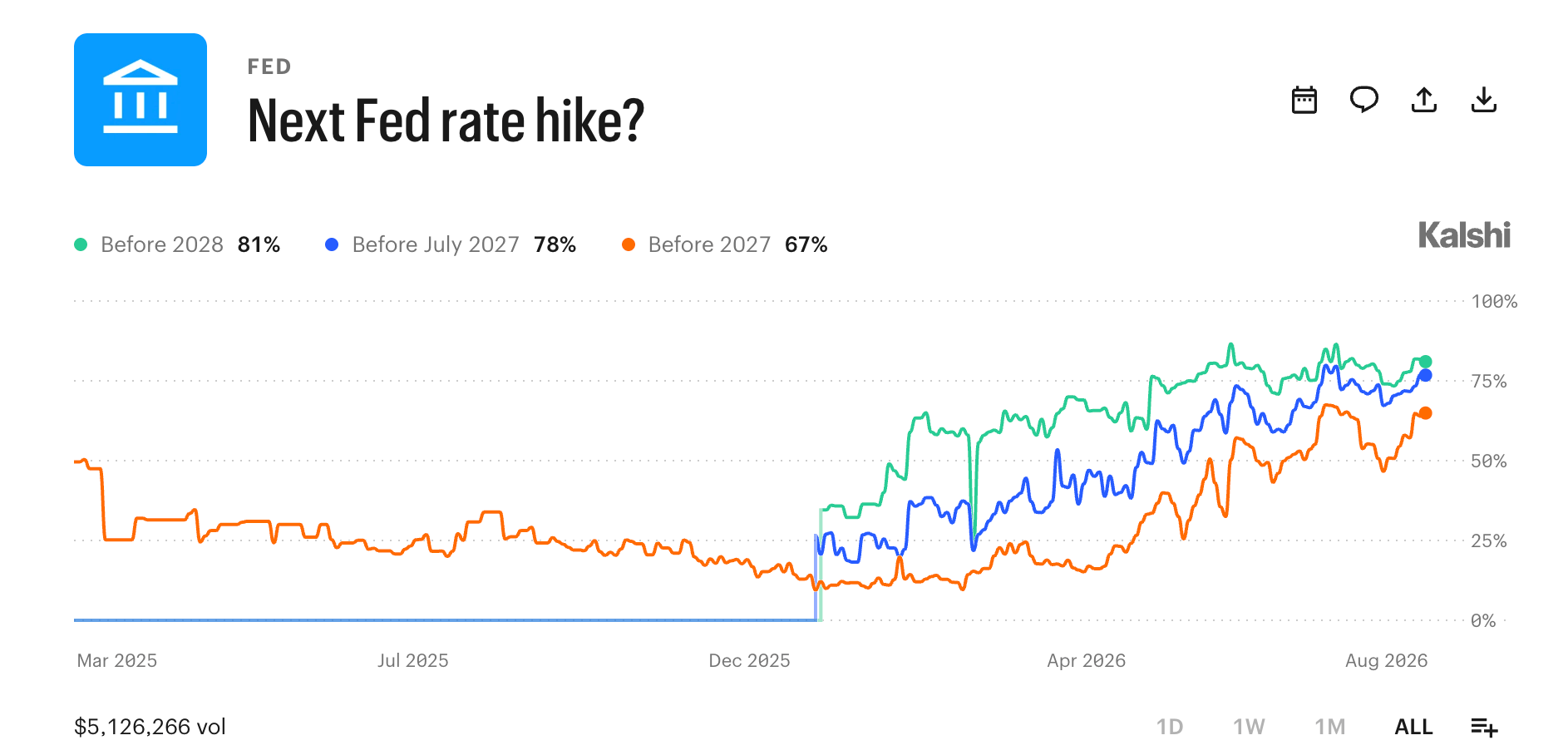
On the other hand, another betting contract on Kalshi prices a 67% probability that the Fed will raise the FFR by 2027.
Warsh Puts Stubborn Inflation Back in Focus
All this data shifted sharply following Warsh's keynote address at the Jackson Hole Economic Policy Symposium, where he carefully avoided promises about a September rate hike while repeatedly returning to the themes of stubborn inflation and the Fed's responsibility to bring prices under control.
"There should be no misunderstanding: The Fed’s goal of achieving price stability at 2 percent, measured by the PCE price index, is firm and fixed," Warsh emphasized. He also made clear that short-term interest rates remain the Fed’s primary tool for achieving this goal.
The figures cited by Warsh explain why traders detected a 'hawkish' signal in his address. The Fed’s preferred 12-month PCE inflation measure is elevated at 3.7%, while the six-month measure shows even higher growth at 4.1%. Neither of these is anywhere close to the central bank’s 2% target. Although some Fed critics believe the 2% target will never be reached again.
Warsh also described an economic situation that gives the Fed no cause for alarm about raising rates. Business investment is surging, particularly in the AI sector, S&P 500 company profits are up over 20% in the past year, and real consumer spending has increased over 2% for four consecutive quarters. Meanwhile, the unemployment rate remains at 4.1%.
Markets Brace for a 'Coin Toss' in September
It is this combination of factors that makes September awkward for proponents of a soft stance on the federal funds rate. Raising the federal funds rate restrains demand and inflation, and an economy still showing resilient growth and high employment gives policymakers significantly more room to tighten policy without immediately harming the labor market.
Warsh still refused to commit himself to a rate hike decision, stating:
"I stand here today committed to the discipline, not to a specific decision."
This signal was intentional: markets can forecast the September outcome however they wish, but the Fed has no intention of giving traders an answer weeks before the meeting. For investors, September has become a veritable 'coin toss' – the odds are 50-50, with real money on both sides. CME futures lean towards a hike, while the Polymarket and Kalshi prediction markets place a slight edge on rates being held steady.
Inflation and labor market reports now carry even greater weight, and either could tip the scales before Fed officials convene in mid-September.