Farewell to the 'Performance Black Box': Windows 11 Task Manager Officially Supports NPU Monitoring

marsbitОпубліковано о 2026-03-31Востаннє оновлено о 2026-03-31

Анотація

Microsoft has introduced a significant update to the Task Manager in a recent Windows 11 development build, adding real-time monitoring for Neural Processing Units (NPU). This enhancement addresses a key gap in hardware performance visibility, particularly as NPUs become central to AI PCs. Users can now track NPU utilization across processes, users, and details tabs in the latest preview version (26300.8142). The update also provides insights into dedicated and shared memory usage by applications. Additionally, the performance page displays detailed activity for neural engines integrated within GPUs, offering comprehensive oversight of all AI-related operations. This upgrade integrates NPUs into the mainstream hardware performance evaluation system, providing developers and power users with essential data for optimizing AI application efficiency and power consumption. The feature is currently available to Windows Insiders, with a broader rollout expected in the future, signaling deeper integration of AI hardware into the Windows ecosystem.

Microsoft recently introduced a major upgrade to the Task Manager in a Windows 11 development build update. This update finally completes the last piece of the hardware monitoring puzzle by officially adding real-time monitoring capabilities for the Neural Processing Unit (NPU).

With the popularization of the AI PC concept, the NPU has become the core hardware for handling artificial intelligence tasks. Previously, users were unable to visually check the operating status of the NPU, but this upgrade makes the load conditions of this dedicated chip transparent and visible.

In the latest preview build 26300.8142, the Task Manager's Processes, Users, and Details pages have all added an NPU column. Users can not only view the real-time NPU utilization but also gain in-depth insights into the specific consumption of dedicated memory and shared memory by various applications.

Furthermore, Microsoft has refined the monitoring dimensions; the Performance page can now fully showcase the neural network engine activity built into the graphics card. This means that all AI-related operational traces within the system will be comprehensively captured by the Task Manager.

This evolution of the Task Manager marks the NPU's official entry into the mainstream hardware performance evaluation system. For developers and tech-savvy users, this is not just an increase in data but also a foundation for precisely tuning the energy consumption and efficiency of AI applications.

Currently, this feature is primarily available to Windows Insiders in preview builds, and a wider rollout will take some time. It is foreseeable that with the普及 of NPU monitoring, future Windows systems will undergo a deeper experience reconstruction centered around the AI hardware ecosystem.

Пов'язані питання

QWhat major update did Microsoft recently introduce to the Task Manager in Windows 11?

AMicrosoft introduced real-time monitoring for the Neural Processing Unit (NPU) in the Task Manager.

QWhy is the NPU monitoring feature significant for AI PC users?

AIt allows users to visually check the workload and status of the NPU, which is crucial for handling AI tasks, making the specialized chip's operations transparent.

QWhich Windows 11 preview build version includes the NPU monitoring capability?

AThe feature is available in the preview build version 26300.8142.

QWhat specific details can users monitor regarding NPU usage in the Task Manager?

AUsers can view real-time NPU utilization and see how programs consume dedicated and shared memory.

QWho currently has access to the NPU monitoring feature in Windows 11?

AThe feature is currently available to Windows Insiders in the preview version, with a wider rollout expected later.

Пов'язані матеріали

BitMart Research Institute Weekly Highlights: ETF Continued Outflows + AI Drain, Crypto Market Seeks Bottom Amid Volatility

**BitMart Research Weekly Highlights: ETF Outflows and AI Demand Weigh on Crypto Market** The crypto market saw a correction this past week, diverging from the all-time highs in U.S. equity markets. Bitcoin (BTC) fell roughly 6%, while Ethereum (ETH) declined about 4.5%. The primary pressure point was significant and sustained outflows from U.S. spot Bitcoin ETFs, which experienced a record nine consecutive days of net redemptions totaling approximately $2.8 billion. Spot Ethereum ETFs also faced continuous outflows. This weakness in digital assets contrasted with the continued surge in traditional markets, particularly AI-related stocks. The news of Anthropic's secret IPO filing, targeting a potential $750B IPO, and Alphabet's major new AI infrastructure funding further fueled the tech rally. The analysis suggests a potential "liquidity siphon" effect, where capital is being diverted from crypto into the dominant AI investment narrative. Other notable developments include DTCC's DTC announcing plans to integrate Stellar for tokenized asset services, signaling a major step for tokenized equities. Meanwhile, MicroStrategy paused its primary mechanism for funding Bitcoin purchases to focus on debt management, removing a key institutional buyer from the market. The report concludes that the crypto market remains under pressure from the competing AI narrative and major upcoming IPOs, with a potential for a broader market bottom if an AI-driven correction occurs later this cycle.

marsbit11 хв тому

BitMart Research Institute Weekly Highlights: ETF Continued Outflows + AI Drain, Crypto Market Seeks Bottom Amid Volatility

marsbit11 хв тому

The Death of the Three-Act Play: AI Ushers Enterprise Software Startups into the ‘Speedrun Era’

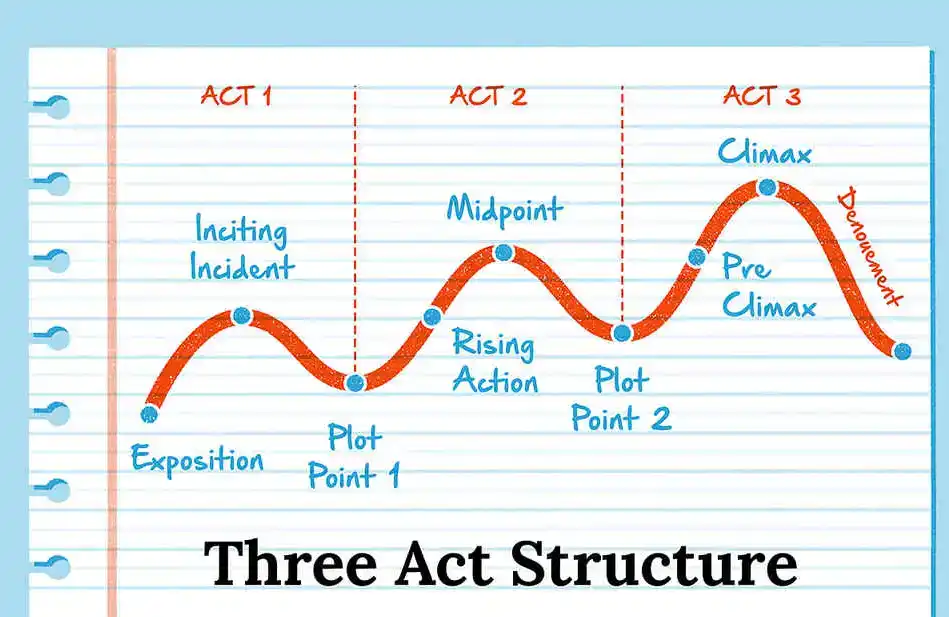
The Death of the Three-Act Play: How AI is Ushering in a 'Speedrun Era' for Enterprise Software Startups The traditional three-act play for building an enterprise software company—first, a niche wedge product; second, an expanded suite; third, a dominant platform—is becoming obsolete in the AI era. Previously, startups would spend 3-5 years perfecting a single-point solution to reach tens of millions in ARR (Act 1: The Wedge). Then, over another few years, they'd build adjacent products to form a suite and cross the $100M ARR threshold (Act 2: The Suite). Finally, with scale and user engagement, they could aim to become a foundational platform themselves (Act 3: The Platform). This model assumed a timeline measured in years. However, AI-driven tools have dramatically compressed software development costs and timelines. Companies like Cursor, Clay, and Harvey have scaled from near zero to approaching or surpassing $100M ARR in remarkably short periods, demonstrating a new competitive pace. The core argument is that in this rapidly changing market, relying on a small, "safe" wedge as a protective harbor may now be a conservative, even risky, strategy. The plummeting cost of building software means the time required for Acts 1 and 2 is approaching zero. Consequently, rational strategy now favors planning to build the entire vision from the outset. This shift changes the calculus for early-stage investment. The emphasis is moving from finding a defensible niche to backing founders with "unreasonable, relentless ambition" to reimagine entire workflows or replace incumbent platforms from day one. The age of gradual expansion is giving way to an era of immediate, full-scale ambition.

marsbit30 хв тому

The Death of the Three-Act Play: AI Ushers Enterprise Software Startups into the ‘Speedrun Era’

marsbit30 хв тому

After the 'Golden Finger' Points to IBM, the Stock God Trump's Next Target Emerges

The White House occupant is being called a "stock god." Financial disclosures show former President Trump executed 3,642 stock trades in Q1 2026, averaging 58 per trading day. More significantly, a pattern has emerged where companies he publicly praises often see their stock prices rise and frequently overlap with his personal portfolio holdings, government industrial policy, and federal funding. Since a high-profile Tesla event in March 2025, Trump has publicly endorsed at least nine companies, including Intel, Dell, Micron, Palantir, IBM, Apple, Thermo Fisher, Nvidia, and AMD. These "Trump concept stocks" share key traits: they are tied to AI, semiconductors, quantum computing, or "Made in America" narratives; they often receive government contracts, subsidies (like CHIPS Act funding), or regulatory favors; and their CEOs typically have strong personal or political ties to Trump. Timing raises questions. In several instances, such as with Palantir and Dell, Trump's personal account established or increased positions weeks before his public endorsements, which were followed by significant stock price jumps. While his assets are reportedly held in a blind trust managed by his children, the correlation is notable. Based on this pattern, analysis suggests the next companies likely to be endorsed are those where the US government has already taken a strategic equity stake but which haven't yet received a high-profile "call-out." Prime candidates include MP Materials (rare earths, 15% DoD interest), Lithium Americas (lithium, DoE-backed), and quantum computing firms like IonQ, Rigetti, and D-Wave, which are reportedly in talks for government equity-for-funding deals. Other potential names are Oracle (deep political ties) and GlobalFoundries (semiconductors and quantum funding). These stocks carry high political premium, meaning their valuations are highly sensitive to political favor, which can be volatile.

marsbit55 хв тому

After the 'Golden Finger' Points to IBM, the Stock God Trump's Next Target Emerges

marsbit55 хв тому

Торгівля

Спот
Ф'ючерси
活动图片