Farewell to the 'Casino' Mindset: The Next Wave of Crypto Applications Should Aim for Mass Adoption

marsbitОпубліковано о 2026-03-05Востаннє оновлено о 2026-03-05

Анотація

The article argues that by 2026, the crypto industry will shift from being a speculative casino to providing "crypto as a service," focusing on mass adoption by solving real-world problems while making the underlying blockchain technology invisible to users. Key trends include crypto's structural advantage of 24/7 market operation, Asia's growing role in areas like cross-border stablecoin payments and asset tokenization, and the rise of practical applications. Examples include Novig, which uses a decentralized order book to improve sports betting odds; Based, a consumer super app that abstracts away complex blockchain interactions; and Doppler, an infrastructure for secure asset issuance. The core advice for builders is to prioritize solving customer problems over showcasing technology, as true adoption occurs when the tech becomes so seamless that users don't notice it.

Author: Paul Veradittakit

Compiled by: AididiaoJP, Foresight News

2026 will be a pivotal year. We will witness the complete transformation of "crypto as an industry" into "crypto as a service".

The past decade in the crypto world has been filled with various gimmicks. The approval of the Bitcoin ETF in 2024 gained it recognition from mainstream finance. In 2025, everyone focused on building out the underlying infrastructure. By 2026, the real value will belong to those companies that leverage blockchain to solve long-standing problems in traditional industries while making users to be completely unaware of the blockchain's presence.

The future crypto unicorns will not be built on hype. They will be the kind of companies that use blockchain technology to improve product efficiency by an order of magnitude, thereby leveraging trillion-dollar markets, and completely hiding the complex technology.

Crypto Technology Won the 'Weekend'

When the Iran conflict broke out, the U.S. stock market was closed for the weekend and couldn't react to the sudden global risk. But the crypto market didn't stop; Bitcoin once rose to $74,000. Commodities completed price discovery first on the decentralized prediction market Hyperliquid, even before the traditional market opened. This is not an isolated incident—the same thing happened last month when China introduced new policies.

Traditional hedge funds are increasingly flooding into this space. The crypto market's "24/7 non-stop" operation is no longer just a slogan, but a structural advantage that traditional finance cannot match.

Nevertheless, the current valuation of the crypto market is still far below the level it should be based on its fundamentals. There's no doubt we are in another bear market (this is the fourth one I've experienced), but this time it's completely different: regulations are gradually becoming clearer, institutional funds have entered the market, and the infrastructure is increasingly mature.

This feeling was particularly strong at the recent Hong Kong Consensus conference. The vitality of the Asian market contrasted sharply with the West. There, support from bipartisan governments, newly entered institutional funds, and a focus on consumer-facing applications are all driving strong bullish sentiment.

What to watch in Asia in 2026:

  • Cross-border payments via stablecoins, especially in the B2B sector. For Asia's relatively fragmented economic systems, crypto payments are a natural choice.
  • Tokenization of gold, stocks, and real estate. Asian banks and fintech companies are catching up with the pace set in the U.S.
  • Perpetual contract trading on DeFi. Driven by retail investors, development speed may surpass that of the West.
  • Prediction markets are expected to become an important track, although their form may differ from that in the West.

Core Trend: 'Crypto as a Service'

The core theme for 2026 is the shift from "crypto as an industry" to "crypto as a service". The goal is no longer to make users see the blockchain, but to make them completely forget its existence.

For over a decade, we have been keen on building "crypto spectacles"—Gas fee wars, TPS competitions, modular stacks, ZK proofs. The 2024 ETF was a vote of approval from mainstream institutions. In 2025, we laid all the underlying infrastructure. In 2026, it's time to turn around.

Farewell to the 'Casino' Era

The new generation of unicorns will not be those "L3 networks built for AI-NFTs". They will be the companies that use blockchain to improve product efficiency tenfold, completely hide the technology, and thereby leverage trillion-dollar markets.

This exactly explains our recent investment logic:
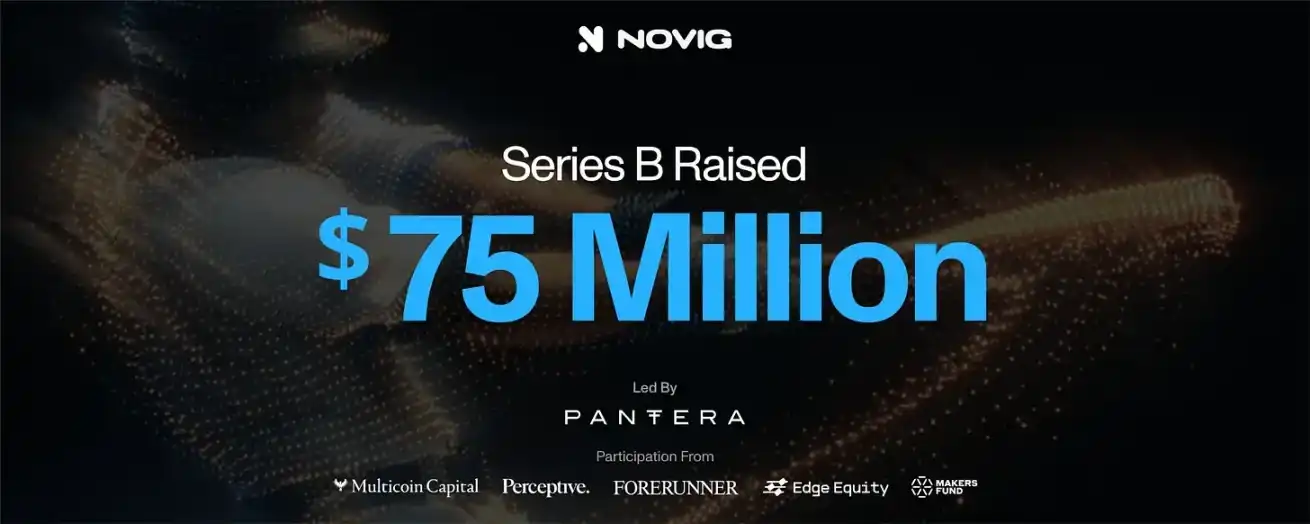
Novig: Farewell to the 'Vig' Era ($75 Million Series B)

Traditional sports betting is a monopolistic,畸形 (distorted/j畸形的 - likely meant 'distorted' or 'dysfunctional') market. Bookies take high commissions from every bet, resulting in a miserable user win rate of only 2%. We led Novig's $75 million round because they treat sports betting as a high-frequency financial product. Through a peer-to-peer trading model, Novig users achieve an average win rate of 23%. Most users don't care at all whether a decentralized order book is used in the backend; they just know they get the best odds in the US here. This is a vivid case of "crypto as a service".
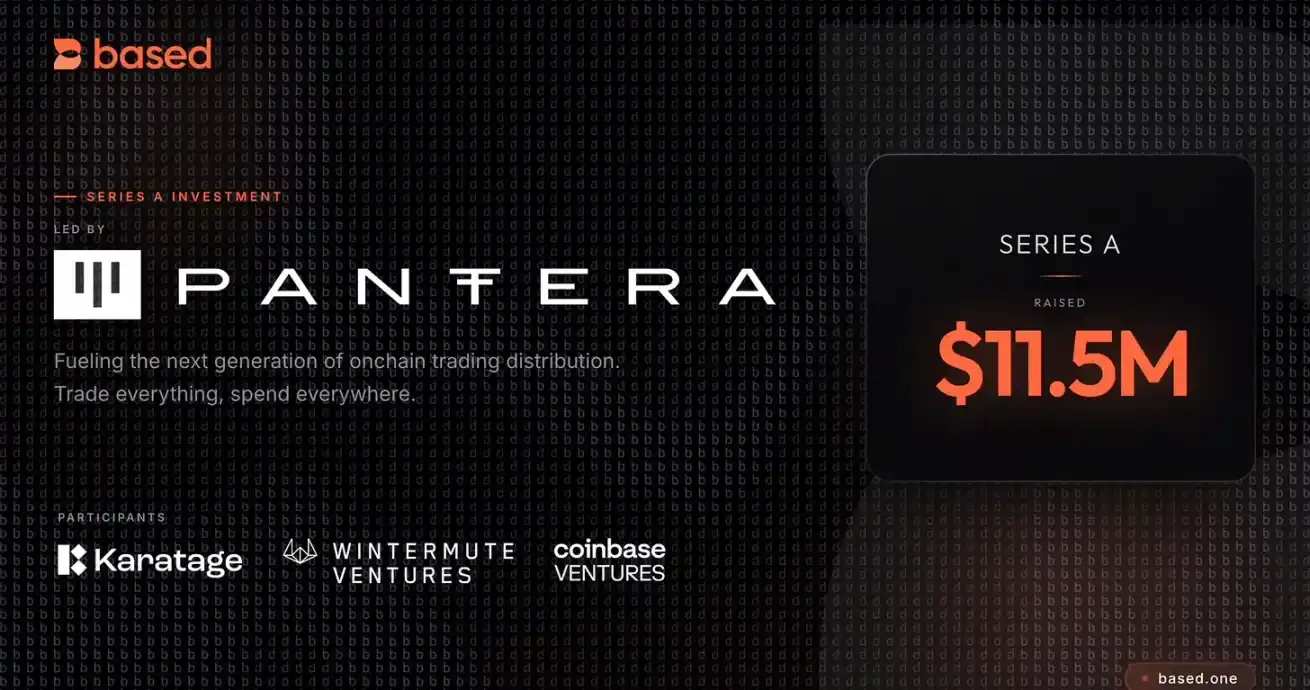
Based: Consumer-Grade Super App ($11.5 Million Series A)

We recently led the Series A funding for Based. This is a composable Web3 consumer-grade super app built on the Hyperliquid ecosystem. "Consumer-grade crypto" was often equated with "clunky experience". Based is changing that; it makes the on-chain interaction experience as smooth and seamless as a top-tier fintech app. Complex operations like cross-chain bridging and Gas fees are abstracted away; users are completely unaware. They only need to focus on the social and financial value brought by the assets.
Doppler: The Default Asset Issuance Infrastructure ($9 Million Seed Round)

If Based and Novig are cool new cars, then Doppler is the high-performance fuel system. We led Doppler's $9 million seed round, aiming for it to become the default infrastructure for on-chain asset issuance. It allows developers to issue assets with institutional-grade security and compliance standards without having to build all the underlying technology from scratch. Doppler is like the Stripe for on-chain assets—pure utility, all encapsulated behind a simple API.

Why 'Invisibility' is More Important Than 'Virality'

This trend of "invisibilization" also runs through our entire investment portfolio:

  • Real World Assets (RWA): Tokenized treasury bonds are no longer an experiment in the crypto world; they are becoming the backend liquidity cornerstone for global trade.
  • AI Agents: Blockchain provides a trusted "truth layer" for AI agents through prediction markets and verifiable data, enabling them to autonomously and trustworthily interact with digital assets.
  • Agent payments will accelerate all this. Payment standards like x402 allow AI agents to directly complete transactions using crypto assets. The gradual clarification of stablecoin regulations is making this payment轨道 (track/rail - likely meant 'rail') smoother.

Advice for Entrepreneurs

If you are planning to start a business in 2026, my advice is simple: Stop talking so much about the technology, and talk more about what practical problems you can solve. If the slide in your funding presentation about the consensus mechanism comes before the one about customer return rates, it means your thinking is still stuck in 2022.

We are looking for teams that are building the next Novig, Based, or Doppler—those who truly understand what "mass adoption" means: when a technology becomes so seamless that people completely ignore its existence, it has truly entered millions of households.

Пов'язані питання

QWhat is the core theme for the crypto industry in 2026 according to the article?

AThe core theme for 2026 is the shift from 'crypto as an industry' to 'crypto as a service', where the goal is to solve real-world problems using blockchain technology while making it completely invisible to the end-user.

QWhat structural advantage does the crypto market have over traditional finance, as highlighted in the article?

AThe crypto market operates 24/7, which is a structural advantage over traditional finance that closes on weekends, allowing it to react to global events and complete price discovery without interruption.

QName one of the companies mentioned as an example of 'crypto as a service' and explain its approach.

ANovig is mentioned as an example. It treats sports betting as a high-frequency financial product using a peer-to-peer trading model, which increases user profitability to 23% compared to the traditional 2%, without users needing to know about the decentralized order book technology behind it.

QWhat are some key areas of focus for the Asian crypto market in 2026, as per the article?

AKey areas for Asia include cross-border payments via stablecoins (especially in B2B), tokenization of assets like gold and real estate, perpetual contract trading on DeFi driven by retail investors, and the potential growth of prediction markets.

QWhat advice does the article give to entrepreneurs looking to start a crypto business in 2026?

AThe advice is to focus on solving real-world problems rather than emphasizing the technology itself. If the pitch deck discusses consensus mechanisms before customer ROI, it's considered a mindset from 2022. The goal should be massive adoption through seamless, invisible technology integration.

Пов'язані матеріали

This Week's Key Events Preview | U.S. to Release April CPI Data; U.S. Senate Banking Committee to Review "Digital Asset Market Structure Act of 2025"

Weekly News Preview: Key events for May 12-16 include major economic and crypto industry developments. On Tuesday, May 12, the U.S. will release its April CPI data. Additionally, the gaming blockchain Ronin will begin a 10-hour migration to an Ethereum Layer 2, built on OP Stack with EigenDA for data availability. This aims to leverage Ethereum's security and settle RON's annual inflation below 1%. Base's first independent network upgrade, "Base Azul," is scheduled for mainnet activation on Wednesday, May 13, focusing on security, performance, and developer experience enhancements. Thursday, May 14, sees the U.S. Senate Banking Committee voting on the "Digital Asset Market Structure Act of 2025." In other news, Solana DeFi protocol Carrot will shut down, setting a final withdrawal deadline due to impacts from the Drift exploit. The Moscow Exchange will launch futures trading for Solana, Ripple, and Tron indices (RUB-settled) for qualified investors. Multiple service closures are scheduled for Friday, May 15. Dmail Network will begin winding down due to unsustainable infrastructure costs and failed commercialization. Users must export data before this date. Separately, the Cosmos-based lending blockchain UX Chain will fully shut down. Finally, on Saturday, May 16, gaming infrastructure provider Lattice will wind down operations, with its Redstone Layer 2 network ceasing. Users are urged to withdraw assets, especially from contracts like Uniswap pools, before the shutdown.

链捕手4 хв тому

This Week's Key Events Preview | U.S. to Release April CPI Data; U.S. Senate Banking Committee to Review "Digital Asset Market Structure Act of 2025"

链捕手4 хв тому

Morning Post | Trump Media Group Releases Q1 Financial Report; Top Three DeFi Applications Return Nearly $100 Million in Revenue to Token Holders in 30 Days; Michael Saylor Shares Bitcoin Tracker Info Again

**Title: Daily Briefing | Trump Media Group Releases Q1 Report; Top 3 DeFi Apps Return Nearly $100M to Token Holders; Michael Saylor Signals Potential Bitcoin Buy** **Summary:** Key developments in the past 24 hours include: * **Economic Outlook:** Goldman Sachs has pushed back its forecast for the next two Federal Reserve interest rate cuts to December 2026 and March 2027, citing persistent inflationary pressures from energy costs. This delayed timeline is expected to tighten liquidity flow into risk assets, including cryptocurrencies. * **DeFi & Revenue:** Data from DefiLlama shows that three leading DeFi applications—Hyperliquid, Pump.fun, and EdgeX—collectively distributed $96.3 million in revenue to their token holders over the last 30 days. This trend highlights a shift in the crypto community's focus towards real protocol earnings and sustainable economic models. * **Corporate Bitcoin Moves:** Michael Saylor, founder of MicroStrategy (note: referred to as 'Strategy' in the text, likely a typographical error), has signaled potential upcoming Bitcoin purchases by posting a "Bitcoin Tracker" update, following a pattern that typically precedes the company's official disclosure of new acquisitions. * **Market Integrity:** Prediction market platform Polymarket announced updates to address platform issues, including identifying and banning clusters of accounts involved in "ghost-fill" activities and implementing measures to prevent bulk account creation. * **Regulation:** The Bank of England Governor warned that stablecoin regulation could lead to tensions between US and international regulators. In South Korea, the National Tax Service has launched a pilot program to entrust seized virtual assets to private custody firms for management. * **Meme Token Trends:** GMGN data lists the top trending meme tokens on Ethereum (e.g., HEX, SHIB), Solana (e.g., FWOG, TROLL), and Base (e.g., SKITTEN, PEPE) over the past day. **Financial Note:** Trump Media & Technology Group reported a Q1 loss of approximately $4 billion, primarily attributed to unrealized losses on its Bitcoin and other digital asset holdings.

链捕手35 хв тому

Morning Post | Trump Media Group Releases Q1 Financial Report; Top Three DeFi Applications Return Nearly $100 Million in Revenue to Token Holders in 30 Days; Michael Saylor Shares Bitcoin Tracker Info Again

链捕手35 хв тому

Telegram Takes Direct Control of TON, Social Traffic Rewrites the Public Chain Narrative

Telegram founder Pavel Durov announced that Telegram will replace the TON Foundation as the core driver and largest validator of The Open Network (TON). Key initiatives include a sixfold reduction in transaction fees, performance upgrades, and improved developer tools within the next few weeks. This marks a strategic shift from Telegram merely providing user access to deeply integrating TON into its platform's core infrastructure. The goal is to transform Telegram's massive social traffic into sustainable on-chain activity. While viral mini-apps like Notcoin have demonstrated Telegram's ability to drive user adoption, TON aims to support frequent, low-value transactions inherent to social platforms—such as tipping, in-app payments, and game rewards. Ultra-low fees and sub-second finality (0.6 seconds) are crucial to making blockchain interactions seamless and nearly invisible within the Telegram user experience. However, Telegram's increased central role raises questions about network decentralization. Durov argues that Telegram's participation will attract more large validators, thereby enhancing decentralization. TON also offers high annual staking rewards (18.8%), aiming to retain capital within its ecosystem. The fundamental challenge for TON is no longer leveraging Telegram's user base, but becoming an indispensable, seamless infrastructure layer for Telegram's everyday applications—moving from an adjacent chain to an embedded utility.

marsbit36 хв тому

Telegram Takes Direct Control of TON, Social Traffic Rewrites the Public Chain Narrative

marsbit36 хв тому

Telegram Takes Direct Control of TON, Social Traffic Reshapes Public Chain Narrative

Telegram's founder, Pavel Durov, has announced a major shift in the development of The Open Network (TON). Telegram will now become the core driver of TON, replacing the TON Foundation and becoming its largest validator. The focus will be on technical upgrades over the next few weeks, including slashing network fees by six times to near-zero and improving finality time to 0.6 seconds. This move signifies a deeper integration between Telegram and TON, moving beyond just providing a user base. The goal is to transform Telegram's vast social traffic and built-in features—like Mini Apps, payments, and bots—into sustainable, on-chain usage scenarios. The reduced fees and faster speeds are crucial for enabling the small, frequent transactions typical of social interactions. While this promises stronger execution and product alignment, it raises questions about centralization. Durov argues Telegram's involvement will attract more validators, enhancing decentralization, but the outcome remains to be seen. Additionally, TON's high annual staking reward of 18.8% aims to retain capital within the ecosystem. The key challenge for TON is no longer just leveraging Telegram's entry point, but becoming an invisible, seamless infrastructure layer within Telegram's daily use. Its success hinges on converting viral attention into lasting, embedded utility.

Odaily星球日报46 хв тому

Telegram Takes Direct Control of TON, Social Traffic Reshapes Public Chain Narrative

Odaily星球日报46 хв тому

Торгівля

Спот
Ф'ючерси
活动图片