Facepalm! A Roundup of "Flipped" Institutional Crypto Predictions for 2025

比推Опубліковано о 2025-12-27Востаннє оновлено о 2025-12-27

Анотація

As 2025 year-end approaches, the cryptocurrency market has failed to deliver the spectacular rallies many institutions had forecasted, instead exposing the inaccuracy of numerous high-profile price predictions. Bitcoin is trading around $87,423 and Ethereum near $2,926, far below the ambitious targets set during the 2023-2024 bull market. Major institutions and analysts, including Michael Saylor (predicting $100,000), Mark Yusko ($150,000), Tom Lee ($250,000), and Tim Draper ($250,000), collectively anticipated Bitcoin reaching six figures, driven by ETF approvals, macro liquidity, and political shifts. Standard Chartered and AllianceBernstein projected $200,000, with the latter even specifying a September 2025 target. However, these forecasts largely underestimated market complexities, such as structural changes from ETFs—which provided a higher floor rather than exponential peaks—and persistent volatility from policy and geopolitical uncertainty. Ethereum predictions also fell short. Deltec Bank expected prices between $9,000-$10,000, while Standard Chartered initially targeted $14,000 before revising down to $7,500. Analysts’ average prediction was $6,105, yet ETH remained below $3,000. The consensus was that upgrades and ETF inflows would propel prices, but the market refused to align with these narratives. The 2025 outcome underscores the declining relevance of historical models, like the four-year cycle thesis, in a new era of institutional involvement and macro pr...

As 2025 draws to a close, the crypto market hasn't produced any miraculous rallies; instead, it has brought the exaggerated price predictions from the past couple of years back down to earth.

First, let's look at the current prices: As of 8:00 AM Beijing Time on December 27th, Bitcoin ≈ $87,423, Ethereum ≈ $2,926.

With the numbers right before our eyes, those earlier predictions of "Bitcoin hitting $200,000" and "Ethereum breaking $10,000" seem a bit awkward now. Market volatility, policy swings, international situations... each one reminds us: predictions are predictions, but the market moves on its own.

Below, let's review those "expert predictions" we once追捧ed (chased after/admired) that have already been "slapped in the face" by reality.

BTC: Mainstream Institutions Bullish En Masse

In 2023–2024, following ETF approvals, a shift in US political winds, and improved macro liquidity, almost all heavyweight institutions and opinion leaders publicly offered specific BTC price targets for 2025.

In hindsight, these targets formed a highly concentrated "prediction cluster."

Michael Saylor (MicroStrategy): Reach Six Figures by 2025, Eventually Reach $1 Million

  • Prediction:

    • BTC $100,000 (2025)

    • Long-term target: $1,000,000

Saylor's judgment wasn't merely a price prediction but an entire long-term narrative of "Bitcoin as a digital capital network." Before 2025, he repeatedly emphasized that BTC would not fall back below sixty thousand.

BTC did indeed maintain a high range for most of 2025, but the $100k mark as a "certain outcome" did not materialize as expected.

Mark Yusko (Morgan Creek CEO): 2025 $150k

  • Prediction: BTC $150,000 (2025)

  • Rationale: Network effects / FOMO driving / New capital inflows
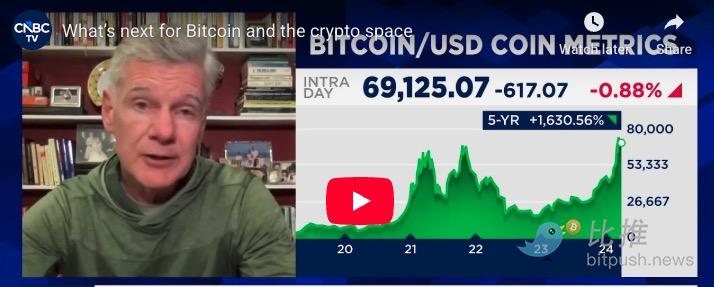
This is a typical "cycle top pricing model", assuming this bull run would completely replicate historical amplitudes.

However, the problem is that ETFs brought about a "structural change," not simply a "leveraged amplification of the cycle."

Tom Lee (Fundstrat Co-founder): $250,000

  • Prediction: BTC $250,000 (2025)

  • Key Catalyst: He believed changes in the US political landscape and potential government Bitcoin holdings were key catalysts. He stated these developments indicate Bitcoin is becoming a legitimate alternative to traditional stores of value like gold.

Tom Lee's prediction was highly influential in 2024 but also heavily reliant on the premise of "policy + sentiment + capital moving in sync."

It's worth noting that Tom Lee revised his prediction downward multiple times in 2025 but still emphasized near-term potential for new highs as the year ended. Just last week, Sean Farrell, Head of Digital Asset Strategy at his firm Fundstrat, predicted in an internal report that BTC could fall to $60,000-65,000 in the first half of 2026 (under a base case). This contrasts with Tom Lee's public optimism, with the company explaining it as a difference in time frames.

Standard Chartered: Close to $200,000

  • Prediction: BTC $200,000 (2025)

  • Rationale/Comparison: Historical price increases following Gold ETF listings. The bank expected significant inflows into Bitcoin spot ETFs to drive this growth, similar to gold's 4x price increase after its first ETF launched.

But unlike gold, Bitcoin did not enter a one-way trend post-ETF; instead, it experienced more frequent pullbacks and repricing.

AllianceBernstein: $200,000

  • Prediction Timeline: September 2025

  • Additional Forecasts:

    • $500k by 2029

    • $1M+ by 2033

This was one of the few institutional predictions offering a specific monthly target. Reality shows: timing targets are the easiest part of any prediction to get wrong.

InvestingHaven: $115,200 (Bull) / $75,000 (Bear)

  • Method: Scenario analysis

This was one of the few models that provided both bull and bear case ranges.

Even so, its bull target was not fully realized in 2025, while the bear case range was validated by the market multiple times.

Tim Draper (VC): $250,000 (Revised)
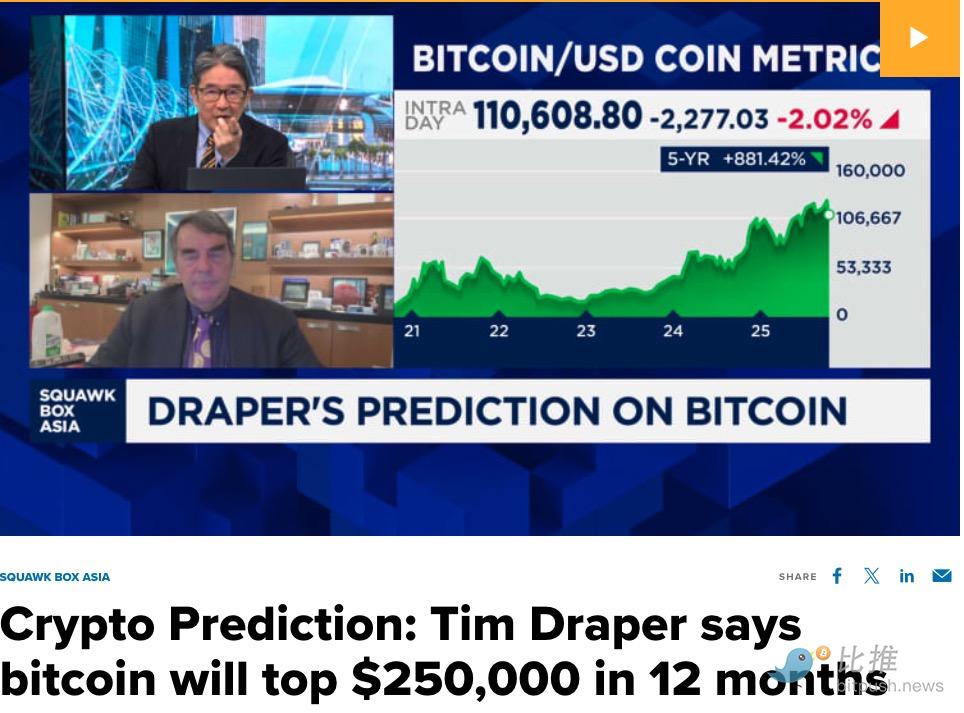
An early investor in Tesla, Skype, Baidu, and Twitch, among others. Draper previously predicted Bitcoin would reach this price in 2022, later revising the timeline to 2025.

Matthew Sigel (VanEck Head of Research): $180,000

  • Prediction: BTC $180,000+ in 2025

  • Rationale:

    • ETF inflows

    • US political cycle changes

But the reality is: ETFs provided more of a floor lift than a ceiling explosion.

Sminston With (Crypto Researcher, PhD): $275,000
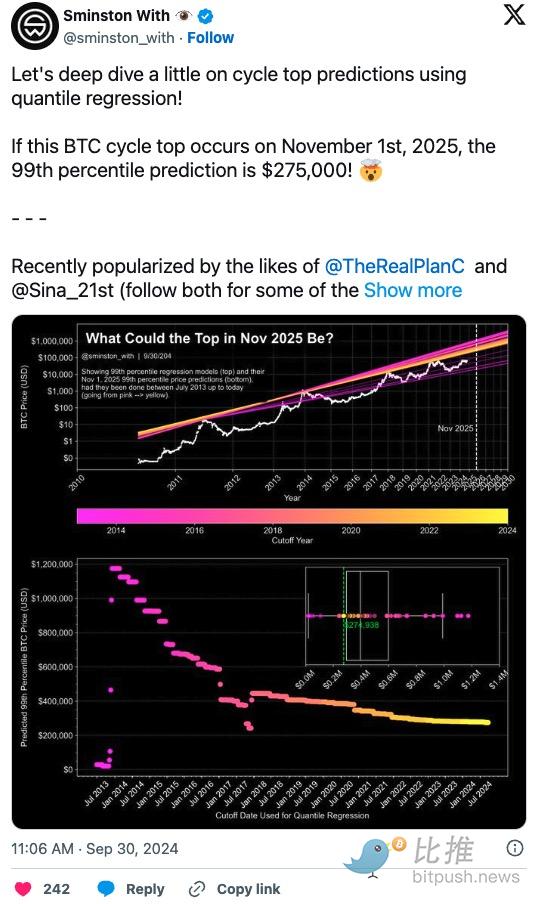
Bitcoin researcher Sminston With used quantile regression to predict the cycle top, estimating it would arrive on November 1, 2025, with Bitcoin reaching $275,000.

By the end of 2025, this prediction was clearly off the mark (had clearly failed).

Cathie Wood (ARK Invest): $1,000,000
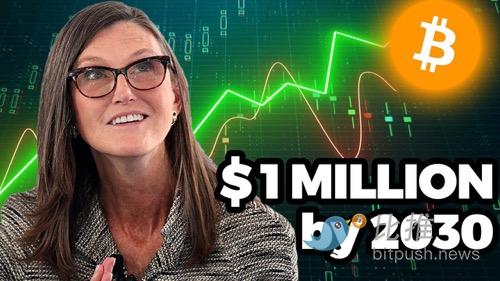
  • Prediction:

    • Base case: $650,000 (2030)

    • Optimistic: $1,000,000+

Strictly speaking, this prediction hasn't been "slapped" yet, but it represents the long-term version of the same logic.

ETH: Predictors Bet on "Upgrade Delivery"

In 2025, ETH's fundamental narrative didn't fail, but the price refused to pay for the narrative.

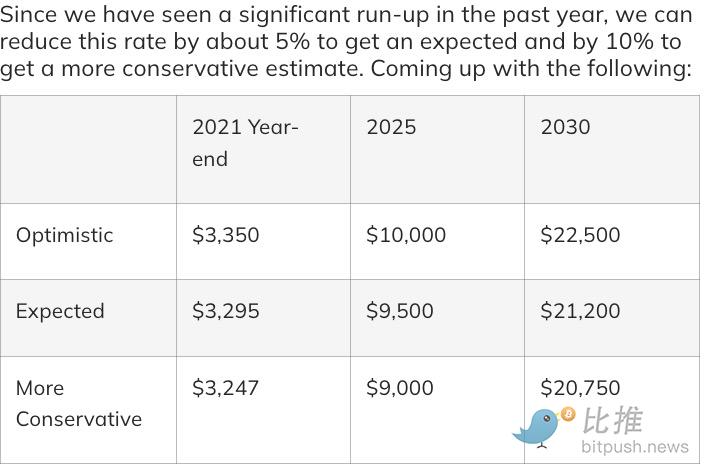
Deltec Bank:

    • 2025: Optimistic $10,000 / Expected $9,500 / Conservative $9,000.
Standard Chartered: The "ETF+Upgrade" Path to $14,000

  • Standard Chartered suggested in 2024 that ETH could reach $14,000 (2025), with ETFs being a core catalyst. But by 2025, Standard Chartered revised its year-end ETH prediction up to $7,500.
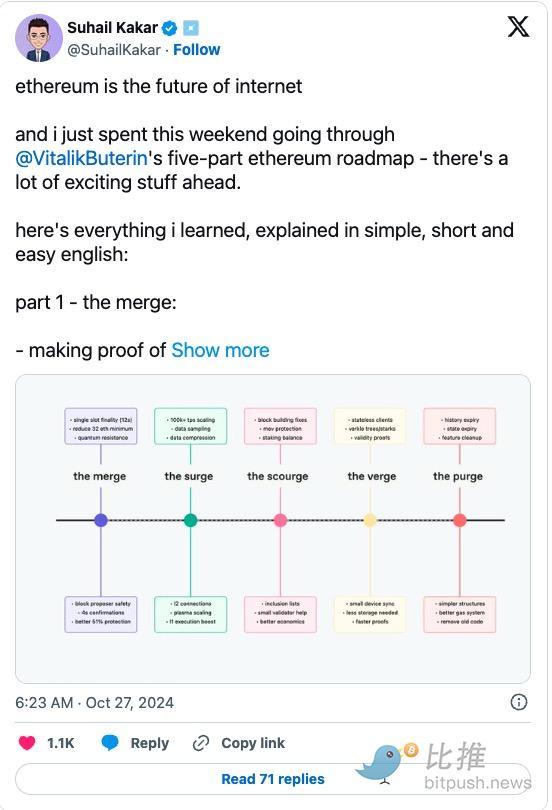
Finder Analysts: In February 2024, the average prediction from 50 analysts was ETH $6,105 (2025).

VanEck predicted Ethereum would reach $11,800 by 2030, citing network growth and adoption.

Bitwise: Predicted end-2024 that Ethereum would reach $7,000 in 2025, alongside new highs for BTC and SOL.

Bankless: Believed that after Ethereum realizes its potential in 2025, the pessimistic price would be $10,000, and the reasonable price would be $15,000.

Summary

The 2025 market cycle has given us pause for reflection – trying to predict the future based solely on past experience is becoming less effective in the crypto market. The once-popular "four-year cycle theory" has lost much of its explanatory power under the impact of massive ETF fund flows and a complex macro environment.

Market predictions are essentially about finding anchors amidst uncertainty. But when the anchors themselves are drifting, who can guarantee accuracy every time? Facing 2026, perhaps what we need is not to rush to find the next "prophet," but to maintain patience and flexibility – the market will always chart its own course, and our job is to prepare to respond, not stubbornly guess.

It should be noted that this article is not meant to negate the value of professional institutional analysis. Rigorous research remains precious in an information-cluttered market. But ultimately, the market always provides the answer, and what we need to do is learn to coexist with predictions while maintaining independent thinking. After all, in this field, there can be many opinions, but the true answer is always only one – the market itself.

Author: Seed.eth


Twitter:https://twitter.com/BitpushNewsCN

Bitpush TG Discussion Group:https://t.me/BitPushCommunity

Bitpush TG Subscription: https://t.me/bitpush

Original link:https://www.bitpush.news/articles/7598563

Трендові криптовалюти

Пов'язані питання

QWhat was the actual price of Bitcoin and Ethereum at the end of 2025, according to the article?

AAs of 8:00 AM Beijing Time on December 27th, 2025, Bitcoin was approximately $87,423 and Ethereum was approximately $2,926.

QWhich CEO predicted Bitcoin price would reach $150,000 in 2025, and what was their reasoning?

AMark Yusko, CEO of Morgan Creek, predicted Bitcoin would reach $150,000 in 2025. His logical basis was network effects, FOMO (Fear Of Missing Out) driving the market, and new capital entering.

QWhat was the key difference between the actual market effect of Bitcoin ETFs and the predictions, as highlighted in the article?

AThe article states that unlike predictions which expected a massive price surge, ETFs brought about a 'structural change' that resulted in more frequent market retracements and repricing, leading to a 'bottom lift' rather than a 'top explosion' in price.

QWhich institution gave a specific month for its Bitcoin price prediction, and what was that prediction?

AAllianceBernstein predicted that Bitcoin would reach $200,000 by September 2025.

QWhat is the article's overall conclusion about the reliability of price predictions in the crypto market?

AThe article concludes that predicting the future based on past experience is increasingly unreliable in the crypto market. It suggests that instead of seeking the next 'prophet,' investors should maintain patience and flexibility, preparing to respond to the market's actual movements rather than being fixated on predictions.

Пов'язані матеріали

STAR 50 Soars 10.73%, Why Did A-Shares Stage a "V-Shaped Reversal"?

After a prolonged decline, the Chinese A-share market staged a strong rally on July 21. The STAR 50 index surged 10.73%, its largest single-day gain in nearly a year, leading a broad-based "V-shaped" reversal. The Shanghai Composite Index rose 1.79%, the Shenzhen Component Index gained 4.81%, and the ChiNext Index jumped 7.05%. Total market turnover reached 2.97 trillion yuan, an increase of 256.1 billion yuan from the previous session, with over 3,100 stocks advancing. The semiconductor sector spearheaded the rebound, with related ETFs posting significant gains. Analysts attribute the surge to three converging factors. First, coordinated capital inflows from "national team" institutions, insurance funds, listed company buybacks, and fund house self-purchases have bolstered market liquidity and confidence. Second, supportive policy signals, including commitments from regulators to ensure stable market operations, provided a favorable backdrop. Third, a stabilization and recovery in overseas markets, notably South Korea, created a positive external environment. Institutions suggest the most severe panic selling phase for the tech sector has likely passed, following a significant digestion of crowded positions and leveraged funds. While short-term volatility may persist, the medium to long-term outlook remains underpinned by enduring trends like AI computing demand expansion and semiconductor localization. The market's focus now shifts to the sustainability of supportive fund flows, earnings reports, and upcoming catalysts from the global AI industry chain.

marsbit38 хв тому

STAR 50 Soars 10.73%, Why Did A-Shares Stage a "V-Shaped Reversal"?

marsbit38 хв тому

U.S. Tech Momentum Stocks Post Largest Single-Day Gain Ever, But Is the Plunge Over?

US tech momentum stocks staged a sharp rebound on Tuesday (July 21st). Morgan Stanley's TMT Momentum Factor surged over 12%, marking its largest single-day gain on record, exceeding even peaks from the 2000 dot-com bubble. Key momentum indices from Goldman Sachs also posted their strongest daily performances in years. The rally was led by semiconductors, with the Philadelphia Semiconductor Index jumping 4.6%. This rebound followed three consecutive down days and a cumulative 33% plunge in momentum stocks, one of the steepest drawdowns since the dot-com era. Analysts attribute the surge largely to a short squeeze. Heavy selling had pushed high-beta momentum stocks into deeply oversold territory, forcing many short sellers, particularly in Asia, to cover their positions, creating a self-reinforcing buying spiral. However, the rebound's internals appear weak. Trading volume was notably low, and advancing stocks still lagged decliners on the S&P 500, indicating a narrow, concentrated rally rather than broad market participation. Diverging views emerge on the outlook. BTIG warns the bounce has hit key resistance and recommends selling into strength, citing extreme volatility and historical parallels to past market tops. Conversely, Goldman Sachs and UBS believe the momentum unwind is nearing its end, suggesting it may be time to gradually add exposure, as positioning has been significantly reduced. They caution, however, that high volatility warrants a measured approach, potentially using defined-risk strategies. The upcoming earnings season, particularly reports from major tech firms like Alphabet, is seen as a critical test for the rally's sustainability. Simultaneously, bond markets flashed a warning, with yields rising partly due to spiking oil prices. Analysts note that if long-term Treasury yields break decisively higher, it could pose a significant headwind for equities, especially growth stocks.

marsbit45 хв тому

U.S. Tech Momentum Stocks Post Largest Single-Day Gain Ever, But Is the Plunge Over?

marsbit45 хв тому

U.S. Tech Momentum Stocks Record Largest Single-Day Gain Ever, but Has the Rout Ended?

U.S. tech momentum stocks staged a dramatic rebound on Tuesday, July 21st. Key momentum indices like the Morgan Stanley TMT Momentum Factor and Goldman Sachs' High Beta Momentum Long Index posted historic or near-historic single-day gains, fueled largely by semiconductor stocks. This sharp rally followed a severe three-day sell-off that saw momentum stocks plunge 33%, marking one of the steepest pullbacks since the dot-com bubble. Analysts attribute the bounce primarily to a short squeeze, as forced covering from over-leveraged traders, particularly in Asia, created a buying spiral. However, the rally's health is questioned due to weak market breadth—overall trading volume was low, and decliners outnumbered advancers in the S&P 500 despite the index's gain—suggesting a narrow, concentrated surge rather than broad recovery. Opinions on the sustainability diverge. BTIG strategists warn the rebound has hit key resistance levels, citing extreme volatility and historic stock dispersion as signs of an ongoing broader correction, and recommend selling into strength. Conversely, Goldman Sachs and UBS view the aggressive momentum unwinding as nearing its end, noting reduced positioning and a lack of new fundamental catalysts. They suggest the sell-off presents a selective opportunity to add exposure, albeit cautiously and gradually using defined-risk strategies. The immediate trajectory hinges on the ongoing earnings season, with market focus on Alphabet's capital expenditure guidance for AI investment clarity. Meanwhile, bond markets present a risk, with rising Treasury yields—potentially heading toward 5.5%—and widening credit spreads for mega-cap tech companies posing a threat to equity valuations. The combination of technical factors, earnings results, and macro conditions leaves the durability of the rebound in doubt.

链捕手48 хв тому

U.S. Tech Momentum Stocks Record Largest Single-Day Gain Ever, but Has the Rout Ended?

链捕手48 хв тому

Long-Divided Must Unite, Long-United Must Divide: When L1 Becomes Its Own Rollup, What Is Ethereum's Endgame?

"The Inevitable Cycle: When L1 Becomes Its Own Rollup – What is Ethereum's Endgame?" For years, the Ethereum community grappled with concerns that L2s were fragmenting the ecosystem and eroding L1's value. While L2s provided cheaper execution, they also splintered liquidity and the unified user experience of a single chain. This has prompted a fundamental reassessment of the relationship between L1 and L2. Ethereum's roadmap is evolving. The "Scale" initiative merges L1 and L2 expansion into a holistic framework. L1 itself is advancing with higher gas limits, statelessness, and zkEVM verification, no longer content to be just a low-throughput settlement layer. Consequently, the primary value proposition of L2s is shifting from merely providing cheap blockspace to offering L1 cannot easily provide: application-specific optimizations, privacy features, and flexible governance models. L2s are becoming a spectrum of execution environments with varying degrees of security inheritance from Ethereum. A critical challenge in this multi-chain future is interoperability. The vision is to make Ethereum "feel like one chain again." This relies on advancements in native account abstraction (like EIP-7702) and intent-based architectures (Open Intents Framework), where users declare desired outcomes, and solvers handle the complex cross-chain execution. Furthermore, shortening Ethereum's finality time from minutes to seconds is crucial, as it underpins trust between chains for bridges, stablecoins, and cross-chain applications. Perhaps the most provocative idea is that Ethereum L1 itself could become a form of "its own Rollup." As zkEVM and proof systems mature, high-performance nodes could execute transactions and generate validity proofs. Regular validators would then verify these proofs instead of re-executing all transactions. This blurs the traditional L1/L2 hierarchy, making "Rollup" more of a general execution-verification architecture. Native Rollup aims to integrate L2 validation more directly into the Ethereum protocol, allowing L2s to inherit L1's security more fully and move away from reliance on security councils. In the end, L2s are not destined to replace L1 or be made obsolete by it. The likely future is a unified system where diverse execution environments—each optimized for specific use cases like DeFi, gaming, or privacy—coexist. They will share a common foundation of security, liquidity, and verifiable state, seamlessly connected to restore a cohesive user experience. The next phase for Ethereum is not just about scaling through separation, but about intelligently reintegrating what was separated back into a coherent whole.

链捕手1 год тому

Long-Divided Must Unite, Long-United Must Divide: When L1 Becomes Its Own Rollup, What Is Ethereum's Endgame?

链捕手1 год тому

Торгівля

Спот

Популярні статті

Як купити O

Ласкаво просимо до HTX.com! Ми зробили покупку O1 exchange (O) простою та зручною. Дотримуйтесь нашої покрокової інструкції, щоб розпочати свою криптовалютну подорож.Крок 1: Створіть обліковий запис на HTXВикористовуйте свою електронну пошту або номер телефону, щоб зареєструвати обліковий запис на HTX безплатно. Пройдіть безпроблемну реєстрацію й отримайте доступ до всіх функцій.ЗареєструватисьКрок 2: Перейдіть до розділу Купити крипту і виберіть спосіб оплатиКредитна/дебетова картка: використовуйте вашу картку Visa або Mastercard, щоб миттєво купити O1 exchange (O).Баланс: використовуйте кошти з балансу вашого рахунку HTX для безперешкодної торгівлі.Треті особи: ми додали популярні способи оплати, такі як Google Pay та Apple Pay, щоб підвищити зручність.P2P: Торгуйте безпосередньо з іншими користувачами на HTX.Позабіржова торгівля (OTC): ми пропонуємо індивідуальні послуги та конкурентні обмінні курси для трейдерів.Крок 3: Зберігайте свої O1 exchange (O)Після придбання O1 exchange (O) збережіть його у своєму обліковому записі на HTX. Крім того, ви можете відправити його в інше місце за допомогою блокчейн-переказу або використовувати його для торгівлі іншими криптовалютами.Крок 4: Торгівля O1 exchange (O)Легко торгуйте O1 exchange (O) на спотовому ринку HTX. Просто увійдіть до свого облікового запису, виберіть торгову пару, укладайте угоди та спостерігайте за ними в режимі реального часу. Ми пропонуємо зручний досвід як для початківців, так і для досвідчених трейдерів.

155 переглядів усьогоОпубліковано 2026.06.19Оновлено 2026.06.19

Як купити O

Як купити PROS

Ласкаво просимо до HTX.com! Ми зробили покупку Pharos (PROS) простою та зручною. Дотримуйтесь нашої покрокової інструкції, щоб розпочати свою криптовалютну подорож.Крок 1: Створіть обліковий запис на HTXВикористовуйте свою електронну пошту або номер телефону, щоб зареєструвати обліковий запис на HTX безплатно. Пройдіть безпроблемну реєстрацію й отримайте доступ до всіх функцій.ЗареєструватисьКрок 2: Перейдіть до розділу Купити крипту і виберіть спосіб оплатиКредитна/дебетова картка: використовуйте вашу картку Visa або Mastercard, щоб миттєво купити Pharos (PROS).Баланс: використовуйте кошти з балансу вашого рахунку HTX для безперешкодної торгівлі.Треті особи: ми додали популярні способи оплати, такі як Google Pay та Apple Pay, щоб підвищити зручність.P2P: Торгуйте безпосередньо з іншими користувачами на HTX.Позабіржова торгівля (OTC): ми пропонуємо індивідуальні послуги та конкурентні обмінні курси для трейдерів.Крок 3: Зберігайте свої Pharos (PROS)Після придбання Pharos (PROS) збережіть його у своєму обліковому записі на HTX. Крім того, ви можете відправити його в інше місце за допомогою блокчейн-переказу або використовувати його для торгівлі іншими криптовалютами.Крок 4: Торгівля Pharos (PROS)Легко торгуйте Pharos (PROS) на спотовому ринку HTX. Просто увійдіть до свого облікового запису, виберіть торгову пару, укладайте угоди та спостерігайте за ними в режимі реального часу. Ми пропонуємо зручний досвід як для початківців, так і для досвідчених трейдерів.

205 переглядів усьогоОпубліковано 2026.06.22Оновлено 2026.06.22

Як купити PROS

Що таке VERONA

I. Вступ до проекту VERONA - це блокчейн, створений для всіх, скрізь, через абстракцію ланцюга. Використовуючи свій загальний шар абстракції, VERONA вирізняється інтеграцією складних функцій блокчейну, таких як рахунки, підписи та взаємодія, безпосередньо на рівні протоколу. Цей підхід дозволяє взаємодіяти з блокчейн-додатками без необхідності розуміти основні технології.1) Основна інформація Назва: VERONA (VERONA)III. Пов'язані посилання Офіційне посилання на сайт: https://xion.burnt.com/ Біла книга: https://xion.burnt.com/whitepaper.pdf Експлорери: https://explorer.burnt.com/ Соціальні мережі: https://x.com/burnt_xion Примітка: Вступ до проекту взято з матеріалів, опублікованих або наданих офіційною командою проекту, які є лише для довідки і не є інвестиційною порадою. HTX не несе відповідальності за будь-які прямі або непрямі збитки, що виникають внаслідок цього.

137 переглядів усьогоОпубліковано 2026.06.22Оновлено 2026.06.22

Що таке VERONA

Обговорення

Ласкаво просимо до спільноти HTX. Тут ви можете бути в курсі останніх подій розвитку платформи та отримати доступ до професійної ринкової інформації. Нижче представлені думки користувачів щодо ціни A (A).

活动图片














