Original | Odaily Planet Daily (@OdailyChina)
Author | Asher (@Asher_ 0210)
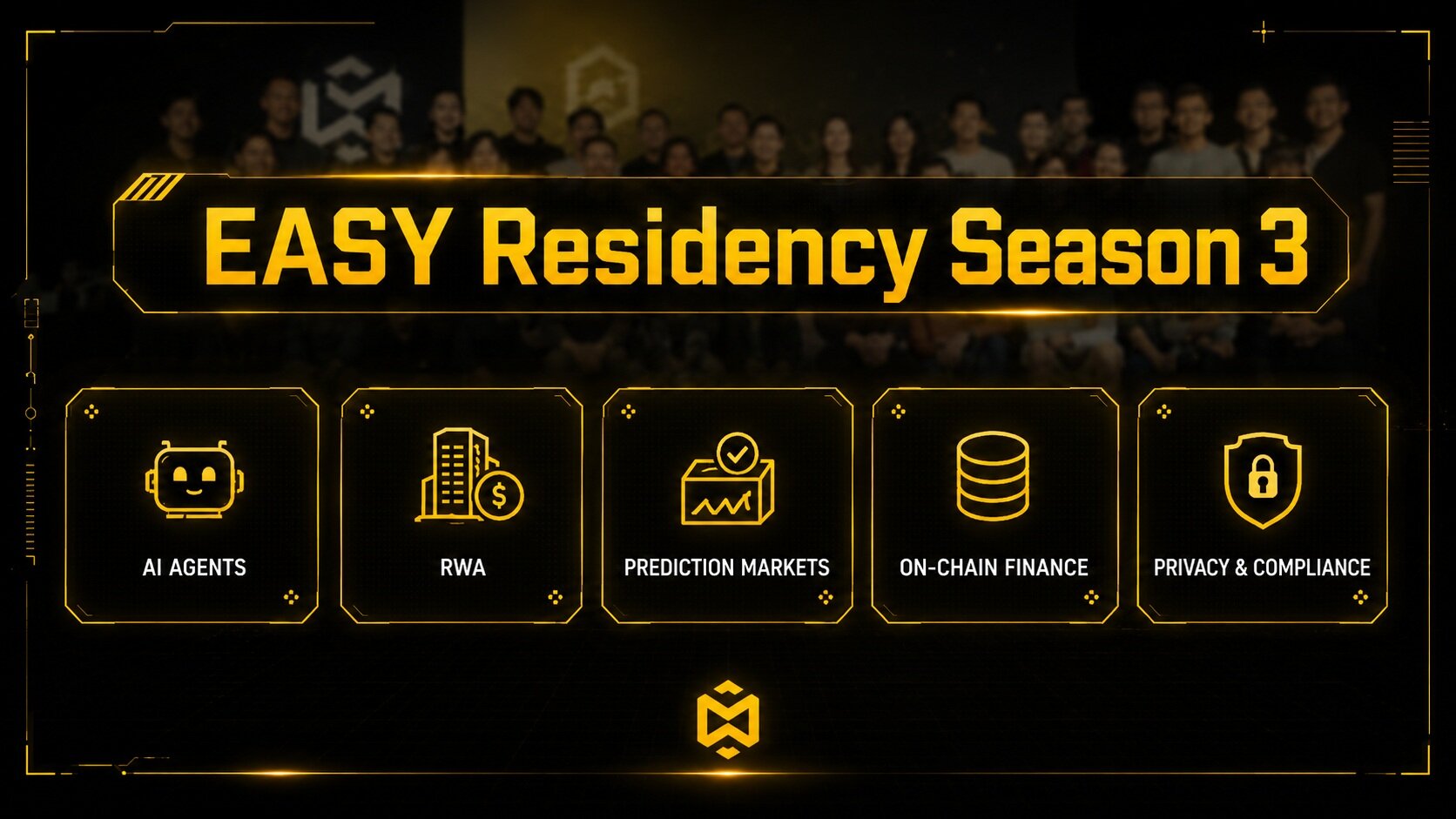
Yesterday, YZi Labs announced the 25 graduating projects of its flagship incubation program, EASY Residency Season 3. This cohort focuses on areas such as reconstructing on-chain financial market structures, AI agents, tokenizing real-world assets, prediction markets, and privacy & compliance.
Next, Odaily Planet Daily will introduce each of these early-stage projects supported by YZi Labs one by one.
BANK OF AI: Identity and Payment Infrastructure for AI Agents on BNB Chain

Official X Account:@bankofai_io
Bank of AI is an AI Agent infrastructure project focused on building protocol-layer capabilities and an AI model aggregation layer to help autonomous agents complete on-chain transactions, payments, and asset calls.
The project can intelligently route between different tokens and transaction paths when agents perform on-chain operations, prioritizing assets and methods with lower costs, thereby reducing interaction costs and improving execution efficiency.
Bank of AI aims to build the underlying infrastructure for AI Agents in the BNB ecosystem around capabilities such as agent identity, payment settlement, token access, and model calls.
Brief Tech: Legal Evidence Indexing Tool for Litigation Workflows
Official X Account: None
Brief Tech introduces AI into the legal service process, primarily assisting lawyers and litigation teams with high-frequency, repetitive tasks in case preparation.
The project can automatically organize raw evidence materials into work products directly usable in litigation processes, such as case timelines, evidence packages, and document compilations.
Brief Tech chooses to address the most painful, repetitive, and high-frequency aspects of litigation preparation, attempting to improve the efficiency of legal teams' case preparation with lower costs and shorter timeframes.
Cournot: Verifiable Reasoning Platform for AI Probabilistic Output

Official X Account:@CournotProtocol
Cournot focuses on making AI inference results trustworthy, with its core direction being to make probabilistic judgments generated by AI verifiable and auditable.
Through a structured attestation mechanism, the project transforms outputs from different agents or models into trackable judgment results, ensuring AI conclusions are not just black-box answers but objects that can be examined and verified.
By introducing capital, reputation, and trust mechanisms, Cournot attempts to provide a more credible foundation for AI decision-making in high-stakes scenarios like markets, governance, and scientific research.
Dapital: Financialized Social Network and Trading Platform

Official X Account:@trydapital
Dapital is a DeFi product combining investment discovery with on-chain trade execution, with the core idea of integrating community discussion, social signals, and trading entry into the same interface.
The project follows the common community-driven path of retail investing, transforming KOL opinions, market sentiment, and social signals into more direct on-chain trading scenarios.
Between discovering assets, gauging market heat, and executing trades, Dapital attempts to provide a smoother product experience that aligns more closely with the investment discovery habits of native DeFi users.
Flap: Programmable Token Issuance Infrastructure

Official X Account:@flapdotsh
Flap focuses on token issuance infrastructure, with its core direction being to abstract complex issuance mechanisms into programmable, composable basic modules.
The project aims to standardize processes like whitelisting, pricing, distribution, liquidity bootstrapping, and subscription rules into on-chain primitives, allowing project teams to build their token issuance workflows by combining modules like building blocks.
For ecosystems like BNB Chain and other EVM chains, Flap helps lower the barrier to entry for new projects, making token launches, capital inflow, and community distribution more programmatic, transparent, and scalable.
GEMINT: On-Chain Marketplace for Collectibles and Intellectual Property Assets

Official X Account:@GEMINT
GEMINT is an on-chain trading protocol for collectibles and IP assets, focusing on introducing interactive trading formats and instant on-chain settlement capabilities for long-tail cultural assets.
Through on-chain mechanisms, the project provides new trading structures for collectibles, IP derivative assets, and cultural assets, enabling more active price discovery, ownership transfer, and market interaction for this asset class.
Culture, ownership, and liquidity are the main narrative foundations of GEMINT. The project's goal is to build more native on-chain trading infrastructure for long-tail collectibles and IP assets.
LayerV: On-Chain Options and Structured Products Platform
Official X Account: None
LayerV is a DeFi project for on-chain volatility trading, focusing on making options, structured products, and volatility strategies simpler, more liquid, and more accessible to ordinary users.
In DeFi, volatility trading has long suffered from high barriers to entry, insufficient liquidity, and complex pricing. LayerV attempts to abstract these complex strategies into more user-friendly on-chain products, lowering the difficulty for users to participate in options and structured yield strategies.
As the DeFi market matures, structured products and options may become new foundational modules, and LayerV hopes to become a key gateway in this direction.
LunarBase: CEX-Grade On-Chain Liquidity Platform

Official X Account:@LunarBaseX
LunarBase focuses on on-chain liquidity quality, aiming to provide trading depth and execution quality close to centralized exchanges for ecosystems like Base and BNB Chain.
The project uses a prop AMM model, employing more active market-making and liquidity management mechanisms to improve on-chain trading depth, price stability, and transaction efficiency. LunarBase is already live on Base and BNB Chain and has generated actual revenue, indicating some commercial validation of its model.
LunarBase attempts to solve the crucial liquidity problem in the DeFi trading experience, aiming to narrow the experience gap between on-chain trading and centralized exchanges through measurable market-making performance.
L7: Multi-Market Agency Capital Acquisition Platform

Official X Account:@TradeOnL7
L7 attempts to transform on-chain trading capabilities into an account system that can receive capital support, allowing traders to acquire capital based on their own strategies.
The project covers multiple on-chain trading scenarios including perpetual contracts, prediction markets, tokenized stocks, yield products, and RWA. Users can showcase strategies, execute trades, and participate in multiple markets within a mobile-first interface equipped with agent interaction capabilities.
The core logic of L7 lies in allocating capital to users who have already demonstrated trading ability. Through its multi-market design, L7 attempts to capture traffic and capital needs from different trading scenarios, acting as a connection layer between on-chain traders and capital.
Möbius: Unified Margin Layer for DeFi

Official X Account:@MobiusExchange
Möbius aims to integrate financing, trading, liquidation, and capital management capabilities into an on-chain account system, building comprehensive account and credit infrastructure for DeFi.
Through a self-custodial credit account, the project integrates lending, perpetual contract trading, and DeFi strategies into a unified account system. Users can manage credit lines, margin, and various on-chain financial operations uniformly while maintaining self-custody of assets.
Möbius focuses on solving the problem of fragmented DeFi assets and capital efficiency, guiding on-chain finance from simple protocol composability toward more institution-grade market-like account and credit infrastructure.
Nemesis: Permissionless Margin Trading Protocol

Official X Account:@Nemesisdottrade
Nemesis is an on-chain trading and liquidity management DeFi project focusing on improving the trading efficiency and capital utilization of on-chain assets through a new market-making framework.
The project has designed an omnidirectional market maker mechanism, allowing a single liquidity pool to simultaneously support spot swaps, margin trading, and liquidity provision, enabling users to establish leveraged long or short positions around any on-chain token.
Compared to traditional AMMs, Nemesis attempts to integrate trading, leverage, and liquidity returns into the same pool, providing traders with more flexible on-chain trading methods and creating new revenue sources for liquidity providers.
Newsliquid: AI Agent-Driven Automated Financial Decision Execution Layer
Official X Account:@newsliquidX
Newsliquid is an AI Agent project for news trading scenarios, focusing on transforming global news data directly into on-chain trading actions.
As market reaction speeds accelerate, the time gap between information acquisition and trade execution becomes increasingly critical. Newsliquid attempts to become a crucial link in on-chain trading infrastructure through automated decision-making and execution pipelines.
Openstocks: DeFi Platform for Tokenized Private Market Exposure

Official X Account:@openstocks_hq
Openstocks is an on-chain financial project for tokenized equity assets, primarily bringing investment exposure to popular unlisted companies on-chain.
Through yield-bearing structures, the project makes Pre-IPO assets more accessible and capital-efficient. As the market matures, these tokenized equity assets are expected to become important foundational modules for on-chain finance.
PokerFi: On-Chain Poker Skill Game Options Market

Official X Account:@pokerfi_gg
PokerFi is an on-chain skill game protocol project, focusing on transforming globally popular games like poker into on-chain protocols.
The project designs each card as a tradable equity in a shared global game, with settlements completed via cryptographic mechanisms, making the game process and results more transparent and trustworthy.
PokerFi sits at the intersection of gaming, prediction markets, and DeFi, attempting to provide a new foundational module for on-chain gaming and trading scenarios.
Polysights: Prediction Market Automation and Intelligence Infrastructure

Official X Account:@Polysights
Polysights is an infrastructure project for prediction market participants, focusing on providing automation, data intelligence, and trading tools.
As prediction markets gradually become a new asset class, professional participants' needs for information analysis, strategy execution, and market monitoring are increasing. Polysights attempts to provide more systematic tool support for these users.
Against the backdrop of growing prediction market trading volumes, Polysights targets the underlying tooling and infrastructure layer, hoping to become an important service provider in the prediction market ecosystem.
Renaiss: Physical Collectibles RWA Liquidity Infrastructure
Official X Account:@renaissxyz
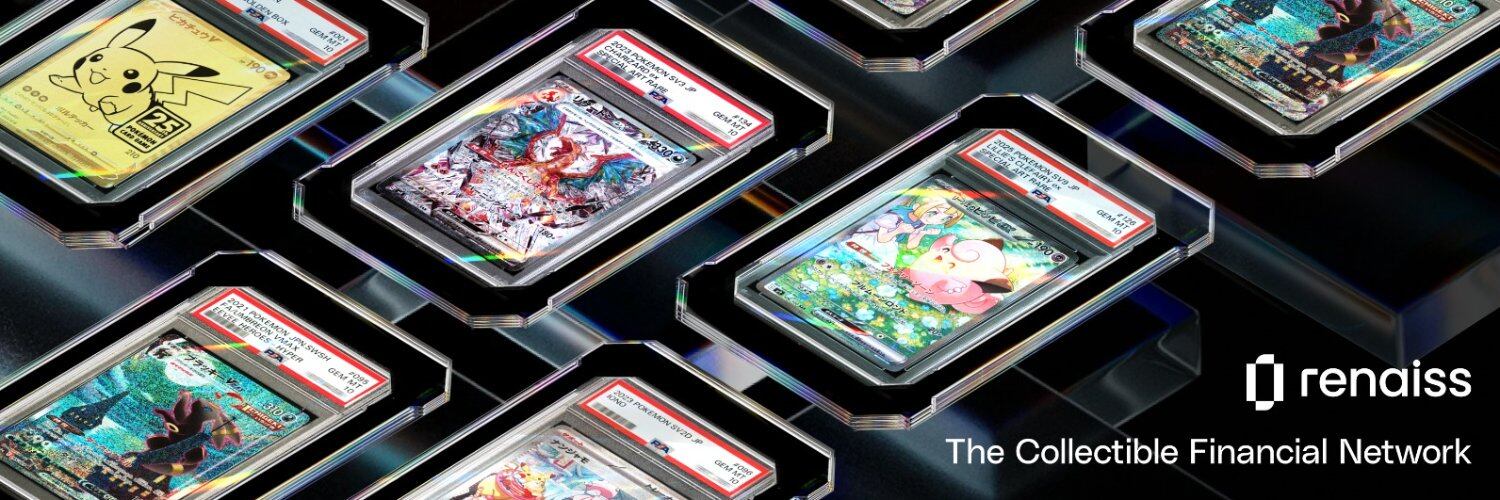
Renaiss is an on-chain liquidity infrastructure project for physical collectibles, focusing on introducing on-chain trading capabilities to a market traditionally plagued by illiquidity and opacity.
Through certified provenance, on-chain settlement, and global market access, the project enables physical collectibles to change hands in a more transparent and efficient manner.
Renaiss attempts to open up the asset class of physical collectibles, which has long lacked financialization infrastructure, providing it with better liquidity and market pricing capabilities.
TermMax: Fixed-Rate Decentralized Lending Platform
Official X Account:@TermMaxFi
TermMax is a DeFi infrastructure project for the on-chain lending market, focusing on providing stronger predictability for on-chain credit through fixed rates and fixed terms.
Through innovative tokenization mechanisms and customizable AMM designs, the project allows users to participate in on-chain lending products with more defined terms and rates.
TermMax hopes to fill the missing fixed-rate infrastructure gap between retail DeFi and institutional-grade credit, providing underlying support for a more mature on-chain lending market.
0xBow.io: Compliance-Oriented Digital Asset Privacy Infrastructure
Official X Account:@0xbowio
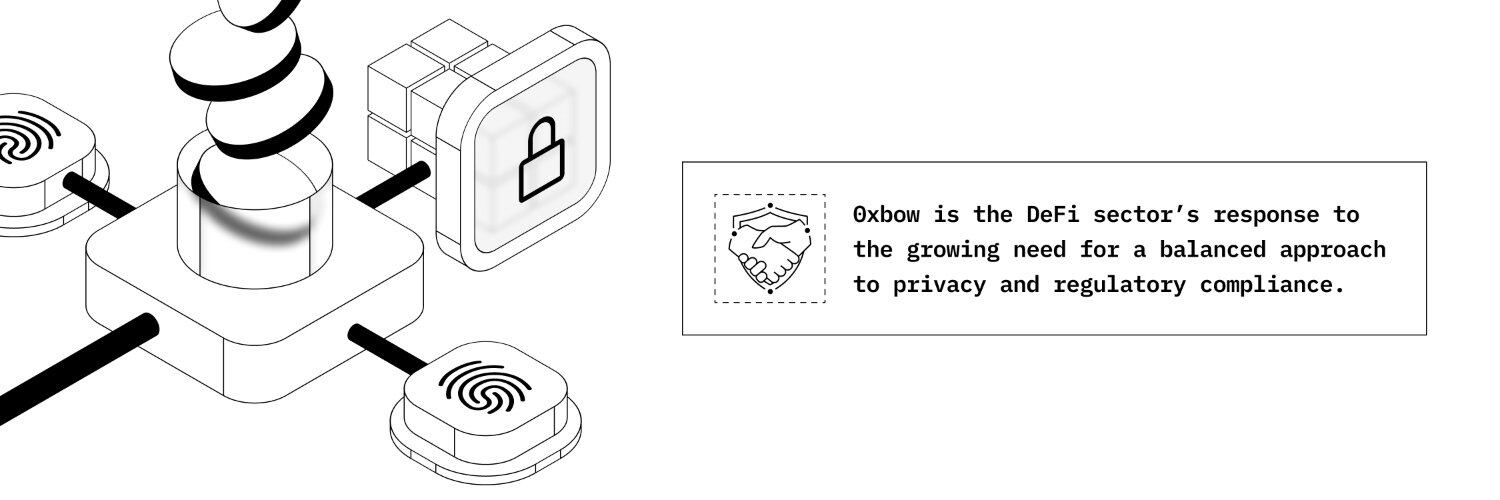
0xBow is an infrastructure project for on-chain privacy and compliance scenarios, focusing on using a Privacy Pools architecture to allow users to protect transaction privacy while retaining compliance attestation capabilities.
The project attempts to prove that privacy and compliance are not entirely opposites. Users can conduct private transactions while simultaneously using relevant mechanisms to prove their funds are not tainted by illegal funds.
As global regulatory expectations continue to evolve, 0xBow targets the next generation of privacy infrastructure, emphasizing the balance between confidentiality and compliance needs in on-chain transactions.
Functor: Self-Custody Authorization Layer for AI Agent Workflows
Official X Account:@FunctorNetwork

Functor is a self-custody authorization infrastructure project for AI Agents and autonomous asset management scenarios, focusing on solving authorization and trust issues in on-chain operations.
When AI Agents start moving funds on behalf of users, the question of who authorized which operation becomes the most critical trust element. Functor attempts to provide verifiable authorization records for each Agent action, allowing trust to flow with specific operations.
Functor hopes to become the authorization infrastructure for AI Agents during on-chain execution, ensuring every fund operation has a clear, verifiable source of trust.
Isaac: Interest-Free Stablecoin Neo-Bank for the Muslim Market

Official X Account:@getusdi
Isaac is a USD neo-bank project for the global Muslim market, focusing on building stablecoin-native financial services around interest-free stablecoins.
The project is not just a financial application but aims to control the underlying USD asset tool, using its proprietary interest-free stablecoin to serve payment, savings, and financial service scenarios.
Isaac's strengths lie in clear cultural demand, a vast target market, and control over the underlying stablecoin tool, aiming to become stablecoin financial infrastructure for Muslim users.
MARGIN X: On-Chain Prime Brokerage Platform for BNB Chain
Official X Account: None
MARGIN X is an on-chain credit and liquidity infrastructure project for crypto market-making scenarios, focusing on replacing the common but opaque OTC token lending models in current market-making with more transparent on-chain mechanisms.
The project hopes to move token lending, capital allocation, and credit support needed for market-making on-chain, making liquidity sources and market maker operations more transparent and traceable.
For BNB Chain, MARGIN X can improve how liquidity is accessed within the ecosystem, while also providing market makers with a more standardized and efficient foundation for on-chain operations.
OrbSwap: Frictionless Stablecoin Exchange with N-Dimensional AMM
Official X Account:@0xorbSwap
Orbswap is a stablecoin exchange project. As stablecoins become increasingly fragmented across issuers, chains, and jurisdictions, frictionless exchange is becoming a real product category.
Orbswap's N-dimensional AMM design is a clear architectural response to this problem. The founder's past experience in DeFi liquidity also matches the technical capabilities valued by the ecosystem.
SilentSwap: Compliance-Oriented Cross-Chain Privacy Exchange Protocol

Official X Account:@SilentSwap
SilentSwap is a non-custodial project for cross-chain private trading, focusing on protecting user transaction privacy while incorporating compliance-oriented functional design.
The project complements the directions covered by privacy infrastructure like 0xBow, providing more credible private trading options for users who simultaneously need confidentiality and accountability/traceability capabilities.
Taco AI: AI Agent Trading and Automation Infrastructure for Crypto Markets

Official X Account:@TacoTradeX
Taco AI is an AI Agent product, focusing on enabling users to use AI Agents for trading, prediction, and automation without needing to self-host or manage complex infrastructure.
As Agent applications in the crypto field mature, products that can hide complex processes behind a stable execution experience will more easily gain users. Taco AI is built around this principle, aiming to provide users with a simpler, more reliable entry point into Agentic Crypto.
vibe.fun: On-Chain Event-Driven Derivatives Platform

Official X Account:@vibedotfun
Vibe.fun is a DeFi project for the on-chain derivatives market, focusing on bringing key derivative types from traditional financial structured products on-chain.
The project introduces barrier options, range accruals, path-dependent payouts, and other product forms not yet common in DeFi, but which are already very important in traditional financial structured products markets.
By on-chainizing these financial primitives, Vibe.fun further expands the range of product forms that DeFi can express and support.






