After multiple bull and bear cycles and narrative iterations, the crypto industry is entering a more complex phase: it is accelerating mainstream adoption while simultaneously experiencing a continued ebb in imagination. ETFs, stablecoins, and institutional funds are making blockchain increasingly resemble a part of the financial system; yet, the enthusiasm for "disrupting everything" is rapidly fading with each cycle. Precisely because of this, now might be a better time than ever to revisit the fundamental question: What exactly is blockchain?
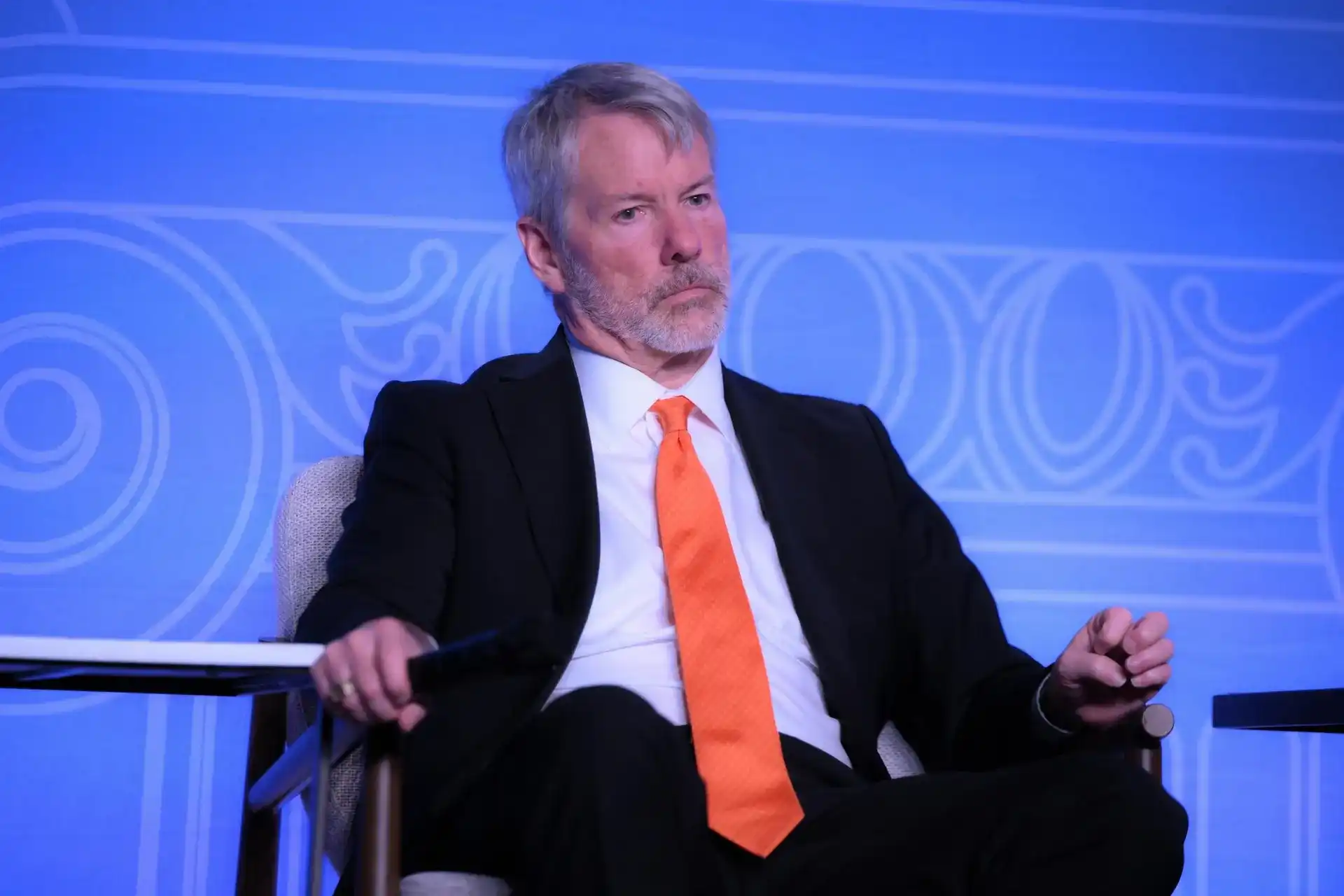
To explore this question, we engaged in an in-depth dialogue with ViaBTC CEO Yang Haipo. As one of the earliest participants and builders in the crypto industry, his answer is not "new infrastructure" or "new technology," but a sharper definition: Blockchain is a hardcore libertarian experiment. This experiment has spent over a decade continuously testing a question that remains relevant—when trust no longer relies on a center, how far can freedom truly go?
Q: After multiple cycles, many users have become significantly disillusioned with the narratives of "blockchain" and "decentralization." Standing at this point in time, how do you view blockchain?
Frankly, most people's understanding of blockchain was off from the start. They thought it was like AI or cloud computing—a "new infrastructure" that could be procured by enterprises or featured in government PPTs. But blockchain was never just a technology; its means is decentralization, and its end is freedom. From a historical perspective, it is a hardcore libertarian experiment.
We all know that the 2008 global financial crisis led some to completely lose trust in the centralized financial system. Satoshi Nakamoto embedded that famous Times headline in the Bitcoin genesis block: "The Chancellor on the brink of second bailout for banks." This was not merely a technical detail; it was also a very distinct political statement.
But Bitcoin did not emerge out of thin air. The cypherpunk movement had been brewing for two decades prior: from David Chaum's DigiCash, to Wei Dai's b-money, to Hal Finney's RPOW, a group of cryptographers and programmers had been attempting to use technological means to achieve personal privacy and financial freedom. Nostalgia for the gold standard, Hayek's theory of currency competition, the technical accumulation of cypherpunks, and the trust collapse triggered by the financial crisis—these threads converged in 2008, crystallizing into a testable proposition: Replace trust with cryptography, replace institutions with protocols, replace law with code, and see what happens.
This is essentially one of the core assumptions of libertarianism—whether individuals, without a Leviathan to back them up, can self-organize, self-govern, and self-account. Blockchain, for the first time, placed this question into the real world for large-scale testing. There is no laboratory, no ethics committee; the control group is the traditional financial system that has operated for centuries, the test subjects are real people, and the stakes are real money.
Moreover, one point often overlooked: Blockchain is inherently financial. Decentralization is extremely costly and inefficient—the same data must be redundantly stored and repeatedly verified by thousands of nodes across the network, with throughput compressed to single digits per second. You wouldn't use such a slow and expensive system to store videos, run AI, or build social networks. The only domain willing to pay such a high cost for decentralization in the long term is essentially finance, because the core of finance is trust, and the cost of trust is far more expensive than computing power. The Bitcoin whitepaper title is clear: A Peer-to-Peer Electronic Cash System. From day one, this has been about money.
Q: From the results, what has this "libertarian experiment" verified?
It has verified that the dividends and costs of freedom are both real.
First, the dividends. One of blockchain's core capabilities is censorship resistance, and this is not an abstract concept—it has been repeatedly validated in reality. In 2010, when WikiLeaks was completely financially blockaded, with Visa, Mastercard, and PayPal all cutting off its funding channels, Bitcoin became the only channel that could not be blocked.
Stablecoins represent another validation on the demand side. Their importance lies not in how beautiful the理念 is, but in the fact that there are real people in the real world who need a value channel that is less easily controlled. For families in Argentina, USDT is the most convenient way to hedge against currency devaluation; for merchants in sanctioned countries, it is the only channel to access global trade settlements; for women in Afghanistan, it is a way to circumvent family control and preserve personal savings.
But here lies a crucial paradox: The most successful product of this libertarian experiment so far is built on the premise that it is not fully decentralized. USDT is centrally issued by Tether and can be frozen. In other words, the success of stablecoins is actually a compromise on the experimental hypothesis—what users want may not be pure decentralization, but a pipeline relatively free from local power control. As for whether the other end of this pipeline remains centralized, many don't care that much.
Now, the costs: Freedom is never free lunch. The other side of this experiment is a dark forest without police, courts, or insurance companies. LUNA is the most typical specimen. The Anchor protocol promised a 19.5% annualized yield, while U.S. Treasury bonds were below 4% at the time. This yield did not come from real economic activity but relied on token issuance and funds from later entrants—essentially the classic Ponzi structure, just cloaked in the guise of an "algorithmic stablecoin." Within three days, $40 billion evaporated. Then followed Three Arrows Capital, Celsius, FTX—one after another collapsing.
An industry that claims to be "decentralized" is actually highly interconnected, highly centralized, and highly fragile. SBF sentenced to 25 years, Do Kwon to 15 years, Celsius founder to 12 years—the most famous founders in this industry are collectively serving prison sentences, writing footnotes for the cost of "freedom."
Q: Why does such an experiment, named for freedom, always evolve into speculation, centralization, and narrative狂热?
Because technology can change the rules, but it cannot automatically change people. Many have overly high expectations for blockchain, as if a sufficiently decentralized underlying protocol would naturally give rise to a free order. But reality is not like that. As long as the participants are human, the market will inevitably form new narratives, new centers, new authorities, and rounds of emotion-driven speculation.
From altcoins, ICOs, DeFi, NFTs to memecoins, a trend is becoming increasingly evident: The technical substance of each narrative is decreasing, the purity of speculation is rising, and the cycles are shortening. To some extent, memecoins are the most honest, as they almost no longer disguise themselves as "technological revolutions" or "paradigm shifts." Those who buy them are not buying assets but a sense of participation, belonging, and the emotional experience of "I was there."
A bull market is essentially a process where consensus is continuously amplified. The halving provides the initial ignition, but what truly determines the duration of the行情 is how much new capital is willing to enter the same narrative. Over the past few cycles, narratives have become lighter, and speculation faster. This also indicates that what the market is often trading is not真正的 technology, but the narratives, identity, and emotions themselves. Precisely because of this, an experiment that initially sought to bypass centers, bypass authorities, and bypass institutional intermediaries will still continually give rise to new centers and new狂热.
Therefore, the most值得 observing aspect of blockchain is not whether it has achieved a pure ideal world, but that it exposes a fact very thoroughly: On top of decentralized protocols, people will still重新制造 centralized structures of belief and speculation.
Q: Where do you think this libertarian experiment of blockchain is ultimately headed?
I am not pessimistic, but I also don't think it will become the "future infrastructure" covering everyone, as many imagine.
The demand for blockchain is real, but the ceiling is not as high as the market imagines. How many people need to突破 capital controls? How large is the scenario for anonymous transactions? What proportion of the global population needs to bypass traditional financial intermediaries? This is a real but limited market. Those who truly need it are already using it.
A major misjudgment of the industry in the past was treating a niche but real demand pipeline as a general infrastructure meant to重构 the entire world. Billions of dollars invested in payments, social networks, games—often背后都建立在一個錯誤假設上: Ordinary people普遍需要去中心化. But the fact is, the vast majority of ordinary people do not need it; they care more about convenience, safety nets, and low barriers to entry. Thus, there are clearly more people willing to use Alipay than those willing to manage their own private keys.
But this does not mean it is without significance. On the contrary, as long as it solves some real problems, it is important enough. Just as the printing press shook the church's monopoly on knowledge, and the internet shook traditional media's monopoly on information, what blockchain truly shakes is the financial intermediaries' monopoly on value flow. For the first time on a global scale, blockchain has made the ability to store and transfer value without relying on a single institution a reality accessible to ordinary people. This change may take decades to reveal its full consequences, but the direction is irreversible.
In a world where bank accounts can be frozen, currencies can be infinitely diluted, and financial institutions can arbitrarily set limits, the very existence of a value transmission network that no one can completely shut down has meaning. It may not belong to everyone, but its existence will permanently alter the boundaries. Once this door is opened, it can never be closed again.
Q: One last question, what advice would you give to ordinary participants?
True freedom is not about having a decentralized wallet, but about having a mind not hijacked by group emotions. This industry is不缺狂热,不缺骗局,也不缺自我感动的 idealists and bloodthirsty speculators. Most projects will归零, most narratives will be forgotten, and most participants will lose money. In such a market with no cash flow, no clear intrinsic value, and no safety margin to measure, what you can ultimately invest in is often not a specific project, but your own judgment.
Every deep read, every被迫反思, every internal dialogue not avoided, expands your ability to not be swept away by narratives. In cryptocurrencies and all rapidly iterating fields, what truly穿越 cycles is often not a particular narrative, but the ability to not be carried away by narratives.