Introduction: Recently, HashKey Capital announced the first close of its fourth fund, HashKey Fintech Multi-Strategy Fund IV, raising $250 million. This also marks the highest single fundraising amount in the crypto VC industry since June 2024.
With outstanding investment performance, HashKey Capital has also been shortlisted for the RootData Crypto VC Top50 list for three consecutive years, becoming one of the most watched and highly regarded Asian VCs in the crypto market today.
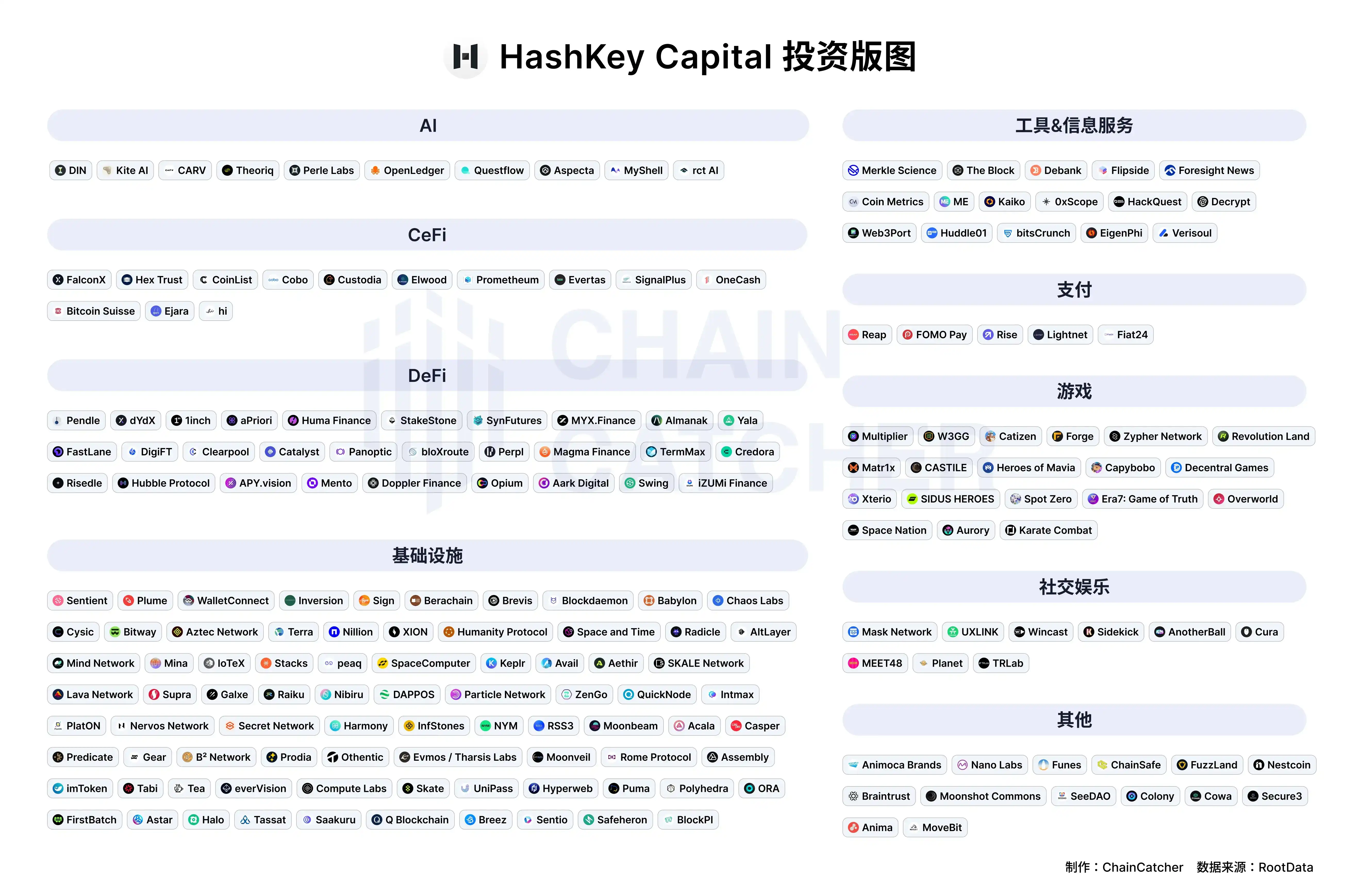
So, why was this round of fundraising for HashKey Capital so smooth? What areas will future investment strategies favor? How will the primary market evolve? ChainCatcher recently had an in-depth conversation with HashKey Capital Partner Xiao Xiao to try to reveal the answers to these questions to the market. The following is the full text of the dialogue:
ChainCatcher: In the primary market winter, HashKey Capital completed a $250 million fundraise, which sends a very positive signal for boosting market confidence. Can you share the specific process of this fundraising round?
Xiao Xiao: This round of fundraising started in mid-to-late September last year and was completed in about three months by the end of the year, raising a total of $250 million. The investor background includes institutional investors, family offices, and high-net-worth individuals from both traditional and Crypto circles.
The fundraising progress was indeed fast, but it wasn't that we completed it quickly without any preparation. Many investors had invested in our previous funds or other HashKey Capital products and were satisfied with the performance and team management, so they came back to reinvest this time. This is a relationship built up over the long term.
The total target for this fund is $500 million, so fundraising will continue. During the process, we also received many customized demands, especially from institutional capital. Therefore, the remaining $250 million may not all go into this fund itself; some might be converted into customized products.
ChainCatcher: Reports show that HashKey Capital's current fund will combine public market investment strategies with liquidity-creating crossover investment opportunities and selectively invest in the private market. Does this mean the new fund's focus is on secondary market investment?
Xiao Xiao: It can't be simply understood as a secondary fund. Our entire investment structure will be different from previous funds. Previously, it was common for primary funds to invest in primary and secondary funds in secondary, but this fund is a multi-strategy fund. It might invest in some liquid assets through primary forms, such as participating in PIPE or CB of listed companies, and also purchase assets of already tokenized projects through OTC.
Why adopt this strategy? On one hand, our early VC funds are still in their investment period, so the new fund will adopt a differentiated strategy. On the other hand, LPs at this stage have very high requirements for liquidity and exit. So, from this perspective, we will make the investment strategy more flexible, ensuring returns while making overall liquidity better.
ChainCatcher: You just mentioned that LPs of this fund have very high requirements for exit. How is this specifically reflected?
Xiao Xiao: On one hand, the investment strategy requires higher liquidity of the targets, ensuring the fund can exit timely. On the other hand, the overall fund structure will also be different from ordinary funds. Common funds are completely closed-end, possibly only naturally maturing after 8 years. Our fund will have an early redemption window in the mid-term. If investors want to take profits and exit, they can choose to redeem early in this window. If investors are more optimistic about the future, they can choose to stay in the fund.
ChainCatcher: HashKey Capital's current fund focuses on infrastructure, scalability, and large-scale application scenarios globally. What specifically does 'large-scale application scenarios' refer to? What is the core criterion for judging whether a project has the potential for 'large-scale application'?
Xiao Xiao: We believe large-scale application is not just about having a large number of users, but requires genuine usage motivation and a sustainable business model. Additionally, we need to see if the frequency of user usage can form a network effect, meaning users continue to use it for a long time, and whether multiple users can produce a 1+1>2 effect.
ChainCatcher: While many other VCs have significantly reduced their investment frequency, Hashkey remains one of the most active Asian crypto VCs. Why are you still confident in the market?
Xiao Xiao: Actually, we understand the behavior of other VCs reducing their investment frequency. Although we are still relatively active, compared to previous years, our recent investment count has also decreased. The main reason is that the number of excellent targets in the market is decreasing. Capital is concentrating towards top targets, and many projects, seeing this situation, simply don't come out to raise funds.
Why are we still willing to invest? This is actually our long-term strategy. In each cycle, when capital enthusiasm subsides and noise disappears, we can反而 find some projects with real long-term value. So we are willing to spend more effort at this stage to find such projects.
ChainCatcher: From public information, you rarely invest in prediction market projects. What are the considerations behind this?
Xiao Xiao: Actually, we have prediction market projects in our portfolio, such as Myriad, though it transitioned into prediction markets midway. We have been paying attention to Polymarket very early on, but previous fund terms had some restrictions, prohibiting investment in platforms with gambling性质. At that time, they were not compliant platforms and were in a gray area, so our fund did not invest.
Now, prediction market projects like Polymarket have become compliant, but their valuations have also increased significantly, no longer fitting the strategy of our early-stage funds. However, they would fit the strategy of our new fund better. So, we might participate in pre-IPO or IPO rounds.
ChainCatcher:Data shows that nearly 60% of new tokens in 2025 broke their issue price upon listing. Coupled with the fact that the token unlock周期 for venture capital institutions takes at least a year, many believe VCs are already in a weak position in the industry. How does this situation affect your discussions with project parties regarding valuation and unlock cycles?
Xiao Xiao:We have always been cautious about valuation. If a project is particularly high, no matter how popular, we will not participate. This is one of our risk control measures.
The listing valuations of many projects are indeed too high. Their intrinsic value isn't worth that much, or they are透支 future market value. Why do these tokens break their issue price? Because they lack a long-term business model to support them. Stock traders know that many U.S. stocks透支 the narrative for the next two or three years, but two or three years later, they have new stories or new businesses to continue raising value. This kind of sustainability is rare in the crypto circle. Many projects'热度 decreases after token issuance. On the other hand, the team lacks perseverance and doesn't want to continue after issuing the token.
How to avoid these problems? Mainly look at whether the project itself has its own造血 ability, whether it has a real business model, rather than the token just being an ecological reward with only selling pressure and no practicality to support it.
Regarding unlock cycles, we think token lock-up is reasonable. Whether for early investors or the team, if there is a long-term plan, a slow token release schedule is completely fine. But this节奏 needs to correspond to the product development节奏.
ChainCatcher: During the project due diligence phase, which dimensions of information do you focus on most?
Xiao Xiao:We value the team's own qualities the most, including their motivation for starting the business, vision, and execution ability. We have encountered many situations where the project itself and financial data were quite good, and the project caught the trend, but the team seemed arrogant or not down-to-earth. Such projects would be passed by me.
For a specific example, at the team management level, we pay attention to whether fund management is standardized, such as whether the company wallet and the founder's personal wallet are independent, and whether the employee incentive mechanism is sound. We have encountered situations during financial due diligence where the project party could not clearly provide this information, which usually indicates problems with fund management. We would directly pass on such projects.
ChainCatcher: The situation of Chinese entrepreneurs has become a highly concerned topic in the market. How do you view the changes in the status and role of Chinese entrepreneurs in the industry?
Xiao Xiao:I don't think the status of Chinese entrepreneurs is lower than that of European and American entrepreneurs; it's just that their status is reflected in different fields. If it's a project偏向 application or execution, I prefer to believe in Chinese teams because Chinese teams are often stronger than European and American teams in internet operations and execution ability.
The advantage of European and American teams may lie more in researching trends or creating trends. The excellent projects we see now are mostly hybrid teams. Even if it's a Chinese创业 project, if they need to expand into the European and American markets, they actually need to hire excellent Europeans and Americans. Similarly, European and American teams need Chinese to expand into the Asian market because Chinese are more successful in the Asian market.
ChainCatcher:The transparency of various types of information for most projects, such as team, token unlocks, and product progress, is very low, which is considered an important issue affecting industry development. How do you view the role transparency will play in the future of the加密 industry?
Xiao Xiao:We actually pay attention to this issue when investing and require them to inform us of the product progress. At the same time, we also encourage invested projects to increase transparency to the community, such as token unlock plans and monthly project progress reports to the community. If a project cannot even manage these processes, they may很快 be eliminated.
ChainCatcher: Do you think the加密 industry will evolve an information disclosure mechanism similar to that of traditional securities markets in the future?
Xiao Xiao:I think two extreme situations will emerge. One is completely anonymous or decentralized projects. The mechanisms of such projects are very simple, and the evolution is decided by the community through on-chain voting. This model itself does not require team disclosure because the governance process is transparent. But as long as a project wants to trade on a centralized exchange, it must承担 certain information disclosure obligations. Whether from the perspective of exchanges protecting users or from the perspective of industry development, a set of compliance and disclosure standards is needed.
ChainCatcher: After multiple market cycles, how do you view the trends and changes in the加密 industry's primary market going forward?
Xiao Xiao: In the past few years, I think a clear trend is the increasing integration of token financing and equity financing. Previously, many projects either went through SAFT financing or Equity financing, but now it's more of an Equity + Token model, which is flexible enough and convenient for exiting from both the crypto market and the traditional capital market.
For加密 projects, whether through IPO or backdoor listing, the listing channels have become smoother. I believe the capacity of the primary market will become larger and larger. Many companies with continuous造血 ability will gradually move closer to the traditional primary market. A large amount of capital will concentrate towards真正的头部创业者. This is already very obvious in the payment industry. Possibly due to the scarcity of targets, a large amount of capital is continuously pouring into top payment companies, regardless of how high the valuation is.
Furthermore, the boundary between primary and secondary investment in the加密 industry will not be so clear. This already appeared in the last wave of the DAT热潮. Many DAT projects raised funds in the primary market, but本质上 they are secondary targets. This situation will become more and more common in the future. Many projects will list first and then raise funds after having sufficient liquidity in the secondary market.