Death Is the Largest 'Buyer' of Cryptocurrency

深潮Опубліковано о 2025-12-16Востаннє оновлено о 2025-12-16

Анотація

Death is the largest "buyer" of cryptocurrency, permanently removing coins from circulation when holders pass away without sharing access to their wallets. With an estimated 500 million global crypto holders—mostly young—and an annual mortality rate of 0.2%, around 1 million holders die each year. If just 10% of these leave wallets recoverable, approximately 100,000 wallets holding an average of $20,000 each become inaccessible annually, effectively burning $2 billion in crypto. This issue grows as the holder population ages. To address inheritance without reintroducing intermediaries, a self-custody solution is proposed: create a long-hosted personal website with an obscure domain; encrypt seed phrases by converting each word into a numeric code based on its location in a specific book (page, line, word position); and publish only the code sequence on the site. This method balances security, accessibility, and avoids reliance on third parties, ensuring assets remain both secure and inheritable.

Written by: Pix

Compiled by: Saoirse, Foresight News

People in the cryptocurrency space often say, "Not your keys, not your coins." This sounds powerful, and indeed it is true. But behind this statement lies a mirrored logic—"Only your keys can own your cryptocurrency."
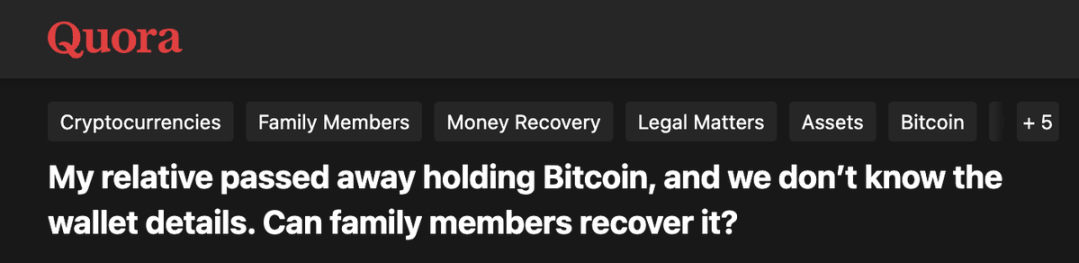
If no one else knows how to access your wallet, then the moment you stop breathing, your cryptocurrency effectively "ceases to exist." Of course, this is not literal disappearance—it still exists on the blockchain ledger, but from an economic perspective, it is no different from being burned.

So, how large is this "death buyer"?

Today, most cryptocurrency holders are young, with the majority between their late twenties and early forties.
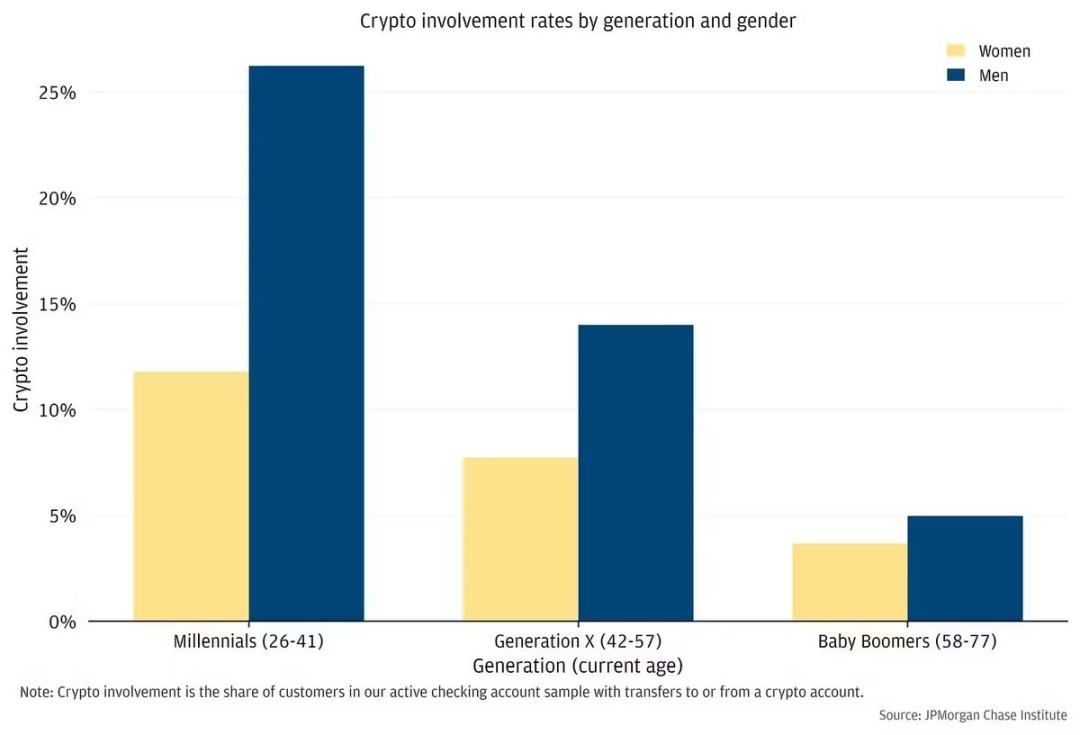
There are very few holders over retirement age, which makes the issue of "cryptocurrency loss due to death" easy to overlook. Even so, the relevant data is still staggering:

  • Approximately 60 million people die globally each year (based on a global population of about 8 billion);

  • There are about 500 million cryptocurrency holders globally (equivalent to 1 in 16 people holding cryptocurrency);

  • Since cryptocurrency holders are younger than the global average population, their mortality rate is lower, conservatively estimated at about 0.2% per year;

  • Based on this calculation, about 1 million people (500 million × 0.2%) among the holders will pass away each year.

Currently, most cryptocurrencies are self-custodied, and holders rarely make estate plans for them. Even if only 10% of the deceased's wallets become inaccessible due to no one knowing how to access them, about 100,000 wallets would become useless each year. If we conservatively assume that the average balance of these inaccessible wallets is only $20,000, then about $2 billion worth of cryptocurrency would exit circulation annually. Moreover, this number will continue to grow over time—after all, the younger generation will also age.

Percentage of cryptocurrency "destroyed" by death each year

This leaves us with a key question: Since the advantage of self-custodying cryptocurrency is the removal of intermediaries, how can we pass on these assets without reintroducing intermediaries?

Inheriting Assets Not Designed to Be "Inheritable"
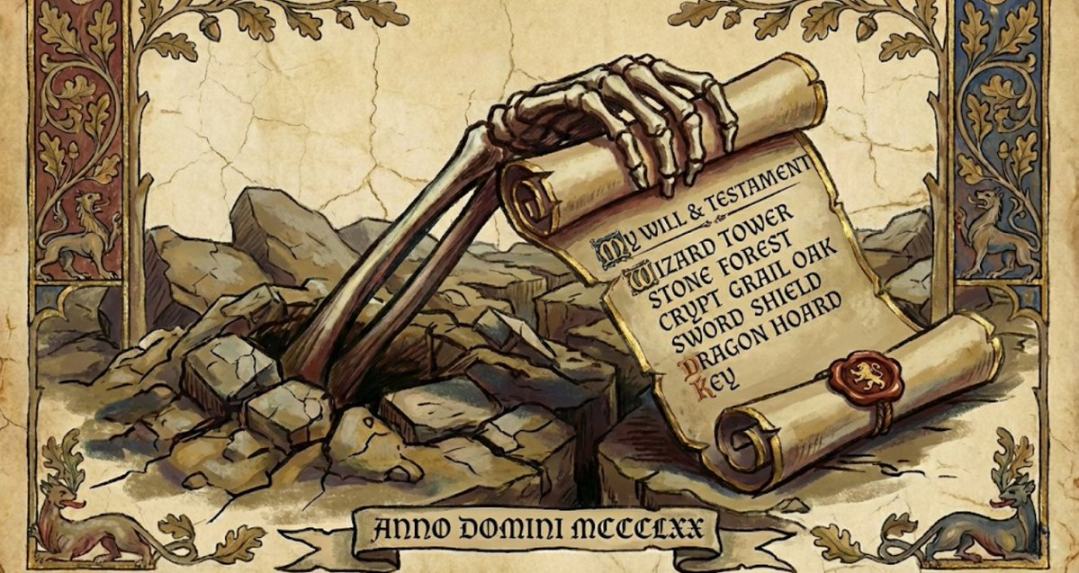
Most current solutions fall into two extremes: either simple but fragile, such as storing a seed phrase in a bank safe (easily lost or stolen); or secure but so complex that no one wants to use them in practice. Neither of these options is ideal, so I adopted a compromise—a simple three-step inheritance method that is easy to remember, difficult to crack, accessible anytime and anywhere, and 100% non-custodial (i.e., no reliance on intermediaries). The specific steps are as follows:

Step 1: Build a Dedicated Single-Page Website

Create a single-page website using a "niche domain" composed of 3-4 words—a domain that ordinary people would not easily type into a search bar but has personal significance to you, making it easy to remember. Prepay for hosting for 10 years or more and set up automatic renewal to ensure long-term accessibility.

Step 2: Encrypt and Convert the Seed Phrase into a Numeric String

First, choose a book you like, find the most common publisher of that book, and purchase 10 copies (ensuring the page numbers and layout are identical in each). Then, convert each word of your cryptocurrency wallet seed phrase into a numeric string: For each word in the seed phrase, find its location in the book and record the "page number - line number - word position in that line." For example, "112, 3, 5" represents "the 5th word on line 3 of page 112." Convert all seed phrase words into numeric strings using this method.

Step 3: Upload the Numeric String to the Dedicated Website

Simply publish the converted numeric string as a list on the dedicated website you built, in the following format:
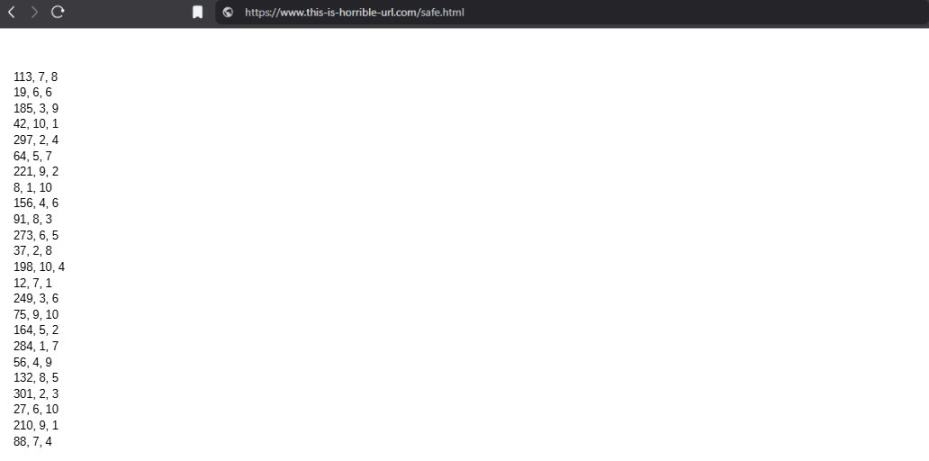
By the way, this is a real numeric string corresponding to a seed phrase, linked to $500 worth of cryptocurrency. However, the website domain is fictional, and the real seed phrase is hidden in a book. Just one hint: I absolutely love good detective novels. Happy "treasure hunting"~

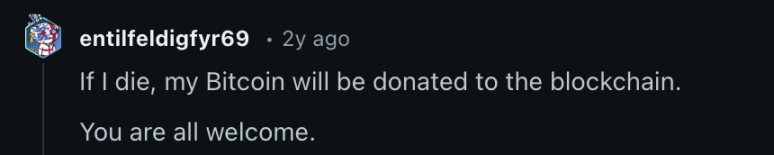
I know this might sound a bit "over the top," and some may think it unnecessary, but this method does make asset inheritance more flexible while ensuring security. You can further enhance security, such as by using rare books or self-printed copies of books to store the location information corresponding to the seed phrase; of course, you can also skip the hassle—just put a hardware wallet (like a Ledger) and a metal plate engraved with the seed phrase in a safe. Otherwise, your cryptocurrency may ultimately only "donate" to the blockchain (i.e., become permanently irretrievable).
Пов'язані питання

QWhat is the main argument of the article 'Death is the Largest 'Buyer' of Cryptocurrency'?

AThe article argues that death acts as a significant and growing 'buyer' of cryptocurrency because when holders die without sharing access to their wallets, those assets become effectively destroyed—remaining on the blockchain but permanently inaccessible, thus removing them from circulation.

QAccording to the article, how much cryptocurrency is estimated to be lost from circulation annually due to holder deaths?

AConservative estimates suggest that approximately $2 billion worth of cryptocurrency is lost annually due to around 100,000 holders dying without sharing access to their wallets, assuming an average wallet balance of $20,000.

QWhat is the three-step inheritance method proposed in the article for passing on cryptocurrency without reintroducing intermediaries?

AThe three-step method involves: 1) Creating a dedicated single-page website with a memorable, obscure domain name and prepaying hosting for over 10 years. 2) Converting the seed phrase into a numeric string by mapping each word to its location in a specific book (page number, line number, word position). 3) Uploading this numeric string to the dedicated website for heirs to access and decode.

QWhy does the article suggest that the problem of cryptocurrency loss due to death is often overlooked?

AThe problem is often overlooked because the majority of cryptocurrency holders are relatively young (late 20s to early 40s), so the mortality rate among them is low. However, as this demographic ages, the issue is expected to grow significantly.

QWhat example does the article give to illustrate the numeric conversion of a seed phrase for inheritance purposes?

AThe article provides an example where each word in the seed phrase is converted to a numeric string like '112, 3, 5', which represents 'page 112, line 3, the 5th word' in a specific book. This numeric list is then posted on a dedicated website for heirs to retrieve and decode using the same book.

Пов'язані матеріали

Understanding CPO (Co-Packaged Optics) in One Article: Why Nvidia Is Willing to Spend $3.2 Billion on a Fiber?

NVIDIA and Corning announced a multi-year strategic partnership on May 6, 2026, with NVIDIA committing up to $3.2 billion to support Corning's U.S. expansion. This investment will triple Corning's manufacturing plants and significantly boost its optical fiber and communications production capacity. The core driver behind this massive investment is the fundamental shift from copper to optical interconnect technology within AI data centers. As GPU clusters scale, copper wires face critical limitations: severe signal attenuation over distance, high energy consumption for signal integrity, and excessive heat generation. Optical fiber, transmitting light instead of electrical signals, solves these issues with minimal loss, near-light speed, and lower power needs. The article outlines a three-stage evolution of data center interconnect: 1. **Traditional Copper Interconnects:** The mainstream solution of the 2010s, now being phased out due to scaling bottlenecks. 2. **Pluggable Optical Modules:** The current mainstream, where modules convert electrical signals to light externally. This process still introduces energy loss and latency. 3. **CPO (Co-Packaged Optics):** The next-generation technology where the optical engine is integrated directly with the GPU chip package. This drastically reduces the electrical signal travel distance to mere millimeters, slashing power consumption and latency while boosting data density. NVIDIA CEO Jensen Huang has identified CPO as an essential core technology for AI infrastructure. NVIDIA's investment signifies a strategic shift from being a buyer to actively controlling its supply chain for critical components. With demand for specialized optical fiber far outstripping supply—evidenced by soaring prices—securing long-term manufacturing capacity has become a competitive necessity. While Corning's expansion may pressure some suppliers, a projected global fiber supply gap of 5-15% over the next few years creates a significant opportunity window, particularly for Chinese manufacturers competitive in optical preforms, chips, and modules. Ultimately, NVIDIA's move is not about chasing a trend but an engineering imperative. The transition to light-based interconnects like CPO is driven by the physical limits of copper, marking a definitive step in the ongoing AI computing revolution.

marsbit11 хв тому

Understanding CPO (Co-Packaged Optics) in One Article: Why Nvidia Is Willing to Spend $3.2 Billion on a Fiber?

marsbit11 хв тому

KOL's Perspective: Why Is SOL Set to Rise from This Point?

**Summary: Why SOL is Positioned for Growth at This Level** The article argues that SOL is poised for an upward move from its current price point, citing several key factors. Primarily, SOL has just broken out of a 4-month consolidation phase. This breakout signals a return of risk appetite to the broader crypto market, as SOL is seen as a key indicator of overall crypto health. The token's ownership has reportedly shifted from short-term traders and tourists to long-term accumulators, leading to low volume. Any meaningful increase in trading activity could thus trigger significant upward momentum. Fundamental strengths include strong institutional adoption, integration with DeFi and RWAs (Real-World Assets), and the potential benefits from the Clarity Act. Despite its high volatility—having dropped 70% from its all-time high but still up 12x from its bear market low—SOL is highlighted as one of the few tokens from the last cycle to reach new highs. It boasts a robust ecosystem of applications, users, and protocols. Future catalysts include the expected influx of AI developers following the Miami Accelerate conference, which focused on AI on Solana. Furthermore, Solana is positioned as the premier chain for memecoin activity, a trend expected to continue and drive network usage and fees. The article concludes that recent price action reflects a healthy transfer to long-term holders, setting the stage for growth.

marsbit1 год тому

KOL's Perspective: Why Is SOL Set to Rise from This Point?

marsbit1 год тому

Those Pre-Bitcoin PoW Protocols Have Recently Been Reimplemented

This article details a recent surge in replicating pre-Bitcoin Proof-of-Work (PoW) protocols, specifically focusing on Hal Finney's 2004 RPOW (Reusable Proofs of Work). Within five days in May 2026, multiple independent builders in the Bitcoin/cypherpunk community launched projects inspired by this early electronic cash proposal. The initiative began with Fred Krueger's `rpow2.com`, a centralized but auditable system that replaced RPOW's original IBM 4758 hardware with Ed25519 signatures. Initially a faithful replica, it later adopted Bitcoin-like features (21M supply cap, difficulty adjustment) and a controversial 5.24% founder allocation. This sparked rapid forks, including `rpow4.com` which incorporated full Bitcoin parameters, a prediction market (`rpowmarket.com`), and a DEX (`rpow2swap.com`). Concurrently, Mike In Space created a prototype of Wei Dai's 1998 b-money proposal (`b-money.replit.app`), pushing the historical exploration even further back. The article contrasts these centralized, server-dependent experiments with Bitcoin's core innovation of decentralized, trustless consensus. It also highlights a parallel development: the `HASH` project on Ethereum, which uses smart contract hooks to enable a purely fair-launch, browser-mineable PoW token with 0% allocations to team or VCs. The collective activity is framed as a meme-driven, educational exploration of cypherpunk history rather than a serious financial movement, with all projects heavily disclaiming any investment value.

marsbit1 год тому

Those Pre-Bitcoin PoW Protocols Have Recently Been Reimplemented

marsbit1 год тому

South Korean Exchanges 'Battle' Regulators, Challenging the Boundaries of Enforcement and Legislation

South Korea's cryptocurrency industry is engaged in a rare, direct confrontation with regulators. The Financial Intelligence Unit (FIU), the primary anti-money laundering (AML) watchdog, has recently imposed heavy penalties on major exchanges like Upbit and Bithumb for alleged violations involving unregistered overseas VASPs and AML procedures. However, exchanges are now actively challenging these actions in court and through industry associations. In a significant shift, the Seoul Administrative Court ruled in favor of Upbit's operator, Dunamu, overturning part of an FIU-ordered business suspension. The court found the FIU's penalty criteria and justification insufficiently clear. Similarly, the court suspended the enforcement of a six-month business suspension against Bithumb pending a final ruling, citing potential irreversible harm to the exchange. Beyond legal battles, the industry is contesting proposed legislative amendments. The Digital Asset eXchange Alliance (DAXA) strongly opposes a draft rule that would mandate Suspicious Transaction Reports (STRs) for all crypto transfers over 10 million KRW (~$6,800). DAXA argues this "poison pill" clause violates legal principles and would overwhelm the STR system, increasing reports from 63,000 to an estimated 5.45 million annually for major exchanges, thereby crippling effective AML monitoring. This conflict highlights a structural tension in South Korea's crypto governance: comprehensive digital asset laws are still developing, while regulators rely heavily on AML enforcement. The industry's move from passive compliance to active legal and legislative challenges signifies a new phase, pressing for clearer rules and more proportionate enforcement. While short-term disputes may intensify, this clash could ultimately lead to a more mature and sustainable regulatory framework for South Korea's vibrant crypto market.

marsbit1 год тому

South Korean Exchanges 'Battle' Regulators, Challenging the Boundaries of Enforcement and Legislation

marsbit1 год тому

Торгівля

Спот
Ф'ючерси

Популярні статті

Як купити PEOPLE

Ласкаво просимо до HTX.com! Ми зробили покупку ConstitutionDAO (PEOPLE) простою та зручною. Дотримуйтесь нашої покрокової інструкції, щоб розпочати свою криптовалютну подорож.Крок 1: Створіть обліковий запис на HTXВикористовуйте свою електронну пошту або номер телефону, щоб зареєструвати обліковий запис на HTX безплатно. Пройдіть безпроблемну реєстрацію й отримайте доступ до всіх функцій.ЗареєструватисьКрок 2: Перейдіть до розділу Купити крипту і виберіть спосіб оплатиКредитна/дебетова картка: використовуйте вашу картку Visa або Mastercard, щоб миттєво купити ConstitutionDAO (PEOPLE).Баланс: використовуйте кошти з балансу вашого рахунку HTX для безперешкодної торгівлі.Треті особи: ми додали популярні способи оплати, такі як Google Pay та Apple Pay, щоб підвищити зручність.P2P: Торгуйте безпосередньо з іншими користувачами на HTX.Позабіржова торгівля (OTC): ми пропонуємо індивідуальні послуги та конкурентні обмінні курси для трейдерів.Крок 3: Зберігайте свої ConstitutionDAO (PEOPLE)Після придбання ConstitutionDAO (PEOPLE) збережіть його у своєму обліковому записі на HTX. Крім того, ви можете відправити його в інше місце за допомогою блокчейн-переказу або використовувати його для торгівлі іншими криптовалютами.Крок 4: Торгівля ConstitutionDAO (PEOPLE)Легко торгуйте ConstitutionDAO (PEOPLE) на спотовому ринку HTX. Просто увійдіть до свого облікового запису, виберіть торгову пару, укладайте угоди та спостерігайте за ними в режимі реального часу. Ми пропонуємо зручний досвід як для початківців, так і для досвідчених трейдерів.

452 переглядів усьогоОпубліковано 2024.12.12Оновлено 2025.03.21

Як купити PEOPLE

Обговорення

Ласкаво просимо до спільноти HTX. Тут ви можете бути в курсі останніх подій розвитку платформи та отримати доступ до професійної ринкової інформації. Нижче представлені думки користувачів щодо ціни PEOPLE (PEOPLE).

活动图片













