Crypto’s $30 billion lending boom is changing the market – Here’s how

ambcryptoОпубліковано о 2026-03-26Востаннє оновлено о 2026-03-26

Анотація

Crypto's lending sector, now valued at $30 billion, is emerging as a key pillar, shifting focus from Layer 1 blockchains like Ethereum and Tron. While L1s still dominate in value, lending protocols such as Aave and Morpho are at the center of a rapidly growing on-chain credit system. The rise of stablecoins as a medium of exchange and the expansion of tokenized assets are improving liquidity and market efficiency. This lending boom is creating a new "yield layer," where users earn returns through interest, leverage, and better capital utilization, turning holdings into productive assets.

For years, the crypto spotlight has been on L1s like Ethereum [ETH] and Tron [TRX]. Today, it seems like that’s changed.

On-chain lending is becoming one of the ecosystem’s most consequential pillars!

An assessment of the competitive landscape

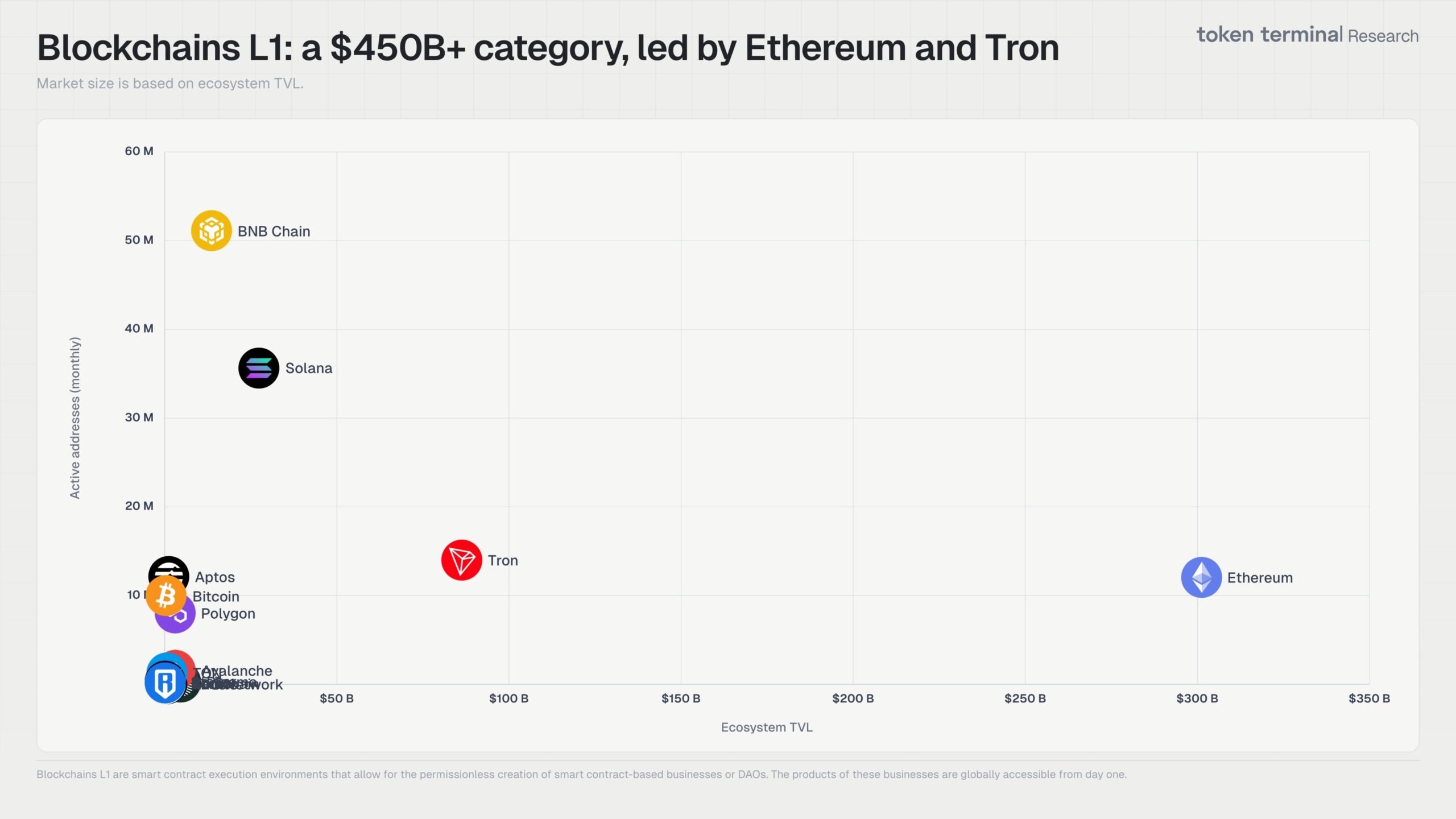
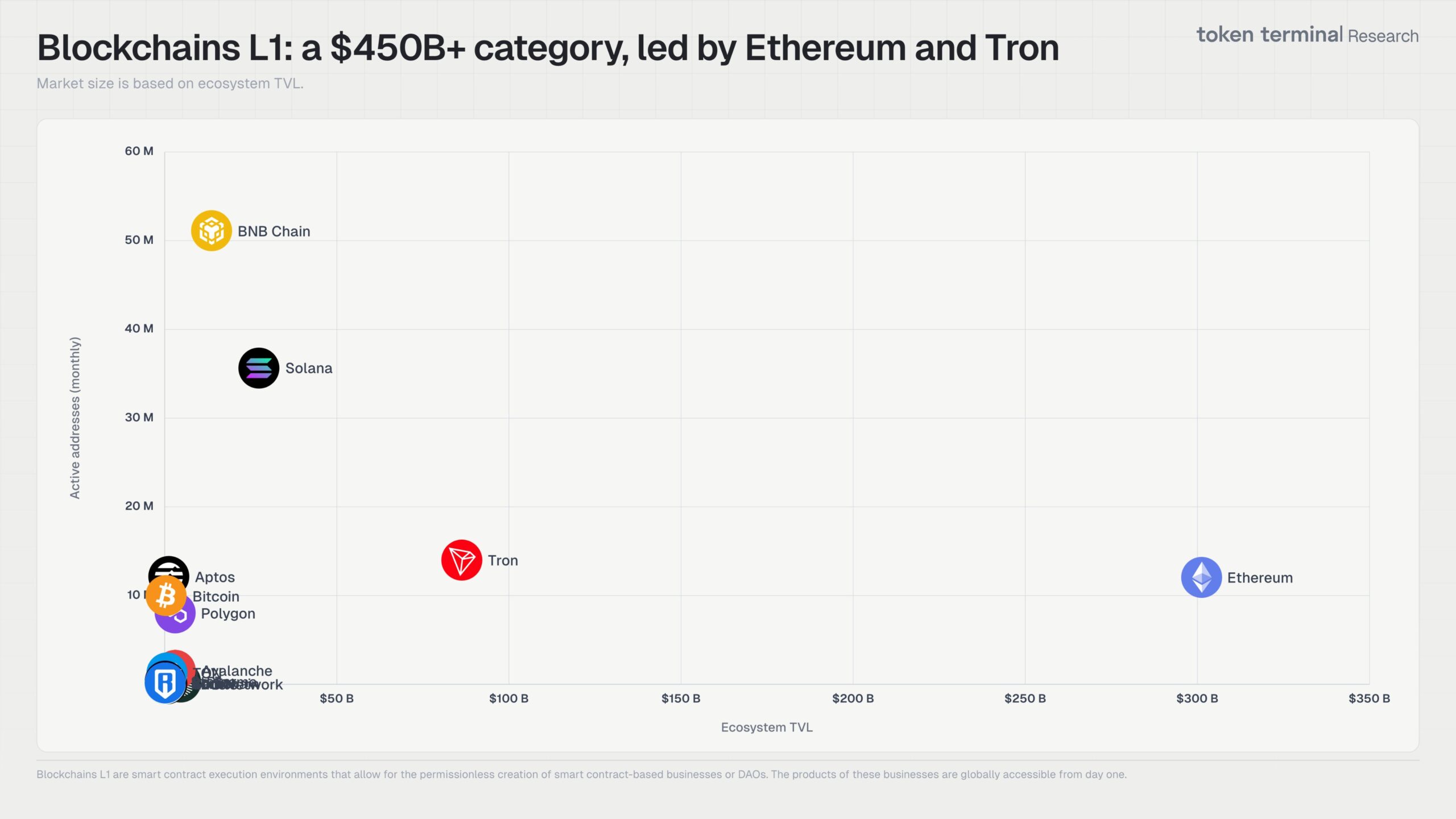
Layer 1 blockchains still anchor the crypto economy today, with the aforementioned L1s commanding a disproportionate share of ecosystem value. According to data from Token Terminal, the gap between these leaders and the rest of the race is stark.
Source: Token Terminal

Elsewhere, chains like BNB Chain [BNB] and Solana [SOL] are competing on the user activity front, even as their relative TVL lags.

The market is still concentrated at the top, but a lot more competitive than we think.

Is lending the new yield source?

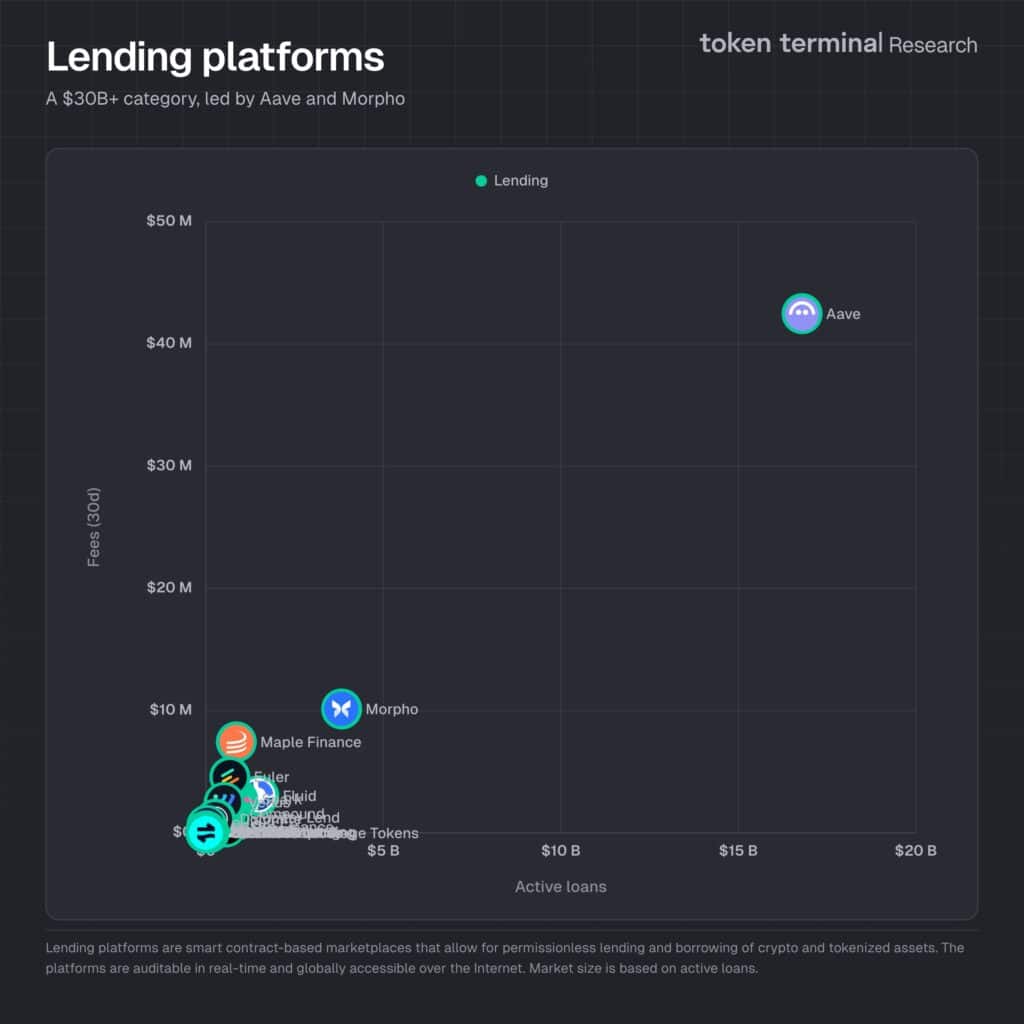
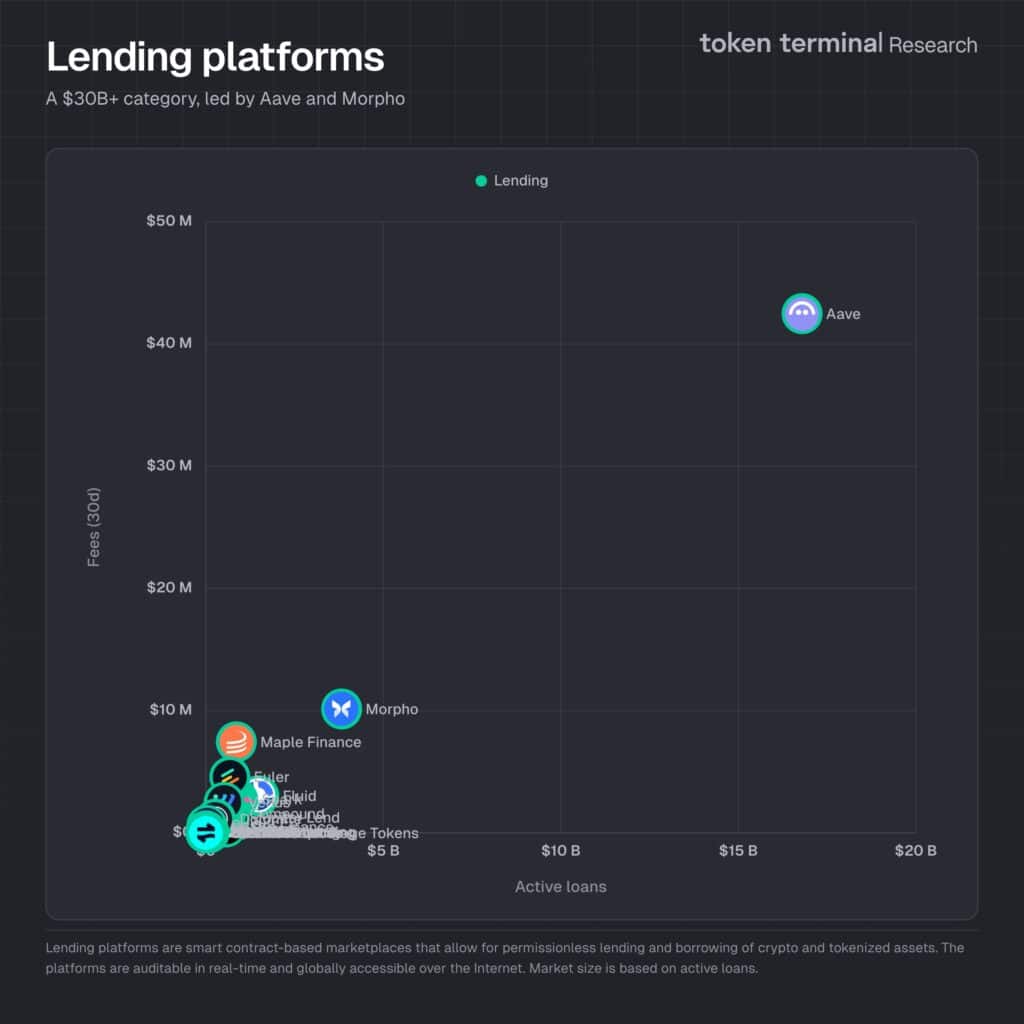
Building on that foundation, lending protocols like Aave and Morpho are now at the center of a fast-growing, on-chain credit system worth about $30 billion!

With stablecoins becoming a popular medium of exchange on-chain, they’re also a default asset for borrowing and lending. On the other hand, a new class of tokenized assets (from funds to commodities and even equities) are expanding the pool of usable collateral.
Source: Token Terminal

Together, they improve liquidity and make markets more efficient.

This is where lending begins to resemble what crypto twitter is now calling a “yield layer.” Instead of relying on buzz alone, users see returns through interest, leverage, and better capital.

In doing so, lending platforms turn holdings into productive assets, and the effects are far-reaching.

Case in point? Rhea Finance integrating with TRON.

Пов'язані питання

QWhat is the current estimated value of the on-chain credit system driven by lending protocols like Aave and Morpho?

AThe on-chain credit system driven by lending protocols like Aave and Morpho is worth about $30 billion.

QWhich Layer 1 blockchains are mentioned as commanding a disproportionate share of ecosystem value according to Token Terminal data?

AEthereum [ETH] and Tron [TRX] are mentioned as commanding a disproportionate share of ecosystem value.

QWhat are stablecoins becoming a popular medium for on-chain, according to the article?

AStablecoins are becoming a popular medium of exchange on-chain, and they are also a default asset for borrowing and lending.

QHow are lending platforms transforming user holdings, as described in the article?

ALending platforms are turning user holdings into productive assets by providing returns through interest, leverage, and better capital efficiency.

QWhat new class of assets is expanding the pool of usable collateral in the lending market?

AA new class of tokenized assets, from funds to commodities and even equities, is expanding the pool of usable collateral.

Пов'язані матеріали

WeChat Agent Issues a 'Heroic Summons,' Half of the Internet Responds

WeChat AI Agent is on the horizon. The WeChat Open Platform has issued a guide for developers, offering them ways to integrate into the WeChat AI ecosystem. This will enable mini-programs to be discovered and invoked by the AI. Meituan has already announced its integration, allowing users to access services like food delivery through WeChat AI. Other platforms like Ctrip and Tongcheng have followed suit. Furthermore, WeChat is collaborating with major smartphone manufacturers to enable their native AI assistants to perform actions within WeChat, such as initiating calls or sending messages, through a controlled protocol called Agent-to-Agent (A2A). Reports indicate the WeChat AI Agent will be accessible by swiping right on the main interface. It aims to understand user intent within the rich context of chats, groups, and past interactions, then automatically call upon relevant mini-programs to complete tasks like ordering coffee or booking restaurants. This positions it as a potential "super app" with direct access to WeChat's vast ecosystem of services, social connections, and payment systems. Technically, this is a complex endeavor. It requires advanced natural language understanding, a "world model" to predict interactions within mini-programs (UI-Oceanus), multi-model orchestration for cost efficiency, and careful coordination with millions of third-party service providers. Tencent's development follows a "Co-Design" approach, where product teams and the Hunyuan model team collaborate closely, allowing capabilities honed in other AI products (like Yuanbao for chat, ima for search, WorkBuddy for office tasks) to be transferred to the WeChat Agent. Tencent is strategically opting for the A2A protocol over GUI-based automation (which it has blocked in the past), maintaining control over its ecosystem. To manage the immense scale and cost of serving 1.4 billion monthly active users, Tencent is deepening its ties with DeepSeek, known for its cost-effective training, to secure a low-cost inference backbone. The ultimate goal is to solve practical, everyday problems for users within the WeChat ecosystem, moving beyond technical benchmarks to deliver real utility, which Tencent sees as the key to winning in the long-term AI game.

marsbit1 год тому

WeChat Agent Issues a 'Heroic Summons,' Half of the Internet Responds

marsbit1 год тому

Humanity Loses $31 Million in Attack, Token Price Plummets 90% Due to a Single Private Key

On June 9th, the digital identity project Humanity Protocol suffered a major security breach resulting in over $31 million in losses. According to on-chain analyst Specter, hundreds of wallets holding the project's H token were drained. The attack was confirmed by founder Terence Kwok to be caused by the compromise of a foundation member's private key. As a precaution, users are advised to avoid interacting with Humanity's cross-chain bridge or liquidity pools. The incident caused the H token price to crash over 90%, from around $0.70 to a low of $0.052, wiping its market cap from $2 billion to approximately $35.7 million. The attacker allegedly minted 100 million new H tokens and is selling them for BNB. This breach adds to existing controversies surrounding Humanity Protocol. Founded in 2024, it aimed to verify human users via palm-print biometrics and zero-knowledge proofs. However, a leaked conversation in 2025 revealed that only about 1 million of its 9 million claimed Human IDs had completed biometric verification, suggesting 88% might be bots. Furthermore, the project has faced allegations of being a repackaged product from a Chinese access control vendor, raising privacy and authenticity concerns. Founder Terence Kwok's previous venture, Tink Labs, a hotel smartphone startup that raised $170 million, failed and entered bankruptcy in 2020 after burning through its funding. The current attack highlights the persistent critical issue of private key management in crypto. Unlike smart contract exploits, a private key compromise bypasses all on-chain security mechanisms. With no user compensation plan announced yet, this $31 million breach may be a final blow to the project's credibility, already weakened by previous controversies and a heavily depreciated token.

marsbit1 год тому

Humanity Loses $31 Million in Attack, Token Price Plummets 90% Due to a Single Private Key

marsbit1 год тому

Торгівля

Спот
Ф'ючерси

Популярні статті

Як купити TRX

Ласкаво просимо до HTX.com! Ми зробили покупку TRON (TRX) простою та зручною. Дотримуйтесь нашої покрокової інструкції, щоб розпочати свою криптовалютну подорож.Крок 1: Створіть обліковий запис на HTXВикористовуйте свою електронну пошту або номер телефону, щоб зареєструвати обліковий запис на HTX безплатно. Пройдіть безпроблемну реєстрацію й отримайте доступ до всіх функцій.ЗареєструватисьКрок 2: Перейдіть до розділу Купити крипту і виберіть спосіб оплатиКредитна/дебетова картка: використовуйте вашу картку Visa або Mastercard, щоб миттєво купити TRON (TRX).Баланс: використовуйте кошти з балансу вашого рахунку HTX для безперешкодної торгівлі.Треті особи: ми додали популярні способи оплати, такі як Google Pay та Apple Pay, щоб підвищити зручність.P2P: Торгуйте безпосередньо з іншими користувачами на HTX.Позабіржова торгівля (OTC): ми пропонуємо індивідуальні послуги та конкурентні обмінні курси для трейдерів.Крок 3: Зберігайте свої TRON (TRX)Після придбання TRON (TRX) збережіть його у своєму обліковому записі на HTX. Крім того, ви можете відправити його в інше місце за допомогою блокчейн-переказу або використовувати його для торгівлі іншими криптовалютами.Крок 4: Торгівля TRON (TRX)Легко торгуйте TRON (TRX) на спотовому ринку HTX. Просто увійдіть до свого облікового запису, виберіть торгову пару, укладайте угоди та спостерігайте за ними в режимі реального часу. Ми пропонуємо зручний досвід як для початківців, так і для досвідчених трейдерів.

1.4k переглядів усьогоОпубліковано 2024.12.10Оновлено 2026.06.02

Як купити TRX

Обговорення

Ласкаво просимо до спільноти HTX. Тут ви можете бути в курсі останніх подій розвитку платформи та отримати доступ до професійної ринкової інформації. Нижче представлені думки користувачів щодо ціни TRX (TRX).

活动图片













