Crypto.com says market maker boosts liquidity, denies trading edge on customers

cointelegraphОпубліковано о 2025-12-23Востаннє оновлено о 2025-12-23

Анотація

Crypto.com is establishing an internal market-making team to support its expansion into prediction markets, a move it states is fully compliant with regulations and designed to boost liquidity. The company denies its internal team has any unfair advantage, asserting it does not get a "first look" at customer orders or proprietary data. It emphasized that all market makers operate under the same rules to ensure fairness and that proprietary trading is not a revenue source. The practice is common among competitors like Kalshi and Polymarket, which also use market makers to provide liquidity.

Cryptocurrency exchange Crypto.com is building an internal market-making team as part of its expansion into prediction markets, a move the company says is fully aligned with federal regulations and intended to improve liquidity, even as market-making in outcome-based trading continues to draw scrutiny.

Bloomberg reported Tuesday that the exchange is recruiting for a new role on its market-making desk, citing a job posting for a “quant trader” who would help buy and sell contracts tied to the outcomes of sporting events on Crypto.com’s prediction platform.

Source: Bloomberg

The report has drawn attention to the practice of exchanges facilitating trading against customer orders, a structure that can raise questions about conflicts of interest as prediction markets gain traction across both crypto and traditional finance.

In a statement to Cointelegraph, a Crypto.com spokesperson said the company’s internal trading team is fully disclosed to the US Commodity Futures Trading Commission and makes markets across its North American derivatives business.

“The bottom line for customers is [that] more competition and liquidity on the platform creates a better overall experience,” the spokesperson said, adding that internal and external market makers operate under the same rules to ensure market fairness and integrity.

“No market maker at Crypto.com gets a ‘first look’, and our internal market maker does not have access to proprietary data or customer order flow before other market makers or market participants,” the spokesperson said.

They added that Crypto.com does not rely on proprietary trading as a revenue source. “We have a simple business model providing our retail customers access to digital assets for a fee, while staying risk neutral," they said.

Related: Phantom taps Kalshi to offer regulated prediction markets in wallet

Market-making isn’t unique to Crypto.com

Crypto.com is not the only prediction-market operator to rely on market makers to support liquidity.

The Bloomberg report noted that competitors such as Kalshi and Polymarket also use professional trading companies or dedicated liquidity providers to facilitate trading on their platforms.

Kalshi, which operates a federally regulated event-contract exchange, relies on designated market makers rather than a purely peer-to-peer order book, and those arrangements have largely been public. It has been reported that quantitative trading company Susquehanna International Group has provided market-making services to Kalshi since 2024, helping supply liquidity as trading volumes surged.

Polymarket, a decentralized prediction market that drew widespread attention during the US presidential election for accurately predicting the outcome, is also building an internal market-making unit, according to Bloomberg.
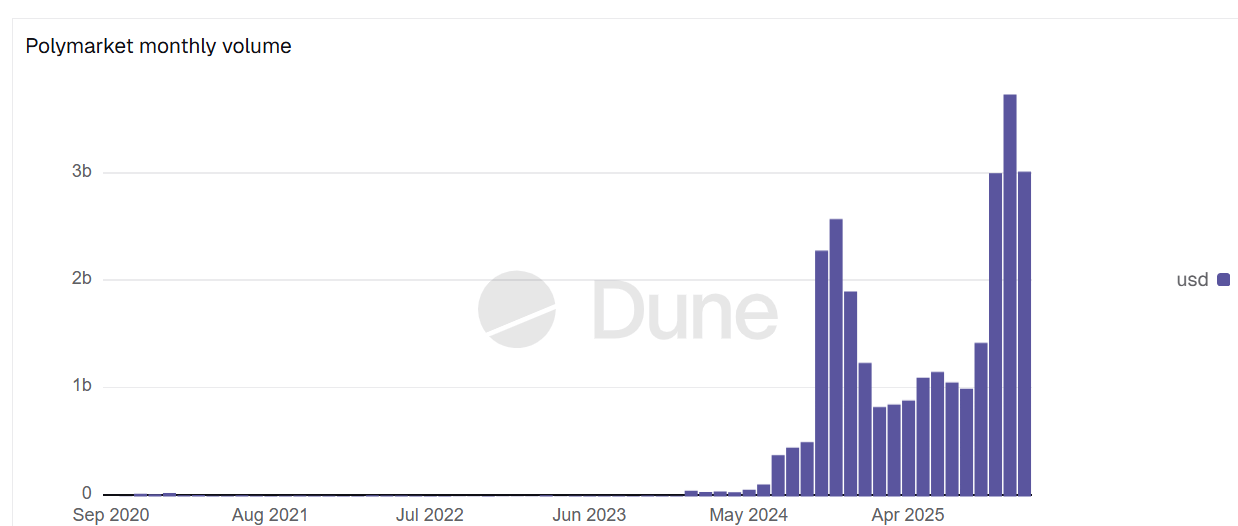
Polymarket’s monthly volumes began to surge in the run-up to the 2024 US presidential election. Source: Dune

Related: DraftKings eyes crypto offerings as it expands into prediction markets

Пов'язані питання

QWhat is the primary reason Crypto.com is building an internal market-making team, according to the company?

ACrypto.com states that building an internal market-making team is intended to improve liquidity and create a better overall experience for customers, and it is fully aligned with federal regulations.

QHow does Crypto.com address concerns about conflicts of interest and unfair advantages for its internal market maker?

ACrypto.com states that its internal market maker does not get a 'first look' at proprietary data or customer order flow before other market participants, and all market makers operate under the same rules to ensure fairness and integrity.

QBesides Crypto.com, which other prediction-market operators use market makers to support liquidity, as mentioned in the article?

AThe article mentions that competitors such as Kalshi and Polymarket also use professional trading companies or dedicated liquidity providers to facilitate trading on their platforms.

QWhat is Crypto.com's stated business model regarding proprietary trading and revenue?

ACrypto.com states that it does not rely on proprietary trading as a revenue source and has a simple business model of providing retail customers access to digital assets for a fee while staying risk neutral.

QWhich quantitative trading company has been reported to provide market-making services to Kalshi since 2024?

AQuantitative trading company Susquehanna International Group has been reported to provide market-making services to Kalshi since 2024.

Пов'язані матеріали

Within Strategy's Framework, STRC's Dividend Yield Remains at 12% as Share Price Stays Below Par Value

Michael Saylor, Executive Chairman of Strategy (MSTR), confirmed that the dividend rate for its STRC perpetual preferred shares will remain at 12.00% through August 2026. The rate has increased from 9% at its July 2025 launch to the current high via a "ratchet" mechanism, which permanently raises the rate by 0.5% whenever the share price falls below $95. This mechanism is intended to push the price back toward its $100 par value and support Strategy's "at-the-market" (ATM) program for issuing new shares to fund Bitcoin purchases. However, the mechanism has not worked as intended. STRC shares closed at $89.46 on July 31, remaining about 10-11% below par value despite the record-high dividend. Competition from rival Strive's higher-yielding SATA securities has pressured demand. The persistent discount has forced Strategy to suspend new STRC issuances via its ATM program, limiting this funding channel for Bitcoin acquisitions. STRC's struggles reflect Bitcoin's own volatility, as the preferred shares historically move in tandem. Analysts have warned the ratchet structure carries long-term, one-way risk. A law firm is investigating Strategy's ability to maintain dividend payments if Bitcoin's price stays low. Retail investors own roughly 83% of outstanding STRC shares, a group seen as prone to panic selling during downturns. In response, Strategy has established financial reserves, including a liquidity cushion covering about 26 months of dividend/interest obligations, and a $2 billion share buyback program alongside a Bitcoin monetization framework, though the company emphasized it is not obligated to sell any Bitcoin.

cryptonews.ru15 хв тому

Within Strategy's Framework, STRC's Dividend Yield Remains at 12% as Share Price Stays Below Par Value

cryptonews.ru15 хв тому

Analyst: Bitcoin's Price Will Drop to $60k in August, Then Rebound to $70k

Financial analyst Andrey Poroshin has provided a new forecast for Bitcoin's price dynamics in August. Poroshin, an analyst at the Bitbanker exchange, expects the cryptocurrency market to experience a downturn this month, with prices retesting the $60,000 level due to a lack of supportive macroeconomic catalysts. He noted that the recent US Federal Reserve decision to hold interest rates did not significantly impact the market, while inflation remains above the 2% target. Poroshin stated that Bitcoin is ending July under pressure from moderate volatility and a lack of new macroeconomic stimuli, leading to continued market caution. According to his base scenario, Bitcoin will drop to a range of $60,000 to $62,000 before recovering to $70,000. He pointed out that even $70,000 remains below the cost of mining in the US, which has prompted some miners to shift towards AI data center operations. Poroshin cited the winding down of BitMEX's operations as a potential catalyst for a price rebound, suggesting the exit of weaker players often coincides with market reversals and reduced short-term selling pressure. He believes Bitcoin is currently less susceptible to geopolitical shocks, such as the Iran-US conflict, and does not expect significant market changes in August related to the pending CLARITY Act. Looking ahead, Poroshin forecasts that September will bring more active price fluctuations driven by potential Fed rate decisions and possible discussions or approval of the CLARITY Act.

cryptonews.ru15 хв тому

Analyst: Bitcoin's Price Will Drop to $60k in August, Then Rebound to $70k

cryptonews.ru15 хв тому

Торгівля

Спот
活动图片





