Crypto Victims Relieved – Or Too Late? What Operation Atlantic Really Means

bitcoinistОпубліковано о 2026-04-10Востаннє оновлено о 2026-04-10

Анотація

Operation Atlantic is a major UK-US-Canada law enforcement initiative targeting crypto fraud and approval-phishing scams, involving agencies like the UK's National Crime Agency and the U.S. Secret Service, along with private partners such as Chainalysis. The operation aims to identify victims and compromised wallets in real time, freeze illicit funds before laundering, and generate investigative leads. Initial results include over 20,000 identified victims, more than 20,000 flagged wallet addresses, and over $12 million in frozen suspected scam proceeds. Globally, $45 million in stolen crypto has been identified. Approval phishing scams trick users into signing malicious transactions, allowing direct wallet draining. The operation highlights growing efforts to combat these rapidly evolving crypto crimes.

Crypto companies and public authorities are joining forces in “Operation Atlantic”, a coordinated push to shut down crypto fraud schemes and approval‐phishing attacks.

A Transnational Operation Against Crypto Phishing Scams

Operation Atlantic is a rare case of law enforcement moving in near real time to block scammers before funds fully disappear on‐chain. The operation is a joint UK–US–Canada venture led by the UK’s National Crime Agency and the US Secret Service, targeting crypto investment and “approval phishing” scams. The multiparty operation is also joined by private industry partners like Chainalysis. The blockchain data and analytics company announced the partnership in a yesterday’s post on their website.

As stated by Chainalysis:

Operation Atlantic’s objective is simple but ambitious: spot victims and compromised wallets in real time, freeze and secure illicit funds before they can be laundered through exchanges or services, generate new investigative leads on the fraud networks behind these scams, and lay the groundwork for ongoing investigations based on the intelligence collected during the operation.

Inside Operation Atlantic’s First Results

The operation, announced last month, has yielded its first striking results.

According to a new report from the National Crime Agency (NCA) of the United Kingdom, more than 20,000 victims have been identified, with over 20,000 wallet addresses flagged and more than $12 million in suspected scam proceeds frozen.

More than $45 million stolen in cryptocurrency fraud schemes has been identified around the world.

The report also highlighted that the operation identified one UK victim that lost more than £52,000 to this type of fraud.

Phishing 101

In approval phishing scams, victims are tricked into signing malicious on‐chain approvals that grant the scammers permission to drain tokens directly from their wallets. These attempts are often disguised as investment opportunities or “account security” prompts.

Such tactics are increasingly favored by organized fraud networks because they bypass traditional password theft and rely on users misunderstanding what they are signing.

Just yesterday, our sister website NewsBTC reported that South Korean authorities are rolling out a new standardized withdrawal‐delay across all exchanges in order to prevent damage from phishing scams that depend on speed.

Last month, the Solana memecoin issuance platform Bonk.fun was hichjacked by a phishing scam that set up a fake “Terms of Services” (TOS) signature prompt which, when signed, allowed the drainer to move the unaware user’s funds.

At the beginning of the month, the social network X announced it is in the process of rolling out its toughest anti-crypto scam measure to date, particularly design to combat phishing scams.

As law enforcement becomes more adept at tracing and freezing stolen funds, scam operations will likely move to more complex laundering routes, creating both new tail risks and new on‐chain data signals for sophisticated traders to track.
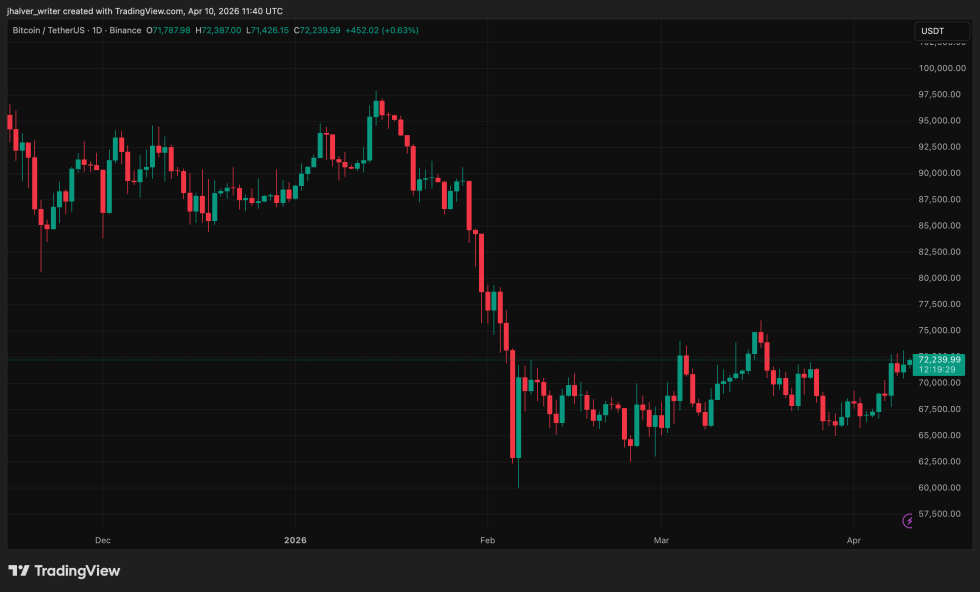
At the moment of writing, BTC trades for the more than $72k on the daily chart. Source: BTCUSDT on Tradingview.

Cover image from Perplexity. BTCUSDT chart from Tradingview.

Пов'язані питання

QWhat is the main objective of Operation Atlantic as described in the article?

AThe main objective of Operation Atlantic is to spot victims and compromised wallets in real time, freeze and secure illicit funds before they can be laundered, generate new investigative leads on the fraud networks, and lay the groundwork for ongoing investigations.

QWhich countries and private company are leading the joint venture known as Operation Atlantic?

AOperation Atlantic is a joint UK-US-Canada venture led by the UK's National Crime Agency and the US Secret Service, with the private industry partner Chainalysis also participating.

QAccording to the article, what were the first key results achieved by Operation Atlantic?

AThe operation identified more than 20,000 victims, flagged over 20,000 wallet addresses, and froze more than $12 million in suspected scam proceeds. It also identified over $45 million stolen in cryptocurrency fraud schemes worldwide.

QHow do approval phishing scams work, according to the article?

AIn approval phishing scams, victims are tricked into signing malicious on-chain approvals that grant scammers permission to drain tokens directly from their wallets. These attempts are often disguised as investment opportunities or 'account security' prompts.

QWhat recent actions have other entities taken to combat phishing scams, as mentioned in the article?

ASouth Korean authorities are rolling out a new standardized withdrawal-delay across all exchanges. The social network X announced it is implementing its toughest anti-crypto scam measure to date, specifically designed to combat phishing scams.

Пов'язані матеріали

Codex Goal Mode Usage Guide: How to Make AI Continuously Pursue a Specific Objective

"Codex Goal Mode: How to Make AI Work Continuously Toward a Specific Goal" OpenAI's Codex "goal mode" (/goal) transforms the AI from a reactive code assistant into a proactive execution agent capable of working autonomously for hours or even days to achieve a defined objective. To maximize its effectiveness, follow these key principles: 1. **Define Clear, Verifiable Exit Criteria:** The goal prompt should be a concise, measurable success condition, not a lengthy specification. Use quantifiable metrics like "reduce build time by 30%" or "achieve 100% test parity." 2. **Provide Initial Guidance and Tools:** Direct Codex toward likely problem areas and specify available tools (e.g., browsers, testing environments) to prevent it from exploring unproductive paths. 3. **Enable Progress Measurement:** Equip Codex with ways to track advancement, such as creating comparison tools for visual tasks or evaluation sets, ensuring it can gauge its own progress. 4. **Use a Realistic Execution Environment:** For tasks like performance optimization, provide access to environments that closely mimic production (e.g., similar configs, databases) to yield valid results. 5. **Be Cautious with Visual Goals:** Avoid vague "pixel-perfect" instructions. Instead, supplement visual references with functional checklists or design system specifications to prevent Codex from obsessing over minor details. 6. **Implement Progress Tracking:** For long-running tasks, have Codex commit code to draft PRs, update progress documents, or send Slack updates to maintain visibility into its work. 7. **Review and Consolidate Results:** Once the goal is met, instruct Codex to review its work, clean up ineffective experimental code, and reflect on what strategies succeeded or failed. Ultimately, using goal mode shifts the developer's role from writing prompts to managing a persistent engineering agent—defining objectives, establishing metrics, configuring environments, and conducting final reviews.

marsbit56 хв тому

Codex Goal Mode Usage Guide: How to Make AI Continuously Pursue a Specific Objective

marsbit56 хв тому

From Ethereum to AI's 'CROPS': What Exactly Is This 'Slow Variable' That Vitalik Has Repeatedly Emphasized?

Recently, Vitalik Buterin has frequently emphasized the concept of "CROPS," first outlined in the Ethereum Foundation's March mandate as core principles guiding its focus: Censorship Resistance, Capture Resistance, Open Source, Privacy, and Security. CROPS represents Ethereum's commitment to providing foundational capabilities for user sovereignty—enabling asset ownership, identity expression, and coordination without reliance on centralized platforms or surrendering ultimate control. This framework is gaining new urgency with the rise of AI, particularly AI agents managing digital assets and automating transactions. While AI offers convenience, it risks centralizing user data, intent, and control if dependent on opaque, centralized services. Vitalik argues for "CROPS AI"—AI that is open, privacy-preserving, secure, and capable of local execution to maintain user agency. He highlights convergence between "CROPS Ethereum access layers" and "CROPS AI," such as using zero-knowledge proofs for private remote LLM calls and Ethereum RPC reads, ensuring users can access services without exposing sensitive information. Ultimately, CROPS is not just an abstract ideal but a practical guide for Ethereum's development and AI integration. It addresses the critical long-term question: as digital systems grow more powerful, how can users retain control over their privacy, assets, and autonomy? In an AI-driven era, these principles may define Ethereum's enduring value—prioritizing verifiable, secure, and user-centric design over short-term optimizations like speed and cost alone.

marsbit1 год тому

From Ethereum to AI's 'CROPS': What Exactly Is This 'Slow Variable' That Vitalik Has Repeatedly Emphasized?

marsbit1 год тому

Торгівля

Спот
Ф'ючерси
活动图片





