Crypto Tycoons Grace the Cover of 'Vanity Fair', Only to Face Widespread Ridicule Online

比推Опубліковано о 2026-03-18Востаннє оновлено о 2026-03-18

Анотація

Crypto industry leaders, including Cathie Wood (ARK Invest), Olaf Carlson-Wee (Polychain), and Michael Novogratz (Galaxy Digital), were featured in a *Vanity Fair* cover story titled “Crypto’s True Believers Want to Be Taken Seriously.” However, the article and its accompanying photos were widely mocked across social media. Rather than portraying the figures as serious innovators, the publication depicted them as eccentric and out-of-touch billionaires—highlighting their interests in extraterrestrial life, extreme survivalism, and going barefoot in public. Critics within the crypto community accused *Vanity Fair* of intentional ridicule, pointing to unflattering photo compositions and dismissive writing that reinforced negative stereotypes. The piece has sparked debate about the crypto industry’s relationship with mainstream media. Some, like Noelle Acheson, acknowledged the awkward portrayal but suggested it reflects how the industry is perceived externally. Others, including Jinelle D’Lima of Nozomi, argued that seeking validation from traditional gateways like *Vanity Fair* contradicts crypto’s original anti-establishment ethos. The incident underscores a cultural disconnect: despite the industry’s financial influence and political lobbying, it remains marginalized in mainstream cultural narratives. The backlash serves as a reminder that crypto’s real strength lies in its technology and decentralized values—not in mainstream approval.

Author: Gu Yu, ChainCatcher

Original Title: Overnight, Crypto Tycoons Were Severely Played by 'Vanity Fair'


Overnight, a group photo of crypto tycoons flooded the X timelines of all crypto practitioners, accompanied by overwhelming ridicule and criticism.

The main subjects in the picture include industry heavyweights such as ARK Invest CEO Cathie Wood, Polychain founder Olaf Carlson-Wee, and Galaxy Digital founder Michael Novogratz, but this still couldn't stop the storm from escalating even further.
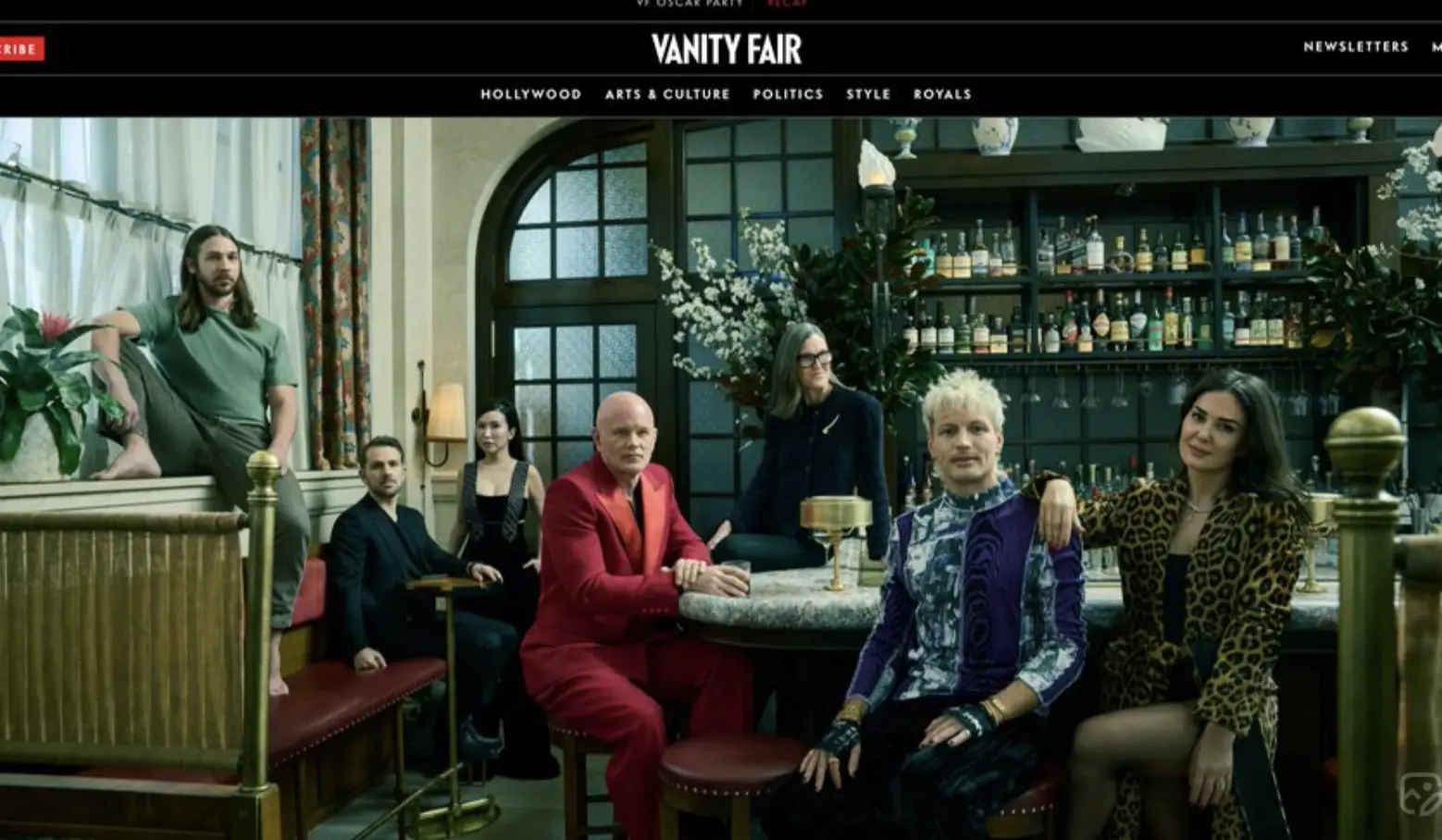
Upon closer examination of this group photo, it becomes clear that it is a work from the venerable celebrity magazine 'Vanity Fair,' featured on the cover of its latest issue's report titled 'Cryptocurrency's True Believers Demand to Be Taken Seriously.'

This article, through close observation of the industry's core circle, delves into how the crypto industry, after enduring multiple rounds of regulatory storms and market crashes, is attempting to redefine the global power landscape in 2026 with massive political donations and a 'savior-like' grand narrative.

Although the stories of crypto industry tycoons have already appeared in a series of traditional magazines such as 'Fortune' and 'The New York Times,' 'Vanity Fair,' as a media outlet deeply versed in celebrity culture, clearly has a more 'sinister' reporting perspective. The article doesn't dwell too much on complex industry trends but instead spends a significant amount of ink on the starkly contrasting private life details of these 'power redefiners.'

In the author's portrayal, these billionaires are depicted as a group of eccentrics who are both detached from reality and eager to dominate it: on one hand, they discuss the future of human civilization in mansions in Puerto Rico, while on the other, they are obsessed with searching for extraterrestrial life, practicing extreme survivalism, and even often going barefoot in public.

Triple Crown Digital partner Noelle Acheson commented on this, saying, 'We can laugh all we want (and we really do want to laugh) at these 'Vanity Fair' photos, at the awkward poses and perplexing character portrayals... but the deeper question is: Is this how the mainstream media views the cryptocurrency industry? If so, we have a lot of work to do.'

In the eyes of most industry insiders, this article not only fails to positively portray the image of cryptocurrency practitioners but also highlights stereotypes about the crypto industry.

Tally co-founder Dennison Bertram further revealed that this article is 'Vanity Fair' magazine deliberately mocking cryptocurrency and its related figures, with both the text and photos filled with deep disdain and sarcasm. Before getting involved in cryptocurrency, he had worked as a fashion photographer for over a decade.

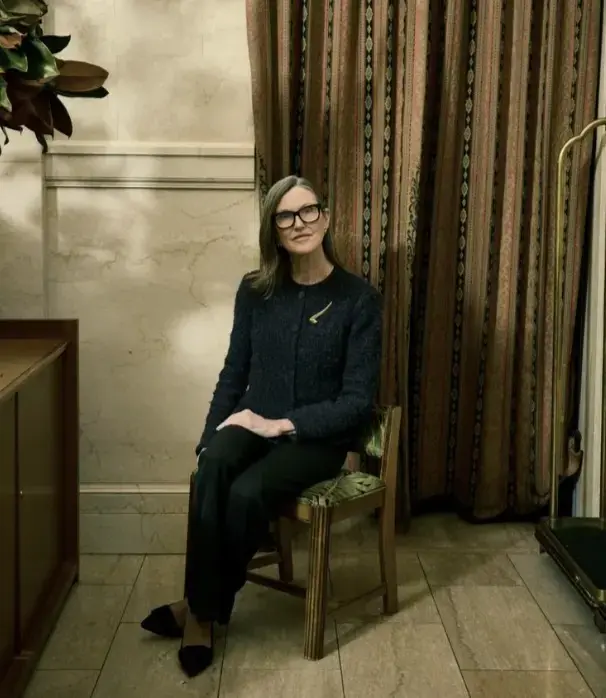
Analyzing Cathie Wood's close-up photo as an example, he said, 'Here, Cathie Wood is deliberately made to appear small. The camera shoots down on her, and the composition deliberately downplays her stature. The messy curtains, her crossed ankles, and the intentionally placed luggage cart all contribute to the deliberately created冷酷无情 (cold and ruthless) atmosphere in the picture. Could there be a more mean-spirited visual effect than this?'
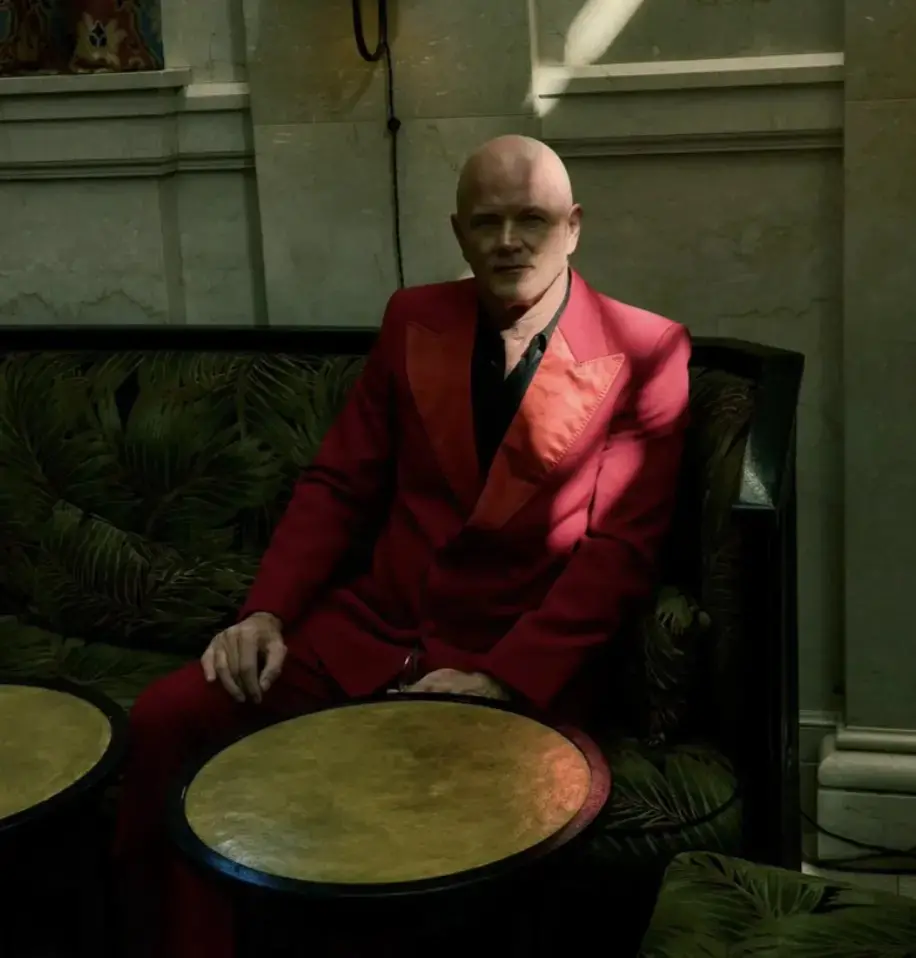
Looking at Michael Novogratz's photo, 'His eyes are squinted, looking fierce. Why? Because he's wearing glasses. He's holding them, almost invisible. His face is deliberately cast in shadow, appearing very menacing. It's another mess, everything is crooked, nothing is整齐划一 (neat and uniform). Is this a positive image? I don't think so at all.'
A group of tycoons who rose to the top through the crypto industry originally attempted to seek more recognition and support from the outside world through 'Vanity Fair' magazine, but they didn't realize it was a huge 'trap,' instead appearing as clown-like figures in the public eye. This is undoubtedly a painful lesson.

At this point, the act of seeking recognition in mainstream magazines itself has become a target of criticism. Nozomi founder Jinelle D'Lima believes that Satoshi Nakamoto and the cypherpunks never sought approval. 'The key point is, you don't need their approval: capital flows don't need it, network operation doesn't need it, the functioning of everything doesn't need it. We weren't built to cater to 'Vanity Fair' or 'Forbes.' We were built to resist everything they represent: gatekeepers, the system, and those who decide what is legitimate and what is illegal.'

'Now we're on the cover. Could it be any more ironic? This isn't like us. We were never supposed to be these people,' Jinelle D'Lima said.

The reason 'Vanity Fair's' report has become a vortex of controversy is that it reveals an awkward predicament for the crypto industry: even if the industry tries to exchange astronomical political donations and 'capitulation' to the mainstream financial system for 'serious treatment' from mainstream circles, within the aesthetic and value systems of mainstream culture, these nouveau riche are still viewed as a subcultural group with cult-like overtones.

This PR disaster might be telling everyone: the true power of the crypto industry has never been in the glossy reports of mainstream media, but in the code that can operate just fine without needing to be 'taken seriously.'


Twitter:https://twitter.com/BitpushNewsCN

Bitpush TG Discussion Group:https://t.me/BitPushCommunity

Bitpush TG Subscription: https://t.me/bitpush

Original link:https://www.bitpush.news/articles/7620917

Пов'язані питання

QWhy did the group photo of crypto leaders on the cover of Vanity Fair spark widespread ridicule online?

AThe photo and accompanying article portrayed crypto leaders as eccentric and out-of-touch billionaires, highlighting their unconventional lifestyles and using unflattering visual compositions, which many in the industry felt reinforced negative perceptions and stereotypes.

QWhat was the main criticism from industry experts like Dennison Bertram regarding Vanity Fair's portrayal of crypto leaders?

ADennison Bertram, a former fashion photographer, criticized the magazine for intentionally mocking the figures through deliberate visual choices, such as unflattering angles, messy backgrounds, and shadowy lighting, which made them appear awkward or sinister.

QHow did the Vanity Fair article describe the private lives of crypto billionaires?

AThe article depicted them as 'weirdos' who are disconnected from reality yet aspire to dominate it, mentioning their interests in topics like alien life, extreme survivalism, and often going barefoot in public, while discussing humanity's future from luxury homes in Puerto Rico.

QWhat deeper issue did Noelle Acheson highlight about the Vanity Fair coverage?

ANoelle Acheson pointed out that the deeper issue is whether this portrayal reflects how mainstream media views the cryptocurrency industry, suggesting that if so, the industry still has significant work to do to improve its image and understanding.

QAccording to Jinelle D'Lima, why is seeking validation from mainstream publications like Vanity Fair contrary to crypto's original ethos?

AJinelle D'Lima argued that figures like Satoshi Nakamoto and cypherpunks never sought approval, as crypto was built to resist gatekeepers, institutions, and those who decide legitimacy—not to conform to mainstream validation through publications like Vanity Fair or Forbes.

Пов'язані матеріали

Breaking: OpenAI Undergoes Major Reorganization, President Brockman Assumes Command

OpenAI has announced a major internal reorganization just months before its anticipated IPO. The company is merging its three flagship product lines—ChatGPT, Codex, and the API platform—into a single, unified product organization. The most significant leadership change involves co-founder and President Greg Brockman moving from a background technical role to take full, permanent control over all product strategy. This follows the indefinite medical leave of AGI Deployment CEO Fidji Simo. Additionally, ChatGPT's longtime lead, Nick Turley, has been reassigned to enterprise products, with former Instagram executive Ashley Alexander taking over consumer offerings. The consolidation, internally framed as a strategic move towards an "Agentic Future," aims to break down internal silos and create a cohesive "Super App." This planned desktop application would integrate ChatGPT's conversational abilities, Codex's coding power, and a rumored internal web browser named "Atlas" to autonomously perform complex user tasks. The reorganization occurs amid significant internal and external pressures. OpenAI has recently seen a wave of high-profile departures, including Sora co-lead Bill Peebles and other senior technical leaders, leading to concerns about a thinning executive bench. Externally, rival Anthropic recently secured funding at a staggering $900 billion valuation, surpassing OpenAI's own. Google's upcoming I/O developer conference also poses a competitive threat. Analysts suggest the dramatic restructure is a pre-IPO move to present a clearer, more focused narrative to Wall Street—streamlining operations and demonstrating decisive leadership under Brockman to counter internal turbulence and intense market competition.

marsbit2 год тому

Breaking: OpenAI Undergoes Major Reorganization, President Brockman Assumes Command

marsbit2 год тому

Two Survival Structures of Market Makers and Arbitrageurs

Market makers and arbitrageurs represent two distinct survival structures in high-frequency trading. Market makers primarily use limit orders (makers) to profit from the bid-ask spread, enjoying high capital efficiency (nominally 100%) but bearing inventory risk. This "inventory risk" arises from passive, fragmented, and discontinuous order fills in the limit order book (LOB). This risk, while a potential cost, can also contribute to excess profit if managed within control boundaries, allowing for mean reversion. Market makers essentially sell "time" (uncertainty over execution timing) to the market for price control and low fees. In contrast, cross-exchange arbitrageurs typically use market orders (takers) to exploit price differences or funding rates, resulting in lower nominal capital efficiency (requiring capital on both exchanges) and higher transaction costs. Their risk exposure stems from asymmetries in exchange rules (e.g., minimum order sizes), execution latency, and infrastructure risks (e.g., ADL, oracle drift). These exposures are active, exogenous gaps that primarily erode profits rather than contribute to them. Arbitrageurs essentially sell "space" (capital sunk across venues) for localized, immediate certainty. Both strategies engage in a trade-off between execution friction and residual risk. Optimal systems allow for temporary, controlled risk exposure rather than enforcing zero exposure at all costs. Their evolution converges towards hybrid models: arbitrageurs may use maker orders to reduce costs, while market makers may use taker orders or hedges for risk management. Ultimately, both use different forms of risk exposure—market makers exposing inventory, arbitrageurs immobilizing capital—to extract marginal, hard-won certainty from the market.

链捕手2 год тому

Two Survival Structures of Market Makers and Arbitrageurs

链捕手2 год тому

Who Will Define the Rules of the AI Era? Anthropic Discusses the 2028 US-China AI Landscape

This article, based on Anthropic's analysis, outlines the intensifying systemic competition between the U.S./allies and China for AI leadership by 2028. It argues that access to advanced computing power ("compute") is the critical bottleneck, where the U.S. currently holds a significant advantage through chip export controls and allied innovation. However, China's AI labs remain competitive by exploiting policy loopholes—via chip smuggling, overseas data center access, and "model distillation" attacks to copy U.S. model capabilities—keeping them close to the frontier. The piece presents two contrasting scenarios for 2028. In the first, decisive U.S. action to tighten compute controls and curb distillation locks in a 12-24 month AI capability lead, cementing democratic influence over global AI norms, security, and economic infrastructure. In the second, policy inaction allows China to achieve near-parity through continued access to U.S. technology, enabling Beijing to promote its AI stack globally and integrate advanced AI into its military and governance systems, altering the strategic balance. Anthropic contends that maintaining a decisive U.S. lead is essential for shaping safe AI development and governance. The core recommendation is for U.S. policymakers to urgently close compute and model access loopholes while promoting global adoption of the U.S. AI technology stack to secure a lasting strategic advantage.

marsbit4 год тому

Who Will Define the Rules of the AI Era? Anthropic Discusses the 2028 US-China AI Landscape

marsbit4 год тому

Торгівля

Спот
Ф'ючерси
活动图片

