Crypto Stocks Soar as Wall Street Sinks Under Pressure From Iran Risks

cryptonews.ruОпубліковано о 2026-08-17Востаннє оновлено о 2026-08-17

Анотація

Cryptocurrency-related stocks rallied while traditional U.S. indices declined on August 17th, a divergence driven by geopolitical tensions and Bitcoin's performance. The Nasdaq, Dow Jones, and S&P 500 all fell at midday. In contrast, Bitcoin rose 1-1.5%, trading near $64,000, boosting companies like Strategy (up ~5%) and Strive (up ~5-6%). Other crypto stocks, including MARA, Circle, and Coinbase, also gained, though not all rose, indicating selective buying. The market split occurred amid escalating Middle East tensions. Former President Donald Trump threatened airstrikes against Oman if it interfered with a U.S.-Iran deal concerning the Strait of Hormuz, a critical global oil shipping chokepoint. With diplomatic efforts stalled, shipping through the strait has slowed dramatically, pushing oil prices higher (Brent near $92) and unsettling traditional markets. For crypto observers, the day highlighted the sensitivity of related stocks to Bitcoin's price. Many remain well below their 2025 highs, meaning Bitcoin's sustained recovery could fuel further gains, but a sell-off could quickly erase them. The key test is whether this divergence lasts beyond a single session, with investors watching Bitcoin's ability to hold above $63,000 alongside corporate earnings, mining costs, global crypto regulation, and developments in the Strait of Hormuz.

Around midday on August 17, the Nasdaq Composite Index was down about 56 points, the Dow Jones Industrial Average lost about 189 points, and the S&P 500 fell about 23 points. Meanwhile, the leading cryptocurrency asset—bitcoin (BTC)—gained about 1–1.5% over the past 24 hours and was trading around $64,000 by 1:30 PM Eastern Time (EDT).

Performance of the four major US indices as of 1:30 PM Eastern Time on Monday.

This divergence led to an unusual trading session. Stocks of cryptocurrency companies, which often crash alongside other speculative assets when investors become defensive, this time received support from bitcoin, while geopolitical worries hit the broader stock market harder.

Strategy and Strive Stand Out as Bitcoin Refuses to Back Down

Bitcoin reserve management company Strategy was among the top gainers, rising about 5% to around $97.50. The company holds a huge stockpile of bitcoins, which ties its share price closely to bitcoin's price. When bitcoin rises, Strategy's stock can show even sharper gains, as traders regularly use it as a publicly traded instrument for leveraged exposure to cryptocurrencies.

Shares of Strive rose about 5–6%, and MARA Holdings gained about 4–5%. Shares of Circle Internet Group also rose about 4%, and crypto exchange operator Bullish gained about 4%. By noon, Coinbase Global shares were up about 1–2% (depending on the data source), recovering from losses after opening lower.

Not all crypto-related companies were in demand. Shares of Bitgo Holdings fell about 1%, and bitcoin mining hardware manufacturer Canaan dropped about 2%. Cleanspark and Hut 8 showed more modest gains, indicating that traders were picking "winners" rather than blindly buying anything crypto-related.

Trump's Threat Against Oman Heightens Tensions in Global Markets

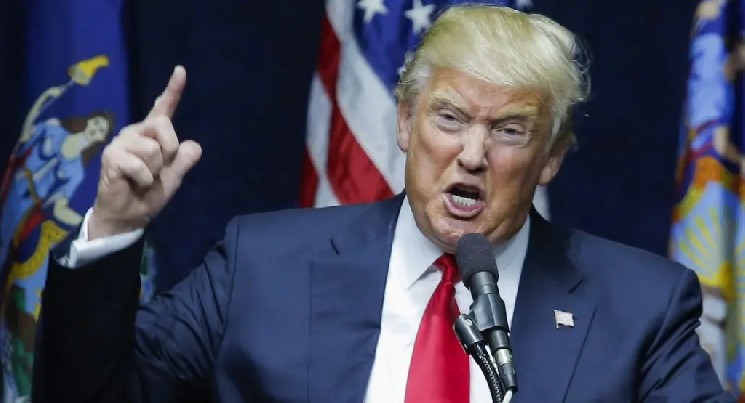
The split emerged against the backdrop of escalating tensions over the Strait of Hormuz—one of the world's most critical energy shipping routes—from President Donald Trump. Trump told Fox News journalist Trey Yingst that the US would launch airstrikes against Oman if that country impedes Washington from reaching a deal with Iran regarding this waterway.

Oman is conducting separate negotiations with Iran on shipping through the strait while diplomatic efforts stall. The 60-day negotiation period outlined in a June memorandum expired on Monday without resulting in a broader settlement between Washington and Tehran.

The Strait of Hormuz matters far beyond the Middle East. Before the conflict paralyzed shipping, roughly one-fifth of the world's oil and gas supplies passed through this narrow waterway, so disruptions to shipping could lead to higher fuel prices, transportation costs, and inflation worldwide.

Oil-Related Risks Keep Wall Street Traders on Edge

Oil markets reflected this tension. On Monday, Brent crude oil fluctuated around $92 per barrel, while West Texas Intermediate crude remained above $84. Shipping through the Strait of Hormuz has slowed dramatically, leaving traders anxiously watching whether negotiations can restore anything resembling normal shipping.
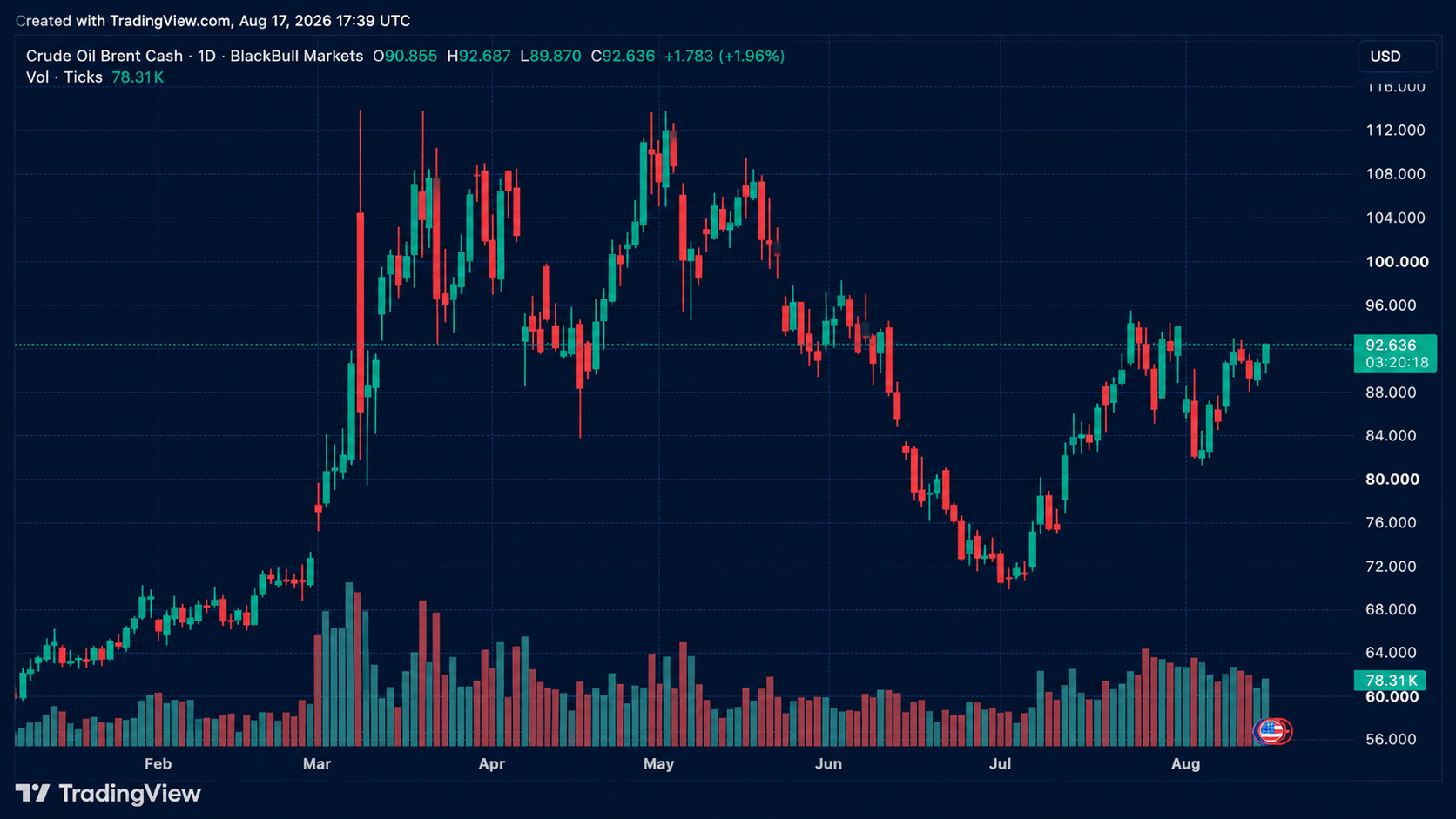
Brent crude oil prices according to Tradingview on August 17, 2026.

For crypto market observers, Monday's split between bitcoin-related company stocks and the major indices is significant because shares of many of these companies remain well below their 2025 highs. Stocks of Strategy, Coinbase, MARA, and other crypto-sensitive companies can amplify bitcoin's moves, meaning a sustained crypto recovery could fuel further gains, but another bitcoin sell-off could erase them just as quickly.

The true test will be whether this divergence lasts longer than one trading session. Investors will watch to see if bitcoin can hold at the $63,000 and $64,000 levels, as well as corporate earnings, mining costs, and global crypto legislation, while world markets remain focused on the responses from Oman and Iran and on any breakthroughs towards resuming shipping through the Strait of Hormuz.

end-content

Пов'язані питання

QWhat was the contrasting performance between major U.S. stock indices and Bitcoin on the date mentioned in the article?

AOn August 17th, major U.S. stock indices like the Nasdaq Composite, Dow Jones Industrial Average, and S&P 500 were all down, losing approximately 56, 189, and 23 points respectively around midday. In contrast, Bitcoin was up by about 1-1.5% over the previous 24 hours, trading around $64,000.

QWhich geopolitical event and associated threat, as described in the article, contributed to the pressure on Wall Street?

AGeopolitical tensions rose around the Strait of Hormuz, a critical energy shipping route. Former U.S. President Donald Trump reportedly threatened via Fox News to bomb Oman if it interfered with Washington's efforts to reach an agreement with Iran concerning the waterway, increasing market anxiety.

QHow did stocks of crypto-related companies like Strategy and Strive perform, and why is Strategy's stock particularly sensitive to Bitcoin's price?

AStocks of crypto-related companies like Strategy and Strive rose significantly, with Strategy's stock up about 5%. Strategy's stock is highly sensitive because the company holds a large reserve of Bitcoin, making its shares a leveraged vehicle for traders seeking exposure to Bitcoin's price movements.

QWhat is the strategic importance of the Strait of Hormuz, according to the article?

AThe Strait of Hormuz is a critically important global energy shipping route. Before the conflict disrupted traffic, roughly one-fifth of the world's oil and gas supplies passed through it. Disruptions there can lead to higher fuel prices, increased transport costs, and global inflation.

QWhat are some of the factors that crypto market observers will be watching to test the sustainability of the divergence between Bitcoin-linked stocks and broader markets?

AObservers will watch several factors: whether Bitcoin can sustain levels around $63,000-$64,000, corporate earnings reports, cryptocurrency mining costs, global crypto regulation, and developments in the geopolitical situation involving Oman and Iran regarding the reopening of the Strait of Hormuz.

Пов'язані матеріали

You'll Be Surprised How Much WeChat's Architecture Differs from Telegram's

An article compares the core architectural philosophies of WeChat and Telegram, highlighting fundamental differences in data storage, monetization, and developer ecosystems. **Data Storage:** Telegram offers unlimited, synchronized cloud storage for seamless access across all devices. In contrast, WeChat stores chat history locally on each device, requiring a manual migration process for transfer and tethering desktop sessions to an active smartphone. **Features & Ecosystem:** Telegram's open Bot API allows for easy, free bot creation, while WeChat's massive ecosystem of over 4.8 million "mini-programs" operates within a closed, curated, and more regulated platform. Commenting also differs: Telegram uses integrated discussion threads for channels, whereas WeChat relies on pre-moderated comments for official accounts and separate chats for interaction. **File Sharing & Payments:** Telegram supports large file transfers (up to 4GB for Premium), while WeChat limits most files to 200MB. A key divergence is in payments: WeChat Pay is deeply integrated into daily life and commerce in China, whereas Telegram lacks a comparable built-in fiat payment system, focusing instead on third-party bots and crypto. **Analysis:** The comparison reveals two distinct models: WeChat is a tightly integrated, closed ecosystem deeply embedded in the real economy, while Telegram prioritizes open protocols, flexible data handling, and low barriers for developers. An added perspective notes that WeChat's fusion of messaging and payments in a single interface without end-to-end encryption for chats potentially broadens the attack surface, raising security questions as more functions converge.

cryptonews.ru4 год тому

You'll Be Surprised How Much WeChat's Architecture Differs from Telegram's

cryptonews.ru4 год тому

Торгівля

Спот
活动图片