Crypto speculation at 2024 lows as TradFi leveraged ETFs hit record $239B

cointelegraphОпубліковано о 2025-12-12Востаннє оновлено о 2025-12-12

Анотація

Crypto speculative activity has hit a near two-year low in 2024, with memecoin dominance falling significantly, according to CryptoQuant. In contrast, traditional finance leveraged ETFs reached a record $239 billion in assets under management in Q3 2025. This shift indicates declining interest in high-risk digital assets and a move toward regulated TradFi products. Crypto investor sentiment remains in "Fear" territory following the October market crash, and smart money traders are betting against memecoins while showing more interest in assets like Ether and tokens with real utility. The memecoin market is described as "dead," with concerns around fair launches and liquidity further dampening interest. A strong catalyst would be needed to revive retail speculation.

Traditional finance leveraged investment products are at a record high, but the appetite for speculative assets remains muted in the cryptocurrency market.

Speculative appetite is cooling among crypto investors, with memecoin dominance vs altcoins hitting a near two-year low last seen in February 2024, according to crypto data platform CryptoQuant.

“Memecoin markets are dead,” wrote CryptoQuant co-founder and CEO, Ki Young Ji, in a Thursday X post.
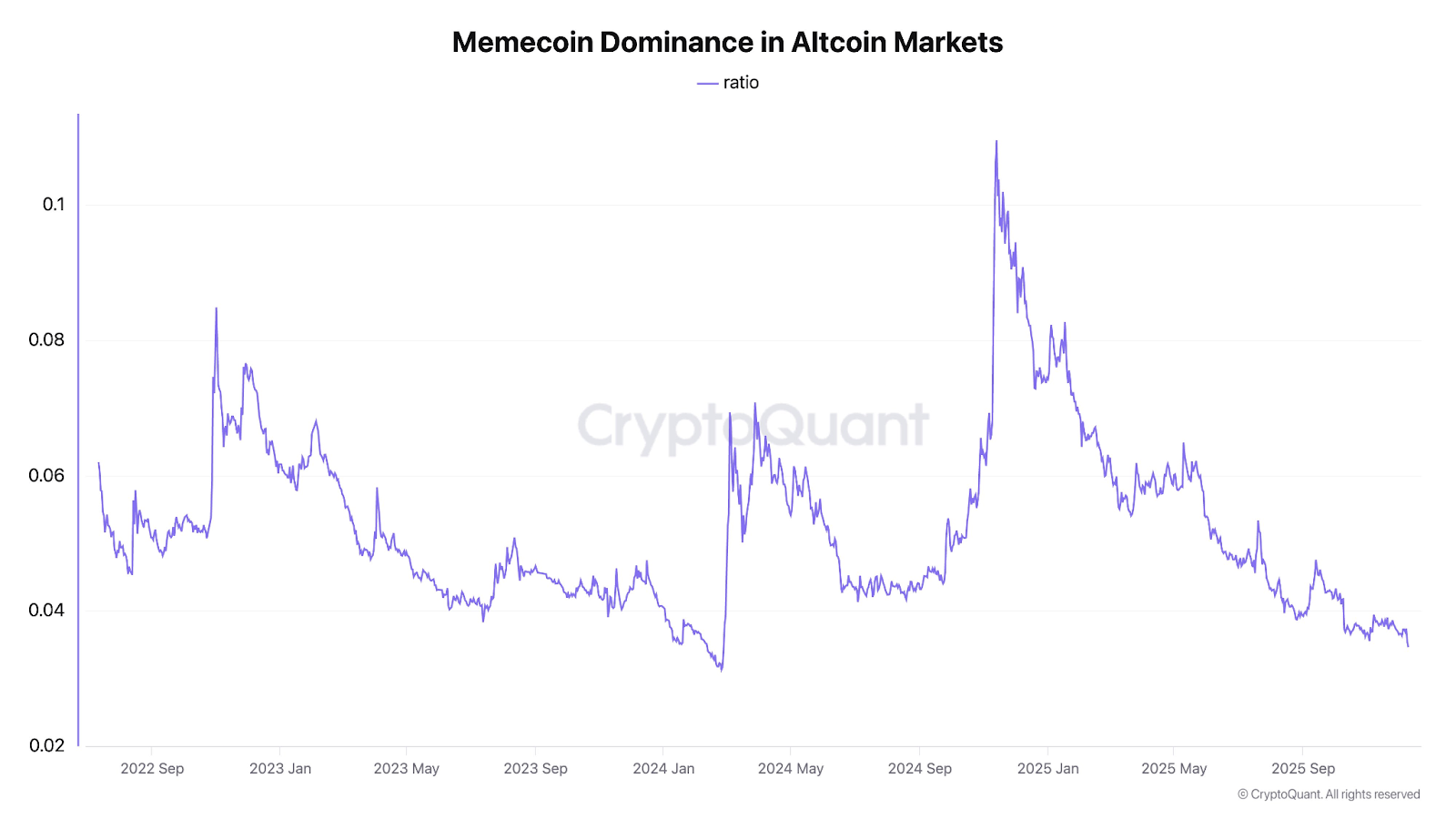
Memecoin dominance in altcoin markets. Source: Ki Young Ju

In contrast, speculative appetite is soaring among equities investors, as traditional leveraged exchange-traded funds (ETFs) hit a new all-time high of $239 billion in assets under management during the third quarter of 2025, according to Bloomberg data shared by Barchart.

The dynamic signals a waning enthusiasm for high-risk digital assets, as speculative appetite is recalibrating to regulated, TradFi leveraged products in less volatile equity markets.
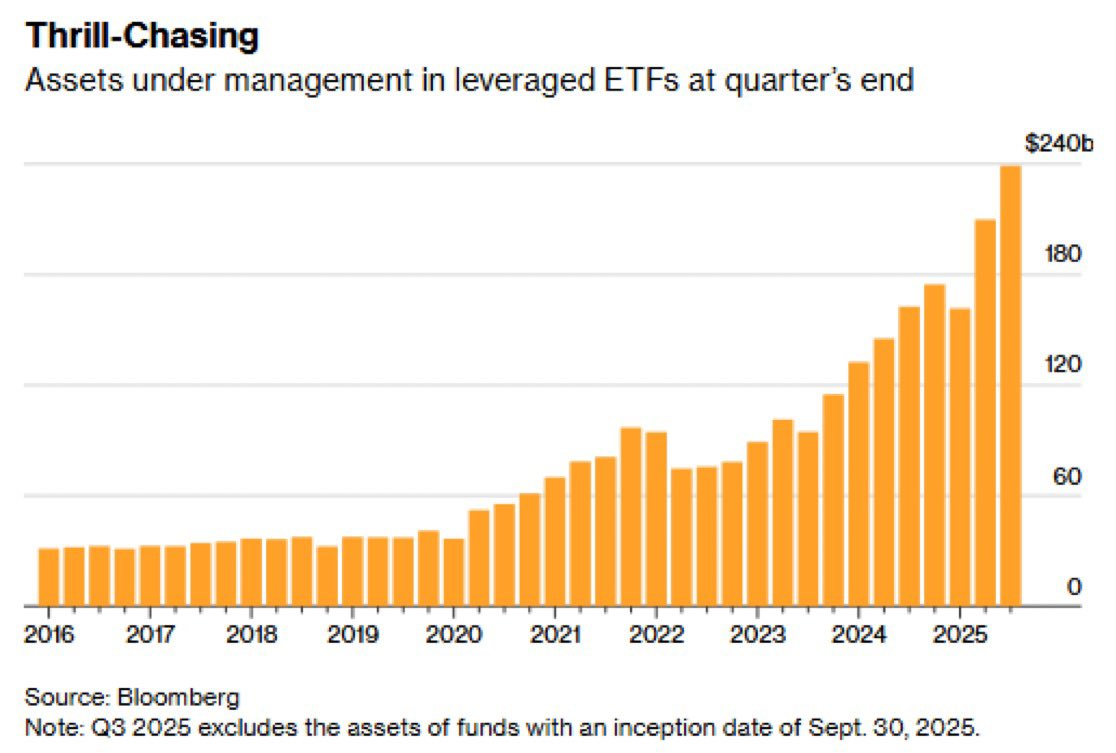
Source: Bloomberg/Barchart

The market dynamic signals a maturation in crypto and equities markets, as risk-taking is “expressed through regulated, familiar products with defined safeguards,” not memecoins that suffer from “thin” liquidity and regulatory uncertainty, Lacie Zhang, market analyst at Bitget Wallet, told Cointelegraph.

”A revival would likely require a strong catalyst — such as a new viral narrative, major exchange listings, or decisive price action — to reignite retail interest.”

Related: Bitcoin treasuries stall in Q4, but largest holders keep stacking sats

Crypto investor sentiment yet to recover from October market crash

The appetite of crypto investors remains muted for most cryptocurrencies since the record market crash at the beginning of October, not just for memecoins.

Crypto investor sentiment saw a small recovery from the “Extreme Fear” of 10 recorded on Nov. 23, but the current 29 reading still signals “Fear,” and remains far below the 62 “Greed” level from Oct. 7, before the $19 billion crypto market crash occurred, according to CoinMarketCap's Fear & Greed Index.
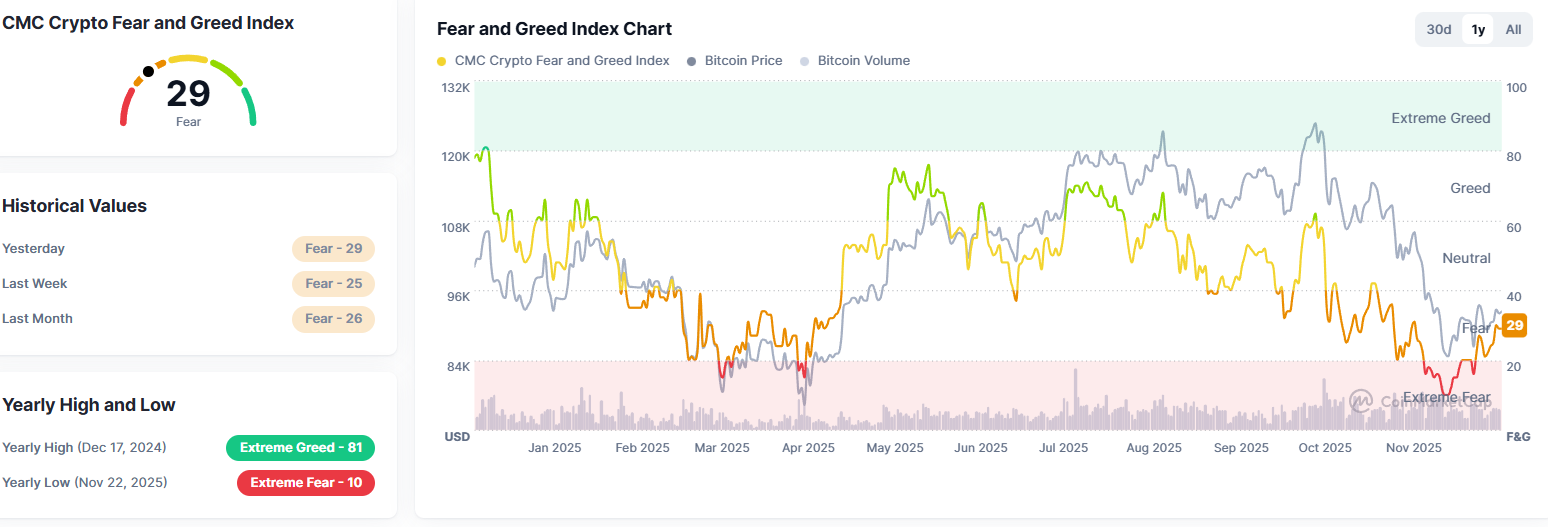
Crypto Fear & Greed Index, 1-year chart. Source: CoinMarketCap

Meanwhile, the crypto industry’s best-performing traders by returns, who are tracked as “smart money” traders on Nansen’s blockchain intelligence platform, are betting on the decline of the leading memecoins and most cryptocurrencies.

Smart money was net short on Fartcoin (FART) for $3.5 million and net short on the Pump.fun (PUMP) token for $1.5 million, Nansen data shows.

However, the cohort is betting on more upside for Ether (ETH) and decentralized exchange Hyperliquid’s (HYPE) token, signaling a preference for tokens with real revenue-generating blockchain protocols.
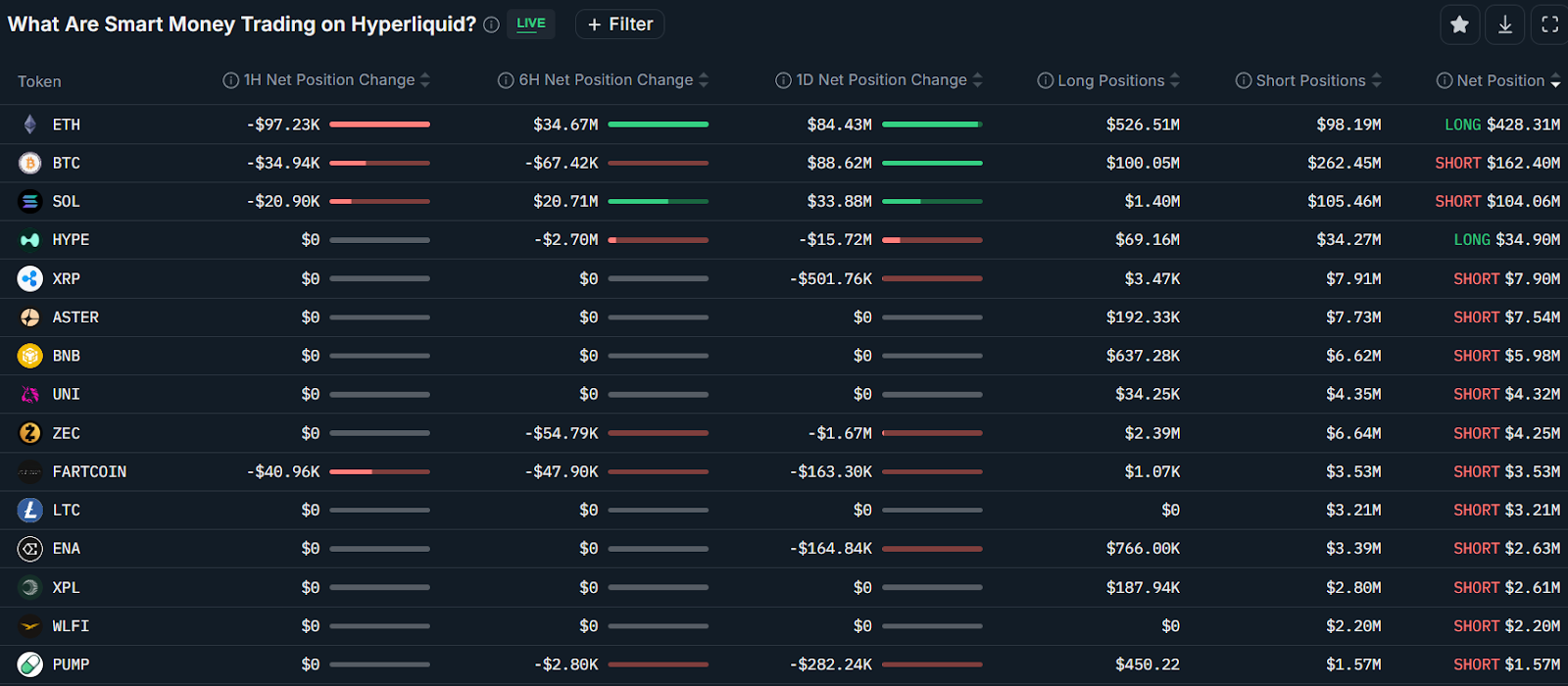
Smart money traders top perpetual futures positions on Hyperliquid. Source: Nansen

Related: Crypto nears its ‘Netscape moment’ as industry approaches inflection point

The positioning from this cohort may also signal investor fatigue with the memecoin launches of the past cycle, as troubling data is emerging about some of these coins.

On Thursday, blockchain data from Bubblemaps claimed that about 30% of the Pepe (PEPE) token’s genesis supply was bundled under an entity that sold $2 million a day after the coin’s debut, casting doubt on the memecoin’s fair-launch premise.

Magazine: Memecoin degeneracy is funding groundbreaking anti-aging research

Пов'язані матеріали

Michael Saylor: 110 Reasons to Oppose BIP-110

Michael Saylor presents 110 arguments against Bitcoin Improvement Proposal (BIP) 110, a soft fork aimed at restricting certain non-monetary data storage uses (like inscriptions) on the Bitcoin blockchain. He acknowledges the proponents' valid concerns—such as node costs, fee pressure, and preserving Bitcoin's monetary focus—but fundamentally disagrees with the proposed solution. Saylor argues that BIP 110 represents a dangerous precedent of using consensus rules to enforce value judgments on transaction validity, moving away from Bitcoin's core principles of neutrality and permissionless innovation. His key objections are organized into eleven categories: 1) It violates neutrality and hard consensus by banning currently valid transactions. 2) It fails to meet the high burden of proof required for a consensus change, lacking concrete data on the alleged crisis. 3) Its seven bundled technical restrictions are overly broad, targeting generic script functionalities and blocking future upgrade paths. 4) It sacrifices compatibility and future optionality by closing off designed upgrade hooks. 5) Its temporary rules add significant complexity (grandfathering, expiry states) without sufficient justification. 6) The economic and security impacts, particularly on miner revenue and fee markets, are uncertain and unmodeled. 7) Superior, market-based tools (fee markets, relay/mining policies) already exist to manage blockchain load. 8) It stifles innovation by creating a chilling effect for developers. 9) Its modified activation mechanism (55% threshold, forced signaling) is aggressive and risks network splits. 10) The precedent it sets—using consensus to suppress disliked but legal uses—is more dangerous than the problem it aims to solve. 11) A better path exists: improving measurements, refining resource-based policies, and allowing market forces to work. Saylor concludes that Bitcoin's strength lies in its neutral rules, open markets, and hard consensus. Changing these foundational elements to target specific use cases is an unnecessary and risky "iatrogenic" intervention. He advocates for guarding Bitcoin's neutrality rather than acting as its redeemer.

marsbit9 хв тому

Michael Saylor: 110 Reasons to Oppose BIP-110

marsbit9 хв тому

Торгівля

Спот
活动图片

