Author: Deep Tide TechFlow
Yesterday's Market Dynamics
Hassett: Expect Slight Decline in Employment Data, But This Should Not Cause Panic
According to Jinshi Data, White House National Economic Council Director Hassett stated in an interview with CNBC regarding the labor market that a decline in employment data should be expected, but this should not cause panic. Hassett believes that, given slow population growth but a "surge" in productivity growth, lower employment data would still be consistent with high GDP growth. Hassett's comments on labor market data pushed U.S. Treasury prices higher, with commodity trading advisors and short-term trading accounts chasing the rally. Additionally, Hassett mentioned that GDP growth is "very strong," expecting a year-end growth rate of 4.0%, with an overall annual growth rate of 3.0%, and attributed the negative growth in the first quarter of last year to the Biden administration.
Binance SAFU Fund Address Purchases Another 4,225 BTC, Worth $300 Million
According to on-chain data, the Binance SAFU fund address has purchased another 4,225 BTC, worth $300 million.
Story Protocol Co-founder Responds to "Token Unlock Delay": Project Needs More Time to Build Use Cases
According to CoinDesk, blockchain intellectual property protocol Story Protocol has postponed its first major token unlock by 6 months to August 2026. Co-founder SY Lee responded to this in an interview, stating the project needs 'more time' to build use cases.
Lee said that near-zero on-chain revenue is a "wrong metric" because Story's business model focuses on off-chain licensing of AI training datasets, not gas fees. He compared the project's decision to Worldcoin's extension of investor and team lock-up periods in 2024, viewing it as a signal of long-term commitment. Story Protocol is shifting from general intellectual property registration to human-contributed data and enterprise licensing agreements that "cannot be scraped," focusing on recording ownership terms and usage rights for datasets and models used to train AI systems. This shift has slowed visible on-chain revenue but aims to reduce token oversupply pressure.
Backpack Announces Token Allocation Plan, TGE to Release 25% of Tokens, with 24% Allocated to Points Holders
Backpack announced its token allocation plan, divided into three phases. The TGE will release 25% of the total token supply, totaling 250 million tokens, of which 240 million (24%) are allocated to points holders and 10 million (1%) to Mad Lads holders.
The second phase of token allocation is pre-IPO, accounting for 37.5%, or 375 million tokens, which will be "growth-triggered unlocks" released gradually based on key milestone achievements. The third phase is post-IPO, also accounting for 37.5%, with these tokens deposited into the company treasury, subject to a one-year lock-up period post-IPO.
The total token supply is 1 billion, with the pre-IPO total supply being 625 million tokens (62.5%). Backpack stated that tokens in the company treasury will serve as a strategic digital asset reserve for long-term value creation, with team members and investors gaining token exposure through the company treasury.
Backpack CEO: Team Tokens Entirely Held in Company Treasury, Locked Until at Least One Year Post-IPO
According to Backpack CEO Armani Ferrante, Backpack's tokenomics will follow two core principles: insiders cannot "dump on retail," and all liquid tokens will be allocated to users. Ferrante stated that founders, executives, employees, and venture investors have not received direct token allocations; all team tokens are held in the company treasury and locked until at least one year post-IPO. Team members only hold company equity and can only profit from the project after a successful company IPO. Backpack plans to IPO in the U.S., with the exchange gradually opening more regions and launching more products, including traditional financial services, securities products, etc. Each time a new region is opened or a new product is launched, tokens will be unlocked to users in a predictable manner, driving platform growth.
Previous news: Backpack announced its token allocation plan, with TGE releasing 25% of tokens, of which 24% is allocated to points holders.
Backpack in Talks to Raise Funds at $1 Billion Valuation
According to Axios, the centralized cryptocurrency exchange Backpack Exchange, created by former FTX and Alameda executives, is discussing a new round of funding with a pre-money valuation of $1 billion. The company plans to raise $50 million, but the final fundraising size could be larger.
MegaETH Announces Mainnet Launch and Introduces Ecosystem Frontend "The Rabbithole"
According to an official announcement from MegaETH, the mainnet is fully live, and the MegaETH ecosystem frontend "The Rabbithole" has been launched.
This platform, serving as the user interface for the MegaETH ecosystem, will provide users with multiple functions, including discovering online and upcoming applications, cross-chain asset bridging and swapping, ecosystem event notifications, and more.
Bitmine Accumulates Another 20,000 ETH from FalconX, Worth $41.07 Million
According to Arkham data, Bitmine purchased another 20,000 ETH (worth $41.07 million) from FalconX approximately 7 hours ago.
Cango Announces Sale of 4,451 Bitcoin for $305 Million to Support AI Transformation
According to an announcement from Cango Inc., the company has completed the sale of 4,451 Bitcoin, directly exchanging them for approximately $305 million worth of USDT in the open market. The proceeds have been used to partially repay Bitcoin-collateralized loans.
Cango stated that this Bitcoin sale aims to strengthen the balance sheet and reduce financial leverage, providing funding support for the company's strategic expansion into AI computing infrastructure. The company is executing a strategic transformation, leveraging its globally grid-connected infrastructure to provide distributed computing power for the AI industry.
Cango will continue its Bitcoin mining operations while seeking the optimal balance between hash rate scale and operational efficiency.
Asset Manager Metalpha Initiates Bitcoin Allocation Plan, Allocating Up to 20% of Annual Net Profit to Purchase Bitcoin
According to Prnewswire, digital asset management company Metalpha Technology Holding Ltd. has begun executing a Bitcoin allocation plan that will allocate up to 20% of the company's annual net profit for Bitcoin purchases. This plan is part of Metalpha's long-term digital asset strategy, aiming to optimize the company's balance sheet by converting a portion of profits into Bitcoin assets. Metalpha stated that this move reflects the company's long-term confidence in Bitcoin as a store of value and hedge against inflation.
Jump Trading to Provide Liquidity in Exchange for Small Equity Stakes in Kalshi and Polymarket
According to Bloomberg, market maker Jump Trading is set to acquire small equity stakes in prediction market platforms Kalshi Inc. and Polymarket in exchange for providing liquidity to these platforms. Sources familiar with the matter revealed that Jump's agreement with Kalshi involves a fixed percentage of company equity, while its stake in Polymarket will grow over time based on the trading volume Jump provides for its U.S. operations.
Market Trends
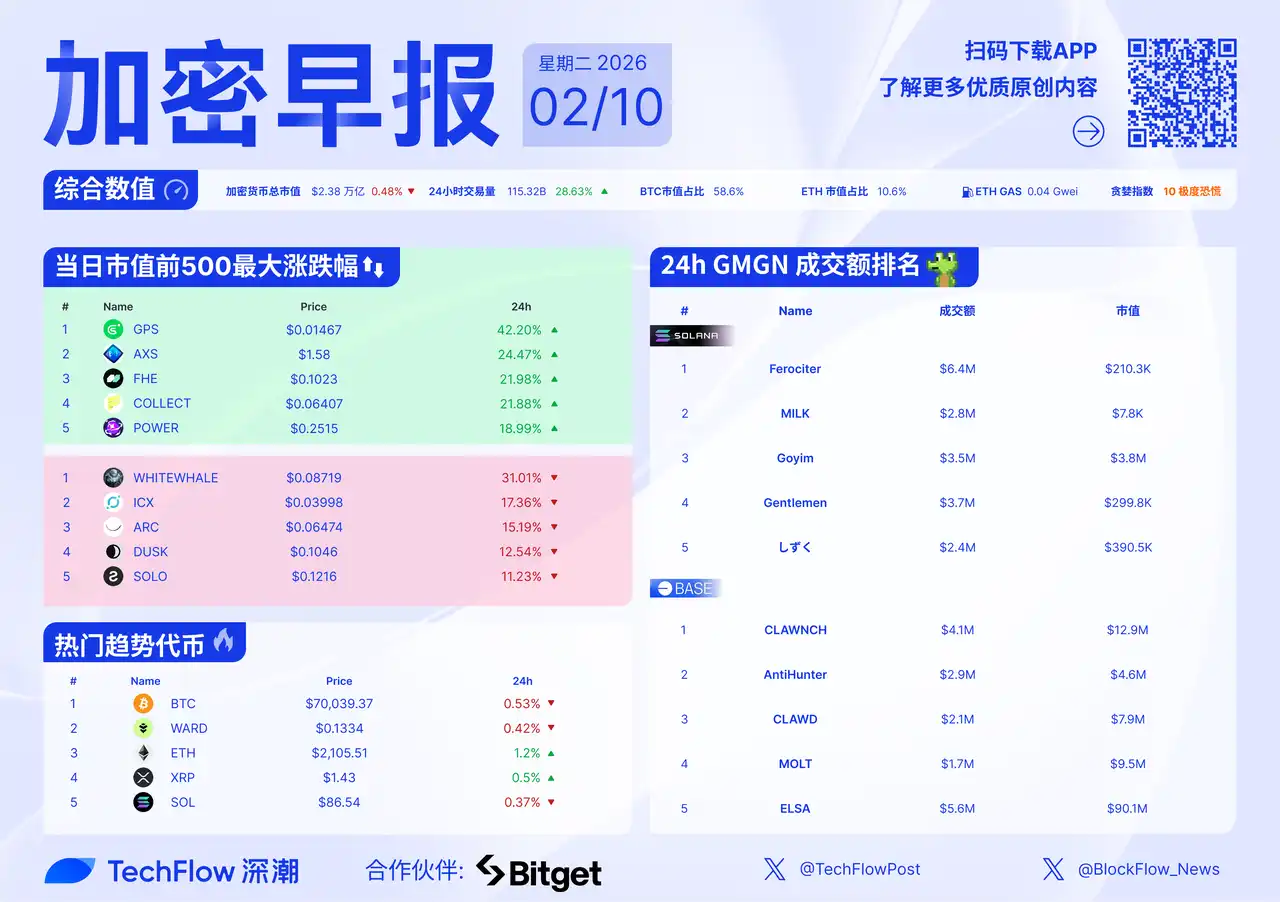
Recommended Reading
Kyle Criticizes Hyperliquid Four Days After Leaving, Arthur Hayes Responds with a $100,000 Bet
This article discusses the dynamics of the cryptocurrency industry, particularly the controversy surrounding the Hyperliquid project. It starts with Kyle Samani's criticism of Hyperliquid after his departure, analyzing the conflict between ethics and interests in the crypto industry and the importance of price within the sector. The article also mentions the bet between Arthur Hayes and Kyle, exploring how industry participants use price as a means to respond to criticism.
Reviewing Bitcoin Bear Market Cycles: At What Price Should You Buy the Dip?
This article analyzes the patterns of Bitcoin price changes during bear market cycles and the underlying influencing factors, while also exploring potential future price trends. By analyzing historical data, the article proposes three possible market scenarios and provides advice on investment strategies for each scenario.
After Mainland China's Document No. 42 Sets the Tone, What is the Best RWA Token Standard?
This article analyzes the regulatory stance on real-world asset tokenization (RWA) as defined in China's "Document No. 42," exploring the definition, application scenarios, and compliance paths of RWA. It also provides an in-depth discussion on the development status of the global RWA market and the evolution of related token standards, analyzing successful cases of on-chain asset tokenization (such as Atoken and stETH) and the future potential of on-chain stock models.
FT Column: Bitcoin's "La Haine" Moment - It's Not the Fall That Matters, But the Landing
By referencing a classic line from the French film "La Haine," this article criticizes the crypto community's blind faith in Bitcoin and its moral victories during crises. Although Bitcoin has rebounded after multiple crashes in the past, the author believes that this faith-based bubble will eventually burst, and market trust in Bitcoin is gradually fading.
Conversation with Cathie Wood: Eight Insights on the Big Ideas for 2026
This article summarizes a deep conversation between veteran investor Peter Diamandis and ARK Invest founder Cathie Wood about the "Big Ideas 2026" report, pointing out that we are currently at a 125-year technological inflection point. The article focuses on the exponential convergence of five major platforms—AI, robotics, energy storage, blockchain, and multi-omics sequencing—and their profound impact on the global economy and technological development over the next five years. It also delves into前沿 trends such as the migration of data centers to orbit, autonomous driving, and the nuclear energy renaissance, offering investment and development suggestions for the future.