Crypto Morning Brief: Hassett Hints at Rate Cuts, Stripe to Launch Stablecoin Payment Feature

深潮Опубліковано о 2025-12-10Востаннє оновлено о 2025-12-10

Анотація

Crypto Morning Brief: Kevin Hassett, a top contender for the next Fed chair, signaled openness to significant interest rate cuts if economic data permits. In regulatory news, SEC Chair Paul Atkins stated that most ICOs should not be classified as securities, limiting the SEC’s role to tokenized securities. Hong Kong plans to begin automatic tax data exchange for crypto transactions with partner jurisdictions starting in 2028. Stripe will launch stablecoin payments on December 12, supporting USDC on Ethereum, Base, and Polygon, with a 1.5% transaction fee. It also opened public testing for its blockchain project Tempo with new partners Kalshi and UBS. Circle introduced a privacy-focused stablecoin, USDCx, in partnership with Aleo, and received a financial services license in Abu Dhabi. In other developments, Coinbase partnered with PNC Bank to offer Bitcoin trading to private clients. A TRUMP meme token announced an upcoming mobile game. Meta is reportedly developing a new AI model named Avocado, and SpaceX is planning a potential record-breaking IPO in 2026.

Author: Deep Tide TechFlow

Yesterday's Market Dynamics

Hassett: Fed Has Ample Room for Significant Rate Cuts

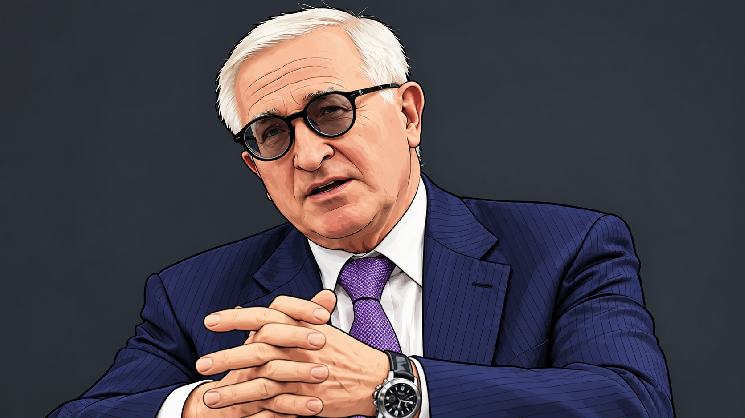
Top contender for the next Fed Chair and White House National Economic Council Director Hassett stated on Tuesday that he believes the Federal Reserve has "ample room" for significant interest rate cuts. When asked if he would push for the substantial rate cuts desired by Trump if appointed, he responded: "If the data shows we can do it—like now—I think there is absolutely room to do so."

When pressed further on whether this meant cuts larger than 25 basis points, he clearly answered: "That's right." Trump said in an interview with Politico on Tuesday that rapid rate cuts would be a "litmus test" for his Fed Chair pick. Faced with the question of whether his loyalty, if appointed Chair, would be to Trump or independent economic judgment, Hassett said: "I would stick to my judgment, and I believe the President trusts my judgment."

SEC Chair: Many Types of Crypto ICOs Are Not Securities Transactions, Focus Will Be on Tokenized Securities Regulation

According to a Decrypt report, SEC Chair Paul Atkins stated at the Blockchain Association's annual policy summit that many types of ICOs should be considered non-securities transactions and thus fall outside the SEC's regulatory purview.

Atkins specifically referenced the token taxonomy he introduced last month, which divides the cryptocurrency industry into four main token categories. He argued that three of these—network tokens, digital collectibles, and digital tools—should not inherently be considered securities, and the related ICOs should also be treated as non-securities transactions.

Atkins stated: "Three areas fall under CFTC regulation, we let them handle it, and we will focus on tokenized securities." He noted that the only ICO category the SEC should regulate is tokenized securities, meaning the on-chain representation of securities already regulated by the SEC.

Hong Kong Government Plans Automatic Exchange of Tax Information Related to Crypto Asset Transactions with Partner Jurisdictions Starting 2028

According to a Hong Kong Government news bulletin, the government has launched a public consultation on implementing the Crypto-Asset Reporting Framework (CARF) and amendments to the Common Reporting Standard (CRS) promulgated by the Organisation for Economic Co-operation and Development (OECD).

The government plans to complete local legislative amendments next year, aiming to automatically exchange tax information related to crypto asset transactions with partner jurisdictions starting in 2028, and implement the newly amended CRS starting in 2029. Secretary for Financial Services and the Treasury Christopher Hui stated that this move aims to demonstrate Hong Kong's commitment to promoting international tax cooperation and combating cross-border tax evasion, which is crucial for maintaining Hong Kong's reputation as an international financial center.

The OECD announced this reporting framework in 2023, allowing partner jurisdictions to automatically exchange tax information related to crypto asset transactions annually. Hong Kong has been exchanging financial account information with partners according to the OECD CRS since 2018. The public can submit comments on the relevant proposals by February 6, 2026.

TRUMP Meme Coin Announces Mobile Game in Early Hours Today

According to an official announcement, the TRUMP Meme token X account posted in the early hours today, "TRUMP mobile game coming soon, built for true Trump fans. Free waitlist now open."

Stripe's Stablecoin Payment Feature to Launch on December 12, Supporting Ethereum, Base, and Polygon Networks

According to a disclosure by Adam, co-founder of RWA.xyz, payment giant Stripe will enable stablecoin payment functionality for user accounts on December 12. This feature supports payments using stablecoins like USDC on mainstream blockchain networks such as Ethereum, Base, and Polygon. Stripe stated that stablecoin payments are fully integrated into its optimized checkout suite, and existing integrations can use it without code changes.

Regarding fees, stablecoin payments charge 1.5% of the transaction amount (calculated in USD), with no fixed fee. All transactions will be settled in USD into the user's existing payment balance.

Stripe and Paradigm Open Tempo Blockchain to Public Testing, Add Kalshi and UBS as Partners

According to a Bloomberg report, payment giant Stripe and crypto venture capital firm Paradigm announced on December 9th the public testing of their jointly developed blockchain project, Tempo. Any enterprise interested in developing real-world stablecoin payment applications can participate. This public test also adds Kalshi and UBS (Union Bank of Switzerland) as new partners. Interest in the stablecoin market has surged during President Trump's second term, and the White House has established a federal regulatory framework for these tokens, which are often pegged to real-world assets like the US dollar. Stripe is one of many financial institutions, retailers, and startups that have announced pilot programs, deals, or partnerships related to this rapidly growing sector of the crypto market.

Circle Launches Bank-Grade Privacy Stablecoin USDCx in Partnership with Aleo Blockchain

According to a Fortune report, Circle and the Aleo blockchain announced a partnership to launch a privacy-enhanced stablecoin, USDCx. This stablecoin will provide users with "bank-grade privacy" protection, making transaction data invisible to the public while retaining compliant records for regulatory review.

Circle Obtains Financial Services License from Abu Dhabi Global Market

According to an official announcement from Circle, Circle Internet Group (NYSE: CRCL) announced it has obtained a Financial Services Permission (FSP) from the Financial Services Regulatory Authority of the Abu Dhabi Global Market (ADGM), allowing it to operate as a money services provider in the international financial center.

Concurrently, Circle appointed Dr. Saeeda Jaffar as Managing Director for the Middle East and Africa region. Dr. Jaffar previously served as Senior Vice President and Group Country Manager for the Gulf Cooperation Council at Visa. She will be responsible for leading Circle's regional strategy, deepening partnerships with financial institutions and enterprises, and accelerating the adoption of trusted digital dollar and on-chain payment solutions in the UAE and broader Middle East and Africa markets.

Circle co-founder and CEO Jeremy Allaire stated that regulatory clarity is the foundation for building a more open and efficient internet financial system. This license enables Circle to expand regulated payment and settlement use cases for businesses, developers, and financial institutions in the UAE.

Coinbase Enters Significant Partnership with PNC Bank

Coinbase's Crypto-as-a-Service platform now provides direct Bitcoin trading services to PNC Private Bank clients, making PNC the first major US bank to offer such a service. This partnership aims to seamlessly integrate digital assets into the traditional financial system.

Meta May Launch New AI Large Language Model 'Avocado' in Early 2026

Informed sources revealed that Meta may release a new large language model, Avocado, in the first quarter of 2026 to further compete with companies like Google and OpenAI.

SpaceX Plans IPO at $1.5 Trillion Valuation, Potentially the Largest IPO in History

According to Jinshi Data citing a Bloomberg report, SpaceX is expected to have an IPO valuation of approximately $1.5 trillion, raising significantly more than $30 billion. SpaceX plans to conduct the IPO in mid-to-late 2026, depending on market conditions. SpaceX expects sales of about $15 billion in 2025 and $22 to $24 billion in 2026. SpaceX's IPO plan has the potential to become the largest IPO in history.

Market Trends
Recommended Reading

Early Thursday Morning, It's Not the Rate Cut Itself That Will Determine the Direction of Risk Assets

This article analyzes the potential impact of the upcoming Federal Reserve interest rate decision on the market, pointing out that the rate cut itself is already fully priced in. The real market drivers lie in the Fed's forecasts for the future interest rate path and its policy stance. Additionally, the article discusses the relationship between the crypto market and Fed policy, as well as the impact of the upcoming labor market data on the overall economy.

Bitwise: My Most Confident Investment in the Crypto Space

This article explores investment strategies in the cryptocurrency space, with the author sharing their views on market uncertainty and how to address it. They emphasize the importance of investing in the entire market and propose a strategy of diversifying risk through cryptocurrency index funds. Furthermore, the article looks ahead to the future development potential of the cryptocurrency industry and related technologies.

What Crypto Decisions Has Fidelity's CEO Made Over the Past Decade?

This article documents an interview with Fidelity Investments CEO Abigail Johnson at the A16Z Founder Summit. She shared how Fidelity has explored the crypto space over the past decade, covering key topics such as early Bitcoin mining, crypto custody, stablecoins, innovative investment models, and the "build vs. buy" approach. The article explores how traditional finance is positioning itself in crypto assets with a new perspective and its outlook for the future.

Behind 'Thefts and Scams' in Cryptocurrency: Why Does Civil Relief Often Hit Roadblocks?

This article recounts cryptocurrency scam cases and analyzes the difficulties in obtaining legal relief, focusing on two real cases that highlight the challenges of both criminal and civil remedies in the cryptocurrency field. The article emphasizes the limitations of civil avenues for recourse when criminal offenses are involved and recommends prioritizing the pursuit of losses through criminal channels.

Where Will the Money for the Next Bull Market Come From?

This article explores the future direction of the crypto market, analyzing potential funding sources for the next bull run. It focuses on key drivers such as institutional capital, Real World Asset (RWA) tokenization, and infrastructure upgrades, while noting that the market is shifting from retail-driven to institutionalized and structurally supported funding.

Пов'язані питання

QWhat did Kevin Hassett suggest about the Federal Reserve's potential interest rate cuts?

AKevin Hassett stated that the Federal Reserve has 'ample room' to cut interest rates significantly, and if the data supports it, he believes there is full room to do so, including cuts larger than 25 basis points.

QWhich blockchain networks will Stripe's new stablecoin payments support upon launch on December 12?

AStripe's stablecoin payments will support the Ethereum, Base, and Polygon blockchain networks.

QWhat new type of stablecoin did Circle launch in partnership with Aleo, and what is its key feature?

ACircle launched a privacy-enhanced stablecoin called USDCx in partnership with Aleo, which offers 'bank-grade privacy' by making transaction data invisible to the public while maintaining compliance records for regulatory review.

QAccording to the SEC chairman, which category of ICOs should be the focus of SEC regulation?

ASEC Chairman Paul Atkins stated that the SEC should focus its regulation solely on tokenized securities, which are on-chain representations of securities already regulated by the SEC.

QWhat major banking institution did Coinbase partner with to offer direct Bitcoin trading services to its private bank clients?

ACoinbase partnered with PNC Bank, making it the first major U.S. bank to offer direct Bitcoin trading services to its private banking clients through Coinbase's Crypto-as-a-Service platform.

Пов'язані матеріали

Has Hook Summer Really Arrived? sato, Lo0p, FLOOD Ignite the New Narrative of Uniswap v4

"Hook Summer" Arrives? Sato, Lo0p, FLOOD Ignite Uniswap v4 Narrative Amidst a slight market recovery, attention within the Ethereum ecosystem has shifted to Meme coins built on Uniswap v4's Hook protocol. Following ASTEROID, tokens like sato, sat1, Lo0p, and FLOOD have become market focal points, with market caps ranging from millions to tens of millions, bringing concentrated liquidity to a narrative-dry market. Uniswap v4 Hooks are "plugin smart contracts" that allow developers to inject custom logic at key points in a liquidity pool's lifecycle (initialization, adding/removing liquidity, swaps, etc.), making the AMM programmable. Recent representative projects include: * **sato**: Market cap peaked over $38M; uses a v4 curve mechanism for minting/burning, locking ETH as reserve. * **sat1**: Market cap briefly exceeded $10M, positioning as an "optimized sato," but later declined significantly. * **Lo0p**: Market cap neared $6.6M; a "lending AMM protocol" allowing users to borrow ETH against deposited LO0P tokens without immediate selling pressure. * **FLOOD**: Market cap approached $6M; channels trading reserves into Aave v3 to generate yield, which is retained in the pool. The emergence of these Hook-based tokens could drive long-term growth for the Uniswap ecosystem by attracting users and liquidity to v4 pools. Combined with Uniswap's activated fee switch (partially used to burn UNI), the long-term outlook for UNI appears positive. However, short-term UNI price appreciation is not directly guaranteed. Factors include the sustainability and lifecycle of these new tokens, their price volatility, overall market conditions, and regulatory pressures. Currently, Uniswap v4's TVL ($595M) lags behind v3 and v2, indicating Hook adoption still requires time to mature. In summary, the Hook ecosystem serves as "long-term nourishment" for UNI, but acts more as a "catalyst" than a direct "booster" in the short term. Note: These are early-stage experimental tokens and may carry unknown risks.

marsbit4 хв тому

Has Hook Summer Really Arrived? sato, Lo0p, FLOOD Ignite the New Narrative of Uniswap v4

marsbit4 хв тому

Has Hook Summer Truly Arrived? sato, Lo0p, FLOOD Ignite the New Uniswap v4 Narrative

With the broader market showing signs of recovery, a new wave of interest has emerged around Ethereum-based meme coins. Following ASTEROID, tokens like sato, sat1, Lo0p, and FLOOD, built upon the Uniswap v4 Hook protocol, are capturing market attention. Their market capitalizations range from millions to tens of millions of dollars, injecting much-needed focused liquidity into a market lacking narratives. This article explores whether this trend signifies an incoming "Hook Summer" and its potential impact on UNI's price. Hooks are essentially plug-in smart contracts for Uniswap v4 liquidity pools, allowing developers to inject custom logic at key points in a pool's lifecycle (like initialization, adding/removing liquidity, swaps). This transforms the AMM into programmable building blocks. Key highlighted projects include: * **sato**: Peaked over $38M market cap. It utilizes a v4 curve for minting/burning; buying locks ETH as reserve to mint new tokens, while selling redeems ETH from the reserve and burns tokens. * **sat1**: Market cap briefly exceeded $10M, promoted as an "optimized sato," but later declined significantly. * **Lo0p**: Reached nearly $6.6M. It's a lending AMM protocol where buying LO0P tokens locks them as collateral, allowing users to borrow ETH from the pool reserve at 40% LTV, aiming to improve capital efficiency for idle ETH in LPs. * **FLOOD**: Peaked near $6M. Its mechanism directs asset reserves from buys into Aave v3 to generate yield, with fees and interest retained in the pool to potentially influence the token's price long-term. In the long term, the development of the Hook ecosystem can attract users and liquidity to Uniswap v4, benefiting UNI's fundamentals—especially combined with the recent activation of the protocol fee switch, where a portion of fees is used to burn UNI. However, in the short term, these Hook-based tokens are unlikely to directly drive significant UNI price appreciation. Their impact is moderated by factors like token sustainability, price volatility, and broader market and regulatory conditions. Currently, Uniswap v4's TVL ($595M) still trails behind v2 and v3, indicating adoption and growth will take time. The article concludes that while the Hook ecosystem provides long-term "nourishment" for UNI, its short-term role is more of a "catalyst" than a "booster." Readers are cautioned that these are early-stage experimental tokens and may carry unknown risks.

Odaily星球日报16 хв тому

Has Hook Summer Truly Arrived? sato, Lo0p, FLOOD Ignite the New Uniswap v4 Narrative

Odaily星球日报16 хв тому

Interview with Michael Saylor: I Did Say I Would Sell Bitcoin, But Never a Net Sale

Interview with Michael Saylor: I Said We'd Sell Bitcoin, But Never Be a Net Seller In a recent podcast, MicroStrategy Executive Chairman Michael Saylor clarified the company's stance on potentially selling Bitcoin. Following MicroStrategy's earnings call statement about being prepared to sell BTC to fund dividends for its STRC (Strategic) credit product, Saylor emphasized the distinction between selling and being a "net seller." Saylor explained the core business model: MicroStrategy sells credit instruments like STRC and uses the proceeds to buy Bitcoin, which is viewed as "digital capital" expected to appreciate around 30-40% annually. A portion of these capital gains can then be used to pay the dividends on the credit products. He stressed that even if the company sells some Bitcoin for dividends, it simultaneously buys much more with new credit issuance. For example, after raising $3.2 billion from STRC sales in April, the dividend obligation was only $80-90 million, making the company a net buyer. The clarification aims to counter market narratives questioning the value of Bitcoin on MicroStrategy's balance sheet if it were never sold, and to dismiss claims of a "Ponzi scheme." Saylor reiterated his personal philosophy for investors: "Don't be a net seller of bitcoin" and ensure your Bitcoin holdings increase each year. Saylor also discussed Bitcoin's role as the foundation for "digital credit," noting that STRC has become the largest and most liquid preferred stock issue in the U.S., offering high risk-adjusted returns (Sharpe ratio). He highlighted Bitcoin's deep liquidity, stating that even large purchases by MicroStrategy do not move the market significantly, which is driven by macro factors, geopolitical tensions, and capital flows from ETFs and credit products. Finally, Saylor reflected on his early inspiration from sci-fi books, which motivated his path to MIT, and maintained his fundamental thesis on Bitcoin remains unchanged: it is superior digital capital enabling superior digital credit.

链捕手20 хв тому

Interview with Michael Saylor: I Did Say I Would Sell Bitcoin, But Never a Net Sale

链捕手20 хв тому

Beaten SK Hynix Employees in China: Year-end Bonus Less Than 5% of Korean Staff's

"SK Hynix Chinese Staff Hit Hard: Bonuses Less Than 5% of Korean Counterparts" Driven by the AI boom, South Korea's SK Hynix is experiencing record performance, with media reports predicting massive year-end bonuses for its employees, making them highly desirable in the matchmaking market. However, this prosperity starkly contrasts with the situation for the company's Chinese employees. According to reports, SK Hynix operates under a rule allocating 10% of operating profit for employee bonuses. While projections suggest Korean employees could receive bonuses reaching millions of RMB, a Chinese employee with over a decade of technical experience revealed the disparity: "If they get 3 million, Chinese staff get less than 5% of that." After adjustments based on KPI ratings, this employee's highest bonus was slightly over 100,000 RMB. Bonuses are paid annually in Korea but semi-annually in China. During the industry downturn in 2023-2024, Chinese employees received no bonus at all. The gap extends beyond bonuses. Recruitment posts for SK Hynix's Chinese factories (in Wuxi, Dalian, Chongqing) show engineer monthly salaries ranging from 10,000 to 35,000 RMB, with a 13th-month salary promised. Chinese employees also receive standard benefits like annual leave but lack stock incentives, which are reportedly unavailable to them. Furthermore, management positions in China are predominantly held by Korean personnel, though industry observers note a gradual increase in local middle managers over time. SK Hynix has confirmed the 10% bonus rule but cautioned that specific future bonus amounts remain unpredictable. The company forecasts strong demand for HBM and other high-value enterprise products for the next 2-3 years, driven by AI infrastructure investment. This focus on business-to-business markets may continue to constrain supply for consumer products, potentially prolonging price increases for components like memory.

链捕手34 хв тому

Beaten SK Hynix Employees in China: Year-end Bonus Less Than 5% of Korean Staff's

链捕手34 хв тому

Торгівля

Спот
Ф'ючерси
活动图片