Author: Deep Tide TechFlow
Yesterday's Market Dynamics
Trump Writes to Norwegian Prime Minister: Reiterates Greenland Sovereignty Claim Due to Not Receiving Nobel Peace Prize
According to Bloomberg, US President Trump recently sent a letter to Norwegian Prime Minister Jonas Gahr Støre, directly linking his claim to Greenland's sovereignty to not receiving the Nobel Peace Prize. Trump stated in the letter: "Given your country's decision not to award me the Nobel Peace Prize, despite me having prevented eight or more wars, I no longer feel obligated to consider only peace, and can now think about what is beneficial for the United States of America."
10-Year Japanese Government Bond Yield Rises 3.0 Basis Points to 2.3%, Hitting Highest Level Since February 1999
According to Jinshi Data, the yield on the 10-year Japanese Government Bond (JGB) rose 3.0 basis points to 2.3%, reaching its highest level since February 1999. The yield on the 30-year US Treasury note rose 3.8 basis points to 4.879%, the highest level since early September last year. The yield on the 40-year Japanese Government Bond rose 5.5 basis points to 4%.
Genius: GENIUS Token to Be Created Before April 12 This Year
According to a message from the official X account of the on-chain trading platform Genius Terminal, the platform has officially released its airdrop and points whitepaper.
According to the announcement, Genius Season 1 will end on April 12, 2026, and the GENIUS token will be created before April 12 this year. From now until April 12, 10 million GP (Genius Points) will be distributed weekly, with points allocated retroactively based solely on spot trading volume.
Previous news: YZi Labs made a "tens of millions of US dollars" investment in Genius Trading, with Changpeng Zhao (CZ) serving as an advisor.
Zero Network Announces Normal Operations Have Resumed
According to an official announcement, the Zerion L2 network, Zero Network, has been restored and is fully operational.
Previous news: The Zerion-incubated L2 network Zero Network had stopped producing blocks for over 3 weeks.
PancakeSwap: Proposal Passed, CAKE's Maximum Supply Reduced to 400 Million Tokens
PancakeSwap posted stating that the relevant proposal has passed, and CAKE's maximum supply has been adjusted to 400 million tokens.
Aster Announces Allocation of 20-40% of Daily Platform Fees for Targeted Buybacks
According to an official disclosure by Aster, Aster has deployed its strategic buyback reserve to automatically execute the $ASTER token buyback plan. This plan, based on the Phase V buyback plan announced last month, allocates 20-40% of daily platform fees for targeted buybacks, dynamically responding to market conditions to maximize value and reduce circulating supply. Aster has already automatically executed an initial buyback through the reserve wallet 0x5E4969C41ca9F9831468B98328A370b7AbD5a397.
Magic Eden Announces Allocation of 15% of Revenue to ME Token Ecosystem, 50% for ME Token Buybacks, Another 50% Distributed to ME Stakers
According to a message last night from the NFT trading platform Magic Eden, starting February 1st, 15% of the platform's total revenue will be allocated to the ME token ecosystem. This portion of revenue will be split evenly, with 50% used to buy back ME tokens, and the other 50% distributed to ME stakers in USDC, with the distribution ratio based on staking power.
Staking power will be determined by both the amount staked and the staking duration. Users can claim rewards monthly, with the first claim opening in March (for February activities). Magic Eden stated that rewards must be claimed within 90 days.
Trove Abandons Hyperliquid for Solana, Sparking Strong Investor Protests and Refund Demands
According to a Cryptonews report, Trove Markets, after raising over $11.5 million, suddenly announced abandoning its integration plans with Hyperliquid to instead build a perpetual contracts trading platform on Solana, sparking strong investor protests and demands for refunds.
The Trove team explained that the decision was due to a liquidity partner withdrawing 500,000 HYPE tokens, which were originally intended to support the planned Hyperliquid integration. Additionally, blockchain investigator ZachXBT found that a Trove-related address transferred approximately $45,000 to a casino deposit address, further intensifying questions about the project's fund management. The TROVE token TGE was originally scheduled for January 19 at 16:00 UTC but may be delayed due to the platform shift and potential processing of refunds.
Bitmine Stakes Another 86,848 Ethereum, Valued at Approximately $279.4 Million
According to monitoring by Onchain Lens (@OnchainLens), Bitmine has further staked 86,848 Ethereum (ETH), valued at approximately $279.4 million.
As of now, Bitmine has cumulatively staked 1,771,936 Ethereum, with a total value of $5.65 billion.
Reuters: New York Stock Exchange to Enable 24/7 Trading of US Stocks
According to Reuters, the New York Stock Exchange will enable 24/7 trading of US stocks.
Supreme Procuratorate: Increase Efforts in Anti-Money Laundering Work, Focus on Punishing Crimes Using Virtual Currency Laundering, etc.
According to Jinshi Data, at the National Chief Procurators' Meeting held in Beijing on January 19th, the Supreme People's Procuratorate made deployments for serving high-quality development by fully utilizing the force of the law. The Supreme Procuratorate required that procuratorial organs must maintain economic and financial security according to the law, severely punish serious economic crimes, and promote the creation of a law-based business environment. The Supreme Procuratorate required severe punishment for crimes such as smuggling and exporting strategic minerals to safeguard national strategic interests;
Collaborate with the National Financial Regulatory Administration and others to lawfully address the chaos of illegal intermediaries in the financial sector, severely punish crimes such as illegal fundraising and financial fraud, combat financial "black and gray industries" across the entire chain, ensure the stable operation of finance, and protect the property safety of the people;
Increase efforts in anti-money laundering work, focusing on punishing crimes using underground banks, virtual currency laundering, etc. The Supreme Procuratorate proposed deepening the rule of law in the capital market in collaboration with the China Securities Regulatory Commission (CSRC), improving the stationed securities procuratorial work mechanism, severely punishing securities crimes such as financial fraud and market manipulation, and maintaining capital market security. (Xinhua News Agency)
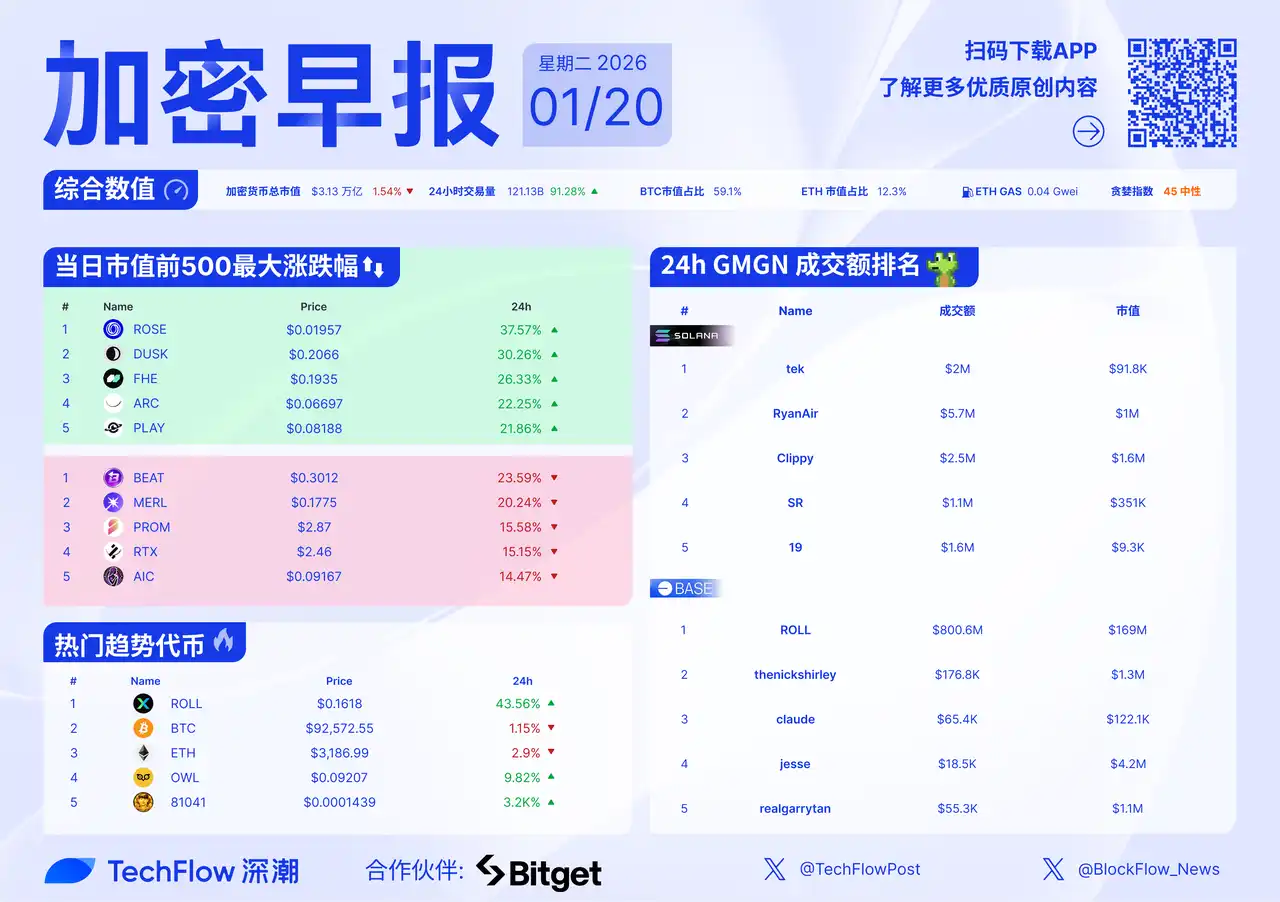
Market Dynamics
Recommended Reading
Single Post 150 Million Views, Dan Koe and His Super Individual Business
This article explores the concept of the "super individual," using American creator Dan Koe as an example to analyze how high income is achieved through content creation and personal brand building. The article also mentions social platform X's (formerly Twitter) support policies for long-form content and the application of AI technology in content creation.
Trump's Tariff Club Swings at Allies, Cryptocurrency Plummets, Gold and Silver Hit New Highs
This article discusses Trump's tariff threats against European allies, causing international tensions. The cryptocurrency market plummeted due to uncertainty, while physical assets like gold and silver became safe-haven choices. The article examines the impact of economic nationalism on global markets and the future development direction of Bitcoin and decentralized assets.
Pantera: The Volatile Year of 2025, Those Projects We Invested In
This article focuses on Pantera Capital's 2025 annual investment report, which completed 31 investments throughout the year, with lead investment比例 reaching 85%, setting a historical high for deployed capital. The report details investment sectors, geographical distribution, and capital flow, focusing on infrastructure, stablecoins, and other areas. The blockchain industry in 2025 was full of volatility and vitality, with multiple portfolio companies successfully IPOing, reaching a total market capitalization of approximately $33 billion. The report also reviews industry development trends and future prospects.
a16z: Behind the Palantir-ization of Everything, A Doomed Imitation Show
This article analyzes the "Palantir-ization" phenomenon sweeping Silicon Valley, where AI startups are emulating Palantir's model by sending engineers to be stationed with clients, providing customized services, and signing high-value contracts to drive business. However, the author points out that this model is not suitable for all companies and analyzes the replicable and non-replicable parts of the Palantir model, providing a more pragmatic roadmap for startups.
Why Am I Not Bullish on Ethereum Now?
This article explores the current state of Ethereum and the challenges it faces, analyzing Ethereum's user growth, transaction fees, market valuation, and competitiveness against other blockchains, and offers rational advice for future investment strategies.