Crypto Exchange Bithumb Pushes IPO Past 2028 As Cleanup Effort Continues

bitcoinistОпубліковано о 2026-04-02Востаннє оновлено о 2026-04-02

Анотація

Bithumb, a major South Korean cryptocurrency exchange, has delayed its initial public offering (IPO) plans to after 2028, a significant postponement from its original 2025 target. The decision follows a year of challenges, including compliance issues, board changes, and a major internal error in February that temporarily displayed over $40 billion in fake user balances. The exchange mistakenly credited users with 2,000 Bitcoin instead of 2,000 won, raising serious concerns about its internal controls. Additionally, Bithumb faced regulatory pressure, including a six-month suspension and a $24 million fine for alleged anti-money laundering breaches. Under renewed CEO Lee Jae-won, the company is now prioritizing the strengthening of its accounting systems and internal governance with advisory firm Samjong KPMG before proceeding with an IPO. This slower timeline contrasts with competitor Upbit, which is reportedly preparing for its own public listing.

Bithumb is now looking at an initial public offering sometime after 2028, a further slip from its earlier 2025 target, after a year of compliance trouble, board changes, and a costly internal blunder that briefly showed more than $40 billion in fake balances on its books.

According to reports tied to the company’s shareholder meeting, the South Korea-based exchange says it wants to spend the next stretch fixing its accounting and control systems before it tries to list.

Internal Error Raised Fresh Questions

The exchange’s most damaging recent episode came in February, when it mistakenly credited users with about 2,000 Bitcoin instead of 2,000 won. The mix-up was quickly reversed, and most of the money never left Bithumb’s internal ledger, but the scale of the error was hard to ignore.

It turned a routine systems failure into a public test of trust, and it arrived at a bad time for a company trying to convince regulators and investors that it is ready for the scrutiny that comes with a stock listing.

BTCUSD trading at $66,362 on the 24-hour chart: TradingView

That mistake followed earlier pressure from South Korean authorities. Under CEO Lee Jae-won, Bithumb faced a six-month suspension and a $24 million fine tied to alleged anti-money-laundering breaches.

Shareholders have now backed Lee for another two-year term, even as the company keeps moving the IPO goal farther down the road. The exchange had once expected to list in 2025, but the new plan is to focus on preparation through 2027 before any filing process advances.
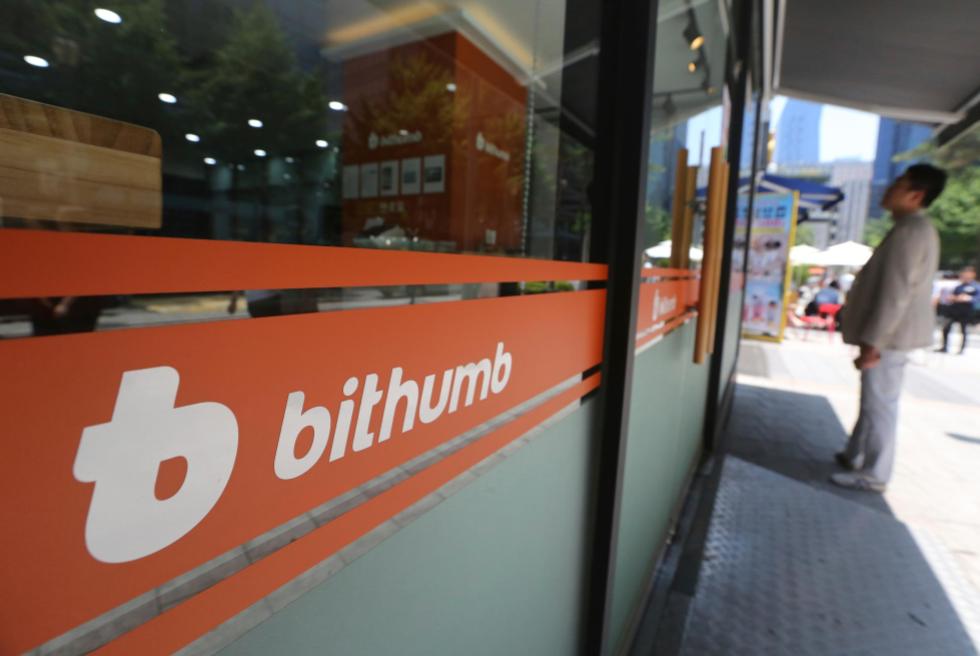
Image: AP

A Slower Road To The Market

Bithumb’s latest timeline fits a broader pattern of delay. CFO Jeong Sang-gyun told shareholders that the company is strengthening its accounting policies and internal controls after bringing in Samjong KPMG as an IPO adviser.

That language points to work that usually happens before a listing window opens, not after a target year has already passed. The change in pace also shows how much the exchange’s public debut now depends on proving basic governance, not just market demand.

The exchange is not the only one moving through the South Korean market with listing plans in view. Dunamu, the operator of Upbit, is also said to be preparing for an IPO after a share swap with Naver Financial, with September mentioned as a possible timing point.

Featured image from Moneyseth, chart from TradingView

Пов'язані питання

QWhat is the new target year for Bithumb's IPO, and why was it delayed from the original 2025 target?

ABithumb is now targeting an IPO sometime after 2028, a delay from its original 2025 goal. The postponement is due to a year of compliance issues, board changes, and a major internal error that falsely displayed over $40 billion in balances. The company now plans to focus on fixing its accounting and control systems before attempting to list.

QWhat was the significant internal error that occurred at Bithumb in February, and what was its impact?

AIn February, Bithumb mistakenly credited users with approximately 2,000 Bitcoin instead of 2,000 won due to a systems failure. Although the error was quickly reversed and most funds never left the exchange's internal ledger, the massive scale of the mistake severely damaged trust and raised questions about the company's readiness for the scrutiny of a public listing.

QWhat regulatory action did South Korean authorities take against Bithumb under CEO Lee Jae-won?

AUnder CEO Lee Jae-won, Bithumb faced regulatory pressure from South Korean authorities, resulting in a six-month suspension and a $24 million fine for alleged anti-money laundering breaches.

QWho did Bithumb bring on as an IPO adviser, and what is the company's current focus according to its CFO?

ABithumb brought in Samjong KPMG as an IPO adviser. According to CFO Jeong Sang-gyun, the company is now focusing on strengthening its accounting policies and internal controls as part of its preparation for a future listing.

QWhich other major South Korean crypto exchange is also preparing for an IPO, and what was a key step in its preparation?

ADunamu, the operator of the Upbit exchange, is also preparing for an IPO. A key step in its preparation was a share swap with Naver Financial, with September mentioned as a potential timing for its public debut.

Пов'язані матеріали

In Jinjiang, Fujian, a Storage Super Unicorn Lies Quiet

In Fujian's Jinjiang, a city known for sportswear, lies a quiet semiconductor giant: Fujian Jinhua Integrated Circuit Co. (JHICC). Once a promising domestic DRAM manufacturer alongside Yangtze Memory and ChangXin Memory Technologies (CXMT), its journey was derailed in 2018 when the U.S. placed it on an Entity List and filed criminal charges for alleged trade secret theft. This halted production for years. A turning point came in February 2024 when a U.S. federal court found JHICC not guilty. However, it had lost crucial time. While CXMT soared to become a top-valued A-share company in 2024, JHICC, with an estimated valuation of 80 billion RMB, was just restarting. Its current output is primarily customized DDR4 chips, not the advanced DDR5/HBM demanded for AI, but it still benefits from the broader memory chip upcycle. JHICC's story is tied to Chen Zhengkun, a veteran engineer who left Micron to lead the venture. Founded in 2016 with state-backed funding, JHICC partnered with Taiwan's UMC to develop DRAM technology. Rapid progress was cut short by the U.S. actions, which Micron initiated, partly due to its heavy reliance on the Chinese market. Post-sanctions, Chen's team worked to rebuild the production line with reduced reliance on U.S. technology. According to its records, JHICC achieved small-scale production and revenue growth under immense pressure. It now focuses on the stable "niche" DRAM market (e.g., TVs, routers) with a monthly capacity of ~40,000 wafers, aiming for 60,000 by 2026. It holds over 1,000 patents but remains on the Entity List. For Jinjiang, investing in JHICC was a bold industrial leap. The local government provided unwavering financial and logistical support during the crisis, helping the company survive. JHICC has become the anchor for a growing local semiconductor cluster. Though its scale lags behind domestic peers, JHICC's persistence symbolizes a hard-won foothold in a global market long dominated by Samsung, SK Hynix, and Micron. Having missed one boom, it seeks a place in the new AI-driven memory supercycle.

marsbit16 хв тому

In Jinjiang, Fujian, a Storage Super Unicorn Lies Quiet

marsbit16 хв тому

Must-Watch Events Next Week|CLARITY Act Could Face Senate Vote; SpaceX, Circle to Report Earnings (8.3-8.9)

**Summary: Key Events and Developments to Watch (August 3-9)** The upcoming week is marked by significant financial disclosures, key legislative deadlines, and notable product updates. **Major Financial Events:** Several companies are scheduled to release their Q2 2026 earnings. American Bitcoin (ABTC) will report on August 3, followed by SpaceX and Hut 8 Mining Corp. on August 4, and Circle on August 5. Notably, a significant portion of SpaceX shares (up to 12% of total shares) will be unlocked on August 6 following their earnings release. **Key Legislative Deadline:** The U.S. Senate faces an August 7 deadline to secure 60 votes for the CLARITY Act, a bipartisan bill aiming to establish a federal regulatory framework for cryptocurrencies. The Senate may hold a full vote on the bill during the week. **Economic Data:** The U.S. July Non-Farm Payrolls report will be released on August 7, providing crucial labor market data. **Technology & Product Updates:** * **Shutdowns:** DeFi portfolio tracker Zapper and wallet app Ctrl Wallet will cease operations on August 3. * **Upgrades:** LayerZero will deprecate its v1 relayers on August 3. XRP Ledger's new version 3.3.0, featuring five new functions, is expected next week. * **AI:** Elon Musk announced that the advanced Grok 4.6 AI model is set for release around August 7. * **Bitcoin:** The BIP-110 forced signaling for a potential Bitcoin network change is scheduled to begin around August 8. **Other Notable Events:** Chinese robotics firm Unitree Tech has set its preliminary price inquiry for its IPO for August 5. South Korean exchange Upbit will delist AQT and AERGO tokens on August 3.

marsbit2 год тому

Must-Watch Events Next Week|CLARITY Act Could Face Senate Vote; SpaceX, Circle to Report Earnings (8.3-8.9)

marsbit2 год тому

Торгівля

Спот
活动图片





