Crypto Crime Crackdown Escalates As Myanmar Targets Scammers With Execution

bitcoinistОпубліковано о 2026-05-16Востаннє оновлено о 2026-05-16

Анотація

Myanmar's military government has proposed a harsh new law, the Anti-Online Fraud Bill, which mandates prison sentences of 10 years to life for digital currency fraud, with the death penalty for operators of scam centers whose coerced or trafficked workers die. The bill responds to online fraud threatening national stability. This crackdown is part of a broader regional effort; China executed 11 people in January linked to Myanmar-based scams, and U.S. authorities have collaborated internationally to arrest hundreds and shut down centers. Southeast Asian scam compounds, often using cryptocurrency, pose a global law enforcement challenge. The move comes as the FBI reports Americans lost over $11 billion to crypto fraud in 2024. Myanmar's parliament, reconvening after a 2021 coup and controversial 2026 elections, may consider the bill in June.

Americans lost more than $11 billion to crypto-related fraud last year, according to an FBI report released in April — and the pressure on governments across Southeast Asia to crack down has only grown since then.

A Deadly Business

Myanmar’s military government has now responded with one of the harshest proposed laws of its kind anywhere in the world.

The Anti-Online Fraud Bill, made public Thursday, would send anyone convicted of digital currency fraud to prison for anywhere between ten years and life.

In the most serious cases, offenders could face the death penalty.

The law specifically targets operators of scam centers who cause the death of workers coerced or trafficked into committing fraud on their behalf — those individuals would be sentenced to death under the proposed legislation.

Myanmar’s parliament, the Pyidaungsu Hluttaw, said it drafted the bill in response to online fraud that threatened the country’s sovereignty and stability.
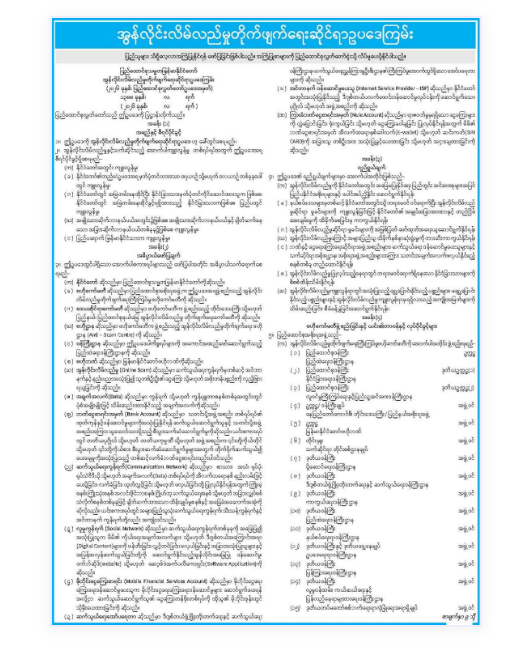
Source: Myanmar National Portal

Not The First Execution In The Region

Myanmar is not alone in taking a hard line. China executed 11 people in January tied to Myanmar-based scam operations, according to reports. Those operations had been responsible for trafficking Chinese nationals into forced labor inside the compounds.

The US has also stepped up its response. In April, American authorities worked alongside officials in China and Dubai to arrest more than 200 people and shut down nine scam centers.

US President Donald Trump signed an executive order in March directing officials to go after scam compounds and cybercrime.

BTCUSD now trading at $78,336. Chart: TradingView

The FBI’s Scam Center Strike Force has since focused its investigations on senior figures running compounds in Cambodia, Laos, and Burma, including affiliates of Chinese organized crime networks.

Online scam centers across Southeast Asia have become a growing problem for law enforcement worldwide. Schemes range from pig butchering and romance scams to fake investment platforms — many of them relying on crypto to move money.

A Government With A Complicated Record

Myanmar’s military took power in a coup in 2021. The country’s parliament did not meet again until March 2026, following elections that independent observers said were neither free nor fair. The government is scheduled to convene during the first week of June, when lawmakers may take up the bill.

Beyond crypto fraud, Americans lost more than $20 billion in total to online scams in 2025, FBI data shows. The agency’s task force has been working to identify and prosecute leaders of the most dangerous scam operations in the region.

Featured image from Unsplash, chart from TradingView

Пов'язані питання

QWhat is the maximum penalty for digital currency fraud under Myanmar's proposed Anti-Online Fraud Bill?

AUnder the proposed Anti-Online Fraud Bill, the maximum penalty for digital currency fraud in Myanmar is the death penalty, applicable in the most serious cases, such as when scam center operators cause the death of coerced or trafficked workers.

QAccording to the article, how much did Americans lose to crypto-related fraud last year based on the FBI report?

AAccording to an FBI report released in April, Americans lost more than $11 billion to crypto-related fraud last year.

QWhich other country has executed people connected to Myanmar-based scam operations, as mentioned in the article?

AChina executed 11 people in January who were tied to Myanmar-based scam operations, according to reports cited in the article.

QWhat is the name of the FBI task force investigating senior figures running scam compounds in Southeast Asia?

AThe FBI task force investigating senior figures running scam compounds in Southeast Asia is called the Scam Center Strike Force.

QWhen is Myanmar's parliament, the Pyidaungsu Hluttaw, scheduled to convene, potentially to take up the Anti-Online Fraud Bill?

AMyanmar's parliament, the Pyidaungsu Hluttaw, is scheduled to convene during the first week of June, when lawmakers may take up the Anti-Online Fraud Bill.

Пов'язані матеріали

Bitcoin Withdrawals Continue: 8 Years of Storage in a Coldcard Cold Wallet Ended in Zero

Coldcard Hardware Wallet Hacked: Losses Mount Due to Vulnerable Seed Generation A critical vulnerability in Coldcard hardware wallets has led to a continued wave of fund thefts. According to Galaxy Research, the total stolen has reached 1,367.05 BTC (approx. $88.6 million) from 4,585 addresses, a significant increase from the initial 594.5 BTC reported on July 30, 2026. Most of the stolen funds remain on the attackers' addresses. The issue is not with the current firmware, which Coinkite has updated, but with seed phrases generated on vulnerable devices between March 2021 and the release of fixed firmware versions. Due to a programmer error, devices switched from using a hardware random number generator to the software-based Yasmarang generator, which was initialized with publicly accessible data like the chip's serial number. This made the seed phrases predictable through offline brute-force attacks, meaning wallets remain at risk until funds are moved to a new wallet generated with the patched firmware. Affected devices include Mk2/Mk3 with firmware 4.0.1–4.1.9 (and up to 5.0.3), Mk4/Mk5 up to version 5.6.0, and Q models up to 1.5.0Q. The only exceptions are seeds created with a high-entropy method like at least 50 independent dice rolls or a strong unique BIP-39 passphrase. All other owners must generate a new seed on the fixed firmware and transfer their assets. A case highlighting the human impact involves a 39-year-old long-term investor who lost 2 BTC (approx. $130,000) in minutes. He had accumulated the Bitcoin over eight years through physical labor, viewing it as a financial lifeline and a retirement plan in a country suffering from hyperinflation. His story underscores that even conservative "buy and hold in cold storage" strategies can be compromised by such underlying technical flaws. From a technical perspective, this incident echoes historical failures where weak random number generators undermined cryptographic security, challenging the assumption that offline storage is automatically foolproof.

cryptonews.ru1 год тому

Bitcoin Withdrawals Continue: 8 Years of Storage in a Coldcard Cold Wallet Ended in Zero

cryptonews.ru1 год тому

Торгівля

Спот
活动图片





