Crypto Con Empire Collapses As Mastermind Faces 20 Years

bitcoinistОпубліковано о 2026-02-11Востаннє оновлено о 2026-02-11

Анотація

A man accused of masterminding a large-scale crypto romance scam has been sentenced to 20 years in prison. Daren Li, a dual national of China and St. Kitts and Nevis, was convicted for his role in a scheme that defrauded victims of over $73 million. The operation used fake trading platforms and built trust through social media and dating apps in a process known as "pig butchering," grooming targets over weeks or months. Funds were laundered through U.S. shell companies and cryptocurrency to obscure trails. Li initially fled after removing an ankle monitor but was later captured. The case is part of a broader trend of rising crypto crime, with one report citing $370 million stolen in January 2026 alone.

A man accused of running a large-scale crypto romance scam was given a heavy federal sentence this week. According to court records and Justice Department statements, Daren Li, a dual national of China and St. Kitts and Nevis, received 20 years in prison for his role in a scheme that sent more than $73 million out of victims’ hands.

Trust Built Online

Li and a group of associates set up fake trading sites and copied the look of real platforms to make everything appear legitimate. They reached out through social media and dating apps, building friendly or romantic ties that made victims comfortable enough to move money.

The approach was slow and patient; messages were exchanged for weeks, sometimes months, before the ask came. Reports note the team used a practice the industry calls “pig butchering” — grooming targets until they trusted the strangers on the other end of the chat.

How Crypto Moved

Court filings show the cash did not simply disappear. Money flowed into bank accounts tied to shell companies inside the US, then onward to other conduits.

Nearly $60 million was routed this way, according to prosecutors. Eight co-conspirators have pleaded guilty and are awaiting sentencing, while the investigation continues to map out additional links.

Some transfers were hidden with layers of banking moves. At points funds were converted into cryptocurrency and moved through wallets to complicate tracing.

BTCUSD trading at $66,834 on the 24-hour chart: TradingView

Investigations And International Work

Multiple federal agencies are on the case. The US Secret Service Global Investigative Operations Center led the probe, with help from Homeland Security Investigations’ El Camino Real Financial Crimes Task Force and the US Marshals Service.

Coordination across borders was required because suspects and servers were often overseas. Li slipped an electronic ankle monitor and fled in December 2025, a fact officials say made the job of bringing him to justice harder. He was captured and later admitted to conspiring to launder the money.

Bigger Pattern Of Crime

Reports say crypto-related scams spiked at the start of 2026, with one security firm estimating $370 million stolen in January alone. Phishing and social engineering ate up most of that total; a single social hack accounted for roughly $280 million.

Losses of this size show how attackers combine online trust-building with technical tricks to drain accounts. Back in February 2025, attackers netted about $1.5 billion in one month when a major exchange was hacked, underscoring how varied the threats can be.

The punishment handed down in the Central District of California sends a message that courts view these crypto crimes as serious. Victims will not get all their money back. Some restitution may be ordered. More prosecutions are likely as investigators follow money trails and coordinate with overseas partners.

Featured image from Cayman Compass, chart from TradingView

Пов'язані матеріали

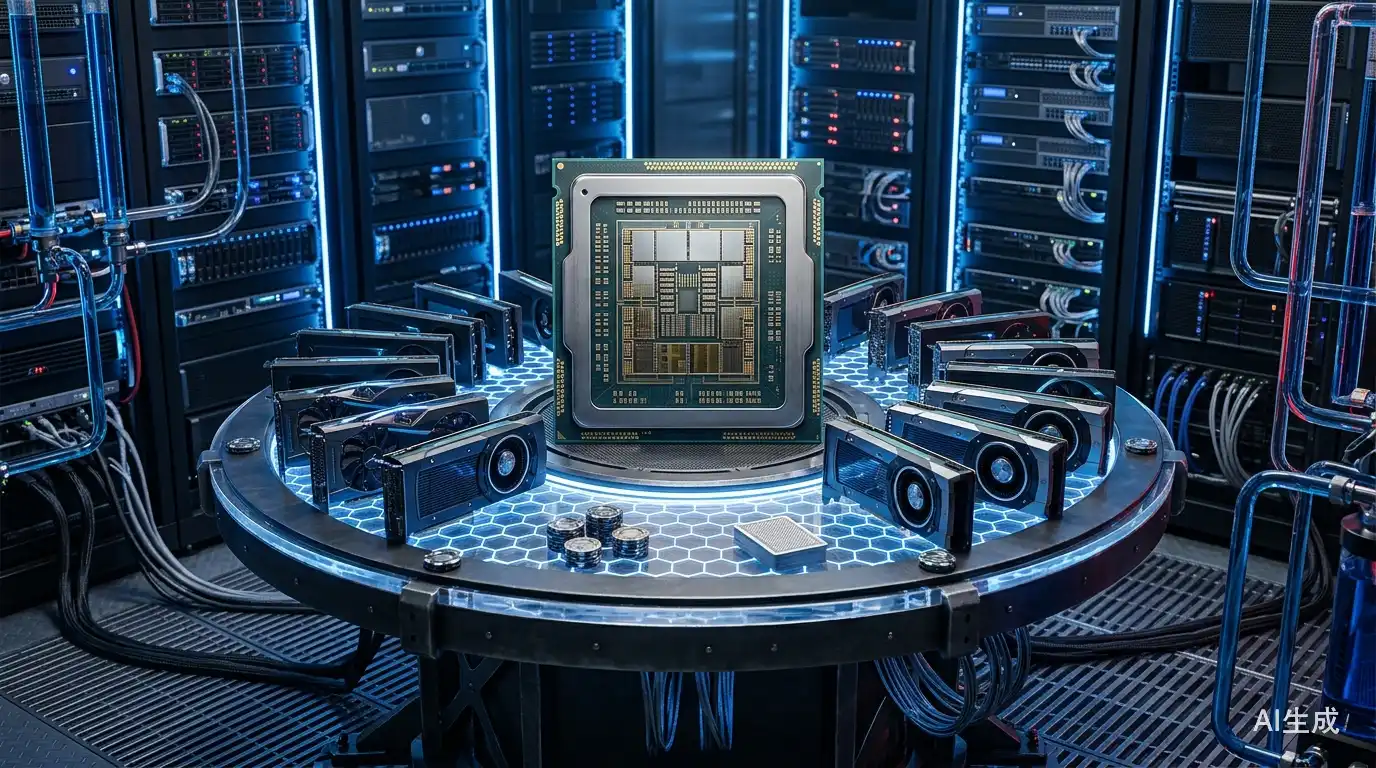
CPU Makes a Comeback to the Table, A $170 Billion "Power Seizure" Drama Begins

A new era is dawning for the server CPU (Central Processing Unit), driven by the shift from AI model training to large-scale reasoning and the rise of Agentic AI. This article explores how the CPU is reclaiming a central role in the AI data center. For years, the focus has been on the GPU (Graphics Processing Unit) for AI training. However, as AI moves to the inference and Agent phase—where tasks involve complex, multi-step reasoning, tool calls, and data management—the workload balance is flipping. Studies show CPUs now handle over 70% of the workload in Agentic AI, up from 10-30% in training. This is because Agent tasks generate massive intermediate data (KV Cache) that exceeds GPU memory, forcing it to be offloaded to the CPU's larger, more scalable memory pools. This increased importance is translating into market changes. Major players are taking note: NVIDIA launched its first standalone CPU line, Vera, based on ARM architecture and optimized for Agent performance. AMD doubled its server CPU market forecast to over $1200 billion by 2030. Analyst reports project the total server CPU market could reach $1700 billion by 2030, with AI-driven demand being a primary driver. Furthermore, the classic ratio of CPUs to GPUs in AI servers is rapidly changing, converging from 1:8 toward 1:1 for Agent deployments. This surge in demand has led to a rare industry-wide price increase of 10-15% for server CPUs from Intel and AMD, breaking a decade-long trend of "more performance for the same price." Demand is bifurcating into high-core-count CPUs for in-rack GPU support and moderate-core CPUs for standalone Agent task orchestration. In China, this global trend presents an opportunity for domestic CPU manufacturers like Hygon (海光信息) and Huawei Kunpeng, who are bolstered by both growing AI infrastructure needs and national policies promoting technological self-reliance ("xin chuang"). The maturity of their software ecosystems is also accelerating, evidenced by faster adaptation to new AI models. In conclusion, the narrative is shifting from a GPU-centric view to one where CPU-GPU synergy is critical. The CPU is no longer a peripheral component but a performance-defining bottleneck and a key growth driver in the AI hardware stack, opening a massive new market estimated in the hundreds of billions of dollars.

marsbit3 год тому

CPU Makes a Comeback to the Table, A $170 Billion "Power Seizure" Drama Begins

marsbit3 год тому

TechFlow Intelligence: AMD AI Director Publicly Criticizes Claude Code for "Becoming Dumber and Lazier", Trump Claims Full Ceasefire in Hormuz But Strait Still Has 80 Unexploded Mines

TechFlow Intelligence Report: This daily digest covers key developments in AI, crypto, hardware, and geopolitics. In AI, SK Telecom faces US export control scrutiny over its partnership with Anthropic, while a Gemini user reports being misled in a scam scenario, sparking safety debates. China's Z.AI launches the GLM-5.2 model, rivaling Claude Opus without NVIDIA chips. In crypto, Bithumb lists ReProtocol, and Upbit delists KernelDAO. On the hardware front, MIT researchers build a custom OS to study chips, ASML denies US claims its advanced lithography machines are in China, and Amazon considers selling its in-house AI chips. Apple's future A21 Pro chip may use TSMC's latest N2P process. Major tech issues include 10,000 GitHub repositories distributing malware and Apple patching a critical eavesdropping flaw in Beats earbuds. US stocks rise, led by semiconductors, with Intel surging 10.6%, while SpaceX falls 3.5%. Geopolitically, despite a US-Iran deal, the Strait of Hormuz remains risky with ~80 uncleared mines, stalling 80M barrels of oil on standby tankers. Iran postpones Switzerland talks, and Trump calls the agreement an "unconditional surrender." The report highlights a contrast: temporary geopolitical calm versus the ongoing, fundamental restructuring of tech supply chains and chip independence.

marsbit3 год тому

TechFlow Intelligence: AMD AI Director Publicly Criticizes Claude Code for "Becoming Dumber and Lazier", Trump Claims Full Ceasefire in Hormuz But Strait Still Has 80 Unexploded Mines

marsbit3 год тому

Торгівля

Спот
Ф'ючерси
活动图片