Crypto card payments overtake P2P stablecoin transfers: Artemis report

ambcryptoОпубліковано о 2026-01-15Востаннє оновлено о 2026-01-15

Анотація

According to a blockchain analytics report by Artemis, crypto card payments have surpassed peer-to-peer (P2P) stablecoin transfers as the primary driver of on-chain stablecoin activity. The data shows that crypto card payments now operate at a monthly run rate exceeding $15 billion, compared to approximately $11 billion for P2P transfers. This shift indicates that stablecoins are increasingly being used through traditional card networks rather than through direct on-chain transactions. Visa dominates this segment, accounting for over 80% of the tracked volume, while Mastercard holds a smaller but growing share. The growth is attributed to expanding merchant acceptance and integration with existing payment infrastructure, allowing users to spend stablecoins without requiring merchants to directly accept crypto. Although P2P transfers remain important for remittances and cross-border settlements, their growth has been slower. The report highlights a structural evolution in stablecoin usage—from infrastructure-led to interface-led adoption—where cards act as the primary user-facing access point, embedding crypto liquidity into global commerce and driving mainstream adoption.

Crypto-linked card payments have surpassed peer-to-peer [P2P] stablecoin transfers as the dominant driver of on-chain stablecoin activity. This is according to a new report published on 15 January by blockchain analytics firm Artemis.

The report, titled Stablecoin Payments at Scale: How Cards Bridge Digital Assets and Global Commerce, shows that stablecoin volumes routed through crypto cards now exceed direct wallet-to-wallet payments. It marks a structural shift in how stablecoins are being used in practice.

Artemis data indicates that crypto card payments have reached a monthly run rate of over $15 billion, compared with roughly $11 billion in P2P stablecoin transfers.

While P2P usage continues to grow steadily, card-based payments have accelerated faster. The growth is driven by expanding merchant acceptance and tighter integration with existing payment rails.

Cards emerge as stablecoins’ primary payment interface

Rather than replacing traditional payments outright, stablecoins are increasingly being used behind the scenes through familiar card networks.

The report highlights that most stablecoin-backed card transactions ultimately settle through major card processors.

This allows users to spend dollar-pegged tokens without requiring merchants to accept crypto directly.

Visa dominates this segment, accounting for more than 80% of stablecoin card volume tracked in the report. Mastercard represents a smaller but growing share, while regional card programs contribute marginally.

This model has allowed stablecoins to scale in consumer payments without requiring new merchant infrastructure. It effectively embeds crypto liquidity into existing global commerce systems.

P2P payments remain relevant but grow more slowly

Artemis notes that P2P stablecoin transfers continue to play a critical role in remittances, treasury movements, and cross-border settlements, particularly in emerging markets.

However, growth in this segment has been more incremental compared with the rapid expansion seen in card-linked spending.

The divergence suggests that while stablecoins are widely used for moving value between wallets, everyday consumer usage is increasingly mediated through cards rather than direct on-chain payments.

Stablecoin usage shifts from rails to interfaces

The report frames the trend as an evolution from infrastructure-led adoption to interface-led adoption.

Stablecoins remain the settlement layer. However, cards have become the dominant user-facing access point, lowering friction for mainstream users and businesses.

According to Artemis, this dynamic helps explain why stablecoin transaction volumes continue to rise even as direct on-chain payment activity grows at a slower pace.

The findings underline how stablecoins are integrating into traditional financial systems. They do this not by replacing them outrightly, but by quietly powering familiar payment experiences at scale.


Final Thoughts

  • The Artemis report shows a clear shift in how stablecoins are being used, with card-based payments now playing a central role in everyday transactions.
  • As traditional payment rails increasingly bridge digital assets and commerce, stablecoin adoption appears to be moving closer to mainstream consumer behavior rather than remaining a niche crypto-native activity.


Пов'язані питання

QAccording to the Artemis report, which method has become the dominant driver of on-chain stablecoin activity?

ACrypto-linked card payments have surpassed P2P stablecoin transfers as the dominant driver of on-chain stablecoin activity.

QWhat is the monthly run rate of crypto card payments compared to P2P stablecoin transfers as reported by Artemis?

ACrypto card payments have reached a monthly run rate of over $15 billion, compared with roughly $11 billion in P2P stablecoin transfers.

QWhich card network dominates the stablecoin card payment segment and what is its market share?

AVisa dominates this segment, accounting for more than 80% of stablecoin card volume tracked in the report.

QWhat key role do P2P stablecoin transfers continue to play, according to the report?

AP2P stablecoin transfers continue to play a critical role in remittances, treasury movements, and cross-border settlements, particularly in emerging markets.

QHow does the report frame the evolution of stablecoin adoption in terms of infrastructure and interfaces?

AThe report frames the trend as an evolution from infrastructure-led adoption to interface-led adoption, where stablecoins remain the settlement layer but cards have become the dominant user-facing access point.

Пов'язані матеріали

Once-Popular Web3 Enters Wave of Layoffs

The once-hot Web3 industry is experiencing a severe wave of layoffs. While many companies attribute job cuts to AI-driven restructuring, the primary reason is often financial pressure. The Web3 sector, at the intersection of tech and finance, has been hit particularly hard. Employees at major cryptocurrency exchanges report sudden, impersonal layoffs—often with system access revoked overnight—and minimal or no severance. Common tactics include setting impossible performance targets or terminating employees for minor policy violations. The working atmosphere has become toxic, marked by intense monitoring, excessive meetings, and management obsessed with control and internal politics rather than product innovation. The industry's core business model is collapsing. Exchange revenue from trading fees and listing charges has plummeted due to a decline in quality projects and retail investor exodus. Events like the massive forced liquidation on October 10th further shattered confidence. Competition from on-chain derivatives platforms and prediction markets is intensifying the downturn. As layoffs continue, displaced workers struggle to find new opportunities. Many transition to the AI sector, but face significant bias from traditional finance and even some AI firms, which view crypto industry experience with suspicion. The current downturn appears more structural than cyclical, driven by unsustainable practices, internal strife, and a failure to innovate, raising questions about the industry's future trajectory.

marsbit46 хв тому

Once-Popular Web3 Enters Wave of Layoffs

marsbit46 хв тому

Sales Drop 26% But Prices Rise? Xiaomi's Dilemma

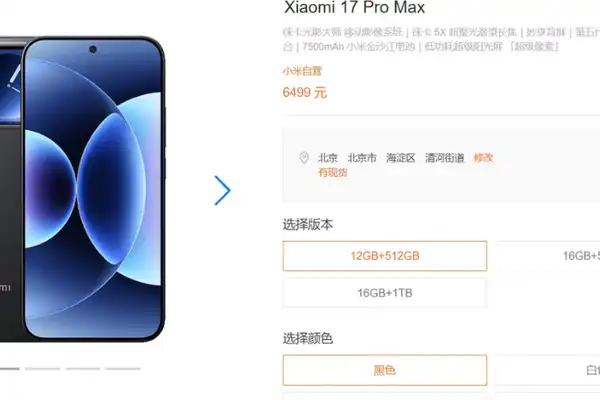
Xiaomi, facing a significant 26.3% year-on-year decline in global smartphone shipments in Q2 2026, has implemented its third price hike of the year. On August 2nd, prices were raised for nine models, including the flagship Mi 17 series (up 400-500 yuan) and Redmi K90/Turbo 5 series (up 300 yuan). This move completes a pattern where cost pressure, originating from surging memory chip prices, has climbed from entry-level to mid-range and now flagship products. The primary driver is a severe supply squeeze on consumer-grade DRAM and NAND flash memory, as major manufacturers like Samsung shift advanced capacity to more profitable HBM for AI applications. According to Xiaomi President Lu Weibing, memory prices for the same configuration have skyrocketed nearly fourfold since Q1 2025, adding roughly 1500 yuan to the cost of a mainstream 12GB+512GB phone. IDC estimates consumer memory costs have risen nearly 300% year-on-year. While the price increases hurt demand and contributed to the sales slump, Xiaomi's strategy of reducing entry-level models and upgrading its product mix also played a role. Domestically, its market share in China fell to 12% (5th place), while leaders Huawei and Apple saw shipments grow over 24%. To mitigate future risks, Xiaomi is accelerating its in-house "Surge" chip development and optimizing memory configurations across its lineup. Xiaomi is not alone; major brands like OPPO, vivo, and Apple have already raised prices in 2026, with industry insiders predicting another round of increases (200-800 yuan) in the second half. A full-scale industry-wide涨价 cycle is underway, forcing both manufacturers and consumers to recalibrate their strategies and purchasing decisions amid sustained cost pressures.

marsbit57 хв тому

Sales Drop 26% But Prices Rise? Xiaomi's Dilemma

marsbit57 хв тому

Торгівля

Спот
活动图片