Crypto Bill Stalls Amid Senate Focus On Inflation – A Quick Look

bitcoinistОпубліковано о 2026-01-22Востаннє оновлено о 2026-01-22

Анотація

A major US cryptocurrency bill has stalled in the Senate as lawmakers shift focus to inflation and housing initiatives. The delay comes amid pushback from industry players like Coinbase, which withdrew support over concerns that the proposed rules could restrict stablecoin operations. The uncertainty has contributed to market volatility, with Bitcoin's price fluctuating around $89,927. Meanwhile, an alternative legislative approach is emerging from the Senate Agriculture Committee, which proposes regulating certain digital tokens as commodities rather than securities. This could provide a separate pathway forward amid the current deadlock. Although the bill is not considered dead, time is running short due to upcoming elections and competing legislative priorities. Supporters continue working behind the scenes to revise the proposal and gather votes, but if an agreement isn’t reached by late February, the legislation may not pass.

Now hanging in uncertainty, a big US cryptocurrency bill meant to set firmer ground for trading platforms, digital tokens and stablecoins lost its urgent status among Congress leaders. Attention shifting elsewhere, several influential senators paused work on it this week. Talks continue behind the scenes, aiming to fix unresolved parts before moving forward.

Lawmakers Focus On Housing

A handful of senators shift attention toward affordable housing plans linked to US President Donald Trump’s priorities. This move shrinks the chance for quick approval of the cryptocurrency legislation. Time runs short as political energy flows elsewhere.

Now the Banking Committee changed its timeline because of that move, so the expected vote on the bill got delayed for now. This puts a pause on efforts to build one clear system.

Big Industry Pushback

Out of nowhere, Coinbase stopped backing the plan. Its executives said the proposal might limit how stablecoins work, affecting services people rely on. That shift made them step away quietly. Right after, the group in charge paused things as well.

That shift laid bare growing tensions. Not every bank welcomed the rise of stablecoins. Rivalry looms when digital coin returns gain wider reach. Some financial players see threat in that growth.

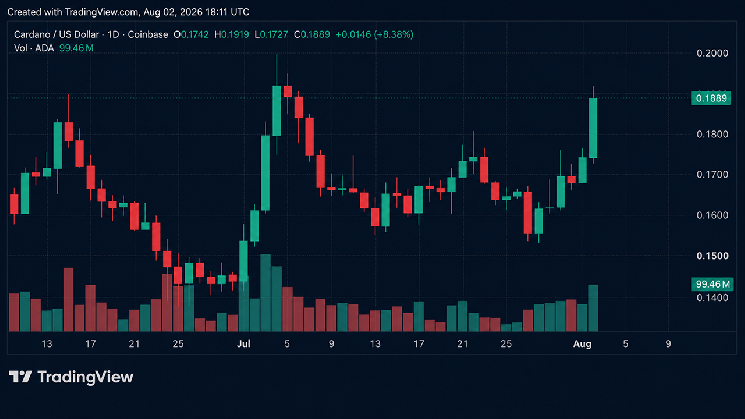
BTCUSD now trading at $89,927. Chart: TradingView

Industry Response And Market Effects

Fear spread through trading floors. When talks got delayed, digital currencies started falling because people began questioning how much longer the arguing could last – alongside what kind of outcome might finally emerge.

Useful, perhaps, if waiting brings sharper rules. Still, dragging too long risks confusing banks more, leaving them unsure when to act.

Separate Tracks Emerge

Ahead of the curve, some lawmakers are eyeing a fresh approach where certain digital tokens fall under commodity rules. This version, quietly shared by the Senate Agriculture team, might follow its own path forward – timing unclear.

Image: AI-CIO

While others debate classification, this draft sidesteps the main gridlock and suggests an alternate route through regulatory terrain.

One path might still move forward, even if the Banking Committee’s proposal gets stuck. Still, running two versions at once brings up concerns – how will they merge them should both make it to debate?

Crypto Bill: What Might Happen Next

Few believe it’s dead, though time slips fast. Elections loom; attention wanders. Agreement must come soon, or nothing sticks.

Some members of Congress quietly say pushing into late February could kill chances, yet backers still meet out of view to adjust the proposal and pull in more votes.

Featured image from Unsplash, chart from TradingView

Пов'язані питання

QWhy did the US cryptocurrency bill lose its urgent status in Congress?

AThe bill lost its urgent status because several influential senators shifted their attention to affordable housing plans linked to President Trump's priorities, reducing the chance for quick approval.

QWhat was Coinbase's reason for withdrawing support for the cryptocurrency bill?

ACoinbase stopped backing the plan because its executives believed the proposal might limit how stablecoins work, which could affect services that people rely on.

QHow did the delay in legislative talks affect the cryptocurrency market?

AThe delay caused fear and uncertainty in trading floors, leading to a fall in digital currency prices as investors questioned how long the arguing would last and what the final outcome might be.

QWhat alternative regulatory approach are some lawmakers considering for digital tokens?

ASome lawmakers are considering a fresh approach where certain digital tokens would fall under commodity rules, as proposed in a draft quietly shared by the Senate Agriculture team.

QWhat is the potential consequence if an agreement on the crypto bill is not reached soon?

AIf an agreement is not reached soon, the bill may not pass due to looming elections and shifting political attention, with some Congress members suggesting that pushing into late February could kill its chances.

Пов'язані матеріали

Anthropic's IPO Launch: Commercial Miracle or Valuation Bubble?

Anthropic has confidentially filed for an IPO, led by Morgan Stanley and Goldman Sachs, potentially going public by October. Following its latest $650 billion funding round, its pre-IPO valuation stands at $965 billion, with projections reaching up to $2 trillion at listing, which would make it the highest-valued private company ever. The article, written by Fu Sheng, addresses skepticism that this represents an AI bubble akin to the 2000 dot-com crash. It argues the current situation differs fundamentally. Unlike the internet bubble era, which relied on speculative narratives with little revenue, Anthropic's valuation is backed by unprecedented, measurable financial performance. Key data points include: * **Revenue Growth:** ARR skyrocketed from $10 billion in early 2025 to $470 billion by May 2026, targeting $100 billion by year-end—a growth curve unmatched in business history. * **Profitability:** It achieved operating profitability in Q2 2026 with an estimated $5.6 billion profit. * **Efficiency:** With ~3,000 employees and ~$470 billion ARR, its revenue per employee exceeds $10 million. Products like Claude Code, launched less than a year ago, already generate $25 billion in annualized revenue. * **Enterprise Adoption:** It boasts a strong enterprise client base, with 8 of the Fortune 10 and over 1,000 large firms spending over $1 million annually on Claude. The valuation is framed using a traditional SaaS model (e.g., a 10x Price-to-Sales multiple on $100 billion revenue). The author contends the core question for analysts has shifted from "How big could this be?" to "How much is it earning and will earn next quarter?" The discussion extends beyond Anthropic to a broader paradigm shift: the transition from a "carbon-based" to a "silicon-based" economy. Companies are increasingly prioritizing investment in compute and AI capabilities over human resources, as these directly scale productivity and competitive advantage. Anthropic's IPO is thus positioned not just as a corporate milestone, but as a price anchor for this new economic era.

链捕手2 год тому

Anthropic's IPO Launch: Commercial Miracle or Valuation Bubble?

链捕手2 год тому

Near Returns to the AI Stage: Transformation into a Public Chain Due to 'Payroll Difficulties,' Agent and Privacy Emerge as New Growth Narratives

NEAR Returns to AI Origins: From Payroll Struggles to Blockchain, Now Focusing on AI Agents and Privacy NEAR Protocol's journey began not with grand blockchain ambitions, but from a practical hurdle: its AI startup founders, including Transformer paper co-author Illia Polosukhin, couldn't efficiently pay international developers in 2017. This led them to pivot and build a high-performance, scalable blockchain. After years navigating various crypto narratives like sharding and cross-chain interoperability, NEAR is now leveraging its AI roots to re-enter the AI arena. A key driver is its "NEAR Intents" layer, which abstracts complex cross-chain transactions. Users simply state their goal (e.g., swap BTC for ETH), and a solver network finds the optimal route. This system has processed over $20B in cross-chain volume, generating significant fee revenue. A major growth area is private transactions via "Confidential Intents/Swaps," which hide trade details until settlement to protect against MEV and front-running. Remarkably, private swaps recently accounted for over 40% of NEAR's transaction volume, highlighting strong demand but also potential regulatory scrutiny. With its AI-founder pedigree, NEAR is positioning itself at the intersection of blockchain, AI agents, and privacy, aiming to become infrastructure for the emerging agent economy while navigating the challenges of its rapid adoption.

marsbit5 год тому

Near Returns to the AI Stage: Transformation into a Public Chain Due to 'Payroll Difficulties,' Agent and Privacy Emerge as New Growth Narratives

marsbit5 год тому

Торгівля

Спот
Ф'ючерси
活动图片